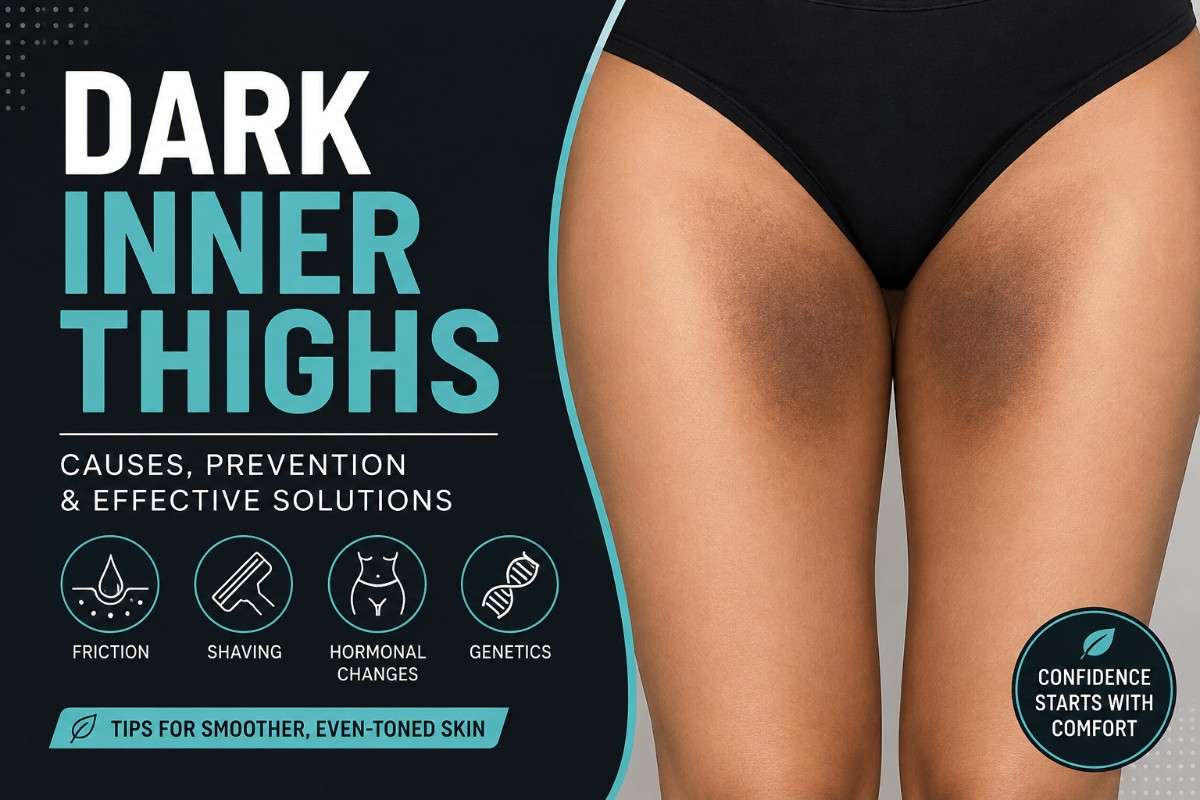
Dark inner thighs are a common skin concern that can affect people of all skin tones. The skin between or around the thighs may gradually become darker than the surrounding area, making some people feel self-conscious when wearing shorts, swimwear, or other clothing that exposes the thighs.
The good news is that dark inner thighs are often manageable once the underlying cause is identified. Friction, shaving, irritation, hormonal changes, excess pigmentation, and certain skin conditions can all contribute to darker skin in this area.
However, darkening is not always simply a cosmetic issue. When the skin becomes noticeably thicker, velvety, or darker in several body folds, it can sometimes be associated with a condition called acanthosis nigricans, which may occur with insulin resistance, prediabetes, diabetes, hormonal conditions, or certain medications.
This guide explains the common causes of dark inner thighs, safe ways to improve their appearance, ingredients that may help, mistakes to avoid, and when it is important to see a dermatologist.
What Are Dark Inner Thighs?
Dark inner thighs refer to hyperpigmentation or a deeper skin tone affecting the inner thigh area compared with nearby skin.
The discoloration may appear:
- Light brown or tan
- Medium or dark brown
- Grayish-brown
- Dark red-brown
- Almost black in some cases
The skin may remain completely smooth, or it may become rough, irritated, itchy, or thicker depending on the cause.
Dark inner thighs are particularly common in areas where the thighs rub against each other. Repeated friction can irritate the skin and contribute to inflammation and post-inflammatory hyperpigmentation.
What Causes Dark Inner Thighs?
There is no single cause of dark inner thighs. Several factors can contribute at the same time.
1. Friction Between the Thighs
Repeated rubbing is one of the most common reasons for darkening in this area. Walking, exercise, tight clothing, and thigh-to-thigh contact can create ongoing friction.
Repeated irritation can trigger inflammation and increased melanin production, eventually leaving the skin darker.
2. Shaving and Hair Removal
Frequent shaving, waxing, or other hair-removal methods can irritate sensitive inner-thigh skin.
Small cuts, razor burn, ingrown hairs, and inflammation may leave behind dark marks known as post-inflammatory hyperpigmentation.
3. Irritating Skin-Care Products
Perfumes, harsh soaps, deodorizing products, strong exfoliants, and certain creams can irritate the skin.
This is especially important for people with medium-to-dark skin because irritation can trigger more noticeable pigmentation.
4. Hormonal Changes
Hormonal changes can influence pigmentation. Pregnancy, hormonal disorders, and certain medications may sometimes contribute to changes in skin color.
5. Acanthosis Nigricans
Acanthosis nigricans causes darker, thicker, often velvety skin. It commonly affects skin folds such as the neck, armpits, and groin, but it can occur elsewhere.
It can be associated with:
- Insulin resistance
- Prediabetes
- Diabetes
- Obesity
- Polycystic ovary syndrome
- Thyroid disorders
- Certain medications
It is important not to assume that every case of dark inner thighs is acanthosis nigricans, but the possibility should be considered when the skin is thickened or velvety.
6. Post-Inflammatory Hyperpigmentation
When skin becomes inflamed or injured, it may produce excess melanin during the healing process.
This can happen after:
- Razor burns
- Ingrown hairs
- Scratching
- Chafing
- Eczema
- Allergic reactions
- Insect bites
- Minor injuries
The resulting pigmentation can remain after the original irritation has disappeared.
7. Excess Moisture
The inner thighs are naturally prone to sweating and moisture. Constant moisture combined with friction can increase irritation and make the skin more vulnerable to discoloration.
8. Tight Clothing
Very tight clothing can increase rubbing and trap heat and moisture.
Synthetic fabrics may also make some people more uncomfortable, particularly during hot weather or exercise.
9. Genetics and Natural Skin Tone
Some people naturally have darker pigmentation around body folds and creases. This can be completely normal and does not necessarily indicate a health problem.
Signs of Dark Inner Thighs
- Uneven Skin Tone: The inner thigh area appears noticeably darker than the surrounding skin.
- Brown or Dark Patches: Pigmentation may range from light brown to deep brown or grayish.
- Skin Thickening: The affected area may become thicker or feel different from the surrounding skin.
- Velvety Texture: Dark, soft, velvety skin can sometimes indicate acanthosis nigricans.
- Friction-Related Irritation: Redness, burning, or sensitivity may occur where the thighs repeatedly rub together.
- Dark Marks After Shaving: Razor bumps, ingrown hairs, or irritation may leave behind darker spots.
- Persistent Pigmentation: Darkening may remain even after the original irritation has disappeared.
Dark Inner Thighs vs. Acanthosis Nigricans
It is useful to understand the difference.
| Feature | Common Hyperpigmentation | Acanthosis Nigricans |
|---|---|---|
| Appearance | Brown or dark patches | Dark, often thicker and velvety |
| Texture | Usually normal | Often thickened or velvety |
| Common causes | Friction, shaving, irritation | Insulin resistance, hormonal conditions, medications |
| Location | Inner thighs and irritated areas | Neck, armpits, groin, folds |
| Treatment | Depends on cause | Treating the underlying cause is important |
| Medical evaluation | Sometimes unnecessary | Recommended when suspected |
A dermatologist can distinguish between these conditions by examining the skin. If acanthosis nigricans is diagnosed, medical testing may be recommended to look for an underlying condition.
How to Get Rid of Dark Inner Thighs?
The best approach is to treat the cause rather than simply trying to bleach the skin.
1. Reduce Friction
Reducing repeated rubbing is one of the most important steps.
Wear comfortable clothing that does not excessively rub against the thighs. During exercise or long walks, anti-chafing products or appropriate clothing can help reduce friction.
2. Keep the Area Dry
After bathing or exercising, gently pat the area dry instead of rubbing it.
If you sweat heavily, changing out of damp clothing can also help reduce prolonged moisture and irritation.
3. Use a Gentle Cleanser
Choose a mild, fragrance-free cleanser rather than harsh soaps or scrubs.
The goal is to clean the area without damaging the skin barrier.
4. Moisturize Regularly
A gentle moisturizer can help support the skin barrier and reduce dryness and irritation.
Look for products containing ingredients such as ceramides, glycerin, or other barrier-supporting moisturizers.
5. Consider Azelaic Acid
Azelaic acid is one topical ingredient that dermatologists may use for certain types of hyperpigmentation.
It can help address excess pigmentation while also being useful for inflammatory skin conditions.
However, the inner thigh is a sensitive area, so start cautiously and stop if significant burning or irritation occurs.
6. Try Gentle Chemical Exfoliation
Ingredients such as lactic acid or glycolic acid may help remove excess surface cells and gradually improve uneven pigmentation.
However, more exfoliation does not necessarily mean faster results. Over-exfoliating can irritate the skin and potentially make pigmentation worse.
7. Protect the Skin From Sun Exposure
Although inner thighs are usually covered, parts of the upper thighs may be exposed when wearing swimsuits, shorts, or certain clothing. If the area is exposed, broad-spectrum sunscreen can help prevent additional pigmentation.
8. Treat Ingrown Hairs
If shaving frequently causes ingrown hairs, changing your hair-removal routine may help prevent repeated inflammation.
Avoid picking or squeezing ingrown hairs because this can cause additional injury and pigmentation.
9. Address Underlying Medical Conditions
If darkening is caused by acanthosis nigricans, treating the underlying condition is more important than simply applying a lightening cream.
For example, when prediabetes or diabetes contributes to acanthosis nigricans, improving control of the underlying metabolic condition may help the skin gradually improve.
Home Remedies to Remove Inner Thigh Darkening
Home remedies can help soothe irritated skin and prevent further darkening, but they usually cannot remove deep pigmentation quickly. The safest approach is to focus on reducing friction, supporting the skin barrier, and avoiding ingredients that cause irritation.
1. Aloe Vera Gel
Apply plain aloe vera gel to clean, dry skin to help soothe irritation and provide lightweight hydration.
2. Moisturize Regularly
Use a fragrance-free moisturizer containing ingredients such as glycerin or ceramides to keep the skin hydrated and support the skin barrier.
3. Cold Compress
Apply a cool compress for 5–10 minutes when the inner thighs feel irritated after walking, exercise, or sweating.
4. Try Oatmeal for Irritated Skin
Use finely ground colloidal oatmeal in a lukewarm bath to help soothe dry or irritated skin.
5. Avoid Frequent Shaving
Give the skin time to recover between shaving sessions if shaving causes razor burn, bumps, or ingrown hairs that leave dark marks.
6. Wear Breathable Fabrics
Choose loose-fitting cotton or moisture-wicking clothing to reduce heat, sweat, and friction around the thighs.
7. Avoid Harsh DIY Treatments
Do not apply lemon juice, baking soda, toothpaste, bleach, or undiluted vinegar because these can irritate the skin and potentially worsen pigmentation.
8. Stay Consistent
Give your skin time to improve because pigmentation often fades gradually after the underlying irritation has been controlled.
Home Remedies You Should Avoid
Some popular remedies can make pigmentation worse by irritating the skin.
Avoid applying:
- Lemon juice
- Undiluted apple cider vinegar
- Baking soda
- Toothpaste
- Strong essential oils
- Bleach
- Abrasive scrubs
Lemon juice, for example, can irritate skin and increase sensitivity. Irritation itself can trigger additional pigmentation.
The goal should be healthier skin, not aggressively removing the top layer of skin.
Best Ingredients for Dark Inner Thighs
Depending on the cause, dermatologists may recommend different ingredients.
| Ingredient | Potential Role |
|---|---|
| Azelaic acid | Helps improve certain types of pigmentation |
| Lactic acid | Gentle exfoliation and skin smoothing |
| Glycolic acid | Chemical exfoliation |
| Vitamin C | Antioxidant and pigmentation support |
| Retinoids | May help increase cell turnover |
| Niacinamide | May help support an even-looking skin tone |
| Ceramides | Support the skin barrier |
| Glycerin | Hydrates dry skin |
Not every ingredient is suitable for every person. Strong products can cause irritation, especially on sensitive inner-thigh skin.
How Long Does It Take to Lighten Dark Inner Thighs?
There is no exact timeline because the cause and depth of pigmentation vary.
Mild pigmentation may gradually improve after the source of irritation is removed. Deeper pigmentation can take considerably longer.
Some post-inflammatory dark spots may take approximately 6 to 12 months to fade, while deeper pigmentation can take much longer. Consistency matters more than trying multiple aggressive products.
How to Prevent Dark Inner Thighs?
Prevention becomes much easier when you know what triggers your pigmentation.
1. Choose Comfortable Clothing
Avoid clothing that creates constant rubbing around the inner thighs.
2. Reduce Chafing
If your thighs rub during exercise or walking, consider appropriate anti-chafing protection.
3. Moisturize Daily
Keeping the skin comfortable and hydrated may help reduce irritation.
4. Shave Carefully
Use a clean, sharp razor and a suitable shaving product. Avoid repeatedly shaving over the same area.
5. Do Not Scrub Aggressively
Dark skin does not mean dirty skin. Scrubbing harder will not necessarily make pigmentation disappear.
In fact, vigorous scrubbing can cause irritation and worsen discoloration.
6. Treat Skin Problems Early
Eczema, fungal infections, ingrown hairs, and persistent irritation should be treated rather than repeatedly scratched or scrubbed.
Myths About Dark Inner Thighs
Myth 1: Dark Inner Thighs Mean Poor Hygiene
Fact: Dark inner thighs are not necessarily related to hygiene. Friction, hormones, genetics, shaving, and skin conditions can all cause pigmentation.
Myth 2: Only Overweight People Get Dark Inner Thighs
Fact: Anyone can develop darker inner thighs. Body weight can increase friction, but it is not the only cause.
Myth 3: Scrubbing Removes Dark Inner Thighs
Fact: Aggressive scrubbing can irritate the skin and potentially make pigmentation worse. Gentle skin care is a better approach.
Myth 4: Lemon Quickly Lightens Dark Thighs
Fact: Lemon juice is not a safe or reliable pigmentation treatment. It can irritate sensitive skin and may worsen discoloration.
Myth 5: Dark Inner Thighs Are Always Caused by PCOS
Fact: PCOS can be associated with acanthosis nigricans, but dark inner thighs can have many other causes, including friction, shaving, irritation, and genetics.
Myth 6: Weight Loss Always Removes Dark Inner Thighs
Fact: Weight loss may reduce friction or improve insulin resistance in some people, but it does not guarantee that existing pigmentation will disappear.
Myth 7: Dark Inner Thighs Cannot Be Treated
Fact: Many cases can improve by addressing the underlying cause and using appropriate skin care. Persistent pigmentation may require dermatologist-guided treatment.
Myth 8: Strong Bleaching Products Work Faster
Fact: Strong or inappropriate lightening products can cause irritation and further pigmentation. Dermatologist-recommended treatments are safer for persistent discoloration.
Myth 9: Dark Skin in Body Folds Is Always Abnormal
Fact: Some natural color variation in areas such as the inner thighs, groin, knees, and underarms is completely normal.
Myth 10: Dark Inner Thighs Should Disappear Overnight
Fact: Hyperpigmentation usually improves gradually. Depending on its cause and depth, noticeable improvement can take weeks to months.
When Should You See a Dermatologist?
See a dermatologist if:
- The pigmentation is rapidly getting darker.
- The skin has become thick or velvety.
- Dark patches are also appearing on the neck or armpits.
- You have persistent itching, burning, pain, scaling, or odor.
- The area develops bumps, sores, or drainage.
- Pigmentation appeared suddenly.
- Home care has not improved the problem.
- You have other symptoms that could suggest a hormonal or metabolic condition.
Sudden development of widespread, dark, velvety patches deserves prompt medical assessment because, although uncommon, rapidly developing acanthosis nigricans can sometimes be associated with serious underlying disease.
Professional Treatments for Dark Inner Thighs
When basic skin care does not provide enough improvement, a dermatologist may recommend prescription or professional treatments.
Depending on the diagnosis, options can include:
- Prescription Lightening Creams: Dermatologist-prescribed creams may gradually reduce stubborn pigmentation.
- Azelaic Acid: Helps improve pigmentation while calming skin inflammation.
- Retinoid Creams: Encourage skin-cell turnover and may gradually improve uneven pigmentation.
- Chemical Peels: Professional peels can exfoliate the skin and improve dark patches.
- Laser Treatment: Certain lasers may target stubborn pigmentation but require careful selection, especially for darker skin tones.
- Acanthosis Nigricans Treatment: Treating underlying insulin resistance, PCOS, or other causes may improve associated darkening.
- Infection Treatment: Antifungal or other prescribed treatments can help when an infection is causing irritation and discoloration.
- Ingrown Hair Treatment: Dermatological care can reduce recurring ingrown hairs and the dark marks they leave behind.
- Combination Treatments: Dermatologists may combine different topical treatments for more persistent pigmentation.
Professional procedures should be selected carefully, particularly for people with darker skin tones. Some resurfacing procedures can cause additional inflammation and pigmentation if performed inappropriately.
A dermatologist should determine whether a procedure is appropriate before treatment.
Can Weight Loss Help Dark Inner Thighs?
It can help in some situations, but it depends on the cause.
If excess weight contributes to friction or acanthosis nigricans, gradual weight management may reduce the underlying trigger. The American Academy of Dermatology reports that significant weight loss can sometimes lead to improvement or clearing of acanthosis nigricans.
However, dark inner thighs are not automatically caused by body weight. People of all body sizes can experience pigmentation because of friction, hormones, shaving, genetics, or skin irritation.
Is Dark Skin Between the Thighs Normal?
Yes. Some degree of color variation in areas such as the inner thighs, groin, elbows, knees, and underarms can be completely normal.
Skin folds naturally experience friction, moisture, and hormonal influences. Having darker inner thighs does not automatically mean that someone has poor hygiene or a medical problem.
The important thing is to notice changes in your own skin and look for symptoms such as thickening, rapid darkening, itching, pain, or other unusual changes.
FAQs
Why do chubby girls have dark inner thighs?
Darker inner thighs are often caused by friction and chafing when the thighs rub together, especially during walking or exercise. Sweat, moisture, shaving, irritation, and post-inflammatory hyperpigmentation can also contribute. It is not simply a result of body weight, and people of any body size can have dark inner thighs.
Will dark inner thighs go away if I lose weight?
They may improve if friction, sweating, or insulin resistance is contributing to the pigmentation. However, weight loss does not automatically remove dark inner thighs because pigmentation can also result from genetics, shaving, hormones, or previous skin irritation.
What should I apply to dark thighs?
A gentle, fragrance-free moisturizer can help protect the skin barrier. For pigmentation, ingredients such as azelaic acid, niacinamide, or gentle exfoliating acids may help over time. Introduce active ingredients gradually because irritation can make pigmentation worse.
Are dark inner thighs permanent?
No, dark inner thighs are not necessarily permanent. Mild pigmentation may gradually fade after the underlying cause is addressed, but deeper or long-standing pigmentation can take months to improve.
Does PCOS cause dark inner thighs?
PCOS can be associated with acanthosis nigricans, a condition that causes darker, thicker, sometimes velvety skin in body folds such as the groin, inner thighs, neck, and underarms. This is often associated with insulin resistance. However, not every case of dark inner thighs is caused by PCOS.
How can I lighten dark inner thighs?
Reducing friction, moisturizing regularly, avoiding harsh scrubs, and using gentle ingredients such as azelaic acid or niacinamide may help gradually improve pigmentation.
Can dark inner thighs go away naturally?
Yes. Mild pigmentation may fade naturally once the underlying cause, such as friction or irritation, is removed. Deeper pigmentation may take several months to improve.
Does shaving cause dark inner thighs?
Shaving may contribute indirectly by causing razor burns, cuts, ingrown hairs, and irritation, which can lead to post-inflammatory hyperpigmentation.
Can I use lemon to lighten dark inner thighs?
It is best to avoid lemon juice because it can irritate sensitive skin and potentially make pigmentation worse.
Does aloe vera help with dark inner thighs?
Aloe vera may soothe and moisturize irritated skin, but it is not a proven fast treatment for established pigmentation.
Can weight gain cause dark inner thighs?
Weight gain can increase thigh friction and moisture, which may contribute to pigmentation. It can also be associated with insulin resistance and acanthosis nigricans.
Can diabetes cause dark inner thighs?
Yes. Diabetes or insulin resistance can be associated with acanthosis nigricans, which causes darker, thicker, velvety skin in body folds.
Should I scrub my dark inner thighs?
No. Aggressive scrubbing can damage the skin and increase inflammation, potentially making pigmentation darker.
Can hormones cause dark inner thighs?
Yes. Hormonal changes and conditions can influence pigmentation and may sometimes contribute to acanthosis nigricans.
Final Thoughts
Dark inner thighs are common and usually have a manageable cause. Friction, shaving, irritation, moisture, hormonal changes, and post-inflammatory hyperpigmentation are among the most frequent contributors.
Instead of trying to bleach or aggressively scrub the area, focus on reducing friction, protecting the skin barrier, moisturizing regularly, and using gentle pigmentation-focused ingredients when appropriate.
If the skin becomes thick, velvety, rapidly darker, or noticeably changes in several body folds, do not treat it as a purely cosmetic concern. A dermatologist or healthcare professional can determine whether acanthosis nigricans or another underlying condition may be involved.
Sources / References:
- American Academy of Dermatology
- DermNet – Post-inflammatory Hyperpigmentation
- Systematic Review – Post-Inflammatory Hyperpigmentation
- Cleveland Clinic
About the Author:
Written by: Kirti Solanki, Health Content Researcher
Kirti Solanki writes evidence-informed health and wellness content designed to make medical and skin-care information easier for general readers to understand. Content is researched using reputable dermatology and medical sources, with an emphasis on practical, responsible health information.
Disclaimer:
This article is for general educational purposes only and is not a substitute for professional medical advice, diagnosis, or treatment. If darkening is sudden, persistent, painful, thickened, or associated with other symptoms, consult a qualified healthcare professional or dermatologist.
Also Read: