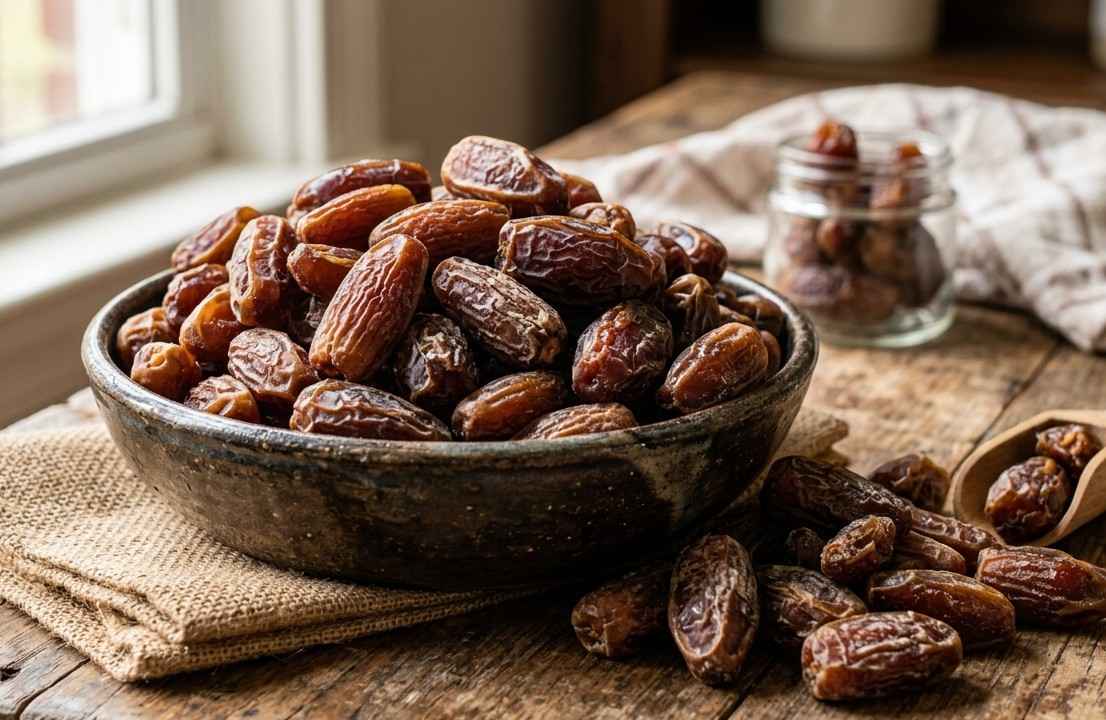
Dried dates are one of the oldest and most cherished natural sweeteners in the world. Known for their rich caramel-like flavor, chewy texture, and impressive nutritional profile, they have been a staple food across Middle Eastern, African, and South Asian cultures for centuries. Whether eaten as a quick energy snack, used in desserts, or added to savory dishes, dried dates offer both taste and health in one small bite.
In this guide, we’ll explore everything you need to know about dried dates—from their nutritional value and science-backed health benefits to possible side effects, preparation methods, and daily consumption tips.
What is Dried Dates?
Dried dates are the dehydrated form of fresh dates, which grow on the date palm tree (Phoenix dactylifera). When fresh dates lose their moisture either naturally on the tree or through controlled drying processes, they become dried dates. This drying process concentrates their sugars, nutrients, and flavor, giving them a longer shelf life and a more intense sweetness.
There are two main types:
- Naturally dried dates: Allowed to ripen and dry on the tree
- Artificially dried dates: Processed using dehydrators or sunlight after harvesting
Common varieties include Medjool, Deglet Noor, and Zahidi dates, each offering a slightly different taste and texture.
Nutrition Facts of Dried Dates (Per 100g)
| Nutrient | Amount |
|---|---|
| Calories | 277 kcal |
| Carbohydrates | 75 g |
| Natural Sugars | 63–66 g |
| Dietary Fiber | 6.7 g |
| Protein | 1.8–2.5 g |
| Fat | 0.2 g |
| Potassium | 696 mg |
| Magnesium | 54 mg |
| Iron | 0.9 mg |
| Calcium | 64 mg |
| Vitamin B6 | 0.2 mg |
| Antioxidants | High |
Dried dates are calorie-dense but packed with essential nutrients, especially fiber, potassium, and antioxidants.
20 Proven Health Benefits of Dried Dates
- Boosts Energy Naturally – High natural sugars like glucose and fructose provide quick and sustained energy.
- Supports Digestive Health – Rich fiber content promotes smooth bowel movements and prevents constipation.
- Improves Heart Health – Potassium and magnesium help regulate blood pressure and support heart function.
- Rich in Antioxidants – Contains flavonoids, carotenoids, and phenolic acid that reduce oxidative stress.
- Supports Brain Function – Antioxidants may help reduce inflammation linked to neurodegenerative diseases.
- Promotes Bone Health – Contains calcium, phosphorus, and magnesium for stronger bones.
- Aids in Natural Labor – Some studies suggest dates may help in cervical dilation during pregnancy.
- Helps Control Blood Pressure – Potassium balances sodium levels in the body.
- Supports Healthy Skin – Antioxidants slow down skin aging and improve elasticity.
- Boosts Immunity – Nutrients and antioxidants strengthen immune defense.
- May Help Prevent Anemia – Contains iron, which supports red blood cell production.
- Improves Gut Health – Acts as a prebiotic, feeding beneficial gut bacteria.
- Supports Weight Gain (Healthy Way) – Calorie-dense food ideal for those needing extra energy.
- Helps Manage Cholesterol Levels – Fiber may reduce LDL cholesterol.
- Enhances Muscle Function – Potassium helps with muscle contraction and recovery.
- Supports Pregnancy Nutrition – Provides essential nutrients for mother and baby.
- Improves Sexual Health – Traditionally used as a natural aphrodisiac due to nutrient density.
- Reduces Inflammation – Bioactive compounds may lower inflammatory markers.
- Helps Detoxify the Body – Fiber supports digestive cleansing.
- Supports Liver Health – Antioxidants may protect liver cells from damage.
10 Side Effects of Dried Dates
- High Sugar Content – May spike blood sugar if consumed in excess.
- Weight Gain – Overeating can lead to excess calorie intake.
- Digestive Issues – Too much fiber may cause bloating or diarrhea.
- Allergic Reactions – Rare but possible in some individuals.
- Tooth Decay Risk – Sticky sugars can promote cavities.
- Not Ideal for Diabetics (in excess) – Requires portion control.
- Sulfur Sensitivity – Some processed dates contain sulfites.
- Hyperkalemia Risk – Excess potassium may affect kidney patients.
- May Trigger IBS Symptoms – High fiber and sugar alcohols may cause discomfort.
- Possible Contamination – Poorly stored dates may develop mold.
How to Make Dried Dates?
Traditional Sun-Drying Method:
- Select ripe, fresh dates
- Wash and pat dry
- Spread on a clean tray
- Place under direct sunlight for several days
- Turn occasionally for even drying
- Store in airtight containers
Using a Dehydrator:
- Wash and slice dates (optional)
- Place evenly on dehydrator trays
- Set temperature to 55–60°C
- Dry for 12–24 hours until chewy
How to Eat Dried Dates?
- Eat them raw as a snack
- Stuff with nuts like almonds or walnuts
- Blend into smoothies
- Add to desserts like cakes and laddoos
- Chop into salads or oatmeal
- Use as a natural sweetener in recipes
Tips for Consuming Dried Dates
- Eat in moderation due to high sugar content
- Pair with protein (nuts) for balanced energy
- Soak overnight for easier digestion
- Choose unsulfured, organic varieties when possible
- Avoid eating too many at once
Other Uses of Dried Dates
- Natural sweetener in baking
- Ingredient in energy bars
- Used in traditional medicines
- Date syrup production
- Skincare masks (DIY)
- Animal feed supplement in some regions
How Much Dried Dates Can You Eat in a Day?
- General recommendation: 2–4 dates per day
- Active individuals: Up to 5–6 dates
- For weight gain: Slightly higher intake with balanced diet
- Moderation is key due to calorie density
Best Time to Eat Dried Dates
- Morning: Boosts energy levels
- Before workout: Quick fuel
- Evening snack: Healthy alternative to sweets
- During fasting (e.g., Ramadan): Traditionally eaten to break fast
Who Should Eat Dried Dates?
- Athletes and active individuals
- People needing quick energy
- Pregnant women (in moderation)
- Individuals with constipation
- Those looking for natural sweeteners
Who Should Avoid Dried Dates?
- Diabetics (without medical guidance)
- People with kidney issues (due to potassium)
- Individuals with IBS or sensitive digestion
- Those on low-calorie diets
- People allergic to dates
How to Store Dried Dates?
- Keep in airtight containers
- Store in a cool, dry place
- Refrigerate for longer shelf life
- Avoid moisture exposure
- Check for mold or unusual smell
Proper storage can keep dry dates fresh for several months.
Precautions and Interactions
- Diabetes medications: Monitor sugar levels when consuming
- Kidney disorders: High potassium intake may be risky
- Digestive sensitivity: Introduce gradually
- Children: Offer in small portions to avoid choking
- Dental health: Rinse mouth after eating
Final Thoughts
Dried dates are a powerhouse of nutrition wrapped in natural sweetness. They offer a wide range of health benefits—from boosting energy and aiding digestion to supporting heart and brain health. However, like any nutrient-dense food, they should be consumed mindfully. Incorporating dry dates into your daily diet can be a simple yet effective way to improve overall wellness.
FAQ’s
What are dried dates good for?
Dry dates are excellent for boosting energy, improving digestion, supporting heart health, and providing essential nutrients like fiber, potassium, and antioxidants.
Can dried dates help with weight loss?
Yes, when eaten in moderation. Their fiber helps keep you full, reducing overeating, but excessive intake can lead to weight gain due to high calories.
Are dried dates safe for diabetics?
Dry dates can be consumed in small portions, but diabetics should monitor blood sugar levels and consult a doctor before including them regularly.
Do dried dates cause weight gain?
They can if consumed in excess because they are calorie-dense and high in natural sugars.
Are dried dates better than fresh dates?
Both have similar nutrients, but dry dates are more concentrated in sugar and calories due to reduced water content.
Can I eat dried dates on an empty stomach?
Yes, eating dry dates in the morning on an empty stomach can provide quick energy and support digestion.
Do dried dates help with constipation?
Yes, their high fiber content helps promote regular bowel movements.
Are dried dates good for skin?
Yes, antioxidants in dry dates help reduce signs of aging and improve skin health.
Can pregnant women eat dried dates?
Yes, in moderation. They may support energy levels and have been linked to easier labor in some studies.
Do dried dates increase hemoglobin?
They contain iron, which may help improve hemoglobin levels when combined with a balanced diet.
Are dried dates good for children?
Yes, but in small amounts due to their sugar content. They are a healthy alternative to processed sweets.
Can dried dates cause bloating?
Yes, overeating may cause bloating or digestive discomfort due to high fiber.
Are dried dates good for heart health?
Yes, potassium and antioxidants help support heart function and regulate blood pressure.
Can I eat dried dates at night?
Yes, but avoid large quantities as their sugar content may affect sleep or digestion.
Do dried dates help in muscle recovery?
Yes, potassium and natural sugars help replenish energy and support muscle recovery after exercise.
Are dried dates keto-friendly?
No, they are high in carbohydrates and not suitable for a strict keto diet.
Do dried dates contain added sugar?
Natural dry dates do not contain added sugar, but always check labels for processed varieties.
Can dried dates be soaked before eating?
Yes, soaking them overnight can make them softer and easier to digest.
How long do dried dates last?
When stored properly, dry dates can last several months to up to a year.
Are dried dates good for immunity?
Yes, antioxidants and nutrients help strengthen the immune system.
Can dried dates cause allergies?
Allergic reactions are rare but possible in sensitive individuals.
Do dried dates improve brain health?
Their antioxidants may help reduce inflammation linked to cognitive decline.
Can I eat dried dates during fasting?
Yes, they are commonly eaten to break fasts as they quickly restore energy.
Are dried dates better than sugar?
Yes, they are a healthier natural sweetener with added nutrients and fiber.
Do dried dates help in digestion?
Yes, fiber supports gut health and promotes smooth digestion.
Can dried dates affect blood pressure?
They may help regulate blood pressure due to high potassium levels.
Are dried dates good for bones?
Yes, they contain minerals like calcium and magnesium that support bone strength.
Can dried dates be eaten daily?
Yes, in moderate amounts as part of a balanced diet.
Do dried dates have preservatives?
Some packaged varieties may contain sulfites; always choose natural or organic options when possible.
What does dried dates taste like?
Dry dates have a rich, naturally sweet flavor often compared to caramel or honey. They are soft and chewy in texture, with some varieties being slightly firmer. Depending on the type, they may also have subtle notes of butterscotch, nuts, or even a mild fruity taste.
Also Read: