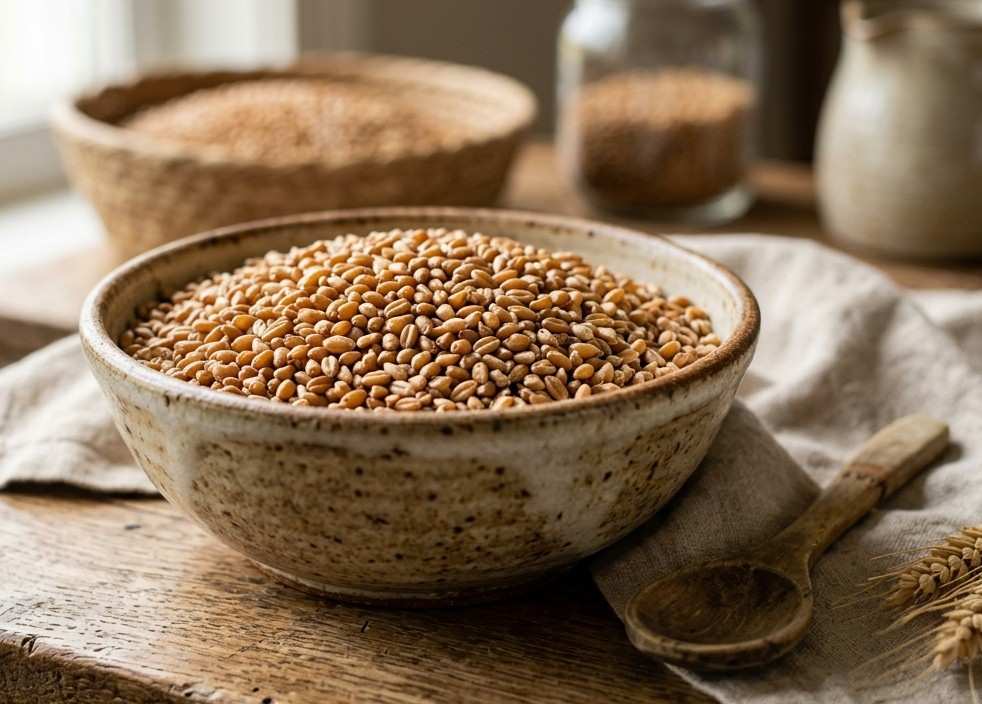
Durum Wheat (most commonly known as pasta wheat or macaroni wheat) is one of the most important wheat varieties in the world and is widely used to make pasta, couscous, bulgur, semolina, bread, and various traditional foods. Known for its rich golden color, firm texture, and high protein content, durum wheat is a nutritious grain that provides energy, fiber, vitamins, minerals, and beneficial plant compounds. When included as part of a balanced diet, it can support digestion, heart health, weight management, and overall wellness.
What is Durum Wheat?
Durum wheat (Triticum durum) is a hard variety of wheat primarily grown in regions with warm and dry climates. The word “durum” comes from the Latin word meaning “hard,” referring to its dense kernels and strong gluten structure.
Durum wheat is most commonly milled into semolina, a coarse flour used to produce pasta, couscous, and many baked products. Compared to common wheat, durum wheat contains more protein and has a firmer texture, making it ideal for foods that need to hold their shape during cooking. It is an excellent source of complex carbohydrates, dietary fiber, B vitamins, iron, magnesium, phosphorus, selenium, and plant-based protein.
Nutrition Facts of Durum Wheat
The following nutritional values are approximate per 100 grams of uncooked whole durum wheat.
| Nutrient | Amount |
|---|---|
| Calories | 339 kcal |
| Carbohydrates | 71 g |
| Protein | 13.7 g |
| Fat | 2.5 g |
| Dietary Fiber | 12 g |
| Sugar | 0.4 g |
| Calcium | 34 mg |
| Iron | 3.5 mg |
| Magnesium | 144 mg |
| Phosphorus | 508 mg |
| Potassium | 431 mg |
| Zinc | 3.5 mg |
| Selenium | 89 mcg |
| Thiamin (Vitamin B1) | 0.42 mg |
| Riboflavin (Vitamin B2) | 0.12 mg |
| Niacin (Vitamin B3) | 6.7 mg |
| Folate | 43 mcg |
20 Proven Health Benefits of Durum Wheat
- Provides Long-Lasting Energy: Triticum durum contains complex carbohydrates that release energy gradually throughout the day.
- Supports Digestive Health: The fiber content helps maintain regular bowel movements and supports gut function.
- Promotes Heart Health: Whole durum wheat may help support healthy cholesterol levels and cardiovascular wellness.
- Aids Weight Management: Fiber and protein increase satiety and may help reduce overeating.
- Supports Muscle Growth: Its protein content helps support muscle maintenance and repair.
- Improves Blood Sugar Control: Whole-grain durum wheat may slow glucose absorption compared to refined grains.
- Boosts Immune Function: Selenium and zinc contribute to normal immune system activity.
- Supports Bone Strength: Magnesium and phosphorus play important roles in maintaining healthy bones.
- Enhances Brain Function: B vitamins help support nervous system health and cognitive performance.
- Promotes Healthy Metabolism: B-complex vitamins assist in converting food into usable energy.
- Helps Prevent Nutrient Deficiencies: Durum wheat contains several essential vitamins and minerals.
- Supports Healthy Red Blood Cells: Iron and folate contribute to red blood cell production.
- Encourages Gut Microbiome Health: Fiber acts as a food source for beneficial gut bacteria.
- Provides Antioxidant Protection: Selenium helps protect cells from oxidative stress.
- Supports Healthy Skin: Nutrients such as zinc and B vitamins contribute to skin health.
- May Reduce Inflammation: Whole grains contain compounds associated with lower inflammatory markers.
- Improves Satiety: The combination of fiber and protein helps keep you feeling full longer.
- Supports Healthy Blood Pressure: Potassium and magnesium contribute to normal blood pressure regulation.
- Helps Maintain Healthy Cholesterol: Whole-grain consumption is associated with improved lipid profiles.
- Contributes to Overall Wellness: The broad nutrient profile makes durum wheat a valuable part of a balanced diet.
10 Side Effects of Durum Wheat
- Gluten Sensitivity Issues: Triticum durum contains gluten and may trigger symptoms in sensitive individuals.
- Unsafe for Celiac Disease: People with celiac disease should avoid durum wheat completely.
- May Cause Digestive Discomfort: Excessive intake can lead to bloating or gas in some people.
- Potential Wheat Allergy Reactions: Individuals with wheat allergies may experience allergic symptoms.
- Can Cause Overconsumption of Calories: Large portions may contribute to excess calorie intake.
- May Raise Blood Sugar if Refined: Refined durum wheat products can affect blood glucose levels more rapidly.
- Possible Abdominal Cramping: Some individuals may experience stomach discomfort after consuming wheat products.
- May Trigger IBS Symptoms: Certain people with irritable bowel syndrome may be sensitive to wheat.
- Can Cause Constipation if Water Intake Is Low: Fiber-rich foods require adequate hydration for optimal digestion.
- Potential Nutrient Imbalance: Relying too heavily on wheat products may reduce dietary variety.
How to Eat Durum Wheat?
Durum wheat can be enjoyed in many different forms:
- Cooked whole wheat berries
- Semolina porridge
- Pasta dishes
- Couscous salads
- Bulgur recipes
- Bread and flatbreads
- Grain bowls
- Soups and stews
- Breakfast cereals
- Side dishes with vegetables
Whole Triticum durum pairs well with vegetables, legumes, lean proteins, herbs, and healthy fats.
Tips for Consuming Durum Wheat
- Choose whole-grain durum wheat whenever possible.
- Combine it with vegetables for extra fiber and nutrients.
- Pair with protein-rich foods for balanced meals.
- Practice portion control.
- Drink enough water when consuming high-fiber foods.
- Rotate grains to maintain dietary diversity.
- Use semolina in homemade recipes.
- Avoid excessive processed wheat products.
- Read labels for whole-grain content.
- Introduce gradually if increasing fiber intake.
How to Cook Durum Wheat?
Ingredients:
- 1 cup whole durum wheat berries
- 3 cups water
- Pinch of salt
Instructions:
- Rinse the wheat thoroughly.
- Soak overnight if desired.
- Add wheat and water to a pot.
- Bring to a boil.
- Reduce heat and simmer.
- Cook for 45–60 minutes or until tender.
- Drain excess water if necessary.
- Fluff with a fork.
- Serve warm or chilled.
Cooked durum wheat can be added to salads, soups, grain bowls, or side dishes.
Other Uses of Durum Wheat
- Pasta Production: Triticum durum is the primary grain used for making high-quality pasta.
- Semolina Flour Manufacturing: It is commonly milled into semolina flour for cooking and baking.
- Couscous Preparation: Triticum durum serves as the traditional base ingredient for couscous.
- Bulgur Production: Cracked durum wheat is used to make nutritious bulgur.
- Breakfast Cereals: It is incorporated into various hot and cold cereal products.
- Bakery Products: Durum flour is used in breads, rolls, and specialty baked goods.
- Soup Thickening: Semolina can help thicken soups and stews.
- Snack Foods: Triticum durum is used in crackers, chips, and other snack items.
- Animal Feed: Some durum wheat products are used in livestock feed.
- Food Industry Applications: It is widely utilized in processed grain-based products.
How Much Durum Wheat Can You Eat in a Day?
A healthy adult can generally consume:
- ½ to 1 cup cooked durum wheat per serving
- 1–3 servings of whole grains daily as part of a balanced diet
Individual requirements vary depending on age, activity level, calorie needs, and health status.
General dietary guidelines suggest:
- 25–48 grams of whole grains per serving
- 2–6 servings of grains daily depending on energy needs
- Whole-grain versions are generally preferred over refined forms
Consult a healthcare professional or dietitian for personalized recommendations.
Best Time to Eat Durum Wheat
Breakfast
Provides sustained energy and helps keep you full throughout the morning.
Lunch
Supports afternoon energy levels and satiety.
Pre-Workout Meal
Complex carbohydrates can help fuel physical activity.
Post-Workout Meal
When combined with protein, it may support recovery and glycogen replenishment.
Dinner
Can be included in balanced evening meals in moderate portions.
Who Should Eat Durum Wheat?
- Active Individuals: It provides energy for exercise and daily activities.
- Athletes: The carbohydrate content helps support training and recovery.
- Students: B vitamins and complex carbohydrates support energy and concentration.
- Working Professionals: It offers sustained energy throughout the day.
- People Seeking Weight Management: Fiber and protein help increase fullness.
- Older Adults: Nutrients support healthy aging and overall wellness.
- Vegetarians: Durum wheat contributes plant-based protein and minerals.
- Individuals Seeking Heart Health: Whole grains may support cardiovascular wellness.
- People Looking to Improve Digestion: Fiber supports digestive regularity.
- Families Seeking Nutritious Staples: Triticum durum can be part of healthy meals for many age groups.
Who Should Not Eat Durum Wheat?
- People with Celiac Disease: Even small amounts can trigger harmful immune reactions.
- Individuals with Wheat Allergy: Consumption may cause allergic responses.
- People with Severe Gluten Sensitivity: Symptoms may worsen after eating durum wheat.
- Individuals Following Gluten-Free Diets: Triticum durum is not gluten-free.
- Certain IBS Patients: Wheat may aggravate digestive symptoms in some individuals.
- People with Specific Grain Intolerances: Alternative grains may be better tolerated.
- Individuals Advised by Doctors to Avoid Gluten: Medical guidance should be followed.
- People Experiencing Wheat-Induced Migraines: Wheat may act as a trigger for some individuals.
- Individuals with Severe Digestive Disorders: Professional dietary guidance may be necessary.
- People with Confirmed Wheat Protein Sensitivity: Avoidance is typically recommended.
How to Store Durum Wheat?
- Use Airtight Containers: This helps protect the grain from moisture and pests.
- Store in a Cool Place: Cooler temperatures help maintain freshness.
- Keep Away from Sunlight: Direct light can reduce quality over time.
- Avoid Humid Areas: Moisture can encourage spoilage.
- Label Storage Dates: Tracking dates helps ensure freshness.
- Freeze for Long-Term Storage: Freezing can extend shelf life.
- Check Regularly for Pests: Periodic inspection helps maintain quality.
- Keep Containers Sealed: Proper sealing preserves flavor and texture.
- Store Cooked Wheat in Refrigeration: Refrigerate cooked wheat promptly.
- Use Fresh Stock First: Rotate older products before opening new ones.
Precautions and Interactions
- Gluten Content: Triticum durum is unsuitable for individuals with celiac disease.
- Wheat Allergy Risk: Allergic individuals should avoid consumption.
- Increase Fiber Gradually: Sudden high intake may cause digestive discomfort.
- Maintain Adequate Hydration: Fiber works best when water intake is sufficient.
- Monitor Blood Sugar Responses: Diabetics should consider portion sizes and meal composition.
- Check Medication Timing: High-fiber foods may affect absorption of certain medications.
- Watch for Digestive Symptoms: Persistent discomfort may indicate intolerance.
- Consult Healthcare Providers: Individuals with medical conditions should seek professional advice.
- Balance with Other Grains: Dietary variety supports broader nutrient intake.
- Choose Whole-Grain Options: Whole durum wheat generally provides more nutrients and fiber than refined products.
Conclusion
Durum wheat is a nutrient-rich grain valued for its high protein content, complex carbohydrates, fiber, vitamins, and minerals. It serves as the foundation for popular foods such as pasta, semolina, couscous, and bulgur. When consumed as part of a balanced diet, whole Triticum durum may support digestive health, heart health, energy production, weight management, and overall wellness. While it offers many nutritional advantages, people with celiac disease, gluten sensitivity, or wheat allergies should avoid it.
FAQ’s
Is durum wheat healthy?
Yes, whole durum wheat is rich in fiber, protein, vitamins, and minerals that can support digestion, heart health, and overall wellness.
Is durum wheat the same as semolina?
No. Triticum durum is the grain, while semolina is the coarse flour produced by milling durum wheat.
Does durum wheat contain gluten?
Yes, Triticum durum contains gluten and is not suitable for people with celiac disease or gluten intolerance.
Is durum wheat good for weight loss?
Triticum durum may support weight management because its fiber and protein can help increase feelings of fullness.
Can people with diabetes eat durum wheat?
People with diabetes can often enjoy whole Triticum durum in moderation as part of a balanced meal, but portion control is important.
Is durum wheat better than regular wheat?
Triticum durum generally contains more protein and has a firmer texture than common wheat, though both can be nutritious when consumed as whole grains.
What foods are made from durum wheat?
Pasta, couscous, bulgur, semolina porridge, bread, crackers, and some breakfast cereals are commonly made from durum wheat.
Can durum wheat help digestion?
Yes, whole durum wheat contains dietary fiber that can promote regular bowel movements and support gut health.
Is durum wheat high in protein?
Yes, Triticum durum contains more protein than many other wheat varieties, making it a valuable plant-based protein source.
Can children eat durum wheat?
Yes, children can safely consume durum wheat products unless they have a wheat allergy, celiac disease, or gluten sensitivity.
Is durum wheat good for athletes?
Yes, its complex carbohydrates and protein can help provide energy and support recovery after exercise.
What is the difference between durum wheat and whole wheat?
Whole wheat refers to wheat that contains the entire grain kernel, while Triticum durum is a specific wheat variety that can be consumed in whole-grain or refined forms.
Is durum wheat good for heart health?
Whole Triticum durum may support heart health due to its fiber, magnesium, and antioxidant content.
Can durum wheat cause allergies?
Yes, individuals with a wheat allergy may experience allergic reactions after consuming Triticum durum.
Is pasta made from durum wheat?
Most traditional pasta is made from durum wheat semolina because of its strong gluten structure and cooking quality.
Can I eat durum wheat every day?
Yes, most healthy individuals can include moderate amounts of whole durum wheat in their daily diet as part of a balanced eating pattern.
Is Durum Wheat safe for pregnant women?
Yes, Triticum durum is generally safe during pregnancy and provides fiber, protein, and essential nutrients. Avoid it if you have a wheat allergy or gluten-related disorder.
What is Durum Wheat good for?
Triticum durum supports energy production, digestion, heart health, and weight management while providing protein, fiber, and important minerals.
What does Durum Wheat taste like?
Triticum durum has a mild, slightly sweet, nutty flavor and a firm, chewy texture.
What is durum wheat called in India?
In India, durum wheat is commonly known as the wheat used to make suji (semolina) or rava and is sometimes called macaroni wheat.
Which is healthier, durum or semolina?
Whole durum wheat is healthier because it contains more fiber and nutrients, while semolina is a processed product made from durum wheat.
Also Read: