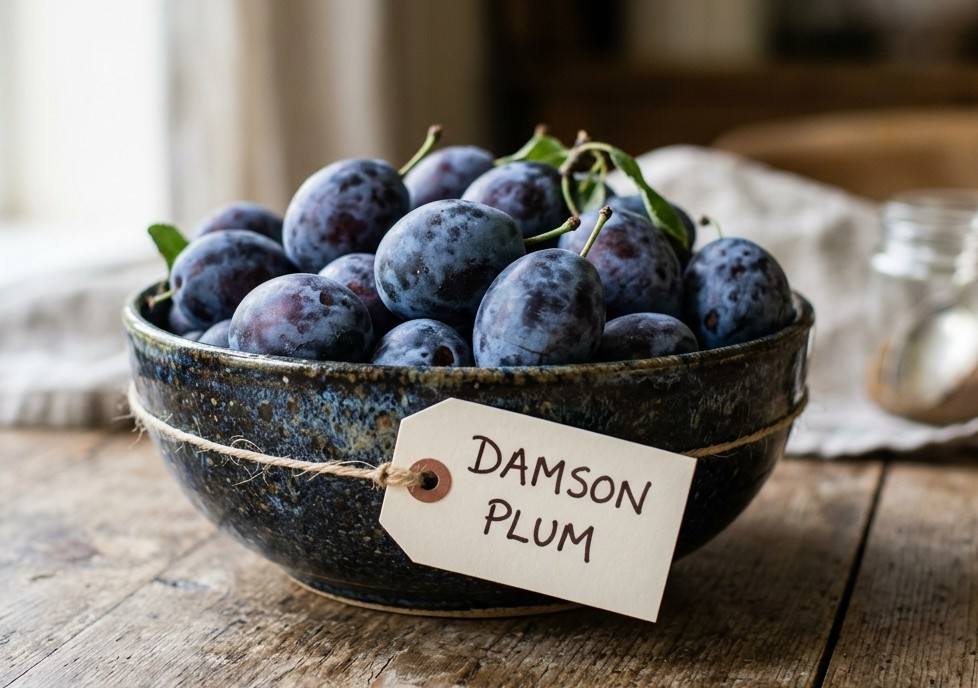
Damson plum is a small, dark-purple fruit known for its firm flesh, naturally tart flavor, and distinctive aroma. Unlike many sweet table plums, damsons are often valued for cooking because their slightly astringent flavor becomes rich and fruity when prepared into jams, preserves, sauces, pies, and other dishes.
Damson plum is a type of European plum associated with Prunus domestica and is particularly recognized as Prunus domestica subsp. insititia. Research on New Zealand damson plums has found that they contain dietary fiber, vitamins, minerals, and phenolic compounds with antioxidant activity.
Adding fresh damson plum to a balanced diet can provide fruit-based carbohydrates, fiber, potassium, vitamin C, and plant compounds. However, it is important not to consider damson plum a treatment for a medical condition.
What Is Damson Plum?
Damson plum is a small variety or subspecies of European plum with a characteristic deep blue-purple to dark-purple skin and firm flesh. Its botanical classification is generally associated with Prunus domestica subsp. insititia.
The fruit is typically smaller and more oval than many common dessert plums. It has a sweet-tart or distinctly tart taste, especially when not fully ripe, which is why it has traditionally been used in preserves and cooking rather than only eaten fresh.
Damsons are also valued for their dark color. Purple fruits can contain phenolic compounds and other phytochemicals, although the amount varies according to variety, ripeness, growing conditions, and processing.
A 2024 study of New Zealand damson plums found that ripening affected their fiber, energy, vitamin, mineral, phenolic, and antioxidant profiles. The study also found that antioxidant activity and total phenolic content were lower in fruit harvested at the advanced ripening stage than at earlier stages.
Nutrition Facts of Damson Plum
| Nutrient | Approximate amount per 100 g |
|---|---|
| Calories | 46–67 kcal |
| Water | 82–87 g |
| Carbohydrates | 11–12 g |
| Dietary fiber | 1.4–3.2 g |
| Protein | 0.7–1.0 g |
| Fat | 0.3–1.1 g |
| Sugars | About 9–10 g |
| Potassium | About 157–308 mg |
| Vitamin C | About 7.7–9.7 mg |
| Vitamin A | Small amount |
| Vitamin E | Small amount |
| Calcium | Small amount |
| Magnesium | Small amount |
| Phosphorus | Small amount |
| Zinc | Small amount |
20 Proven Health Benefits of Damson Plum
1. Provides Antioxidants: Damson plum contains phenolic compounds that contribute to antioxidant activity and help protect cells from oxidative stress.
2. Supports Digestive Health: Its dietary fiber can contribute to normal bowel function and overall digestive health.
3. May Help Maintain Regularity: The fiber and naturally occurring fruit compounds can support healthy bowel movements when consumed as part of a fiber-rich diet.
4. Supports Heart Health: Potassium and plant compounds in plums can contribute to a heart-healthy dietary pattern.
5. Provides Potassium: Damson plum supplies potassium, an essential mineral involved in fluid balance, nerve signaling, and normal muscle function.
6. Supports Immune Function: Vitamin C contributes to normal immune-system function and antioxidant protection.
7. Helps Increase Fruit Intake: Adding damson plum to meals can make it easier to include a wider variety of nutrient-rich fruits in the diet.
8. Supports Healthy Skin: Vitamin C and antioxidant compounds contribute to normal collagen formation and protection against oxidative stress.
9. May Support Bone Health: Research on plums suggests potential associations with favorable bone-health markers, although much of the evidence comes from dried plums rather than fresh damsons.
10. Provides Polyphenols: Damson plum contains phenolic compounds, including compounds associated with antioxidant activity.
11. May Support Metabolic Health: Research on Prunus fruits suggests that their polyphenols may have beneficial effects on metabolic-health markers, although more human research is needed.
12. Supports Hydration: Because fresh damson plum contains a high proportion of water, it contributes some fluid to the diet.
13. May Support Healthy Blood Pressure: Its potassium content can contribute to dietary patterns associated with healthy blood-pressure regulation.
14. Supports Normal Nerve Function: Potassium and other minerals in damson plum contribute to normal nerve and muscle function.
15. Supports Normal Muscle Function: Potassium is important for normal muscle contraction and cellular function.
16. May Help With Satiety: The combination of water, fiber, and whole-fruit structure can make fresh damson plum more filling than many highly processed sweet foods.
17. Provides Vitamin E: Damson-specific research has detected vitamin E, another nutrient involved in antioxidant protection.
18. Adds Variety to a Plant-Rich Diet: Eating different fruits provides a broader range of naturally occurring vitamins, minerals, and phytochemicals.
19. May Support Cognitive Health: Reviews of plum research have reported promising findings related to cognitive function, although stronger human studies are needed.
20. Supplies Naturally Occurring Plant Compounds: Beyond conventional nutrients, damson plum contains bioactive compounds that are being investigated for their potential role in human health.
10 Side Effects of Damson Plum
Fresh damson plum is generally suitable for most people when eaten in moderate amounts, but eating large quantities may cause digestive symptoms.
1. Stomach Discomfort: Eating a large amount at once may cause abdominal discomfort in sensitive individuals.
2. Gas and Bloating: The fruit’s carbohydrates and fiber may contribute to gas or bloating in some people.
3. Diarrhea: Excessive intake may loosen stools, particularly in people who are sensitive to fruit sugars or consume large portions.
4. Blood Sugar Considerations: Although whole fruit can fit into a balanced diet, people managing diabetes should account for its carbohydrate and natural sugar content.
5. Acidic Taste May Irritate Some People: Damsons have a naturally tart flavor that may be uncomfortable for people sensitive to acidic foods.
6. Allergy: A small number of people may experience an allergic reaction to plums or other stone fruits.
7. Oral Discomfort: The acidity of tart damsons may temporarily irritate sensitive teeth or the mouth.
8. Excess Calories From Sweetened Products: Damson jam, preserves, and desserts can contain substantially more added sugar and calories than fresh fruit.
9. Choking Risk From the Pit: The hard stone should never be swallowed because it can present a choking or gastrointestinal hazard.
10. Digestive Sensitivity: People with certain digestive disorders may notice symptoms after eating large portions of high-fiber or fermentable fruits.
How to Eat Damson Plum?
Damson plum can be eaten fresh once it is sufficiently ripe, although its naturally tart flavor means many people prefer using it in cooked preparations.
Wash the fruit thoroughly under running water and remove the stem. Cut it open and remove the hard stone before eating or cooking.
You can:
- Eat ripe damson plum as fresh fruit.
- Add chopped damson to oatmeal or porridge.
- Mix it into yogurt.
- Add it to fruit salads.
- Cook it into a compote.
- Make homemade damson jam or preserves.
- Use it in pies and crumbles.
- Make a tart fruit sauce.
- Add cooked damson to pancakes or toast.
- Dry it for longer-term use.
The stone should always be removed before eating.
Tips for Consuming Damson Plum
- Choose fruit that is mature and free from mold or significant bruising.
- Wash the fruit before eating.
- Remove the pit before consumption.
- Start with a small portion if you have not eaten damsons before.
- Eat fresh damson with yogurt, oats, nuts, or another balanced food.
- Avoid relying heavily on sweetened damson jams if you are trying to limit added sugar.
- Refrigerate ripe fruit to slow deterioration.
- Use less-ripe, firmer fruit for cooking and preserves.
- If the fruit causes digestive discomfort, reduce your portion size.
- Do not eat fruit that smells fermented or shows visible mold.
Other Uses of Damson Plum
- Jam and Preserves: Damson’s strong flavor and natural acidity make it especially suitable for jams, jellies, and preserves.
- Compote: Cooked damson can be combined with water and spices to create a flavorful fruit compote.
- Pies and Desserts: Its tart flavor can balance the sweetness of pies, crumbles, cakes, and other desserts.
- Fruit Sauces: Damson can be cooked into a sauce for use with breakfast foods or savory dishes.
- Juices and Drinks: The fruit can be processed into juices, syrups, and other beverages.
- Chutneys: Damson can be combined with vinegar, spices, and other ingredients to make a sweet-tart chutney.
- Drying: Some damson fruits can be dried and used as a concentrated fruit ingredient.
- Purees: Cooked damsons can be blended into a puree for desserts, sauces, or breakfast dishes.
Damsons have historically been particularly valued for preserves because their firm flesh and tart flavor work well during cooking.
How Much Damson Plum Can You Eat in a Day?
For most healthy adults, around 100–150 g of fresh damson plum per day is a practical portion as part of a varied diet.
This is roughly one small serving of fruit, although the exact number of damsons depends on their size.
There is no established medical dosage for fresh damson plum. If you are increasing your fruit intake, start with a smaller serving and increase gradually according to your digestive tolerance.
Best Time to Eat Damson Plum
There is no scientifically established “best time” to eat fresh damson plum.
You can enjoy it:
- With breakfast
- As a mid-morning snack
- With lunch
- As an afternoon snack
- Alongside yogurt or oats
- As part of a balanced dessert
Eating it during the day may be convenient because the fruit can be easily incorporated into meals and snacks. For people with sensitive digestion, eating a moderate portion with a meal may be more comfortable than consuming a large quantity on an empty stomach.
Who Should Eat Damson Plum?
- Healthy Adults: Fresh damson plum can be a nutritious addition to a balanced diet for most healthy adults.
- People Looking for More Fiber: Those trying to increase dietary fiber can include damson alongside vegetables, whole grains, legumes, and other fruits.
- People Seeking Potassium-Rich Foods: Damson can contribute potassium as part of a varied diet.
- People Who Enjoy Tart Fruits: Its naturally sweet-tart flavor makes it a useful alternative to very sweet fruits and desserts.
- People Following a Plant-Rich Diet: Damson adds another source of fruit-based nutrients and phytochemicals.
- People Looking for a Lower-Calorie Dessert: Fresh damson can be used instead of some highly processed sweet foods.
Who Should Not Eat Damson Plum?
- People With a Plum Allergy: Anyone with a known allergy to plums or relevant stone fruits should avoid damson unless their healthcare professional has advised otherwise.
- People With Significant Digestive Sensitivity: Those who repeatedly develop bloating, diarrhea, or abdominal pain after eating plums may need to limit or avoid them.
- People With Difficulty Swallowing Fruit Pits: The hard stone must always be removed before eating.
- People Following a Medically Prescribed Diet: Those on a specific carbohydrate, potassium, or other therapeutic diet should follow their healthcare professional’s individualized guidance.
- People With Symptoms After Eating Stone Fruits: Recurrent mouth, throat, skin, or gastrointestinal symptoms after eating stone fruits should be discussed with a healthcare professional.
How to Store Damson Plum?
- Unripe Damsons: Keep firm, unripe fruit at room temperature until it reaches the desired ripeness.
- Ripe Damsons: Refrigerate ripe fruit to slow spoilage and preserve quality.
- Wash Before Eating: Wash the fruit immediately before consumption rather than storing it wet.
- Use Refrigerated Fruit Promptly: Check stored damsons regularly and discard fruit showing mold or significant deterioration.
- Freeze for Longer Storage: Pitted damsons can be frozen for later use in cooking and desserts.
- Store Prepared Damson Safely: Refrigerate homemade compotes, sauces, and other cooked preparations in appropriate sealed containers.
- Dry for Extended Storage: Properly dried fruit can last substantially longer than fresh fruit when stored in suitable conditions.
Precautions and Interactions
- Remove the Pit: Always remove the hard stone before eating because it is not an edible part of the fruit.
- Watch Portion Size: Large servings may cause digestive discomfort in some people.
- Consider Added Sugar: Damson jams, syrups, and desserts can contain considerable amounts of added sugar compared with fresh fruit.
- Diabetes Management: If you monitor blood glucose, include damson in your overall carbohydrate plan rather than treating it as a sugar-free food.
- Kidney-Related Diets: People who have been prescribed a potassium-restricted diet should ask their healthcare professional whether damson fits their individual plan.
- Allergy Precaution: Stop eating the fruit and seek appropriate medical advice if symptoms suggest an allergic reaction.
- Medication Considerations: Fresh damson is a food, not a drug, but people taking medicines as part of a medically restricted diet should discuss significant dietary changes with their healthcare professional.
- Do Not Substitute for Treatment: Damson plum should not replace prescribed treatment for diabetes, cardiovascular disease, digestive disorders, or other medical conditions.
- Choose Fresh Fruit Carefully: Avoid moldy, rotten, or visibly spoiled damsons because spoilage can make fruit unsafe.
- Pregnancy and Breastfeeding: Fresh damson plum can generally be included as a normal fruit serving, but pregnant or breastfeeding individuals with allergies, digestive problems, or medically restricted diets should follow individualized healthcare advice.
Damson Plum and Antioxidants
One of the most interesting aspects of damson plum is its phytochemical profile. Research on New Zealand damsons has demonstrated antioxidant activity and found that total phenolic content changes as the fruit ripens.
Plums in general contain phenolic compounds such as chlorogenic-acid-related compounds and flavonoids. These compounds are being investigated for antioxidant and other biological activities.
However, antioxidant activity measured in a laboratory does not automatically mean that eating the fruit will prevent or treat a particular disease. More human research specifically involving damson plum is needed.
Fresh Damson Plum vs. Dried Damson Plum
Fresh and dried damsons should not be considered nutritionally identical.
Fresh damson contains substantial water and has a relatively low energy density. Drying removes water and concentrates sugars, calories, and other nutrients. Research on dried plums, commonly known as prunes, has found notable amounts of fiber, sorbitol, potassium, and phenolic compounds, with evidence particularly related to bowel regularity.
Therefore, if you are watching calories or carbohydrate intake, fresh damson is generally easier to portion than dried fruit.
Final Thoughts
Damson plum is a distinctive European plum recognized for its dark-purple skin, firm texture, and pleasantly tart flavor. It provides fiber, potassium, vitamin C, and various plant compounds, while damson-specific research has demonstrated antioxidant activity and changes in nutritional composition during ripening.
For most people, fresh damson can be enjoyed as part of a varied, fruit-rich diet. Eating it fresh or using it in minimally sweetened recipes allows you to enjoy its characteristic flavor without adding large amounts of sugar.
The strongest evidence for health effects comes from research on plums more broadly, and more clinical research specifically on damson plum is needed before making strong disease-prevention or treatment claims.
FAQ’s
What is Damson Plum good for?
Damson plum provides fiber, potassium, vitamin C, and antioxidant plant compounds that can support overall digestive and nutritional health.
Can you eat Damson Plum raw?
Yes, ripe damson plums can be eaten raw after washing and removing the hard pit, although their tart flavor makes them particularly popular in cooked dishes.
Is Damson Plum healthy?
Yes, fresh damson plum can be a nutritious addition to a balanced diet because it provides fruit-based fiber, vitamins, minerals, water, and plant compounds.
Is Damson Plum good for digestion?
Yes, its dietary fiber can support normal bowel function and digestive health when consumed as part of a balanced, fiber-rich diet.
Is Damson Plum good for constipation?
The fiber and water naturally present in fresh damson plum may help support regular bowel movements, although it should not be considered a treatment for chronic constipation.
Is Damson Plum good for weight loss?
Fresh damson plum can fit into a weight-management diet because it is relatively low in calories and provides water and fiber, which may contribute to fullness.
Does Damson Plum have a lot of sugar?
Damson plum contains naturally occurring fruit sugars, but the amount varies with variety and ripeness; fresh fruit generally contains considerably less added sugar than damson jams and preserves.
Is Damson Plum good for diabetes?
Fresh damson can be included in a diabetes-friendly eating pattern in an appropriate portion, but people managing blood glucose should account for its carbohydrate content.
Is Damson Plum good for the heart?
Damson plum provides potassium and polyphenols that can contribute to a heart-healthy diet, although eating damson alone has not been proven to prevent heart disease.
Does Damson Plum contain vitamin C?
Yes, fresh damson plum contains vitamin C, although the amount varies according to variety, ripeness, and growing conditions.
Does Damson Plum have antioxidants?
Yes, research on damson plum has identified phenolic compounds and antioxidant activity, with levels changing during the ripening process.
Can you eat Damson Plum during pregnancy?
Fresh damson plum can generally be eaten during pregnancy as part of a balanced diet, provided it is properly washed and the pit is removed.
Can children eat Damson Plum?
Yes, children can generally eat appropriately prepared ripe damson plum, but the hard pit must be completely removed to reduce choking and ingestion risks.
What does Damson Plum taste like?
Damson plum usually has a distinctive sweet-tart, tangy flavor that is often more acidic and less sweet than common dessert plums.
What is the difference between Damson Plum and regular Plum?
Damson plums are generally smaller, firmer, more oval, and more tart than many common European dessert plums, making them especially popular for cooking and preserving.
Can Damson Plum help with constipation?
Its dietary fiber may support bowel regularity, particularly when combined with adequate fluid intake and an overall high-fiber diet.
Can you eat the skin of Damson Plum?
Yes, the skin is edible after thorough washing and contains some of the fruit’s naturally occurring plant compounds.
Can you eat the Damson Plum pit?
No. The hard pit should be removed and discarded rather than eaten.
Can Damson Plum be frozen?
Yes, damson plums can be washed, pitted, and frozen for later use in cooking, smoothies, sauces, and desserts.
Is Damson Plum acidic?
Damson plum has a naturally tart and acidic flavor, particularly when it is less ripe.
Can Damson Plum cause stomach problems?
Eating large amounts may cause bloating, gas, abdominal discomfort, or loose stools in some people because of its fiber and naturally occurring carbohydrates.
Is Damson Plum the same as a prune?
No. Damson is a type of plum, while the term prune generally refers to a plum that has been dried, particularly varieties suited to drying.
Is Damson Plum good for skin?
Its vitamin C and antioxidant plant compounds can contribute to overall nutritional support for healthy skin, although eating damson is not a treatment for skin conditions.
Is Damson Plum good for the kidneys?
Damson provides potassium and fluid, but people with kidney disease or potassium restrictions should follow their healthcare professional’s dietary advice rather than increasing damson intake specifically.
What is Damson Plum used for?
Damson plum is commonly used for jams, jellies, preserves, pies, crumbles, compotes, sauces, chutneys, beverages, and other cooked preparations.
Can I eat Damson Plum every day?
Yes, most healthy adults can eat Damson Plum every day in a moderate portion as part of a balanced diet.
Sources / References:
Disclaimer:
This guide is for general informational purposes only and does not replace professional medical advice, diagnosis, or treatment. Consult a qualified healthcare professional before making significant dietary changes, especially if you have a medical condition or take medications.
Also Read:
3 thoughts on “Damson Plum: 20 Benefits, Side Effects & How Much to Eat”