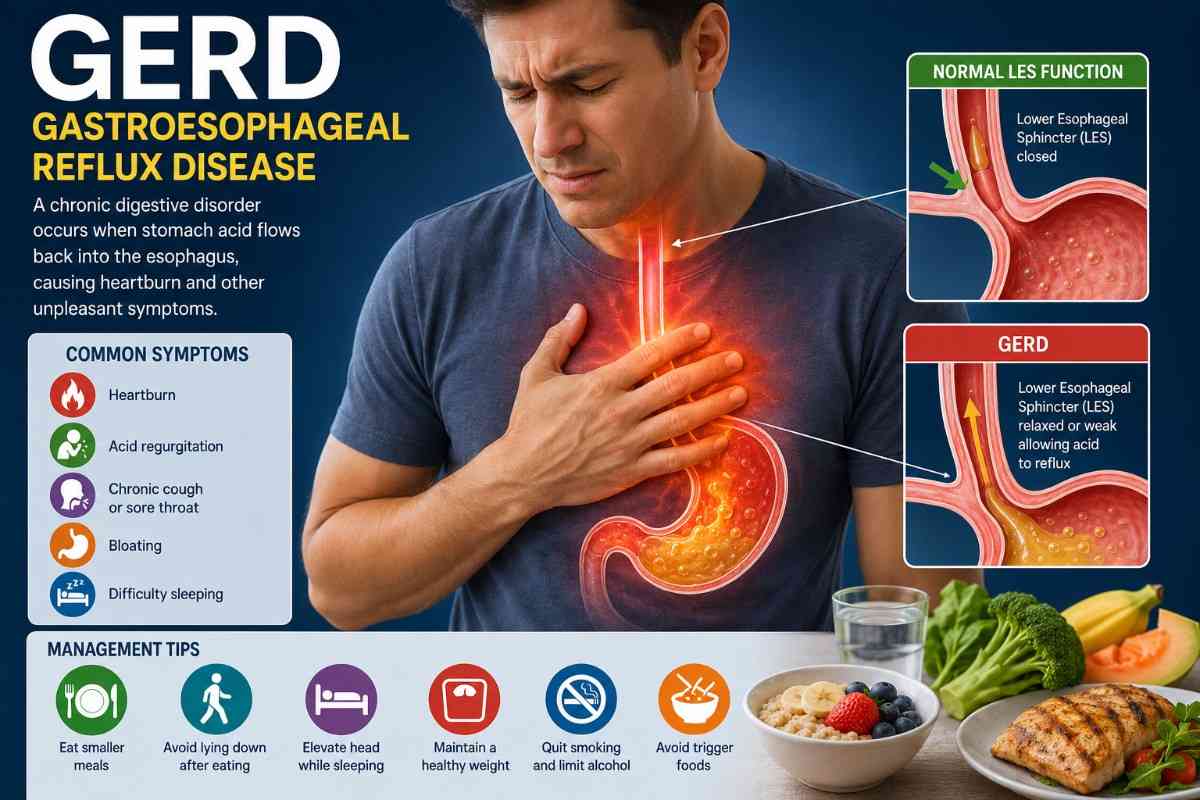
Gastroesophageal Reflux Disease (GERD) is one of the most common digestive disorders affecting millions of people worldwide. While occasional acid reflux after a heavy or spicy meal is normal, frequent reflux can damage the lining of the esophagus and significantly affect your quality of life. Persistent heartburn, chest discomfort, sour-tasting regurgitation, and difficulty swallowing are just a few symptoms that may indicate GERD rather than simple indigestion.
This guide explains what GERD is, why it happens, its symptoms, causes, diagnosis, and the available treatment options based on current medical evidence.
What Is Gastroesophageal Reflux Disease (GERD)?
Gastroesophageal Reflux Disease (GERD) is a chronic digestive condition in which stomach acid, digestive enzymes, or stomach contents repeatedly flow backward into the esophagus—the tube that carries food from the mouth to the stomach.
Normally, a muscular valve called the lower esophageal sphincter (LES) opens to allow food into the stomach and then closes tightly. In people with GERD, the LES becomes weak or relaxes at inappropriate times, allowing acidic stomach contents to move upward into the esophagus.
Unlike the stomach, the esophagus does not have a protective lining against acid. Repeated exposure can lead to inflammation, irritation, ulcers, and, in some cases, more serious complications if left untreated.
Occasional acid reflux is common and usually harmless. Gastroesophageal Reflux Disease is diagnosed when reflux occurs frequently—typically more than twice a week—or causes ongoing symptoms or tissue damage.
Symptoms of GERD
Symptoms vary from person to person. Some individuals experience only mild discomfort, while others develop persistent symptoms that interfere with daily life.
1. Heartburn
Heartburn is the hallmark symptom of Gastroesophageal Reflux Disease. It causes a burning sensation behind the breastbone that often worsens after eating, lying down, or bending over.
2. Acid Regurgitation
Many people notice a sour, bitter, or acidic taste in the mouth caused by stomach acid flowing back into the throat.
3. Chest Pain
GERD can sometimes cause chest pain that resembles heart-related pain. Because chest pain may also signal a medical emergency, sudden or severe chest pain should always be evaluated promptly.
4. Difficulty Swallowing
Inflammation or narrowing of the esophagus may make swallowing uncomfortable or difficult.
5. Chronic Cough
Persistent reflux may irritate the throat and airways, resulting in a long-lasting cough, especially at night.
6. Hoarseness
Repeated exposure to stomach acid can inflame the vocal cords, leading to morning hoarseness or voice changes.
7. Sore Throat
Some individuals experience frequent throat irritation, particularly upon waking.
8. Feeling of a Lump in the Throat
Gastroesophageal Reflux Disease may create the sensation that something is stuck in the throat, even when nothing is present.
9. Nausea
Some people experience mild nausea, especially after meals.
10. Poor Sleep
Nighttime reflux can interrupt sleep and reduce overall sleep quality.
Causes of GERD
Gastroesophageal Reflux Disease develops due to a combination of mechanical, dietary, and lifestyle factors that allow stomach contents to flow backward into the esophagus.
1. Weak Lower Esophageal Sphincter (LES)
The most common cause is a weakened or poorly functioning LES, which fails to keep stomach acid inside the stomach.
2. Hiatal Hernia
A hiatal hernia occurs when part of the stomach pushes through the diaphragm, making reflux more likely.
3. Obesity
Excess abdominal fat increases pressure inside the abdomen, promoting acid reflux.
4. Pregnancy
Hormonal changes and pressure from the growing uterus can increase reflux during pregnancy.
5. Delayed Stomach Emptying
When food remains in the stomach longer than normal, stomach pressure increases, raising the likelihood of reflux.
6. Smoking
Smoking weakens the LES and reduces saliva production, which normally helps neutralize acid.
7. Alcohol Consumption
Alcohol can relax the LES and stimulate stomach acid production.
8. Large Meals
Eating large portions stretches the stomach and increases pressure against the LES.
9. Eating Close to Bedtime
Lying down soon after eating allows stomach acid to move more easily into the esophagus.
10. Certain Medications
Some medications may worsen GERD symptoms by relaxing the LES or irritating the esophagus. These may include certain pain relievers, calcium channel blockers, sedatives, and some asthma medications. Never stop a prescribed medication without consulting your healthcare provider.
Risk Factors
Several factors increase the likelihood of developing Gastroesophageal Reflux Disease:
- Being overweight or obese
- Older age
- Pregnancy
- Smoking
- Frequent alcohol consumption
- Diet high in fatty or fried foods
- Large evening meals
- Hiatal hernia
- Certain medications
- Chronic stress
- Sedentary lifestyle
Having one or more risk factors does not necessarily mean someone will develop GERD, but the likelihood increases as these factors accumulate.
Stages of Gastroesophageal Reflux Disease
Gastroesophageal Reflux Disease can progress over time if left untreated. Although there is no universally accepted staging system for symptoms alone, healthcare providers often describe GERD progression based on the severity of esophageal damage seen during an endoscopy.
Stage 1: Mild GERD
Characteristics:
- Occasional heartburn (less than twice a week)
- Mild acid reflux after certain foods or large meals
- Little to no damage to the esophagus
- Symptoms usually improve with lifestyle changes or over-the-counter medications
Common Symptoms:
- Mild heartburn
- Sour taste in the mouth
- Occasional bloating
- Mild chest discomfort
Stage 2: Moderate GERD
Characteristics:
- Heartburn occurs several times a week
- Symptoms interfere with daily activities
- Mild inflammation (esophagitis) may develop
- Prescription medications may be needed
Common Symptoms:
- Frequent heartburn
- Acid regurgitation
- Difficulty swallowing
- Persistent cough
- Hoarseness
- Sore throat
Stage 3: Severe GERD
Characteristics:
- Daily or persistent acid reflux
- Significant inflammation and damage to the esophagus
- Symptoms may not respond well to lifestyle changes alone
- Long-term medication or specialist treatment is often required
Common Symptoms:
- Severe heartburn
- Painful swallowing
- Chest pain
- Chronic cough
- Sleep disturbances
- Frequent regurgitation
- Nausea
Stage 4: Complicated GERD
Characteristics:
- Long-term untreated Gastroesophageal Reflux Disease causes serious complications
- Significant damage to the esophagus
- May require endoscopic procedures or surgery
Possible Complications:
- Esophageal ulcers
- Esophageal strictures (narrowing)
- Barrett’s esophagus
- Increased risk of esophageal adenocarcinoma
Common Symptoms:
- Difficulty swallowing solid foods
- Unexplained weight loss
- Vomiting blood or passing black stools
- Persistent chest pain
- Chronic anemia from bleeding ulcers
Los Angeles (LA) Classification of GERD (Endoscopic Grading)
Doctors often use the Los Angeles (LA) Classification to grade esophageal damage seen during an upper endoscopy.
| Grade | Description |
|---|---|
| Grade A | One or more small erosions (less than 5 mm) confined to the mucosal folds. |
| Grade B | One or more erosions larger than 5 mm that do not extend between the tops of two mucosal folds. |
| Grade C | Erosions extend between the tops of two or more mucosal folds but involve less than 75% of the esophageal circumference. |
| Grade D | Extensive erosions involving 75% or more of the esophageal circumference; this is the most severe form of erosive esophagitis. |
How GERD Is Diagnosed?
Healthcare professionals usually diagnose GERD based on symptoms, medical history, and physical examination. If symptoms are persistent, severe, or do not improve with treatment, additional tests may be recommended.
1. Medical History and Symptom Review
The healthcare provider asks about the frequency of heartburn, regurgitation, swallowing difficulties, nighttime symptoms, medications, diet, and lifestyle habits.
2. Upper Endoscopy (EGD)
An upper endoscopy uses a flexible tube with a camera to examine the esophagus, stomach, and upper part of the small intestine. This test helps identify inflammation, ulcers, strictures, Barrett’s esophagus, or other abnormalities.
3. Esophageal pH Monitoring
This test measures how often stomach acid enters the esophagus over a 24-hour period and is considered one of the most accurate methods for confirming acid reflux.
4. Esophageal Manometry
Manometry evaluates the strength and coordination of the esophageal muscles and the lower esophageal sphincter.
5. Barium Swallow
During this imaging test, the patient drinks a barium solution that coats the digestive tract, allowing abnormalities to be seen on X-rays.
Treatments for GERD
Treatment depends on symptom severity, frequency, and the presence of complications. Most people benefit from a combination of lifestyle changes and medication.
1. Lifestyle Modifications
Lifestyle improvements are often the first step in GERD management and may significantly reduce symptoms.
Common recommendations include:
- Losing excess weight if overweight
- Eating smaller, more frequent meals
- Avoiding lying down for at least two to three hours after eating
- Sleeping with the head of the bed elevated
- Quitting smoking
- Limiting alcohol intake
- Wearing loose-fitting clothing around the waist
- Identifying and avoiding personal trigger foods
2. Over-the-Counter Medications
People with occasional symptoms may benefit from over-the-counter medications, including:
Antacids:
Antacids provide quick, short-term relief by neutralizing stomach acid but do not heal inflammation.
H2 Receptor Blockers:
These medications reduce acid production and generally provide longer-lasting relief than antacids.
Proton Pump Inhibitors (PPIs):
PPIs are among the most effective medications for healing the esophagus and controlling persistent acid reflux. They reduce stomach acid production more effectively than H2 blockers and are commonly recommended for moderate to severe GERD. Because long-term use may not be appropriate for everyone, these medications should be used under the guidance of a healthcare professional.
3. Prescription Treatments
If symptoms continue despite initial treatment, a healthcare provider may prescribe stronger acid-suppressing medications, adjust existing therapies, or investigate other underlying causes.
In selected cases where medications and lifestyle changes do not adequately control GERD—or when complications develop—surgical or endoscopic procedures may be considered. These options are typically reserved for carefully evaluated patients after consultation with a gastroenterologist.
Best Diet for GERD
Diet plays a key role in managing Gastroesophageal Reflux Disease. Although trigger foods vary from person to person, choosing nutrient-rich, minimally processed foods and eating balanced meals may help reduce symptoms. Keeping a food diary can also help identify foods that consistently worsen reflux.
Foods to Eat
The following foods are generally well tolerated by many people with Gastroesophageal Reflux Disease:
- Oatmeal, whole-grain bread, brown rice, and other whole grains
- Bananas, melons, apples, and pears
- Leafy greens, broccoli, carrots, cucumbers, green beans, and zucchini
- Lean proteins such as skinless chicken, turkey, fish, tofu, and legumes
- Low-fat or fat-free dairy products, if tolerated
- Healthy fats in moderation, including avocados, nuts, seeds, and olive oil
- Herbal teas that do not contain peppermint or caffeine (if tolerated)
- Water throughout the day to support hydration
Foods to Limit or Avoid
Some foods may relax the lower esophageal sphincter or increase stomach acid production, making reflux more likely.
Common trigger foods include:
- Fried and greasy foods
- Fatty cuts of meat
- Spicy dishes
- Tomatoes and tomato-based sauces
- Citrus fruits and citrus juices
- Chocolate
- Peppermint and spearmint
- Garlic and onions (for some people)
- Coffee and other caffeinated beverages
- Carbonated drinks
- Alcohol
- Highly processed snack foods
Not everyone reacts to the same foods. Eliminating only your personal triggers can make your diet easier to maintain while helping control symptoms.
Lifestyle Changes and Home Remedies for GERD
Many people experience noticeable improvement by combining medical treatment with healthy daily habits.
1. Eat Smaller Meals
Large meals increase pressure inside the stomach, making reflux more likely. Eating smaller portions more frequently may reduce symptoms.
2. Avoid Eating Before Bed
Finish your last meal at least two to three hours before lying down or going to sleep.
3. Maintain a Healthy Weight
If you are overweight, gradual weight loss can reduce pressure on the stomach and lower the frequency of reflux episodes.
4. Raise the Head of Your Bed
Elevating the head of the bed by about 6–8 inches may help reduce nighttime reflux. Extra pillows alone are usually less effective than raising the bed frame or using a wedge pillow.
5. Quit Smoking
Stopping smoking may improve lower esophageal sphincter function and reduce irritation of the digestive tract.
6. Limit Alcohol
Reducing alcohol intake may decrease reflux symptoms in many individuals.
7. Wear Comfortable Clothing
Avoid tight belts and clothing that increase pressure around the abdomen.
8. Manage Stress
Stress does not directly cause Gastroesophageal Reflux Disease, but it may worsen symptom perception or contribute to habits that trigger reflux, such as overeating or poor sleep. Regular exercise, adequate sleep, mindfulness, and relaxation techniques may help.
Complications of Gastroesophageal Reflux Disease
Without appropriate treatment, chronic GERD can lead to complications over time.
1. Esophagitis
Repeated exposure to stomach acid can inflame the lining of the esophagus, causing pain and difficulty swallowing.
2. Esophageal Strictures
Long-term inflammation may lead to scar tissue that narrows the esophagus, making swallowing difficult.
3. Barrett’s Esophagus
In some people, chronic acid exposure changes the cells lining the lower esophagus. This condition, known as Barrett’s esophagus, increases the risk of developing esophageal adenocarcinoma, although the overall risk remains low.
4. Esophageal Ulcers
Persistent acid reflux can cause painful sores that may bleed or make swallowing uncomfortable.
5. Respiratory Problems
Gastroesophageal Reflux Disease has been associated with chronic cough, worsening asthma symptoms in some people, recurrent throat irritation, and laryngitis.
How to Prevent GERD?
Although GERD cannot always be prevented, healthy lifestyle choices may reduce the likelihood of developing symptoms or experiencing frequent flare-ups.
- Maintain a healthy body weight.
- Eat slowly and chew food thoroughly.
- Choose smaller meal portions.
- Avoid lying down immediately after meals.
- Limit foods and beverages that trigger reflux.
- Stop smoking.
- Moderate alcohol intake.
- Stay physically active.
- Wear loose-fitting clothing around the waist.
- Follow your healthcare provider’s treatment plan if you have ongoing symptoms.
When to See a Doctor?
Seek medical advice if you:
- Experience heartburn more than twice a week.
- Have symptoms that continue despite over-the-counter treatment.
- Develop difficulty or pain when swallowing.
- Lose weight without trying.
- Notice vomiting, black stools, or signs of gastrointestinal bleeding.
- Have persistent chest pain, especially if it is accompanied by shortness of breath, dizziness, sweating, or pain spreading to the arm, jaw, neck, or back. These symptoms require immediate medical evaluation to rule out a heart-related emergency.
FAQ’s
Is GERD the same as acid reflux?
No. Acid reflux is the backward flow of stomach contents into the esophagus that can happen occasionally. Gastroesophageal Reflux Disease is a chronic condition in which reflux occurs frequently or causes complications.
Is milk good for GERD?
Low-fat or fat-free milk may be suitable for some people. Whole milk and other high-fat dairy products can worsen symptoms in certain individuals.
Can stress make GERD worse?
Stress is not considered a direct cause of Gastroesophageal Reflux Disease, but it can worsen symptoms and influence behaviors that contribute to reflux.
Is GERD dangerous?
Most cases are manageable. However, untreated Gastroesophageal Reflux Disease can lead to complications such as esophagitis, strictures, Barrett’s esophagus, and, in rare cases, esophageal cancer.
Can children develop GERD?
Yes. Infants, children, and adolescents can develop Gastroesophageal Reflux Disease Symptoms and treatment vary by age, so evaluation by a pediatric healthcare professional is important.
Can GERD be cured permanently?
Many people can successfully manage Gastroesophageal Reflux Disease with lifestyle changes, medications, and avoiding trigger foods. In severe cases, surgery may be recommended.
Is GERD dangerous if left untreated?
Untreated Gastroesophageal Reflux Disease may lead to complications such as esophagitis, esophageal ulcers, strictures, Barrett’s esophagus, and an increased risk of esophageal cancer.
Can GERD cause chest pain?
Yes. Gastroesophageal Reflux Disease can cause burning chest pain that may resemble heart-related pain. However, sudden or severe chest pain should always be evaluated immediately to rule out a heart emergency.
Can GERD affect sleep?
Yes. Nighttime acid reflux can interrupt sleep, trigger coughing, and cause throat irritation or heartburn while lying down.
Does drinking water help with GERD?
Drinking water may help wash acid back into the stomach and keep you hydrated, but it is not a substitute for medical treatment or lifestyle changes.
How do you get rid of GERD?
Gastroesophageal Reflux Disease can be managed with lifestyle changes, avoiding trigger foods, maintaining a healthy weight, eating smaller meals, and taking medications prescribed by your healthcare provider. Severe cases may require surgery.
What foods trigger GERD?
Common Gastroesophageal Reflux Disease trigger foods include fried foods, spicy dishes, chocolate, caffeine, alcohol, carbonated drinks, tomatoes, citrus fruits, peppermint, onions, garlic, and high-fat meals.
What does Stage 1 GERD feel like?
Stage 1 Gastroesophageal Reflux Disease typically causes mild, occasional heartburn, acid regurgitation, a sour taste in the mouth, bloating, or mild chest discomfort, often after eating or lying down.
How long can GERD last?
Gastroesophageal Reflux Disease is usually a chronic condition. Symptoms may come and go, but they can persist for months or years if not properly managed.
Can GERD cause permanent damage?
Yes. Untreated Gastroesophageal Reflux Disease can lead to complications such as esophagitis, esophageal strictures, Barrett’s esophagus, and, in rare cases, an increased risk of esophageal cancer.
What does Stage 4 GERD feel like?
Stage 4 Gastroesophageal Reflux Disease may cause severe heartburn, difficulty swallowing, persistent chest pain, chronic cough, unexplained weight loss, and symptoms related to complications such as ulcers or Barrett’s esophagus.
Is GERD curable?
There is no guaranteed permanent cure for Gastroesophageal Reflux Disease in every case. However, many people successfully control their symptoms through lifestyle changes, medications, and, when appropriate, surgery.
Sources / References:
- National Institute of Diabetes and Digestive and Kidney Diseases (NIDDK)
- Mayo Clinic
- Cleveland Clinic
- American College of Gastroenterology (ACG)
- National Institutes of Health (NIH)
- NHS
- MedlinePlus
About the Author:
Written by: Kirti Solanki (Health Content Researcher)
Kirti Solanki is a Health Content Researcher who creates evidence-based, easy-to-understand health content using trusted medical sources to help readers make informed wellness decisions.
Disclaimer:
This guide is for informational purposes only and is not a substitute for professional medical advice, diagnosis, or treatment. Always consult a qualified healthcare provider for personalized medical guidance.
Also Read: