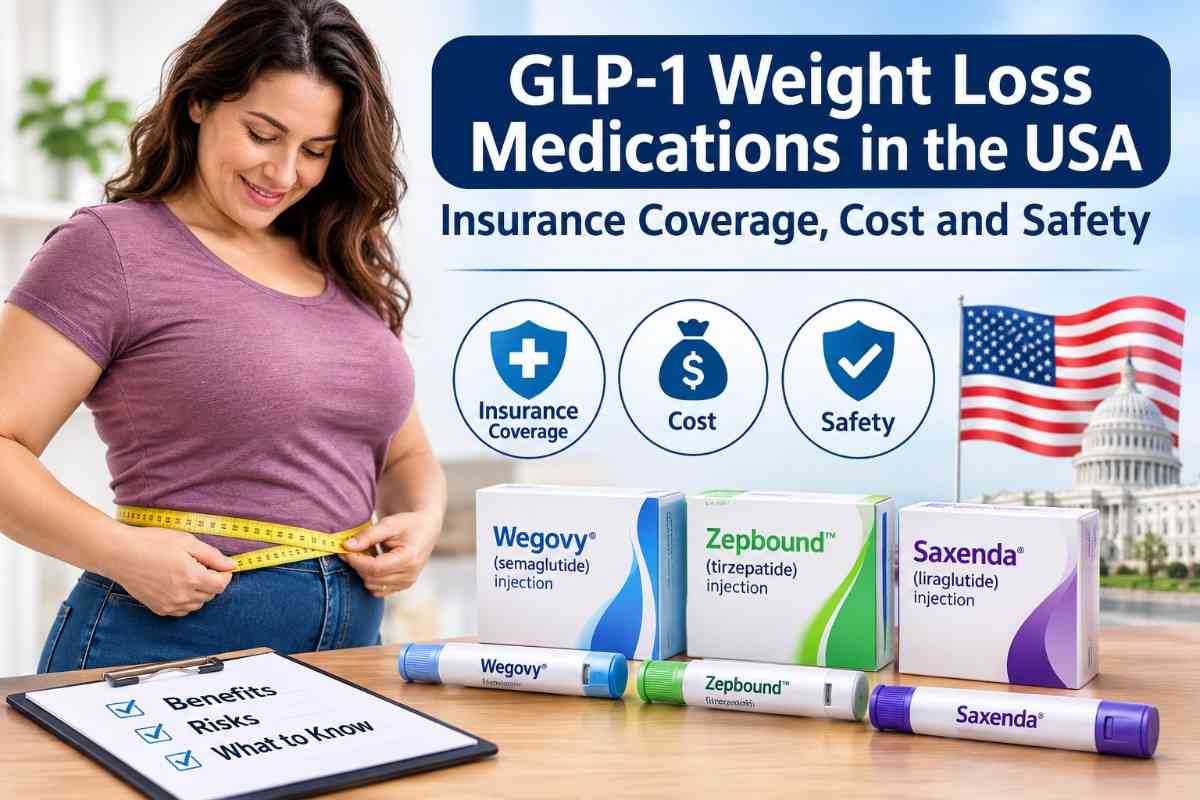
GLP-1 weight loss medications have become one of the most discussed treatments for obesity in the United States. Medicines such as Wegovy, Zepbound, and Saxenda are changing how doctors approach long-term weight management. They can help people lose significant amounts of weight, reduce appetite, and improve certain obesity-related health conditions.
However, getting these medications is not always straightforward. The cost can be expensive without insurance, coverage varies between health plans, and these treatments come with potential side effects and safety considerations.
In 2026, Americans considering GLP-1 medications need to understand more than just their weight-loss potential. They should also know how much treatment costs, whether insurance pays for it, what happens when treatment stops, and who should avoid these medications.
This guide explains how GLP-1 weight loss medications work in the USA, their estimated costs, insurance coverage, benefits, risks, and important considerations before starting treatment.
What Are GLP-1 Weight Loss Medications?
GLP-1 stands for glucagon-like peptide-1. It is a natural hormone produced in the intestine that helps regulate blood sugar, appetite, and digestion.
GLP-1 medications work by activating receptors that help the body control hunger and food intake. They can:
- Reduce appetite and food cravings.
- Help people feel full for longer.
- Slow down stomach emptying.
- Improve blood sugar regulation.
- Support long-term weight management when combined with lifestyle changes.
Some newer medications, such as tirzepatide, activate two hormone receptors: GLP-1 and GIP. These medications are sometimes called dual GIP/GLP-1 receptor agonists.
GLP-1 medications are not simply appetite suppressants. They affect several processes involved in weight regulation and metabolic health.
Popular GLP-1 Weight Loss Medications in the USA in 2026
Several prescription medications are available in the United States for weight management. However, not every GLP-1 medication is approved specifically for weight loss.
| Medication | Active ingredient | How it works |
|---|---|---|
| Wegovy | Semaglutide | GLP-1 receptor agonist |
| Zepbound | Tirzepatide | Dual GIP/GLP-1 receptor agonist |
| Saxenda | Liraglutide | GLP-1 receptor agonist |
| Ozempic | Semaglutide | Primarily approved for type 2 diabetes |
| Mounjaro | Tirzepatide | Primarily approved for type 2 diabetes |
Important distinction: Wegovy, Zepbound, and Saxenda have FDA-approved weight-management indications. Ozempic and Mounjaro are diabetes medications, not interchangeable weight-loss prescriptions. A medication’s approved uses depend on its specific product label.
1. Wegovy (Semaglutide)
Wegovy is a prescription medication used for chronic weight management in eligible adults and certain adolescents. It is available as a weekly injection and, in 2026, an oral tablet formulation.
It helps reduce appetite, increases feelings of fullness, and supports long-term weight reduction when used with a reduced-calorie diet and increased physical activity.
2. Zepbound (Tirzepatide)
Zepbound is a prescription medication that activates both GIP and GLP-1 receptors. It is administered as a weekly injection.
It is approved for chronic weight management in adults with obesity or overweight accompanied by at least one weight-related health condition. It is also approved for certain adults with obesity and moderate-to-severe obstructive sleep apnea.
3. Saxenda (Liraglutide)
Saxenda is a daily injectable medication that activates GLP-1 receptors. It helps control hunger and supports weight management alongside lifestyle changes.
Unlike Wegovy and Zepbound, Saxenda requires daily injections.
4. Ozempic and Mounjaro
Ozempic and Mounjaro are primarily prescribed for type 2 diabetes. Although people may experience weight loss while taking them, their diabetes formulations are not FDA-approved specifically as weight-loss medications.
For obesity treatment, healthcare professionals may consider medications with approved weight-management indications.
Who Qualifies for GLP-1 Weight Loss Medications?
Not everyone who wants to lose weight qualifies for prescription GLP-1 treatment.
In the United States, eligibility depends on the specific medication, medical history, age, and FDA-approved indications.
Common eligibility criteria for adult weight-management treatment include:
- BMI of 30 or higher: Adults with obesity may qualify for certain prescription weight-management medications.
- BMI of 27 or higher: Adults who are overweight and have at least one weight-related health condition may qualify.
- Weight-related conditions: These may include high blood pressure, type 2 diabetes, high cholesterol, or obstructive sleep apnea, depending on the medication.
- Medical evaluation: A healthcare professional reviews medical history, current medications, health risks, and treatment goals.
BMI is only one part of the assessment. A doctor should determine whether the potential benefits of treatment outweigh the risks.
GLP-1 Weight Loss Medication Insurance Coverage in the USA in 2026
Insurance coverage is one of the biggest concerns for Americans considering GLP-1 medications.
Having health insurance does not automatically mean that Wegovy, Zepbound, or Saxenda will be covered. Many insurance companies distinguish between medications prescribed for diabetes and those prescribed specifically for obesity.
For example, a health plan may cover Ozempic for type 2 diabetes but refuse to cover it when prescribed solely for weight loss.
According to 2026 insurance coverage tracking by GoodRx, coverage for obesity medications remains restrictive across many commercial health plans. Many patients must also meet additional requirements before receiving approval. GoodRx
1. Private and Employer-Sponsored Health Insurance
Private insurance coverage varies significantly between companies and individual plans.
Some employer-sponsored health plans cover FDA-approved obesity medications, while others exclude weight-loss drugs entirely.
Even when coverage is available, patients may need to meet requirements such as:
- Prior authorization from the insurance company.
- A documented BMI within the medication’s eligibility criteria.
- Evidence of a weight-related health condition.
- Medical records showing previous weight-management efforts.
- Participation in a supervised weight-management program.
- Step therapy, meaning trying another treatment before receiving the requested medication.
Some employers have also reduced or removed obesity medication benefits because of their high costs.
2. Medicare Coverage for GLP-1 Medications
Medicare coverage for GLP-1 medications depends on the reason the medication is prescribed.
Historically, Medicare Part D generally excluded drugs used solely for weight loss. However, 2026 introduced an important development.
2026 update
Medicare GLP-1 Bridge Program
Starting July 1, 2026, the Medicare GLP-1 Bridge program provides eligible beneficiaries access to certain weight-management medications for a $50 monthly copayment.
The program includes:
- Wegovy (injection or tablet).
- Foundayo (tablet).
- Zepbound KwikPen.
The program does not cover every formulation of these medications. For example, Zepbound single-dose pens and vials are excluded from this particular program.
Eligibility requirements apply, including Medicare Part D enrollment and clinical criteria. Not every Medicare beneficiary automatically qualifies. Medicare
Medicare Part D may also cover certain GLP-1 medications for other FDA-approved medical indications, such as type 2 diabetes or qualifying cardiovascular conditions, subject to the applicable coverage rules.
3. Medicaid Coverage
Medicaid coverage for weight-loss medications varies by state.
Some state Medicaid programs cover certain GLP-1 medications for obesity treatment, while others do not.
Coverage may depend on:
- State Medicaid policies.
- Medical eligibility.
- The specific medication.
- Prior authorization requirements.
- Whether the prescription is for obesity, diabetes, or another approved condition.
KFF’s January 2026 analysis explains that states generally have the option to exclude weight-loss drugs from Medicaid coverage, even though coverage rules differ for other approved medical indications.
4. Affordable Care Act Marketplace Plans
ACA Marketplace plans do not all provide the same coverage for obesity medications.
Some plans may cover specific GLP-1 medications, while others exclude weight-loss treatment or impose strict authorization requirements.
People purchasing individual health insurance should review the prescription drug formulary before choosing a plan.
Insurance Coverage Comparison in 2026
| Insurance type | GLP-1 weight-loss coverage |
|---|---|
| Employer-sponsored insurance | Depends on employer and plan |
| Private insurance | Depends on policy and formulary |
| Medicare | Limited coverage, including the 2026 Bridge program for eligible beneficiaries |
| Medicaid | Varies by state |
| ACA Marketplace | Depends on the selected plan |
Tip: Before starting treatment, call the number on your insurance card and ask whether your plan covers the specific medication for obesity treatment, not just diabetes.
How Much Do GLP-1 Weight Loss Medications Cost in the USA in 2026?
The cost of GLP-1 medications can vary depending on the drug, dosage, pharmacy, insurance coverage, and manufacturer savings programs.
Without insurance, some branded weight-loss medications can cost hundreds or more than $1,000 per month.
However, manufacturer-direct payment options have changed the prices available to certain self-paying patients in 2026.
Estimated GLP-1 Medication Costs
| Medication | Approximate cost considerations |
|---|---|
| Wegovy | Depends on formulation, dose, and payment program |
| Zepbound | Discounted self-pay KwikPen options start at $299 monthly |
| Saxenda | Depends on pharmacy pricing and available discounts |
| Ozempic | Varies by pharmacy and insurance |
| Mounjaro | Varies by pharmacy and insurance |
These are not guaranteed checkout prices. Insurance deductibles, pharmacy charges, eligibility restrictions, and savings-program conditions can change the final amount.
Zepbound Self-Pay Prices in 2026
According to the manufacturer’s published 2026 pricing information, eligible self-paying patients may access Zepbound KwikPen at the following monthly prices:
| Zepbound dosage | Published self-pay price |
|---|---|
| 2.5 mg | $299 |
| 5 mg | $399 |
| 7.5 mg | $499 |
| 10 mg | $699 |
| 12.5 mg | $699 |
| 15 mg | $699 |
Certain manufacturer offers may reduce the price for eligible patients. These offers have specific conditions and expiration dates. The 2.5 mg dose is a starting dose, not an approved maintenance dose.
For the latest pricing and eligibility details, visit the official Zepbound savings and insurance page.
Why Are GLP-1 Medications So Expensive?
Several factors contribute to the high cost of these medications:
- Brand-name pricing: Many popular obesity medications are branded prescription products.
- Manufacturing: Producing injectable medications requires specialized manufacturing and quality controls.
- Long-term treatment: Many patients need ongoing treatment to maintain weight loss.
- Insurance restrictions: Patients without coverage may have to pay the full price.
- Dosage and formulation: Different strengths and delivery methods can have different prices.
How to Reduce the Cost of GLP-1 Medications
Americans may have several options for reducing prescription expenses:
- Check whether their health insurance covers obesity treatment.
- Ask their doctor about manufacturer savings programs.
- Compare prices at licensed pharmacies.
- Review eligible self-pay options through manufacturer-direct pharmacies.
- Ask about alternative FDA-approved medications.
- Check whether their employer offers a weight-management benefit.
Avoid purchasing prescription weight-loss injections from unverified websites or social media sellers. Cheap products may be counterfeit, improperly stored, or incorrectly labeled.
How Effective Are GLP-1 Medications for Weight Loss?
GLP-1 medications can produce meaningful weight loss, but results vary from person to person.
Clinical trials have shown that some medications can help people lose a substantial percentage of their starting body weight when combined with lifestyle changes.
| Medication | Weight-loss findings from clinical trials |
|---|---|
| Wegovy (semaglutide) | Approximately 15% average weight reduction in a major trial |
| Zepbound (tirzepatide) | Approximately 15%–21% average weight reduction, depending on dosage |
| Saxenda (liraglutide) | Approximately 5%–8% average weight reduction |
These figures are approximate trial results, not guaranteed outcomes. The studies used different populations, treatment durations, and methods, so the percentages should not be interpreted as a direct head-to-head comparison.
What Factors Affect Weight Loss?
Several factors can influence how much weight a person loses while taking GLP-1 medication:
- Starting body weight and BMI.
- Medication type and prescribed dosage.
- Treatment duration.
- Eating habits and daily calorie intake.
- Physical activity and exercise.
- Sleep quality and stress levels.
- Other medical conditions and medications.
- Individual response to treatment.
Some people experience noticeable weight loss within the first few months, while others need more time to see meaningful changes.
Potential Health Benefits of GLP-1 Weight Loss Medications
GLP-1 medications may provide health benefits beyond reducing body weight. Depending on the medication and the patient’s medical condition, potential benefits include:
- Reduced appetite: Helps decrease hunger and makes it easier to manage food intake.
- Better portion control: Promotes feelings of fullness after eating smaller meals.
- Improved blood sugar levels: Helps regulate glucose levels, particularly in people with type 2 diabetes.
- Better cardiovascular health: Wegovy has an approved indication for reducing certain major cardiovascular events in eligible adults with established cardiovascular disease and obesity or overweight.
- Improved blood pressure: Weight reduction may contribute to healthier blood pressure levels.
- Better cholesterol levels: Weight loss may improve certain cholesterol and triglyceride measurements.
- Improved sleep apnea: Zepbound is approved for moderate-to-severe obstructive sleep apnea in adults with obesity.
- Reduced obesity-related health risks: Losing excess weight may help improve several weight-related health conditions.
These benefits are not identical across all GLP-1 medications. Their approved uses and supporting evidence differ.
GLP-1 Medication Side Effects and Safety Concerns
Although GLP-1 medications can be effective, they are not free from side effects.
Most commonly reported side effects involve the digestive system, particularly when someone starts treatment or increases the dosage.
Common Side Effects
| Side effect | What it may feel like |
|---|---|
| Nausea | Feeling sick or uncomfortable in the stomach |
| Vomiting | Throwing up after eating or taking medication |
| Diarrhea | Frequent loose or watery stools |
| Constipation | Difficulty passing stools |
| Abdominal pain | Stomach discomfort or cramps |
| Bloating | Feeling unusually full or swollen |
| Heartburn | Burning sensation in the chest or throat |
| Fatigue | Feeling unusually tired |
| Belching | Frequent burping |
| Headache | Mild or moderate head pain |
These symptoms are often more noticeable during dose increases and may improve as the body adjusts.
Serious Risks You Should Know About
Some less common but potentially serious complications require medical attention.
1. Pancreatitis: Inflammation of the pancreas can cause severe, persistent abdominal pain, sometimes spreading to the back.
2. Gallbladder Problems: Rapid weight loss and GLP-1 treatment may be associated with gallstones or gallbladder inflammation.
3. Kidney Problems: Severe vomiting or diarrhea can cause dehydration, which may contribute to acute kidney injury.
4. Severe Digestive Problems: Some patients experience serious gastrointestinal reactions. These medications are not recommended for people with severe gastroparesis.
5. Hypoglycemia: Low blood sugar is more likely when GLP-1 medications are combined with insulin or certain diabetes medications.
6. Allergic Reactions: Serious allergic reactions can occur, including swelling, breathing difficulties, or anaphylaxis.
7. Increased Heart Rate: Some patients may experience an increase in resting heart rate.
8. Aspiration Risk During Anesthesia: Delayed stomach emptying may increase the risk of stomach contents entering the lungs during general anesthesia or deep sedation. Patients should inform their surgical and anesthesia teams about GLP-1 treatment.
9. Diabetic Retinopathy Complications: People with type 2 diabetes and existing diabetic eye disease may need additional monitoring, particularly when blood sugar improves rapidly.
10. Thyroid C-Cell Tumor Warning: Animal studies have identified thyroid C-cell tumors with semaglutide and tirzepatide. The relevance to humans is unknown, but these medications carry a boxed warning.
The thyroid-related warning means Wegovy and Zepbound should not be used by people with a personal or family history of medullary thyroid carcinoma (MTC) or those with Multiple Endocrine Neoplasia syndrome type 2 (MEN 2).
For complete safety information, see the official Wegovy FDA prescribing information and Zepbound prescribing information.
When Should You Seek Medical Attention?
Contact a healthcare professional if you experience:
- Severe or persistent stomach pain.
- Repeated vomiting or inability to keep fluids down.
- Signs of dehydration, such as very little urine or dizziness.
- Severe constipation or abdominal swelling.
- Symptoms of low blood sugar.
- Pain in the upper abdomen accompanied by fever or jaundice.
Seek emergency medical care for breathing difficulties, facial or throat swelling, or other signs of a severe allergic reaction.
Who Should Avoid GLP-1 Weight Loss Medications?
GLP-1 medications are not suitable for everyone. A doctor should review medical history and individual risks before prescribing treatment.
People who should generally avoid certain GLP-1 medications or receive additional medical evaluation include:
- People with a personal or family history of medullary thyroid carcinoma: Wegovy and Zepbound are contraindicated in these individuals.
- People with MEN 2: These medications carry a contraindication for this inherited endocrine condition.
- Pregnant women: Weight-loss medications should not be used for weight reduction during pregnancy.
- People planning pregnancy: Semaglutide should generally be discontinued at least two months before a planned pregnancy.
- People with a history of pancreatitis: A healthcare professional should carefully assess the potential risks.
- People with severe gastroparesis: These medications may worsen delayed stomach emptying.
- People with serious allergic reactions to the medication: Known serious hypersensitivity is a reason not to use the affected product.
- People taking another GLP-1 medication: Combining these treatments is generally not recommended.
- People with certain kidney or digestive conditions: Individual assessment and monitoring may be necessary.
Can Pregnant or Breastfeeding Women Take GLP-1 Medications?
GLP-1 weight-loss medications are not intended for weight reduction during pregnancy.
If pregnancy occurs while taking a medication such as Wegovy, contact the prescribing healthcare professional promptly. Semaglutide should be stopped when pregnancy is recognized when being used for weight reduction or cardiovascular risk reduction.
For people planning pregnancy, semaglutide should be discontinued at least two months beforehand.
Breastfeeding recommendations differ by medication and formulation. Patients should discuss the specific product label and available safety evidence with their healthcare professional before starting treatment.
What Happens When You Stop Taking GLP-1 Medications?
One important question people often overlook is what happens after treatment ends.
GLP-1 medications help regulate appetite and food intake. When someone stops taking them, these effects gradually decrease.
As a result, some people experience:
- Increased appetite and hunger.
- Stronger food cravings.
- Difficulty maintaining previous eating habits.
- Gradual weight regain.
- Changes in blood sugar control in people with diabetes.
Weight regain does not mean that the medication has failed. Obesity is a chronic condition, and maintaining weight loss can require long-term management.
Before stopping treatment, discuss a maintenance plan with your doctor. This may include nutrition support, physical activity, behavioral strategies, and alternative medical treatments.
GLP-1 Medications vs. Traditional Weight Loss Methods
GLP-1 medications are not a replacement for healthy eating and physical activity. They are medical treatments that may make weight management easier for eligible people.
| Feature | GLP-1 medications | Traditional lifestyle changes |
|---|---|---|
| Appetite control | Directly affects appetite-related hormones | Depends on habits and behavioral strategies |
| Weight loss | Can produce substantial weight reduction | Results vary |
| Prescription required | Yes | No |
| Medical monitoring | Recommended | Depends on individual health |
| Side effects | Possible medication-related effects | Generally fewer treatment-related risks |
| Cost | Can be expensive | Depends on food, exercise, and support costs |
| Long-term maintenance | May require continued treatment | Requires sustainable lifestyle habits |
A combination of medical treatment and healthy lifestyle changes may offer better long-term weight-management support for eligible patients.
Are Compounded GLP-1 Medications Safe in the USA?
Compounded GLP-1 medications have received considerable attention because some patients look for less expensive alternatives to branded prescriptions.
However, compounded medications are not the same as FDA-approved products.
Compounded drugs are not FDA-approved, and the FDA does not review them for safety, effectiveness, and quality before marketing in the same way it does approved medications.
Patients should be particularly cautious about:
- Unverified online sellers.
- Products marketed as generic versions of branded injections.
- Incorrect dosage instructions.
- Unclear storage and shipping conditions.
- Products containing unverified ingredients.
- Injectable products sold without a valid prescription.
Compounded medications may be appropriate in certain patient-specific circumstances when prepared by qualified professionals, but they should not be treated as automatically equivalent to FDA-approved GLP-1 products.
Always obtain prescription medication through a licensed pharmacy and consult a healthcare professional before using a compounded product.
How to Use GLP-1 Medications More Safely
If a doctor prescribes a GLP-1 medication, following the treatment plan is important.
- Follow the prescribed dosage: Never increase the dose independently to lose weight faster.
- Start with the recommended dose: Many medications use gradual dose escalation to improve tolerability.
- Eat smaller meals: Large meals may worsen nausea and digestive discomfort.
- Stay hydrated: Drink enough fluids, particularly if you experience vomiting or diarrhea.
- Eat nutritious foods: Include protein, vegetables, fruits, and fiber-rich foods.
- Exercise regularly: Combine appropriate aerobic activity with strength training.
- Monitor your symptoms: Report persistent or unusual side effects to your healthcare professional.
- Review other medications: Some drug combinations may increase risks or require additional monitoring.
- Attend follow-up appointments: Your doctor can assess progress, side effects, and whether treatment should continue.
- Avoid unapproved combinations: Do not combine multiple GLP-1 medications unless specifically directed by a qualified healthcare professional.
Important: Medication prices, insurance policies, and eligibility requirements can change. Always confirm current details with your insurer, pharmacy, and healthcare professional.
FAQ’s
Which GLP-1 medication is best for weight loss?
Tirzepatide (Zepbound) and semaglutide (Wegovy) are among the leading FDA-approved medications for chronic weight management. The best choice depends on medical history, treatment goals, side effects, and affordability.
Does insurance cover Wegovy in the USA?
Some private and employer-sponsored insurance plans cover Wegovy, but coverage varies. Prior authorization and other eligibility requirements may apply.
How much does Zepbound cost per month without insurance?
In 2026, eligible self-paying patients can access certain Zepbound KwikPen doses starting at $299 per month through the manufacturer’s pricing program. Higher doses cost more.
Does Medicare cover GLP-1 medications for weight loss?
Eligible Medicare Part D beneficiaries may access certain medications through the Medicare GLP-1 Bridge program for a $50 monthly copayment, subject to clinical and program requirements.
Can you take GLP-1 medications without diabetes?
Yes. Certain medications, including Wegovy, Zepbound, and Saxenda, are FDA-approved for weight management in eligible people who do not have diabetes.
How long can you stay on GLP-1 medications?
Treatment duration depends on the medication, individual response, side effects, and medical needs. Some people may require long-term treatment to maintain weight loss.
Do GLP-1 medications cause weight regain after stopping?
Weight regain is common after discontinuing treatment because appetite and hunger may increase. Maintaining healthy eating and exercise habits can help, but individual results vary.
Are GLP-1 weight loss medications safe for long-term use?
They can be used for long-term weight management when prescribed appropriately and monitored by a healthcare professional. However, potential risks, side effects, and individual medical conditions must be considered.
Can you take Ozempic specifically for weight loss?
Ozempic is FDA-approved for certain type 2 diabetes indications, not specifically for chronic weight management. Wegovy contains the same active ingredient, semaglutide, but has separate weight-management indications.
What is the difference between Wegovy and Zepbound?
Wegovy contains semaglutide and activates GLP-1 receptors. Zepbound contains tirzepatide and activates both GIP and GLP-1 receptors. Both are approved for chronic weight management in eligible adults.
Can GLP-1 medications cause hair loss?
Some people report hair loss during treatment. Hair shedding may also occur as a result of rapid weight loss or nutritional deficiencies. Discuss persistent hair loss with a healthcare professional.
Are GLP-1 medications worth the cost?
For eligible people with obesity or weight-related health conditions, these medications may provide meaningful health benefits. However, cost, insurance coverage, possible side effects, and the need for ongoing treatment should be considered before starting.
Are GLP-1 pills available in India?
Yes, oral semaglutide tablets such as Rybelsus are available in India for type 2 diabetes, but they are not specifically approved for weight loss.
Can I lose 10 kg in 2 months with Ozempic?
It is possible for some people, but results vary. Rapid weight loss is not guaranteed or recommended.
How much weight can you lose on GLP-1 in 3 months?
Weight loss varies depending on the medication, dosage, lifestyle, and individual response.
Where can I buy GLP-1 pills?
You can obtain GLP-1 medications through licensed pharmacies with a valid prescription.
Is GLP-1 safe for weight loss?
GLP-1 medications can be safe when medically prescribed, but they may cause digestive side effects and other serious risks.
Sources / References:
- U.S. Food and Drug Administration (FDA) – Drug Information
- FDA – Wegovy Prescribing Information
- DailyMed – Zepbound Prescribing Information
- Centers for Medicare & Medicaid Services – Medicare GLP-1 Bridge
- Medicare – GLP-1 Bridge Program Guide
- KFF – Medicaid Coverage of and Spending on GLP-1s
- GoodRx – GLP-1 Insurance Coverage Tracking in 2026
- Eli Lilly – Zepbound Savings and Pricing Information
Disclaimer:
This article is for educational purposes only and does not replace professional medical advice, diagnosis, or treatment. Consult a qualified healthcare professional before starting, changing, or stopping any weight-loss medication.
Also Read: