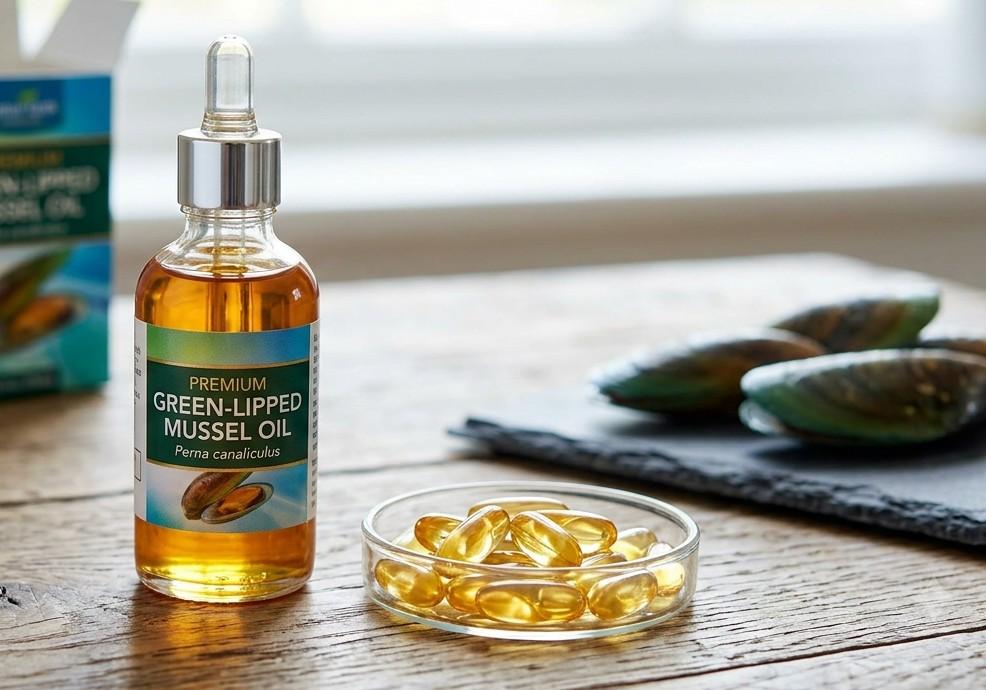
Green-lipped mussel oil is a marine-derived oil made from the New Zealand green-lipped mussel, scientifically known as Perna canaliculus. It has attracted attention because it contains several long-chain polyunsaturated fatty acids, including omega-3 fatty acids, as well as other lipid compounds.
Unlike conventional fish oil, green-lipped mussel oil has a distinctive fatty-acid profile. Research has particularly explored green-lipped mussel products for joint comfort, inflammation, mobility, and general nutritional support. A recent 2026 randomized controlled trial found that 1,000 mg/day of green-lipped mussel powder for 12 weeks was associated with improvements in pain and physical function in adults with mild-to-moderate knee osteoarthritis, although this study used powder rather than oil.
What Is Green-Lipped Mussel Oil?
Green-lipped mussel oil is an oil extract obtained from the New Zealand green-lipped mussel (Perna canaliculus), a marine mollusk native to New Zealand waters.
The oil contains long-chain omega-3 and other polyunsaturated fatty acids. Research examining green-lipped mussel preparations has identified compounds such as EPA, DHA, ETA and other fatty acids. The exact fatty-acid composition depends on the extraction method and product.
Green-lipped mussel oil is generally sold as softgel capsules or liquid supplements. Some products are standardized extracts, while others contain the oil combined with additional oils or antioxidants such as vitamin E.
Because products differ, it is better to judge a supplement by its Supplement Facts panel rather than assuming every green-lipped mussel oil contains the same amount of omega-3s.
Nutrition Facts of Green-Lipped Mussel Oil
Green-lipped mussel oil does not have one standardized nutrition profile. The nutritional composition varies according to the species, harvesting conditions, extraction process, concentration, and manufacturer.
| Nutrient/Compound | Typical Characteristics |
|---|---|
| Calories | Primarily supplied by fat; amount depends on serving size |
| Total Fat | Main nutritional component |
| Omega-3 Fatty Acids | Present in varying amounts |
| EPA | Present in many green-lipped mussel preparations |
| DHA | Present in varying amounts |
| ETA | A notable omega-3 fatty acid found in green-lipped mussel |
| Other Fatty Acids | May include several marine-derived fatty acids |
| Protein | Usually very low in purified oil |
| Carbohydrates | Generally negligible |
| Fiber | None |
| Vitamins & Minerals | Usually minimal in purified oil |
| Daily Value | Often not established for proprietary green-lipped mussel extracts |
For example, one commercially registered green-lipped mussel oil product lists 100 mg of green-lipped mussel oil per softgel, while another concentrated product lists a 300 mg proprietary green-lipped mussel oil extract per two-softgel serving. These examples demonstrate why supplement labels should be checked carefully rather than applying one dosage to all products.
20 Health Benefits of Green-Lipped Mussel Oil
1. Supports Joint Comfort: Green-lipped mussel preparations have been studied for their potential to support comfort in people experiencing joint pain and stiffness, particularly related to osteoarthritis.
2. May Support Mobility: By potentially helping manage joint discomfort and stiffness, green-lipped mussel products may support everyday movement and physical function.
3. Provides Omega-3 Fatty Acids: Green-lipped mussel oil supplies marine-derived long-chain polyunsaturated fatty acids that contribute to overall dietary omega-3 intake.
4. Supports a Balanced Inflammatory Response: Its fatty acids may influence pathways involved in inflammation, although human evidence for specific anti-inflammatory effects remains limited.
5. May Support Joint Flexibility: Regular supplementation may help some people maintain comfortable joint movement when combined with exercise and other healthy habits.
6. May Support Exercise Recovery: Its fatty acids may contribute to normal inflammatory processes following physical activity, although green-lipped mussel oil-specific evidence is still developing.
7. Supports Cardiovascular Nutrition: Marine omega-3 fatty acids are part of a heart-conscious dietary pattern, although green-lipped mussel oil should not be considered a treatment for cardiovascular disease.
8. May Help Maintain Healthy Lipid Intake: Replacing some less favorable dietary fats with marine-derived polyunsaturated fats can contribute to a balanced fat profile.
9. Supports General Nutritional Health: The long-chain fatty acids in the oil can contribute to overall dietary intake of marine omega-3s.
10. May Support Healthy Aging: Maintaining adequate omega-3 intake alongside physical activity, sufficient protein, sleep, and a balanced diet can support healthy aging.
11. May Support Physical Function: A 2026 clinical trial of green-lipped mussel powder found improvements in several pain and physical-function outcomes in adults with knee osteoarthritis.
12. May Complement Joint-Friendly Lifestyle Habits: Green-lipped mussel supplementation may be used alongside appropriate exercise, weight management, and other joint-supportive habits.
13. Provides ETA: Green-lipped mussel products can contain eicosatetraenoic acid (ETA), an omega-3 fatty acid that distinguishes them from some conventional marine oils.
14. May Support Normal Joint Function: Its marine fatty acids may complement nutritional strategies aimed at maintaining comfortable joint function.
15. May Support Active Adults: People who regularly exercise may consider marine omega-3 sources as part of an overall nutrient-dense diet.
16. May Support Healthy Inflammatory Signaling: Marine fatty acids participate in biological pathways involved in inflammatory signaling, although supplementation should not be viewed as a treatment for inflammatory diseases.
17. May Support Long-Term Mobility: Maintaining comfortable movement through exercise and adequate nutrition is important for mobility as people age.
18. May Provide an Alternative Marine Omega-3 Source: People looking beyond traditional fish oil may choose green-lipped mussel oil as another marine-derived omega-3 supplement.
19. May Support Overall Wellness: Its fatty acids can contribute to a balanced nutritional pattern when the supplement is used appropriately.
20. May Complement a Healthy Lifestyle: Green-lipped mussel oil is best viewed as one nutritional component rather than a replacement for a balanced diet, exercise, medical care, or prescribed treatment.
10 Side Effects of Green-Lipped Mussel Oil
1. Fishy or Marine Aftertaste: Some people may notice a marine-like taste or odor after taking the oil, particularly if the capsule releases in the mouth.
2. Heartburn: Marine oil supplements can occasionally cause reflux or heartburn, especially when taken on an empty stomach.
3. Nausea: Some people may experience mild nausea after taking concentrated marine-oil supplements.
4. Stomach Discomfort: Bloating, abdominal discomfort, or indigestion can occur in sensitive individuals.
5. Diarrhea: Larger amounts of supplemental oils may cause loose stools or diarrhea in some people.
6. Headache: Headache has been reported with omega-3 supplementation generally, although this is not specific to green-lipped mussel oil.
7. Allergic Reaction: People allergic to mussels or other shellfish may experience an allergic reaction and should use particular caution.
8. Increased Bleeding Risk at High Omega-3 Intake: High amounts of omega-3 fatty acids may have antiplatelet effects and can be relevant for people taking anticoagulant medicines.
9. Unpleasant Breath or Body Odor: Marine oils can occasionally contribute to unpleasant breath or odor.
10. Supplement-Specific Reactions: Other ingredients in a capsule, such as gelatin, oils, preservatives, or antioxidants, can cause reactions in sensitive individuals.
Stop taking the supplement and seek medical attention if you develop symptoms of a serious allergic reaction, such as facial swelling, difficulty breathing, widespread hives, or severe dizziness.
How to Use Green-Lipped Mussel Oil?
Green-lipped mussel oil is most commonly taken orally as a softgel or capsule. Follow the serving instructions printed on the specific product because concentrations vary considerably.
Taking the supplement with a meal may improve tolerance and reduce the likelihood of stomach upset or reflux.
Do not assume that a higher dose provides greater benefits. More concentrated products may contain substantially different amounts of active fatty acids than standard green-lipped mussel oil.
Other Uses of Green-Lipped Mussel Oil
Green-lipped mussel oil is primarily marketed as a nutritional supplement, but its marine fatty-acid content has led to interest in several areas:
- Joint and mobility support
- General omega-3 supplementation
- Active-lifestyle nutrition
- Healthy-aging nutrition
- Dietary support for maintaining normal inflammatory processes
- Complementary nutritional support for people concerned about joint stiffness
Some green-lipped mussel products are also marketed for pets, particularly dogs, but human supplements should not automatically be substituted for veterinary products.
Tips for Consuming Green-Lipped Mussel Oil
- Choose a Transparent Label: Look for a product that clearly states the amount of green-lipped mussel oil or extract per serving.
- Check the Fatty-Acid Profile: If omega-3 intake is your goal, check whether the manufacturer provides EPA, DHA, ETA, or total omega-3 amounts.
- Start With the Label Dose: Begin with the manufacturer’s recommended serving rather than taking a large amount immediately.
- Take It With Food: Taking oil-based supplements with a meal may improve gastrointestinal tolerance.
- Check the Ingredients: Look for additional oils, gelatin, antioxidants, or other ingredients that may not suit your dietary needs.
- Choose Quality-Controlled Products: Prefer manufacturers that provide appropriate quality testing and clear labeling.
- Avoid Expired Products: Oils can deteriorate over time, particularly when exposed to heat, light, or oxygen.
- Do Not Combine Randomly: Consider your total intake if you are already taking fish oil, krill oil, or another omega-3 supplement.
- Monitor Your Response: Stop and seek professional advice if you develop unusual symptoms after starting the supplement.
- Ask About Medication Interactions: Speak with a healthcare professional before use if you take prescription medicines regularly.
How to Take Green-Lipped Mussel Oil?
For capsules or softgels, swallow the recommended serving with water, preferably alongside a meal.
There is no universal dose for all green-lipped mussel oil products because preparations differ substantially. Some commercial products contain only a small amount of oil per softgel, whereas concentrated extracts can contain a much larger amount of active material.
If using green-lipped mussel oil for a specific health concern, discuss the appropriate product and dose with a healthcare professional rather than self-prescribing a therapeutic dose.
How Much Green-Lipped Mussel Oil Can You Take Per Day?
There is no universally established daily dose for green-lipped mussel oil itself.
Product instructions can differ significantly. For example, registered supplement labels include products recommending one 100 mg softgel daily and other products using 300 mg of a proprietary extract per two-softgel serving.
For this reason, follow the specific product’s serving instructions and do not use the dose from one brand as the dose for another.
The FDA has concluded that dietary supplements providing no more than 5 grams per day of combined EPA and DHA are safe when used as recommended, but this figure is not a recommended dose for green-lipped mussel oil and does not account for all fatty acids in the product.
Green-Lipped Mussel Oil Dosage
| Purpose | General Approach |
|---|---|
| General nutritional supplementation | Follow the product’s labeled serving |
| Joint-support supplementation | Use only the manufacturer’s recommended dose unless a healthcare professional advises otherwise |
| Concentrated extracts | Follow the standardized extract’s specific directions |
| Combining with fish or krill oil | Check total omega-3 intake before combining |
| Prescription medication use | Ask a healthcare professional before supplementation |
| Children | Use only with guidance from a pediatric healthcare professional |
A clinical trial using green-lipped mussel powder used 1,000 mg/day for 12 weeks, but this should not be interpreted as a recommended dose for green-lipped mussel oil because oil and powder preparations can have different compositions and bioavailability.
Best Time to Take Green-Lipped Mussel Oil
There is no proven universal “best time” to take green-lipped mussel oil.
For many people, taking it with a main meal is practical because food may improve tolerance and reduce the chance of reflux or stomach discomfort.
If the product label recommends a particular schedule, follow that schedule. Consistency is generally more important than choosing a specific morning or evening time.
Who Should Take Green-Lipped Mussel Oil?
- Adults Interested in Omega-3 Intake: Adults who want an additional marine-derived source of long-chain fatty acids may consider it as part of a balanced diet.
- People Interested in Joint Nutrition: Adults looking for complementary nutritional support for joint comfort may discuss green-lipped mussel products with a healthcare professional.
- Physically Active Adults: Active adults may consider marine omega-3 sources as part of an overall nutritious eating pattern.
- People Who Do Not Regularly Eat Seafood: Green-lipped mussel oil may provide an alternative marine-derived source of fatty acids, although it does not replace the nutritional variety of whole seafood.
- Adults Seeking a Fish-Oil Alternative: People who do not prefer traditional fish oil may be interested in other marine-derived oils, provided they tolerate the ingredients.
Who Should Avoid Green-Lipped Mussel Oil?
- People With Mussel Allergy: Anyone with a known allergy to mussels should avoid green-lipped mussel products unless an allergy specialist specifically advises otherwise.
- People With Serious Shellfish Allergies: Because green-lipped mussel is a mollusk, people with significant shellfish allergies should seek professional advice before using it.
- People Taking Anticoagulants: Individuals taking warfarin or other blood-thinning medicines should discuss omega-3 supplementation with their healthcare professional.
- People With a Bleeding Disorder: Anyone with a bleeding disorder should obtain medical advice before using concentrated marine-oil supplements.
- People Preparing for Surgery: Tell your surgeon or healthcare professional about supplement use before a planned procedure.
- Pregnant or Breastfeeding Women: Safety information for green-lipped mussel oil varies by product, so pregnancy or breastfeeding should be discussed with a healthcare professional before supplementation.
- Children: Children should not be given adult green-lipped mussel oil supplements without guidance from a pediatric healthcare professional.
- People With Multiple Medical Conditions: Those managing chronic conditions should check with a healthcare professional before adding a new supplement.
How to Store Green-Lipped Mussel Oil?
Store green-lipped mussel oil according to the manufacturer’s instructions.
Generally, keep the container tightly closed in a cool, dry place away from direct sunlight and excessive heat. Avoid leaving capsules in hot cars, near kitchen heat, or in humid bathrooms.
Some products specifically instruct consumers not to refrigerate, while others may have different storage requirements, so the product label should take priority.
Always check the expiration date and discard the product if the oil develops an unusually rancid or strongly unpleasant odor.
Precautions and Interactions
- Blood Thinners: High amounts of omega-3 fatty acids may affect platelet activity, so people taking anticoagulants such as warfarin should discuss supplementation with their healthcare professional.
- Blood Pressure Medicines: Omega-3 supplements can have blood-pressure-lowering effects, which may be relevant when combined with antihypertensive medicines.
- Other Omega-3 Supplements: Combining green-lipped mussel oil with fish oil or krill oil may substantially increase total supplemental omega-3 intake.
- Surgery: Inform your healthcare team about all dietary supplements before surgery.
- Allergies: People with mussel or shellfish allergies should carefully evaluate the product and seek professional advice.
- Pregnancy: Do not assume that a supplement is safe during pregnancy simply because it is naturally derived; discuss green-lipped mussel oil with your prenatal healthcare professional.
- Breastfeeding: Ask a healthcare professional before taking concentrated green-lipped mussel products while breastfeeding.
- Product Quality: Supplements are regulated differently from medicines, and products are not required to undergo FDA premarket approval for safety and effectiveness in the same way medicines do.
- Dose Differences: Do not transfer the dosage from one brand or extract to another because formulations can differ significantly.
- Medical Treatment: Green-lipped mussel oil should not replace prescribed treatment for arthritis, cardiovascular disease, inflammatory conditions, or other medical conditions.
What Does the Research Actually Show?
The evidence should be interpreted carefully. The most recent human trial involved green-lipped mussel powder rather than green-lipped mussel oil. In that 12-week study, 1,000 mg/day of powder was associated with improvements in several pain and function measures, and no clinically meaningful safety concerns were identified.
A separate human study investigating different green-lipped mussel formats found that the bioavailability of fatty acids differed between oil, powder, and whole-mussel forms, meaning results from one preparation cannot automatically be applied to another.
Therefore, green-lipped mussel oil may have potential, but stronger research specifically on standardized oil products is still needed.
FAQ’s
What is green-lipped mussel oil made from?
Green-lipped mussel oil is extracted from the New Zealand green-lipped mussel, scientifically known as Perna canaliculus.
What is green-lipped mussel oil good for?
It is mainly used as a source of marine omega-3 fatty acids and for potential joint, mobility, and general nutritional support.
Can you take green-lipped mussel oil every day?
Yes, some products are designed for daily use, but the appropriate daily amount depends on the specific product and its concentration.
Is green-lipped mussel oil better than fish oil?
They are different marine oils with different fatty-acid profiles, so neither can be considered universally better for everyone.
Does green-lipped mussel oil contain omega-3?
Yes, green-lipped mussel oil contains marine omega-3 fatty acids, although the amount varies between products.
Does green-lipped mussel oil contain EPA and DHA?
Many preparations contain EPA and DHA, along with other fatty acids such as ETA, but the exact amounts depend on the product.
Does green-lipped mussel oil help with joint pain?
Research on green-lipped mussel preparations suggests potential benefits for joint pain and physical function, but more research specifically on the oil is needed.
How long does green-lipped mussel oil take to work?
There is no established timeframe, and potential joint-related benefits may take several weeks rather than occurring immediately.
What does green-lipped mussel oil smell like?
It can have a mild marine or seafood-like smell, although the odor varies according to the product and processing method.
Can green-lipped mussel oil cause stomach problems?
Yes, some people may experience nausea, heartburn, indigestion, bloating, or loose stools.
Can people with shellfish allergies take green-lipped mussel oil?
People with a known mussel or significant shellfish allergy should avoid self-use and consult an allergy specialist or healthcare professional.
Can you take green-lipped mussel oil with fish oil?
They can sometimes be taken together, but combining them increases total supplemental omega-3 intake, so professional guidance may be appropriate.
Can you take green-lipped mussel oil on an empty stomach?
It can be taken according to the product directions, but taking it with food may be better tolerated.
Can green-lipped mussel oil be taken with blood thinners?
People taking anticoagulants or other medicines affecting blood clotting should consult their healthcare professional before using it.
Is green-lipped mussel oil safe during pregnancy?
Safety depends on the specific product and individual circumstances, so pregnant women should consult their healthcare professional before taking it.
Can children take green-lipped mussel oil?
Children should only use green-lipped mussel oil under guidance from a pediatric healthcare professional.
Can dogs take green-lipped mussel oil?
Green-lipped mussel products are commonly used in pet supplements, but products and doses formulated for humans should not automatically be given to dogs; consult a veterinarian.
Does green-lipped mussel oil expire?
Yes, it has an expiration date and should be stored according to the manufacturer’s instructions to help protect the oil from heat, light, and oxidation.
Does green-lipped mussel oil smell fishy?
It can have a mild marine or seafood-like odor, although high-quality encapsulated products may have little noticeable smell.
Does Green-Lipped Mussel Really Help Arthritis?
Green-lipped mussel may help reduce joint pain and improve physical function in some people with osteoarthritis, but research is still limited and results can vary; it should be considered a complementary option rather than a proven treatment for arthritis.
Which Is Better, Green-Lipped Mussel or Glucosamine?
There is no clear evidence that green-lipped mussel is universally better than glucosamine; both have mixed research results, and the choice depends on the type of arthritis, individual health needs, medications, and advice from a healthcare professional.
Final Thought
Green-lipped mussel oil is a marine-derived supplement containing a range of long-chain fatty acids, including omega-3s. It has attracted particular interest for joint and mobility support, although research on green-lipped mussel oil specifically is less extensive than research on green-lipped mussel powder and other preparations.
If you are considering it, choose a clearly labeled product, follow the manufacturer’s dosage, and speak with a healthcare professional if you have a shellfish allergy, take blood-thinning medication, are pregnant or breastfeeding, or have a medical condition.
Sources / References:
About the Author:
Written by: Kirti Solanki (Health Content Researcher)
Kirti Solanki creates research-based health and wellness content focused on making nutrition, supplements, lifestyle topics, and general health information easier for readers to understand. Content is developed using reputable medical and scientific references, with attention to evidence quality, practical safety information, and reader-friendly explanations.
Disclaimer:
This guide is for general educational purposes only and does not replace professional medical advice, diagnosis, or treatment. Green-lipped mussel oil is a dietary supplement and should not be used as a substitute for prescribed medication or medical care. Always consult a qualified healthcare professional before starting a new supplement, especially if you are pregnant or breastfeeding, have a medical condition, have a seafood allergy, take prescription medicines, or are preparing for surgery.
Also Read: