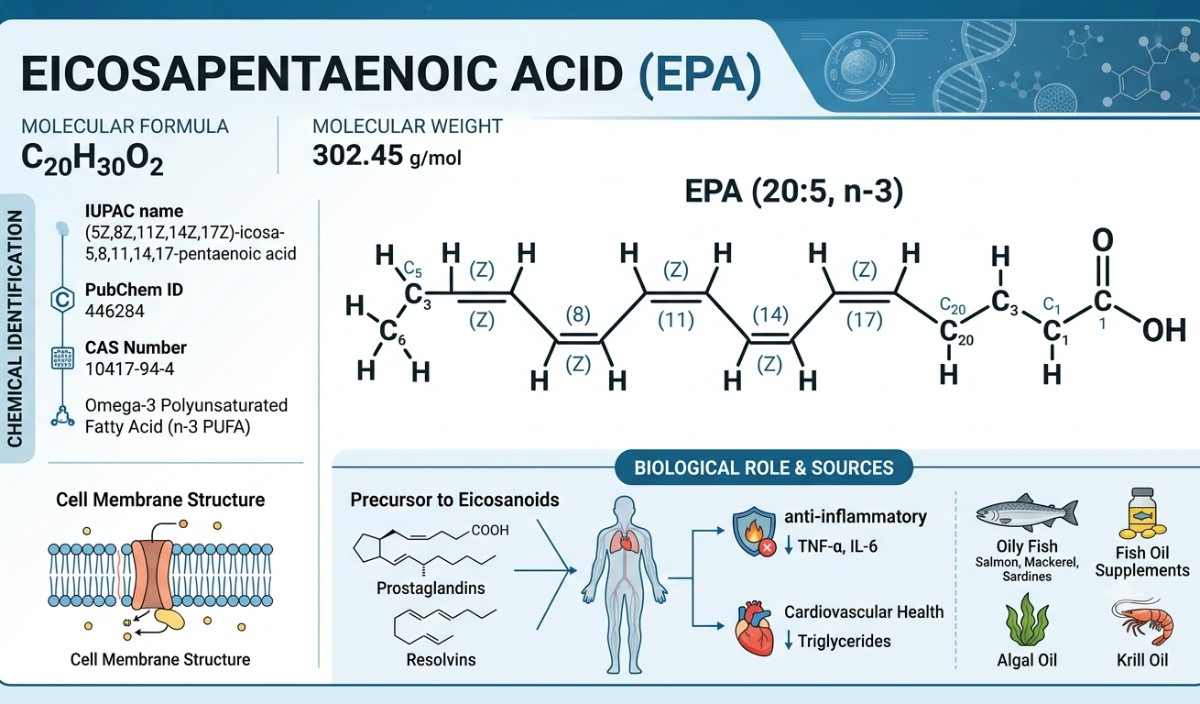
Eicosapentaenoic acid (EPA) is a long-chain omega-3 polyunsaturated fatty acid found naturally in oily fish, seafood, fish oil, and certain algae-based products. It is closely related to another important omega-3 fatty acid, docosahexaenoic acid (DHA).
EPA is involved in cell-membrane structure, lipid metabolism, immune signaling, and the production of specialized compounds that help regulate inflammation. Unlike alpha-linolenic acid (ALA), which is mainly obtained from plant foods, EPA is already in the form the body can use directly. The body can convert ALA into EPA, but the conversion is generally limited.
EPA has received considerable scientific attention for its role in triglyceride management and cardiovascular health. However, its effects depend on the dose, formulation, health condition, and whether EPA is used alone or together with DHA.
What Is Eicosapentaenoic Acid?
Eicosapentaenoic acid, commonly abbreviated as EPA, is an omega-3 fatty acid containing 20 carbon atoms and five double bonds. It is classified as a long-chain polyunsaturated fatty acid.
EPA is naturally present in fatty fish such as salmon, sardines, mackerel, herring, and anchovies. It is also available in fish-oil supplements and purified prescription products such as icosapent ethyl.
EPA and DHA are different from ALA. ALA is mainly found in plant foods such as flaxseed, chia seeds, soybean oil, and canola oil, while EPA and DHA are found primarily in seafood.
One important distinction is that EPA supplements are not all equivalent. Some products contain EPA plus DHA, whereas purified EPA products contain EPA in a specific pharmaceutical form. Therefore, research findings from one preparation should not automatically be applied to every fish-oil supplement.
About of Eicosapentaenoic Acid
| Property | Details |
|---|---|
| Full Name | Eicosapentaenoic Acid |
| Common Abbreviation | EPA |
| Chemical Formula | C20H30O2 |
| Fatty Acid Type | Omega-3 polyunsaturated fatty acid |
| Carbon Atoms | 20 |
| Double Bonds | 5 |
| Omega-3 Classification | Long-chain n-3 fatty acid |
| Molecular Weight | Approximately 302.46 g/mol |
| Main Natural Sources | Fatty fish and seafood |
| Common Supplement Sources | Fish oil, krill oil, algae-derived products |
| Related Omega-3s | DHA and ALA |
| Main Biological Roles | Cell membranes, lipid metabolism, inflammatory signaling |
| Appearance | Usually an oily lipid in purified form |
| Dietary Status | No separate recommended daily allowance has been established for EPA |
| Pharmaceutical Form | Icosapent ethyl is a purified ethyl ester of EPA |
How Does Eicosapentaenoic Acid Work?
EPA works through several interconnected biological pathways.
First, EPA becomes incorporated into cell membranes, where it can influence membrane composition and cellular signaling. When released from membranes, it can be converted into lipid mediators that are generally less inflammatory than some compounds derived from arachidonic acid.
EPA can also contribute to the production of specialized pro-resolving mediators, including E-series resolvins, which participate in the natural process of resolving inflammation.
Another important effect is on triglyceride metabolism. Higher amounts of EPA and other omega-3 fatty acids can reduce circulating triglyceride concentrations. NIH notes that increasing EPA and DHA from food or supplements can lower triglycerides.
At pharmaceutical doses, purified EPA has also been studied for cardiovascular risk reduction. In the REDUCE-IT trial, icosapent ethyl was associated with a significant reduction in major cardiovascular events in appropriately selected high-risk patients already receiving statin therapy.
However, these cardiovascular findings should not be assumed to apply to every ordinary fish-oil supplement because different formulations and doses can produce different outcomes.
20 Benefits of Eicosapentaenoic Acid
1. Helps Lower Triglycerides: EPA can reduce blood triglyceride levels, making it particularly relevant for people with elevated triglycerides when used appropriately.
2. Supports Cardiovascular Health: EPA contributes to cardiovascular health through effects on triglycerides, lipid metabolism, inflammatory signaling, and vascular biology.
3. May Reduce Cardiovascular Events in High-Risk Patients: Prescription-strength purified EPA has been shown to reduce major cardiovascular events in selected high-risk adults receiving statin therapy.
4. Supports Healthy Inflammatory Regulation: EPA can alter inflammatory lipid mediators and participate in pathways involved in controlling and resolving inflammation.
5. May Support Joint Health: Omega-3 supplementation, including EPA-containing preparations, has been studied for joint symptoms and inflammatory activity in rheumatoid arthritis, although the overall evidence is mixed and generally modest.
6. May Help Reduce Joint Discomfort: Some clinical studies suggest omega-3 supplementation may modestly improve pain and other joint-related outcomes, but it should not replace prescribed arthritis treatment.
7. May Support Mood: EPA-enriched omega-3 preparations have shown potential for reducing depressive symptoms in some clinical trials and meta-analyses, particularly when EPA represents a substantial proportion of the supplement.
8. May Complement Depression Treatment: Research suggests EPA-rich omega-3 supplementation may have value as an adjunct to conventional depression treatment rather than as a replacement for medical therapy.
9. Supports Normal Cell Membranes: EPA is incorporated into cell membranes throughout the body, where fatty-acid composition influences membrane structure and cellular communication.
10. Supports Normal Immune Function: EPA participates in immune-cell signaling and the production of lipid mediators involved in inflammatory and immune responses.
11. Supports Blood Vessel Function: EPA can influence vascular signaling and lipid mediators, which are relevant to normal blood-vessel function and cardiovascular physiology.
12. May Improve the Blood Lipid Profile: EPA’s strongest established lipid effect is triglyceride reduction, although its effects on LDL cholesterol can vary according to the formulation used.
13. May Help Manage Inflammation Associated With Rheumatoid Arthritis: Research has found that marine omega-3 fatty acids can influence inflammatory pathways involved in rheumatoid arthritis, although clinical improvements are generally limited.
14. Supports Healthy Lipid Metabolism: EPA influences how the liver and other tissues handle circulating lipids and triglyceride-rich particles.
15. May Support Healthy Aging: Adequate omega-3 intake contributes to normal cardiovascular, cellular, and immune functions that are important throughout aging, although EPA supplements are not proven to prevent aging-related diseases.
16. May Support Brain-Related Functions: EPA contributes to omega-3 availability and signaling in the body, although DHA is generally more abundant than EPA in brain tissue and has a more established structural role in the brain.
17. May Support Inflammation Resolution: EPA serves as a precursor for specialized lipid mediators, including E-series resolvins, that participate in the body’s inflammation-resolution pathways.
18. May Support Metabolic Health: By lowering triglycerides and influencing lipid metabolism, EPA may be useful as part of comprehensive management of certain metabolic risk profiles.
19. May Support Overall Omega-3 Status: Consuming EPA directly can increase the body’s availability of this long-chain omega-3 fatty acid more efficiently than relying only on limited conversion of plant-based ALA.
20. Provides a Targeted EPA Option: Purified EPA preparations allow clinicians to use a defined EPA dose for specific medical indications rather than relying on the variable EPA content of ordinary fish-oil supplements.
10 Side Effects of Eicosapentaenoic Acid
EPA is generally well tolerated when used appropriately, but supplements and prescription-strength products can cause side effects.
1. Fishy Aftertaste: Fish-oil products containing EPA can sometimes leave a fishy taste or cause unpleasant burping.
2. Bad Breath: Some people experience fishy-smelling breath after taking fish-oil supplements.
3. Nausea: EPA-containing supplements may cause nausea or stomach discomfort, particularly when taken on an empty stomach.
4. Indigestion: Digestive symptoms such as dyspepsia, bloating, or abdominal discomfort can occur with omega-3 supplements.
5. Diarrhea: Higher doses of omega-3 supplements may occasionally cause loose stools or diarrhea.
6. Heartburn: Some people experience reflux or heartburn after taking fish-oil products.
7. Increased Bleeding Risk: EPA may increase bleeding risk, particularly when combined with medicines that affect blood clotting.
8. Atrial Fibrillation or Flutter: Prescription-strength icosapent ethyl has been associated with an increased risk of atrial fibrillation or atrial flutter requiring hospitalization in clinical trials.
9. Allergic Reactions: People with an allergy to fish or ingredients in a particular product should discuss its safety with a healthcare professional before use.
10. Changes in Cholesterol: Depending on the omega-3 formulation, lipid changes can differ, so people taking EPA for triglyceride management should have their lipid levels monitored as recommended by their clinician.
How to Take Eicosapentaenoic Acid?
EPA can be obtained through food or supplements.
From Food
Good dietary sources include:
- Salmon
- Sardines
- Mackerel
- Herring
- Anchovies
- Other oily fish and seafood
Eating fish provides EPA together with other nutrients, including protein, vitamins, minerals, and often DHA. NIH recommends that adults generally eat one to two servings of seafood per week as part of a healthy dietary pattern.
From Supplements
EPA is available in:
- Fish-oil capsules
- EPA-rich omega-3 supplements
- Krill oil
- Algae-derived omega-3 products
- Prescription EPA preparations such as icosapent ethyl
Always check the supplement label for the actual amount of EPA per serving, rather than looking only at the total amount of fish oil.
Taking an EPA-containing supplement with food may improve tolerance and reduce digestive discomfort.
What Is the Best Time to Use Eicosapentaenoic Acid?
There is no universally established “best” time of day for EPA.
For an ordinary dietary supplement, taking it with a meal is often practical and may improve tolerance. If the product causes burping or stomach discomfort, taking it with the largest meal of the day may help.
Prescription EPA products should be taken exactly according to the prescribing instructions. For example, FDA-approved icosapent ethyl is taken with food at the prescribed dose.
Consistency is generally more important than taking EPA at a particular hour.
Who Should Take Eicosapentaenoic Acid?
- People With High Triglycerides: Individuals with elevated triglycerides may benefit from EPA-based treatment when recommended and monitored by a healthcare professional.
- People With Certain Cardiovascular Risk Profiles: Selected adults with cardiovascular disease or specific high-risk conditions may be prescribed purified EPA in addition to statin therapy.
- People With Low Seafood Intake: Individuals who rarely eat fish may discuss an omega-3 supplement with a healthcare professional, especially when dietary sources are limited.
- People Following a Vegetarian or Vegan Diet: Algae-derived EPA can provide a non-fish source of EPA, although product formulations vary.
- People With an EPA-Specific Medical Indication: Prescription EPA may be appropriate when a clinician determines that the expected benefits outweigh the risks.
- People Seeking General Omega-3 Nutrition: Healthy adults can generally obtain omega-3 fatty acids through a balanced diet that includes appropriate seafood rather than automatically relying on supplements.
Who Should Avoid Eicosapentaenoic Acid?
- People With Known Product Allergies: Anyone with a known allergy to EPA, fish, or ingredients in a particular product should seek professional advice before using it.
- People Taking Blood-Thinning Medicines: Individuals taking anticoagulants or other medicines that affect blood clotting should consult their healthcare professional before starting supplemental EPA.
- People With a History of Atrial Fibrillation: Those with an irregular heartbeat should discuss EPA use with a clinician because prescription icosapent ethyl has been associated with increased atrial fibrillation or flutter risk.
- People Preparing for Surgery: Anyone scheduled for surgery should tell their healthcare team about EPA and all other supplements or medicines they take.
- Pregnant or Breastfeeding Women: EPA can be obtained from appropriate seafood during pregnancy, but high-dose supplements or prescription products should be discussed with a healthcare professional.
- Children Without Medical Guidance: Children should not be given high-dose EPA supplements without advice from a pediatrician or qualified healthcare professional.
How Much Eicosapentaenoic Acid Should You Take Daily?
There is no separate recommended daily allowance for EPA established for healthy adults. NIH notes that individual recommendations for EPA and DHA have not been established.
For general nutrition, obtaining omega-3s through seafood is often preferred.
For medical treatment, the dose can be substantially higher and depends on the specific product and condition. For example, FDA labeling for prescription icosapent ethyl uses 4 grams per day for its approved indications, generally taken as 2 grams twice daily with food.
This does not mean everyone should take 4 grams of EPA daily. Prescription-strength doses are used under medical supervision for specific conditions.
When choosing an over-the-counter product, check:
- Amount of EPA per capsule
- Amount of DHA per capsule
- Total omega-3 content
- Serving size
- Other ingredients
- Quality testing and manufacturer standards
Other Uses of Eicosapentaenoic Acid
EPA is being studied and used in several areas of nutrition and medicine.
1. Triglyceride Management
EPA is particularly important in the treatment of elevated triglycerides. Prescription omega-3 products can substantially reduce triglyceride levels.
2. Cardiovascular Risk Reduction
Purified EPA has demonstrated cardiovascular benefits in selected high-risk patients receiving statins.
3. Inflammatory Conditions
EPA is being investigated for its ability to influence inflammatory signaling and specialized pro-resolving mediators.
4. Rheumatoid Arthritis
Omega-3 fatty acids containing EPA have been studied as complementary nutritional interventions for rheumatoid arthritis, although the benefits appear modest and evidence quality varies.
5. Mental Health Research
EPA-rich omega-3 formulations have been investigated as add-on treatments for depressive symptoms, with some meta-analyses reporting potential benefits.
6. Nutritional Supplementation
EPA can be used as part of an omega-3 supplementation strategy when dietary intake is insufficient or when a healthcare professional recommends supplementation.
Precautions and Interactions
- Blood Thinners: EPA may increase bleeding risk when combined with anticoagulants or other medicines affecting clotting, so medical supervision is important.
- Antiplatelet Medicines: People taking antiplatelet drugs should tell their healthcare professional before starting high-dose EPA.
- Atrial Fibrillation: People with a history of irregular heart rhythms should discuss EPA therapy with their clinician because prescription icosapent ethyl has been associated with atrial fibrillation or flutter.
- Surgery: Tell your surgeon or healthcare team about EPA supplementation before an operation or invasive procedure.
- Fish or Shellfish Allergy: Check the source and ingredients of an EPA supplement carefully if you have a seafood allergy.
- Pregnancy: Do not begin high-dose EPA supplementation during pregnancy without discussing the product and dose with your healthcare provider.
- Breastfeeding: Discuss high-dose EPA or prescription products with a healthcare professional while breastfeeding.
- Lipid Monitoring: People taking EPA for high triglycerides may need periodic lipid testing to determine how well treatment is working.
- Do Not Substitute Supplements for Prescribed Treatment: EPA supplements should not be used to replace statins, blood-pressure medicines, diabetes treatment, or other prescribed cardiovascular therapies.
- Check the EPA Content: Fish-oil supplements can contain very different amounts of EPA and DHA, so the total “fish oil” number does not tell you how much EPA you are actually receiving.
- Use Prescription EPA as Directed: Prescription icosapent ethyl has specific indications, doses, and safety warnings that differ from ordinary over-the-counter fish-oil supplements.
EPA vs DHA: What Is the Difference?
EPA and DHA are both marine omega-3 fatty acids, but they have different biological roles.
| Feature | EPA | DHA |
|---|---|---|
| Full name | Eicosapentaenoic acid | Docosahexaenoic acid |
| Carbon atoms | 20 | 22 |
| Double bonds | 5 | 6 |
| Main emphasis | Inflammatory signaling, triglycerides, cardiovascular research | Brain, retina, cell membranes |
| Common sources | Fatty fish, fish oil, algae | Fatty fish, fish oil, algae |
| Cardiovascular research | Strong evidence in specific purified EPA populations | Extensive omega-3 research |
| Brain structural role | Less abundant than DHA | Particularly important in brain and retinal tissue |
EPA and DHA should not be treated as interchangeable. A supplement containing EPA and DHA may have different effects from a purified EPA product.
Food Sources of Eicosapentaenoic Acid
The richest natural sources of EPA are generally oily fish and seafood.
| Food | EPA Availability |
|---|---|
| Sardines | High |
| Mackerel | High |
| Salmon | Moderate to high |
| Herring | High |
| Anchovies | High |
| Trout | Moderate |
| Other oily seafood | Variable |
| Fish oil | Concentrated source |
| Algae-based products | Variable; some provide EPA |
For people who do not eat fish, algae-derived products can provide an alternative source of marine-type omega-3 fatty acids, although many algae products are primarily DHA rather than EPA, so the label should be checked carefully.
Final Thought
Eicosapentaenoic acid (EPA) is an important long-chain omega-3 fatty acid with established roles in cell membranes, lipid metabolism, and inflammatory signaling. Its strongest clinical application is in triglyceride management, while purified EPA has also demonstrated cardiovascular risk-reduction benefits in selected high-risk patients receiving appropriate background treatment.
Research into EPA and depression, rheumatoid arthritis, inflammation, immune function, and other conditions is promising in some areas but remains mixed. Importantly, more EPA is not automatically better, and prescription-strength doses should not be self-prescribed.
For general health, a balanced diet containing appropriate seafood is usually a practical way to obtain EPA and other nutrients. People considering high-dose EPA supplements, particularly those taking blood-thinning medicines or having cardiovascular conditions, should discuss their options with a healthcare professional.
FAQ’s
Is EPA the same as DHA?
No. EPA and DHA are both omega-3 fatty acids, but they have different biological roles; EPA is particularly studied for triglycerides and inflammatory signaling, while DHA is especially important for brain and retinal structure.
Can EPA lower triglycerides?
Yes. EPA can significantly reduce triglyceride levels, particularly at therapeutic doses used under medical supervision.
Can EPA support heart health?
Yes. EPA may support cardiovascular health, and prescription-strength purified EPA has been shown to reduce certain cardiovascular events in selected high-risk patients.
Can vegetarians get EPA?
Yes. Some algae-based supplements provide EPA and can be an option for people who do not consume fish or seafood.
Is EPA safe during pregnancy?
EPA is naturally obtained from seafood during pregnancy, but high-dose EPA supplements should be discussed with a healthcare professional before use.
Does EPA increase bleeding risk?
High-dose EPA may increase bleeding risk, especially when combined with anticoagulant or antiplatelet medicines, so medical advice is recommended.
Can EPA help with inflammation?
EPA participates in biological pathways that regulate inflammation and serves as a precursor for specialized lipid mediators involved in inflammation resolution.
Can EPA help with depression?
Some research suggests EPA-rich omega-3 preparations may help reduce depressive symptoms in certain people, particularly as an addition to standard treatment.
Is EPA better than DHA?
Neither is universally better. EPA and DHA perform different functions, and the most appropriate form depends on dietary needs and the intended health goal.
Sources / References:
About the Author:
Written by: Kirti Solanki (Health Content Researcher)
Kirti Solanki creates research-based health and wellness content designed to make complex nutrition and medical topics easier to understand. Her articles emphasize evidence-based information, clear explanations, responsible health guidance, and trustworthy references.
Disclaimer:
This guide is for educational and informational purposes only and does not replace professional medical advice, diagnosis, or treatment. EPA supplements can interact with medicines and may not be appropriate for everyone. Consult a qualified healthcare professional before starting high-dose EPA, especially if you take blood-thinning medication, have a heart rhythm condition, are pregnant or breastfeeding, or are being treated for high triglycerides.
Also Read:
1 thought on “Eicosapentaenoic Acid: 20 Benefits, Side Effects & Sources”