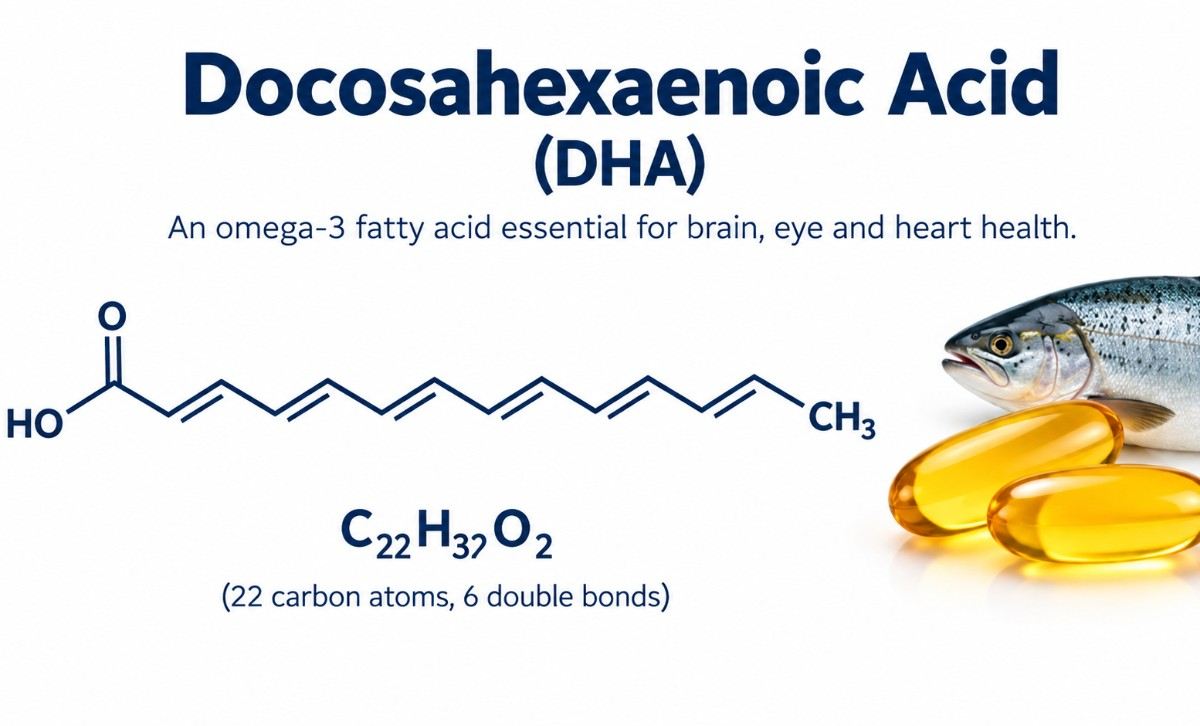
Docosahexaenoic acid, commonly known as DHA, is a long-chain omega-3 polyunsaturated fatty acid that plays an important structural role in the human body. It is especially concentrated in the brain, retina of the eye, and cell membranes. DHA is naturally found in fatty fish and seafood and is also available through fish oil, algal oil, fortified foods, infant formulas, and dietary supplements.
DHA is particularly important during periods of rapid growth, including pregnancy, infancy, and childhood. However, it remains an important component of cell membranes throughout adulthood.
Although DHA is often promoted for brain, eye, heart, and pregnancy health, the strength of evidence differs depending on the health outcome. Adequate DHA intake is biologically important, but taking extra DHA does not necessarily improve every health condition or cognitive outcome.
What Is Docosahexaenoic Acid?
Docosahexaenoic acid (DHA) is an omega-3 fatty acid containing 22 carbon atoms and six double bonds. Its scientific shorthand is 22:6n-3.
DHA belongs to the same omega-3 family as eicosapentaenoic acid (EPA) and alpha-linolenic acid (ALA). ALA is mainly obtained from plant foods such as flaxseeds, chia seeds, walnuts, soybean oil, and canola oil, while DHA and EPA are naturally abundant in fatty fish and seafood.
The human body can convert a small amount of ALA into DHA, but the conversion is limited. Therefore, dietary sources of DHA or supplements can be practical ways to increase DHA intake.
DHA is particularly abundant in the brain and retina, where it contributes to membrane structure and normal cellular function.
About of Docosahexaenoic Acid
| Property | Details |
|---|---|
| Full Name | Docosahexaenoic Acid |
| Common Name | DHA |
| Fatty Acid Type | Omega-3 polyunsaturated fatty acid |
| Chemical Formula | C22H32O2 |
| Molecular Weight | Approximately 328.49 g/mol |
| Omega Classification | Omega-3 (n-3) |
| Carbon Atoms | 22 |
| Double Bonds | 6 |
| Scientific Notation | 22:6n-3 |
| Appearance | Pure DHA is an oily lipid; dietary DHA occurs within oils, foods, or supplements |
| Main Natural Sources | Fatty fish, seafood, fish oils and algae |
| Vegetarian Source | Algal oil |
| Major Biological Locations | Brain, retina, cell membranes and other tissues |
| Related Omega-3s | EPA and ALA |
| Main Biological Role | Structural component of cell membranes and precursor for specialized lipid mediators |
| Energy Content | Like other fats, DHA provides approximately 9 calories per gram |
How Does Docosahexaenoic Acid Work?
DHA becomes incorporated into the phospholipid membranes surrounding cells. It is particularly concentrated in neural tissue and the retina, where membrane composition is important for normal cellular signaling and function.
DHA can also serve as a precursor for specialized molecules involved in the body’s processes for regulating inflammation and resolving inflammatory responses.
During pregnancy, DHA is transferred from the mother to the developing fetus and contributes to fetal tissue development, particularly during the later stages of pregnancy when brain DHA accumulation increases rapidly.
The effects of DHA supplementation, however, depend on factors such as baseline DHA status, dose, age, diet, pregnancy status, and overall health. Research does not support assuming that more DHA always produces better outcomes.
20 Science-Backed Benefits of Docosahexaenoic Acid
1. Supports Brain Structure
DHA is an important structural omega-3 fatty acid in brain tissue and contributes to the composition and function of neural cell membranes.
2. Supports Normal Brain Development
Adequate DHA is particularly important during fetal and early-life brain development, when the nervous system undergoes rapid growth and maturation.
3. Supports Eye Health
DHA is highly concentrated in the retina, where it contributes to the structure and function of retinal cell membranes.
4. Supports Visual Development
Adequate DHA availability during early life is associated with normal retinal development, and some research suggests potential improvements in visual acuity in infants.
5. Supports Healthy Cell Membranes
DHA is incorporated into phospholipid membranes and helps maintain the structural characteristics required for normal cellular function.
6. Supports Fetal Development
Maternal DHA intake contributes to the supply of long-chain omega-3 fatty acids needed during fetal development, particularly for the developing brain and eyes.
7. May Support Healthy Birth Weight
A 2024 systematic review and meta-analysis found that DHA supplementation during pregnancy at approximately 450–800 mg per day was associated with higher infant birth weight and fewer low-birth-weight births, although outcomes can vary between populations.
8. May Support Pregnancy Nutrition
DHA is an important nutritional component during pregnancy, and supplementation may be particularly useful for pregnant people who consume little or no seafood.
9. Supports Infant DHA Status
DHA intake during pregnancy and early life can increase DHA availability and tissue status, particularly among people with relatively low baseline intake.
10. Supports Normal Nervous-System Function
Because DHA is abundant in neural tissues and participates in membrane structure and signaling, adequate availability supports normal nervous-system biology.
11. Supports Cardiovascular Nutrition
DHA is one of the principal long-chain omega-3 fatty acids studied for cardiovascular health, although cardiovascular effects depend on the amount consumed and whether DHA is taken alone or with EPA.
12. Participates in Inflammation Regulation
DHA can be metabolized into specialized lipid mediators involved in regulating and resolving inflammatory responses.
13. Supports Normal Immune Function
Omega-3 fatty acids participate in immune-system processes, and DHA contributes to the lipid environment and signaling pathways involved in immune regulation.
14. Supports Healthy Cell Signaling
DHA-containing membrane phospholipids influence membrane properties and can affect cellular signaling pathways.
15. May Support Preterm Infant Nutrition
DHA is an important component of nutritional strategies for preterm infants, although the appropriate amount and combination with other fatty acids should be determined by neonatal specialists.
16. May Support Some Aspects of Infant Visual Development
Research indicates that DHA availability during early development may contribute to visual outcomes, although supplementation does not guarantee improved vision in every infant.
17. Supports Maternal and Fetal Omega-3 Status
DHA supplementation can increase maternal DHA levels and help provide DHA to the developing fetus when dietary intake is inadequate.
18. May Help Maintain Healthy Lipid Metabolism
Long-chain omega-3 fatty acids influence triglyceride and lipid metabolism, although therapeutic effects generally require specific doses and should be discussed with a healthcare professional.
19. Provides a Dietary Source of Long-Chain Omega-3
DHA-rich foods and supplements provide DHA directly, which can be useful because conversion of plant-derived ALA into DHA is very limited.
20. Supports Nutritional Needs During Early Life
DHA is biologically important throughout the first 1,000 days, although research shows that supplementation does not consistently improve standardized long-term cognitive or behavioral outcomes in healthy populations.
Important evidence note: DHA is essential to normal biology, but this should not be confused with evidence that DHA supplements prevent or treat every brain, eye, heart, or developmental condition. For example, recent meta-analysis research found no significant overall improvement in several neurodevelopmental outcomes from prenatal DHA supplementation, despite an increase in birth weight.
10 Side Effects of Docosahexaenoic Acid
DHA is generally well tolerated when used appropriately, but supplements can cause mild digestive effects and may interact with certain medications.
1. Fishy Aftertaste
Fish-oil-derived DHA supplements may cause a fishy taste or unpleasant aftertaste, particularly when taken without food.
2. Fishy Burps
Some people experience fishy-smelling burps after taking DHA-containing fish oil supplements.
3. Bad Breath
A temporary fishy odor on the breath can occur with some fish-oil products.
4. Nausea
Taking a DHA supplement, especially on an empty stomach, may cause nausea in some people.
5. Heartburn
Omega-3 supplements can occasionally cause heartburn or reflux-like discomfort.
6. Stomach Discomfort
Some people may experience abdominal discomfort after taking concentrated DHA supplements.
7. Loose Stools
Higher amounts of fish oil or omega-3 supplements may cause loose stools in some individuals.
8. Diarrhea
Large supplemental doses may cause diarrhea or other gastrointestinal symptoms.
9. Easy Bruising or Bleeding Concerns
High-dose omega-3 supplementation can affect platelet function, so people taking anticoagulant or antiplatelet medicines should discuss supplementation with their healthcare professional.
10. Allergic Reactions
People with an allergy to fish or seafood should check the source and ingredients of DHA supplements carefully, while algal DHA may provide an alternative for some individuals.
How to Use Docosahexaenoic Acid?
DHA can be obtained from food, fortified products, fish oil, krill oil, or algal oil supplements.
Natural dietary sources include fatty fish such as salmon, sardines, herring, and trout. Seafood is one of the principal dietary sources of DHA and EPA.
For people who do not eat fish, algal oil is an important vegetarian and vegan source of DHA.
If using a supplement:
- Follow the serving size on the product label or your healthcare professional’s recommendation.
- Check the label for the actual amount of DHA, rather than assuming that the total fish-oil amount equals the DHA amount.
- Taking DHA with a meal may improve tolerance and reduce fishy aftertaste or digestive discomfort.
- Choose products from reputable manufacturers that provide quality and purity information.
- Do not automatically combine several omega-3 supplements without checking the total DHA and EPA intake.
What Is the Best Time to Take Docosahexaenoic Acid?
There is no universally established “best” time of day for DHA.
For convenience and better digestive tolerance, many people take DHA with a meal, particularly a meal containing some dietary fat.
The most important factor is consistent intake rather than taking DHA at a particular hour.
Pregnant people, breastfeeding women, children, and people taking medicines should follow individualized recommendations from a healthcare professional.
Who Should Take Docosahexaenoic Acid?
1. People With Low Dietary DHA Intake
People who rarely eat seafood may benefit from discussing dietary DHA or supplementation with a healthcare professional.
2. People Who Avoid Fish
Algal DHA can provide a vegetarian or vegan source of DHA for people who do not consume fish.
3. Pregnant Women
Pregnant women need adequate omega-3 nutrition, and DHA can be obtained from low-mercury seafood or appropriately selected supplements when dietary intake is insufficient.
4. Breastfeeding Women
Breastfeeding women may consider DHA intake as part of an overall balanced diet, particularly when seafood intake is low.
5. Infants With Specific Nutritional Needs
Infants, especially premature infants, may require carefully determined DHA intake as part of specialized nutritional care.
6. People Seeking a Plant-Based DHA Source
Algal oil provides a direct DHA source for people following vegetarian or vegan diets.
7. People Advised to Increase Omega-3 Intake
Individuals advised by a healthcare professional to increase long-chain omega-3 intake may use DHA-containing foods or supplements as appropriate.
Who Should Avoid Docosahexaenoic Acid?
DHA is a normal dietary fatty acid, so the question is usually whether a person should use a supplement, rather than whether DHA itself should be avoided.
1. People With Known Supplement Allergies
Anyone who has previously experienced an allergic reaction to a particular DHA supplement or one of its ingredients should avoid that product.
2. People With Fish or Seafood Allergies
People with fish or seafood allergies should carefully check whether a supplement is fish-derived and discuss suitable alternatives with a healthcare professional.
3. People Taking Blood-Thinning Medicines
People taking anticoagulants or antiplatelet medicines should consult their healthcare professional before starting high-dose omega-3 supplements.
4. People Preparing for Surgery
People scheduled for surgery should tell their healthcare team about all omega-3 supplements because clinicians may recommend changes depending on the dose and procedure.
5. People With Bleeding Disorders
Individuals with diagnosed bleeding disorders should seek professional advice before taking concentrated DHA supplements.
6. People Taking Multiple Omega-3 Products
Combining fish oil, cod liver oil, DHA capsules, and fortified products can unnecessarily increase total omega-3 intake, so products should be reviewed together.
7. Infants and Young Children Without Professional Guidance
Infant DHA intake should be based on age-appropriate nutrition and, when supplementation is being considered, guidance from a pediatrician or qualified healthcare professional.
How Much Docosahexaenoic Acid Should You Take Daily?
There is no single universal recommended daily allowance for DHA for all adults.
The Food and Nutrition Board established intake recommendations for ALA but did not establish separate recommended intakes for EPA and DHA.
For pregnancy, several professional recommendations have historically supported approximately 200 mg DHA per day, while some clinical trials have studied higher doses. A 2024 meta-analysis examining pregnancy trials included DHA doses of approximately 450–800 mg per day, but these study doses should not automatically be interpreted as a universal daily recommendation for every pregnant person.
The appropriate amount depends on:
- Age
- Diet
- Pregnancy or breastfeeding status
- Fish and seafood consumption
- Existing health conditions
- Medications
- DHA and EPA intake from other products
- Individual nutritional requirements
Always check the DHA amount per serving on a supplement label rather than looking only at the total amount of fish oil.
Other Uses of Docosahexaenoic Acid
1. Infant Formula
DHA is used in many infant nutrition products because of its biological importance in early development.
2. Prenatal Nutrition
DHA is included in some prenatal supplements and may help people who have difficulty obtaining enough DHA through seafood.
3. Vegetarian and Vegan Nutrition
Algal oil is a direct plant-based source of DHA and is commonly used in vegetarian and vegan supplements.
4. Fortified Foods
DHA may be added to certain fortified foods and beverages.
5. Clinical Nutrition
DHA may be incorporated into specialized nutritional formulations, particularly in settings where nutritional requirements are carefully monitored.
6. Research and Pharmaceutical Nutrition
DHA continues to be studied for its potential roles in cardiovascular, neurological, inflammatory, developmental, and metabolic health.
Precautions and Interactions
1. Blood-Thinning Medicines
Tell your healthcare professional if you take warfarin, aspirin, clopidogrel, or other medicines that affect blood clotting before starting concentrated omega-3 supplements.
2. High Supplemental Doses
Do not assume that a larger DHA dose provides greater health benefits, because research findings vary according to the health outcome and population.
3. Pregnancy
Pregnant women should prioritize low-mercury seafood choices and discuss supplementation with a healthcare professional when dietary intake is inadequate.
4. Fish Allergies
Check whether the DHA supplement is derived from fish or algae if you have a seafood allergy.
5. Quality of Supplements
Choose products from reputable manufacturers and check expiration dates, storage instructions, and ingredient information.
6. Combined Omega-3 Products
Check total DHA and EPA intake when using multiple omega-3 products to avoid unintentionally taking unnecessarily high amounts.
7. Cod Liver Oil
If DHA comes from cod liver oil, consider the product’s vitamin A and vitamin D content as well, because excessive intake of these vitamins can be harmful.
8. Surgery
Tell your surgeon or healthcare professional about DHA and other omega-3 supplements before an operation.
9. Bleeding Disorders
People with bleeding disorders should obtain individualized medical advice before taking concentrated omega-3 supplements.
10. Medical Conditions
People with chronic medical conditions should discuss regular supplementation with their healthcare professional, particularly when using therapeutic doses.
How to Store Docosahexaenoic Acid?
The storage method depends on the form of DHA.
For DHA capsules or softgels:
- Keep the product in a cool, dry place.
- Protect it from excessive heat and direct sunlight.
- Keep the container tightly closed.
- Follow the manufacturer’s refrigeration instructions if provided.
- Keep supplements away from children.
- Do not use the product after its expiration date.
Fish-oil products can become oxidized when exposed to heat, light, or oxygen. If a product develops a strongly rancid or unusually unpleasant odor or taste, discontinue use and check with the manufacturer or pharmacist.
DHA From Food vs. Supplements
For many people, food is an excellent way to obtain DHA and other nutrients.
Fatty fish such as salmon, sardines, trout, and herring provide DHA along with protein, vitamins, minerals, and other nutrients. Seafood consumption during pregnancy can be beneficial when lower-mercury choices are selected.
Supplements can be useful when dietary intake is inadequate, particularly for people who do not eat fish. Algal DHA is an option for people following vegetarian or vegan diets.
However, supplements should complement a balanced diet rather than replace nutritious foods.
DHA and Pregnancy: What Does the Research Say?
DHA has received substantial research attention during pregnancy because fetal brain and retinal development require long-chain polyunsaturated fatty acids.
A 2024 systematic review and meta-analysis of nine randomized controlled trials involving 5,710 participants found that DHA supplementation during the latter half of pregnancy at 450–800 mg/day was associated with higher infant birth weight and fewer low-birth-weight births. The effect on preterm birth was not statistically significant in that analysis.
At the same time, newer evidence emphasizes that DHA supplementation does not consistently improve every developmental outcome. A 2026 systematic review and meta-analysis found increased birth weight with prenatal DHA but did not find significant improvements across several measured neurodevelopmental outcomes in the general population.
Therefore, DHA should be viewed as an important nutrient rather than a guaranteed way to improve intelligence, learning ability, or developmental outcomes.
DHA and Brain Health
DHA is one of the most abundant omega-3 fatty acids in the brain and is involved in the structure of neural membranes. Research describes roles in neurogenesis, neurotransmission, synaptic function, and cellular signaling.
However, observational associations between DHA status and cognitive health should not automatically be interpreted as proof that DHA supplements prevent dementia or improve memory in healthy adults.
This distinction is important when evaluating online claims about DHA.
DHA and Eye Health
The retina contains substantial amounts of DHA, making it an important component of retinal cell membranes.
Adequate DHA is particularly important during early development, and research has investigated its relationship with visual acuity in infants. However, taking DHA supplements should not be considered a treatment for eye disease unless specifically recommended by an eye-care or medical professional.
DHA and EPA: What Is the Difference?
DHA and EPA are both long-chain omega-3 fatty acids, but they have different biological roles.
| Feature | DHA | EPA |
|---|---|---|
| Full Name | Docosahexaenoic Acid | Eicosapentaenoic Acid |
| Structure | 22:6n-3 | 20:5n-3 |
| Main Biological Role | Strong structural role in brain and retina | Important role in lipid mediators and inflammatory regulation |
| Main Sources | Fatty fish, seafood, algae | Fatty fish, seafood, fish oil, algae |
| Brain Concentration | Very high | Lower than DHA |
| Retinal Concentration | Very high | Lower than DHA |
| Supplements | Fish oil and algal oil | Fish oil and algal oil |
Both are important omega-3 fatty acids, and many supplements contain them together.
Final Thought
Docosahexaenoic acid (DHA) is a long-chain omega-3 fatty acid that plays an important structural role in the brain, retina, and cell membranes. It is particularly important during pregnancy, infancy, and periods of rapid development.
Good dietary sources include fatty fish and seafood, while algal oil provides a vegetarian and vegan source. DHA supplements may be useful for people who do not obtain enough DHA from their diet, but dosage should be individualized rather than based on the assumption that more is always better.
The strongest evidence supports DHA as an important nutrient, while evidence for additional supplementation producing specific cognitive, developmental, or disease-prevention benefits remains mixed. Therefore, DHA should be incorporated as part of an overall balanced dietary pattern and used thoughtfully when supplementation is appropriate.
FAQ’s
What is DHA good for?
DHA supports normal brain and eye function and is particularly important during pregnancy, infancy, and early childhood development.
Is DHA the same as omega-3?
DHA is one type of omega-3 fatty acid, along with EPA and the plant-based omega-3 fatty acid ALA.
Is DHA safe during pregnancy?
DHA from appropriate low-mercury seafood or a suitable supplement is generally considered safe when used appropriately, but pregnant women should discuss supplementation and dosage with their healthcare professional.
Is DHA good for the brain?
DHA is an important structural component of brain tissue and supports normal neural cell membrane function.
Is DHA good for the eyes?
Yes, DHA is highly concentrated in the retina and contributes to normal retinal structure and function.
Can DHA improve memory?
DHA supports normal brain biology, but evidence that DHA supplements consistently improve memory in healthy adults is mixed.
What is the difference between DHA and EPA?
DHA has a particularly strong structural role in the brain and retina, while EPA is more involved in the production of signaling molecules that regulate inflammatory processes.
Can vegetarians get DHA?
Yes, algal oil is a direct vegetarian and vegan source of DHA.
Can DHA cause bleeding?
High-dose omega-3 supplementation can affect platelet function, so people taking blood-thinning medicines should consult a healthcare professional before using concentrated DHA supplements.
Can I take DHA every day?
DHA can be taken regularly when appropriate, but the amount should be based on dietary intake, individual needs, and professional guidance when supplementation is required.
Is DHA found in fish oil?
Yes, many fish oil supplements contain DHA along with EPA, although the exact amounts vary between products.
Is algal DHA as good as fish-derived DHA?
Algal oil provides DHA directly and can be a useful vegetarian or vegan alternative to fish-derived DHA.
Can children take DHA?
Children need DHA as part of normal nutrition, but supplemental DHA should be age-appropriate and discussed with a pediatrician when necessary.
What are some vegetarian sources of docosahexaenoic acid?
Vegetarian sources of DHA include algal oil and DHA-fortified foods, as algae are the primary vegetarian source of preformed DHA. Plant foods such as flaxseeds, chia seeds, and walnuts provide ALA, which the body can convert to DHA only in small amounts.
Sources / References:
About the Author:
Written by: Kirti Solanki (Health Content Researcher)
Kirti Solanki is a health content researcher focused on creating reader-friendly, evidence-informed content across nutrition, wellness, preventive health, and lifestyle topics. Her content emphasizes research-based information, clear explanations, responsible health communication, and practical guidance for general readers.
Disclaimer:
This guide is intended for educational and informational purposes only and does not replace professional medical advice, diagnosis, or treatment. Individual DHA requirements can vary according to age, diet, pregnancy status, health conditions, medications, and other factors. Speak with a qualified healthcare professional before starting high-dose DHA or omega-3 supplements, particularly during pregnancy, before surgery, or when taking medicines that affect blood clotting.
Also Read: