Groin pain can be uncomfortable, frustrating, and sometimes difficult to understand. It may appear suddenly after exercise, lifting something heavy, or making an awkward movement. In other cases, it develops gradually and may be related to a joint, nerve, hernia, urinary problem, or another underlying condition.
The groin is the area where the lower abdomen meets the upper inner thigh. Several muscles, tendons, nerves, blood vessels, joints, and other structures are located around this region, so pain can have many different causes. Muscle strains are among the most common, particularly in people who participate in sports involving running, kicking, twisting, or sudden changes in direction.
Although many cases of groin pain improve with appropriate rest and treatment, persistent or severe pain should not be ignored. Certain symptoms, including sudden severe testicular pain or symptoms associated with a strangulated hernia, require urgent medical attention.
What Is Groin Pain?
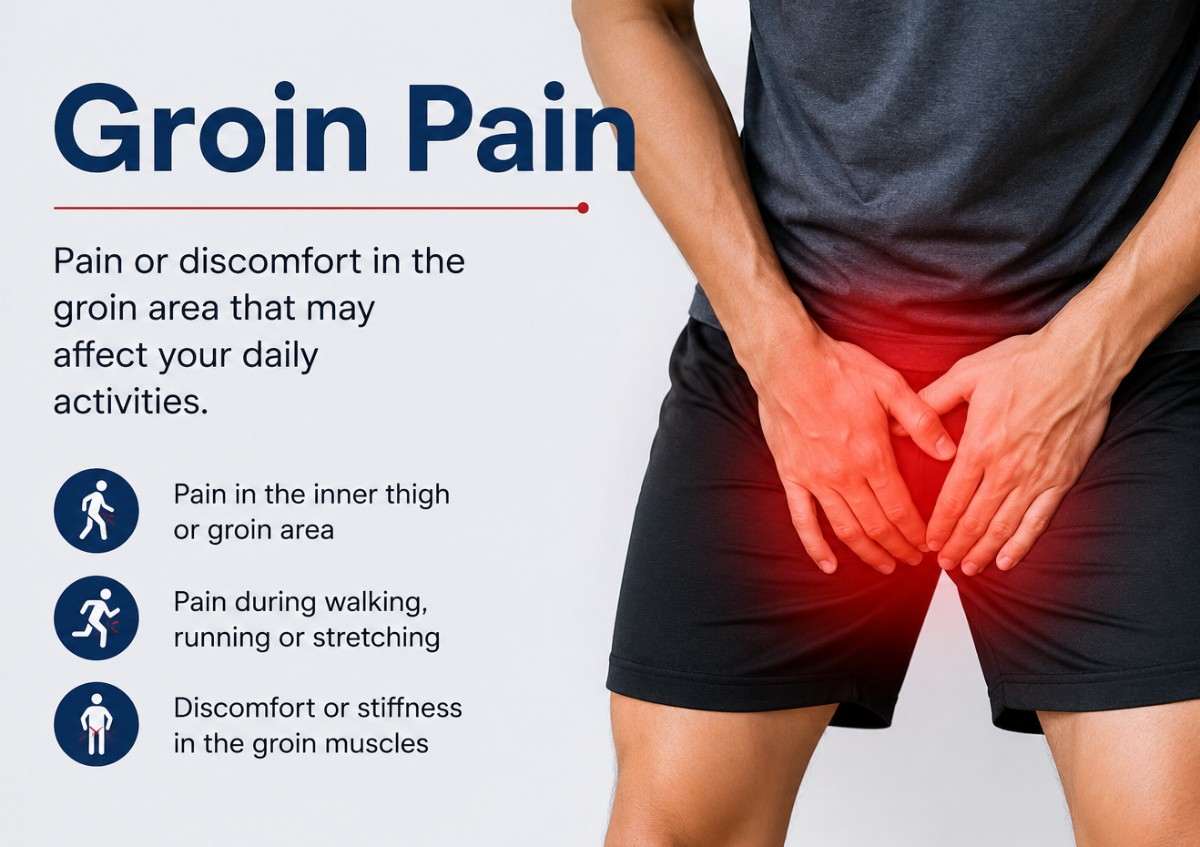
Groin pain refers to discomfort in the area between the lower abdomen and upper inner thigh. The pain may be felt on one side or both sides and can range from a mild ache to sharp, stabbing, burning, or pulling pain.
Depending on its cause, groin pain may occur:
- After physical activity or exercise
- When walking or running
- When moving the hip or leg
- When coughing or sneezing
- While lifting heavy objects
- When sitting or standing for long periods
- Along with swelling or a lump
- Along with pain in the lower abdomen, hip, thigh, or testicle
Because several conditions can produce similar symptoms, the location and character of the pain alone may not be enough to identify its cause.
Common Causes of Groin Pain
1. Groin Strain
A groin strain occurs when one or more muscles in the groin are stretched beyond their normal capacity. It is particularly common among athletes but can happen to anyone after sudden or strenuous activity.
You may experience sudden pain during sprinting, jumping, kicking, changing direction, or stretching.
2. Hip Problems
Conditions affecting the hip, such as osteoarthritis or a labral tear, can cause pain that is felt primarily in the groin. Hip-related pain may be accompanied by stiffness, reduced movement, clicking, or discomfort during activity.
3. Inguinal Hernia
An inguinal hernia develops when tissue pushes through a weak area in the abdominal wall. It may cause a visible or noticeable lump in the groin, along with aching, pressure, burning, or discomfort that becomes more noticeable with coughing, bending, lifting, or straining.
4. Athletic Pubalgia
Athletic pubalgia, sometimes called a sports hernia, involves injury or weakness of tissues around the lower abdominal wall and pelvis. Despite the name, it is not the same as a traditional inguinal hernia. It can cause persistent groin pain that returns with sports or strenuous activity.
5. Kidney Stones
Kidney stones can cause severe pain that begins in the back or side and may travel toward the lower abdomen and groin. Urinary symptoms or blood in the urine may also occur.
6. Urinary Tract Infection
A urinary tract infection can sometimes cause discomfort around the lower abdomen or groin, particularly when accompanied by burning during urination, frequent urination, or fever.
7. Testicular Conditions
In males, problems involving the testicles can sometimes cause pain that spreads into the groin. Epididymitis, orchitis, testicular masses, and testicular torsion are among the possible causes.
8. Nerve-Related Pain
A pinched or irritated nerve in the lower back or pelvis can send pain signals into the groin or upper leg. This type of pain may feel burning, shooting, tingling, or electric.
9. Stress Fracture
Repetitive physical activity can occasionally lead to a stress fracture involving the hip or pelvis. Pain may become worse with weight-bearing activity and improve with rest.
10. Swollen Lymph Nodes
Lymph nodes in the groin can become enlarged when the body is responding to an infection or inflammation. A noticeable lump may be present along with tenderness.
Types of Groin Pain
Groin pain can be described in different ways depending on the underlying problem.
1. Sharp Groin Pain
Sharp pain is often associated with an acute muscle injury, sudden movement, or irritation of a joint or nerve.
2. Dull or Aching Groin Pain
A dull ache may occur with overuse, certain hip problems, hernias, or chronic muscle and tendon problems.
3. Burning Groin Pain
Burning discomfort can sometimes indicate nerve irritation or inflammation.
4. Groin Pain When Walking
Pain while walking may be related to a muscle strain, hip problem, stress injury, or other musculoskeletal condition.
5. Groin Pain When Coughing
Pain that becomes worse when coughing or straining can occur with an inguinal hernia. A bulge that becomes more noticeable when coughing is another common sign.
6. Groin Pain That Radiates
Pain may spread toward the upper thigh, lower abdomen, hip, back, or testicle depending on the underlying cause.
Symptoms That May Occur With Groin Pain
Groin pain may occur by itself or alongside other symptoms, including:
- Tenderness
- Swelling
- Bruising
- Muscle weakness
- Difficulty walking
- Reduced hip movement
- Muscle spasms
- A groin lump or bulge
- Hip stiffness
- Lower abdominal discomfort
- Testicular pain or swelling
- Burning during urination
- Fever
- Nausea or vomiting
A groin strain can cause pain, weakness, swelling, bruising, muscle spasms, and difficulty moving the leg or hip.
Groin Pain in Men
Groin pain in men can have many of the same causes seen in women, including muscle strains, hernias, hip problems, kidney stones, and nerve irritation.
However, pain may also originate from the testicles or structures around them. Sudden and severe testicular pain is particularly important because testicular torsion can cut off the blood supply to the testicle and requires emergency treatment.
Men should seek medical evaluation for unexplained testicular swelling, a new lump, persistent testicular pain, or sudden severe pain.
Groin Pain in Women
Women can also develop groin pain from muscle strains, hip problems, hernias, nerve irritation, urinary conditions, and other causes.
Depending on the symptoms, pain in this region can sometimes be related to reproductive or pelvic conditions. Persistent, severe, or unexplained pelvic or groin pain should be evaluated by a healthcare professional rather than self-diagnosed.
How Is Groin Pain Diagnosed?
A healthcare professional usually begins with a medical history and physical examination.
They may ask:
- When did the pain begin?
- Did it happen after an injury?
- What activity were you doing?
- Does walking make it worse?
- Does coughing or lifting trigger the pain?
- Is there a lump or swelling?
- Is the pain moving into your abdomen, hip, thigh, or testicle?
- Are there urinary symptoms?
- Have you experienced similar pain before?
During the examination, the healthcare professional may assess the hip, abdomen, groin muscles, and surrounding areas.
Depending on the suspected cause, imaging may include an X-ray, ultrasound, or MRI. Ultrasound and MRI can be useful for evaluating soft-tissue injuries such as muscle or tendon damage.
Treatment for Groin Pain
Treatment depends on the underlying cause. There is no single treatment that works for every type of groin pain.
1. Rest From Aggravating Activities
If the pain appears to be related to a muscle strain, temporarily avoiding running, jumping, heavy lifting, or other activities that worsen the pain can allow the injured tissues to recover.
2. Apply Cold Therapy
For a recent muscle injury, a cold pack wrapped in a towel may help reduce pain and swelling. Cleveland Clinic recommends short applications rather than placing ice directly against the skin.
3. Gradually Resume Movement
Complete inactivity for an extended period is not usually necessary for uncomplicated muscle injuries. Once acute pain settles, gradual movement and rehabilitation can help restore strength and flexibility.
4. Physical Therapy
Physical therapy may be recommended for persistent muscle, tendon, hip, or sports-related groin problems. A therapist can develop exercises that address strength, flexibility, movement patterns, and return to activity.
5. Pain-Relieving Medication
Depending on your health history, a healthcare professional may recommend an over-the-counter pain reliever such as acetaminophen or an NSAID. NSAIDs are not appropriate for everyone, so people with certain medical conditions or those taking particular medications should check with a healthcare professional before using them.
6. Treatment for a Hernia
A symptomatic inguinal hernia may require surgical repair. The appropriate approach depends on the size, symptoms, type of hernia, and individual circumstances.
7. Treatment for Other Causes
Kidney stones, infections, hip disorders, nerve problems, and testicular conditions require treatment specific to the diagnosis. Treating only the pain without addressing its underlying cause may allow the problem to persist.
Exercises for Groin Pain Relief
The right exercises can help restore strength, flexibility, and movement when groin pain is caused by a mild muscle or tendon strain. However, exercise is not appropriate for every cause of groin pain. If the pain is severe, unexplained, associated with a lump or swelling, or you suspect a hernia or other injury, get medical advice before exercising.
1. Gentle Hip Flexor Stretch
Kneel with one knee on the floor and the other foot in front. Keep your back straight and gently move your hips forward until you feel a mild stretch around the front of the hip and groin. Hold for about 20–30 seconds and repeat 2–3 times on each side.
2. Adductor Stretch
Sit with the soles of your feet together and allow your knees to gently move toward the floor. Keep the movement comfortable and avoid forcing your knees downward. Hold for 20–30 seconds.
3. Gentle Adductor Squeeze
Lie on your back with your knees bent. Place a soft ball or pillow between your knees. Gently squeeze it for about 5–10 seconds, then relax. Repeat 8–10 times.
4. Glute Bridge
Lie on your back with your knees bent and feet flat on the floor. Tighten your abdominal and glute muscles and slowly lift your hips. Hold briefly before lowering back down. Start with 8–10 repetitions.
5. Side-Lying Leg Raise
Lie on your side with your legs straight. Slowly raise the upper leg while keeping your hips stable, then lower it with control. Perform 8–12 repetitions on each side.
6. Bodyweight Squat
Stand with your feet approximately shoulder-width apart. Slowly bend your knees and hips as if sitting into a chair, then return to standing. Keep the movement controlled and stop if it causes groin pain. Begin with 8–10 repetitions.
7. Hip Abduction Exercise
Using a resistance band around the thighs, gently move one leg outward while keeping your torso stable. Return slowly to the starting position. Begin with 8–12 repetitions on each side.
8. Gentle Walking
Once comfortable, short periods of easy walking can help maintain mobility. Increase your walking distance gradually rather than suddenly returning to long walks, running, or sports.
Tips for Exercising With Groin Pain
- Start with gentle movements and increase difficulty gradually.
- Do not force a painful stretch.
- Stop an exercise if it causes sharp or increasing pain.
- Avoid sprinting, jumping, kicking, and sudden direction changes while recovering from an injury.
- Allow adequate recovery between strengthening sessions.
- Consider physical therapy if pain persists or repeatedly returns.
Important: These exercises are mainly appropriate for uncomplicated muscle-related groin pain. Groin pain caused by a hernia, fracture, kidney stone, infection, testicular condition, or another medical problem requires treatment based on the underlying cause, rather than simply exercising through the pain.
How to Prevent Groin Pain?
Not every cause of groin pain can be prevented, but several habits may reduce the risk of muscle-related injuries.
1. Warm Up Before Exercise
A gradual warm-up prepares the muscles and joints for physical activity.
2. Increase Exercise Gradually
Avoid suddenly increasing training intensity, distance, or resistance.
3. Strengthen the Hips and Core
Balanced strength around the hips, pelvis, abdomen, and thighs can support movement and athletic performance.
4. Maintain Flexibility
Regular mobility work may help maintain comfortable movement, particularly when combined with appropriate strengthening.
5. Use Proper Technique
Poor movement mechanics during lifting, running, jumping, or sports can place unnecessary stress on the groin and surrounding tissues.
6. Allow Adequate Recovery
Repeatedly exercising an injured area before it has recovered can prolong symptoms and increase the risk of another injury.
Emergency Warning Signs of Groin Pain
Most groin pain is not an emergency, but certain symptoms can indicate a serious condition that needs immediate medical attention.
- Sudden, severe testicular pain: This can be a sign of testicular torsion, which requires urgent treatment to restore blood flow.
- A painful or firm groin lump: A hernia that becomes suddenly painful, hard, or difficult to push back may be trapped or strangulated.
- Groin pain with vomiting: Severe pain accompanied by nausea or vomiting may occur with a strangulated hernia, kidney stone, or other urgent condition.
- A discolored groin bulge: A hernia that turns red, purple, dark, or unusually swollen may indicate compromised blood supply.
- Inability to pass stool or gas: When accompanied by severe groin or abdominal pain and a hernia, this can indicate bowel obstruction.
- Severe pain after an injury: Inability to walk, significant swelling, deformity, or severe pain after a fall, collision, or other injury requires prompt assessment.
- Groin pain with fever: Fever, chills, swelling, redness, or worsening pain can indicate an infection that needs medical evaluation.
- Blood in the urine with severe pain: This may occur with kidney stones or another urinary tract problem and should be medically assessed.
- Sudden worsening of previously mild pain: Rapidly increasing pain, particularly when accompanied by swelling, vomiting, fever, or a new lump, should not be ignored.
When Is Groin Pain Serious?
Groin pain deserves prompt medical attention when it is severe, persistent, unexplained, or accompanied by concerning symptoms.
Seek urgent medical care for:
- Sudden severe testicular pain
- Testicular pain with swelling
- Severe groin pain with nausea or vomiting
- Groin pain accompanied by significant abdominal, back, or chest pain
- A painful hernia that suddenly becomes worse
- A hernia bulge that becomes dark red, purple, or otherwise discolored
- A hernia accompanied by vomiting or inability to pass stool or gas
- Severe pain following a significant injury
- Inability to walk or bear weight
A strangulated hernia can interfere with the blood supply to trapped tissue and can become life-threatening. Symptoms can include rapidly worsening pain, nausea or vomiting, fever, discoloration of the bulge, and inability to pass stool or gas.
Sudden severe testicular pain is also an emergency because testicular torsion can compromise blood flow.
When Should You See a Doctor for Groin Pain?
Consider making a medical appointment if:
- Pain is severe or keeps returning
- Symptoms do not improve after a few days of appropriate home care
- You notice a groin lump or swelling
- You have persistent testicular discomfort
- Pain interferes with normal walking or daily activities
- You have blood in your urine
- You develop fever or urinary symptoms
- Pain continues despite rest
Mayo Clinic recommends medical evaluation for serious groin pain and pain that does not improve with home treatment within a few days.
FAQ’s
How long does groin pain usually last?
A mild muscle strain may improve with appropriate rest and rehabilitation, but recovery varies according to the severity of the injury and the cause of the pain.
Can groin pain go away on its own?
Some mild muscle strains improve with rest and appropriate self-care. Persistent or worsening pain should be evaluated to determine whether another condition is responsible.
Can walking make groin pain worse?
Yes. Walking can aggravate certain muscle strains, hip conditions, stress injuries, and other causes of groin pain. If walking causes significant pain, reduce activity and seek medical advice if symptoms persist.
Is groin pain always caused by a pulled muscle?
No. Hernias, hip problems, kidney stones, nerve irritation, urinary conditions, and testicular problems can also cause groin pain.
Can a hernia cause groin pain?
Yes. An inguinal hernia can cause groin pressure, aching, burning, or pain, particularly with coughing, lifting, bending, or straining.
Should I exercise with groin pain?
Avoid activities that significantly increase pain. If the cause is uncertain or symptoms are persistent, consult a healthcare professional before returning to strenuous exercise.
What is the fastest way to relieve groin pain?
There is no single fastest treatment because the cause matters. For a minor muscle strain, rest from aggravating activity and appropriate cold therapy may help initially. Other causes require specific treatment.
Where is groin pain located?
Groin pain is usually felt where the lower abdomen meets the upper inner thigh. It may also spread toward the hip, thigh, lower abdomen, back, or testicle.
How do I know if my groin pain is serious?
Severe or sudden pain, testicular swelling, vomiting, fever, a painful groin lump, inability to walk, or rapidly worsening symptoms require prompt medical attention.
Can kidney stones cause groin pain?
Yes. Kidney stone pain may begin in the back or side and travel toward the lower abdomen and groin. Blood in the urine, nausea, or painful urination may also occur.
Why does my groin hurt when I walk?
Groin pain while walking can occur with a muscle strain, hip problem, stress injury, tendon problem, or other condition affecting the hip and groin.
Why does my groin hurt when I cough?
Pain that increases when coughing or straining can occur with an inguinal hernia, although other conditions may also cause pain with these movements.
Can groin pain come from the hip?
Yes. Several hip conditions can cause pain that is mainly felt in the groin rather than directly over the hip.
How long should I wait before seeing a doctor for groin pain?
See a healthcare professional if pain is severe, keeps returning, interferes with normal activities, or does not begin improving after a few days of appropriate self-care.
Should I stretch a painful groin?
Gentle movement may be appropriate during recovery, but aggressive stretching can worsen some injuries. The appropriate exercises depend on the cause and severity of the pain.
Is groin pain common in athletes?
Yes. Running, kicking, jumping, twisting, and sudden changes in direction can increase the risk of groin muscle and tendon injuries.
Can groin pain affect both sides?
Yes. Muscle overuse, certain hip or pelvic conditions, and other underlying problems can cause pain on both sides of the groin.
Can nerve problems cause groin pain?
Yes. Irritated or compressed nerves in the lower back, pelvis, or groin can cause burning, shooting, tingling, or electric-like pain.
Can women get groin pain from reproductive conditions?
Yes. Some pelvic or reproductive conditions can cause pain that is felt in or around the groin. Persistent or severe pelvic pain should be medically evaluated.
Can men have groin pain without a muscle injury?
Yes. Hernias, kidney stones, urinary conditions, hip problems, and testicular disorders can cause groin pain even without a muscle injury.
What’s the best sleeping position for a groin strain?
Sleeping on your back with a pillow under your knees may reduce tension on the groin. Side sleeping can also be comfortable if you place a pillow between your knees.
What can be mistaken for groin pain?
Hip problems, kidney stones, inguinal hernias, urinary infections, nerve irritation, pelvic conditions, and testicular problems can sometimes feel like groin pain.
How can I check for groin pain?
Notice where the pain occurs and whether it worsens with walking, hip movement, stretching, coughing, or lifting. A healthcare professional can perform a physical examination to determine the underlying cause.
What is a red flag for groin pain?
Sudden severe pain, testicular pain or swelling, a painful or discolored groin lump, vomiting, fever, inability to walk, or rapidly worsening symptoms are red flags requiring urgent medical evaluation.
Final Thought
Groin pain is a symptom rather than a diagnosis. A strained muscle is a common cause, but hip problems, hernias, kidney stones, nerve irritation, urinary conditions, and testicular disorders can also produce pain in this area.
Mild pain after physical activity may improve with appropriate rest and gradual rehabilitation. However, severe, persistent, unexplained, or rapidly worsening pain deserves medical evaluation. Sudden severe testicular pain and symptoms of a potentially strangulated hernia require urgent attention.
Sources / References:
About the Author:
Written by: Kirti Solanki, Health Content Researcher
Kirti Solanki creates reader-focused health content based on medical literature and information from reputable healthcare organizations. Her work focuses on presenting health topics in a clear, accessible, and evidence-informed way.
Disclaimer:
This article is for general education only and does not replace professional medical advice, diagnosis, or treatment. Seek medical care for severe, persistent, or concerning symptoms.
Also Read: