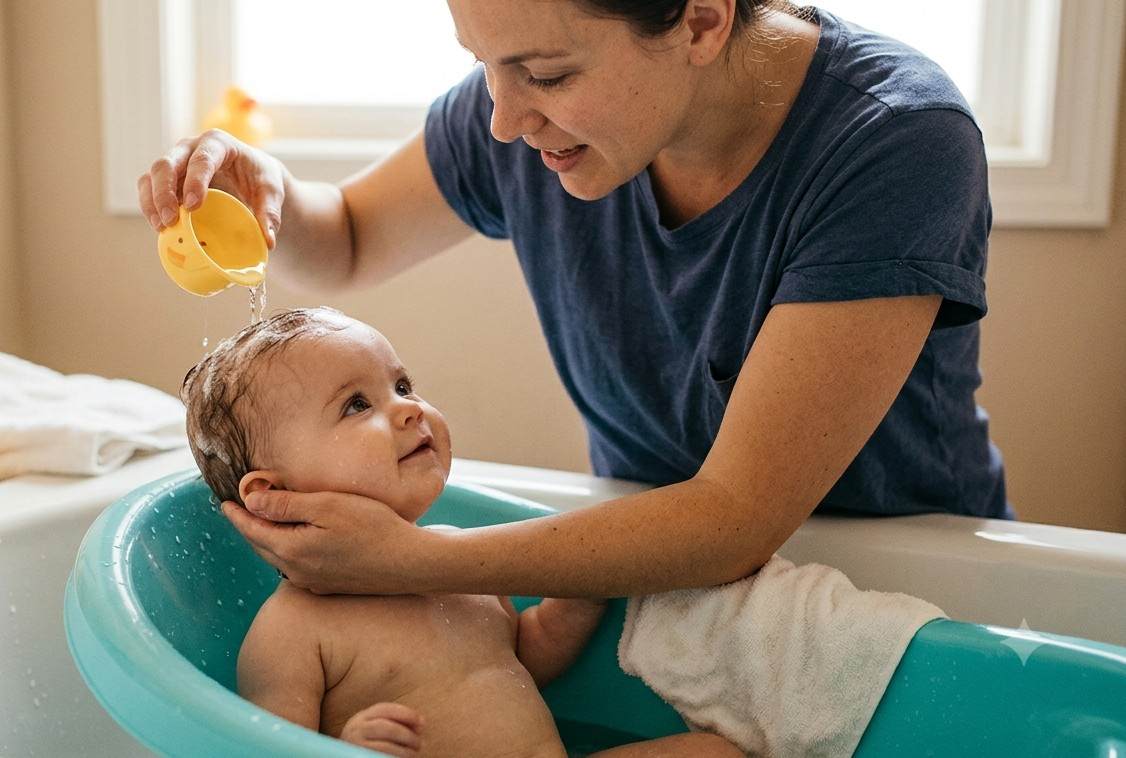
Washing a baby’s hair for the first time can feel a little intimidating, especially for new parents. Your baby’s head may seem delicate, and you might worry about getting water in their eyes, irritating their scalp, or accidentally pressing on the soft spot.
The good news is that washing a baby’s hair is usually simple once you know the right technique. With lukewarm water, a gentle baby shampoo when needed, and a little patience, you can keep your baby’s scalp clean without making bath time stressful.
Babies do not need their hair washed every day. For most infants, washing their hair once or twice a week with a mild baby shampoo is enough, although their individual needs may vary. You can also clean their scalp with plain water when necessary.
In this guide, you will learn how to wash a baby’s hair safely, how often to do it, which products to use, and how to care for common scalp concerns such as cradle cap.
When Can You Start Washing a Baby’s Hair?
You can gently clean your baby’s hair from birth. However, during the first few weeks, it is important to be especially careful about keeping your newborn warm and supporting their head and neck.
If your baby still has their umbilical cord stump, follow your healthcare professional’s advice about sponge bathing and keeping the area dry. You can clean your baby’s hair separately using a small amount of lukewarm water and a soft washcloth.
For newborns, plain water is generally sufficient during the first month. You can introduce a mild baby shampoo when needed, following the product instructions and your healthcare professional’s advice.
What You Need to Wash Your Baby’s Hair
Before you begin, gather everything you need so you will not have to leave your baby unattended.
- Lukewarm water: Use comfortably warm water, not hot water.
- Mild baby shampoo: Choose a gentle product specifically formulated for babies, preferably fragrance-free.
- Soft washcloth: A clean, soft cloth helps wet and rinse the scalp without splashing.
- Soft baby brush: This is optional and may help with gentle grooming.
- Soft towel: Keep it nearby to dry your baby’s head immediately after washing.
- Clean clothes: Have fresh clothes and a diaper ready for after bath time.
You do not need lots of products to care for your baby’s hair. Simple, gentle cleaning is usually the best approach for a young infant’s delicate scalp.
How to Wash a Baby’s Hair: A Step-by-Step Guide
Follow these simple steps to clean your baby’s hair comfortably and safely.
1. Choose the Right Time
Choose a time when your baby is calm, awake, and comfortable. Avoid washing their hair immediately after a feed, when they are hungry, or when they are already tired and fussy.
A warm room can help your baby feel comfortable during the process. Prepare the shampoo, water, washcloth, and towel beforehand so everything is within reach.
2. Check the Water Temperature
Fill a small baby bath or bowl with lukewarm water. Test the temperature with your wrist or elbow before using it.
The water should feel comfortably warm, not hot. Mix it thoroughly to avoid areas that are hotter than others.
Never rely only on how the water looks to judge its temperature, and keep your baby away from hot running water.
3. Support Your Baby’s Head and Neck
Your baby cannot support their head independently during the early months, so provide steady support throughout the process.
If you are washing their hair separately, hold your baby securely on your lap, supporting their head and neck. You can place a towel over your lap to keep your clothes dry.
If your baby is in a baby bath, maintain a secure hold and keep their face above the water. Never leave your baby unattended in or near water, even for a moment.
4. Wet the Hair Gently
Dip a soft washcloth into the lukewarm water and gently squeeze it so it is damp rather than dripping.
Carefully wipe the hair and scalp, moving slowly from the forehead toward the back of the head. Avoid pouring water directly over your baby’s face.
If your baby has thick hair, gently part it with your fingers to help water reach the scalp. There is no need to rub or scrub.
5. Apply a Small Amount of Baby Shampoo
For routine washing, use a small amount of mild baby shampoo when necessary. Follow the product’s age recommendations and avoid products with strong fragrances or harsh cleansing ingredients.
Gently massage the shampoo into the scalp with your fingertips. Use the pads of your fingers rather than your fingernails.
Pay attention to areas where sweat, oil, or milk residue may collect, particularly around the hairline. Do not scratch the scalp or press firmly on the soft spots, known as fontanelles.
6. Rinse the Hair Thoroughly
Rinsing is an important step because leftover shampoo can irritate your baby’s sensitive skin.
Use a clean, damp washcloth or carefully trickle a small amount of lukewarm water over the scalp. Keep the water away from your baby’s eyes, nose, and mouth.
You can place your hand gently across the forehead to help direct water toward the sides of the head. Take your time and make sure no shampoo remains in the hair or along the hairline.
7. Dry the Hair With a Soft Towel
Once you finish rinsing, wrap your baby in a soft, dry towel to help keep them warm.
Gently pat the scalp and hair rather than rubbing vigorously. If your baby has longer hair, carefully squeeze out excess water with the towel.
Avoid vigorous rubbing, tight hairstyles, or pulling at tangled hair. Once the hair is dry enough, you can gently smooth it with your fingers or a soft baby brush.
How Often Should You Wash a Baby’s Hair?
The ideal frequency depends on your baby’s age, hair type, scalp condition, and how much they sweat or get dirty.
| Baby’s age or situation | General hair-washing guidance |
|---|---|
| Newborn during the first month | Plain water is generally enough for routine cleaning. |
| Young infant with a healthy scalp | A mild baby shampoo once or twice a week is often sufficient. |
| Baby with sweaty or dirty hair | Clean as needed, using water or mild baby shampoo when appropriate. |
| Baby with cradle cap | More frequent gentle shampooing may help; ask a healthcare professional if it persists. |
Remember that washing your baby’s hair and bathing their entire body are not the same thing. You can clean your baby’s scalp without giving them a full bath.
Tips for Washing a Baby’s Hair Safely
A few simple precautions can make hair washing easier for both you and your baby.
- Keep everything ready: Gather your supplies before starting so you never need to leave your baby unattended.
- Use gentle products: Choose a mild, age-appropriate baby shampoo and avoid strong fragrances.
- Protect the eyes: Use a damp washcloth and rinse slowly to prevent shampoo and water from entering the eyes.
- Support the head: Keep one hand supporting your baby’s head and neck whenever necessary.
- Avoid excessive washing: Frequent shampooing may dry out the scalp, so wash according to your baby’s needs.
- Keep the room warm: Babies can lose body heat quickly when wet.
- Be gentle around the soft spot: Normal, gentle washing is safe, but avoid forceful pressure or scratching.
- Make the experience soothing: Talk softly, maintain eye contact, and take breaks if your baby becomes upset.
If your baby cries during hair washing, it does not necessarily mean you are doing anything wrong. They may dislike the sensation of water, feel cold, or simply be tired. Try shorter washing sessions and a gentler approach.
How to Wash a Newborn Baby’s Hair Without Giving a Full Bath
You do not have to place your newborn in a bathtub just to clean their hair.
A separate hair wash can be more convenient, particularly during the first few weeks.
- Choose a warm, comfortable room and gather a soft washcloth, lukewarm water, and a towel.
- Hold your newborn securely on your lap, supporting their head and neck.
- Wet the washcloth and gently clean the scalp and hair.
- If shampoo is needed, apply a tiny amount of mild baby shampoo appropriate for your newborn’s age.
- Use a clean, damp cloth to remove all shampoo residue.
- Pat the hair dry immediately and keep your baby warm.
For very young newborns, follow your healthcare professional’s guidance on sponge bathing and care of the umbilical cord stump. Never leave your baby alone on a changing surface, counter, or near water.
How to Wash a Baby’s Hair With Cradle Cap
Cradle cap is a common condition that causes greasy, yellowish or whitish scales on a baby’s scalp. It is generally harmless and usually clears up on its own.
If your baby has cradle cap, you can take these steps:
- Use gentle shampoo: Wash the scalp with a mild baby shampoo.
- Massage carefully: Use your fingertips to loosen the scales gently while washing.
- Brush softly: If needed, use a soft baby brush to remove loose flakes without irritating the skin.
- Avoid picking: Never scrape, scratch, or pull off attached scales, as this can damage the skin and increase the risk of infection.
- Ask before treating: Consult a pediatrician or pharmacist before using medicated products or scalp treatments.
Do not use adult dandruff shampoo on a young baby unless a healthcare professional specifically recommends it. If the scalp becomes swollen, bleeds, leaks fluid, or does not improve, seek medical advice.
Mistakes to Avoid When Washing a Baby’s Hair
Even with good intentions, parents sometimes make small mistakes when caring for their baby’s scalp.
- Using adult shampoo: Adult products may be too harsh or irritating for a baby’s delicate skin.
- Using hot water: Water that is too hot can burn sensitive skin. Always check the temperature before washing.
- Scrubbing the scalp: Vigorous rubbing can irritate the skin. Gentle fingertip movements are enough.
- Washing too frequently: Daily shampooing is usually unnecessary for a baby with a healthy scalp.
- Leaving shampoo behind: Inadequate rinsing may cause irritation, so rinse carefully.
- Trying to remove every cradle cap scale: Forcing scales off can cause injury. Allow loose flakes to come away naturally.
- Leaving the baby unattended: Never leave a baby alone near water, even if the water is shallow or you need to reach for something nearby.
When Should You Contact a Pediatrician?
Most babies do not experience problems with routine hair washing. However, certain scalp symptoms need professional attention.
Contact your baby’s pediatrician if you notice:
- Persistent redness, swelling, or irritation of the scalp.
- Sores, bleeding, pus, or fluid leaking from the skin.
- A rash that spreads beyond the scalp.
- Cradle cap that worsens or does not improve with gentle care.
- Significant discomfort, persistent scratching, or unusual hair loss.
These symptoms may indicate irritation, infection, or another skin condition that requires assessment. Do not assume every scalp problem is cradle cap.
FAQ’s
Can I wash my newborn’s hair with water only?
Yes. Plain lukewarm water is generally sufficient for routine hair cleaning during the first month. A mild baby shampoo can be introduced when needed, following age recommendations and professional guidance.
How do I keep shampoo out of my baby’s eyes?
Use a damp washcloth to wet and rinse the hair slowly. Gently shield the forehead with your hand to direct water toward the sides of the head. If shampoo enters the eyes, rinse gently with clean lukewarm water.
Can I wash my newborn’s hair every day?
Daily hair washing is usually unnecessary. Plain lukewarm water is generally sufficient for routine cleaning during the first month.
Which shampoo is safe for a baby’s hair?
Choose a mild, fragrance-free baby shampoo suitable for your baby’s age. Follow the product instructions and avoid harsh or medicated shampoos unless recommended by a healthcare professional.
Can I wash my baby’s hair without shampoo?
Yes. Plain water is often enough to clean a baby’s hair, especially during the newborn period. Use a gentle baby shampoo when additional cleaning is needed.
How do I wash my baby’s hair without getting water in their eyes?
Use a damp washcloth to wet and rinse the hair slowly. Gently shield your baby’s forehead with your hand to direct water away from their eyes.
Is it safe to wash a baby’s soft spot?
Yes. Gentle washing around the soft spot is safe because it is protected by a strong membrane. Avoid pressing firmly, scratching, or rubbing the area roughly.
How do I remove cradle cap while washing my baby’s hair?
Wash the scalp gently with mild baby shampoo and use a soft baby brush to loosen loose scales. Never pick or scrape the flakes, as this may injure the skin.
Should I oil my baby’s hair before washing it?
Hair oil is not necessary for routine care. If your baby has cradle cap, ask a healthcare professional which product is appropriate for loosening the scales.
What should I do if my baby cries during hair washing?
Keep your baby warm, support their head securely, and use a soft washcloth instead of pouring water over their head. Try again when your baby is calm.
Can I use adult shampoo on my baby’s hair?
It is better to use a mild baby shampoo because adult products may irritate a baby’s delicate scalp. Avoid adult dandruff shampoos unless a healthcare professional recommends one.
Conclusion
Washing a baby’s hair does not need to be complicated. With lukewarm water, gentle handling, an appropriate baby shampoo, and careful rinsing, you can keep your little one’s scalp clean and comfortable.
Remember that newborns and young infants do not need frequent shampooing. Pay attention to your baby’s scalp, avoid harsh products, and never leave your baby unattended near water. If you notice persistent irritation or unusual scalp changes, consult your pediatrician.
Sources / References:
- American Academy of Pediatrics (HealthyChildren.org)
- Centers for Disease Control and Prevention (CDC)
- NHS
- American Academy of Dermatology
Disclaimer:
This article is for general educational purposes only and is not a substitute for professional medical advice, diagnosis, or treatment. Consult your pediatrician if your baby has persistent scalp irritation or other concerning symptoms.
Also Read: