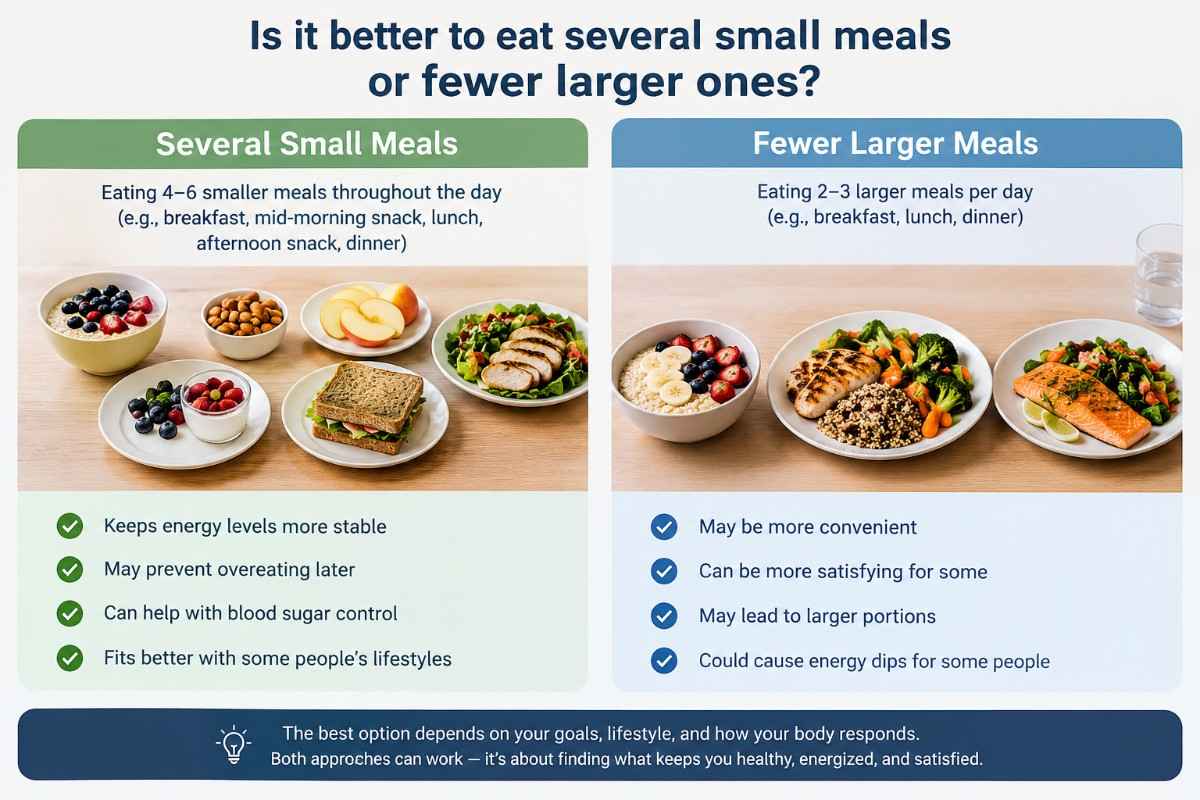
Have you ever wondered whether eating five or six small meals throughout the day is healthier than eating three larger meals? You may have heard that eating frequently boosts your metabolism, helps burn more calories, and prevents weight gain. On the other hand, some people prefer eating fewer, larger meals because they feel fuller for longer and find it easier to follow a routine.
So, which eating pattern is actually better for your health?
For most healthy adults, neither several small meals nor fewer larger meals is automatically healthier. The quality of your food, your overall calorie intake, portion sizes, hunger levels, and daily routine generally matter more than the number of times you eat. A review of randomized controlled trials found no clear advantage of eating more frequently for weight management or cardiometabolic health, although the available evidence had important limitations.
In this guide, we will explore the differences between small, frequent meals and fewer, larger meals, their potential benefits and drawbacks, and how to choose an eating schedule that works for your body.
What Does Eating Several Small Meals Mean?
Eating several small meals means spreading your daily food intake across multiple eating occasions instead of consuming most of your food in two or three main meals.
For example, someone following this pattern might eat breakfast, have a midmorning snack, eat a smaller lunch, enjoy an afternoon snack, have dinner, and occasionally eat a light evening snack.
The goal is to distribute food throughout the day rather than eating large portions at once. Some people prefer this approach because they become hungry frequently, have difficulty eating large portions, or feel uncomfortable after heavy meals.
However, eating more often does not automatically make a diet healthier. If your small meals consist mainly of sugary snacks, refined carbohydrates, or highly processed foods, the overall nutritional quality of your diet may still be poor.
What Does Eating Fewer, Larger Meals Mean?
Eating fewer, larger meals means consuming your daily food intake in two or three main meals, with fewer snacks between them.
A typical example is eating breakfast, lunch, and dinner without regularly snacking throughout the day. Some adults prefer two substantial meals because of their work schedules, appetite patterns, or personal preferences.
This approach can make meal planning simpler and may help some people avoid unnecessary snacking. However, eating very large portions can leave others feeling overly full, uncomfortable, or hungry later if their meals are not balanced.
Eating fewer meals also does not mean you must skip meals or ignore hunger. The goal is to find a reasonable schedule that supports adequate nutrition and fits your lifestyle.
Small Meals vs. Large Meals: Key Differences
| Feature | Several small meals | Fewer larger meals |
|---|---|---|
| Meal frequency | Usually 4–6 eating occasions | Usually 2–3 main meals |
| Portion size | Smaller portions at each sitting | Larger portions at each sitting |
| Hunger management | May help people who get hungry frequently | May suit people who feel satisfied for longer |
| Meal planning | Requires more frequent preparation | Can be simpler to organize |
| Weight management | Depends on total intake and food choices | Depends on total intake and food choices |
| Digestive comfort | May help people who struggle with large meals | May cause discomfort in people sensitive to large portions |
| Best suited for | People who prefer smaller portions or need them for medical reasons | People who prefer structured meals and fewer snacks |
Neither approach is best for everyone. Your response to portion sizes, the foods you eat, and your individual health needs should guide your decision.
Is It Better to Eat Several Small Meals or Fewer Larger Meals?
Eating several small meals or fewer larger meals can affect hunger, digestion, and daily eating habits differently. The best option depends on your nutritional needs, lifestyle, and health goals, as neither eating pattern is universally better for everyone.
Benefits of Eating Several Small Meals
Eating smaller meals more frequently can be useful for certain people, particularly when it helps them manage hunger or tolerate food more comfortably.
- May Improve Digestive Comfort: Smaller portions may reduce the uncomfortable fullness that some people experience after eating a large meal.
- May Help Manage Hunger: Planned meals and snacks can help people who become hungry between traditional mealtimes.
- Can Support People With Reduced Appetite: Older adults and people who struggle to consume enough food may find smaller portions easier to manage.
- May Help With Certain Digestive Conditions: People with acid reflux or those recovering from some stomach surgeries may benefit from smaller meals, depending on their individual circumstances.
- Provides Opportunities for Balanced Snacks: Planned snacks such as fruit with yogurt or whole-grain toast with peanut butter can contribute useful nutrients.
- May Fit Active Schedules: People with long working hours or demanding physical routines may find it easier to distribute food intake throughout the day.
These potential benefits do not mean everyone needs to eat frequently. Research on small, frequent meals is limited in several clinical settings, and outcomes depend on the person’s health, food choices, and total intake.
Drawbacks of Eating Several Small Meals
Frequent eating also has disadvantages, especially when snacks are unplanned or meals are poorly balanced.
- May Increase Total Calorie Intake: Adding snacks without adjusting meal portions can lead to consuming more energy than intended.
- Requires More Planning: Preparing, packing, and scheduling food several times a day can be inconvenient.
- May Encourage Constant Grazing: Eating whenever food is available can make it harder for some people to distinguish physical hunger from habit or boredom.
- Can Reduce Appetite for Main Meals: Frequent snacks may leave you less hungry for meals containing a wider variety of nutrients.
- May Affect Evening Routines: Repeated late-night eating can interfere with a comfortable bedtime routine for some people.
- Does Not Automatically Boost Metabolism: Eating more frequently is not a reliable shortcut to burning more calories or losing weight.
The important distinction is between planned, nutritious small meals and repeatedly snacking without considering hunger or overall food intake.
Benefits of Eating Fewer, Larger Meals
For people who feel comfortable eating substantial meals, a two- or three-meal pattern may be easier to maintain.
- Simplifies Daily Meal Planning: Preparing three main meals can reduce the need to organize food throughout the day.
- May Reduce Unplanned Snacking: A satisfying meal can help some people avoid repeatedly reaching for snacks.
- Makes Balanced Meals Easier to Organize: Main meals can include vegetables, protein-rich foods, whole grains, and healthy fats in suitable proportions.
- Can Support a Consistent Routine: Regular breakfast, lunch, and dinner may fit work, school, and family schedules.
- May Help Some People Recognize Hunger Cues: Planned mealtimes can reduce habitual eating between meals.
- Can Be Convenient for Busy Adults: People who have limited opportunities to eat during working hours may prefer fewer, more substantial meals.
However, these benefits depend on whether you eat enough nutritious food and feel comfortable with the portions. Fewer meals are not inherently superior for health or weight control.
Drawbacks of Eating Fewer, Larger Meals
Fewer meals may not suit everyone, particularly people who feel uncomfortably full after eating large portions.
- May Cause Overfullness: Large meals can cause bloating, heaviness, or indigestion in susceptible individuals.
- May Worsen Acid Reflux: Some people experience more reflux after large meals, especially when lying down soon afterward.
- Can Make Hunger More Difficult to Manage: Long gaps between meals may leave some people extremely hungry and more likely to eat quickly or beyond fullness.
- May Be Difficult for People With Small Appetites: Older adults and people with certain illnesses may struggle to consume sufficient nutrients in only a few meals.
- May Not Suit Certain Medical Needs: Some digestive conditions and medical treatments require specific meal patterns.
- Can Lead to Poor Food Choices When Overly Hungry: If meals are delayed for too long, convenient but less nutritious foods may become more appealing.
A larger meal is not necessarily unhealthy, but forcing yourself to eat large portions or ignoring persistent hunger is not a good strategy.
Does Eating More Frequently Boost Metabolism?
One of the most common nutrition myths is that eating every two or three hours keeps your metabolism running faster.
Your body does use energy to digest and process food, a process known as the thermic effect of food. However, this effect is influenced largely by how much you eat and the nutritional composition of your food, rather than simply how many meals you divide it into.
For example, eating the same total amount of food across six meals instead of three does not reliably produce a meaningful metabolic advantage.
A systematic review and meta-analysis published in 2023 examined randomized trials comparing lower and higher eating frequencies. It found no clear advantage of either pattern for weight change or cardiometabolic health, although the certainty of evidence was very low.
The takeaway: Do not feel that you must eat every few hours to keep your metabolism active. Choose a schedule that helps you meet your nutritional needs comfortably.
Which Is Better for Weight Loss?
Neither eating several small meals nor eating fewer, larger meals guarantees weight loss. What matters most is your overall energy intake, food quality, physical activity, sleep, and ability to maintain your eating pattern over time.
Here is how the two approaches may affect weight management:
- Small, Frequent Meals: These may help some people manage hunger, but frequent snacks can also increase calorie intake if portions are not planned.
- Fewer, Larger Meals: These may simplify calorie management for some people, but large portions can make it easier to consume more food than intended.
- Balanced Meals: Including protein, fiber-rich carbohydrates, vegetables, and healthy fats can make meals more satisfying regardless of frequency.
- Consistency: An eating pattern you can follow without persistent hunger or overeating is generally more practical than a restrictive schedule.
Research has not established a universally superior meal frequency for weight loss. A 2020 systematic review found some differences between meal patterns in certain outcomes, but the overall evidence was insufficient to recommend one frequency for everyone.
Is It Better to Eat Small Meals for Blood Sugar Control?
Meal frequency can influence how food intake is distributed throughout the day, but it is not the only factor affecting blood sugar.
The carbohydrate content of a meal, portion size, physical activity, medications, and individual metabolic health all play important roles.
For some people, eating balanced meals at regular intervals may help avoid large swings in blood glucose. Others may do well with three conventional meals. Eating small meals is not a universal treatment for blood sugar problems.
If you have diabetes, take insulin, or use medication that can cause low blood sugar, discuss your meal schedule with your healthcare professional. Changing meal timing or skipping meals may require adjustments to your treatment plan.
Which Eating Pattern Is Better for Digestion?
Your digestive comfort may be a useful guide when choosing between small meals and larger meals.
People who experience uncomfortable fullness after eating may find smaller portions easier to tolerate. Those with acid reflux may also benefit from avoiding very large meals and not lying down immediately after eating.
On the other hand, if you feel comfortable eating three balanced meals and do not experience troublesome symptoms, there is usually no reason to switch to six meals a day solely for digestion.
If you regularly experience bloating, abdominal pain, vomiting, persistent heartburn, or unexplained weight loss, seek medical advice rather than relying only on a change in meal frequency.
How to Choose the Best Eating Schedule for You
Rather than following a strict rule, consider these practical steps.
- Pay Attention to Your Hunger: Notice when you naturally feel hungry and satisfied. Avoid forcing yourself to eat when uncomfortably full or routinely ignoring significant hunger.
- Prioritize Food Quality: Include vegetables, fruits, whole grains, beans, lentils, nuts, seeds, and suitable protein sources in your daily diet.
- Choose Satisfying Meals: Protein and fiber can help make meals more filling, reducing the urge to snack constantly.
- Plan Snacks When Needed: If you feel hungry between meals, choose nourishing options such as fruit, yogurt, nuts, or roasted chickpeas.
- Avoid Oversized Portions: If large meals leave you uncomfortable, try reducing portion sizes or dividing your intake into more eating occasions.
- Consider Your Daily Routine: Your schedule should work with your job, exercise, family commitments, and sleep.
- Notice How You Feel: Persistent fatigue, dizziness, intense hunger, or difficulty eating enough may indicate that your current approach needs attention.
Sample Meal Plans for Both Eating Patterns
The following examples illustrate how both approaches can include a variety of nutritious foods. Adjust portions to your appetite, activity level, and individual requirements.
Option 1: Three main meals
- Breakfast: Oatmeal with fruit and nuts, plus eggs or yogurt for protein.
- Lunch: Brown rice or whole-grain roti with dal, vegetables, and yogurt.
- Dinner: Fish, tofu, beans, or another protein source with vegetables and whole grains.
Option 2: Smaller meals throughout the day
- Morning meal: Yogurt with oats and banana.
- Midmorning snack: An apple and a small serving of almonds, if hungry.
- Lunch: A moderate portion of rice, lentils, and vegetables.
- Afternoon snack: Whole-grain toast with peanut butter.
- Dinner: Vegetable soup with whole-grain bread and tofu or another protein source.
You do not need to eat every snack shown in the second plan. Snacks should complement your meals and help meet your needs, not become compulsory eating occasions.
Common Mistakes to Avoid
- Eating Frequently Just to Boost Metabolism: There is no strong evidence that eating more often automatically improves metabolic health.
- Skipping Meals Despite Significant Hunger: This can make it harder to maintain a comfortable, balanced eating pattern.
- Eating Large Portions Too Quickly: Eating slowly can give you more time to recognize fullness.
- Choosing Low-Nutrient Snacks Repeatedly: Frequent intake of sugary drinks, sweets, and highly processed snacks can displace more nutritious foods.
- Ignoring Individual Medical Needs: Some people need a specific eating schedule because of their health conditions or medications.
- Following Extreme Meal Schedules Without Guidance: Very restrictive patterns can make it difficult to obtain adequate nutrition and may not be appropriate for everyone.
FAQ’s
Is it better to eat 3 meals or 6 small meals a day?
Both eating patterns can be healthy. Three balanced meals may suit people who prefer a simple routine, while six smaller meals may help those who feel better eating smaller portions.
Do small, frequent meals help with weight loss?
Small, frequent meals do not automatically lead to weight loss. Total calorie intake, food quality, physical activity, and consistency are more important.
Does eating fewer meals slow down metabolism?
Eating fewer meals does not automatically slow metabolism. Meal frequency alone does not determine how many calories your body burns.
Is eating 5 small meals a day healthy?
Yes, five small meals can be healthy if they provide sufficient nutrients and appropriate portions. However, most adults do not need to eat five times a day to stay healthy.
Are larger meals bad for digestion?
Not necessarily. However, large meals may cause bloating, heaviness, or acid reflux in some people, making smaller portions more comfortable.
How many hours should you wait between meals?
There is no universally required interval between meals. Your schedule can depend on your hunger, daily routine, activity level, and individual nutritional needs.
Is it okay to eat only two meals a day?
Some adults can meet their nutritional needs with two meals a day. However, this pattern may not suit everyone, particularly people with certain medical conditions or medication schedules.
Which meal pattern is best for muscle gain?
The best pattern is one that provides enough total calories and protein to support muscle growth and recovery. Eating more frequently may be convenient, but it is not essential for everyone.
Should I eat snacks between meals?
Snacks are useful when you are hungry or need additional nutrients. Choose options such as fruit, nuts, yogurt, or whole-grain foods rather than snacking out of habit.
Is eating three meals a day better than skipping meals?
Three balanced meals can help many people meet their nutritional needs. However, whether skipping a meal is appropriate depends on your overall diet, health, and individual circumstances.
Is skipping breakfast unhealthy?
Not necessarily for every adult, but skipping breakfast may not suit everyone. Consider your hunger, nutritional needs, medical conditions, and medication schedule when deciding whether to eat breakfast.
Final Thoughts
Is it better to eat several small meals or fewer larger ones? For most healthy adults, either pattern can work well.
Eating smaller meals may be more comfortable for people who struggle with large portions, while fewer, larger meals may suit those who prefer a simpler routine. Neither approach guarantees better metabolism, digestion, or weight loss.
Focus on eating a balanced diet, choosing appropriate portions, staying hydrated, and paying attention to your hunger and fullness cues. If you have a medical condition that affects your eating schedule, seek personalized advice from a qualified healthcare professional or registered dietitian.
The best eating pattern is the one that helps you meet your nutritional needs, supports your health, and fits comfortably into your everyday life.
Sources and References:
- Harvard Health Publishing
- American Heart Association
- PubMed
- National Center for Biotechnology Information (NCBI)
Disclaimer:
This article is for educational purposes only and does not replace professional medical advice, diagnosis, or treatment. Consult a qualified healthcare professional for dietary guidance tailored to your individual health needs.
Also Read: