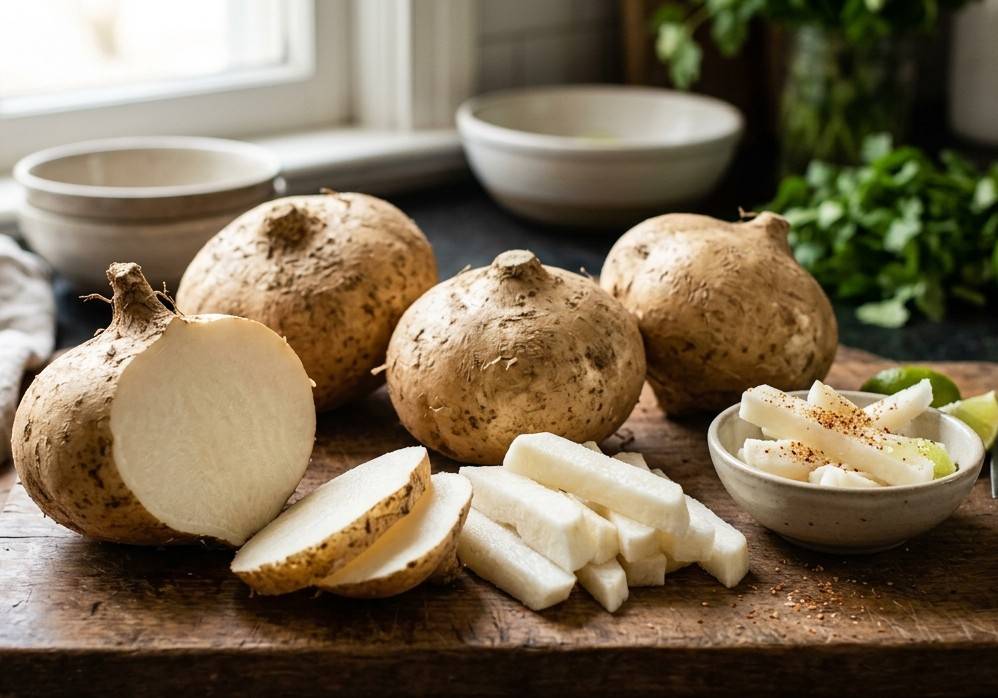
Jicama is a crunchy, refreshing root vegetable that has gained popularity for its unique taste and impressive nutritional profile. Often called the “Mexican turnip”, “Mexican potato” or “yam bean,” jicama is packed with fiber, vitamin C, antioxidants, and water, making it a healthy addition to many diets. Its mildly sweet flavor and crisp texture make it perfect for salads, snacks, stir-fries, and low-calorie meals.
In this guide, you will learn everything about jicama, including its nutrition facts, science-backed health benefits, side effects, how to eat it, storage tips, precautions, and much more.
What is Jicama?
Jicama is a crunchy root vegetable known for its mildly sweet flavor and juicy texture. It belongs to the legume family and is scientifically called Pachyrhizus erosus. Jicama is often referred to as the “Mexican turnip” or “yam bean,” although it is not related to turnips or yams.
The vegetable has a round shape with thick brown skin and crisp white flesh inside. Its texture is similar to a water chestnut or pear, making it refreshing and satisfying to eat raw. Jicama is widely used in salads, slaws, stir-fries, tacos, fruit bowls, and healthy snacks.
One of the biggest reasons people love jicama is its nutritional value. It is low in calories, high in fiber, rich in vitamin C, and contains beneficial antioxidants. Because of its crunchy texture and refreshing taste, it has become popular among people following weight-loss diets, diabetic-friendly meal plans, and healthy eating lifestyles.
Nutrition Facts of Jicama
Below is the approximate nutritional value of 100 grams of raw jicama.
| Nutrient | Amount |
|---|---|
| Calories | 38 kcal |
| Carbohydrates | 8.8 g |
| Dietary Fiber | 4.9 g |
| Sugars | 1.8 g |
| Protein | 0.7 g |
| Fat | 0.1 g |
| Vitamin C | 20.2 mg |
| Potassium | 150 mg |
| Calcium | 12 mg |
| Magnesium | 12 mg |
| Iron | 0.6 mg |
| Folate | 12 mcg |
| Water Content | About 90% |
Jicama is especially valued for its high fiber and water content, making it a filling yet low-calorie food.
20 Proven Health Benefits of Jicama
- Supports Weight Loss: Mexican turnip is low in calories and high in fiber, helping you stay full for longer periods.
- Improves Digestion: The dietary fiber in Mexican turnip supports smooth bowel movements and healthy digestion.
- Boosts Immunity: Vitamin C in jicama helps strengthen the immune system and fight infections.
- Promotes Gut Health: Mexican turnip contains prebiotic fiber called inulin that feeds healthy gut bacteria.
- Helps Control Blood Sugar: Its low glycemic index may help regulate blood sugar levels.
- Supports Heart Health: Fiber and potassium in jicama may contribute to healthy blood pressure and cholesterol levels.
- Keeps You Hydrated: The high water content in Mexican turnip helps maintain hydration.
- Rich in Antioxidants: Mexican turnip contains antioxidants that help protect cells from damage.
- Supports Healthy Skin: Vitamin C helps boost collagen production for healthier skin.
- Strengthens Bones: Calcium and magnesium in jicama contribute to bone health.
- May Reduce Constipation: Fiber improves stool bulk and supports regular bowel movements.
- Supports Healthy Metabolism: Nutrients in Mexican turnip help maintain energy production and metabolic function.
- Good for Diabetics: Jicama’s fiber content may help slow sugar absorption.
- Improves Circulation: Potassium helps support healthy blood circulation and heart function.
- May Lower Cholesterol: Soluble fiber can help reduce bad cholesterol levels.
- Supports Brain Health: Antioxidants and nutrients may help protect brain cells from oxidative stress.
- Helps Reduce Inflammation: Natural plant compounds in jicama may help lower inflammation.
- Provides Natural Energy: Healthy carbohydrates provide a quick and refreshing energy boost.
- Supports Eye Health: Mexican turnip contains nutrients that may contribute to better vision health.
- May Aid Detoxification: Water and fiber help the body naturally remove waste and toxins.
10 Side Effects of Jicama
- Digestive Discomfort: Eating too much Mexican turnip may cause bloating or gas because of its fiber content.
- Stomach Cramps: Excessive consumption may lead to mild stomach pain in sensitive individuals.
- Diarrhea Risk: Very high fiber intake from jicama can sometimes trigger loose stools.
- Allergic Reactions: Some people may experience itching, swelling, or allergic symptoms.
- Low Blood Sugar: Large amounts may lower blood sugar levels in sensitive individuals.
- Pesticide Exposure: Unwashed jicama skin may contain pesticide residues or dirt.
- Nutrient Absorption Issues: Excess fiber may interfere with mineral absorption when consumed excessively.
- Unsafe Seeds and Leaves: The seeds, stems, and leaves of the Mexican turnip plant contain toxic compounds and should not be eaten.
- Possible Medication Interaction: Jicama may interact with diabetes medications by affecting blood sugar levels.
- Digestive Sensitivity: People with irritable bowel syndrome may experience discomfort after eating raw Mexican turnip.
How to Eat Jicama?
Jicama is highly versatile and can be enjoyed in many ways. Before eating, always peel off the thick outer skin because it is not edible.
Here are some popular ways to eat jicama:
- Slice it into sticks and eat it raw as a snack.
- Sprinkle lime juice, salt, and chili powder on raw Mexican turnip.
- Add diced Mexican turnip to salads for extra crunch.
- Use it in tacos or wraps.
- Mix it into fruit salads.
- Stir-fry it with vegetables and sauces.
- Roast or bake jicama fries.
- Blend it into slaws and coleslaw recipes.
- Add it to soups for texture.
- Use thin slices as a low-carb tortilla alternative.
Tips for Consuming Jicama
- Choose firm and smooth jicama roots without soft spots.
- Wash the vegetable thoroughly before peeling.
- Always remove the skin before eating.
- Start with small portions if you are not used to high-fiber foods.
- Pair Mexican turnip with healthy dips like hummus or yogurt.
- Store cut Mexican turnip in airtight containers to maintain freshness.
- Add lemon or lime juice to prevent dryness.
- Combine Mexican turnip with fruits and vegetables for balanced nutrition.
- Avoid eating spoiled or mushy jicama.
- Drink enough water when consuming fiber-rich foods like Mexican turnip.
Other Uses of Jicama
- Healthy Snack Alternative: Mexican turnip sticks are often used instead of chips or processed snacks.
- Low-Carb Substitute: Thin jicama slices can replace tortillas or crackers in some recipes.
- Salad Ingredient: Mexican turnip adds crunch and freshness to vegetable salads.
- Fruit Bowl Addition: Its sweet and juicy flavor pairs well with tropical fruits.
- Soup Ingredient: Cooked Mexican turnip can add texture to soups and stews.
- Smoothie Addition: Some people blend small amounts of Mexican turnip into smoothies.
- Natural Hydration Food: Athletes may use jicama as a refreshing post-workout snack.
- Pickled Vegetable: Mexican turnip can be pickled for tangy side dishes.
- Stir-Fry Vegetable: It remains crunchy when lightly cooked in stir-fries.
- Diet-Friendly Food: Mexican turnip is commonly included in low-calorie meal plans.
How Much Jicama Can You Eat in a Day?
Most healthy adults can safely eat about 1 to 2 cups of jicama per day as part of a balanced diet. Moderate consumption provides fiber, hydration, and nutrients without causing digestive discomfort.
People who are sensitive to fiber should start with smaller portions, such as half a cup daily, and gradually increase intake.
Common dietary recommendations include:
- Raw jicama slices: 1 cup per serving
- Jicama salad: 1–2 cups
- Cooked jicama: Half to one cup
- Jicama juice or smoothie: Small portions mixed with other ingredients
Moderation is important to avoid excessive fiber intake.
Best Time to Eat Jicama
Mexican turnip can be eaten at almost any time of the day.
- Morning: Provides hydration and fiber to start the day.
- Before meals: May help control appetite and prevent overeating.
- Afternoon snack: Offers refreshing energy without too many calories.
- Post-workout: Helps rehydrate the body because of its high water content.
- Evening: Light and easy to digest when eaten in moderate amounts.
Who Should Eat Jicama?
- People Trying to Lose Weight: Mexican turnip is filling and low in calories.
- Diabetics: Its low glycemic index may help support blood sugar management.
- Athletes: High water content helps support hydration and recovery.
- People with Constipation: Fiber in jicama supports healthy bowel movements.
- Heart-Conscious Individuals: Potassium and fiber may benefit cardiovascular health.
- Vegetarians and Vegans: Mexican turnip provides plant-based nutrients and fiber.
- People Seeking Healthy Snacks: Raw jicama is a nutritious alternative to junk food.
- Older Adults: Soft crunch and nutrients may support healthy aging.
- Children: Mexican turnip can be a refreshing and healthy snack when served safely.
- People with Weak Immunity: Vitamin C helps support immune defenses.
Who Should Not Eat Jicama?
- People Allergic to Jicama: Those with allergies should avoid consuming it completely.
- Individuals with Sensitive Digestion: High fiber may trigger bloating or discomfort.
- People with IBS: Raw jicama may worsen digestive symptoms in some individuals.
- Those Taking Diabetes Medication: Blood sugar levels may need monitoring.
- People with Chronic Diarrhea: Excess fiber may worsen symptoms.
- Individuals Eating Unsafe Plant Parts: Seeds and leaves should never be consumed because they are toxic.
- People with Severe Gastrointestinal Disorders: Fiber-rich foods may irritate the digestive tract.
- Young Children Without Supervision: Large raw chunks can pose a choking hazard.
- People with Low Blood Sugar Issues: Excessive intake may contribute to blood sugar fluctuations.
- Those Sensitive to Raw Vegetables: Cooking may be a better option for easier digestion.
How to Store Jicama?
- Store in a Cool Place: Whole Mexican turnip stays fresh longer in cool and dry conditions.
- Refrigerate After Cutting: Cut pieces should be refrigerated immediately.
- Use Airtight Containers: This helps prevent moisture loss and keeps jicama crisp.
- Avoid Excess Moisture: Too much moisture can cause spoilage.
- Keep Away from Sunlight: Direct sunlight may reduce freshness.
- Do Not Freeze Whole: Freezing may change the texture significantly.
- Peel Before Long Storage: Peeled slices are easier to use for quick meals.
- Check for Soft Spots: Discard jicama if it becomes mushy or develops mold.
- Wrap Cut Pieces Properly: Plastic wrap or sealed containers help maintain freshness.
- Consume Within a Few Days After Cutting: Fresh cut Mexican turnip tastes best when eaten quickly.
Precautions and Interactions
- Avoid Eating Seeds and Leaves: Only the root flesh is safe to eat because other parts contain toxins.
- Monitor Blood Sugar Levels: Diabetics should consume jicama in moderation.
- Introduce Slowly: Sudden high fiber intake may cause digestive discomfort.
- Wash Thoroughly Before Use: Proper cleaning reduces dirt and pesticide exposure.
- Consult a Doctor During Pregnancy if Unsure: Moderate food-based consumption is generally considered safe.
- Use Caution with Digestive Disorders: Fiber may aggravate some gastrointestinal conditions.
- Watch for Allergic Symptoms: Stop consumption if itching or swelling occurs.
- Avoid Overeating: Too much jicama may lead to bloating or diarrhea.
- Pair with Balanced Meals: Combining Mexican turnip with protein and healthy fats improves meal balance.
- Consult Healthcare Providers About Medication Interactions: Especially if taking diabetes-related medicines.
Conclusion
Jicama is a refreshing, crunchy, and nutrient-rich root vegetable that can be a valuable addition to a healthy diet. It is low in calories, high in fiber, rich in vitamin C, and packed with hydration-supporting properties. From supporting digestion and weight management to promoting heart health and immunity, Mexican turnip offers many potential benefits.
At the same time, moderation is important. Excessive consumption may cause digestive discomfort, and only the root portion should be eaten because the seeds and leaves are toxic. When consumed properly, Mexican turnip can be a delicious and healthy ingredient in salads, snacks, stir-fries, and many other dishes.
FAQ’s
What is jicama good for?
Mexican turnip is good for supporting digestion, weight management, hydration, heart health, and immunity because it is rich in fiber, water, vitamin C, and antioxidants. It may also help promote gut health and support healthy blood sugar levels.
What does jicama taste like?
Mexican turnip has a mildly sweet and nutty flavor with a crunchy texture similar to an apple or water chestnut.
Can you eat jicama raw?
Yes, Mexican turnip is commonly eaten raw after peeling off the outer skin.
Is jicama good for weight loss?
Yes, Mexican turnip is low in calories and high in fiber, which may help keep you full for longer.
Is jicama safe for diabetics?
Yes, Mexican turnip has a low glycemic index and contains fiber that may help support blood sugar control.
Can you eat jicama every day?
Most people can safely eat Mexican turnip daily in moderate amounts as part of a balanced diet.
Do you need to peel jicama before eating?
Yes, the thick outer skin should always be removed before consumption.
Can jicama be cooked?
Yes, Mexican turnip can be roasted, stir-fried, baked, steamed, or added to soups.
Is jicama keto-friendly?
Mexican turnip is lower in carbs than many root vegetables, so it can fit into some low-carb diets in moderation.
Can pregnant women eat jicama?
Yes, moderate consumption of peeled Mexican turnip is generally considered safe during pregnancy.
Is jicama good for digestion?
Yes, its fiber and prebiotic content may help support healthy digestion and gut bacteria.
Can children eat jicama?
Yes, children can eat Mexican turnip when it is peeled and cut into safe, small pieces.
Does jicama cause gas?
Eating too much Mexican turnip may cause gas or bloating because of its high fiber content.
Is jicama healthier than potato?
Jicama is lower in calories and carbohydrates and higher in water content than potatoes.
Can jicama help with constipation?
Yes, the fiber in Mexican turnip may help promote regular bowel movements.
What is jicama called in India?
Mexican turnip is not very common in India, but it is sometimes called Mexican turnip or yam bean.
Are jicama seeds edible?
No, jicama seeds and leaves are toxic and should not be eaten.
What is the best way to eat jicama?
Mexican turnip is often enjoyed raw with lime juice, chili powder, or added to salads and slaws.
Also Read: