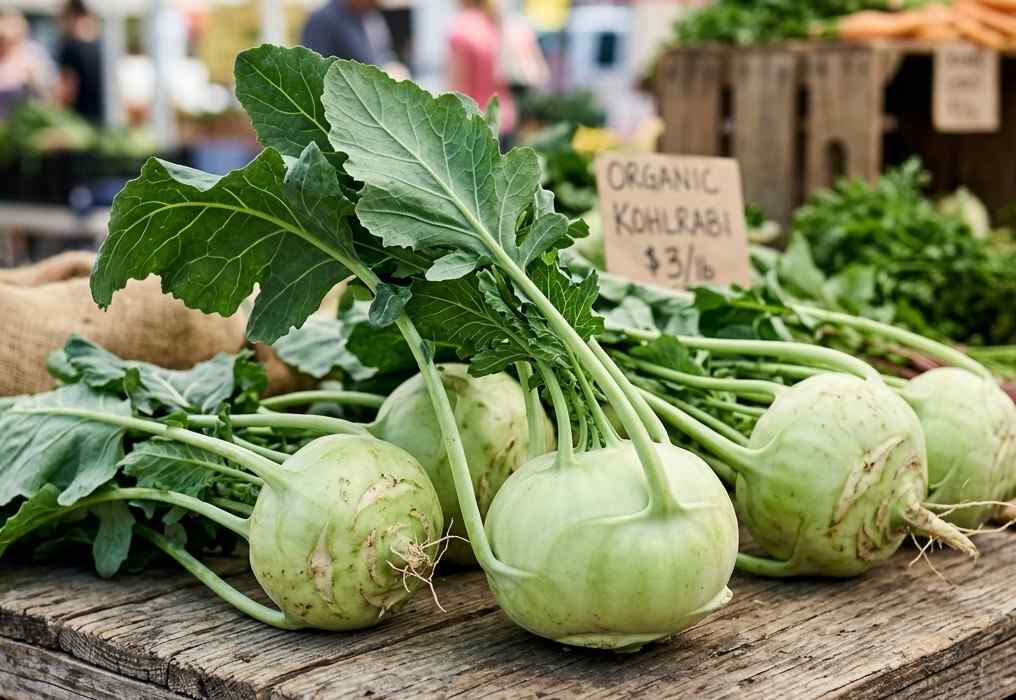
Kohlrabi may not be the most common vegetable in the kitchen, but it is quickly becoming popular among health-conscious eaters because of its impressive nutrition and versatility. With its round bulb shape, crunchy texture, and mildly sweet flavor, kohlrabi is a delicious addition to salads, soups, stir-fries, and many other dishes. Belonging to the cruciferous vegetable family, kohlrabi shares many health-promoting compounds with vegetables like broccoli, cabbage, and kale.
In this complete guide, you will learn everything about kohlrabi, including its nutritional value, science-backed health benefits, possible side effects, how to eat it, storage tips, precautions, and much more.
What is Kohlrabi?
Kohlrabi is a unique-looking vegetable that belongs to the cruciferous vegetable family, which also includes broccoli, cabbage, kale, cauliflower, and Brussels sprouts. Its name comes from German words meaning “cabbage turnip,” and it has a round bulb-like stem with leafy greens growing from the top.
Despite its unusual appearance, kohlrabi is highly nutritious and versatile. The bulb can be eaten raw or cooked, while the leaves are also edible and packed with nutrients. Kohlrabi has a mildly sweet, crisp flavor that is often compared to a mix of cabbage, broccoli stems, and turnips.
This vegetable is available in green and purple varieties, though both taste very similar. It is low in calories, rich in fiber, and loaded with vitamins, minerals, and antioxidants that support overall health.
Kohlrabi is popular in many European and Asian cuisines and is increasingly gaining attention worldwide because of its impressive nutritional profile and health benefits.
Nutrition Facts of Kohlrabi
| Nutrient | Amount (Per 100 Grams of Raw Kohlrabi) |
|---|---|
| Calories | 27 kcal |
| Carbohydrates | 6.2 g |
| Protein | 1.7 g |
| Fat | 0.1 g |
| Dietary Fiber | 3.6 g |
| Sugar | 2.6 g |
| Vitamin C | 62 mg |
| Vitamin B6 | 0.2 mg |
| Folate | 16 mcg |
| Potassium | 350 mg |
| Calcium | 24 mg |
| Magnesium | 19 mg |
| Phosphorus | 46 mg |
| Iron | 0.4 mg |
| Sodium | 20 mg |
| Water | 91 g |
Kohlrabi is especially rich in vitamin C and fiber while remaining naturally low in calories and fat.
20 Proven Health Benefits of Kohlrabi
- Boosts Immunity: Cabbage turnip is rich in vitamin C, which helps strengthen the immune system and supports the body in fighting infections.
- Supports Digestion: The high fiber content in kohlrabi promotes healthy digestion and helps prevent constipation.
- Aids Weight Loss: Cabbage turnip is low in calories but filling, making it an excellent addition to weight-loss diets.
- Improves Heart Health: The fiber and potassium in kohlrabi may help support healthy blood pressure and cholesterol levels.
- Rich in Antioxidants: Cabbage turnip contains antioxidants that help protect the body from oxidative stress and cellular damage.
- Supports Healthy Skin: Vitamin C in Cabbage turnip promotes collagen production, which helps maintain healthy and youthful skin.
- Strengthens Bones: Cabbage turnip contains calcium and magnesium that contribute to strong bones and teeth.
- Helps Regulate Blood Sugar: Its fiber content may help slow sugar absorption and support balanced blood sugar levels.
- Promotes Eye Health: Antioxidants and vitamin A compounds in Cabbage turnip may help protect vision and eye health.
- Supports Muscle Function: Potassium and magnesium help maintain proper muscle function and reduce muscle cramps.
- Improves Gut Health: The dietary fiber in kohlrabi nourishes beneficial gut bacteria and supports digestive balance.
- May Reduce Inflammation: Antioxidants and plant compounds in Cabbage turnip may help reduce inflammation in the body.
- Supports Detoxification: Cruciferous vegetables like kohlrabi contain compounds that support natural detoxification processes.
- Promotes Healthy Metabolism: B vitamins in Cabbage turnip help the body convert food into energy efficiently.
- May Lower Cancer Risk: Cabbage turnip contains glucosinolates, plant compounds linked to potential cancer-protective effects.
- Supports Brain Health: Nutrients such as potassium and vitamin B6 may contribute to healthy brain and nerve function.
- Hydrates the Body: Kohlrabi has a high water content that helps support hydration.
- Improves Blood Circulation: Iron and other minerals in Cabbage turnip support healthy blood circulation and oxygen transport.
- Supports Liver Health: Antioxidants and sulfur-containing compounds may help protect liver function.
- Boosts Energy Naturally: The nutrient-rich composition of Cabbage turnip helps support steady energy levels throughout the day.
10 Side Effects of Kohlrabi
- May Cause Gas and Bloating: The fiber and sulfur compounds in Cabbage turnip may lead to digestive discomfort in some people.
- Can Trigger Thyroid Issues: Excessive intake of raw cruciferous vegetables may interfere with thyroid function in sensitive individuals.
- May Cause Allergic Reactions: Some people may experience itching, swelling, or allergic symptoms after eating kohlrabi.
- Could Lead to Stomach Upset: Eating too much Cabbage turnip at once may cause stomach cramps or diarrhea.
- May Interact with Blood Thinners: Vitamin K in kohlrabi leaves may affect blood-thinning medications.
- Can Cause Digestive Irritation: People with sensitive digestive systems may experience irritation from raw Cabbage turnip.
- May Affect Kidney Patients: Its potassium content may not be suitable for people with certain kidney conditions.
- Could Cause Loose Stools: Excessive fiber intake from kohlrabi may lead to loose stools in some individuals.
- May Increase Gas Production: Fermentable carbohydrates in Cabbage turnip can contribute to increased intestinal gas.
- Can Be Difficult to Digest Raw: Some individuals may find raw Cabbage turnip harder to digest compared to cooked forms.
How to Eat Kohlrabi?
Cabbage turnip is highly versatile and can be enjoyed in many ways. Both the bulb and leaves are edible.
Raw Kohlrabi
Raw Cabbage turnip has a crisp texture similar to an apple or radish. It can be:
- Sliced into sticks for snacks
- Added to salads
- Mixed into coleslaw
- Served with dips
- Shredded into wraps or sandwiches
Cooked Kohlrabi
Cooking softens the texture and brings out a sweeter flavor. It can be:
- Roasted with olive oil and spices
- Steamed as a side dish
- Stir-fried with vegetables
- Added to soups and stews
- Mashed like potatoes
- Included in curries
Kohlrabi Leaves
The leaves are nutrient-rich and can be:
- Sautéed like spinach
- Added to soups
- Mixed into smoothies
- Used in stir-fries
Tips for Consuming Kohlrabi
- Choose firm and heavy bulbs without cracks or soft spots.
- Smaller kohlrabi bulbs are usually sweeter and more tender.
- Peel the outer skin before eating because it can be tough.
- Start with small portions if you are not used to high-fiber foods.
- Combine kohlrabi with healthy fats like olive oil for better nutrient absorption.
- Cook Cabbage turnip lightly to preserve nutrients while improving digestibility.
- Store leaves separately to keep them fresh longer.
- Add herbs and spices to enhance flavor.
Other Uses of Kohlrabi
- Used in Salads: Cabbage turnip is commonly shredded or sliced into fresh salads for extra crunch.
- Added to Soups: Kohlrabi can be cooked into soups and stews for texture and nutrition.
- Used in Pickling: The bulb can be pickled for a tangy and crunchy snack.
- Included in Stir-Fries: Cabbage turnip works well in vegetable stir-fries because of its mild flavor.
- Used in Juices: Raw kohlrabi can be blended into vegetable juices and smoothies.
- Fed to Livestock: In some regions, Cabbage turnip is also used as animal feed.
- Used in Traditional Cuisine: Many European and Asian dishes include Cabbage turnip as a staple ingredient.
- Added to Casseroles: Cooked Cabbage turnip can be baked into casseroles and gratins.
- Used as a Low-Carb Substitute: Kohlrabi can replace potatoes in some recipes for lower carbohydrate intake.
- Included in Fermented Foods: Cabbage turnip can be fermented similarly to cabbage for probiotic-rich dishes.
How Much Kohlrabi Can You Eat in a Day?
For most healthy adults, eating about 1 to 2 cups of kohlrabi daily is considered safe and beneficial. This amount provides a healthy dose of fiber, vitamins, and antioxidants without excessive intake.
People who are new to high-fiber vegetables should start with smaller portions to avoid digestive discomfort.
Moderation is important, especially for individuals with thyroid conditions, digestive sensitivity, or kidney issues.
General dietary guidelines include:
- Raw kohlrabi: 1 cup per serving
- Cooked kohlrabi: ½ to 1 cup per serving
- Kohlrabi juice: ½ cup occasionally
- Kohlrabi leaves: ½ cup cooked
Including kohlrabi several times a week as part of a balanced diet is generally considered healthy.
Best Time to Eat Kohlrabi
Morning
Eating kohlrabi in the morning may help support digestion and provide hydration and nutrients for the day.
Afternoon
Cabbage turnip makes a refreshing snack or salad ingredient during lunch hours because of its crunchy texture and fiber.
Before Meals
Consuming fiber-rich vegetables like kohlrabi before meals may help increase fullness and reduce overeating.
Evening
Cooked Cabbage turnip can be enjoyed during dinner as a healthy side dish that is light yet nutritious.
Who Should Eat Kohlrabi?
- People Trying to Lose Weight: Cabbage turnip is low in calories and high in fiber, making it ideal for weight management.
- Individuals with Digestive Issues: Its fiber content may help support regular bowel movements and digestive health.
- Athletes and Active Individuals: Potassium and vitamin C in Cabbage turnip support recovery and hydration.
- People Seeking Immune Support: Vitamin C-rich kohlrabi may help strengthen immune function.
- Vegetarians and Vegans: Cabbage turnip provides plant-based nutrients and fiber for balanced nutrition.
- People Looking for Heart-Healthy Foods: The potassium and antioxidants in kohlrabi support cardiovascular health.
- Individuals with High Cholesterol: Fiber may help support healthy cholesterol levels.
- Older Adults: Cabbage turnip contains nutrients that support bone and overall health during aging.
- People Seeking Hydrating Foods: Its high water content helps maintain hydration.
- Health-Conscious Individuals: Cabbage turnip is nutrient-dense and fits well into balanced diets.
Who Should Not Eat Kohlrabi?
- People with Thyroid Disorders: Excessive raw Cabbage turnip intake may interfere with thyroid function in sensitive individuals.
- Individuals with Kidney Disease: The potassium content may not be suitable for people with kidney problems.
- People with Cruciferous Vegetable Allergies: Some individuals may experience allergic reactions.
- Those with Sensitive Digestion: Raw Cabbage turnip may cause bloating or discomfort in some people.
- Individuals on Blood Thinners: Vitamin K in the leaves may interfere with certain medications.
- People Prone to Gas and Bloating: Cabbage turnip may worsen digestive gas in sensitive individuals.
- Those with IBS: Some people with irritable bowel syndrome may react to high-fiber vegetables like kohlrabi.
- Individuals Recovering from Digestive Surgery: High-fiber foods may need to be limited temporarily.
- People with Severe Acid Reflux: Raw vegetables may trigger symptoms in some individuals.
- Children Under One Year: Large amounts of raw fibrous vegetables may be difficult for infants to digest.
How to Store Kohlrabi?
- Refrigerate Immediately: Store Cabbage turnip in the refrigerator to maintain freshness and crispness.
- Separate the Leaves: Remove leaves from the bulb before storage to extend shelf life.
- Use Airtight Bags: Keep kohlrabi in a perforated or airtight bag to reduce moisture loss.
- Store in the Crisper Drawer: The crisper drawer helps maintain humidity and freshness.
- Avoid Washing Before Storage: Wash only before use to prevent spoilage.
- Consume Within One Week: Fresh Cabbage turnip tastes best when eaten within several days.
- Freeze for Longer Storage: Blanched Cabbage turnip can be frozen for future use.
- Keep Away from Ethylene-Producing Fruits: Apples and bananas may speed up spoilage.
Precautions and Interactions
- Monitor Thyroid Health: People with thyroid conditions should avoid excessive raw cruciferous vegetable intake.
- Increase Fiber Gradually: Introduce Cabbage turnip slowly to reduce digestive discomfort.
- Consult a Doctor if on Medication: People taking blood thinners or kidney medications should seek medical advice.
- Cook if Sensitive to Raw Vegetables: Cooking kohlrabi may improve digestion and reduce bloating.
- Avoid Overconsumption: Excessive intake may cause digestive issues due to high fiber.
- Watch for Allergic Reactions: Stop consumption if itching, swelling, or rash develops.
- Maintain Dietary Variety: Cabbage turnip should be part of a balanced diet rather than the only vegetable consumed.
- Choose Fresh Produce: Fresh, firm Cabbage turnip provides better flavor and nutrition.
- Wash Thoroughly Before Eating: Proper washing helps remove dirt and pesticide residues.
- Use Moderation in Juice Form: Concentrated vegetable juices may cause digestive discomfort if consumed excessively.
Conclusion
Kohlrabi is a nutritious and versatile cruciferous vegetable that offers a wide range of health benefits. Rich in fiber, vitamin C, antioxidants, and essential minerals, it supports digestion, immunity, heart health, hydration, and overall wellness.
Whether eaten raw in salads, roasted as a side dish, or blended into soups and smoothies, Cabbage turnip can easily fit into many healthy eating patterns. However, moderation is important, especially for individuals with thyroid issues, digestive sensitivities, or kidney concerns.
FAQ’s
What does kohlrabi taste like?
Cabbage turnip has a mildly sweet and crunchy taste that is often compared to broccoli stems, cabbage, or turnips.
Can you eat kohlrabi raw?
Yes, Cabbage turnip can be eaten raw and is commonly added to salads, slaws, and snack platters.
Is kohlrabi good for weight loss?
Yes, Cabbage turnip is low in calories and high in fiber, which may help promote fullness and support weight management.
Can diabetics eat kohlrabi?
Yes, Cabbage turnip may be suitable for people with diabetes because it is low in calories and contains fiber that may help support balanced blood sugar levels.
Is kohlrabi healthier raw or cooked?
Both forms are healthy, but raw kohlrabi contains more vitamin C while cooked kohlrabi may be easier to digest.
Can you eat kohlrabi leaves?
Yes, the leaves are edible and nutritious and can be cooked like spinach or kale.
Does kohlrabi cause gas?
Cabbage turnip may cause gas or bloating in some people because it is a cruciferous vegetable high in fiber.
Is kohlrabi good for digestion?
Yes, the fiber in Cabbage turnip may help support healthy digestion and regular bowel movements.
Can you freeze kohlrabi?
Yes, Cabbage turnip can be blanched and frozen for longer storage.
Is kohlrabi a root vegetable?
No, Cabbage turnip is not a root vegetable; the bulb grows above ground as a swollen stem.
Can pregnant women eat kohlrabi?
Yes, pregnant women can generally eat Cabbage turnip in moderation as part of a balanced diet.
Is kohlrabi good for the immune system?
Yes, Cabbage turnip is rich in vitamin C, which supports healthy immune function.
Can kohlrabi help lower cholesterol?
Its fiber content may help support healthy cholesterol levels when included in a balanced diet.
Is purple kohlrabi different from green kohlrabi?
The main difference is color, while the flavor and nutritional value are very similar.
Can children eat kohlrabi?
Yes, children can eat cooked or raw Cabbage turnip in age-appropriate portions.
What is the best way to cook kohlrabi?
Cabbage turnip can be roasted, steamed, sautéed, stir-fried, or added to soups and curries.
Is kohlrabi keto-friendly?
Yes, Cabbage turnip is relatively low in carbohydrates and may fit into many low-carb diets.
Does kohlrabi contain antioxidants?
Yes, Cabbage turnip contains antioxidants and plant compounds that help protect cells from oxidative stress.
Can I eat Kohlrabi every day?
Yes, most healthy people can eat Cabbage turnip daily in moderate amounts as part of a balanced diet.
What is Kohlrabi good for?
Cabbage turnip is good for digestion, immunity, heart health, hydration, and weight management because it is rich in fiber, vitamin C, and antioxidants.
What is kohlrabi called in India?
Kohlrabi is commonly called “Knol Khol” in India and is especially popular in Kashmir and some northern regions.
What is another name for kohlrabi?
Another name for kohlrabi is “German turnip” or “cabbage turnip.”
What country eats the most kohlrabi?
Cabbage turnip is widely consumed in countries such as Germany, Austria, Hungary, and India, especially in traditional cuisines.
What is the closest vegetable to kohlrabi?
The closest vegetables to kohlrabi in taste and texture are broccoli stems, cabbage, turnips, and radishes.
Also Read: