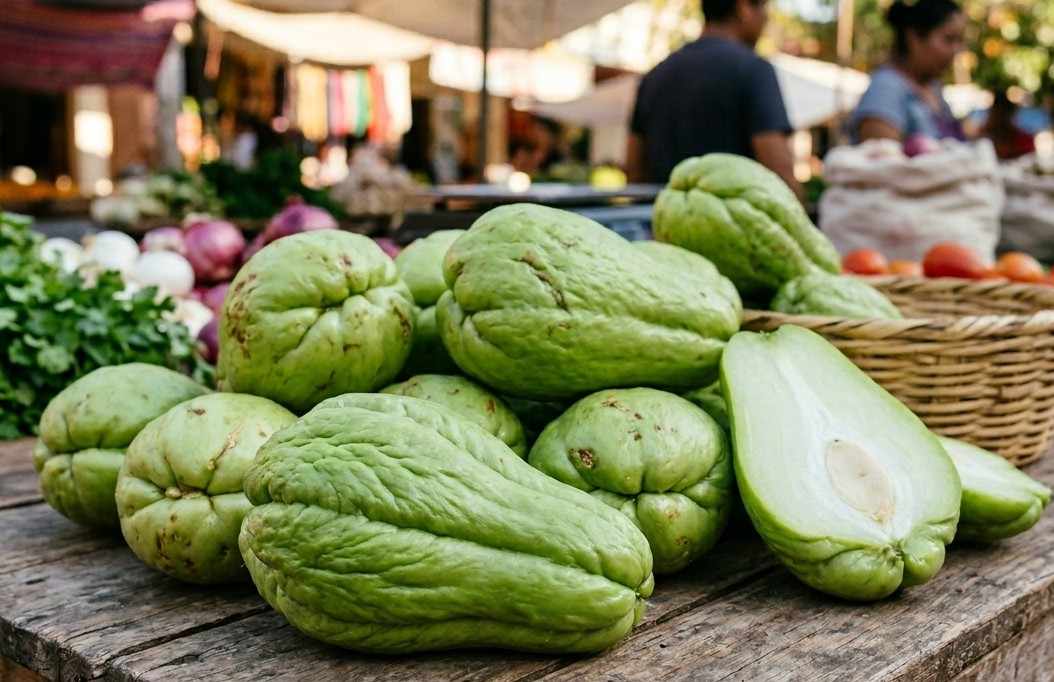
Chayote (also known as vegetable pear, mirliton, christophine, choko, chow chow, sayote, cho-cho, iskush, and mango squash) is a light green, pear-shaped vegetable that belongs to the gourd family. Known for its mild flavor and crisp texture, it is widely used in soups, salads, stir-fries, curries, and stews around the world. This versatile vegetable is low in calories yet packed with important nutrients, antioxidants, fiber, and plant compounds that support overall health.
Popular in Latin American, Asian, and Indian cuisines, chayote can be eaten raw or cooked and is valued for its refreshing taste and impressive nutritional profile. From supporting digestion and heart health to helping with weight management, chayote offers several potential health benefits when included as part of a balanced diet.
What is Chayote?
Chayote is a type of edible squash scientifically known as Sechium edule. It is native to Central America but is now cultivated in many tropical and subtropical regions worldwide. The vegetable has wrinkled green skin, pale flesh, and a mild cucumber-like flavor.
Almost every part of the chayote plant can be consumed, including the fruit, seeds, shoots, leaves, and roots. It is often compared to squash, zucchini, or cucumber because of its soft texture and versatility in cooking.
Chayote is commonly used in:
- Soups and stews
- Stir-fries
- Salads
- Curries
- Pickles
- Juices
- Baked dishes
Because it is low in calories and rich in nutrients, chayote is often included in healthy eating plans and weight-management diets.
Nutrition Facts of Chayote (Per 100 Grams)
| Nutrient | Amount |
|---|---|
| Calories | 19 kcal |
| Carbohydrates | 4.5 g |
| Protein | 0.8 g |
| Fat | 0.1 g |
| Dietary Fiber | 1.7 g |
| Vitamin C | 7.7 mg |
| Folate | 93 mcg |
| Potassium | 125 mg |
| Magnesium | 12 mg |
| Calcium | 17 mg |
| Phosphorus | 18 mg |
| Iron | 0.3 mg |
| Zinc | 0.7 mg |
| Water | 94 g |
Chayote is especially valued for being low in calories while providing hydration, antioxidants, vitamins, and minerals.
20 Proven Health Benefits of Chayote
- Supports Weight Loss – Vegetable pear is low in calories and high in water and fiber, making it filling and useful for weight management diets.
- Improves Digestion – The fiber content in vegetable pear may help promote smoother digestion and support regular bowel movements.
- Boosts Immunity – Vitamin C and antioxidants in chayote may strengthen the immune system and help the body fight infections.
- Promotes Heart Health – Chayote contains potassium and fiber that may help maintain healthy blood pressure and cholesterol levels.
- Helps Control Blood Sugar – Its low carbohydrate content and fiber may support better blood sugar management.
- Rich in Antioxidants – Vegetable pear provides antioxidants that may help reduce oxidative stress and protect cells from damage.
- Supports Healthy Pregnancy – Folate in vegetable pear is important for fetal growth and may help support a healthy pregnancy.
- May Reduce Inflammation – Plant compounds found in vegetable pear may help lower inflammation in the body.
- Keeps the Body Hydrated – Because it contains a high amount of water, chayote may help maintain hydration levels.
- Supports Liver Health – Some studies suggest vegetable pear may help support normal liver function and reduce fat buildup.
- May Improve Skin Health – Vitamin C and antioxidants may help support collagen production and healthier-looking skin.
- Supports Kidney Function – Chayote has traditionally been used as a mild diuretic that may support urinary health.
- Helps Maintain Healthy Blood Pressure – Potassium in vegetable pear may assist in balancing sodium levels and regulating blood pressure.
- Promotes Healthy Aging – Antioxidants in chayote may help slow cellular damage associated with aging.
- Supports Bone Health – Minerals like magnesium, calcium, and phosphorus contribute to stronger bones and teeth.
- May Improve Energy Levels – Vegetable pear contains B vitamins and carbohydrates that may help support natural energy production.
- Supports Brain Function – Folate and antioxidants in vegetable pear may contribute to cognitive health and mental performance.
- May Lower Cholesterol Levels – Fiber may help reduce bad cholesterol levels and support cardiovascular health.
- Supports Healthy Metabolism – Nutrients in chayote may help the body efficiently process fats, proteins, and carbohydrates.
- Good for Detox Diets – Its high water content and light nutritional profile make vegetable pear popular in cleansing and detox meal plans.
10 Side Effects of Chayote
- Allergic Reactions – Some individuals may experience itching, swelling, or skin irritation after handling or eating chayote.
- Digestive Discomfort – Eating excessive amounts of Vegetable pear may cause bloating, gas, or stomach discomfort in sensitive people.
- May Lower Blood Sugar Too Much – People taking diabetes medications should monitor blood sugar because chayote may enhance glucose-lowering effects.
- Possible Drug Interactions – Chayote’s mild diuretic properties may interact with certain medications.
- Can Cause Loose Stools – Overconsumption of fiber-rich vegetable pear may lead to diarrhea in some individuals.
- Risk of Low Blood Pressure – Large amounts of potassium-rich foods like vegetable pear may contribute to low blood pressure in susceptible people.
- Skin Irritation from Sap – Raw chayote can release a sticky sap that may irritate sensitive skin.
- May Affect Kidney Patients – Individuals with severe kidney disease may need to monitor potassium intake when consuming Vegetable pear.
- Possible Nutrient Imbalance – Relying excessively on low-calorie vegetables like chayote without dietary variety may reduce overall nutrient intake.
- Not Suitable for Certain Allergies – People allergic to squash-family vegetables may react to vegetable pear as well.
How to Eat Chayote?
Chayote is extremely versatile and can be enjoyed in many ways. It has a mild flavor that easily absorbs spices and seasonings.
Popular ways to eat chayote include:
- Raw in salads or slaws
- Boiled or steamed
- Stir-fried with vegetables
- Added to soups and curries
- Roasted in the oven
- Stuffed and baked
- Pickled
- Blended into smoothies or juices
Young chayote can often be eaten with the skin, while mature chayote may need peeling before cooking.
Tips for Consuming Chayote
- Wash Vegetable pear thoroughly before use.
- Peel mature vegetable pear carefully because the sap can be slippery.
- Pair chayote with healthy fats and proteins for balanced meals.
- Add herbs and spices to enhance its mild flavor.
- Start with small portions if you are trying it for the first time.
- Steam or boil lightly to preserve nutrients.
- Store properly to maintain freshness and texture.
Other Uses of Chayote
- Traditional Herbal Use – Vegetable pear leaves and fruits have been used in traditional remedies in some cultures.
- Animal Feed – Chayote plants are sometimes used as livestock feed in agricultural regions.
- Natural Hydration Food – Its high water content makes it useful in refreshing summer dishes.
- Pickling Ingredient – Vegetable pear is commonly preserved in pickles and fermented foods.
- Soup Thickener – Cooked chayote can help add texture to soups and stews.
- Low-Calorie Pasta Substitute – Sliced vegetable pear can be used in place of noodles in certain recipes.
- Juicing Ingredient – Vegetable pear is added to vegetable juices for hydration and nutrients.
- Gardening Plant – The fast-growing vine is cultivated as an edible garden plant.
- Decorative Vegetable – Its unique pear-like shape makes it visually appealing in food displays.
- Diet-Friendly Ingredient – Vegetable pear is often included in low-carb and weight-management meal plans.
How Much Chayote Can You Eat in a Day?
Most healthy adults can safely consume about 1–2 cups of cooked or raw chayote daily as part of a balanced diet. Moderate intake is generally considered safe and beneficial.
People with medical conditions such as kidney disease or those taking medications affecting blood pressure or blood sugar should consult a healthcare professional regarding appropriate intake.
Common dietary intake includes:
- Raw chayote: ½–1 cup per serving
- Cooked chayote: 1 cup per serving
- Chayote juice: ½ cup occasionally
- Chayote leaves in tea: Used traditionally in moderation
Moderation is important to avoid digestive discomfort or nutrient imbalance.
Best Time to Eat Chayote
Vegetable pear can be eaten at any time of the day depending on personal preference and dietary goals.
- Morning: Added to smoothies or breakfast dishes for hydration and fiber.
- Lunch: Included in salads, curries, or stir-fries for a light and nutritious meal.
- Evening: Served in soups or steamed dishes as a low-calorie dinner option.
- Post-workout: Combined with protein-rich foods for balanced recovery meals.
Who Should Eat Chayote?
- People Trying to Lose Weight – Its low-calorie and high-fiber nature makes vegetable pear ideal for weight-management diets.
- Individuals with Digestive Issues – The fiber and water content may support smoother digestion and bowel regularity.
- People with High Blood Pressure – Potassium in chayote may help support healthy blood pressure levels.
- Pregnant Women – Folate in vegetable pear supports fetal growth and development during pregnancy.
- Fitness Enthusiasts – Vegetable pear provides hydration and nutrients while remaining low in calories.
- Diabetics – Its low glycemic properties may support balanced blood sugar levels when eaten moderately.
- Older Adults – Antioxidants and minerals may help support healthy aging and bone health.
- People Seeking Hydration – The vegetable’s high water content may help maintain fluid balance.
Who Should Not Eat Chayote?
- People Allergic to Gourds – Individuals allergic to squash-family vegetables should avoid vegetable pear.
- Those with Severe Kidney Disease – Potassium intake may need restriction in advanced kidney conditions.
- Individuals with Sensitive Digestion – Excessive intake may cause bloating or digestive discomfort.
- People Taking Certain Medications – Chayote may interact with blood pressure or diabetes medications.
- Those with Low Blood Pressure – Large amounts may contribute to excessively low blood pressure.
- People with Frequent Diarrhea – High fiber intake may worsen loose stools in some individuals.
How to Store Chayote?
- Store in the Refrigerator – Keeping chayote in the refrigerator helps maintain freshness for longer.
- Use a Plastic or Paper Bag – A loosely closed bag can reduce moisture loss.
- Keep Away from Excess Moisture – Too much moisture may cause spoilage or mold growth.
- Avoid Cutting Until Use – Whole vegetable pear lasts longer than cut pieces.
- Refrigerate Cut Pieces Properly – Store cut vegetable pear in an airtight container.
- Do Not Freeze Raw Easily – Freezing raw vegetable pear may alter its texture after thawing.
- Consume Within 1–2 Weeks – Fresh vegetable pear is best eaten while firm and crisp.
Precautions and Interactions
- Monitor Blood Sugar Levels – Diabetics should observe blood sugar responses when consuming large amounts of Vegetable pear.
- Use Carefully with Blood Pressure Medication – Chayote’s potassium content may affect blood pressure regulation.
- Avoid Excessive Intake – Eating too much vegetable pear may cause digestive discomfort.
- Watch for Allergic Reactions – Stop consumption if itching, swelling, or irritation occurs.
- Handle Raw Chayote Carefully – The sap may irritate sensitive skin during peeling.
- Consult a Doctor During Pregnancy if Needed – Although nutritious, dietary changes should be discussed with a healthcare professional.
- Use Moderately with Diuretics – Chayote’s mild diuretic properties may increase fluid loss.
- Maintain Dietary Variety – Vegetable pear should be part of a balanced diet rather than the sole vegetable source.
Conclusion
Chayote is a nutritious and versatile vegetable that can be a valuable addition to a healthy diet. Low in calories yet rich in fiber, vitamins, minerals, and antioxidants, it may support digestion, heart health, hydration, immunity, and weight management. Its mild taste makes it easy to include in a variety of dishes, from salads and soups to curries and stir-fries.
While chayote is generally safe for most people, moderation is important, especially for individuals with certain medical conditions or food sensitivities. When consumed as part of a balanced lifestyle, vegetable pear can provide both flavor and nutrition in a simple, refreshing way.
FAQ’s
What is Chayote good for?
Vegetable pear is good for supporting digestion, hydration, weight management, heart health, and immunity because it is low in calories and rich in fiber, antioxidants, vitamins, and minerals.
What is chayote called in India?
Chayote is known by different names in India, including chow chow in Tamil Nadu, iskush in Northeast India, and seeme badanekai in parts of Karnataka.
Why is chayote so expensive?
Vegetable pear can become expensive due to seasonal availability, transportation costs, limited cultivation in some regions, and high demand for fresh produce.
What does chayote taste like?
Vegetable pear has a mild, slightly sweet flavor that is often compared to cucumber, zucchini, or squash.
Can you eat chayote raw?
Yes, vegetable pear can be eaten raw in salads, slaws, and smoothies.
Is chayote good for weight loss?
Yes, vegetable pear is low in calories and high in water and fiber, which may help support weight management.
Does chayote help digestion?
Yes, the fiber content in vegetable pear may promote healthy digestion and regular bowel movements.
Is chayote safe for diabetics?
Vegetable pear may help support healthy blood sugar levels when eaten in moderation as part of a balanced diet.
Can pregnant women eat chayote?
Yes, chayote contains folate and other nutrients that may support a healthy pregnancy.
Do you need to peel chayote before eating?
Young vegetable pear can often be eaten with the skin, while mature vegetable pear is usually peeled before cooking.
Can chayote be eaten every day?
Yes, moderate daily consumption of vegetable pear is generally considered safe for most healthy adults.
Is chayote a fruit or a vegetable?
Botanically, vegetable pear is a fruit, but it is commonly used and cooked as a vegetable.
How long does fresh chayote last?
Fresh vegetable pear can usually last 1–2 weeks when stored properly in the refrigerator.
Can you freeze chayote?
Yes, cooked chayote can be frozen, although freezing raw vegetable pear may affect its texture.
Is chayote high in potassium?
Vegetable pear contains potassium, but the amount is moderate compared to some other vegetables.
Can chayote lower blood pressure?
Its potassium content may help support healthy blood pressure levels when included in a balanced diet.
Is chayote good for the skin?
Vitamin C and antioxidants in vegetable pear may help support healthy and glowing skin.
What is the best way to cook chayote?
Vegetable pear can be steamed, boiled, roasted, stir-fried, or added to soups and curries.
Does chayote contain protein?
Vegetable pear contains a small amount of plant-based protein along with fiber and vitamins.
Can children eat chayote?
Yes, cooked vegetable pear is generally safe and nutritious for children when served appropriately.
Is chayote good for hydration?
Yes, vegetable pear contains a high amount of water that may help keep the body hydrated.
Are chayote seeds edible?
Yes, the soft seed inside young vegetable pear is edible and can be eaten cooked or raw.
Also Read: