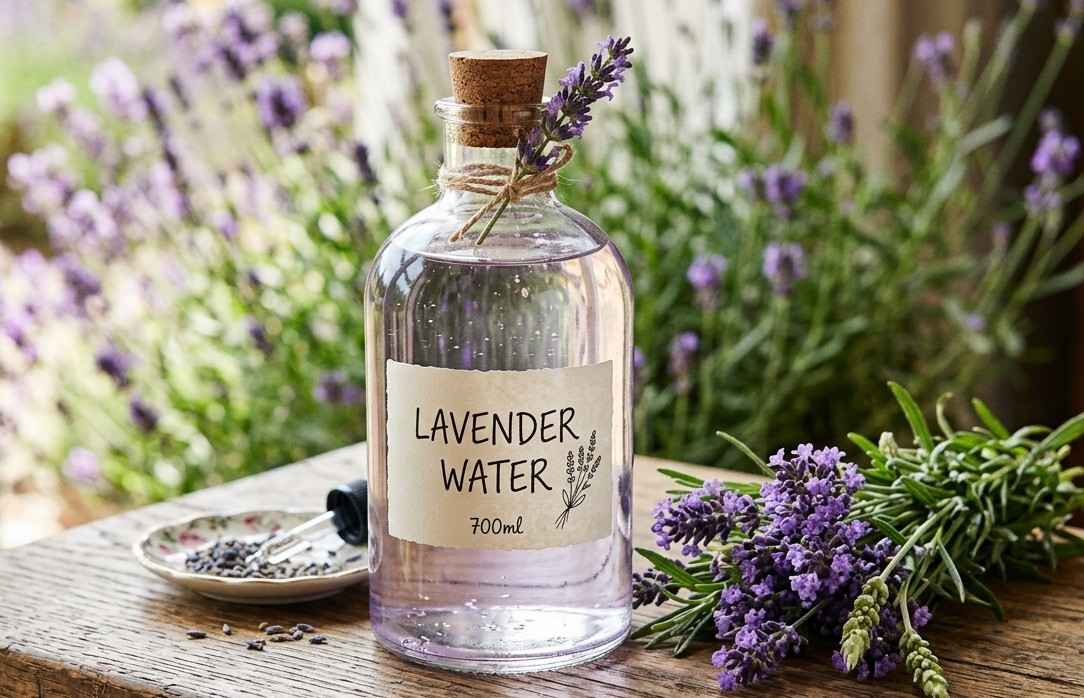
Lavender has been cherished for centuries for its soothing aroma and therapeutic properties. While most people are familiar with lavender essential oil or tea, lavender water is an equally powerful yet gentler option that’s gaining popularity in wellness routines. This guide takes a deep, practical look at lavender water—what it is, how it works, its proven health benefits, risks, and how you can incorporate it into your daily life.
What is Lavender Water?
Lavender water is a mild infusion made by steeping dried or fresh lavender flowers in water. Unlike lavender essential oil, which is highly concentrated, lavender water is much gentler and can be consumed or applied directly to the skin in diluted form.
It carries a subtle floral flavor and a calming aroma, making it a popular choice for relaxation, digestion support, skincare, and overall wellness. It’s often used as a natural remedy in herbal traditions and modern holistic health practices.
Components of Lavender Water
| Nutrient | Amount (Per 1 Cup – Approximate) |
|---|---|
| Calories | 2–5 kcal |
| Carbohydrates | 0.5 g |
| Sugars | 0 g |
| Fiber | 0 g |
| Protein | 0 g |
| Fat | 0 g |
| Vitamin A | Trace |
| Vitamin C | Trace |
| Calcium | Small amount |
| Iron | Small amount |
| Antioxidants | Present |
Lavender water is extremely low in calories and contains plant compounds like flavonoids and polyphenols, which contribute to its health benefits.
20 Science-Backed Benefits of Lavender Water
- Reduces Stress and Anxiety: Lavender infused water contains calming compounds that help regulate the nervous system and lower stress hormones.
- Improves Sleep Quality: Drinking lavender water before bed may promote deeper, more restful sleep by relaxing the mind.
- Supports Digestive Health: It can help reduce bloating, gas, and indigestion by soothing the digestive tract.
- Relieves Headaches: The calming effect may reduce tension headaches and mild migraines.
- Boosts Mood: Lavender’s aroma has been linked to improved mood and reduced symptoms of mild depression.
- Promotes Healthy Skin: Antioxidants in lavender water may help reduce acne and improve skin clarity.
- Supports Hormonal Balance: It may help regulate mood swings linked to hormonal fluctuations.
- Enhances Hydration: Adding flavor to water encourages better hydration habits.
- Reduces Inflammation: Anti-inflammatory compounds may help reduce internal and external inflammation.
- Supports Respiratory Health: The soothing aroma may help ease mild respiratory discomfort.
- Improves Cognitive Function: Relaxation induced by lavender may improve focus and mental clarity.
- Acts as a Mild Antimicrobial: Lavender contains natural compounds that may help fight bacteria.
- Helps with Menstrual Discomfort: It may ease cramps and discomfort through relaxation effects.
- Supports Heart Health: Stress reduction indirectly benefits cardiovascular health.
- Relieves Muscle Tension: Lavender water may help relax muscles when consumed or used topically.
- Improves Gut-Brain Connection: Its calming effects may positively influence gut health via the nervous system.
- May Reduce Blood Pressure: Relaxation effects can contribute to temporary reductions in blood pressure.
- Supports Immune Function: Antioxidants help the body fight oxidative stress.
- Enhances Oral Health: Mild antibacterial properties may help maintain oral hygiene.
- Promotes Overall Relaxation: Regular consumption can contribute to a calmer, more balanced lifestyle.
10 Side Effects of Lavender Water
- Allergic Reactions: Some individuals may experience skin irritation or allergic symptoms.
- Hormonal Effects: Excessive use may interfere with hormone balance in sensitive individuals.
- Digestive Upset: Overconsumption may cause nausea or stomach discomfort.
- Drowsiness: Its calming effect can lead to excessive sleepiness in some people.
- Interaction with Medications: It may interact with sedatives or blood pressure medications.
- Headaches (Rare): Some people may experience mild headaches.
- Skin Sensitivity: Topical use may irritate sensitive skin types.
- Lower Blood Pressure Too Much: In people with low BP, it may cause dizziness.
- Pregnancy Concerns: Not always recommended during pregnancy without medical advice.
- Hormone-Sensitive Conditions: May not be suitable for those with hormone-related disorders.
How to Make Lavender Water
Ingredients:
- 1 teaspoon dried lavender buds (food-grade)
- 1 cup water
Method:
- Bring water to a boil.
- Add lavender buds to the hot water.
- Cover and let it steep for 5–10 minutes.
- Strain the liquid into a cup.
- Let it cool slightly before drinking.
Optional: Add honey or lemon for taste.
Tips for Consuming Lavender Water
- Start with small amounts to see how your body reacts.
- Use only food-grade lavender to avoid contamination.
- Avoid adding too many buds, as the flavor can become bitter.
- Drink it warm for relaxation or cold for refreshment.
- Combine with other herbs like chamomile or mint for enhanced benefits.
Other Uses of Lavender Water
Lavender infused water isn’t just for drinking—it has multiple versatile uses:
- Facial Toner: Helps soothe irritated skin and reduce acne.
- Hair Rinse: May improve scalp health and reduce dandruff.
- Room Spray: Acts as a natural air freshener.
- Stress Relief Spray: Spritz on pillows or linens for better sleep.
- Bath Addition: Add to bathwater for relaxation.
- Wound Cleansing: Mild antimicrobial properties may help clean minor cuts.
- Aromatherapy Mist: Use as a calming body mist.
How Much Lavender Water Can You Drink in a Day?
Typically:
- 1–2 cups per day is considered safe for most people.
Drinking more than this regularly may increase the risk of side effects like drowsiness or digestive discomfort.
Best Time to Drink Lavender Water
- Evening or Before Bed: Ideal for relaxation and better sleep.
- After Meals: Helps with digestion and bloating.
- During Stressful Moments: Can help calm the mind and body.
Avoid drinking it before activities that require high alertness, such as driving.
Who Should Drink Lavender Water?
Lavender infused water may be beneficial for:
- Individuals dealing with stress or anxiety
- People with mild sleep issues
- Those experiencing digestive discomfort
- Individuals looking for natural skincare support
- Anyone seeking a calming herbal beverage
Who Should Avoid Lavender Water?
Certain groups should be cautious or avoid it:
- Pregnant or breastfeeding women (unless advised by a doctor)
- Children in large quantities
- Individuals with hormone-sensitive conditions
- People taking sedatives or blood pressure medications
- Those allergic to lavender or similar plants
How to Store Lavender Water
- Store in a clean, airtight container.
- Keep refrigerated if not consumed immediately.
- Use within 24–48 hours for freshness.
- Avoid leaving it at room temperature for long periods.
For longer storage, prepare small fresh batches instead of large quantities.
Precautions and Interactions
- Always consult a healthcare professional if you have underlying health conditions.
- Avoid combining with strong sedatives or alcohol.
- Do a patch test before using it on skin.
- Use only culinary-grade lavender, not ornamental varieties treated with chemicals.
- Monitor your body’s response, especially if trying it for the first time.
Final Thoughts
Lavender infused water is a simple yet powerful herbal infusion that fits seamlessly into a modern wellness lifestyle. From improving sleep and reducing stress to enhancing skin health and digestion, its benefits are wide-ranging. However, like any natural remedy, it should be used mindfully and in moderation.
FAQ’s
What does lavender water taste like?
Lavender floral water has a light, floral taste with slightly sweet and herbal notes, though it can become mildly bitter if over-steeped.
What is lavender water good for?
Lavender floral water is commonly used for stress relief, better sleep, improved digestion, and promoting healthy skin due to its calming and antioxidant properties.
Can I drink lavender water every day?
Yes, you can drink lavender floral water daily in moderation, typically 1–2 cups per day, as long as your body tolerates it well.
Is lavender water safe for sleep?
Yes, lavender floral water is often consumed before bedtime because it may help relax the mind and improve sleep quality.
How long does lavender water take to work?
Its calming effects can be felt within 15–30 minutes for relaxation, while long-term benefits like improved sleep or skin may take a few days to weeks.
Can lavender water help with anxiety?
Lavender floral water may help reduce mild anxiety due to its natural calming compounds that support the nervous system.
Is lavender water good for skin?
Yes, it may help soothe irritation, reduce acne, and improve overall skin clarity when consumed or used as a toner.
Can I drink lavender water on an empty stomach?
Yes, it is generally safe to drink on an empty stomach, and it may help with digestion and calming the system early in the day.
Does lavender water have caffeine?
No, lavender floral water is naturally caffeine-free, making it suitable for evening consumption.
Can lavender water cause drowsiness?
Yes, due to its calming effects, it may cause mild drowsiness, especially when consumed in larger amounts.
Is lavender water safe during pregnancy?
Pregnant women should consult a doctor before consuming lavender floral water, as its effects may vary.
Can children drink lavender water?
Children can have small amounts occasionally, but it should not be given regularly without medical advice.
Can lavender water help with headaches?
It may help relieve tension headaches due to its relaxing properties.
Can I mix lavender water with other herbs?
Yes, it pairs well with herbs like chamomile, mint, or lemon for added flavor and benefits.
Is lavender water the same as lavender oil?
No, lavender floral water is a mild infusion, while lavender oil is highly concentrated and not safe to drink directly.
Can lavender water help with digestion?
Yes, it may help reduce bloating and support smoother digestion.
Does lavender water help with weight loss?
While not a direct weight-loss drink, it may support weight management by reducing stress and improving digestion.
Can I use lavender water daily on my face?
Yes, if your skin tolerates it, lavender floral water can be used daily as a gentle toner.
What does lavender water smell like?
Lavender floral water has a light, fresh, and floral aroma with soft herbal undertones, often described as calming, slightly sweet, and clean without being overpowering.
Also Read: