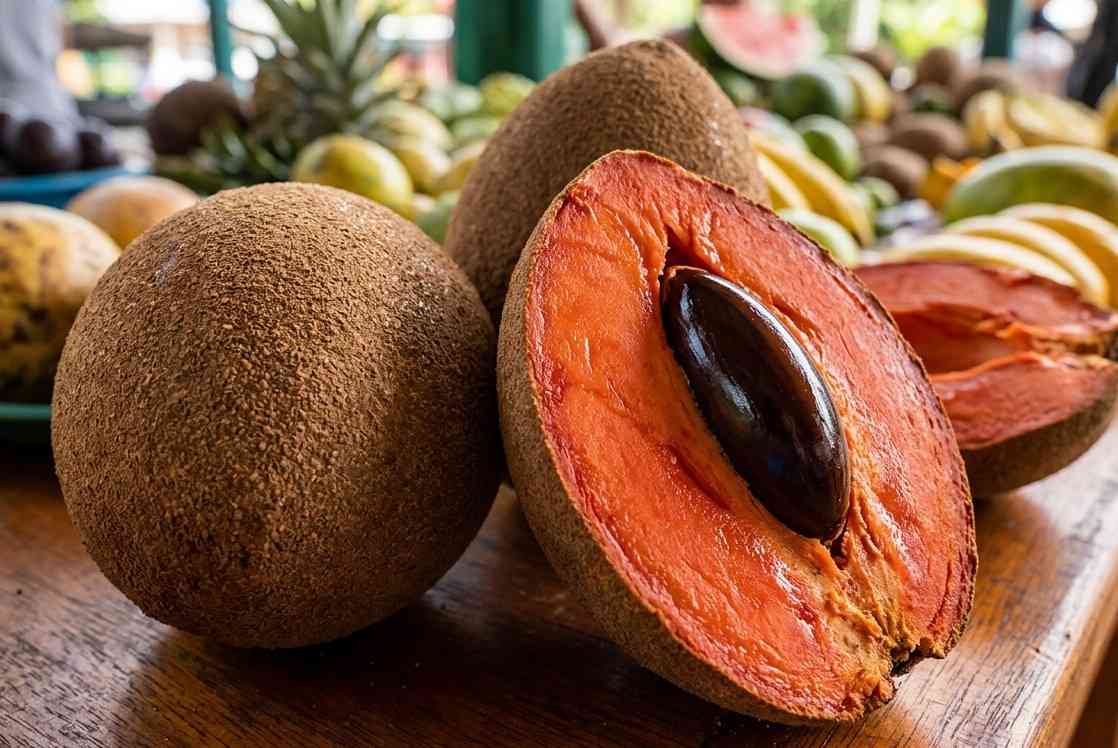
Mamey sapote is one of those rare tropical fruits that instantly captures attention with its unique flavor, vibrant color, and rich nutritional profile. Popular in parts of Central America, the Caribbean, and increasingly in other tropical regions, this fruit is often described as a blend of pumpkin, sweet potato, and almond with a creamy texture. Beyond its delicious taste, mamey sapote offers a wide range of health benefits, making it a valuable addition to a balanced diet.
In this guide, you’ll discover everything you need to know about mamey sapote (also known as red mamey, mamey, zapote rojo or zapote colorado)—from its nutritional value and science-backed health benefits to side effects, usage tips, and storage methods.
What is Mamey Sapote?
Mamey sapote is a tropical fruit that comes from the tree Pouteria sapota. It is native to Mexico and Central America but is also grown in the Caribbean and parts of South America. The fruit has a rough brown outer skin and a bright orange to reddish pulp inside, along with a large glossy seed.
The flavor is rich, sweet, and slightly nutty, often compared to a combination of pumpkin, sweet potato, and marzipan. Because of its creamy texture, it is commonly used in smoothies, desserts, and ice creams.
Nutrition Facts of Mamey Sapote
Below is the approximate nutritional value per 100 grams of raw mamey sapote:
| Nutrient | Amount |
|---|---|
| Calories | 124 kcal |
| Carbohydrates | 32 g |
| Dietary Fiber | 5.4 g |
| Sugars | 20 g |
| Protein | 1.5 g |
| Fat | 0.5 g |
| Vitamin C | 23 mg |
| Vitamin A | 720 IU |
| Potassium | 257 mg |
| Calcium | 18 mg |
| Iron | 0.8 mg |
| Magnesium | 21 mg |
20 Proven Health Benefits of Mamey Sapote
- Boosts Immunity – Rich in vitamin C, it strengthens the immune system and helps fight infections.
- Supports Eye Health – Contains vitamin A, which is essential for vision and eye protection.
- Improves Digestion – High fiber content aids in smooth digestion and prevents constipation.
- Enhances Skin Health – Antioxidants help maintain glowing and healthy skin.
- Promotes Heart Health – Potassium helps regulate blood pressure and heart function.
- Provides Energy – Natural sugars and carbohydrates offer quick and sustained energy.
- Supports Brain Function – Nutrients contribute to improved memory and mental clarity.
- Aids in Weight Management – Fiber keeps you full longer, reducing overeating.
- Improves Hair Health – Nutrients help strengthen hair and prevent breakage.
- Strengthens Bones – Contains calcium and magnesium for bone health.
- Reduces Inflammation – Antioxidants help combat inflammation in the body.
- Supports Blood Health – Iron content helps in preventing anemia.
- Boosts Metabolism – Nutrients support efficient metabolic processes.
- Improves Gut Health – Fiber promotes healthy gut bacteria.
- Supports Muscle Function – Potassium helps in muscle contraction and recovery.
- Helps Detoxify the Body – Natural compounds aid in removing toxins.
- Regulates Blood Sugar (in moderation) – Fiber slows sugar absorption.
- Improves Sleep Quality – Magnesium may help promote relaxation.
- Enhances Mood – Nutrients support neurotransmitter function.
- Supports Overall Wellness – A combination of vitamins and minerals boosts general health.
10 Side Effects of Mamey Sapote
- High Sugar Content – May not be suitable in large amounts for diabetics.
- Allergic Reactions – Rare, but possible in sensitive individuals.
- Digestive Issues – Overeating may cause bloating or discomfort.
- Weight Gain – Excess consumption can increase calorie intake.
- Blood Sugar Spikes – Especially when eaten in large portions.
- Seed Toxicity – The seed should not be consumed.
- Nausea – Overconsumption may lead to mild nausea.
- Interactions with Medications – May interfere with certain treatments.
- Skin Sensitivity – Some people may react when handling the fruit.
- Overeating Effects – Can cause lethargy due to high carbohydrate load.
How to Eat Mamey Sapote?
Mamey sapote is very easy to enjoy:
- Cut the fruit in half and remove the seed
- Scoop out the soft pulp with a spoon
- Eat it fresh as is
- Blend into smoothies or milkshakes
- Add to desserts like ice cream or puddings
- Use in baking for a natural sweet flavor
Tips for Consuming Mamey Sapote
- Choose ripe fruits that are slightly soft to touch
- Avoid unripe fruit, as it can be hard and less flavorful
- Consume in moderation due to high sugar content
- Pair with protein or healthy fats for balanced nutrition
- Refrigerate after cutting to maintain freshness
Other Uses of Mamey Sapote
- Used in ice creams and desserts
- Added to smoothies and juices
- Used in traditional dishes in Latin cuisine
- Oil extracted from the seed is used for hair care
- Included in natural skincare remedies
How Much Mamey Sapote Can You Eat in a Day?
A moderate serving is recommended:
- Adults: 100–150 grams per day
- Children: 50–100 grams per day
Overconsumption should be avoided due to its calorie and sugar content.
Mamey Sapote Dosage
There is no strict “dosage,” but for health benefits:
- 1 small portion daily is sufficient
- For smoothies: ½ cup pulp per serving
- For desserts: moderate use as a natural sweetener
Best Time to Eat Mamey Sapote
- Morning: Provides energy for the day
- Afternoon: Acts as a healthy snack
- Avoid late night consumption if sensitive to sugar
Who Should Eat Mamey Sapote?
- Individuals needing energy boosts
- People with digestive issues (in moderation)
- Those looking to improve skin and hair health
- Athletes needing quick natural fuel
- Individuals seeking nutrient-rich fruits
Who Should Not Eat Mamey Sapote?
- People with diabetes (without portion control)
- Those allergic to tropical fruits
- Individuals on strict low-sugar diets
- People with sensitive digestion (in large amounts)
How to Store Mamey Sapote?
- Keep unripe fruit at room temperature
- Once ripe, store in the refrigerator
- Cut fruit should be kept in an airtight container
- Consume within 2–3 days after cutting
Precautions and Interactions
- Do not consume the seed, as it may be toxic
- Consult a doctor if you have diabetes before regular consumption
- Monitor portion size to avoid excess sugar intake
- Avoid combining with heavy sugary foods
- Check for allergic reactions when trying for the first time
Conclusion
Mamey sapote is more than just a delicious tropical fruit—it’s a powerhouse of nutrients and health benefits. From boosting immunity and supporting digestion to enhancing skin and heart health, it offers a wide range of advantages when consumed in moderation.
However, like any food, balance is key. Being mindful of portion sizes and individual health conditions ensures you get the best out of this unique fruit without unwanted effects.
FAQ’s
What does mamey sapote taste like?
Mamey has a sweet, creamy flavor often compared to a mix of pumpkin, sweet potato, almond, and sometimes chocolate. Its texture is soft and smooth, similar to a ripe avocado.
Is mamey sapote good for health?
Yes, mamey is rich in vitamins A and C, fiber, and antioxidants. It supports immunity, digestion, heart health, and skin wellness when consumed in moderation.
Can diabetics eat mamey sapote?
Diabetics can eat mamey in small portions, but they should be cautious due to its natural sugar content. It’s best to consult a healthcare professional before including it regularly in the diet.
Is mamey sapote safe during pregnancy?
Mamey is generally safe in moderate amounts during pregnancy as it provides essential nutrients. However, excessive consumption should be avoided, and medical advice is recommended.
Can you eat mamey sapote seeds?
No, the seeds should not be eaten. They may contain toxic compounds and are not safe for consumption.
How do you know when mamey sapote is ripe?
A ripe mamey feels slightly soft when pressed gently, similar to a ripe avocado. The flesh inside should be deep orange or reddish and soft.
Can you eat mamey sapote raw?
Yes, mamey is most commonly eaten raw. Simply cut it open, remove the seed, and scoop out the pulp.
Is mamey sapote good for weight loss?
It can support weight management when eaten in moderation due to its fiber content, which helps keep you full. However, overeating can lead to excess calorie intake.
Does mamey sapote improve skin health?
Yes, the vitamins and antioxidants in mamey help nourish the skin, reduce signs of aging, and promote a healthy glow.
Can children eat mamey sapote?
Yes, children can eat mamey in small amounts. It provides energy and nutrients, but portion control is important due to its sugar content.
How long does mamey sapote last after cutting?
Once cut, mamey should be stored in an airtight container in the refrigerator and consumed within 2–3 days.
Can mamey sapote be used in smoothies?
Yes, it is perfect for smoothies due to its creamy texture and naturally sweet flavor.
Is mamey sapote good for digestion?
Yes, its high fiber content helps promote healthy digestion and can prevent constipation.
Can you eat mamey sapote every day?
You can eat it daily in moderate amounts, typically around 100–150 grams, depending on your dietary needs.
Does mamey sapote cause allergies?
Allergic reactions are rare but possible. If you experience itching, swelling, or discomfort, discontinue use and consult a doctor.
Is mamey sapote high in calories?
Yes, it is moderately high in calories compared to some fruits, so it should be eaten in controlled portions.
Can mamey sapote help boost immunity?
Yes, its vitamin C content helps strengthen the immune system and protect against infections.
Can mamey sapote be frozen?
Yes, the pulp can be frozen for later use in smoothies or desserts. Store it in airtight containers for best quality.
What is Mamey Sapote good for?
It boosts immunity, aids digestion, supports heart and eye health, and provides natural energy.
Is mamey the same as chikoo?
No, they are different fruits. Mamey has orange flesh and a pumpkin-like taste, while chikoo has brown flesh and a caramel-like flavor.
Also Read: