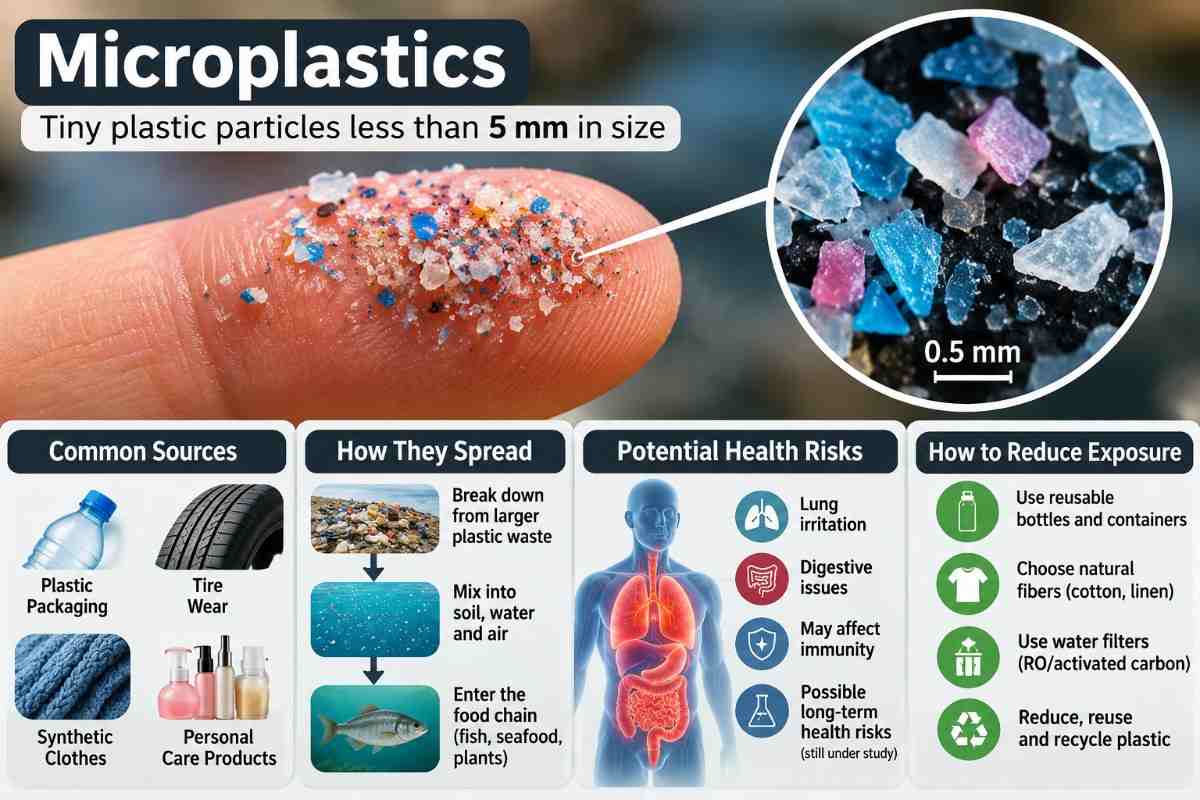
Microplastics are tiny plastic particles that have become an increasing concern for environmental and human health. They are found in everyday surroundings, including drinking water, food, household dust, oceans, and even the air we breathe. Because these particles are so small, people can unknowingly come into contact with them through ordinary daily activities.
From plastic food containers and bottled water to synthetic clothing and household products, plastic has become a part of modern life. As plastic materials break down, they can release microscopic particles that enter the environment and potentially reach the human body.
Scientists are studying how microplastics enter the body, where they may accumulate, and whether long-term exposure can affect human health. Although research has identified microplastics in several human tissues and biological samples, many questions about their health effects remain unanswered.
Understanding what microplastics are, where they come from, and how to limit unnecessary exposure can help people make more informed everyday choices.
What Are Microplastics?
Microplastics are extremely small plastic particles that are generally defined as being less than 5 millimeters in size. They can come from larger plastic products that gradually break apart or from materials manufactured at microscopic sizes.
Some microplastics are visible as tiny fragments, while others are too small to see without specialized equipment. Even smaller plastic particles, generally below 1 micrometer, are often described as nanoplastics.
These particles can enter the environment through the breakdown of plastic packaging, synthetic fabrics, vehicle tires, personal care products, and other everyday materials.
Unlike natural materials, many plastics do not readily biodegrade. Instead, they can persist in the environment and gradually break into smaller pieces.
Types of Microplastics
Microplastics are commonly classified into two main categories based on how they are produced.
1. Primary Microplastics
Primary microplastics are manufactured at very small sizes for specific industrial or commercial purposes.
Examples include:
- Microbeads previously used in certain cosmetic and personal care products.
- Plastic pellets used as raw materials in manufacturing.
- Small plastic particles used in some industrial cleaning and abrasive applications.
- Microplastic particles released from certain synthetic materials.
2. Secondary Microplastics
Secondary microplastics form when larger plastic products break down into smaller pieces because of sunlight, heat, weathering, friction, and environmental conditions.
Common examples include:
- Plastic bags breaking into tiny fragments.
- Disposable bottles gradually deteriorating.
- Food packaging breaking apart.
- Synthetic clothing releasing plastic fibers during washing.
- Vehicle tires producing tiny particles through road friction.
Secondary microplastics are widespread because plastic waste can remain in the environment for long periods.
Where Are Microplastics Found?
Microplastics have been detected in many parts of the environment, including water, soil, food, and air. Their widespread presence makes exposure difficult to avoid completely.
1. Drinking Water
Microplastics have been detected in both bottled and tap water. They may enter water supplies through environmental contamination, plastic packaging, water treatment processes, and distribution systems.
2. Seafood
Fish and shellfish can encounter microplastics in contaminated aquatic environments. Some marine organisms ingest these particles while feeding.
Shellfish may be a particular exposure concern because people often consume the entire animal, including its digestive tract.
3. Fruits and Vegetables
Research has investigated microplastic contamination in agricultural soil, irrigation water, and food crops.
Particles may reach agricultural environments through contaminated water, plastic mulch, fertilizers, and atmospheric deposition. However, the extent of human exposure through individual fruits and vegetables is still being studied.
4. Salt
Some studies have detected microplastics in sea salt and other commercially available salts. Contamination can occur during production, processing, packaging, or from the surrounding environment.
5. Household Dust
Microplastics can accumulate in indoor dust through synthetic carpets, furniture, clothing, packaging, and other household materials.
People may be exposed by accidentally swallowing dust or inhaling airborne particles.
6. Air
Microplastic fibers and fragments can become airborne through clothing, household activities, road traffic, and industrial processes.
People may inhale these particles while spending time indoors or outdoors.
7. Food Packaging
Plastic packaging can release microscopic particles under certain conditions, including friction, wear, and exposure to heat.
Research is still investigating how much these sources contribute to overall dietary exposure.
How Do Microplastics Enter the Human Body?
Microplastics can enter the human body through several exposure pathways. The two major routes currently studied are ingestion and inhalation.
1. Through Food and Drinks
People may swallow microplastic particles when consuming contaminated food, drinking water, seafood, and other beverages.
2. Through Breathing
Airborne plastic fibers and particles can enter the respiratory system when people inhale indoor or outdoor air containing microplastic pollution.
3. Through Skin Contact
Microplastics can come into contact with the skin through clothing, cosmetics, and personal care products. However, how much of this exposure results in particles entering the body through the skin remains uncertain.
4. Through Household Activities
Activities such as washing synthetic clothes, cleaning plastic surfaces, and using products that release plastic fibers can contribute to indoor exposure.
Potential Health Effects of Microplastics
One of the biggest questions surrounding microplastics is whether they can cause health problems in humans.
Researchers have detected microplastics in human blood, lungs, placenta, and other biological samples. These findings demonstrate that some plastic particles can enter the body. However, detecting particles in human tissue does not automatically prove that they cause disease.
Laboratory and animal studies have reported several possible biological effects. Scientists are continuing to investigate whether these findings translate into meaningful health problems in humans.
Here are some potential health concerns being studied.
1. Digestive System Problems
Microplastics that enter the body through food and drinking water can interact with the digestive tract. Experimental studies suggest that certain particles may affect intestinal cells, digestive barriers, and gut function.
However, more human research is needed to determine whether ordinary environmental exposure causes digestive disorders.
2. Inflammation
Some laboratory and animal studies suggest that microplastic exposure may trigger inflammatory responses in certain tissues.
Chronic inflammation is associated with several health conditions, but a direct relationship between everyday microplastic exposure and inflammatory diseases in humans has not been established.
3. Oxidative Stress
Oxidative stress occurs when harmful molecules called free radicals exceed the body’s antioxidant defenses.
Experimental research has found that certain microplastics may increase oxidative stress in cells. Scientists are studying whether this mechanism contributes to long-term health effects in humans.
4. Respiratory Health Concerns
Airborne microplastic particles may enter the respiratory tract when inhaled.
Researchers are investigating whether prolonged exposure can irritate lung tissues, trigger inflammation, or contribute to respiratory problems. The actual risks associated with everyday exposure are not yet fully understood.
5. Gut Microbiome Changes
The gut microbiome consists of trillions of microorganisms that support digestion, immunity, and other important body functions.
Some experimental studies suggest that microplastics may influence the balance of gut bacteria. However, it is not yet clear whether typical human exposure causes clinically significant microbiome changes.
6. Hormonal Disruption
Certain chemicals used in plastic manufacturing, including some plastic additives, have raised concerns about hormonal health.
Some chemicals associated with plastics can interfere with endocrine functions. However, the effects of microplastic particles themselves and the chemicals associated with them need to be studied separately.
7. Reproductive Health Concerns
Animal and laboratory research has raised questions about the possible effects of microplastics on reproductive tissues and fertility-related processes.
Human evidence remains limited, and scientists have not established that everyday microplastic exposure causes infertility.
8. Cardiovascular Health
Researchers are investigating whether microplastics may contribute to inflammation and other processes associated with cardiovascular health.
A 2024 study published in the New England Journal of Medicine reported an association between micro- and nanoplastics detected in arterial plaque and an increased risk of cardiovascular events among certain patients undergoing carotid artery surgery.
However, this observational finding does not prove that microplastics directly caused those events. More research is required to understand the relationship.
9. Immune System Effects
The immune system protects the body against infections and harmful substances.
Experimental studies suggest that certain microplastics may influence immune responses and inflammatory pathways. Whether these changes occur at realistic environmental exposure levels in humans remains uncertain.
10. Possible Effects on Cellular Health
Some laboratory studies have reported changes in cell function following exposure to certain microplastic particles.
These include oxidative stress, cellular damage, and altered cell activity. However, laboratory exposure conditions do not always represent the levels people encounter in everyday life.
Important: These are potential health effects under investigation, not proven consequences of normal daily exposure. The FDA and WHO emphasize that important scientific uncertainties remain regarding the health risks of microplastics.
Who May Have Higher Exposure to Microplastics?
Although microplastic exposure can affect people across different age groups, certain individuals may encounter more sources of plastic particles because of their environment, occupation, or daily habits.
- People Working in Plastic Manufacturing: Workers involved in plastic production, processing, and recycling may encounter higher occupational exposure.
- People Living Near Industrial Areas: Industrial activities and nearby pollution sources may contribute to environmental exposure.
- People Frequently Consuming Packaged Foods: Regular use of packaged food and beverages can increase contact with plastic food-contact materials, although the resulting exposure varies.
- People Working in Textile Industries: Workers handling synthetic fabrics may encounter airborne plastic fibers.
- People Living in Highly Polluted Areas: Environmental contamination may increase opportunities for exposure through air, dust, food, and water.
- Children: Children may have different exposure patterns because of their hand-to-mouth behavior, activities, and developing bodies.
Higher exposure does not automatically mean that someone will develop a health condition.
How to Reduce Microplastic Exposure
Completely avoiding microplastics is difficult because they are widespread in the environment. However, some simple lifestyle changes may help reduce unnecessary exposure.
1. Use Stainless Steel or Glass Water Bottles
Consider using reusable stainless steel or glass bottles instead of frequently relying on single-use plastic bottles. Choose clean, food-safe containers and maintain them properly.
2. Avoid Heating Food in Plastic Containers
Transfer food into microwave-safe glass or ceramic containers before heating. Avoid using plastic containers that are not specifically designed for the intended heating conditions.
3. Store Food in Glass Containers
Glass containers can be a practical alternative for storing leftovers, fruits, vegetables, and cooked meals.
4. Reduce Single-Use Plastics
Limit unnecessary use of disposable plastic bags, cups, straws, and food packaging. Reusable alternatives can help reduce plastic waste.
5. Wash Fruits and Vegetables Properly
Wash fresh produce under clean running water before eating or cooking. This helps remove dirt and surface contaminants, although ordinary washing cannot guarantee the removal of all microplastic particles.
6. Keep Your Home Dust-Free
Regularly clean floors, furniture, carpets, and other surfaces to reduce the accumulation of household dust.
A damp microfiber cloth or wet cleaning method can help prevent dust from becoming airborne during cleaning.
7. Improve Indoor Ventilation
Open windows when outdoor air quality is suitable and use appropriate ventilation or filtration systems when needed.
This may help reduce the concentration of airborne dust and particles indoors.
8. Choose Natural-Fiber Clothing When Practical
Cotton, linen, and wool can be alternatives to synthetic fabrics such as polyester and nylon. Natural fibers can also release particles, but choosing them when practical may reduce some sources of synthetic plastic fibers.
9. Avoid Unnecessary Plastic Food Contact
Use food-safe glass, stainless steel, or ceramic utensils when convenient. Replace plastic items that are visibly damaged, heavily scratched, or deteriorating.
10. Follow Safe Food and Water Practices
Use a reliable drinking water source and follow local water-quality guidance. Do not assume that bottled water is automatically free from microplastics or that every household filter removes them.
Can Microplastics Be Removed From the Body?
There is currently no scientifically established detoxification treatment that can completely remove microplastics from the human body.
The digestive system naturally eliminates many ingested particles through bowel movements. However, researchers are still investigating what happens to smaller particles, particularly nanoplastics, that may cross biological barriers.
Some particles may remain in tissues or interact with biological systems, but their long-term behavior in humans is not fully understood.
Be cautious of products advertised as microplastic detox supplements, special cleanses, or treatments. There is currently insufficient clinical evidence that these products can remove microplastics from human tissues.
Maintaining a balanced diet, drinking safe water, and following healthy lifestyle habits support general health but should not be presented as proven microplastic removal methods.
Are Microplastics Dangerous to Humans?
Microplastics are an emerging environmental and public health concern, but their exact health risks are still being investigated.
Scientists have confirmed that humans encounter microplastics through food, drinking water, and air. Research has also identified plastic particles in several human biological samples.
However, there is not yet enough reliable evidence to determine exactly how much exposure is harmful or whether everyday exposure causes specific diseases.
The potential risk may depend on several factors:
- Particle Size: Smaller particles may have different abilities to cross biological barriers.
- Plastic Type: Different plastic polymers have different chemical and physical properties.
- Exposure Level: The amount of particles entering the body may influence potential effects.
- Exposure Duration: Long-term exposure may have different implications from occasional exposure.
- Chemical Additives: Some plastics contain chemicals that may have independent health effects.
More standardized research and long-term human studies are needed before scientists can establish clear health risks and safe exposure limits.
Microplastics vs. Nanoplastics: What Is the Difference?
Microplastics and nanoplastics are both small plastic particles, but they differ in size.
| Feature | Microplastics | Nanoplastics |
|---|---|---|
| Size | Generally less than 5 mm | Generally less than 1 micrometer |
| Visibility | Some may be visible | Generally invisible to the naked eye |
| Sources | Plastic packaging, fabrics, tires, and degraded plastics | Further breakdown of plastics and other sources |
| Detection | Requires specialized methods for many particles | Requires highly specialized analytical techniques |
| Research | More extensively studied | Still developing |
| Health concerns | Potential effects are being investigated | Potential biological interactions are being investigated |
Nanoplastics are particularly challenging to study because of their extremely small size and the difficulty of accurately detecting and measuring them.
FAQ’s
What are the main sources of microplastics?
The main sources include plastic packaging, synthetic textiles, vehicle tires, personal care products, industrial activities, and the breakdown of larger plastic waste.
Are microplastics found in drinking water?
Yes. Microplastics have been detected in both bottled and tap water. However, their concentrations vary, and the health implications of typical exposure remain uncertain.
Can microplastics enter the bloodstream?
Research has detected microplastics in human blood samples, suggesting that some particles can enter the circulatory system. More research is needed to understand their movement and long-term effects.
Can microplastics cause cancer?
There is currently insufficient human evidence to establish that microplastic exposure directly causes cancer. Some laboratory studies have investigated possible cellular damage and biological mechanisms, but a direct causal relationship has not been proven.
Are microplastics found in the human brain?
Researchers are investigating the presence of microplastics and nanoplastics in human brain tissue. Some studies have reported their detection, but their potential effects on brain health remain uncertain.
Can boiling water remove microplastics?
Boiling water is not a reliable universal method for removing microplastics. Some research has investigated whether boiling hard water can help precipitate certain particles along with mineral deposits, but this does not guarantee complete removal.
Do bottled water products contain microplastics?
Microplastics have been detected in some bottled water products. However, the amount can vary depending on the water source, bottling process, packaging, and testing method.
Can microplastics affect children?
Children may encounter microplastics through food, water, air, and household dust. Researchers are studying possible health implications, but the long-term effects of childhood exposure are not yet established.
Does washing vegetables remove microplastics?
Washing vegetables under clean running water can remove dirt and some surface contaminants. However, it cannot guarantee the removal of microplastics that may be present within plant tissues or firmly attached to surfaces.
Can air purifiers remove microplastics?
Air purifiers with suitable particle filtration, such as properly rated HEPA filters, can capture many airborne particles. Their effectiveness depends on particle characteristics, filter performance, room size, and airflow.
Are microplastics present in breast milk?
Some studies have reported detecting microplastics in human breast milk. However, the evidence is still developing, and the potential health implications for infants are not fully understood.
How can I reduce microplastic exposure at home?
Use glass or stainless steel food containers, avoid unnecessarily heating food in plastic, clean household dust regularly, improve indoor ventilation, and reduce unnecessary single-use plastics.
Which foods are highest in microplastics?
Seafood, shellfish, salt, bottled water, honey, and processed foods may contain microplastics.
Is coffee full of microplastics?
Not necessarily, but microplastics may enter coffee through water, packaging, filters, and brewing equipment.
How can I avoid microplastics in tea?
Choose loose-leaf tea, use a stainless-steel infuser, and avoid plastic tea bags.
Which tea bags are 100% plastic-free?
Choose verified uncoated paper or cotton tea bags, and check their sealing materials.
Is Lipton tea plastic-free?
Not completely. Some Lipton tea bags may contain small amounts of plastic-based sealing or binding materials.
Final Thoughts
Microplastics are increasingly found in the environment, food, drinking water, and air. Their widespread presence has raised important questions about human exposure and long-term health.
Although researchers have identified microplastic particles in different human tissues, their exact effects on human health are not yet fully understood. More high-quality studies are needed to determine whether everyday exposure contributes to specific health conditions.
In the meantime, reducing unnecessary plastic use, choosing safer food-storage materials, maintaining a clean indoor environment, and following good food and water hygiene practices are sensible steps.
The goal is not to become afraid of every plastic product but to understand potential exposure sources and make practical choices that support both environmental and human health.
Sources / References:
- World Health Organization (WHO)
- U.S. Food and Drug Administration (FDA)
- Systematic Review – Impact of Microplastic Exposure on Human Health.
- 2026 Scientific Review – Microplastics and Nanoplastics in the Human Diet.
Disclaimer:
This article is for informational and educational purposes only. It is not a substitute for professional medical advice, diagnosis, or treatment. Consult a qualified healthcare professional for health-related concerns.
Also Read: