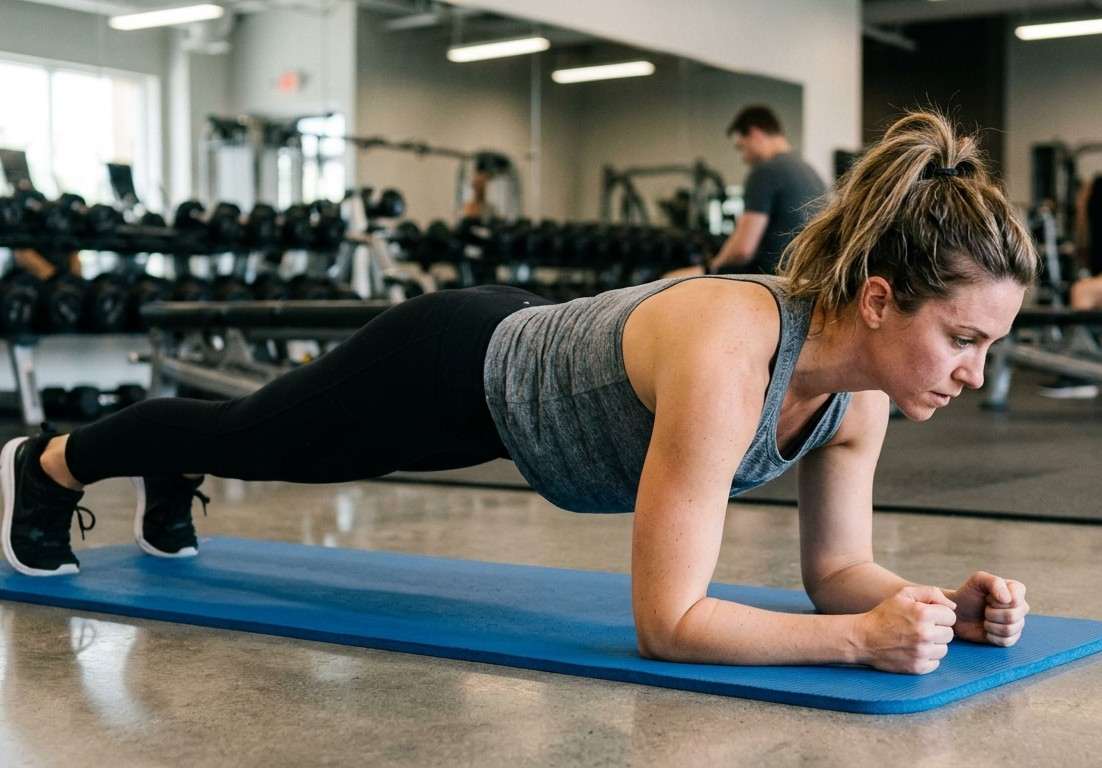
A plank may look simple, but holding your body steady against gravity can challenge several muscles at the same time. Unlike exercises that involve repeated movement, the plank is an isometric exercise, meaning the muscles contract while you maintain a relatively fixed position.
Planks are popular because they require little or no equipment and can be adapted for beginners as well as more experienced exercisers. When performed with good form, they can help develop core strength and stability that support everyday movements and other forms of exercise.
What Is a Plank Exercise?
A plank is a bodyweight exercise in which you support your body on your forearms and toes or your hands and toes while keeping your torso stable.
The traditional forearm plank involves placing the elbows underneath the shoulders, lifting the body from the floor, tightening the abdominal and glute muscles, and maintaining a relatively straight line from the head through the hips to the feet.
Because the body remains still while the muscles work to maintain the position, the plank is considered an isometric core exercise.
What Muscles Does the Plank Work?
Although the abdominal muscles are usually associated with planks, the exercise involves more than just the abs.
1. Rectus Abdominis
The rectus abdominis is one of the major muscles at the front of the abdomen. It helps stabilize the trunk while you hold the plank.
2. Transverse Abdominis
This deeper abdominal muscle helps provide trunk stability and contributes to the bracing action used during a plank.
3. Obliques
The muscles along the sides of the abdomen help prevent the torso from rotating or collapsing.
4. Lower Back Muscles
The muscles around the lower back contribute to maintaining a stable trunk. Good technique is important because allowing the lower back to sag can place unnecessary stress on the area.
5. Glutes
Your glute muscles help stabilize the pelvis and maintain alignment while you hold the position.
6. Shoulders and Arms
The shoulders, arms and upper-body muscles help support your body, particularly during high-plank variations.
7. Hips and Pelvis
The muscles around the hips and pelvis contribute to balance and stability.
Overall, the plank is better thought of as a whole-core stability exercise rather than an exercise that targets only the stomach. A strong core helps the muscles around the abdomen, pelvis, hips and lower back work together during physical activity.
20 Proven Benefits of Plank Exercise
- Strengthens the Core: Planks engage the abdominal and deeper core muscles, helping improve overall core strength.
- Improves Core Stability: Regular planking trains your trunk to stay stable while your body is under tension.
- Supports Better Balance: A stronger core can help improve balance and body control during everyday activities and exercise.
- Engages Multiple Muscles: Planks work the abs while also involving the shoulders, arms, back, hips and glutes.
- Improves Muscular Endurance: Holding a plank challenges the muscles to remain active for a sustained period.
- Supports Good Posture: Stronger trunk muscles can contribute to better postural control.
- May Support Lower-Back Stability: Developing core strength can help the body maintain better trunk control during movement.
- Requires No Equipment: Planks can be performed almost anywhere without weights or gym machines.
- Easy to Modify: Beginners can use wall, incline or knee planks before progressing to harder variations.
- Helps Improve Body Control: Planks teach you to maintain alignment and control your pelvis and torso.
- Strengthens the Glutes: Proper planking involves the glute muscles, which help stabilize the pelvis.
- Challenges the Shoulders: The shoulders and upper-body muscles work to support the body during plank variations.
- Convenient for Home Workouts: A plank can easily be included in short home-based exercise sessions.
- Supports Functional Fitness: Core stability is useful for movements such as lifting, reaching, bending and carrying.
- Can Improve Exercise Performance: Better core stability may help you maintain control during other strength and fitness exercises.
- Provides a Simple Fitness Progression: You can gradually increase hold time or move to more challenging variations as your strength improves.
- May Help Improve Coordination: Dynamic plank variations require the core to stabilize the body while the limbs move.
- Complements Other Exercises: Planks can be combined with squats, lunges, push-ups, walking and cardiovascular exercise.
- Helps Build Discipline and Consistency: Because planks are simple and accessible, they can be easy to include regularly in a workout routine.
- Supports Overall Core Conditioning: Different plank variations allow you to challenge the front, sides and supporting muscles of the trunk.
How to Do a Forearm Plank Correctly?
Follow these steps for a basic forearm plank:
- Start by lying face down on an exercise mat or comfortable surface.
- Place your forearms on the floor with your elbows approximately underneath your shoulders.
- Extend your legs behind you and place your toes on the floor.
- Tighten your abdominal muscles.
- Lift your torso and legs from the floor.
- Keep your head and neck in a neutral position.
- Keep your shoulders away from your ears.
- Maintain a straight, controlled body position without deliberately pushing your hips excessively high or allowing your lower back to sag.
- Continue breathing normally.
- Hold the position only as long as you can maintain good form.
- Lower yourself slowly and rest.
Proper technique is more important than trying to hold the plank for as long as possible.
How Long Should You Hold a Plank?
There is no single ideal plank time for everyone. Your appropriate hold depends on your fitness level, technique and training goals.
1. Beginner
Start with approximately 10–20 seconds, focusing on maintaining good alignment rather than chasing a longer time.
2. Intermediate
You may gradually work toward 20–60 seconds if you can maintain proper form.
3. Advanced
More experienced exercisers may perform longer holds or choose a more challenging plank variation instead of simply increasing the duration.
Mayo Clinic Health System describes starting with a 20-second plank and gradually working toward longer holds as part of a broader exercise routine.
Important: A 2-minute plank performed with poor form is not necessarily better than a controlled 20–30-second plank.
10 Variations of Plank Exercise
Changing the position can make the plank easier or more challenging.
1. Knee Plank
Keep your knees on the floor while supporting your upper body with your forearms. This is a useful starting point for beginners.
2. Wall Plank
Perform the plank against a wall. It reduces the amount of body weight you need to support and can be useful for people who find floor planks difficult.
3. Incline Plank
Place your hands or forearms on a sturdy elevated surface, such as a stable bench or countertop.
4. High Plank
Support your body on your hands instead of your forearms, similar to the top position of a push-up.
5. Side Plank
Balance on one forearm or hand while turning your body sideways. This variation places greater emphasis on the muscles along the sides of the trunk.
6. Shoulder-Tap Plank
From a high-plank position, lift one hand at a time to touch the opposite shoulder. The goal is to minimize movement through the hips and torso.
7. Plank With Leg Lift
From a plank position, slowly lift one leg while maintaining control of your pelvis and torso.
8. Plank With Arm Lift
Raise one arm while maintaining a stable trunk.
9. Plank With Opposite Arm and Leg Lift
Lift one arm and the opposite leg simultaneously. This requires greater balance and core control.
10. Plank With Knee Drive
From a high plank, slowly bring one knee toward the chest before returning it to the starting position.
Common Plank Exercise Mistakes
1. Letting the Lower Back Sag
Allowing the hips to drop can change the exercise and may increase stress on the lower back.
2. Raising the Hips Too High
Pushing the hips far upward reduces the challenge to the trunk.
3. Holding Your Breath
Planking should not involve intentionally holding your breath. Continue breathing slowly and regularly.
4. Looking Too Far Forward
Keep your head and neck aligned rather than lifting your chin excessively.
5. Shrugging the Shoulders
Try to keep the shoulders relaxed and away from the ears.
6. Chasing Time Instead of Technique
If your body starts losing alignment, it is usually better to stop, rest and repeat with better form.
Are Planks Good for Weight Loss?
Planks can contribute to an active exercise routine, but they should not be considered a stand-alone weight-loss exercise.
A plank primarily trains muscular strength, endurance and stability rather than providing the same cardiovascular demand as activities such as brisk walking, running, cycling or swimming.
For fat loss, overall physical activity, resistance training, nutrition, sleep and other lifestyle factors are more important than simply increasing plank time.
Can Planks Give You Six-Pack Abs?
Planks can strengthen and develop the abdominal muscles, but doing planks alone does not guarantee visible six-pack abs.
Visible abdominal definition depends on several factors, including overall body composition, genetics, nutrition and muscle development. Core exercises can strengthen the underlying muscles, while reducing overall body fat generally requires a broader approach to physical activity and nutrition.
10 Possible Side Effects and Risks of Planks
- Lower Back Strain: Allowing the hips to sag can place unnecessary stress on the lower back.
- Shoulder Discomfort: Poor positioning or holding the plank for too long may strain the shoulders.
- Wrist Pain: High planks can put pressure on the wrists, particularly in people with existing wrist discomfort.
- Muscle Fatigue: Shaking or significant muscle fatigue can occur when the core and supporting muscles become tired.
- Neck Strain: Looking too far forward or lifting the head can put unnecessary tension on the neck.
- Poor Form: Continuing after losing proper alignment reduces the quality of the exercise and may increase the risk of discomfort.
- Overtraining: Performing excessive plank sessions without adequate recovery can contribute to muscle soreness and fatigue.
- Existing Injuries: People with back, shoulder, wrist or other musculoskeletal injuries may need to modify or avoid certain plank variations.
- Breath Holding: Holding your breath during a plank can make the exercise unnecessarily difficult and may cause lightheadedness in some people.
- Too-Advanced Variations: Starting with difficult versions before developing sufficient core strength can increase the likelihood of poor technique.
How to Reduce the Risks?
Start with an easier plank variation, maintain a controlled body position, breathe normally and stop when your form begins to deteriorate. If you have an existing injury or experience persistent or sharp pain during planks, consult a qualified healthcare professional before continuing.
How Many Calories Does Planking Burn?
Planking burns calories, but the exact amount varies based on body weight, plank variation, duration, muscle engagement, and individual metabolism. The figures below are reasonable estimates rather than exact calorie counts.
| Body Weight | 1 Minute | 5 Minutes | 10 Minutes |
|---|---|---|---|
| 50 kg (110 lb) | 2–4 kcal | 10–20 kcal | 20–40 kcal |
| 60 kg (132 lb) | 2–5 kcal | 10–25 kcal | 20–50 kcal |
| 70 kg (154 lb) | 3–5 kcal | 15–25 kcal | 30–50 kcal |
| 80 kg (176 lb) | 3–6 kcal | 15–30 kcal | 30–60 kcal |
| 90 kg (198 lb) | 4–7 kcal | 20–35 kcal | 40–70 kcal |
| 100 kg (220 lb) | 4–8 kcal | 20–40 kcal | 40–80 kcal |
Note: These are approximate ranges. Actual calorie expenditure can differ considerably between individuals. Planks are primarily useful for core strength, stability, and muscular endurance, rather than maximizing calorie burn.
Plank vs. Sit-Ups
Planks and sit-ups train the core in different ways.
| Feature | Plank | Sit-Ups |
|---|---|---|
| Exercise type | Isometric | Dynamic |
| Main focus | Core stability | Trunk movement |
| Equipment | Usually none | Usually none |
| Movement | Hold a position | Repeated movement |
| Beginner modification | Wall or knee plank | Modified sit-up |
| Main goal | Stability and endurance | Abdominal strength and movement |
A balanced workout can include different types of core exercises rather than relying on only one movement.
How Often Should You Do Planks?
For many people, planks can be included several times per week as part of a balanced fitness program.
Instead of performing extremely long holds every day, focus on consistent practice with good technique. You can also alternate traditional planks with side planks and other core exercises to train the trunk in different ways.
A well-rounded fitness program should include more than core training, including cardiovascular activity and other forms of strength training.
Who Should Be Careful With Planks?
People with existing back problems, significant joint pain, recent injuries, osteoporosis or other health concerns should consider speaking with a qualified healthcare professional before beginning a new exercise program.
Stop the exercise if you experience sharp or unusual pain, particularly in the lower back, shoulders or wrists.
Muscle fatigue and a mild burning sensation can occur during exercise, but pain should not be ignored.
Tips to Make Planks More Effective
- Focus on body alignment rather than maximum hold time.
- Keep your abdominal muscles gently braced.
- Squeeze your glutes without excessively tilting your pelvis.
- Keep breathing throughout the hold.
- Keep your neck neutral.
- Start with an easier variation if the traditional plank is too difficult.
- Progress gradually rather than increasing duration dramatically.
- Stop when you can no longer maintain good technique.
- Combine planks with other core, strength and cardiovascular exercises.
How Many Planks Should I Do a Day?
There is no fixed number of planks everyone needs to do each day. Quality and consistency are more important than the number of repetitions, because a plank is a timed hold rather than a repeated movement.
| Fitness Level | Planks per Day | Hold per Plank |
|---|---|---|
| Beginner | 2–3 | 10–20 seconds |
| Intermediate | 3–4 | 20–45 seconds |
| Advanced | 3–5 | 45–90 seconds |
For most people, 2–3 sets of 20–60 seconds is a practical starting point. Rest between sets and gradually increase the duration or try more challenging variations as your core strength improves.
If your form starts to break down, stop the set rather than trying to hold the plank longer. You do not need to perform dozens of planks to strengthen your core.
A Simple Beginner Plank Exercise Routine
If you are new to planks, try this simple progression:
| Exercise | Duration | Sets |
|---|---|---|
| Wall plank | 20–30 seconds | 2 |
| Knee plank | 10–20 seconds | 2 |
| Forearm plank | 10–20 seconds | 2 |
| Side plank from knees | 10–15 seconds per side | 2 |
Rest between sets and increase the duration gradually as your technique improves.
Final Thought
The plank is a simple but effective core exercise that trains your body to maintain stability under tension. It works the abdominal and trunk muscles while also involving the shoulders, back, hips and glutes.
You do not need to hold a plank for several minutes to benefit from it. For most people, good technique, consistent practice and gradual progression are more valuable than chasing a record time.
Planks work best when they are combined with a complete fitness routine that includes strength training, cardiovascular exercise, mobility and adequate recovery.
FAQ’s
What will happen if I plank daily?
Planking daily may improve core strength, stability, muscular endurance and body control when performed with proper form. Results depend on your overall fitness routine and consistency.
Is a 2-minute plank every day good?
A 2-minute plank can be challenging and may be useful if you can maintain proper form throughout. However, longer is not always better, and shorter, controlled holds may be more appropriate for beginners.
Will a 1-minute plank a day give results?
A 1-minute plank performed consistently can help improve core endurance and stability. Visible changes in body shape require a broader exercise and nutrition approach.
How long should I plank per day?
Beginners can start with about 10–20 seconds per set and gradually progress. Many people can work toward 30–60 seconds per set while maintaining good form rather than focusing only on maximum duration.
Do planks slim your waist?
Planks can strengthen the abdominal and core muscles, but they do not specifically burn waist fat. Reducing overall body fat through appropriate nutrition and physical activity is necessary to make the waist appear slimmer.
What happens if I plank every day for 30 days?
A 30-day plank routine may improve core endurance, stability and body control. The amount of visible change varies depending on your starting fitness level, nutrition, activity level and genetics.
Can I get a 6-pack from planking?
Planking can strengthen the abdominal muscles, but planking alone is unlikely to produce a visible six-pack. Abdominal definition also depends on overall body-fat levels, genetics, nutrition and a well-rounded exercise routine.
What does a plank do to your body?
A plank strengthens and stabilizes the core while also engaging the shoulders, arms, back, hips and glutes.
Are planks good for losing belly fat?
Planks strengthen the abdominal muscles, but they cannot specifically burn belly fat. Fat loss generally requires a combination of physical activity, nutrition and an overall calorie deficit.
Can I do planks every day?
Some people can perform short, properly controlled planks daily, but you do not need to plank every day to build core strength. Allowing adequate recovery is important.
Do planks burn a lot of calories?
Planks burn calories, but generally fewer than vigorous cardiovascular activities because they are primarily a strength and stability exercise.
Which plank is best for beginners?
A wall plank, incline plank or knee plank is usually easier for beginners than a full forearm or high plank.
Are planks better than sit-ups?
Neither exercise is universally better. Planks emphasize core stability and isometric endurance, while sit-ups involve repeated trunk movement.
Can planks reduce back pain?
Core strengthening may support spinal stability, but planks are not a universal treatment for back pain. People with persistent or severe pain should seek professional medical advice.
Why do my arms shake during a plank?
Shaking can happen when your muscles become fatigued while trying to maintain the position. Reduce the hold time and focus on proper form.
Can planks build muscle?
Planks can strengthen and improve the endurance of core and supporting muscles. More advanced resistance exercises may be needed for substantial muscle growth.
Should I plank before or after a workout?
Either can work. Short planks can be included in a warm-up or activation routine, while more challenging plank work can be included during the main strength-training portion of a workout.
Why does my lower back hurt during planks?
Lower-back discomfort can occur when the hips sag, the core is not adequately braced or the exercise is too difficult. Try an easier variation and reassess your form.
Can planks improve posture?
Planks can strengthen muscles involved in trunk stability, which may support good posture, but posture depends on several muscles, movement habits and other factors.
Sources / References:
Disclaimer:
This guide is for general educational purposes only and does not replace personalized medical or fitness advice. Stop exercising if you experience pain and consult a qualified healthcare professional when appropriate.
Also Read: