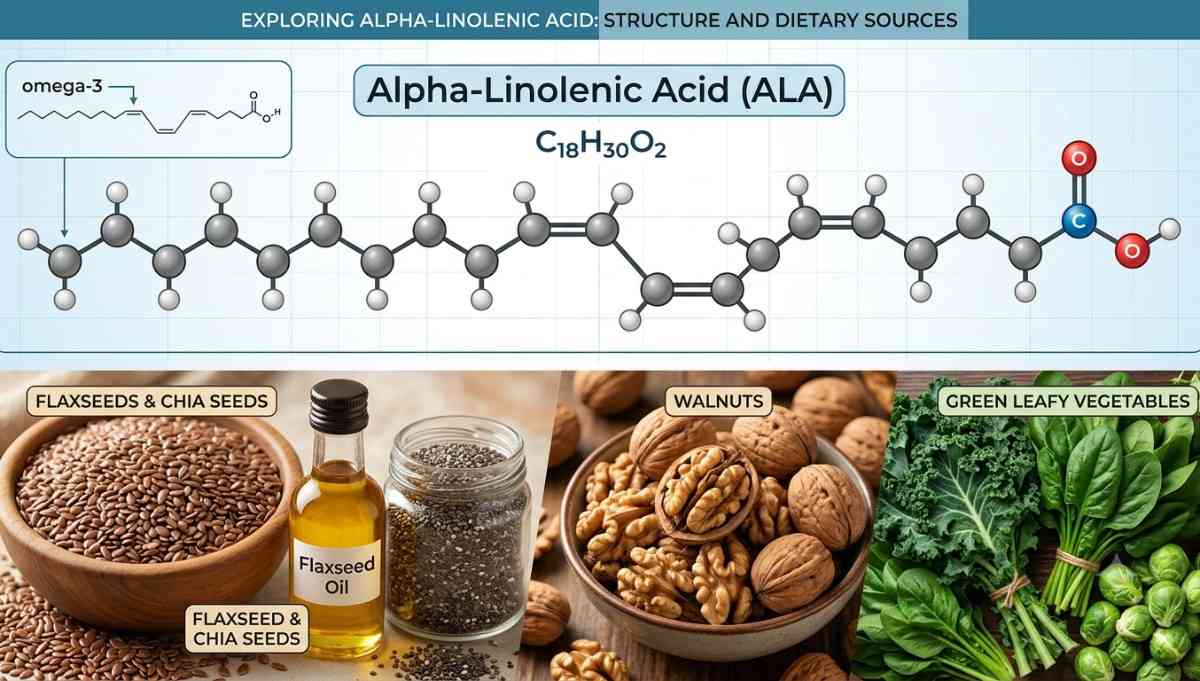
Alpha-linolenic acid (ALA) is a plant-based omega-3 fatty acid that plays an important role in a healthy diet. It is considered an essential fatty acid because the body cannot produce it on its own, so it must come from food.
ALA is found naturally in foods such as flaxseeds, chia seeds, walnuts, soybean oil, and canola oil. Unlike EPA and DHA, which are commonly associated with fatty fish, ALA is primarily obtained from plant foods. The body can convert some ALA into EPA and DHA, but this conversion is limited.
Because of this, ALA is particularly useful for people who follow vegetarian or vegan diets and want to include omega-3 fats without eating seafood.
What Is Alpha-Linolenic Acid (ALA)?
Alpha-linolenic acid, commonly called ALA, is an omega-3 polyunsaturated fatty acid. It is one of the three major omega-3 fatty acids, along with EPA (eicosapentaenoic acid) and DHA (docosahexaenoic acid).
ALA is classified as an essential fatty acid because humans cannot synthesize enough of it to meet the body’s needs. Dietary intake is therefore necessary.
Once consumed, ALA can be incorporated into cell membranes and can also be converted into EPA and DHA. However, only a small amount is converted, particularly to DHA. Therefore, ALA should not be considered a complete nutritional substitute for dietary sources of EPA and DHA.
ALA vs EPA vs DHA
| Feature | ALA | EPA | DHA |
|---|---|---|---|
| Full name | Alpha-linolenic acid | Eicosapentaenoic acid | Docosahexaenoic acid |
| Main sources | Flaxseeds, chia, walnuts, plant oils | Fatty fish, seafood, algae | Fatty fish, seafood, algae |
| Type | Plant-based omega-3 | Long-chain omega-3 | Long-chain omega-3 |
| Essential? | Yes | Not classified as essential | Not classified as essential |
| Can the body make it? | No | Can be produced in small amounts from ALA | Can be produced in very small amounts from ALA |
| Main dietary role | Essential omega-3 source | Important long-chain omega-3 | Important structural omega-3, especially in brain and retina |
The important takeaway is that ALA, EPA, and DHA are related but not interchangeable. ALA is an essential dietary fat, while EPA and DHA have distinct biological roles.
Best Food Sources of ALA
You do not need to rely on supplements to get ALA. Many everyday plant foods contain it.
| Food | ALA contribution |
|---|---|
| Flaxseeds | One of the richest plant sources of ALA |
| Flaxseed oil | Concentrated source of ALA |
| Chia seeds | Rich plant source of ALA |
| Walnuts | Convenient source of plant-based omega-3 |
| Canola oil | Useful cooking-oil source |
| Soybean oil | Provides ALA along with other unsaturated fats |
| Soy foods | Can contribute smaller amounts |
| Leafy vegetables | Provide smaller amounts |
NIH identifies flaxseed, chia seeds, walnuts, flaxseed oil, soybean oil, and canola oil among useful sources of omega-3 fats.
20 Health Benefits of Alpha-Linolenic Acid
- Supports Essential Fat Intake: ALA helps meet the body’s requirement for essential omega-3 fatty acids because humans cannot produce it naturally.
- Supports Cell Membranes: Omega-3 fatty acids are incorporated into cell membranes and contribute to normal cellular function.
- Supports Cardiovascular Health: Higher dietary intake of ALA has been associated with cardiovascular benefits in observational research, although clinical evidence specifically for ALA remains less certain.
- May Support Healthy Blood Pressure: Omega-3-rich dietary patterns may contribute to healthy blood pressure as part of an overall balanced diet.
- May Support Normal Heart Rhythm: Omega-3 fats have biological effects that may support cardiovascular function, although ALA should not be considered a treatment for heart rhythm disorders.
- Provides a Plant-Based Omega-3: ALA gives vegetarians and vegans a practical way to obtain an essential omega-3 fatty acid.
- Supports EPA Production: The body can convert a small amount of ALA into EPA.
- Contributes to DHA Production: ALA can ultimately contribute to DHA production, although the conversion is very limited.
- Supports Normal Growth and Development: Essential fatty acids are required for normal growth and development.
- Supports Healthy Dietary Fat Intake: Replacing some sources of saturated fat with unsaturated-fat-rich foods can contribute to a healthier overall dietary pattern.
- May Support Healthy Cholesterol Patterns: ALA-rich foods can be part of dietary patterns associated with cardiovascular health, although the effect should not be attributed to ALA alone.
- May Help Support Blood Vessel Function: Omega-3 fats participate in biological processes involved in vascular function.
- Supports Brain-Related Nutrition: ALA contributes to overall omega-3 intake, although DHA is the major omega-3 associated with brain structure and function.
- Supports Eye-Related Nutrition: ALA contributes to essential omega-3 intake, while DHA is particularly concentrated in the retina.
- Provides a Nutrient-Dense Alternative to Some Animal Fats: Foods such as walnuts, chia, and flaxseeds provide ALA together with other nutrients.
- May Contribute to a Heart-Healthy Eating Pattern: ALA-rich nuts, seeds, and plant oils can fit naturally into diets emphasizing unsaturated fats.
- Supports Normal Physiological Processes: Omega-3 fatty acids participate in numerous cellular and signaling processes.
- May Be Helpful When Seafood Intake Is Low: ALA can help provide essential omega-3 intake for people who rarely eat seafood, although it does not fully replace EPA and DHA.
- Supports Plant-Rich Diets: ALA-rich seeds, nuts, and oils can complement diets based on vegetables, fruits, legumes, and whole grains.
- Helps Prevent Inadequate Essential-Fat Intake: Regularly eating ALA-rich foods can help satisfy the dietary requirement for this essential fatty acid.
How Much ALA Do You Need Per Day?
The U.S. National Academies established adequate intake levels for ALA rather than a recommended dietary allowance. According to the NIH Office of Dietary Supplements:
| Life stage | Adequate intake of ALA per day |
|---|---|
| Adult men | 1.6 g |
| Adult women | 1.1 g |
| Pregnant women | 1.4 g |
| Breastfeeding women | 1.3 g |
| Teen boys | 1.6 g |
| Teen girls | 1.1 g |
| Children 4–8 years | 0.9 g |
| Children 1–3 years | 0.7 g |
These values are general dietary reference values, not instructions to take a specific amount of an ALA supplement.
How to Add More ALA to Your Diet?
Getting ALA through whole foods is generally straightforward.
Try adding ground flaxseed to oatmeal, yogurt, smoothies, or homemade baked foods. Chia seeds can be added to overnight oats or puddings, while walnuts make an easy snack or salad topping.
Canola and soybean oils can also contribute ALA when used as part of a balanced diet.
A practical approach is to focus on variety rather than trying to consume large amounts of one particular food.
How to Take Alpha-Linolenic Acid?
Alpha-linolenic acid (ALA) is best obtained through foods such as ground flaxseeds, chia seeds, walnuts, flaxseed oil, canola oil, and soybean oil. Add ground flaxseed or chia seeds to oatmeal, yogurt, smoothies, salads, or other meals. If using an ALA supplement, follow the product’s dosage instructions and speak with a healthcare professional if you take medications or have a medical condition.
What Is the Best Time to Take Alpha-Linolenic Acid?
There is no established best time of day to consume ALA. ALA-rich foods can be included with breakfast, lunch, dinner, or snacks. If an ALA supplement causes stomach discomfort, taking it with a meal may improve tolerance.
Who Should Take Alpha-Linolenic Acid?
Most people should obtain ALA as part of a balanced diet because it is an essential fatty acid. It may be particularly useful for people who:
- Eat vegetarian or vegan diets.
- Rarely consume seafood.
- Want more plant-based omega-3 sources.
- Include nuts, seeds, and healthy plant oils in their diet.
Who Should Not Take Alpha-Linolenic Acid?
There is generally no need for healthy adults to avoid dietary ALA. However, people should use high-dose ALA supplements cautiously and discuss them with a healthcare professional if they:
- Take blood-thinning or blood-clotting medications.
- Have a bleeding disorder or are preparing for surgery.
- Have an allergy to an ALA-containing food, such as walnuts or flaxseed.
- Have a medical condition requiring dietary restrictions.
- Are pregnant or breastfeeding and are considering concentrated supplements.
These precautions are mainly relevant to supplements rather than normal amounts of ALA obtained from foods.
ALA and Weight Loss
ALA is sometimes marketed as a weight-loss nutrient, but it should not be considered a fat-burning supplement.
Foods containing ALA, such as chia seeds, flaxseeds, and walnuts, can be nutritious additions to a weight-management diet. However, these foods also contain calories, so portion size still matters.
Successful weight management depends on the overall dietary pattern, calorie intake, physical activity, sleep, and other lifestyle factors rather than ALA alone.
ALA and Heart Health
Heart health is one of the areas in which ALA has received considerable research attention.
Some observational studies have associated higher ALA intake with lower cardiovascular risk. However, observational associations do not prove that ALA itself prevents heart disease. Harvard’s Nutrition Source notes that evidence specifically for ALA is less extensive than evidence for marine omega-3s, and additional research is needed.
The best approach is therefore to include ALA-rich foods as part of a broader heart-healthy eating pattern rather than relying on ALA supplements as a treatment or prevention strategy.
ALA for Vegetarians and Vegans
ALA is especially relevant for people who do not eat fish.
Flaxseeds, chia seeds, walnuts, and certain plant oils provide ALA without requiring animal foods. However, people following vegan or vegetarian diets should understand that ALA conversion into EPA and DHA is limited.
Algal oil is another option for people seeking a vegetarian or vegan source of DHA and sometimes EPA.
ALA During Pregnancy
Pregnancy increases nutritional requirements, including the adequate intake for ALA.
The NIH lists an adequate intake of 1.4 grams of ALA per day during pregnancy and 1.3 grams per day while breastfeeding.
Pregnant women should also discuss overall omega-3 intake with their healthcare professional. ALA does not provide the same amount of DHA as directly consuming DHA-containing foods or supplements because conversion from ALA is limited.
10 Possible Side Effects and Precautions
ALA from normal food sources is generally considered part of a healthy diet. However, consuming very large amounts of concentrated oils or supplements may cause problems.
- Digestive Discomfort: Large amounts of oil or concentrated supplements may cause stomach upset.
- Loose Stools: High intakes of oils can sometimes have a mild laxative effect.
- Bloating: Some ALA-rich foods, particularly seeds, may cause bloating when introduced suddenly.
- Gas: Increasing fiber-rich flax or chia too quickly may lead to gas.
- Excess Calories: Oils, nuts, and seeds are calorie-dense and can contribute substantial calories when consumed in large portions.
- Allergic Reactions: People with allergies to specific nuts or seeds should avoid those foods.
- Medication Considerations: People taking medicines that affect blood clotting should discuss high-dose omega-3 supplementation with a healthcare professional.
- Supplement Quality Concerns: Dietary supplements can vary in formulation, dose, and quality, so choosing products carefully is important.
- Excessive Supplementation: More ALA is not necessarily better, and high-dose supplements should not be used simply because ALA is an essential nutrient.
- Replacing Necessary Nutrients: Focusing heavily on one fatty acid should not come at the expense of a varied diet containing other essential nutrients.
For most people, obtaining ALA from foods such as flaxseed, chia, walnuts, and appropriate plant oils is a sensible approach.
Is ALA the Same as Omega-3?
ALA is a type of omega-3 fatty acid, but the terms are not interchangeable.
Omega-3 is the broader family, while ALA is one specific member of that family. EPA and DHA are other important omega-3 fatty acids.
This distinction matters because the body handles ALA differently from EPA and DHA.
Can ALA Replace Fish Oil?
Not completely.
ALA can provide an essential plant-based omega-3, but conversion of ALA into EPA and DHA is limited. Fish oil provides EPA and DHA directly, while algal oil can provide DHA and, depending on the product, EPA.
Therefore, someone who does not eat fish should not assume that consuming large quantities of ALA will produce the same nutritional effect as consuming EPA and DHA.
Is Flaxseed Oil a Good Source of ALA?
Yes. Flaxseed oil is particularly rich in ALA.
However, whole or ground flaxseed offers more than ALA because it also contains dietary fiber and other plant compounds. Which form is preferable depends on how you are using it and your overall dietary needs.
Flaxseed oil should generally be stored according to the manufacturer’s instructions because oils containing polyunsaturated fats can be sensitive to oxidation.
Who May Benefit From Paying Attention to ALA Intake?
ALA-rich foods can be particularly useful for:
- People who eat little or no seafood
- Vegetarians and vegans
- People looking to replace some saturated-fat sources with unsaturated fats
- Individuals who want more nuts and seeds in their diet
- People looking for plant-based sources of essential omega-3 fats
However, people with specific medical conditions or those taking medications should discuss concentrated omega-3 supplements with a qualified healthcare professional.
How to Choose ALA-Rich Foods?
Instead of looking for foods advertised as “high in omega-3” alone, check the overall nutritional value.
A good ALA-rich choice can provide several nutrients at once. For example, flaxseed and chia provide ALA along with fiber, while walnuts provide ALA along with protein and other unsaturated fats. A balanced diet is more useful than depending on a single “superfood.”
Other Uses of Alpha-Linolenic Acid
ALA is primarily consumed as an essential dietary omega-3 fatty acid. Foods rich in ALA can also be used as part of:
- Heart-healthy eating: Nuts, seeds, and plant oils can contribute unsaturated fats to the diet.
- Plant-based diets: ALA provides an important plant source of omega-3.
- Vegetarian and vegan nutrition: ALA helps meet essential omega-3 needs without seafood.
- Balanced fat intake: ALA-rich foods can replace some foods higher in saturated fat.
- Nutrient-dense meals: Flaxseed, chia seeds, and walnuts provide ALA along with other nutrients.
ALA should not be considered a substitute for EPA or DHA because the body’s conversion of ALA into these long-chain omega-3 fatty acids is limited.
Tips for Consuming Alpha-Linolenic Acid
- Choose whole-food sources: Flaxseeds, chia seeds, and walnuts are convenient options.
- Use ground flaxseed: Ground flaxseed is generally easier to incorporate into meals than whole flaxseed.
- Add seeds gradually: Increasing fiber-rich foods suddenly may cause gas or bloating.
- Store oils properly: Follow storage instructions for flaxseed and other ALA-rich oils to help maintain quality.
- Watch portions: Nuts, seeds, and oils are nutritious but calorie-dense.
- Vary your sources: Include different ALA-rich foods rather than relying on one food.
- Remember EPA and DHA: ALA does not completely replace direct dietary sources of EPA and DHA.
Precautions and Interactions
ALA obtained from ordinary foods is generally considered safe as part of a balanced diet. Concentrated supplements require more caution.
People taking anticoagulant or antiplatelet medications should consult their healthcare professional before taking high-dose omega-3 supplements. Anyone preparing for surgery should also disclose supplement use to their healthcare team.
People with food allergies should avoid the specific ALA-rich food responsible for their allergy. For example, someone with a walnut allergy should not use walnuts as an ALA source.
It is also important not to assume that taking more ALA provides greater health benefits. ALA is an essential nutrient, but excessive supplementation is not necessary for most people. Food-based sources are generally a practical way to meet daily ALA needs.
FAQ’s
Is ALA good for heart health?
ALA may support cardiovascular health when consumed as part of a balanced diet, although evidence for ALA supplements is less conclusive.
How much ALA do adults need daily?
The adequate intake is about 1.6 grams daily for adult men and 1.1 grams for adult women.
Can ALA be converted into EPA and DHA?
Yes, the body can convert ALA into EPA and DHA, but the conversion is limited, especially for DHA.
Is ALA suitable for vegetarians and vegans?
Yes. ALA is naturally found in many plant foods, making it an important omega-3 source for vegetarian and vegan diets.
Can ALA help with weight loss?
ALA is not a weight-loss treatment, but ALA-rich foods can be included in a balanced diet that supports healthy weight management.
Is ALA safe to consume every day?
ALA from normal food sources is generally safe to consume daily. Supplements should be used according to product instructions and professional advice when appropriate.
Is ALA good during pregnancy?
ALA is an essential fatty acid needed during pregnancy, but pregnant women should discuss their overall omega-3 intake and supplements with their healthcare provider.
Is ALA found in walnuts?
Yes. Walnuts are a convenient plant-based source of ALA and can be added to salads, oatmeal, yogurt, or snacks.
Should I take an ALA supplement?
Not everyone needs an ALA supplement. Many people can meet their needs through foods. If you are considering a concentrated supplement, particularly if you take medication or have a medical condition, speak with a healthcare professional first.
Final Thought
Alpha-linolenic acid is an essential plant-based omega-3 fatty acid that deserves a place in a balanced diet. Flaxseeds, chia seeds, walnuts, and certain plant oils make it relatively easy to obtain ALA through everyday foods.
The most important point is not to treat ALA as a miracle nutrient. It is one part of an overall healthy eating pattern. ALA provides essential omega-3 nutrition, but its conversion into EPA and DHA is limited, so ALA-rich foods should not automatically be viewed as a complete replacement for sources of EPA and DHA.
Sources / References:
Disclaimer:
This guide is for general educational purposes only and does not replace professional medical advice, diagnosis, or treatment. Consult a qualified healthcare professional before starting supplements or making significant dietary changes.
Also Read: