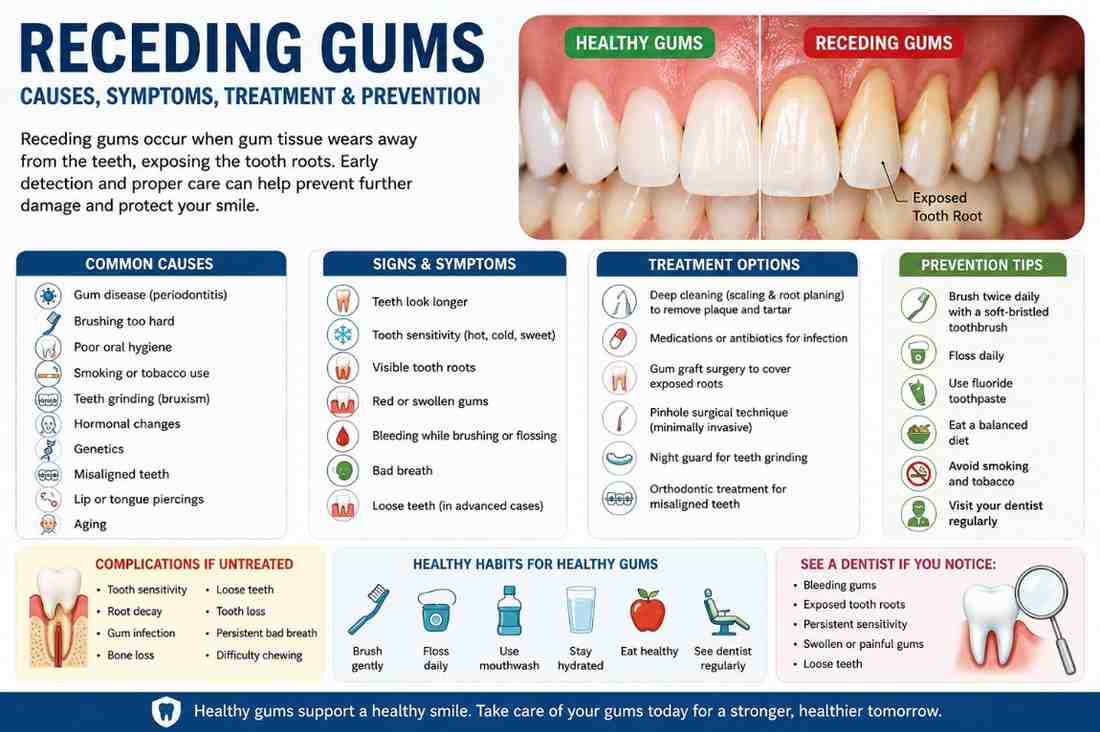
Receding gums are a common dental problem that affects millions of people worldwide. While gum recession may seem like a cosmetic issue at first, it can expose the sensitive roots of your teeth, increase the risk of tooth decay, cause tooth sensitivity, and even lead to tooth loss if left untreated.
The good news is that early diagnosis and proper dental care can help slow or stop gum recession. Understanding the causes, symptoms, and treatment options is the first step toward protecting your oral health.
In this guide, we’ll cover everything you need to know about receding gums, including risk factors, treatments, prevention tips, and answers to frequently asked questions.
What Are Receding Gums?
Receding gums, also known as gum recession, occur when the gum tissue surrounding your teeth gradually pulls back or wears away, exposing more of the tooth or even its root.
Unlike healthy gums that fit snugly around the teeth, receding gums leave gaps where bacteria can accumulate, increasing the risk of cavities, infection, and periodontal disease. Although gum tissue does not naturally grow back, modern dental treatments can help protect exposed roots and improve oral health.
Signs and Symptoms of Receding Gums
Common symptoms include:
- Teeth appearing longer than usual
- Tooth sensitivity to hot, cold, or sweet foods
- Visible tooth roots
- Red or swollen gums
- Bleeding while brushing or flossing
- Persistent bad breath
- Loose teeth in advanced cases
- Pain along the gum line
- Small gaps between teeth and gums
- Increased plaque buildup near the roots
What Causes Receding Gums?
Several factors can contribute to gum recession.
1. Gum Disease
Periodontal disease is the leading cause of receding gums. Bacterial infection destroys gum tissue and supporting bone.
2. Aggressive Brushing
Brushing too hard or using a hard-bristled toothbrush can gradually wear away gum tissue.
3. Poor Oral Hygiene
Inadequate brushing and flossing allow plaque and tartar to build up, leading to gum inflammation.
4. Genetics
Some people naturally have thinner gum tissue, making them more prone to recession.
5. Smoking and Tobacco Use
Tobacco reduces blood flow to the gums and increases the risk of periodontal disease.
6. Teeth Grinding (Bruxism)
Excessive pressure on teeth can contribute to gum recession over time.
7. Misaligned Teeth
Crooked or crowded teeth place uneven stress on the gums.
8. Hormonal Changes
Pregnancy, menopause, and puberty may increase gum sensitivity.
9. Lip or Tongue Piercings
Jewelry can repeatedly rub against the gums, causing irritation.
10. Aging
Some gum recession naturally occurs with age, especially without regular dental care.
Receding Gums Risk Factors
Your risk is higher if you:
- Smoke
- Have diabetes
- Have untreated gum disease
- Brush aggressively
- Skip regular dental cleanings
- Have a family history of gum disease
- Grind your teeth
- Have poor oral hygiene
- Wear poorly fitted dental appliances
- Have vitamin deficiencies affecting gum health
Stages of Gum Recession
Mild
Only a small portion of the tooth root becomes visible.
Moderate
Noticeable gum loss with increased sensitivity.
Advanced
Large portions of the root are exposed, increasing the risk of cavities and loose teeth.
Complications of Untreated Receding Gums
Without treatment, gum recession can lead to:
- Tooth sensitivity
- Root decay
- Gum infection
- Bone loss
- Loose teeth
- Tooth loss
- Difficulty chewing
- Persistent bad breath
- Gum abscess
- Increased dental treatment costs
How Dentists Diagnose Receding Gums
A dentist may:
- Examine the gum line
- Measure gum pockets
- Check for bleeding
- Evaluate tooth mobility
- Take dental X-rays
- Assess bone loss
- Review oral hygiene habits
- Look for signs of gum disease
Treatment for Receding Gums
Treatment depends on the underlying cause.
1. Deep Dental Cleaning
Scaling and root planing remove plaque and tartar below the gum line.
2. Antibiotics
Used if bacterial infection is present.
3. Gum Grafting
Healthy tissue is transplanted to cover exposed roots.
4. Pinhole Surgical Technique
A minimally invasive procedure available in selected dental clinics.
5. Orthodontic Treatment
Correcting misaligned teeth may reduce pressure on the gums.
6. Night Guard
Protects teeth if grinding is causing recession.
7. Improved Oral Hygiene
Gentle brushing and daily flossing help prevent further damage.
Home Care Tips for Receding Gums
Although receding gums cannot be reversed naturally, healthy habits can help slow progression.
1. Brush Gently
Use a soft-bristled toothbrush.
2. Floss Daily
Remove plaque between teeth.
3. Use Fluoride Toothpaste
Protects exposed roots from cavities.
4. Consider a Desensitizing Toothpaste
May help reduce tooth sensitivity.
5. Quit Smoking
Improves gum healing and overall oral health.
6. Eat a Balanced Diet
Include foods rich in vitamin C, calcium, and vitamin D.
7. Stay Hydrated
Saliva helps protect teeth and gums.
8. Visit Your Dentist Regularly
Routine cleanings help prevent periodontal disease.
Foods That Support Healthy Gums
These foods may help maintain healthy gums:
- Leafy green vegetables
- Citrus fruits
- Berries
- Yogurt
- Cheese
- Almonds
- Fatty fish
- Green tea
- Carrots
- Apples
Foods to Limit
Reduce:
- Sugary snacks
- Soft drinks
- Sticky candies
- Excess alcohol
- Tobacco products
- Highly acidic beverages
Can Receding Gums Grow Back?
No. Lost gum tissue does not naturally regenerate. However, early treatment can stop progression, and procedures like gum grafting can restore gum coverage in some cases.
How to Prevent Receding Gums?
- Brush twice daily using gentle pressure.
- Floss every day.
- Schedule dental checkups every six months.
- Quit smoking.
- Wear a mouthguard if you grind your teeth.
- Eat a nutrient-rich diet.
- Treat gum disease early.
- Replace your toothbrush every three to four months.
- Drink plenty of water.
- Manage chronic health conditions like diabetes.
When Should You See a Dentist?
Seek dental care if you notice:
- Bleeding gums
- Exposed tooth roots
- Loose teeth
- Persistent bad breath
- Swollen gums
- Tooth sensitivity that worsens
- Pain while chewing
- Gum recession that appears to be progressing
Early treatment greatly improves the chances of preserving your natural teeth.
Receding Gums Treatment Cost
| Treatment | Average Cost (India) | Average Cost (USA) | Best For |
|---|---|---|---|
| Dental Consultation | ₹300–₹1,000 | $50–$250 | Initial examination and diagnosis |
| Dental X-rays | ₹300–₹1,500 | $25–$250 | Evaluating bone and gum health |
| Professional Teeth Cleaning | ₹1,000–₹5,000 | $75–$300 | Mild plaque and tartar removal |
| Scaling & Root Planing (Deep Cleaning) | ₹2,000–₹10,000 per quadrant | $200–$500 per quadrant | Gum disease and early gum recession |
| Antibiotic Therapy | ₹500–₹3,000 | $20–$150 | Treating bacterial gum infections |
| Desensitizing Treatment | ₹500–₹2,000 | $30–$100 | Reducing tooth sensitivity |
| Composite Bonding (Root Coverage) | ₹2,000–₹8,000 per tooth | $200–$600 per tooth | Covering exposed tooth roots |
| Gum Graft Surgery | ₹10,000–₹35,000 per tooth | $600–$3,000 per tooth | Moderate to severe gum recession |
| Connective Tissue Graft | ₹15,000–₹40,000 | $800–$3,500 | Root coverage and gum restoration |
| Pinhole Surgical Technique (PST) | ₹25,000–₹70,000 (limited availability) | $2,000–$6,000 | Minimally invasive gum recession treatment |
| Laser Gum Therapy | ₹5,000–₹20,000 | $300–$2,000 | Selected cases of gum disease |
| Night Guard (for Teeth Grinding) | ₹3,000–₹15,000 | $200–$800 | Preventing further gum recession from bruxism |
Note: Costs vary depending on the severity of gum recession, the type of treatment, your location, and the dental clinic. The estimates below are approximate.
Factors That Affect Treatment Cost
- Severity of gum recession
- Number of teeth requiring treatment
- Presence of gum disease or bone loss
- Type of procedure recommended
- Dentist’s experience and specialization
- Geographic location
- Dental insurance coverage (where applicable)
Tip: Early treatment with professional cleaning or scaling is significantly less expensive than advanced surgical procedures such as gum grafting. Regular dental checkups can help detect gum recession before it becomes severe.
FAQ’s
Are receding gums permanent?
Yes, the lost gum tissue is usually permanent unless treated with specific dental procedures like gum graft surgery.
Can brushing too hard cause gum recession?
Yes. Using excessive force or a hard-bristled toothbrush can wear away gum tissue over time.
Is gum recession painful?
Not always. Many people first notice increased tooth sensitivity before experiencing pain.
Can receding gums cause tooth sensitivity?
Yes. Exposed tooth roots are more sensitive to hot, cold, sweet, and acidic foods and drinks.
Can gum recession lead to tooth loss?
Yes. Severe gum recession can weaken the supporting structures of the teeth, increasing the risk of loose teeth and tooth loss.
Can receding gums heal on their own?
No. Gum recession cannot heal naturally, but early treatment can prevent it from worsening.
Is gum graft surgery painful?
Most patients experience only mild discomfort, which is usually manageable with prescribed or over-the-counter pain medication.
Are receding gums a sign of gum disease?
They can be. While gum disease is a leading cause, gum recession may also result from brushing habits, genetics, or other factors.
Does age cause receding gums?
The risk increases with age, but healthy oral hygiene and regular dental care can help prevent or slow gum recession.
Which toothpaste is best for receding gums?
A fluoride toothpaste designed for sensitive teeth can help protect exposed roots and reduce discomfort. Your dentist may recommend a specific product based on your needs.
Can mouthwash help receding gums?
An antibacterial mouthwash may help reduce plaque and support gum health, but it cannot reverse existing gum recession.
How long does it take to treat receding gums?
The timeline depends on the severity. Mild cases may improve with better oral hygiene and professional cleaning, while surgical treatments require several weeks of healing.
Can smoking cause receding gums?
Yes. Smoking damages gum tissue, reduces blood flow, and significantly increases the risk of gum disease and gum recession.
Can children develop receding gums?
Yes, although it is less common. Causes may include aggressive brushing, orthodontic issues, or underlying gum disease.
Is surgery always necessary?
No. Mild cases often improve with professional cleaning and better oral hygiene, while advanced cases may require surgery
How far can gums recede before teeth fall out?
Teeth do not fall out simply because the gums recede. Tooth loss usually occurs when severe gum recession is accompanied by significant bone loss and advanced periodontal disease.
Why are my gums receding all of a sudden?
Sudden gum recession may result from gum disease, aggressive brushing, teeth grinding, tobacco use, hormonal changes, or trauma to the gums. A dental evaluation can identify the underlying cause.
When is it too late to fix receding gums?
It’s never too late to seek treatment. While lost gum tissue does not grow back naturally, dental treatments such as deep cleaning or gum grafting can help stop further recession and protect your teeth.
At what age do gums start receding?
Gum recession can occur at any age but becomes more common after age 40. However, poor oral hygiene, smoking, and gum disease can cause it earlier.
How should I brush my teeth if I have receding gums?
Use a soft-bristled toothbrush and brush gently with small circular motions. Avoid scrubbing aggressively, as this can worsen gum recession.
What’s the worst thing for receding gums?
Ignoring gum disease, smoking, brushing too hard, poor oral hygiene, and untreated teeth grinding are among the worst habits for receding gums.
Will receding gums grow back after deep cleaning?
No. Deep cleaning removes plaque and bacteria and helps stop gum disease, but it cannot regenerate lost gum tissue.
How long will teeth last with receding gums?
With proper treatment and good oral hygiene, teeth affected by gum recession can often last a lifetime. Without treatment, the risk of tooth loss increases.
How can I stop receding gums from getting worse?
Brush gently with a soft-bristled toothbrush, floss daily, quit smoking, treat gum disease promptly, wear a night guard if you grind your teeth, and visit your dentist regularly.
How painful is receding gum surgery?
Most patients experience mild to moderate discomfort after gum graft surgery. The procedure is performed under local anesthesia, and post-operative pain is usually manageable with medication and proper aftercare.
Sources / References:
- National Institute of Dental and Craniofacial Research
- American Dental Association
- American Academy of Periodontology
- Mayo Clinic
- Cleveland Clinic
- NHS
About the Author:
Written by: Kirti Solanki (Health Content Researcher)
Kirti Solanki researches evidence-based health and wellness topics, translating reliable medical information into easy-to-understand articles that help readers make informed decisions about their health. All content is based on reputable medical sources but is not a substitute for professional medical advice.
Disclaimer:
This article is for educational purposes only and should not replace professional medical or dental advice, diagnosis, or treatment. Always consult a qualified dentist or healthcare provider for concerns about your oral health.
Also Read: