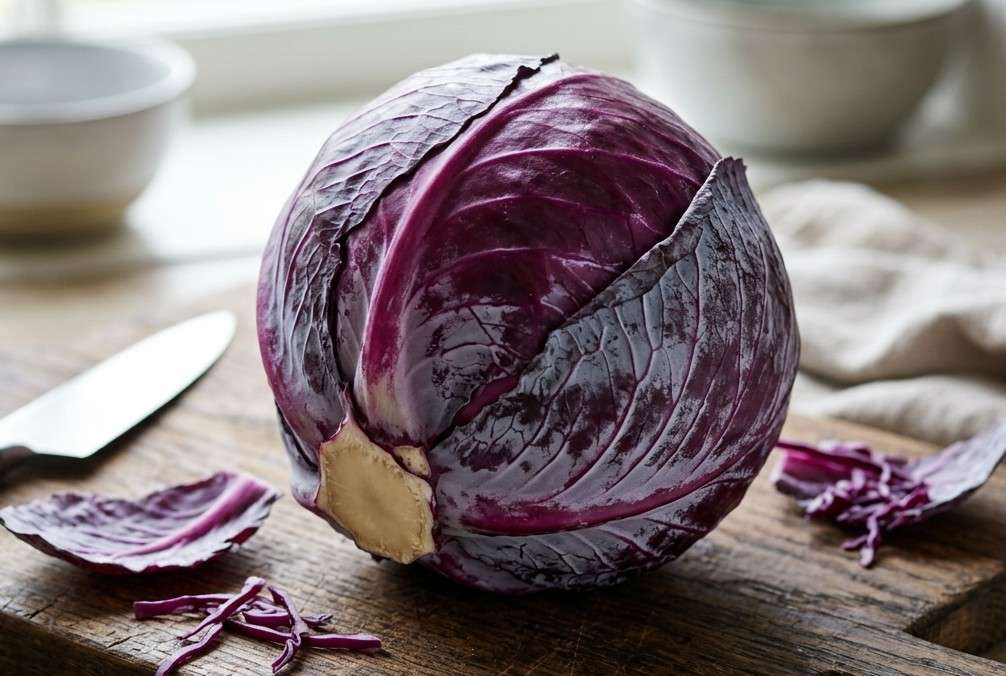
Red cabbage is one of the most colorful and nutritious vegetables found in kitchens around the world. Known for its deep purple-red color and crisp texture, this vegetable belongs to the cruciferous family, which also includes broccoli, kale, cauliflower, and Brussels sprouts. Red cabbage is widely appreciated for its refreshing taste, versatility, and powerful health benefits.
Whether eaten raw in salads, fermented into sauerkraut, steamed as a side dish, or added to soups and stir-fries, red cabbage can easily become part of a healthy daily diet. It is packed with vitamins, minerals, antioxidants, and plant compounds that support overall wellness.
In this guide, you will learn everything about red cabbage (also known as Purple cabbage, Red kraut or Rotkraut), including its nutrition facts, science-backed health benefits, side effects, best ways to eat it, storage tips, and precautions.
What is Red Cabbage?
Red cabbage is a leafy vegetable scientifically known as Brassica oleracea var. capitata f. rubra. It is closely related to green cabbage but differs in color, flavor, and antioxidant content. The vibrant purple-red color comes from anthocyanins, which are natural antioxidants also found in blueberries and purple grapes.
Red cabbage has a slightly peppery and earthy taste compared to green cabbage. It can be consumed raw, cooked, pickled, or fermented. Due to its rich nutrient profile and low calorie content, it is often included in weight-loss diets and healthy meal plans.
Red cabbage is widely grown across Europe, Asia, and North America and is commonly used in salads, slaws, wraps, soups, and traditional dishes.
Nutrition Facts of Red Cabbage
Below is the approximate nutritional value of 100 grams of raw red cabbage.
| Nutrient | Amount |
|---|---|
| Calories | 31 kcal |
| Carbohydrates | 7.4 g |
| Protein | 1.4 g |
| Fat | 0.2 g |
| Fiber | 2.1 g |
| Vitamin C | 57 mg |
| Vitamin K | 38 mcg |
| Vitamin A | 1116 IU |
| Folate | 18 mcg |
| Calcium | 45 mg |
| Potassium | 243 mg |
| Magnesium | 16 mg |
| Iron | 0.8 mg |
| Anthocyanins | High |
| Water Content | About 90% |
20 Proven Health Benefits of Red Cabbage
- Rich in Antioxidants: Purple cabbage contains anthocyanins and vitamin C that help fight oxidative stress and protect cells from damage.
- Supports Heart Health: The anthocyanins in red cabbage may help reduce inflammation and support healthy blood circulation.
- Boosts Immunity: Its high vitamin C content strengthens the immune system and helps the body fight infections.
- Improves Digestion: Dietary fiber in red cabbage promotes healthy digestion and supports regular bowel movements.
- Aids Weight Loss: Purple cabbage is low in calories but high in fiber, making it filling and helpful for weight management.
- Promotes Healthy Skin: Antioxidants and vitamins in purple cabbage may help improve skin texture and reduce signs of aging.
- Supports Eye Health: Vitamin A and carotenoids in red cabbage contribute to better vision and eye protection.
- Strengthens Bones: Vitamin K and calcium help maintain strong bones and support bone density.
- May Reduce Cancer Risk: Cruciferous vegetables like purple cabbage contain compounds that may help protect against certain cancers.
- Helps Reduce Inflammation: The plant compounds in red cabbage may help lower inflammation throughout the body.
- Supports Brain Function: Antioxidants may help protect brain cells and support memory and cognitive health.
- Regulates Blood Pressure: Potassium in purple cabbage helps balance sodium levels and supports healthy blood pressure.
- Supports Liver Detoxification: Sulfur-containing compounds in red cabbage may help the liver remove toxins from the body.
- Improves Gut Health: Fiber acts as food for beneficial gut bacteria and supports a healthy microbiome.
- May Help Control Blood Sugar: Fiber slows sugar absorption and may help stabilize blood glucose levels.
- Promotes Healthy Hair: Vitamins and minerals in purple cabbage contribute to stronger and healthier hair.
- Supports Healthy Pregnancy: Folate in red cabbage supports fetal growth and healthy cell development.
- Helps Prevent Constipation: Its water and fiber content support smoother digestion and regular stools.
- Enhances Hydration: Purple cabbage contains a high amount of water that helps maintain hydration.
- Supports Healthy Aging: Antioxidants may protect the body from age-related cellular damage.
10 Side Effects of Red Cabbage
- May Cause Gas and Bloating: The fiber and sulfur compounds in purple cabbage can lead to digestive discomfort in some people.
- Can Trigger Thyroid Issues: Excessive consumption of raw cruciferous vegetables may interfere with thyroid function in sensitive individuals.
- May Cause Stomach Cramps: Eating too much red cabbage at once can irritate the digestive system.
- Possible Allergic Reactions: Some individuals may experience itching, swelling, or digestive issues after eating cabbage.
- Can Interfere with Blood Thinners: Vitamin K in purple cabbage may affect blood-thinning medications like warfarin.
- May Lead to Diarrhea: Excessive fiber intake from red cabbage may cause loose stools in some people.
- Can Cause Acidic Reactions: Some individuals with acid sensitivity may experience heartburn after consuming cabbage.
- Possible Digestive Sensitivity: People with IBS may experience discomfort from consuming large amounts of raw cabbage.
- May Lower Blood Sugar Too Much: Diabetic individuals taking medication should monitor blood sugar when increasing cabbage intake.
- Could Cause Nutrient Imbalance: Overconsumption without dietary variety may reduce balanced nutrient intake.
How to Eat Red Cabbage?
Red cabbage is extremely versatile and can be included in meals in many delicious ways.
Raw
- Add shredded purple cabbage to salads and coleslaw.
- Use it in sandwiches, tacos, and wraps.
- Mix it into grain bowls and fresh vegetable platters.
Cooked
- Steam or sauté it as a side dish.
- Add it to soups, curries, and stir-fries.
- Roast it with olive oil and spices.
Fermented
- Make homemade sauerkraut or kimchi.
- Fermented red cabbage supports gut health due to probiotics.
Juiced or Smoothies
- Blend small amounts into vegetable juices or smoothies for added antioxidants.
Tips for Consuming Red Cabbage
- Wash thoroughly before eating.
- Remove damaged outer leaves.
- Slice thinly for easier digestion.
- Combine with lemon juice or vinegar to enhance flavor.
- Start with small portions if you are not used to high-fiber foods.
- Cook lightly if raw cabbage causes digestive discomfort.
- Pair with healthy fats like olive oil for better nutrient absorption.
Other Uses of Red Cabbage
- Natural Food Coloring: Purple cabbage juice can be used as a natural purple food dye in recipes.
- pH Indicator Experiment: Purple cabbage juice changes color depending on acidity and is commonly used in science experiments.
- Fermentation Ingredient: Red cabbage is often used to make probiotic-rich fermented foods.
- Decorative Garnish: Its vibrant color makes dishes visually appealing.
- Animal Feed: In some areas, cabbage leaves are used as livestock feed.
- Compost Material: Purple cabbage scraps can be added to compost for gardening.
- Soup Thickener: Cooked cabbage can naturally thicken soups and stews.
- Pickling Vegetable: Red cabbage is commonly pickled for long-term storage.
- Low-Calorie Wrap Alternative: Large cabbage leaves can replace tortillas or wraps.
- Traditional Remedies: Some cultures use cabbage leaves in folk remedies for swelling and discomfort.
How Much Red Cabbage Can You Eat in a Day?
Most healthy adults can safely consume about 1 to 2 cups of red cabbage daily as part of a balanced diet. Moderate consumption provides fiber, vitamins, and antioxidants without causing digestive discomfort.
People new to high-fiber vegetables should begin with smaller servings and gradually increase intake. Cooked cabbage may be easier to digest than raw cabbage for some individuals.
The ideal amount depends on age, digestion, health conditions, and overall diet.
- Children: ¼ to ½ cup daily
- Adults: 1 to 2 cups daily
- Athletes and active individuals: Up to 2 cups daily as part of balanced meals
- Seniors: Moderate cooked portions may be easier to digest
Purple cabbage juice should be consumed in moderation, usually around ½ to 1 cup daily.
Best Time to Eat Red Cabbage
Morning
Eating purple cabbage in salads or smoothies in the morning provides fiber and antioxidants to start the day.
Lunch
Lunch is considered one of the best times to consume red cabbage because digestion is generally stronger during the daytime.
Evening
Lightly cooked red cabbage can be eaten during dinner, but large raw portions late at night may cause bloating in some individuals.
Before Workouts
Small portions can provide hydration and nutrients before exercise.
Who Should Eat Red Cabbage?
- People Trying to Lose Weight: Its low calorie and high fiber content supports fullness and appetite control.
- Athletes and Active Individuals: Nutrients and antioxidants support recovery and overall wellness.
- People with Digestive Issues: Moderate cooked portions may improve bowel regularity.
- Individuals with Weak Immunity: Vitamin C helps strengthen immune defenses.
- Pregnant Women: Folate and nutrients support healthy pregnancy when eaten in moderation.
- Older Adults: Antioxidants may help support healthy aging and bone health.
- People with High Blood Pressure: Potassium may help support healthy blood pressure levels.
- Vegetarians and Vegans: Red cabbage provides plant-based nutrients and antioxidants.
- People Seeking Better Skin Health: Vitamins and antioxidants may support healthy skin.
- Individuals Wanting Better Gut Health: Fiber supports beneficial gut bacteria.
Who Should Not Eat Red Cabbage?
- People with Thyroid Disorders: Excessive raw cabbage may interfere with thyroid function in sensitive individuals.
- Individuals with IBS: Raw cabbage may trigger bloating and discomfort.
- People Taking Blood Thinners: High vitamin K content may interact with medications.
- Those Allergic to Cruciferous Vegetables: Allergic individuals should avoid it completely.
- People with Severe Digestive Sensitivity: Excess fiber may worsen symptoms.
- Individuals Recovering from Gastrointestinal Surgery: Raw cabbage may be difficult to digest during recovery.
- People Prone to Gas and Bloating: Large servings can increase digestive discomfort.
- Individuals with Acid Reflux: Raw cabbage may worsen symptoms in some cases.
- People on Restricted Fiber Diets: High fiber content may not be suitable.
- Those with Kidney Concerns: Potassium intake may need monitoring in certain kidney conditions.
How to Store Red Cabbage?
- Refrigerate Whole Cabbage: Store whole purple cabbage in the refrigerator crisper drawer to keep it fresh longer.
- Wrap Cut Portions Properly: Cover cut cabbage tightly with plastic wrap or airtight containers.
- Keep Away from Moisture: Excess moisture can lead to spoilage and mold growth.
- Use Within a Few Days After Cutting: Freshly cut cabbage tastes best when consumed quickly.
- Freeze for Long Storage: Blanched red cabbage can be frozen for future use.
- Avoid Direct Sunlight: Store away from heat and sunlight to maintain freshness.
- Check for Spoilage Regularly: Remove wilted or damaged leaves immediately.
- Do Not Wash Before Storage: Washing before refrigeration may increase moisture and spoilage.
- Store Fermented Cabbage in Airtight Jars: Refrigerated jars help maintain flavor and freshness.
- Use Clean Containers: Proper hygiene helps prevent bacterial contamination.
Precautions and Interactions
- Monitor Thyroid Health: Individuals with thyroid conditions should avoid excessive raw cabbage intake.
- Consult a Doctor if on Blood Thinners: Vitamin K may affect medication effectiveness.
- Introduce Gradually: Sudden high-fiber intake can cause digestive discomfort.
- Cook if Sensitive to Raw Vegetables: Cooking may improve digestibility.
- Avoid Spoiled Cabbage: Rotten cabbage may contain harmful bacteria.
- Practice Portion Control: Excessive intake may cause gas and bloating.
- Check for Allergic Reactions: Stop consumption if itching or swelling occurs.
- Balance with Other Vegetables: A varied diet supports better overall nutrition.
- Use Caution with Kidney Conditions: Potassium levels may need monitoring.
- Consult Healthcare Providers During Pregnancy: Moderate intake is generally safe, but dietary concerns should be discussed with a professional.
Conclusion
Red cabbage is a nutritious, colorful, and versatile vegetable that offers a wide range of health benefits. From supporting heart health and digestion to boosting immunity and providing powerful antioxidants, this cruciferous vegetable can be an excellent addition to a balanced diet.
When consumed in moderation, purple cabbage is generally safe and beneficial for most people. However, individuals with thyroid disorders, digestive sensitivities, or medication interactions should be mindful of their intake.
FAQ’s
Is red cabbage healthier than green cabbage?
Purple cabbage generally contains more antioxidants and anthocyanins than green cabbage, making it slightly more nutrient-dense.
Can red cabbage be eaten raw?
Yes, Purple cabbage can be safely eaten raw in salads, slaws, wraps, and sandwiches.
What does red cabbage taste like?
Purple cabbage has a slightly peppery, earthy, and mildly sweet flavor with a crunchy texture.
Is red cabbage good for weight loss?
Yes, Purple cabbage is low in calories and high in fiber, which helps keep you full for longer.
Can diabetics eat red cabbage?
Yes, Purple cabbage may help support blood sugar control due to its fiber and antioxidant content when eaten in moderation.
Does red cabbage help digestion?
Yes, the fiber in purple cabbage supports healthy digestion and regular bowel movements.
Can red cabbage cause gas?
Yes, eating large amounts of raw purple cabbage may cause gas and bloating in some individuals.
Is cooked red cabbage healthier than raw?
Both forms are healthy, but cooking may improve digestibility while raw cabbage retains more vitamin C.
Can you eat red cabbage every day?
Yes, moderate daily consumption is generally safe for most healthy people.
Is red cabbage good for the skin?
Yes, antioxidants and vitamin C in purple cabbage may help support healthy and glowing skin.
Does red cabbage contain iron?
Yes, Purple cabbage contains small amounts of iron along with other essential minerals.
Is red cabbage good for heart health?
Yes, anthocyanins and antioxidants in purple cabbage may support heart and blood vessel health.
Can pregnant women eat red cabbage?
Yes, pregnant women can eat purple cabbage in moderation as part of a balanced diet.
How long does red cabbage last in the fridge?
Whole purple cabbage can last about 2 to 3 weeks in the refrigerator when stored properly.
Can red cabbage be frozen?
Yes, blanched purple cabbage can be frozen for longer storage.
Is red cabbage acidic or alkaline?
Purple cabbage is considered an alkaline-forming food after digestion despite its slightly acidic taste.
Can red cabbage be juiced?
Yes, Purple cabbage can be added to fresh vegetable juices and smoothies.
Is red cabbage keto-friendly?
Yes, Purple cabbage is relatively low in carbohydrates and can fit into a keto diet in moderation.
Why does red cabbage change color when cooked?
The pigments in purple cabbage react to changes in pH, causing the color to shift during cooking.
Can red cabbage help boost immunity?
Yes, its high vitamin C and antioxidant content may help support the immune system.
Is Red Cabbage safe for children?
Yes, Purple cabbage is generally safe for children when served in age-appropriate portions and cooked well for easier digestion.
What is Red Cabbage good for?
Purple cabbage is good for digestion, immunity, heart health, weight management, and providing antioxidants and vitamins.
How long should I boil red cabbage?
Purple cabbage usually takes about 10–15 minutes to boil until tender.
How to make red cabbage healthy?
Use light cooking methods such as steaming or sautéing and avoid excessive oil, sugar, or heavy sauces.
How to soften raw red cabbage?
Thinly slice it and massage it with salt, lemon juice, or vinegar for a few minutes to soften the texture.
What to soak red cabbage in?
You can soak purple cabbage in cold water with a little vinegar or salt to help clean it thoroughly.
Do you need to wash red cabbage before cooking?
Yes, always wash purple cabbage under running water and remove any damaged outer leaves before use.
What are some common mistakes to avoid when cooking cabbage?
Avoid overcooking, using too much water, skipping seasoning, and storing cooked cabbage for too long.
What to add to red cabbage to make it taste better?
Ingredients like garlic, onion, lemon juice, apple cider vinegar, olive oil, apples, and spices can improve the flavor.
How to make red cabbage taste sweet?
Add apples, honey, maple syrup, raisins, or caramelized onions for natural sweetness.
What pairs well with red cabbage?
Purple cabbage pairs well with potatoes, carrots, apples, rice, beans, roasted vegetables, and grilled meats.
What spices go in red cabbage?
Common spices include black pepper, cumin, cloves, cinnamon, nutmeg, paprika, and caraway seeds.
What is the tastiest way to cook red cabbage?
Many people enjoy purple cabbage sautéed with onions, apples, vinegar, and mild spices for a sweet and savory flavor.
Which herbs go with red cabbage?
Parsley, thyme, dill, rosemary, bay leaves, and cilantro pair well with purple cabbage dishes.
What meat goes best with red cabbage?
Purple cabbage is commonly served with chicken, pork, beef, turkey, sausages, and roasted meats.
Also Read: