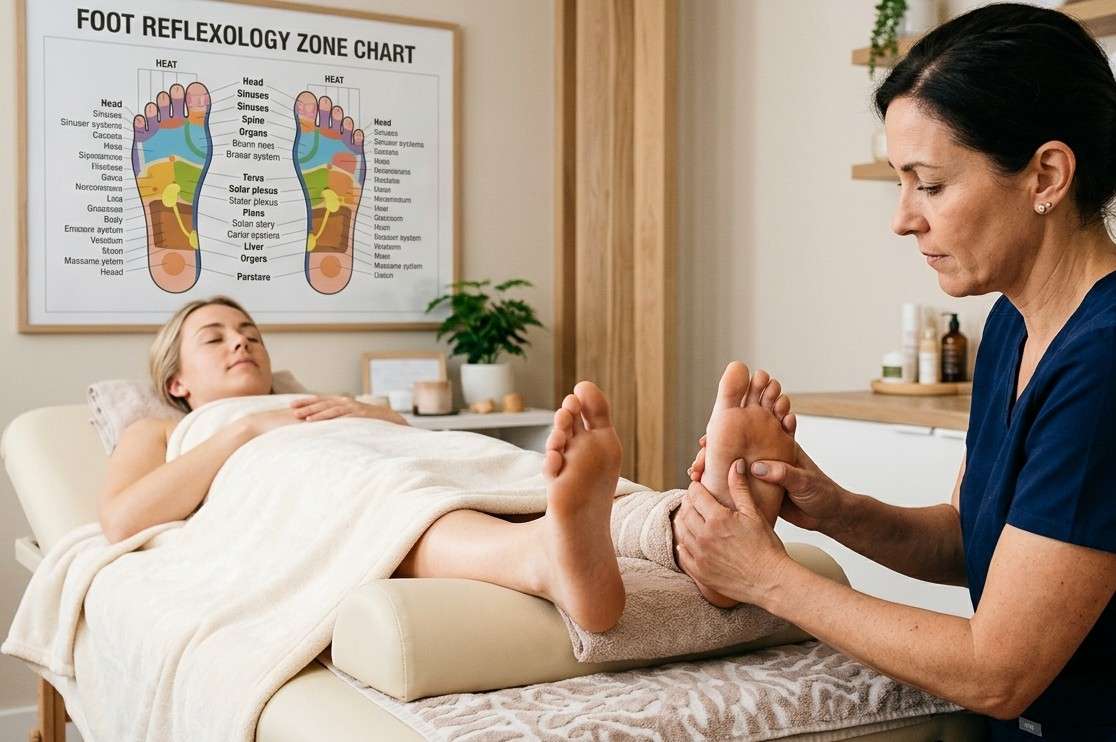
Reflexology (also known as zone therapy or reflex zone therapy) is a natural therapy that involves applying pressure to specific points on the feet, hands, and ears to support relaxation and overall wellness. This ancient healing practice is based on the idea that different reflex points correspond to organs and systems throughout the body. Many people use reflexology to reduce stress, improve circulation, relieve discomfort, and promote balance in daily life.
Over the years, reflexology has become popular in wellness centers, spas, and holistic health clinics worldwide. Some people enjoy it as a relaxing treatment, while others use it alongside conventional healthcare for additional comfort and stress management. This guide explores reflexology, its history, benefits, techniques, risks, and how you can safely include it in your self-care routine.
What is Reflexology?
Reflexology is a complementary therapy where pressure is applied to reflex points located mainly on the feet, hands, and ears. Practitioners believe these points connect to specific organs, glands, muscles, and body systems through energy pathways and the nervous system.
Unlike a regular massage that focuses on muscles, reflexology targets mapped pressure points. The treatment is usually performed using fingers, thumbs, and specialized techniques without oils or lotions.
A typical reflexology session may last between 30 and 60 minutes. During the session, the therapist carefully applies pressure to selected reflex zones depending on the person’s needs and wellness goals.
History of Reflexology
Reflexology has roots in several ancient cultures, including:
- Ancient Egypt
- China
- India
- Native American traditions
Historical records suggest that forms of foot therapy existed thousands of years ago. Modern reflex zone therapy was later developed in the early 20th century through “zone therapy,” introduced by physician Dr. William Fitzgerald. Later, physiotherapist Eunice Ingham expanded the concept and created detailed reflex maps of the feet.
Today, reflex zone therapy is practiced worldwide as a holistic wellness therapy.
How Reflexology Works
Reflex zone therapy practitioners believe that:
- The body contains interconnected energy pathways.
- Pressure points correspond to organs and systems.
- Stimulating reflex points may encourage balance and relaxation.
- Zone therapy may help improve nerve function and circulation.
Although scientific evidence is still developing, many people report feeling deeply relaxed and refreshed after sessions.
Reflexology Pressure Point Maps
1. Foot Reflexology
The feet contain the most commonly used reflex points.
Common Foot Reflex Areas
| Foot Area | Related Body Part |
|---|---|
| Toes | Head and brain |
| Ball of foot | Heart and chest |
| Arch | Digestive organs |
| Heel | Lower back and intestines |
| Inner foot | Spine |
2. Hand Reflexology
Hand reflex zone therapy is useful for people sensitive to foot treatments.
Common Hand Reflex Areas
| Hand Area | Related Body Part |
|---|---|
| Fingertips | Brain and sinuses |
| Palm center | Digestive system |
| Thumb base | Neck and throat |
| Wrist area | Reproductive organs |
3. Ear Reflexology
Ear reflex zone therapy focuses on pressure points believed to represent the entire body.
It is sometimes combined with acupuncture or acupressure therapies.
Types of Reflexology
1. Foot Reflexology
This is the most popular type and focuses on foot pressure points to support whole-body wellness.
2. Hand Reflexology
Hand reflex zone therapy is often used for convenience since hands are easier to access throughout the day.
3. Facial Reflexology
This technique involves stimulating facial pressure points to encourage relaxation and circulation.
4. Ear Reflexology
Ear reflex zone therapy uses pressure points on the ears to support stress relief and relaxation.
5. Thai Reflexology
Thai reflex zone therapy combines traditional reflex zone therapy with stretching and massage techniques.
20 Proven Benefits of Reflexology
1. Stress Reduction
Zone therapy may help calm the nervous system and promote deep relaxation.
2. Better Sleep
Many people report improved sleep quality after reflex zone therapy sessions.
3. Relaxation Support
The therapy may help release tension throughout the body.
4. Improved Circulation
Pressure techniques may encourage healthy blood flow.
5. Reduced Muscle Tension
Reflexology may help ease tight muscles and body stiffness.
6. Enhanced Mood
Some individuals feel emotionally refreshed after treatment.
7. Headache Relief
Certain reflex points may help reduce headache discomfort.
8. Anxiety Management
Relaxation techniques may help lower feelings of anxiety.
9. Digestive Comfort
Reflex zone therapy may support healthy digestion and bowel function.
10. Increased Energy
Some people experience improved energy levels after sessions.
11. Better Foot Comfort
Reflexology can help soothe tired or achy feet.
12. Hormonal Balance Support
Some practitioners use reflex zone therapy to support hormonal wellness.
13. Improved Relaxation Response
The therapy may help the body shift into a calmer state.
14. Reduced Fatigue
Relaxation and stress relief may contribute to lower fatigue levels.
15. Nervous System Support
Stimulating nerve endings may support nervous system function.
16. Enhanced Well-Being
Many individuals use reflex zone therapy for general wellness maintenance.
17. Temporary Pain Relief
Some people experience short-term relief from mild discomfort.
18. Improved Mind-Body Awareness
Reflex zone therapy may help people become more aware of body tension.
19. Support During Recovery
Some people use reflex zone therapy alongside wellness recovery routines.
20. Self-Care Improvement
Regular sessions can become part of a healthy self-care routine.
Reflexology Techniques
Thumb Walking
The practitioner moves the thumb in small walking motions across reflex areas.
Finger Pressure
Specific fingers apply gentle or firm pressure to reflex points.
Rotational Pressure
Circular movements are used on sensitive reflex zones.
Hook and Backup Technique
This technique targets deeper reflex points with controlled pressure.
Slide and Press
The therapist slides across the reflex area while applying pressure.
What Happens During a Reflexology Session?
A rreflex zone therapy appointment usually includes:
- Health discussion
- Relaxation setup
- Foot, hand, or ear assessment
- Pressure point stimulation
- Post-session relaxation
Clients usually remain fully clothed except for shoes and socks.
How to Prepare for Reflexology
- Stay Hydrated: Drink water before and after the session.
- Wear Comfortable Clothing: Loose clothing helps you relax during treatment.
- Avoid Heavy Meals: A light meal beforehand may feel more comfortable.
- Communicate Clearly: Inform the therapist about pain, injuries, or medical conditions.
Reflexology vs Massage
| Reflexology | Massage |
|---|---|
| Focuses on pressure points | Focuses on muscles |
| Mainly feet, hands, ears | Full-body muscle work |
| Based on reflex maps | Based on anatomy |
| Uses thumb and finger pressure | Uses kneading and strokes |
| Wellness-focused | Muscle-relief focused |
Reflexology vs Acupressure
| Reflexology | Acupressure |
|---|---|
| Uses reflex maps | Uses meridian points |
| Mainly feet and hands | Entire body |
| Western and Eastern influences | Traditional Chinese Medicine |
| Pressure on reflex zones | Pressure on energy channels |
Who Uses Reflexology?
People from many lifestyles use reflex zone therapy, including:
- Office workers
- Athletes
- Seniors
- Wellness enthusiasts
- Individuals seeking stress relief
- Spa visitors
- People interested in holistic therapies
Reflexology for Stress Relief
Stress is one of the most common reasons people try reflex zone therapy. Pressure point stimulation combined with a calming environment may help relax the body and mind.
Some reflexologists focus on:
- Solar plexus points
- Spine reflex areas
- Head and brain reflex points
These areas are believed to support nervous system relaxation.
Reflexology for Sleep
Many people use reflex zone therapy before bedtime to encourage better rest. Relaxation from the session may help calm racing thoughts and reduce tension.
Even short hand or foot reflexology routines may help create a calming nighttime ritual.
Reflexology for Foot Health
Foot reflex zone therapy can help:
- Relax tired feet
- Ease foot tension
- Improve circulation
- Support flexibility
- Encourage relaxation after long periods of standing
Reflexology and Mental Wellness
While reflex zone therapy is not a mental health treatment, many people use it as part of relaxation and stress management routines.
The calming experience may help support:
- Emotional balance
- Relaxation
- Mindfulness
- Mood improvement
Reflexology in Spas and Wellness Centers
Many spas include reflex zone therapy in wellness packages because it is relaxing and non-invasive.
Sessions may include:
- Aromatherapy
- Foot soaking
- Herbal compresses
- Relaxation music
- Warm towels
Can You Do Reflexology at Home?
Yes, basic reflex zone therapy techniques can be practiced at home.
Simple Home reflex zone therapy Routine:
- Sit comfortably.
- Relax your feet or hands.
- Use your thumb to apply gentle pressure.
- Focus on sore or tense areas.
- Massage each foot for 5–10 minutes.
Best Oils for Reflexology
Although traditional reflex zone therapy may not require oils, some therapists use:
- Coconut oil
- Almond oil
- Jojoba oil
- Lavender oil blends
- Peppermint oil blends
Always dilute essential oils properly before use.
Reflexology Tools
Common reflexology tools include:
- Wooden foot rollers
- Massage balls
- Reflexology sticks
- Acupressure mats
- Hand rollers
These tools may help stimulate pressure points at home.
10 Possible Side Effects of Reflexology
1. Temporary Foot Sensitivity
Some people experience mild soreness after treatment.
2. Fatigue
Deep relaxation may cause temporary tiredness.
3. Lightheadedness
A few individuals feel dizzy after sessions.
4. Emotional Release
Relaxation may trigger emotional responses.
5. Mild Headache
Occasional headaches can occur temporarily.
6. Tender Pressure Points
Certain reflex areas may feel sensitive.
7. Temporary Nausea
Some people report mild nausea after treatment.
8. Increased Urination
Hydration and relaxation may temporarily affect urination frequency.
9. Skin Irritation
Oils or lotions may irritate sensitive skin.
10. Discomfort from Excess Pressure
Too much pressure may cause pain or bruising.
Who Should Avoid Reflexology?
Consult a healthcare professional before reflex zone therapy if you have:
- Serious foot injuries
- Blood clotting disorders
- Severe circulation problems
- Foot infections
- Open wounds
- High-risk pregnancy conditions
- Severe osteoporosis
People with chronic medical conditions should seek medical guidance before beginning new wellness therapies.
Is Reflexology Scientifically Proven?
Research on reflex zone therapy is ongoing. Some studies suggest it may help support relaxation, stress reduction, and overall comfort, but more large-scale scientific evidence is needed.
Most experts consider reflex zone therapy a complementary therapy rather than a replacement for medical treatment.
Tips for Choosing a Reflexologist
- Check Certifications: Look for trained and certified practitioners.
- Read Reviews: Client reviews may provide insight into professionalism and quality.
- Ask About Experience: Choose someone experienced in reflexology techniques.
- Discuss Health Conditions: Inform the practitioner about medical concerns beforehand.
- Ensure Cleanliness: Professional hygiene standards are important.
How Often Should You Get Reflexology?
Frequency depends on personal goals.
| Goal | Suggested Frequency |
|---|---|
| Relaxation | Once or twice monthly |
| Stress management | Weekly or biweekly |
| General wellness | Every few weeks |
| Occasional self-care | As needed |
Reflexology Myths
Myth 1: Reflexology Can Cure Diseases
Zone therapy is not a cure for medical conditions.
Myth 2: Reflexology Is the Same as Massage
Zone therapy uses mapped pressure points rather than muscle manipulation.
Myth 3: Reflexology Must Hurt
Effective reflex zone therapy should not cause severe pain.
Myth 4: Only Feet Matter
Hands and ears also contain reflex points.
Reflexology Around the World
Zone therapy practices differ across cultures.
- China: Often connected with energy flow concepts.
- Thailand: Frequently combined with stretching and massage.
- Europe: Popular in wellness clinics and spas.
- United States: Commonly used as a complementary therapy.
- India: Often integrated with holistic wellness traditions.
Reflexology and Holistic Wellness
Many people combine reflex zone therapy with:
- Meditation
- Yoga
- Aromatherapy
- Healthy nutrition
- Breathing exercises
- Massage therapy
- Mindfulness routines
This combination may help support overall wellness and relaxation.
DIY Foot Reflexology Techniques
Toe Pressure
Gently squeeze and rotate each toe.
Arch Massage
Apply thumb pressure along the arch.
Heel Pressing
Use circular motions on the heel area.
Ball of Foot Massage
Massage the ball of the foot using the thumb.
Spine Reflex Sweep
Press along the inner edge of the foot slowly.
Reflexology for Beginners
If you are new to reflex zone therapy:
- Start with light pressure
- Keep sessions short
- Drink water afterward
- Focus on relaxation
- Avoid excessive pressure
- Learn basic reflex maps first
Conclusion
Reflexology is a widely practiced complementary therapy focused on stimulating pressure points in the feet, hands, and ears. Many people enjoy zone therapy for its calming experience, stress relief, and wellness support. While research continues to explore its full benefits, reflex zone therapy remains a popular holistic practice in spas, wellness centers, and home self-care routines worldwide.
When performed safely and by trained professionals, reflex zone therapy can become a relaxing addition to a healthy lifestyle. Whether you are looking for stress reduction, relaxation, or simple self-care, reflex zone therapy offers a gentle and natural wellness experience.
FAQ’s
When should you not do reflexology?
Zone therapy should be avoided or done only with medical approval if you have foot injuries, open wounds, infections, severe circulation problems, blood clots, fractures, or certain high-risk pregnancy conditions.
What happens to your body after reflexology?
After reflex zone therapy many people feel relaxed, calm, refreshed, or sleepy, while some may temporarily experience mild soreness, tiredness, increased urination, or lightheadedness.
Is reflexology the same as massage?
No, reflex zone therapy focuses on mapped pressure points, while massage mainly targets muscles and soft tissues.
Does reflexology really work?
Many people report feeling relaxed and refreshed after reflex zone therapy, although scientific evidence is still limited and ongoing.
Is reflexology painful?
Zone therapy should not cause severe pain, but some pressure points may feel tender or sensitive.
How long does a reflexology session last?
Most reflex zone therapy sessions last between 30 and 60 minutes.
What should I wear to a reflexology appointment?
Comfortable clothing is recommended, and you may only need to remove shoes and socks.
Can reflexology help with stress?
Many people use reflex zone therapy to support stress relief and relaxation.
Can reflexology improve sleep?
Some individuals report better sleep quality after reflex zone therapy sessions.
Is reflexology safe for everyone?
Zone therapy is generally safe for healthy adults, but people with certain medical conditions should consult a healthcare professional first.
Can pregnant women get reflexology?
Pregnant women should consult their doctor before trying reflex zone therapy, especially during high-risk pregnancies.
Can reflexology cure diseases?
Zone therapy is not considered a cure for diseases and should not replace medical treatment.
Can reflexology help with headaches?
Certain reflex points may help support relaxation and temporary headache relief for some individuals.
Can I do reflexology at home?
Yes, basic reflex zone therapy techniques can be practiced safely at home using gentle pressure.
Which is better: foot reflexology or hand reflexology?
Both can be beneficial, but foot reflex zone therapy is the most commonly practiced form.
Do reflexologists use oils?
Some practitioners use oils or lotions, while traditional reflex zone therapy may be performed without them.
Is reflexology backed by science?
Some studies suggest reflex zone therapy may help relaxation and stress management, but more research is needed.
Can reflexology help with anxiety?
Some people use reflex zone therapy as part of their relaxation and stress-management routine.
Is reflexology suitable for seniors?
Yes, gentle reflex zone therapy is often enjoyed by seniors for relaxation and comfort.
Can reflexology help tired feet?
Yes, reflex zone therapy may help relax tired feet and improve comfort after standing or walking for long periods.
Also Read: