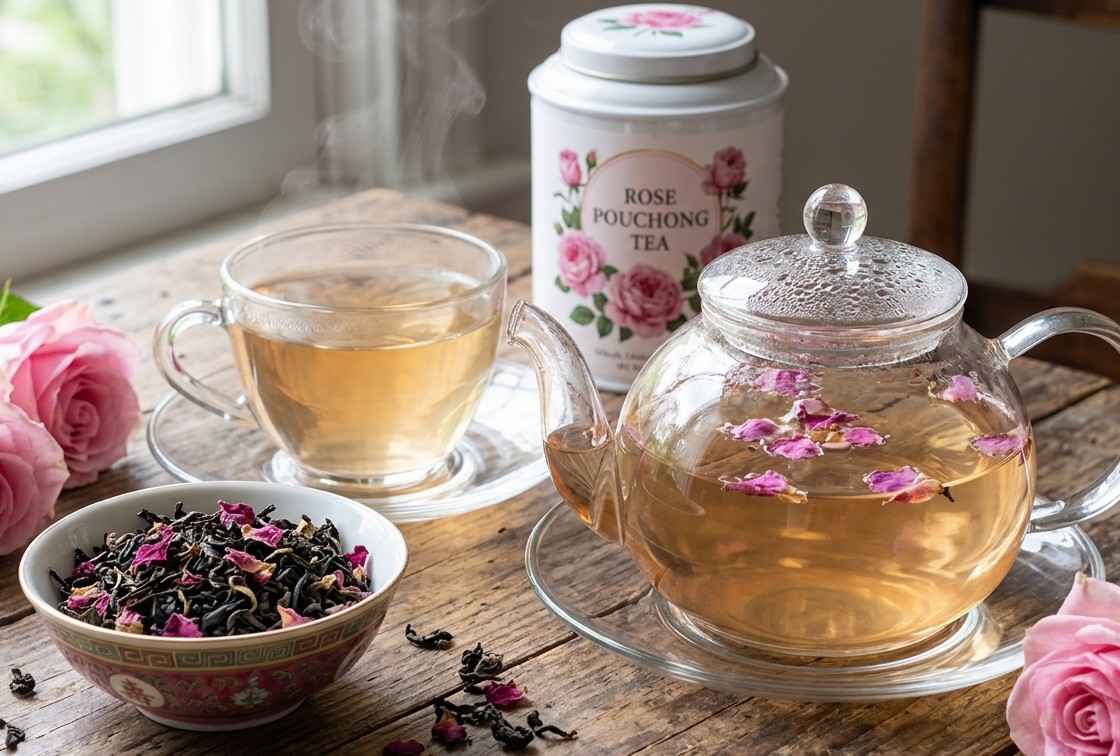
Rose Pouchong Tea is a fragrant and lightly oxidized tea known for its delicate floral aroma and smooth taste. This elegant tea combines pouchong tea leaves with rose petals or natural rose essence, creating a soothing beverage enjoyed for centuries in parts of Asia. With its mild caffeine content, antioxidants, and calming properties, Rose Pouchong Tea has become popular among tea lovers seeking both flavor and wellness benefits.
This tea is appreciated not only for its pleasant fragrance but also for its potential to support digestion, heart health, skin wellness, relaxation, and overall vitality. Whether consumed hot or iced, Rose Pouchong Tea offers a refreshing and aromatic experience.
What is Rose Pouchong Tea?
Rose Pouchong Tea is a scented tea made from pouchong tea leaves infused with the aroma of roses. Pouchong tea itself is a lightly oxidized tea that falls between green tea and oolong tea in flavor and processing. The addition of rose petals gives the tea a sweet floral fragrance and a gentle taste.
Traditionally, tea makers layer tea leaves with fresh rose blossoms so the leaves absorb the floral aroma naturally. The final tea has a smooth, mellow flavor with subtle floral notes and a light golden color when brewed. Rose Pouchong Tea is commonly enjoyed for relaxation, digestive comfort, mental clarity, and its antioxidant-rich profile.
Components of Rose Pouchong Tea
| Nutrient | Approximate Amount Per Cup |
|---|---|
| Calories | 2–5 |
| Carbohydrates | 0 g |
| Protein | 0 g |
| Fat | 0 g |
| Caffeine | 20–40 mg |
| Polyphenols | Moderate |
| Catechins | Present |
| Antioxidants | High |
| Potassium | Small amounts |
| Magnesium | Trace amounts |
| Fluoride | Small amounts |
| Vitamin C | Trace amounts |
| L-Theanine | Present |
Nutritional values may vary depending on brewing strength and tea quality.
20 Proven Benefits of Rose Pouchong Tea
- Rich in Antioxidants: Rose Pouchong Tea contains antioxidants that help protect the body from oxidative stress and free radical damage.
- Supports Heart Health: The polyphenols in this tea may help maintain healthy cholesterol levels and support cardiovascular wellness.
- Promotes Relaxation: Rose aroma and L-theanine together may help calm the mind and reduce stress naturally.
- Boosts Mental Alertness: Its moderate caffeine content may improve focus, concentration, and mental performance.
- Aids Digestion: Rose Pouchong Tea may soothe the digestive tract and help reduce bloating after meals.
- Supports Weight Management: The tea may help increase metabolism and support fat oxidation when combined with a healthy lifestyle.
- Improves Skin Health: Antioxidants in the tea may help protect the skin from premature aging and environmental damage.
- May Reduce Inflammation: Certain plant compounds in the tea may help lower inflammation in the body.
- Supports Immune Function: The tea contains natural compounds that may strengthen immune defenses.
- Helps Reduce Fatigue: Mild caffeine and amino acids may help improve energy levels without excessive stimulation.
- Promotes Healthy Blood Circulation: Rose compounds may support circulation and vascular health.
- May Improve Mood: The floral aroma of rose tea may positively affect mood and emotional well-being.
- Supports Oral Health: Tea polyphenols may help reduce harmful bacteria in the mouth.
- Helps Maintain Hydration: Drinking Rose Pouchong Tea contributes to daily fluid intake.
- May Support Liver Health: Antioxidants in tea may help protect liver cells from oxidative damage.
- Supports Healthy Aging: The antioxidant profile may help slow certain signs of aging.
- May Reduce Mild Headaches: Rose aroma and hydration may help ease tension-related discomfort.
- Supports Healthy Blood Sugar Levels: Some tea compounds may assist in maintaining balanced glucose metabolism.
- Encourages Better Sleep Quality: Drinking a mild cup in the evening may promote relaxation before bedtime.
- May Enhance Emotional Balance: Rose-scented teas are traditionally used for emotional calmness and comfort.
10 Side Effects of Rose Pouchong Tea
- Caffeine Sensitivity: Excessive intake may cause jitteriness, nervousness, or rapid heartbeat in sensitive individuals.
- Sleep Disturbances: Drinking large amounts late in the day may interfere with sleep quality.
- Digestive Discomfort: Strong tea may cause stomach irritation or nausea in some people.
- Iron Absorption Issues: Tea tannins may reduce iron absorption when consumed with meals.
- Headaches from Excess Intake: Too much caffeine may trigger headaches in some individuals.
- Possible Allergic Reactions: Individuals allergic to roses or floral products may experience mild allergic symptoms.
- Pregnancy Concerns: High caffeine intake during pregnancy may not be recommended.
- Acid Reflux Aggravation: Tea may worsen acid reflux symptoms in sensitive individuals.
- Medication Interactions: Tea compounds may interact with blood thinners or stimulant medications.
- Dehydration Risk: Excessive caffeine consumption without enough water may contribute to mild dehydration.
How to Make Rose Pouchong Tea?
Ingredients:
- 1 teaspoon Rose Pouchong Tea leaves
- 1 cup hot water
- Honey or lemon (optional)
Instructions:
- Heat water to around 85–90°C (185–194°F).
- Place the tea leaves into a teapot or infuser.
- Pour hot water over the leaves.
- Steep for 3–5 minutes.
- Strain the tea into a cup.
- Add honey or lemon if desired.
- Serve warm and enjoy the floral aroma.
Iced Rose Pouchong Tea:
- Brew the tea slightly stronger than usual.
- Let it cool completely.
- Pour over ice cubes.
- Garnish with fresh rose petals or lemon slices.
Other Uses of Rose Pouchong Tea
- Natural Facial Steam: Rose Pouchong Tea can be used as a facial steam to refresh and hydrate the skin.
- Bath Soak Addition: Adding brewed tea to bathwater may create a relaxing spa-like experience.
- Homemade Toner: Cooled tea may be used as a gentle skin toner for refreshing the face.
- Aromatherapy Support: The floral aroma may help create a calming atmosphere during relaxation.
- Dessert Flavoring: The tea can be infused into cakes, syrups, and desserts for floral flavor.
- Hair Rinse: Tea may be used as a mild hair rinse to add shine and freshness.
- Cooking Ingredient: Rose Pouchong Tea can flavor rice, sauces, and marinades.
- Cold Compress: Chilled tea bags may help soothe tired eyes and mild puffiness.
- Homemade Ice Cubes: Frozen tea cubes can be added to drinks for extra flavor.
- Potpourri Ingredient: Dried tea leaves and rose petals can be used in homemade potpourri blends.
How Much Rose Pouchong Tea Can You Drink a Day?
Most healthy adults can safely drink about 2–4 cups of Rose Pouchong Tea daily. This amount generally provides beneficial antioxidants without excessive caffeine intake.
People sensitive to caffeine may prefer limiting intake to 1–2 cups per day. Pregnant individuals and those with medical conditions should consult a healthcare professional regarding appropriate consumption levels.
Moderation is important because excessive tea intake may lead to caffeine-related side effects or reduced iron absorption.
Tips for Consuming Rose Pouchong Tea
- Use high-quality loose-leaf tea for the best flavor and aroma.
- Avoid boiling water because it may create bitterness.
- Drink the tea fresh for maximum fragrance and antioxidant benefits.
- Pair the tea with light snacks or fruits for a pleasant experience.
- Store tea leaves in an airtight container away from sunlight.
- Avoid excessive sweeteners to maintain the tea’s natural flavor.
- Try blending with jasmine or mint for a unique taste.
- Consume between meals if concerned about iron absorption.
- Use filtered water for cleaner flavor.
- Start with mild brewing strength if you are sensitive to caffeine.
Best Time to Drink Rose Pouchong Tea
Morning
Drinking Rose Pouchong Tea in the morning may help improve alertness and mental clarity without the heaviness of strong coffee.
After Meals
The tea may support digestion and help reduce bloating when consumed after meals.
Afternoon
A cup in the afternoon may provide gentle energy and relaxation during stressful work hours.
Evening
A lightly brewed cup may help calm the mind, though caffeine-sensitive individuals should avoid late-night consumption.
Who Should Drink Rose Pouchong Tea?
- Busy Professionals: The tea may help improve focus and reduce stress during demanding workdays.
- Tea Enthusiasts: People who enjoy delicate floral teas may appreciate its aroma and smooth taste.
- Individuals Seeking Relaxation: Rose Pouchong Tea may support calmness and emotional balance.
- People Interested in Antioxidants: Those seeking antioxidant-rich beverages may benefit from this tea.
- Adults Managing Mild Fatigue: Moderate caffeine may help boost natural energy levels.
- Individuals Looking for Digestive Support: The tea may help soothe digestion after meals.
- People Interested in Weight Management: The tea may support metabolism as part of a healthy lifestyle.
- Those Seeking Hydration Alternatives: It can serve as a flavorful alternative to sugary beverages.
- People Interested in Skin Wellness: Antioxidants may support healthier-looking skin.
- Individuals Seeking Gentle Caffeine: Rose Pouchong Tea offers milder stimulation than many strong black teas.
Who Should Not Drink Rose Pouchong Tea?
- People Sensitive to Caffeine: Even moderate caffeine may trigger jitters or anxiety.
- Pregnant Individuals: Excess caffeine intake may not be suitable during pregnancy.
- People with Severe Acid Reflux: Tea may worsen reflux symptoms in sensitive individuals.
- Individuals with Rose Allergies: Rose components may trigger allergic reactions.
- People with Iron Deficiency: Tea tannins may interfere with iron absorption.
- Children Sensitive to Stimulants: Caffeine-containing tea may not be ideal for young children.
- Individuals Taking Blood Thinners: Certain tea compounds may interact with medications.
- People with Severe Anxiety Disorders: Caffeine may increase nervousness in some individuals.
- Those with Chronic Insomnia: Evening tea consumption may interfere with sleep.
- Individuals with Certain Heart Conditions: Excess caffeine may not be suitable for some heart-related conditions.
Precautions and Interactions
- Caffeine Interaction: Rose Pouchong Tea may interact with stimulant medications and increase nervous system activity.
- Iron Absorption Precaution: Avoid drinking tea directly with iron-rich meals to minimize reduced iron absorption.
- Pregnancy Precaution: Pregnant individuals should monitor total caffeine intake carefully.
- Medication Interaction: The tea may interact with blood pressure or anticoagulant medications.
- Allergy Warning: Individuals allergic to roses should use caution when trying the tea.
- Moderation Advice: Excessive consumption may increase the risk of caffeine-related side effects.
- Digestive Sensitivity: Drinking strong tea on an empty stomach may cause nausea in some people.
- Sleep Precaution: Avoid consuming large amounts late at night if sensitive to caffeine.
- Storage Safety: Store tea properly to prevent moisture and contamination.
- Consultation Recommendation: People with chronic health conditions should consult a healthcare professional before regular use.
Conclusion
Rose Pouchong Tea is a fragrant and refreshing tea that combines the smooth qualities of pouchong tea with the soothing aroma of roses. Its antioxidant content, calming properties, and gentle flavor make it a favorite among tea lovers worldwide.
From supporting relaxation and digestion to promoting skin health and mental clarity, this floral tea offers numerous potential wellness benefits when consumed in moderation. However, like all caffeinated beverages, it should be enjoyed responsibly, especially by individuals sensitive to caffeine or those with specific medical conditions.
FAQ’s
What does Rose Pouchong Tea taste like?
Rose Pouchong Tea has a light, floral, and slightly sweet taste with smooth and delicate tea notes.
Is Rose Pouchong Tea caffeinated?
Yes, Rose Pouchong Tea contains moderate amounts of caffeine because it is made from tea leaves.
Can I drink Rose Pouchong Tea every day?
Most healthy adults can safely enjoy 2–4 cups daily in moderation.
Is Rose Pouchong Tea good for relaxation?
Yes, the floral aroma and natural L-theanine content may help promote calmness and relaxation.
Does Rose Pouchong Tea help with digestion?
Rose Pouchong Tea may help soothe digestion and reduce mild bloating after meals.
Can Rose Pouchong Tea help with weight management?
The tea may support metabolism and healthy weight management when combined with proper diet and exercise.
Is Rose Pouchong Tea safe during pregnancy?
Pregnant individuals should consult a healthcare professional because the tea contains caffeine.
Can I drink Rose Pouchong Tea before bed?
A lightly brewed cup may be relaxing, but caffeine-sensitive people should avoid it late at night.
How should Rose Pouchong Tea be stored?
Store the tea in an airtight container away from moisture, heat, and direct sunlight.
Can Rose Pouchong Tea be served cold?
Yes, Rose Pouchong Tea can be enjoyed as a refreshing iced tea.
Does Rose Pouchong Tea contain antioxidants?
Yes, it contains antioxidants such as polyphenols and catechins that may support overall health.
Is Rose Pouchong Tea good for skin health?
Its antioxidants may help protect the skin from environmental stress and premature aging.
Can children drink Rose Pouchong Tea?
Children sensitive to caffeine should consume it only in small amounts or avoid it.
Is Rose Pouchong Tea the same as rose tea?
No, Rose Pouchong Tea contains pouchong tea leaves along with rose flavor, while rose tea may be made only from rose petals.
Can I add milk to Rose Pouchong Tea?
It is usually enjoyed without milk to preserve its delicate floral flavor, though some people may add a small amount.
Does Rose Pouchong Tea help with stress?
The soothing floral aroma and calming compounds may help reduce stress and mental fatigue.
How long should I steep Rose Pouchong Tea?
Steep the tea for about 3–5 minutes for the best flavor and aroma.
Can Rose Pouchong Tea help boost energy?
Yes, its moderate caffeine content may provide gentle and steady energy support.
How long does it take for Rose Pouchong Tea to work?
Rose Pouchong Tea may begin to provide calming and refreshing effects within 15–30 minutes after drinking, while digestive and antioxidant-related benefits may develop with regular consumption over time.
What is Rose Pouchong Tea good for?
Rose Pouchong Tea is commonly enjoyed for relaxation, stress relief, digestive support, gentle energy, antioxidant protection, hydration, mental clarity, and overall wellness.
Also Read: