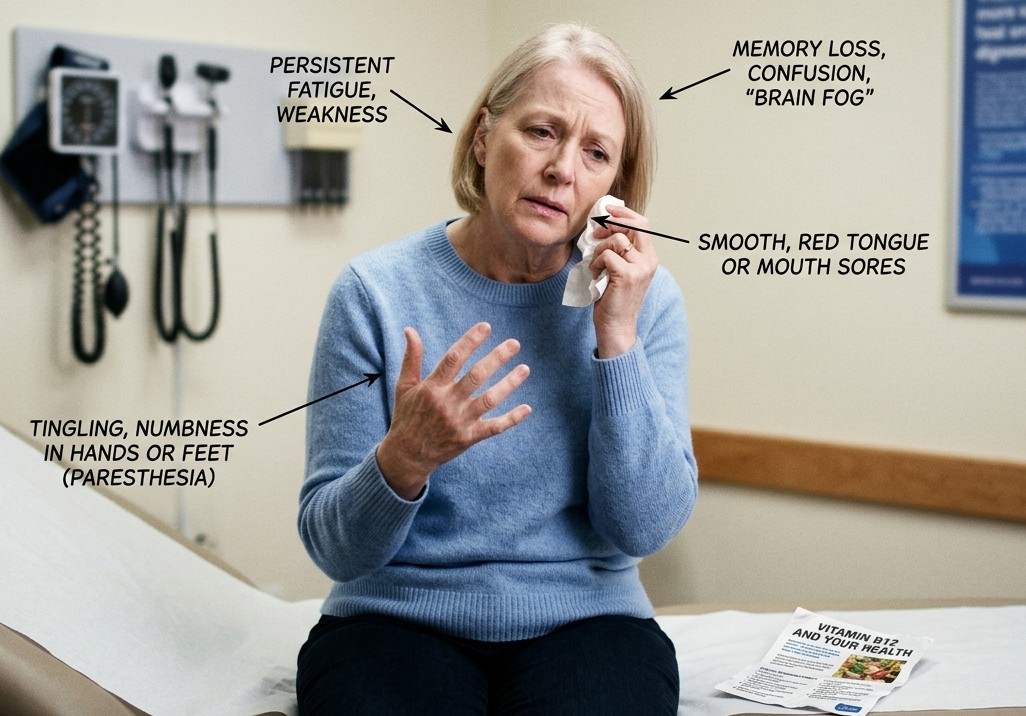
Vitamin B12 is a small but essential nutrient that plays a major role in red blood cell formation, DNA production, and the normal functioning of the nervous system. When your body does not get or absorb enough vitamin B12, the deficiency can gradually affect many parts of the body.
One reason vitamin B12 deficiency can be difficult to recognize is that its symptoms may develop slowly. A person may initially blame tiredness, weakness, poor concentration, or tingling hands on stress, lack of sleep, aging, or a busy lifestyle. However, persistent or unexplained symptoms may deserve medical attention.
Vitamin B12 deficiency can occur even when a person is eating some B12-containing foods because problems with absorption, certain medical conditions, gastrointestinal surgery, or long-term use of some medicines can interfere with B12 status.
Below are important warning signs that may indicate vitamin B12 deficiency and what they can mean.
What Is Vitamin B12 Deficiency?
Vitamin B12 deficiency occurs when the body does not have enough vitamin B12 to support normal biological functions. B12 is particularly important for healthy red blood cells and the development and function of the nervous system.
The body can store substantial amounts of vitamin B12, so symptoms may take years to become noticeable after intake or absorption becomes inadequate. This is one reason deficiency can sometimes go undetected for a long time. Importantly, neurological symptoms can occur even when a person does not have obvious anemia.
15 Warning Signs of Vitamin B12 Deficiency You Should Not Ignore
1. Constant or Unusual Tiredness
Persistent fatigue is one of the commonly recognized signs associated with vitamin B12 deficiency.
B12 is necessary for normal red blood cell production. When deficiency contributes to megaloblastic anemia, the body’s ability to transport oxygen efficiently can be affected, leaving you feeling unusually tired or weak.
If you regularly feel exhausted despite getting adequate sleep, it is worth discussing the symptom with a healthcare professional rather than assuming it is simply due to a busy lifestyle.
2. Weakness or Low Energy
Some people with B12 deficiency notice that everyday activities require more effort than usual.
You may feel physically weak, have less stamina, or find that activities you previously handled easily now leave you exhausted. Weakness can occur alongside anemia but may also have many other causes.
Persistent weakness should therefore be evaluated rather than automatically attributed to vitamin B12 deficiency.
3. Numbness or Tingling in the Hands and Feet
A particularly important warning sign is a sensation of pins and needles, numbness, or tingling in the hands or feet.
Vitamin B12 is essential for normal nervous-system function. Deficiency can affect nerves and produce abnormal sensations, sometimes beginning subtly in the fingers or toes.
Because nerve-related symptoms can potentially become permanent when deficiency remains untreated, unexplained or persistent tingling deserves medical evaluation.
4. Problems With Balance or Walking
B12 deficiency can affect coordination and balance.
You might feel unusually unsteady while walking, have difficulty maintaining balance, or notice that your coordination is not what it used to be. These symptoms can result from neurological effects of B12 deficiency.
Balance problems should not be ignored, particularly when they occur together with numbness or weakness.
5. Brain Fog and Difficulty Concentrating
Another possible sign is difficulty concentrating or feeling mentally “foggy.”
You may find it harder to focus on work, remember information, follow conversations, or complete tasks that normally feel straightforward. NICE recognizes problems with memory and concentration, sometimes described as brain fog, among possible symptoms of B12 deficiency.
However, brain fog has many possible causes, including sleep problems, stress, medications, and other nutritional deficiencies.
6. Memory Problems
Vitamin B12 deficiency may affect memory and other cognitive functions.
Some people experience forgetfulness, difficulty recalling information, or problems with understanding and judgment. More severe deficiency can be associated with confusion and other neurological or psychological changes.
New or worsening memory problems should always be discussed with a healthcare professional because many conditions can cause them.
7. A Pale or Unusually Yellowish Appearance
Changes in skin color can sometimes accompany B12 deficiency.
When B12 deficiency causes megaloblastic anemia, a person may develop pale skin. The NIH also lists pale skin among possible effects of vitamin B12 deficiency.
Skin color changes are not specific to B12 deficiency, so they should be considered alongside other symptoms and medical test results.
8. A Sore, Red, or Swollen Tongue
Your mouth can sometimes provide an early clue.
Vitamin B12 deficiency can cause glossitis, a condition in which the tongue becomes sore, smooth, red, or inflamed. Some people may also experience mouth discomfort or ulcers.
If a sore or unusually red tongue persists without an obvious cause, it is worth getting checked.
9. Mouth Ulcers
Recurring mouth ulcers can occur with vitamin B12 deficiency.
Although mouth ulcers are common and can result from many different factors, they are among the oral symptoms reported with B12 or folate deficiency.
Frequent or persistent ulcers may warrant evaluation for nutritional deficiencies and other underlying causes.
10. Shortness of Breath
Feeling short of breath during normal activities can sometimes be associated with B12 deficiency, particularly when the deficiency has caused anemia.
A reduced number of healthy red blood cells can limit oxygen delivery and contribute to breathlessness, weakness, and fatigue.
Sudden or severe shortness of breath requires prompt medical attention and should never be assumed to be caused by vitamin deficiency.
11. Heart Palpitations
Some people with B12 deficiency-related anemia may experience noticeable heartbeats or palpitations.
The heart may work harder to compensate for reduced oxygen-carrying capacity when significant anemia develops. Palpitations are listed among possible symptoms of B12 or folate deficiency anemia.
Persistent, severe, or new palpitations should be medically evaluated because they have numerous possible causes.
12. Changes in Vision
Vitamin B12 deficiency can sometimes affect the nervous system and may be associated with vision problems.
New visual changes should not automatically be attributed to B12 deficiency. Eye conditions, neurological problems, diabetes, medications, and other health issues can also affect vision.
13. Mood Changes
Changes in mood may occur in some people with vitamin B12 deficiency.
Reported psychological effects include depression, anxiety, confusion, and other changes in mental functioning.
Because mood changes can have many causes, B12 testing may be appropriate when symptoms occur alongside other signs such as fatigue, numbness, or cognitive changes.
14. Loss of Appetite or Unintentional Weight Loss
A decrease in appetite can occur with vitamin B12 deficiency, and some people may experience unexplained weight loss.
Unintentional weight loss should always be taken seriously because it can be associated with nutritional deficiencies, digestive disorders, thyroid problems, infections, and other medical conditions.
15. Muscle Weakness
Vitamin B12 deficiency can affect the nervous system and may contribute to muscle weakness.
You may notice difficulty climbing stairs, carrying objects, maintaining balance, or performing physical activities that previously felt normal. Muscle weakness is among the neurological symptoms associated with B12 deficiency.
When muscle weakness develops together with numbness, tingling, or balance problems, medical evaluation becomes particularly important.
Can You Have Vitamin B12 Deficiency Without Anemia?
Yes. This is an important point because many people associate B12 deficiency only with anemia. However, neurological symptoms can occur even when a person does not have anemia.
For example, someone could experience:
- Tingling or numbness
- Balance problems
- Memory difficulties
- Concentration problems
- Muscle weakness
- Vision changes
without having obvious anemia.
This is why symptoms, medical history, diet, medications, and laboratory testing all matter when evaluating possible B12 deficiency.
What Causes Vitamin B12 Deficiency?
Vitamin B12 deficiency does not always mean that someone is simply “not eating enough B12.”
Possible causes include:
1. Low Dietary Intake
People who eat little or no animal-derived foods may have a higher risk of inadequate B12 intake unless they regularly consume fortified foods or appropriate supplements.
2. Problems Absorbing Vitamin B12
The body needs stomach acid and intrinsic factor to properly absorb B12 from food. Conditions affecting the stomach or small intestine can interfere with this process.
3. Pernicious Anemia
Pernicious anemia is an autoimmune condition that interferes with intrinsic factor and therefore B12 absorption.
4. Gastrointestinal Surgery
Certain surgeries involving the stomach or gastrointestinal tract can reduce the body’s ability to absorb vitamin B12.
5. Certain Medications
Long-term use of some medicines, including metformin and proton pump inhibitors, can affect vitamin B12 absorption or status.
6. Older Age
Older adults may have a higher risk of B12 deficiency because changes in digestion and absorption can reduce the amount of B12 the body obtains from food.
Who Is More Likely to Develop Vitamin B12 Deficiency?
Certain groups deserve particular attention, including:
- Older adults
- People following vegetarian or vegan diets without reliable B12 sources
- People with pernicious anemia
- People with gastrointestinal disorders affecting absorption
- People who have undergone gastrointestinal surgery
- People taking certain medications for extended periods
- People with conditions that interfere with nutrient absorption
Having one of these risk factors does not automatically mean you have a deficiency, but it may make testing more relevant if symptoms develop.
How Is Vitamin B12 Deficiency Diagnosed?
Vitamin B12 deficiency cannot reliably be diagnosed from symptoms alone because many of its warning signs overlap with other conditions.
A healthcare professional may consider your symptoms, medical history, diet, medications, and blood-test results. Blood testing can include vitamin B12 levels and tests that evaluate red blood cells and hemoglobin.
In certain situations, additional testing such as methylmalonic acid may help clarify B12 status, particularly when the blood B12 result is borderline.
The appropriate tests and interpretation depend on the individual and the laboratory reference ranges.
When Should You See a Doctor?
You should consider medical evaluation if you have persistent or unexplained symptoms such as:
- Ongoing fatigue or weakness
- Numbness or tingling
- Balance or walking problems
- Memory or concentration changes
- A persistently sore or red tongue
- Unexplained weight loss
- Vision changes
- Shortness of breath
- Heart palpitations
- Multiple symptoms occurring together
Prompt evaluation is particularly important when neurological symptoms such as numbness, balance problems, weakness, or changes in coordination develop. Untreated B12 deficiency can sometimes cause neurological damage that may not completely reverse.
Can Vitamin B12 Deficiency Be Treated?
Yes. Vitamin B12 deficiency is generally treatable, but treatment depends on why the deficiency developed.
Depending on the cause and severity, treatment may involve vitamin B12 tablets, injections, or dietary changes. People with absorption problems may require a different treatment approach from those whose deficiency is primarily related to inadequate dietary intake.
It is better to identify and treat the underlying cause rather than taking high-dose supplements indefinitely without knowing whether a deficiency actually exists.
Final Thoughts
Vitamin B12 deficiency can affect much more than energy levels. Persistent fatigue, weakness, numbness, tingling, balance problems, memory changes, brain fog, mouth changes, vision problems, and mood changes can all occur in people with B12 deficiency.
At the same time, these symptoms are not unique to vitamin B12 deficiency. Similar problems can occur because of other vitamin deficiencies, anemia, thyroid disorders, medications, sleep problems, neurological conditions, and other health issues.
The key takeaway is that persistent or unexplained symptoms should not be ignored, especially when neurological symptoms such as numbness, tingling, weakness, or balance problems are present. A healthcare professional can determine whether vitamin B12 testing and further evaluation are appropriate.
FAQ’s
What are the first warning signs of vitamin B12 deficiency?
Early signs may include unusual tiredness, weakness, brain fog, difficulty concentrating, numbness, tingling, and changes in appetite.
What does B12 deficiency feel like in the body?
Vitamin B12 deficiency may feel like persistent fatigue, weakness, pins and needles, numbness, balance problems, or unusual muscle weakness.
Can vitamin B12 deficiency cause tingling in the hands and feet?
Yes. B12 deficiency can affect the nervous system and cause tingling, pins and needles, or numbness in the hands and feet.
Can B12 deficiency cause extreme tiredness?
Yes. B12 deficiency can contribute to fatigue and weakness, particularly when it causes anemia.
Can vitamin B12 deficiency cause brain fog?
Yes. Some people with B12 deficiency experience difficulty concentrating, memory problems, or a feeling of brain fog.
Can B12 deficiency cause dizziness?
It can. Dizziness may occur when B12 deficiency causes anemia, although dizziness has many other possible causes.
Can vitamin B12 deficiency affect your tongue?
Yes. B12 deficiency can cause a sore, red, swollen, or unusually smooth tongue and may also contribute to mouth ulcers.
Can B12 deficiency cause hair loss?
Hair loss is not considered one of the most specific signs of vitamin B12 deficiency. However, nutritional deficiencies, including B12 deficiency in some cases, may be associated with hair changes.
Can B12 deficiency cause weight loss?
Yes. Loss of appetite and unintentional weight loss can occur with B12 deficiency, although unexplained weight loss should be medically evaluated.
How do you know if you are low in vitamin B12?
Symptoms alone cannot confirm B12 deficiency. A healthcare professional can assess your symptoms and risk factors and may recommend blood tests to evaluate B12 status.
What foods are high in vitamin B12?
Fish, meat, eggs, milk, and other dairy products naturally contain vitamin B12. Some fortified foods also provide B12.
How long does it take to recover from vitamin B12 deficiency?
Recovery depends on the severity and underlying cause. Some symptoms may improve relatively quickly after treatment, while neurological symptoms can take longer and may not completely resolve if the deficiency has been prolonged.
Is vitamin B12 deficiency serious?
It can be serious if left untreated because prolonged deficiency can cause anemia and neurological problems. Early diagnosis and appropriate treatment can help prevent complications.
What are the worst symptoms of B12 deficiency?
The most serious symptoms can include severe numbness or tingling, difficulty walking or maintaining balance, muscle weakness, vision changes, confusion, memory problems, and significant neurological changes.
What are the facial signs of B12 deficiency?
Facial signs are not specific, but some people may develop pale or slightly yellowish skin because B12 deficiency can cause anemia. Skin changes alone cannot confirm a B12 deficiency.
Which organ is affected by B12 deficiency?
Vitamin B12 deficiency particularly affects the nervous system and blood-forming system. Prolonged deficiency can damage nerves and interfere with healthy red blood cell production.
Can you fully recover from B12 deficiency?
Yes, many people recover well when B12 deficiency is diagnosed and treated appropriately. However, neurological damage caused by prolonged deficiency may take longer to improve and can sometimes be permanent.
What foods should I avoid if I have a B12 deficiency?
There is generally no specific food that everyone with B12 deficiency needs to avoid. Instead, focus on reliable B12 sources such as fish, meat, eggs, dairy products, or fortified foods, depending on your diet and the cause of the deficiency.
What are the two main causes of B12 deficiency?
The two broad causes are inadequate B12 intake and poor absorption of B12. Poor absorption can result from conditions affecting the stomach or intestines, pernicious anemia, certain surgeries, or some long-term medications.
Sources / References:
Disclaimer:
This guide is for general educational purposes only and does not replace professional medical advice, diagnosis, or treatment. If you have persistent symptoms or suspect vitamin B12 deficiency, consult a qualified healthcare professional for appropriate testing and care.
Also Read: