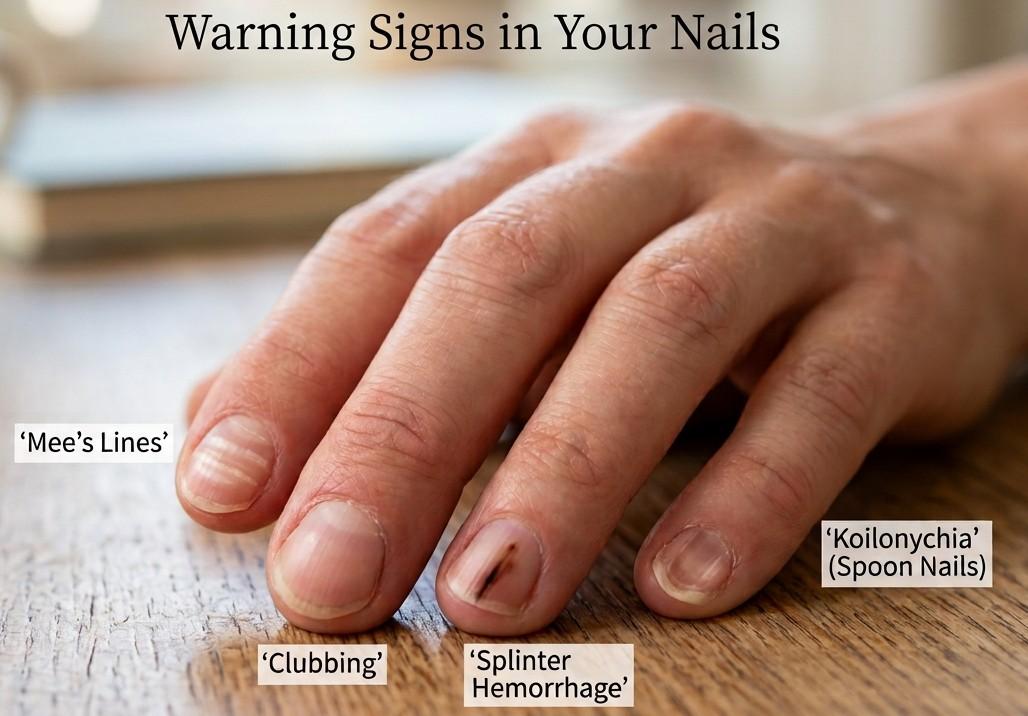
Your nails may seem like a small cosmetic detail, but changes in their color, shape, texture, thickness, or growth can sometimes provide clues about what is happening in your body. Many nail changes are harmless and can result from injuries, frequent exposure to water, nail polish, manicures, or normal aging. However, some changes deserve medical attention because they may be linked to infections, nutritional deficiencies, skin conditions, thyroid problems, circulation issues, or other health conditions.
The important thing is not to panic when you notice an unusual nail. Instead, pay attention to new, persistent, worsening, or unexplained changes, particularly when they affect only one nail or are accompanied by pain, swelling, bleeding, or changes in the surrounding skin. This guide explains the nail warning signs you should know and when it is worth seeing a doctor or dermatologist.
Why Your Nails Can Reveal Health Changes
Fingernails and toenails are made primarily of keratin and grow continuously. Because nail growth can be affected by illness, injury, inflammation, nutrition, medications, and other factors, changes sometimes appear in the nail weeks or months after an event.
For example, deep horizontal grooves called Beau’s lines can appear after something temporarily slows nail growth, such as a significant illness, injury, major stress, or certain medical treatments.
However, nails should not be used to diagnose a disease by themselves. The same nail appearance can have several possible causes, which is why persistent or unexplained changes should be evaluated professionally.
12 Warning Signs in Your Nails You Should Never Ignore
1. A New or Changing Dark Line Under Your Nail
One of the most important nail changes to watch is a new brown, black, or dark vertical streak underneath a fingernail or toenail.
Dark nail streaks can have harmless causes, including trauma or increased pigmentation. However, a new or changing dark streak can sometimes be a sign of melanoma developing under the nail.
Pay particular attention if the pigmentation:
- Becomes wider or darker
- Changes over time
- Has irregular coloring
- Extends onto the surrounding skin
- Does not grow out with the nail
- Appears without an obvious injury
Do not assume a dark nail streak is simply a bruise, especially when you cannot remember injuring the nail.
2. A Dark Band That Spreads Onto the Skin
A dark line becomes particularly important when the pigmentation appears to extend from the nail onto the skin surrounding the nail.
This can be a warning sign of melanoma and is sometimes called a Hutchinson sign. Skin cancer can also develop around the nail, not just underneath it.
This does not mean every dark area around a nail is cancer. Pigmentation can have several causes, but a new or changing dark area should be assessed rather than ignored.
3. Nails That Suddenly Become Blue or Dusky
Blue or bluish nails can occasionally be related to reduced oxygen levels in the bloodstream. The American Academy of Dermatology lists blue nails among nail color changes that can sometimes indicate an underlying health problem.
Cold temperatures can temporarily make fingers look bluish, so the change may disappear after warming up.
However, persistent blue or grayish nails, particularly when accompanied by breathing difficulty, chest discomfort, dizziness, confusion, or unusual weakness, require prompt medical attention.
4. Spoon-Shaped Nails
Healthy nails generally have a gentle curve. If the nails become unusually thin and develop a depression in the center, creating a spoon-like appearance, the condition is called koilonychia.
Spoon-shaped nails can be associated with iron deficiency, although other causes are possible.
If several nails gradually become spoon-shaped, especially when you also experience fatigue, weakness, pale skin, or shortness of breath, speak with a healthcare professional about whether blood testing may be appropriate.
5. Deep Horizontal Grooves Across the Nails
Horizontal grooves that run across the width of the nail are known as Beau’s lines.
They can develop when nail growth temporarily slows or stops. Possible triggers include significant illness, high fever, injury, chemotherapy, or major physical stress.
A single groove after a known illness may simply grow out with the nail. But repeated or unexplained grooves are worth discussing with a doctor.
The location of the groove can sometimes provide a clue about when the event occurred because nails grow gradually.
6. Nails That Start Curving Over Enlarged Fingertips
When nails become increasingly rounded and curve downward over the fingertips, the change may represent digital clubbing.
Clubbing can sometimes be hereditary and harmless, but it can also occur alongside diseases affecting the lungs, heart, liver, or digestive system.
Because clubbing can develop gradually, people may not notice it immediately.
If your fingertips appear more rounded than they used to and your nails are becoming increasingly curved, it is worth having the change evaluated.
7. Nails That Become Yellow, Thick, and Slow-Growing
Yellow nails are common and do not automatically indicate a serious disease. Nail polish, smoking, and fungal infections can all contribute to discoloration.
However, nails that become yellow, thickened, and unusually slow-growing may sometimes be associated with a condition known as yellow nail syndrome. Yellow nail changes can also occur with lung disease, rheumatoid arthritis, or significant nail infection.
If discoloration persists after stopping nail polish or does not improve, consider getting the nail examined.
8. Nails That Lift Away From the Nail Bed
When part of the nail separates from the skin underneath, the area may appear white because air gets underneath the nail. This condition is called onycholysis.
Possible causes include:
- Fungal infection
- Psoriasis
- Injury
- Aggressive manicures
- Repeated trauma
- Certain underlying medical conditions
The AAD recommends having a nail that is lifting examined because identifying the underlying cause is important for proper treatment.
Avoid repeatedly digging underneath the nail, as this can cause additional trauma or infection.
9. Small Pits or Dents Covering the Nails
Tiny dents that look as though they were made with the tip of a pin or an ice pick are called nail pitting.
Nail pitting can occur with skin conditions such as psoriasis, eczema, or alopecia areata.
A few minor imperfections do not necessarily indicate disease. But widespread or persistent pitting, particularly when accompanied by skin, scalp, or hair changes, deserves professional evaluation.
10. Redness, Swelling, or Pain Around a Nail
The skin surrounding your nail should not remain persistently red, swollen, tender, or painful.
These symptoms may indicate paronychia, an infection or inflammation around the nail. Bacterial and fungal causes are possible.
Seek medical care if:
- Swelling is getting worse
- Pus develops
- Pain becomes significant
- The redness spreads
- An open sore develops
- You have diabetes or poor circulation
Early treatment can help prevent a localized nail infection from becoming more serious.
11. Green or Greenish-Black Nail Discoloration
A nail that develops a green or greenish-black color may have a bacterial infection.
Bacterial nail infections can produce greenish-black discoloration and may worsen without appropriate treatment.
Do not simply cover the discoloration with nail polish. If the color persists or the nail is painful, lifting, or producing an odor, have it checked.
12. Nails That Become Extremely Thick, Distorted, or Overgrown
Toenails can sometimes become unusually thick, curved, distorted, or difficult to trim.
Fungal infections are a common cause of thickened nails, but other possibilities include psoriasis, repeated trauma, circulation problems, and other nail disorders.
Extremely thick nails can also make ordinary trimming difficult and increase the risk of injury to the surrounding skin.
Nail Color Changes You Should Pay Attention To
Not every color change means something is wrong, but persistent unexplained discoloration deserves attention.
| Nail Change | Possible Causes |
|---|---|
| Yellow nails | Nail polish, fungal infection, smoking, some medical conditions |
| Blue nails | Cold exposure or reduced oxygen levels |
| Pale nails | Anemia or other health conditions |
| White nail changes | Trauma, fungal infection, or certain systemic conditions |
| Brown/black streak | Pigmentation, trauma, medications, or melanoma |
| Greenish-black nail | Bacterial infection |
| Half-pink, half-white appearance | Can occur with some systemic conditions |
These associations are not diagnoses. A healthcare professional may need to examine the nail and consider your other symptoms, medications, medical history, and possibly laboratory tests.
When a Nail Change Could Be Melanoma?
Melanoma under or around a nail is uncommon, but it is one of the nail changes that should never be casually dismissed.
Watch for:
- A new dark vertical streak
- A streak that becomes wider
- Uneven or multiple colors
- Pigment spreading onto the surrounding skin
- A dark mark that changes over time
- A nail that splits or lifts without an obvious explanation
- A bump or persistent sore around or underneath the nail
Melanoma can occur underneath fingernails and toenails, and it may not cause pain in its early stages.
If you notice a suspicious dark streak, arrange an examination with a dermatologist rather than waiting for it to disappear.
Are White Spots on Nails a Sign of Calcium Deficiency?
Not necessarily.
Small white spots on nails are often caused by minor trauma to the nail rather than a calcium deficiency. They typically grow out as the nail grows.
This is a good example of why nail changes should not automatically be linked to a specific nutrient deficiency based solely on appearance.
If you have widespread or persistent nail abnormalities, it is better to identify the actual cause with a healthcare professional rather than taking supplements unnecessarily.
Can Your Nails Show Iron Deficiency?
They can sometimes provide a clue.
Thin, spoon-shaped nails are one nail change associated with iron deficiency.
However, you cannot confirm iron deficiency simply by looking at your nails. A healthcare professional may recommend blood tests, such as a complete blood count and iron-related testing, depending on your symptoms and medical history.
If you have persistent fatigue, weakness, shortness of breath, dizziness, or unusually pale skin along with nail changes, mention all of these symptoms during your medical evaluation.
What Causes Sudden Nail Changes?
Several things can affect nail appearance, including:
- Physical injury
- Nail biting or picking
- Aggressive manicures
- Frequent exposure to water
- Cleaning chemicals
- Fungal or bacterial infections
- Psoriasis and eczema
- Nutritional deficiencies
- Thyroid disorders
- Diabetes
- Certain medications
- Significant illness
- Physical stress
- Some heart, lung, liver, or digestive conditions
The nail problems can sometimes occur alongside conditions such as psoriasis, iron-deficiency anemia, thyroid disease, diabetes, and heart, lung, or liver disease.
This is why the pattern and persistence of a nail change matter more than one isolated imperfection.
When Should You See a Doctor About Your Nails?
Make an appointment with a dermatologist or healthcare professional if you notice a nail change that is:
- New and unexplained
- Getting worse
- Persistent
- Affecting only one nail without an obvious cause
- Associated with pain or swelling
- Associated with bleeding
- Causing the nail to lift
- Accompanied by a dark streak
- Associated with changes in the surrounding skin
- Causing significant changes in nail shape
- Occurring along with other unexplained symptoms
The AAD recommends professional evaluation for significant changes in nail color, texture, shape, or attachment because nail abnormalities can have many possible causes.
How to Keep Your Nails Healthy?
Healthy nail habits can reduce the risk of injury and infection.
1. Keep Nails Clean and Dry
Clean your nails regularly and dry them thoroughly after washing.
2. Avoid Picking or Digging Under Nails
Using sharp objects underneath your nails can injure the nail bed and increase the risk of infection.
3. Protect Your Hands
Wear gloves when cleaning or when your hands are repeatedly exposed to water or cleaning products. Excessive water exposure can weaken nails and contribute to splitting and peeling.
4. Be Careful With Manicures
Avoid aggressive cuticle treatments and excessive filing or scraping.
5. Trim Nails Regularly
Keep toenails appropriately trimmed to reduce trauma and other nail problems.
6. Do Not Cover Persistent Nail Changes
Nail polish can hide discoloration or changes that need to be monitored. If something unusual persists, allow the nail to be examined.
7. Protect Your Feet
Wear properly fitting shoes and avoid walking barefoot in communal wet areas. Wearing footwear in public showers and pools can help reduce exposure to organisms that may cause fungal infections.
How to Check Your Nails at Home
A simple nail check takes only a few minutes.
- Look at all fingernails and toenails in good lighting.
- Compare one nail with the others.
- Look for new dark lines or unusual discoloration.
- Check for changes in thickness or shape.
- Look for horizontal grooves or widespread pits.
- Check whether any nail is separating from the nail bed.
- Examine the skin around each nail for swelling, redness, sores, or unusual pigmentation.
- Take a photograph if you notice something new so you can monitor whether it changes.
Regular observation can help you recognize changes early. The AAD recommends checking the nails as part of skin self-examination, particularly because melanoma can occur beneath or around nails.
Final Takeaway
Most nail imperfections are not a sign of a serious disease, but persistent or unexplained changes should not automatically be dismissed.
The most important warning signs include a new or changing dark streak, pigment spreading around the nail, blue nails, spoon-shaped nails, deep horizontal grooves, clubbing, persistent yellow discoloration, nail lifting, pitting, painful swelling, greenish-black discoloration, and severe thickening or distortion.
Your nails cannot diagnose a health condition on their own. Think of them as another part of your body worth observing. If a change is new, persistent, worsening, or accompanied by other symptoms, getting it checked is the safest approach.
FAQ’s
What does a black line on a nail mean?
A black or brown vertical line can have several causes, including pigmentation, injury, medications, or a benign nail condition. However, a new or changing dark streak should be examined by a dermatologist because, in some cases, it can be a sign of melanoma.
Can nails show signs of health problems?
Yes. Certain nail changes may occur alongside conditions such as iron deficiency, fungal infections, psoriasis, thyroid disorders, diabetes, and some heart or lung conditions. However, nail appearance alone cannot diagnose a disease.
What do spoon-shaped nails indicate?
Spoon-shaped nails, known as koilonychia, can sometimes be associated with iron deficiency. They may also have other causes, so persistent spoon-shaped nails should be evaluated by a healthcare professional.
Why do nails turn yellow?
Yellow nails can result from nail polish, smoking, fungal infections, or other nail and health conditions. Yellow nails that remain discolored, become thick, or grow unusually slowly should be checked.
What causes blue nails?
Blue nails can occur because of cold temperatures, but persistent blue or dusky nails may sometimes indicate reduced oxygen levels or circulation problems. If blue nails occur with breathing difficulty, chest pain, dizziness, or confusion, seek urgent medical care.
Are ridges in fingernails a sign of illness?
Not always. Vertical ridges are common and often become more noticeable with age. Deep horizontal grooves across several nails, however, may develop after illness, injury, or another event that temporarily affects nail growth.
What do horizontal lines across the nails mean?
Deep horizontal grooves called Beau’s lines can occur when nail growth is temporarily interrupted. Possible triggers include significant illness, high fever, injury, major physical stress, and certain medical treatments.
What does green discoloration under a nail mean?
Green or greenish-black discoloration can occur with certain bacterial nail infections. If the discoloration persists or is accompanied by pain, swelling, odor, or nail lifting, medical evaluation is recommended.
Can nail fungus cause thick and discolored nails?
Yes. Fungal infections can cause nails to become thick, yellowish, brittle, distorted, or crumbly. A healthcare professional can determine whether fungus is responsible and recommend appropriate treatment.
Why is my nail separating from the nail bed?
A nail can separate from the nail bed because of injury, fungal infection, psoriasis, repeated trauma, certain medications, or other conditions. Persistent nail lifting should be evaluated to identify the underlying cause.
What does nail clubbing look like?
Nail clubbing causes the fingertips to become more rounded and the nails to curve downward around the fingertips. It can sometimes occur with lung, heart, liver, or digestive conditions and should be medically evaluated if it develops unexpectedly.
Can stress affect your nails?
Significant physical or emotional stress can sometimes affect nail growth. Deep horizontal grooves may appear after major physical stress or illness, although ordinary day-to-day stress does not necessarily cause obvious nail abnormalities.
Are nail changes always a sign of a serious problem?
No. Many nail changes are harmless and can result from minor injuries, aging, manicures, nail polish, or everyday exposure to water and chemicals. The concern is greater when a change is new, persistent, worsening, or unexplained.
Can a dermatologist diagnose nail problems?
Yes. A dermatologist can examine the nails and surrounding skin and may perform additional tests, such as fungal testing or blood tests, when necessary to determine the cause.
What is the most concerning nail warning sign?
A new or changing dark streak under a nail is one of the nail changes that deserves particular attention, especially if it becomes wider, changes color, or spreads onto the surrounding skin. It should be evaluated by a dermatologist.
What are some signs of unhealthy nails?
Discoloration, brittleness, pitting, thickening, deep ridges, nail lifting, swelling, pain, or unusual dark streaks can indicate unhealthy nails.
What do liver failure nails look like?
Liver disease may cause Terry’s nails, where most of the nail appears white with a narrow pink or brown band near the tip.
What do B12 deficiency nails look like?
B12 deficiency may cause bluish or unusually pigmented nails, although nail appearance alone cannot confirm a deficiency.
What organ affects your nails?
The thyroid, liver, kidneys, heart, lungs, and blood can all be associated with certain nail changes.
What do heart failure nails look like?
Some heart or circulation problems may cause bluish nails or clubbing, but these signs have other possible causes.
What do nails look like with kidney failure?
Kidney disease may cause half-and-half nails, with a lighter nail base and darker reddish-brown area toward the tip.
What are the signs of vitamin deficiency in nails?
Deficiencies may cause brittle, thin, discolored, or unusually shaped nails, with spoon-shaped nails sometimes linked to iron deficiency.
What are the signs of heart disease in fingernails?
Bluish nails and clubbing can sometimes occur with certain heart or lung conditions, but they do not diagnose heart disease.
Sources / References:
Disclaimer:
This guide is for educational purposes only and does not replace professional medical advice, diagnosis, or treatment. If you notice a persistent, worsening, painful, or unusual nail change, consult a qualified healthcare professional or dermatologist.
Also Read: