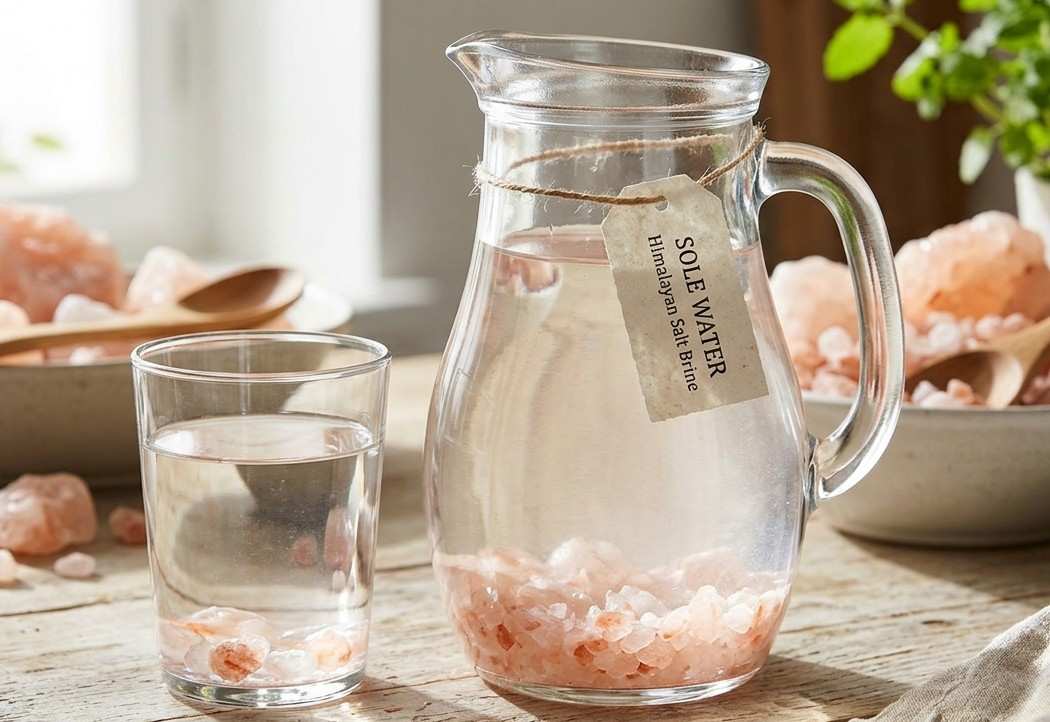
Sole water has become increasingly popular among health-conscious individuals looking for natural ways to support hydration and mineral intake. Made by dissolving natural salt crystals—most commonly Himalayan pink salt—into water until a saturated solution is formed, sole water is believed to provide trace minerals that may support various bodily functions.
Advocates of sole water claim that it can help maintain electrolyte balance, support hydration, aid digestion, and contribute to overall wellness. While some of these benefits are supported by the known roles of minerals and electrolytes in the body, it is important to understand that scientific evidence specifically examining sole water is limited. Most benefits are based on the mineral content of natural salts and their physiological functions.
This guide explores everything you need to know about sole water (also known as Himalayan Salt Water, Himalayan Sole, or Pink Himalayan Salt Water), including its nutrition facts, science-backed health benefits, side effects, preparation methods, proper usage, and important precautions.
What is Sole Water?
Sole water (pronounced “so-lay”) is a concentrated solution of water and unrefined natural salt, usually Himalayan pink salt, Celtic sea salt, or other mineral-rich salts.
The solution is created by adding salt crystals to water until no more salt can dissolve. This results in a fully saturated saltwater concentrate containing sodium, chloride, and small amounts of trace minerals such as magnesium, potassium, calcium, and iron.
To consume sole water, a small amount of the concentrate—typically one teaspoon—is mixed into a glass of plain water and consumed, usually in the morning.
Unlike regular table salt, natural salts used in sole water are minimally processed and retain various trace minerals, which contribute to their distinctive colors and flavors.
Components of Sole Water
The exact nutritional composition varies depending on the type of salt used and the concentration of the solution.
| Nutrient | Approximate Amount (Per 1 tsp Sole Concentrate) |
|---|---|
| Calories | 0 |
| Protein | 0 g |
| Fat | 0 g |
| Carbohydrates | 0 g |
| Sodium | 300–500 mg |
| Chloride | 450–700 mg |
| Potassium | Trace amounts |
| Magnesium | Trace amounts |
| Calcium | Trace amounts |
| Iron | Trace amounts |
| Zinc | Trace amounts |
| Copper | Trace amounts |
| Manganese | Trace amounts |
| Selenium | Trace amounts |
| Water | Variable |
Note: Nutrient values vary significantly depending on salt source and preparation method.
20 Proven Benefits of Sole Water
- Supports Hydration: The sodium and electrolytes in sole water may help the body maintain proper fluid balance and hydration.
- Promotes Electrolyte Balance: Sole water provides sodium and trace minerals that contribute to electrolyte regulation.
- Supports Nerve Function: Sodium plays an essential role in transmitting nerve impulses throughout the body.
- Aids Muscle Function: Electrolytes found in sole water help support normal muscle contractions.
- May Reduce Muscle Cramps: Proper electrolyte balance may help reduce the risk of dehydration-related muscle cramps.
- Supports Healthy Blood Pressure Regulation: Adequate sodium intake is necessary for maintaining healthy blood circulation and blood pressure regulation.
- Improves Water Absorption: Sodium helps facilitate water absorption in the intestines.
- Supports Digestive Health: Salt may stimulate digestive secretions that assist with food breakdown.
- May Enhance Stomach Acid Production: Sodium chloride contributes to hydrochloric acid production in the stomach.
- Supports Nutrient Absorption: Healthy digestion can improve absorption of vitamins and minerals from food.
- Helps Maintain Acid-Base Balance: Electrolytes help regulate the body’s pH balance.
- Supports Adrenal Function: Sodium is important for hormone regulation and adrenal gland activity.
- May Improve Exercise Recovery: Replenishing electrolytes after physical activity may support recovery.
- Supports Cellular Function: Sodium is essential for cellular communication and nutrient transport.
- May Help Prevent Dehydration: Electrolyte-containing beverages can assist in maintaining hydration levels.
- Supports Healthy Circulation: Proper electrolyte balance contributes to efficient blood flow.
- May Promote Energy Levels: Adequate hydration and mineral balance can help reduce feelings of fatigue.
- Supports Cognitive Function: Hydration and electrolyte balance are important for concentration and mental performance.
- Provides Trace Minerals: Natural salts contain small amounts of minerals that support overall health.
- May Support Overall Wellness: Consuming adequate fluids and essential minerals contributes to general health and well-being.
10 Side Effects of Sole Water
- High Sodium Intake: Excessive consumption may lead to excessive sodium intake.
- Increased Blood Pressure: Individuals sensitive to sodium may experience elevated blood pressure.
- Fluid Retention: High sodium levels can cause water retention and swelling.
- Kidney Stress: Excess sodium may place additional strain on the kidneys.
- Electrolyte Imbalance: Overconsumption may disrupt normal electrolyte balance.
- Increased Thirst: High sodium intake can trigger excessive thirst.
- Digestive Discomfort: Some people may experience stomach irritation or nausea.
- Headaches: Excessive sodium consumption may contribute to headaches in susceptible individuals.
- Heart Health Concerns: People with cardiovascular conditions should monitor sodium intake carefully.
- Risk of Hypernatremia: Extremely high sodium consumption may lead to elevated blood sodium levels.
How to Make Sole Water?
Ingredients:
- 1 glass jar with lid
- Himalayan pink salt crystals or natural sea salt
- Filtered water
Instructions:
- Fill one-quarter of a glass jar with natural salt crystals.
- Add filtered water until the jar is nearly full.
- Seal the jar with a non-metal lid.
- Allow the mixture to sit for 12–24 hours.
- Check the jar after 24 hours.
- If some salt remains undissolved at the bottom, the solution is fully saturated.
- If all salt dissolves, add more salt and wait several more hours.
- Store the concentrate at room temperature.
- To consume, add 1 teaspoon of sole concentrate to a glass of water.
Tips for Consuming Sole Water
- Start with a small amount to assess tolerance.
- Mix sole concentrate with a full glass of water.
- Drink additional plain water throughout the day.
- Use high-quality natural salt sources.
- Avoid excessive daily consumption.
- Monitor sodium intake from other foods.
- Consult a healthcare provider if you have health concerns.
- Consume as part of a balanced diet.
- Maintain proper hydration during exercise.
- Stop use if adverse symptoms occur.
Other Uses of Sole Water
Beyond drinking, sole water has several practical uses:
Mineral Bath Soak
It can be added to bathwater to create a mineral-rich soaking experience.
Salt Gargle
Diluted sole water may be used as a saltwater gargle for temporary throat comfort.
Nasal Rinse Ingredient
Some people use properly diluted salt solutions for nasal cleansing.
Mouth Rinse
Diluted saltwater can be used as an oral rinse.
Skin Cleansing
Some individuals use diluted sole water in skincare routines.
Foot Soak
It may be added to warm water for relaxing foot baths.
Household Cleaning
Saltwater solutions can assist with certain natural cleaning tasks.
Food Preparation
Natural salt solutions can be used in pickling and fermentation processes.
How Much Sole Water Can You Drink in a Day?
Most proponents recommend:
- 1 teaspoon of sole concentrate mixed into 8–12 ounces (240–350 ml) of water once daily.
For most healthy adults:
- 1 serving daily is generally considered sufficient.
- Excessive intake is not recommended due to sodium content.
- Total sodium intake from all dietary sources should remain within recommended guidelines.
The World Health Organization recommends limiting sodium intake to approximately 2,000 mg per day for most adults.
Best Time to Drink Sole Water
Early Morning
Many people prefer drinking sole water shortly after waking up because hydration levels are often lower after overnight fasting.
Before Exercise
The electrolytes may help support hydration before physical activity.
After Exercise
Some individuals consume sole water after workouts to replace electrolytes lost through sweat.
During Hot Weather
Electrolyte support may be beneficial during periods of excessive sweating.
When Recovering from Mild Dehydration
Sole water may help restore fluid and electrolyte balance when used appropriately.
Who Should Drink Sole Water?
- Athletes and Active Individuals: People who lose significant electrolytes through sweating may benefit from occasional electrolyte replenishment.
- People Living in Hot Climates: High temperatures can increase fluid and electrolyte losses.
- Individuals Seeking Mineral Intake: Sole water provides small amounts of trace minerals.
- People Looking to Improve Hydration Habits: It may encourage regular water consumption.
- Outdoor Workers: Individuals exposed to heat may benefit from electrolyte support.
- People Following Whole-Food Lifestyles: Natural salt products align with minimally processed dietary approaches.
- Individuals Engaging in Intense Exercise: Heavy physical activity increases electrolyte requirements.
- People Recovering from Excessive Sweating: Electrolyte replacement may support recovery.
Who Should Avoid Sole Water?
- People with High Blood Pressure: Extra sodium may worsen hypertension.
- Individuals with Kidney Disease: Impaired kidney function may affect sodium handling.
- People with Heart Failure: Fluid and sodium management are often medically necessary.
- Individuals on Sodium-Restricted Diets: Sole water may conflict with dietary restrictions.
- People with Severe Fluid Retention: High sodium intake can increase swelling.
- Individuals with Hypernatremia: Elevated blood sodium levels can worsen with additional sodium intake.
- People Taking Certain Medications: Some medications interact with sodium balance.
- Pregnant Women with Medical Restrictions: Medical guidance should be obtained before use.
- Children Without Medical Advice: Sodium needs differ by age.
- Individuals Sensitive to Salt: Excessive sodium may trigger symptoms in susceptible people.
How to Store Sole Water?
- Use Glass Containers: Glass jars help preserve quality and prevent chemical leaching.
- Keep the Lid Tightly Closed: Proper sealing reduces contamination.
- Store at Room Temperature: Sole water is stable without refrigeration.
- Avoid Direct Sunlight: Excessive heat and light may affect quality.
- Use Clean Utensils: Prevent contamination by using clean spoons.
- Keep Away from Moisture Sources: Excess moisture can affect salt concentration.
- Label the Container: Mark the preparation date for convenience.
- Inspect Before Use: Discard if contamination is suspected.
- Avoid Metal Containers: Salt may react with certain metals.
- Store in a Dry Location: Dry conditions help maintain stability.
Precautions and Interactions
Although sole water is generally safe for healthy individuals when consumed in moderation, several precautions should be considered.
Monitor Sodium Intake
Sole water contributes to total daily sodium consumption. Excessive sodium intake may increase health risks in susceptible individuals.
Consult a Healthcare Professional
Individuals with chronic medical conditions should seek medical advice before adding sole water to their routine.
Medication Interactions
Sole water may interact with:
- Diuretics
- Blood pressure medications
- Corticosteroids
- Kidney-related medications
- Certain heart medications
Pregnancy and Breastfeeding
Pregnant or breastfeeding women should consult healthcare providers before regular use.
Kidney Conditions
People with kidney disorders may have difficulty regulating sodium levels and should exercise caution.
Cardiovascular Disease
Individuals with heart disease should monitor sodium intake carefully.
Avoid Excessive Consumption
More is not necessarily better. Excessive intake can increase the risk of sodium-related side effects.
Maintain a Balanced Diet
Sole water should not replace a nutrient-rich diet, adequate hydration, or medical treatment.
Final Thoughts
Sole water is a mineral-rich saltwater concentrate made from natural salts and water. It provides sodium and trace minerals that support hydration, electrolyte balance, nerve function, and muscle activity. While many health claims surrounding sole water are popular in wellness communities, scientific evidence specifically supporting all claimed benefits remains limited.
When used responsibly and in moderation, Himalayan salt water may be a convenient way to supplement electrolytes, particularly for active individuals and those exposed to hot climates. However, because it contains significant amounts of sodium, it should be consumed cautiously by people with hypertension, kidney disease, heart conditions, or anyone following a sodium-restricted diet.
FAQ’s
What does sole water taste like?
Himalayan salt water has a mildly salty taste that becomes less noticeable when a small amount of the concentrate is diluted in a glass of water.
What is sole water good for?
Himalayan salt water is commonly used to support hydration, electrolyte balance, and mineral intake due to its sodium and trace mineral content.
Can I drink sole water every day?
Healthy adults can generally drink Himalayan salt water daily in moderation, provided their total sodium intake remains within recommended limits.
Does sole water help with hydration?
Yes, the electrolytes in Himalayan salt water may help support fluid balance and hydration, especially after sweating or exercise.
Is sole water the same as salt water?
Not exactly. Himalayan salt water is a concentrated solution made with mineral-rich natural salt, whereas regular salt water can be made with any type of salt.
Can sole water help with digestion?
Some people believe Himalayan salt water supports digestion by stimulating stomach acid and digestive secretions, though research is limited.
What minerals are found in sole water?
Himalayan salt water primarily contains sodium and chloride, along with trace amounts of minerals such as magnesium, potassium, calcium, iron, and zinc.
Can sole water raise blood pressure?
Because it contains sodium, excessive consumption may increase blood pressure in individuals who are sensitive to salt.
Is sole water safe for people with kidney disease?
People with kidney disease should consult a healthcare professional before drinking Himalayan salt water due to its sodium content.
Can sole water help with muscle cramps?
Maintaining electrolyte balance may help reduce dehydration-related muscle cramps in some individuals.
What is the best salt for making sole water?
Himalayan pink salt and high-quality unrefined sea salt are the most commonly used salts for preparing Himalayan salt water.
Should sole water be refrigerated?
No, Himalayan salt water does not usually require refrigeration and can be stored in a sealed glass container at room temperature.
Can pregnant women drink sole water?
Pregnant women should consult their healthcare provider before regularly consuming Himalayan salt water, especially if they have blood pressure concerns.
Can children drink sole water?
Children should only consume Himalayan salt water under the guidance of a healthcare professional because their sodium requirements differ from those of adults.
Does sole water contain calories?
No, Himalayan salt water contains virtually no calories, fat, protein, or carbohydrates.
Can sole water replace electrolyte drinks?
Himalayan salt water can provide some electrolytes, but it does not contain the same balance of nutrients found in many commercial electrolyte beverages.
How long does sole water last?
When stored properly in a clean glass container with a tight-fitting lid, Himalayan salt water can remain usable for a very long time because the high salt concentration naturally inhibits microbial growth.
How long does it take for Sole Water to work?
Some people notice hydration benefits within a few hours, while other effects may take days or weeks of regular use.
What does Sole Water smell like?
Himalayan salt water is usually odorless but may have a very mild mineral scent depending on the salt used.
Also Read: