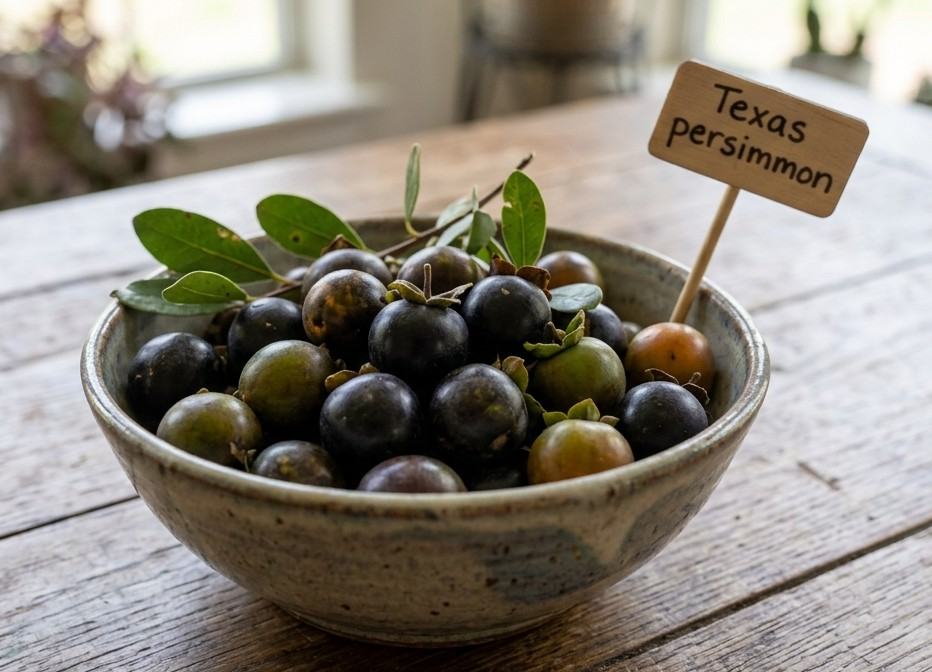
Texas persimmon is a small, distinctive fruit native to parts of Texas, Oklahoma, and northern Mexico. Unlike the familiar orange persimmons commonly found in grocery stores, Texas persimmon produces small round fruits that turn deep purple to almost black when fully ripe.
Known scientifically as Diospyros texana, this fruit is also called Texas persimmon, Mexican persimmon, black persimmon, or chapote. It grows on a drought-tolerant small tree with attractive peeling bark and is especially associated with rocky and dry landscapes of Central and West Texas.
The ripe fruit has soft, sweet flesh and can be eaten fresh or incorporated into foods such as puddings and custards. However, the fruit contains several relatively large seeds, so the edible pulp needs to be separated from them.
What Is Texas Persimmon?
Texas persimmon (Diospyros texana) is a small tree or shrub belonging to the Ebenaceae, or persimmon family. It is native primarily to Central and West Texas, parts of southwestern Oklahoma, and northeastern Mexico.
The tree is particularly recognizable because of its smooth, peeling bark, which can reveal gray, white, pink, or lighter-colored layers underneath. Female trees produce the fruit, while male and female flowers occur on separate plants.
The fruit begins green and becomes black as it ripens. A ripe fruit is approximately 1 inch in diameter and contains several hard seeds surrounded by soft, dark pulp. When fully ripe, the flesh is sweet and can be eaten by humans.
Texas persimmon should not be confused with American persimmon (Diospyros virginiana) or Japanese persimmon (Diospyros kaki). They are related but are different species.
20 Potential Health Benefits of Texas Persimmon
1. Provides Natural Carbohydrates: The soft ripe pulp contains naturally occurring carbohydrates that can contribute energy to the diet.
2. May Provide Dietary Fiber: As a whole fruit, Texas persimmon can contribute fiber, which is important for normal digestive function.
3. Contains Plant Compounds: Persimmon fruits contain naturally occurring phytochemicals, including phenolic compounds and tannins.
4. Supports a Fruit-Rich Diet: Adding a variety of fruits to the diet increases exposure to different vitamins, minerals, and plant compounds.
5. May Support Digestive Health: The fiber found in fruit can help support normal bowel regularity when consumed as part of an adequate-fiber diet.
6. May Help With Satiety: The combination of water, fruit pulp, and fiber may help make a serving of ripe fruit satisfying.
7. Provides Antioxidant Compounds: Plant phenolics can have antioxidant activity in laboratory studies, although this does not mean Texas persimmon treats oxidative-stress-related diseases.
8. May Contribute Vitamin C: Persimmon fruits can contain vitamin C, although a precise amount for Texas persimmon has not been adequately standardized.
9. May Provide Carotenoid Compounds: Related persimmon fruits contain carotenoids, which are naturally occurring plant pigments with antioxidant properties.
10. May Support Overall Nutrient Intake: Eating different types of fruits can help broaden overall dietary micronutrient intake.
11. Naturally Low in Fat: Fresh fruit pulp is generally not a significant source of fat, making it suitable for many balanced eating patterns.
12. Can Replace Highly Processed Desserts: Fully ripe Texas persimmon pulp can be used in naturally sweet recipes instead of some heavily processed dessert ingredients.
13. May Add Variety to Meals: Its unusual dark color and sweet flavor make it a useful addition to fruit dishes, purees, and desserts.
14. Provides Hydration Alongside Food: Fresh ripe fruit contains water, contributing a small amount to overall daily fluid intake.
15. Supplies Plant-Based Food Components: Texas persimmon can contribute naturally occurring compounds that are characteristic of plant foods.
16. May Complement a Heart-Healthy Eating Pattern: Including fruits regularly is consistent with dietary patterns commonly recommended for cardiovascular health, although Texas persimmon itself has not been established as a cardiovascular treatment.
17. May Support a Balanced Snack: A small serving of ripe fruit can be combined with foods such as yogurt or nuts for a more balanced snack.
18. May Contribute to Dietary Antioxidant Diversity: Eating different fruits exposes the diet to a broader range of naturally occurring antioxidant compounds.
19. Can Be Used as a Whole-Fruit Ingredient: Using the ripe pulp in homemade foods allows the fruit to be consumed without relying on highly processed flavorings.
20. Adds Seasonal Dietary Variety: Incorporating unusual native fruits such as Texas persimmon can increase variety in an otherwise repetitive diet.
10 Side Effects of Texas Persimmon
Texas persimmon is documented as edible when ripe, but eating the fruit when it is immature or consuming excessive amounts may cause problems.
1. Astringent Taste: Unripe fruit can contain tannins that create a strong dry, puckering sensation in the mouth.
2. Stomach Discomfort: Eating a large quantity of unfamiliar or very tannic fruit may cause digestive discomfort in some people.
3. Constipation: Excessive consumption of tannin-rich, unripe persimmon may contribute to digestive problems.
4. Seeds Can Be a Choking Hazard: Texas persimmon contains several hard seeds that should not be swallowed.
5. Allergic Reaction: Although uncommon, anyone can potentially develop an allergy or food-related reaction to a fruit.
6. Loose Stools: Eating a large serving of any unfamiliar fruit may cause temporary digestive changes in sensitive individuals.
7. Mouth Irritation: Very unripe fruit may feel unpleasant or irritating because of its astringent compounds.
8. Excessive Sugar Intake: Large quantities of ripe fruit can add substantial natural sugar and carbohydrates to the diet.
9. Food Contamination: Wild-harvested fruit can become contaminated with dirt, microorganisms, pesticides, or animal waste if it is not handled properly.
10. Misidentification Risk: Wild fruits should not be eaten unless the plant and fruit have been positively identified because other species may not be suitable for consumption.
How to Eat Texas Persimmon?
The most important rule is to eat Texas persimmon only when it is fully ripe.
The fruit starts green and becomes dark purple or black when mature. Ripe Texas persimmon should have soft flesh rather than firm, hard pulp. Reliable botanical and horticultural sources describe the ripe black fruit as sweet and edible.
To eat it:
- Wash the fruit thoroughly.
- Make sure it is completely ripe and soft.
- Remove the stem and inspect the fruit.
- Cut or gently squeeze the fruit open.
- Scoop out the soft pulp.
- Remove the hard seeds.
- Eat the pulp fresh or use it in a recipe.
The fruit can also be incorporated into puddings, custards, breads, jellies, and other preparations.
Tips for Consuming Texas Persimmon
- Choose Fully Ripe Fruit: Look for fruit that has turned deep purple to black and has softened considerably.
- Avoid Green Fruit: Immature fruit can be strongly astringent because of its tannin content.
- Remove the Seeds: Texas persimmon normally contains several hard seeds, so separate them from the pulp before eating.
- Wash Before Eating: Thoroughly wash freshly harvested fruit before consuming it.
- Start Small: If you have never eaten Texas persimmon before, begin with a small serving.
- Use Soft Pulp in Recipes: Very ripe pulp can work well in homemade puddings, custards, purees, and baked foods.
- Do Not Rely on Frost Alone: Frost is not required for persimmon fruit to ripen and lose its astringency; ripeness and softening are more important indicators.
Other Uses of Texas Persimmon
- Food Preparation: Fully ripe Texas persimmon pulp can be eaten fresh or used in puddings and custards.
- Jellies and Preserves: The sweet ripe pulp can be incorporated into homemade fruit preparations.
- Baking: The soft pulp can be added to breads, muffins, and other baked foods.
- Natural Dye: The fruit pulp can produce a dark, persistent black stain and has historically been used as a dye.
- Leather Dyeing: Sources report traditional use of the fruit for dyeing animal hides, particularly in Mexico.
- Landscaping: Texas persimmon is valued as an ornamental and drought-tolerant landscape tree.
- Wildlife Food: Birds and mammals consume the ripe fruit, making the species useful in native wildlife habitats.
- Woodworking: The dark, dense wood has been used for tools, engraving blocks, and artistic applications.
- Native Plant Gardens: Its drought tolerance and distinctive peeling bark make it suitable for appropriate native landscapes.
- Habitat Planting: The tree can provide cover and food resources for wildlife in its native range.
How Many Texas Persimmon Can You Eat in a Day?
There is no scientifically established daily serving or therapeutic dose specifically for Texas persimmon.
For most healthy adults, a reasonable approach is to treat it like other fresh fruits and consume a modest serving rather than large quantities at once. Because Texas persimmon is small and contains multiple seeds, the amount of edible pulp can vary considerably between fruits.
If you are trying the fruit for the first time, start with a small amount and see how your digestive system responds.
Best Time to Eat Texas Persimmon
There is no evidence showing that Texas persimmon provides a special health advantage when eaten at a particular time of day.
It can be eaten:
- With breakfast
- As a mid-morning snack
- With lunch
- As an afternoon snack
- As part of a dessert
- After physical activity as part of a balanced snack
The most important factor is ripeness, not the clock. The fruit should be fully ripe and soft before eating.
Who Should Eat Texas Persimmon?
- Healthy Adults: Healthy adults can enjoy fully ripe Texas persimmon as an occasional whole-fruit food.
- People Seeking More Fruit Variety: Those who enjoy trying native or less-common fruits can use Texas persimmon to diversify their diet.
- People Following Plant-Rich Diets: The fruit can fit into vegetarian and plant-forward eating patterns.
- People Who Enjoy Homemade Foods: Ripe pulp can be incorporated into homemade puddings, baked foods, and other recipes.
- People Interested in Native Foods: Individuals interested in regional foods may enjoy this traditional native fruit when correctly identified and fully ripe.
Who Should Not Eat Texas Persimmon?
- People Eating Unripe Fruit: Avoid green or clearly unripe Texas persimmon because it can be strongly astringent.
- People With a Known Persimmon Allergy: Anyone with a confirmed allergy to persimmon should avoid the fruit unless advised otherwise by a qualified healthcare professional.
- Young Children Without Supervision: Because the fruit contains hard seeds, young children should only consume properly prepared, seed-free pulp under appropriate supervision.
- People With Significant Digestive Sensitivity: Anyone who develops digestive symptoms after eating the fruit should stop consuming it.
- People Unsure of Plant Identification: Do not consume a wild fruit if you cannot confidently identify it as Diospyros texana.
- People Eating Contaminated Fruit: Fruit that is moldy, damaged, chemically contaminated, or improperly handled should be discarded.
How to Store Texas Persimmon?
- Room Temperature for Ripening: Firm fruit can be kept at room temperature while it finishes ripening.
- Refrigerate Ripe Fruit: Once soft and ripe, refrigeration can help slow further deterioration.
- Use Quickly: Very ripe fruit has a short eating window because the pulp becomes extremely soft.
- Keep Clean: Store washed and prepared fruit in a clean, covered container.
- Freeze the Pulp: Seed-free pulp can be frozen for later use in cooked recipes.
- Check Before Eating: Discard fruit showing significant mold, unusual fermentation, or spoilage.
- Protect From Damage: Handle ripe fruit gently because its soft pulp can bruise easily.
Precautions and Interactions
- Do Not Eat It Unripe: The biggest food-related precaution is avoiding immature, strongly astringent fruit.
- Remove Hard Seeds: Separate the seeds before eating the pulp.
- Confirm Identification: When harvesting from the wild, make certain the plant is correctly identified as Diospyros texana.
- Wash Wild-Harvested Fruit: Clean fruit thoroughly before eating.
- Consider Food Allergies: Stop eating the fruit if symptoms such as itching, swelling, hives, vomiting, or breathing difficulty occur and seek appropriate medical care for serious symptoms.
- Watch Portion Size: Eating very large quantities is unnecessary and may cause digestive discomfort.
- Medication Users Should Be Cautious: There is insufficient clinical evidence to establish specific drug interactions involving Texas persimmon itself, so people taking multiple medications should discuss frequent medicinal-style use with a healthcare professional.
- Do Not Treat Disease With It: Texas persimmon should not be used as a replacement for prescribed treatment.
- Pregnancy and Breastfeeding: There is limited species-specific research on Texas persimmon during pregnancy and breastfeeding, so moderate food consumption is preferable to concentrated or medicinal use unless advised by a healthcare professional.
- Seek Professional Advice for Medical Conditions: People with significant digestive disorders, food allergies, or other medical conditions should ask a healthcare professional before making an unusual wild fruit a regular part of their diet.
Texas Persimmon vs. Regular Persimmon
Texas persimmon and commonly sold persimmons are related but are not the same species.
Texas persimmon is Diospyros texana, while the widely cultivated Asian or Japanese persimmon is Diospyros kaki. Texas persimmon produces a much smaller dark purple-to-black fruit, whereas many commercial persimmons produce considerably larger orange fruits.
This distinction matters when researching nutrition and health benefits because research conducted on Diospyros kaki should not automatically be described as clinical evidence for Diospyros texana.
Is Texas Persimmon Safe to Eat?
Yes, fully ripe Texas persimmon fruit is documented as edible for humans. The ripe fruit is described as sweet and soft, while immature fruit is green and astringent.
The safest approach is to positively identify the plant, wait until the fruit is fully ripe, wash it thoroughly, and remove the hard seeds before eating.
Final Thoughts
Texas persimmon is an unusual native fruit with a fascinating combination of culinary, ecological, and cultural uses. Its small fruit changes from green to dark purple or black as it ripens, developing soft, sweet flesh that can be eaten fresh or used in homemade foods.
Although Texas persimmon contains naturally occurring plant compounds and can contribute to a varied fruit-based diet, there is not enough species-specific clinical research to claim that it prevents or treats particular diseases. Many health claims made about persimmons online are based on research involving other persimmon species.
For the healthiest approach, enjoy fully ripe Texas persimmon as a whole fruit, remove the seeds, and treat it as one part of an overall balanced diet.
FAQ’s
Is Texas persimmon edible?
Yes, fully ripe Texas persimmon fruit is edible, but the hard seeds should be removed before eating.
What does Texas persimmon taste like?
Ripe Texas persimmon has soft, sweet pulp, while unripe fruit can have a strong astringent, puckering taste.
Can you eat Texas persimmon seeds?
It is best to remove the hard seeds rather than eat them.
What color is a ripe Texas persimmon?
A ripe Texas persimmon typically changes from green to dark purple or nearly black.
Can you eat Texas persimmon raw?
Yes, the fully ripe pulp can be eaten raw after washing the fruit and removing the seeds.
Is Texas persimmon the same as American persimmon?
No. Texas persimmon is Diospyros texana, while American persimmon is Diospyros virginiana.
Is Texas persimmon the same as Japanese persimmon?
No. Japanese persimmon is Diospyros kaki, whereas Texas persimmon is Diospyros texana.
When is Texas persimmon ripe?
Texas persimmon is generally considered ripe when the fruit has become very dark and the pulp has softened.
Can you eat unripe Texas persimmon?
It is best to avoid unripe fruit because it can be highly astringent and unpleasant to eat.
Can Texas persimmon be used in recipes?
Yes, ripe pulp can be used in homemade puddings, custards, baked foods, preserves, and other recipes.
Can Texas persimmon be frozen?
Yes, seed-free ripe pulp can be frozen for later use in cooking and baking.
Does Texas persimmon have seeds?
Yes, the small fruit typically contains several hard seeds surrounded by soft pulp.
Is Texas persimmon good for digestion?
Its fruit pulp may contribute dietary fiber, which supports normal digestive function, but Texas persimmon has not been clinically established as a digestive treatment.
Can children eat Texas persimmon?
Children can potentially eat properly ripe, washed, seed-free pulp, but young children should be supervised because the hard seeds can pose a choking risk.
Can you grow Texas persimmon at home?
Yes, Texas persimmon can be grown as a drought-tolerant native landscape tree when the climate and soil conditions are suitable.
What is another name for Texas persimmon?
Texas persimmon is also known as Mexican persimmon, black persimmon, and chapote.
Are Texas persimmons rare?
Texas persimmon is a native species rather than a universally available commercial fruit, and it is particularly associated with the dry and rocky regions of its native range.
Is Texas Persimmon fast growing?
No, Texas persimmon is generally a slow-growing tree, although growth can vary depending on soil, water, sunlight, and climate.
Can I eat Texas Persimmon every day?
You can eat fully ripe Texas persimmon as part of a varied diet, but there is no established daily serving specifically for this fruit.
Is Texas Persimmon safe for pregnant women?
There is limited research specifically on Texas persimmon during pregnancy, so pregnant women should consume it only as a normal food and discuss frequent consumption with their healthcare provider.
What is Texas Persimmon good for?
Texas persimmon is mainly valued as an edible native fruit that provides natural carbohydrates, fiber, water, and plant compounds when fully ripe.
Sources / References:
Disclaimer:
This guide is for general educational purposes only and does not replace professional medical advice, diagnosis, or treatment. Consult a qualified healthcare professional before making dietary changes, especially if you have a medical condition or take medications.
Also Read: