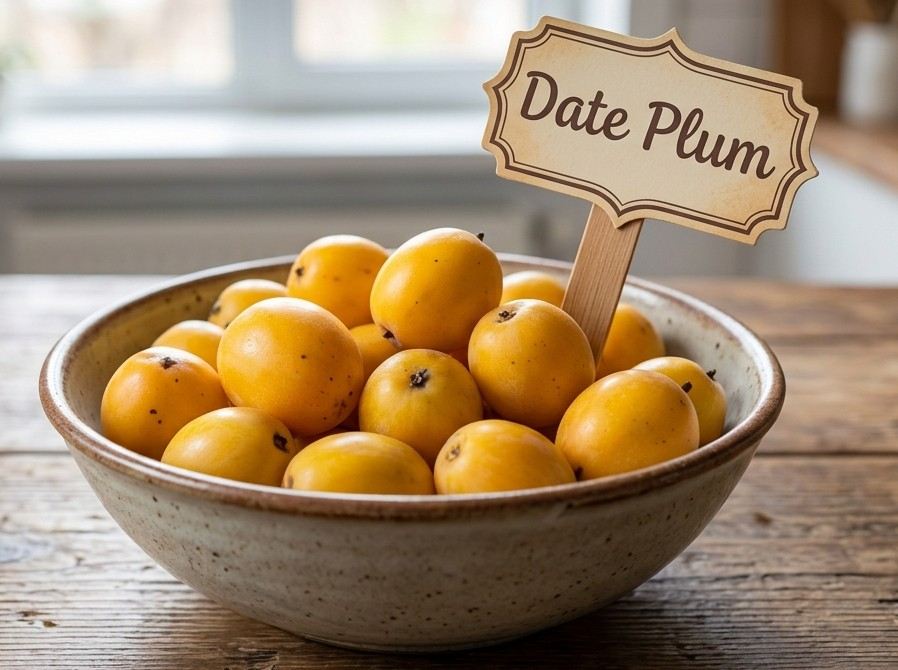
Date plum is a small, naturally sweet fruit with an interesting name and a long history of use in parts of Asia and Europe. Scientifically known as Diospyros lotus L., it belongs to the Ebenaceae family and is related to other persimmon species. It is also called European date plum, Caucasian persimmon, or lotus tree.
The fruit is generally small and round, turning yellow, purple, or dark purple-black as it matures. Its flavor is often described as a combination of date-like sweetness and plum or persimmon notes. Date plum can be eaten fresh when properly ripe and is also traditionally dried.
What Is Date Plum?
Date plum is the edible fruit of Diospyros lotus L., a deciduous tree in the ebony family, Ebenaceae. Kew’s Plants of the World Online recognizes Diospyros lotus as an accepted species, with a native range extending from northeastern and south-central Türkiye through parts of Asia to Korea.
The fruit is considerably smaller than many cultivated persimmons. When ripe, it develops a soft, sweet flesh and may become purple-black or blue-black. In some regions, it is consumed fresh, while drying is another traditional way of preserving it.
Date plum should not be confused with the common Asian persimmon, Diospyros kaki, which is sometimes called Chinese date plum. They are different species.
Nutrition Facts of Date Plum
The exact nutritional composition of date plum can vary considerably according to variety, maturity, growing conditions, and whether the fruit is fresh or dried. A Himalayan wild-fruit review reported approximately 70.5% moisture, 22% carbohydrates, 2% crude protein, 4.2% crude fat, and 1.7% ash for Diospyros lotus fruit in the cited dataset.
| Nutrient/Component | Approximate Information |
|---|---|
| Water | 70.5% |
| Carbohydrates | 22% |
| Protein | 2.0% |
| Fat | 4.2% |
| Ash/mineral residue | 1.7% |
| Vitamin C | Detected; approximately 13.9 mg/100 g in one study |
| Phenolic compounds | Approximately 130.3 mg/100 g extract basis in one study |
| Flavonoids | Approximately 12.7 mg/100 g extract basis in one study |
| Natural sugars | Fructose is prominent |
| Other compounds | Tannins, gallic acid, ellagic acid, quercetin and other phenolics |
20 Proven Health Benefits of Date Plum
- Provides Antioxidants: Date plum contains phenolic compounds and flavonoids that demonstrate antioxidant activity in laboratory testing.
- Supports Vitamin C Intake: The fruit contains vitamin C, an essential nutrient involved in normal immune function, collagen formation, and antioxidant protection.
- May Support Immune Function: Its vitamin C and plant phytochemicals can contribute to an overall nutrient-rich diet that supports normal immune function.
- Supports Digestive Health: Whole fruit provides carbohydrates and some dietary components that can fit into a balanced diet supporting normal digestion.
- Provides Natural Carbohydrates: Date plum supplies naturally occurring sugars that provide energy.
- Contains Beneficial Polyphenols: Research has identified compounds including gallic acid, ellagic acid, quercetin, myricetin, and kaempferol in Diospyros lotus.
- May Help Protect Cells From Oxidative Stress: Antioxidant compounds in date plum can neutralize free radicals in laboratory antioxidant assays.
- Supports a Fruit-Rich Diet: Adding Caucasian persimmon can increase variety in a diet that includes different fruits and plant foods.
- May Support Heart-Healthy Eating: Replacing highly processed sweets with naturally sweet whole fruit can support an overall heart-conscious eating pattern.
- Contains Flavonoids: Date plum contains several flavonoid compounds that are being studied for their biological activities.
- Provides Plant-Based Phytochemicals: Its flesh contains several naturally occurring compounds that contribute to the nutritional diversity of the fruit.
- May Support Normal Metabolism: Its carbohydrates can contribute energy as part of a balanced eating pattern.
- Contains Phenolic Acids: Compounds such as gallic, caffeic, ferulic, and ellagic acids have been detected in date plum research.
- May Support Healthy Aging: Antioxidant-rich fruits may help dietary patterns provide compounds associated with protection against oxidative stress, although direct anti-aging effects of date plum have not been established in humans.
- Provides Variety of Micronutrients: Besides vitamin C, date plum contains a broader range of naturally occurring nutrients and plant compounds.
- May Support Skin Nutrition: Vitamin C contributes to normal collagen production, making vitamin-C-containing fruits useful in an overall skin-supportive diet.
- Contains Naturally Occurring Tannins: Tannins are among the phytochemicals identified in date plum, particularly in less mature fruit.
- May Offer Functional-Food Potential: Studies have investigated Caucasian persimmon as a potential source of natural antioxidant compounds and functional food ingredients.
- Can Be Used as a Naturally Sweet Snack: Ripe date plum can provide sweetness without requiring added table sugar.
- Offers Different Preparation Options: The fruit can be consumed fresh or preserved by drying, giving it flexibility as part of a varied diet.
10 Side Effects of Date Plum
Date plum is a food rather than a medicine, and most healthy adults can generally include ripe fruit as part of a varied diet. However, eating large quantities or consuming unripe fruit may cause problems.
- Digestive Discomfort: Eating too much fruit at once may cause bloating, gas, or abdominal discomfort.
- Loose Stools: A large serving may cause digestive upset in sensitive individuals.
- Constipation in Some People: Large quantities of tannin-rich or unripe fruit may be less comfortable for digestion.
- Mouth Dryness: Unripe date plum can be more astringent because tannins are higher before full maturity.
- Blood Sugar Rise: Caucasian persimmon contains natural sugars, so large servings may increase blood glucose.
- Allergic Reaction: Anyone allergic to persimmon-family fruits or other foods should watch for possible allergy symptoms.
- Calorie Increase From Dried Fruit: Drying removes much of the water and makes the sugars and calories more concentrated per gram.
- Dental Concerns: Sticky dried fruit can remain on teeth and contribute to dental problems when oral hygiene is poor.
- Stomach Irritation: Very large amounts of unripe or astringent fruit may cause stomach discomfort.
- Seed-Related Choking Risk: The small fruit contains seeds, so they should be removed or handled carefully, particularly when serving the fruit to children.
How to Eat Date Plum?
Choose fruit that is properly ripe and soft rather than strongly astringent or immature. Wash it thoroughly, remove the stem, and eat the flesh while avoiding the seeds.
Fresh Caucasian persimmon can be eaten on its own or added to fruit bowls, yogurt, oatmeal, porridge, or smoothies. Dried date plum can also be eaten as a small snack, although drying concentrates its natural sugars.
Tips for Consuming Date Plum
- Choose fully ripe fruit for a sweeter and less astringent taste.
- Wash fresh fruit thoroughly before eating.
- Remove the seeds before serving.
- Start with a small portion if you have never eaten the fruit before.
- Avoid relying on dried Caucasian persimmon as an unlimited snack because drying concentrates sugars.
- Pair fresh date plum with nuts, seeds, yogurt, or another protein-rich food for a more balanced snack.
- Avoid eating large quantities of unripe fruit because it can be more astringent.
- Store ripe fruit properly to preserve its quality.
Other Uses of Date Plum
- Dried Fruit: Date plum can be dried to extend its shelf life and create a naturally sweet snack.
- Beverage Ingredient: Caucasian persimmon has been documented as a food and beverage-base plant resource.
- Fruit Preparations: Ripe fruit can be incorporated into homemade fruit preparations, desserts, and blended foods.
- Functional Food Research: Researchers have investigated date plum extracts and powders as potential sources of antioxidant compounds.
- Traditional Food: In areas where the fruit grows naturally or is cultivated, it has traditionally been eaten fresh or dried.
How Many Date Plum Can You Eat in a Day?
There is no established evidence-based daily dosage specifically for date plum. As a practical food portion, around ½ to 1 cup of fresh ripe date plum can be a reasonable serving for many healthy adults, depending on the size of the fruit and the rest of the diet.
For dried Caucasian persimmon, a smaller portion is more appropriate because drying concentrates the fruit’s sugars and calories.
Best Time to Eat Date Plum
There is no scientifically established “best time” to eat date plum. It can be eaten as part of breakfast, as a snack, or alongside a meal.
For people who experience digestive discomfort from fruit, eating a moderate serving with or after a meal may be more comfortable than consuming a large amount on an empty stomach.
Who Should Eat Date Plum?
- Healthy Adults: Ripe date plum can be included as part of a varied and balanced diet.
- Fruit Lovers: People looking for a less common naturally sweet fruit may enjoy its date-like and persimmon-like flavor.
- People Seeking Antioxidant-Rich Foods: Those who want more plant foods containing polyphenols can include date plum as one option.
- People Wanting Fruit Variety: Caucasian persimmon can add variety to a diet containing different seasonal fruits.
- People Choosing Whole-Food Snacks: Fresh ripe Caucasian persimmon can be used as an alternative to highly processed sweet snacks.
Who Should Not Eat Date Plum?
- People With a Known Fruit Allergy: Avoid Caucasian persimmon if you have previously experienced an allergic reaction to it.
- People With Significant Digestive Sensitivity: Those who regularly develop symptoms after eating certain fruits should start cautiously or seek individual dietary advice.
- Young Children: Seeds should be removed and the fruit prepared appropriately to reduce choking risks.
- People Monitoring Blood Sugar: Those with diabetes should account for date plum’s carbohydrate and sugar content within their overall meal plan.
- People Who Cannot Tolerate Astringent Fruits: Unripe date plum may be particularly unpleasant because of its tannin content.
How to Store Date Plum?
- Fresh Ripe Fruit: Keep ripe Caucasian persimmon refrigerated if you are not eating it immediately.
- Unripe Fruit: Allow suitable fruit to ripen at room temperature away from excessive heat.
- Cut Fruit: Place cut fruit in an airtight container and refrigerate promptly.
- Dried Fruit: Store dried date plum in a cool, dry, dark place in a sealed container.
- Check for Spoilage: Discard fruit showing mold, unusual fermentation, leakage, or an unpleasant odor.
Precautions and Interactions
- Eat Only Properly Identified Fruit: Because several Diospyros species exist, make sure the fruit has been correctly identified as Diospyros lotus.
- Prefer Ripe Fruit: Mature fruit is generally more pleasant and less astringent than immature fruit.
- Watch Portion Size: Large quantities can provide substantial amounts of natural sugar.
- Be Careful With Dried Fruit: Dried date plum is more concentrated than fresh fruit.
- Consider Diabetes Management: If you monitor blood glucose, include Caucasian persimmon within your carbohydrate plan rather than treating it as a sugar-free food.
- Check for Allergies: Stop eating the fruit and seek appropriate medical care if signs of a serious allergic reaction occur.
- Use Caution With Concentrated Products: Extracts and supplements are different from ordinary food portions and may have different safety considerations.
- Do Not Use It as a Medicine Replacement: Laboratory research on date plum should not be interpreted as proof that the fruit can treat medical conditions.
- Ask About Individual Interactions: People taking multiple medications or using concentrated herbal products should discuss regular supplementation with a healthcare professional.
FAQ’s
Is Date Plum Sweet?
Yes. Mature fruit contains naturally occurring sugars, with fructose reported as a major sugar in one chemical analysis.
Can I eat Date Plum every day?
Yes, ripe Caucasian persimmon can generally be eaten daily in moderation as part of a balanced diet, with about ½–1 cup of fresh fruit being a reasonable serving for many healthy adults.
Is Date Plum safe for pregnant women?
Ripe Caucasian persimmon can generally be consumed as a food during pregnancy in moderate amounts, but pregnant women should wash it thoroughly, remove the seeds, and consult their healthcare provider if they have specific dietary or medical concerns.
What is Date Plum good for?
Caucasian persimmon is a source of vitamin C, natural carbohydrates, and antioxidant plant compounds, making it a useful addition to a varied, nutrient-rich diet.
What does Date Plum taste like?
Ripe Caucasian persimmon has a sweet, soft flavor that may resemble a combination of dates, plums, and persimmons.
Is Date Plum the same as Persimmon?
No. Date plum (Diospyros lotus) and common Asian persimmon (Diospyros kaki) are different species.
Can you eat Date Plum raw?
Yes, ripe Caucasian persimmon can be eaten raw after washing it and removing the seeds.
Does Date Plum have antioxidants?
Yes, studies have found antioxidant activity and several phenolic compounds in Diospyros lotus fruit.
Can you eat unripe Date Plum?
It is better to eat it when ripe because unripe fruit can be more astringent due to its higher tannin content.
Can Date Plum be dried?
Yes, Caucasian persimmon can be dried and used as a naturally sweet snack or preserved fruit.
Is Date Plum high in sugar?
Caucasian persimmon contains naturally occurring sugars, so portion size is important, particularly for people monitoring blood glucose.
Is Date Plum good for digestion?
As a whole fruit, Caucasian persimmon can fit into a balanced diet, but eating large amounts or consuming unripe fruit may cause digestive discomfort in some people.
Can children eat Date Plum?
Children can potentially eat properly ripe Caucasian persimmon, but the seeds should be removed and the fruit prepared into an age-appropriate texture.
What is Date Plum called in other countries?
Date plum is also known as European date plum, Caucasian persimmon, lotus persimmon, lilac persimmon, and lotus tree fruit.
What is the botanical name of Date Plum?
The botanical name of date plum is Diospyros lotus L.
Sources / References:
Disclaimer:
This guide is for general educational purposes only and does not replace professional medical advice, diagnosis, or treatment. Research on date plum is still developing, and laboratory findings should not be considered proof of medical benefits in humans.
Also Read:
3 thoughts on “Date Plum: Nutrition, 20 Benefits, Side Effects & How Much to Eat”