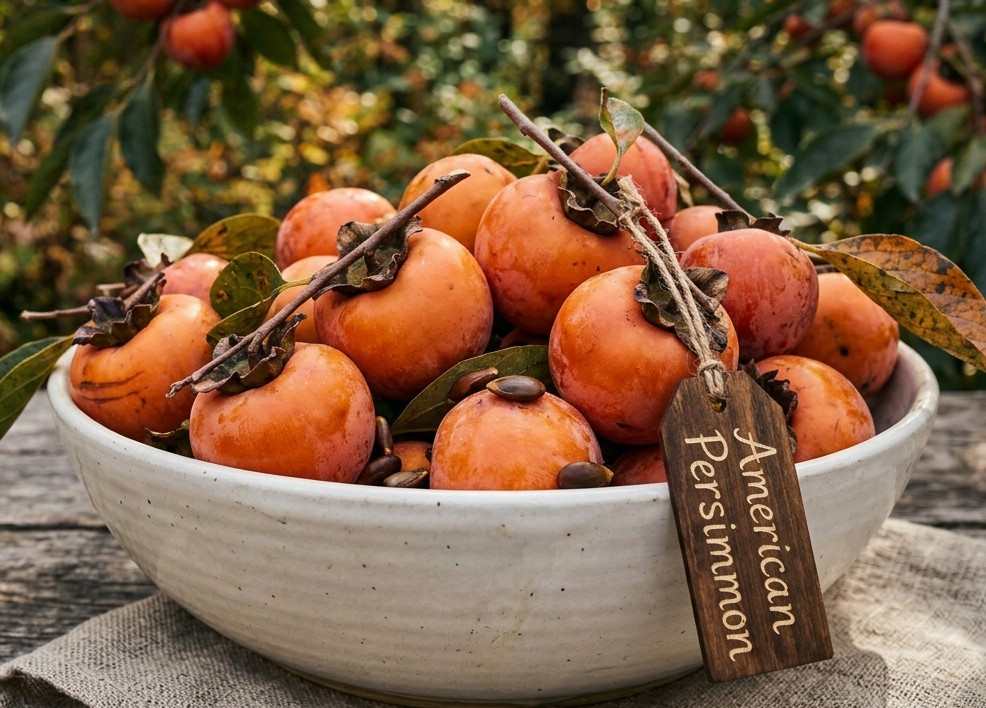
American persimmon is a small, naturally sweet fruit that has been eaten in North America for centuries. Unlike many supermarket persimmons, the American variety is usually very soft when fully ripe and can have a rich, date-like sweetness. It is also an interesting source of vitamin C, carbohydrates, minerals, and plant compounds.
The most important thing to remember is that American persimmons should be fully ripe before eating. Unripe fruit contains considerable tannins that create an intensely puckering sensation and may cause digestive problems when consumed in large amounts.
What Is American Persimmon?
American persimmon (Diospyros virginiana) is a deciduous fruit tree belonging to the Ebenaceae, or ebony, family. It is native to central and eastern North America and is also known as common persimmon, native persimmon, eastern persimmon, possum apple, and date plum.
The fruit is relatively small, often around plum size, with orange to yellow-orange flesh when ripe. American persimmons differ from the larger Asian or Japanese persimmon (Diospyros kaki), which is more commonly found in supermarkets.
A ripe American persimmon becomes very soft and sweet. Its flavor is often described as resembling dates, honey, or a combination of sweet fruits. Most native varieties need to become fully ripe and soft before their astringency decreases enough to make them pleasant to eat.
American persimmon also has cultural and historical importance. Native American communities used the fruit in foods such as breads and puddings and also dried it for later use.
Nutrition Facts of American Persimmon
The following values are approximate and based primarily on USDA-derived data for raw American persimmon. Nutrient databases for this relatively uncommon fruit are less complete than those for commercially common fruits.
| Nutrient | Approximate amount per 100 g |
|---|---|
| Calories | 127 kcal |
| Water | 64.4 g |
| Carbohydrates | 33.5 g |
| Protein | 0.8 g |
| Fat | 0.4 g |
| Vitamin C | 66 mg |
| Calcium | 27 mg |
| Iron | 2.5 mg |
| Phosphorus | 26 mg |
| Potassium | 310 mg |
| Sodium | 1 mg |
20 Proven Health Benefits of American Persimmon
- Supports Immune Function: American persimmon provides vitamin C, an essential nutrient that supports normal immune-system function and antioxidant defenses.
- Provides Antioxidants: Vitamin C and other naturally occurring plant compounds can help protect cells from oxidative stress.
- Supports Digestive Health: Its naturally occurring fiber can contribute to normal bowel function and a healthy digestive pattern.
- May Support Heart Health: Potassium and other nutrients in the fruit can contribute to a balanced, heart-supportive diet.
- Provides Potassium: American persimmon contains potassium, an essential mineral involved in nerve signaling, muscle contraction, and fluid balance.
- Supports Normal Blood Pressure: Adequate potassium intake as part of an overall healthy diet can help support normal blood-pressure regulation.
- Supports Collagen Production: Vitamin C is required for normal collagen formation, which is important for skin, blood vessels, cartilage, and wound healing.
- Supports Skin Health: Vitamin C and antioxidant compounds may help support normal skin structure and protection from oxidative stress.
- Provides Natural Energy: Its carbohydrate content supplies the body with an accessible source of dietary energy.
- Supports Iron Absorption: The vitamin C in American persimmon can enhance absorption of non-heme iron from plant-based foods eaten with the fruit.
- Contributes to Bone Nutrition: Calcium, phosphorus, and other nutrients found in the fruit contribute to overall bone-supportive nutrition.
- Supports Normal Nerve Function: Potassium and other minerals participate in normal nerve signaling.
- Supports Muscle Function: Potassium contributes to normal muscle contraction and nerve-to-muscle communication.
- May Support Satiety: Fiber-containing fruits can help add volume to meals and may contribute to feelings of fullness.
- Supports a Balanced Diet: American persimmon provides carbohydrates, vitamin C, potassium, calcium, and iron in a naturally occurring food matrix.
- May Support Regular Bowel Movements: Dietary fiber helps increase stool bulk and supports normal intestinal movement.
- Provides Plant-Based Micronutrients: The fruit supplies several vitamins and minerals without cholesterol.
- Useful as a Whole-Fruit Snack: Its naturally sweet flavor can make it a convenient alternative to highly processed sweet snacks.
- Supports Antioxidant Protection: Vitamin C contributes to the body’s antioxidant defense system and helps regenerate other antioxidants.
- Adds Variety to Fruit Intake: Including less-common fruits such as American persimmon can increase dietary variety and expose the diet to a broader range of plant compounds.
10 Side Effects of American Persimmon
Ripe American persimmon is generally suitable as a food for most people, but eating it incorrectly or in excessive amounts can cause problems.
- Mouth Astringency: Unripe American persimmon can cause an intense dry, puckering sensation because of its high tannin content.
- Stomach Discomfort: Eating large quantities, particularly of unripe fruit, may cause stomach discomfort, nausea, or digestive upset.
- Constipation or Digestive Changes: A sudden large increase in fruit and fiber intake may temporarily alter bowel habits.
- Bezoar Formation: Excessive consumption of tannin-rich persimmons has rarely been associated with phytobezoars, which are hardened masses that can obstruct the digestive tract.
- Nausea: Tannin-rich unripe persimmons may cause nausea in susceptible individuals.
- Vomiting: Significant digestive irritation or a bezoar-related obstruction can cause vomiting and requires medical attention.
- Abdominal Pain: Persistent abdominal pain after eating large amounts of persimmon should not be ignored because gastrointestinal obstruction is a rare but recognized complication.
- Allergic Reaction: Although uncommon, food allergies can occur and may cause itching, swelling, rash, or breathing difficulty.
- Excess Calorie Intake: Because ripe fruit contains concentrated natural carbohydrates, eating very large quantities can substantially increase calorie and carbohydrate intake.
- Blood-Sugar Considerations: People managing diabetes should account for ripe persimmon as part of their total carbohydrate intake rather than treating it as a sugar-free food.
How to Eat American Persimmon?
American persimmon should generally be eaten only when fully ripe and soft. Most native varieties remain strongly astringent until they reach this stage.
To eat it:
- Wash the fruit gently.
- Check that it is fully ripe and very soft.
- Remove the leafy calyx from the top.
- Cut the fruit open or scoop out the soft pulp with a spoon.
- Remove the seeds before eating if present.
- Eat the pulp fresh or incorporate it into recipes.
Ripe pulp can be added to oatmeal, yogurt, smoothies, puddings, breads, muffins, sauces, and desserts.
Tips for Consuming American Persimmon
- Wait for Full Ripeness: Do not judge American persimmon by firmness because ripe fruit can become extremely soft.
- Avoid Unripe Fruit: High tannin levels can create an unpleasant astringent sensation and may contribute to digestive problems.
- Start With a Small Amount: If you have never eaten the fruit before, try a small serving first.
- Remove Seeds: American persimmon fruit may contain several relatively large seeds, so check the pulp carefully.
- Use Fresh Pulp Quickly: Very ripe fruit has a short shelf life and can spoil quickly.
- Combine With Other Foods: The sweet pulp works well with plain yogurt, oats, nuts, and whole grains.
Other Uses of American Persimmon
- Puddings: Ripe American persimmon pulp has traditionally been used in sweet puddings.
- Baked Goods: The soft fruit can be incorporated into breads, cakes, muffins, and other baked foods.
- Persimmon Bread: Historically, the fruit has been used to make a naturally sweet bread.
- Syrups: Ripe fruit can be cooked into a sweet syrup for culinary use.
- Jellies: American persimmons can be processed into jellies and preserves.
- Beverages: The ripe fruit can be incorporated into homemade beverages and fruit preparations.
- Dried Fruit: Persimmons have historically been dried for storage and later consumption.
- Seed Uses: Historically, roasted persimmon seeds have been used as a coffee substitute.
- Wildlife Food: The fruits provide food for birds and numerous mammals, including deer, raccoons, foxes, and bears.
- Wood Products: The extremely hard wood has historically been used for products such as golf-club heads, billiard cues, shoe lasts, and other durable wooden items.
How Much American Persimmon Can You Eat in a Day?
There is no officially established daily dosage for American persimmon as a food. For most healthy adults, a practical serving is around 1–2 small ripe fruits, depending on fruit size and the rest of the diet.
People who have digestive disorders, a history of gastrointestinal surgery, delayed stomach emptying, or other conditions that increase bezoar risk should ask a healthcare professional about an appropriate amount. Persimmon-related bezoars are uncommon but have been documented.
Best Time to Eat American Persimmon
There is no scientifically established “best time” to eat American persimmon.
It can be eaten as a snack, with breakfast, or as part of a meal. If you experience digestive discomfort from eating fruit alone, having it with a meal may be more comfortable. The most important timing-related factor is ripeness, not the time of day.
Who Should Eat American Persimmon?
- Healthy Adults: Most healthy adults can enjoy fully ripe American persimmon as part of a varied diet.
- People Seeking More Fruit Variety: Those who enjoy trying locally or regionally available fruits can use American persimmon as a seasonal option.
- People Looking for Vitamin C Foods: American persimmon can contribute meaningful vitamin C to the diet.
- People Following Plant-Based Diets: The fruit provides several plant-based nutrients and can easily fit into vegetarian and vegan eating patterns.
- Active Individuals: Its carbohydrate content can provide a convenient source of dietary energy.
- People Who Enjoy Whole-Fruit Snacks: Fully ripe persimmon can be used as a naturally sweet alternative to highly processed snacks.
Who Should Not Eat American Persimmon?
- People Eating Unripe Fruit: Unripe American persimmons should be avoided because of their high tannin content and strong astringency.
- People With Previous Bezoars: Anyone with a history of bezoars should discuss persimmon consumption with a healthcare professional.
- People With Delayed Stomach Emptying: Those with conditions that slow gastric emptying may have increased risk of food bezoars and should seek individualized advice.
- People With Certain Gastrointestinal Conditions: Individuals with significant digestive disorders should ask their clinician whether persimmon is appropriate.
- People With a Persimmon Allergy: Anyone who develops allergic symptoms after eating persimmon should avoid it and seek appropriate medical advice.
- People Taking Concentrated Persimmon Products: Supplements, extracts, or medicinal preparations should not be used casually because their safety and dosing can differ from normal food consumption.
How to Store American Persimmon?
- Unripe Fruit: Keep unripe fruit at room temperature until it becomes very soft and ripe.
- Protect From Bruising: Handle American persimmons gently because ripe fruit is delicate and easily damaged.
- Refrigerate Ripe Fruit: Once ripe, refrigeration can slow deterioration and help extend freshness.
- Use Quickly: Very soft ripe persimmons are best consumed promptly because they deteriorate quickly.
- Freeze the Pulp: If you have more ripe fruit than you can eat, scoop out the pulp and freeze it in an airtight container for later recipes.
- Check Before Eating: Discard fruit showing significant mold, fermentation, unusual odor, or extensive spoilage.
Purdue Extension notes that persimmons are best stored at room temperature while ripening and that ripe fruit should be consumed promptly or refrigerated for short-term storage.
Precautions and Interactions
- Check Ripeness: Only eat American persimmon when it has reached appropriate ripeness and lost its strong astringency.
- Do Not Overconsume: Large quantities, particularly of astringent fruit, may increase the risk of digestive complications.
- Bezoar Risk: Persimmon tannins can contribute to hard phytobezoar formation in susceptible people, although this complication is uncommon.
- Gastrointestinal Surgery: People who have previously undergone stomach surgery should discuss frequent persimmon consumption with their healthcare provider because altered digestion can increase bezoar risk.
- Diabetes: Ripe American persimmon contains substantial carbohydrate, so people with diabetes should include it within their overall carbohydrate plan.
- Kidney Conditions: People following a potassium-restricted diet should account for the fruit’s potassium content and ask their healthcare professional about suitable portions.
- Allergy Precaution: Stop eating the fruit and seek medical care if symptoms such as facial swelling, difficulty breathing, or widespread hives occur.
- Medication Considerations: There are not well-established clinically important medication interactions for ordinary food amounts, but people taking multiple medicines should discuss concentrated persimmon supplements with a pharmacist or doctor.
- Do Not Substitute for Treatment: Traditional uses of persimmon should not be considered proven treatments for medical conditions.
- Seek Care for Severe Symptoms: Persistent abdominal pain, repeated vomiting, severe bloating, or inability to pass stool or gas after eating large amounts of persimmon requires prompt medical evaluation because gastrointestinal obstruction can be serious.
American Persimmon vs. Japanese Persimmon
American persimmon and Japanese persimmon are not the same species.
| Feature | American Persimmon | Japanese Persimmon |
|---|---|---|
| Scientific name | Diospyros virginiana | Diospyros kaki |
| Native range | Central and eastern North America | East Asia |
| Typical fruit size | Small | Larger |
| Flavor when ripe | Very sweet, date-like | Sweet and fruity |
| Ripeness | Usually very soft when ready | Depends on variety |
| Common names | Native/common persimmon | Kaki/Japanese persimmon |
| Commercial availability | More limited | Widely sold |
American persimmon is native to North America, whereas Japanese persimmon originated in East Asia and is the type most frequently encountered in commercial produce markets.
Final Thoughts
American persimmon is a distinctive North American fruit with a long history of culinary and cultural use. Its vitamin C, potassium, carbohydrates, and other nutrients make it a nutritious seasonal food. However, ripeness matters more than almost anything else when eating this fruit.
Unlike firm supermarket persimmons, many American persimmons need to become extremely soft before they are pleasant to eat. Eating large amounts of unripe or highly astringent persimmon is best avoided because tannins can cause intense mouth astringency and, rarely, contribute to gastrointestinal bezoars.
FAQ’s
Is American persimmon safe to eat?
Yes, fully ripe American persimmon is generally safe to eat in normal food portions, but unripe fruit can be highly astringent because of its tannins.
Can you eat American persimmon raw?
Yes, ripe American persimmon can be eaten raw by scooping the soft flesh from the skin and removing the seeds.
How do you know when an American persimmon is ripe?
A ripe American persimmon is usually very soft, with orange-yellow flesh and a sweet aroma, while an unripe fruit is firmer and strongly astringent.
What does American persimmon taste like?
Ripe American persimmon has a very sweet, rich flavor that is often compared with dates, honey, or other soft tropical fruits.
Can you eat American persimmon seeds?
The seeds are generally removed rather than eaten because they are relatively large and hard.
Is American persimmon high in vitamin C?
Yes, American persimmon can provide a significant amount of vitamin C compared with many commonly eaten fruits.
Is American persimmon good for digestion?
Its natural fiber may support regular bowel movements, but eating large amounts or consuming unripe fruit may cause digestive discomfort.
Can you eat American persimmon every day?
Most healthy adults can include a small serving of ripe American persimmon in their daily diet, provided it fits their overall nutritional needs.
Can American persimmon cause constipation?
Large amounts of persimmon, particularly unripe or highly astringent fruit, may cause digestive problems in some people.
Is American persimmon good for the heart?
It provides potassium and other nutrients that can contribute to a heart-supportive eating pattern, although it should not be considered a treatment for heart disease.
Is American persimmon good for the skin?
Its vitamin C contributes to normal collagen production and antioxidant protection, which are important for healthy skin.
Can people with diabetes eat American persimmon?
People with diabetes can potentially eat ripe persimmon in appropriate portions, but its carbohydrate content should be included in their overall carbohydrate intake.
Can you eat American persimmon during pregnancy?
Ripe American persimmon can generally be included as a fruit during pregnancy, provided it is properly washed and consumed as part of a balanced diet.
Is American persimmon the same as Japanese persimmon?
No. American persimmon is Diospyros virginiana, while Japanese persimmon is Diospyros kaki.
Why does unripe persimmon make your mouth feel dry?
Unripe persimmons contain tannins that bind with proteins in the mouth, producing a strong dry and puckering sensation called astringency.
Can American persimmon be used in recipes?
Yes, ripe American persimmon pulp can be used in breads, puddings, muffins, cakes, smoothies, sauces, jams, and other desserts.
Can American persimmon cause stomach problems?
Eating large quantities or consuming unripe fruit may cause stomach discomfort, nausea, or other digestive symptoms in susceptible individuals.
Is American Persimmon Safe for Children?
Yes, fully ripe American persimmon can generally be given to children in age-appropriate portions, but the seeds should be removed and unripe fruit should be avoided.
What Is American Persimmon Good For?
American persimmon provides vitamin C, potassium, carbohydrates, and plant compounds that can support overall nutrition, immune function, and antioxidant defenses.
What Is the Difference Between a Regular Persimmon and an American Persimmon?
American persimmon (Diospyros virginiana) is a smaller North American species that becomes very soft when ripe, while the term “regular persimmon” often refers to Asian or Japanese persimmon (Diospyros kaki), which is generally larger and has different varieties.
Sources / References:
Disclaimer:
This guide is for informational purposes only and does not replace professional medical advice, diagnosis, or treatment. Consult a qualified healthcare professional for personalized guidance.
Also Read: