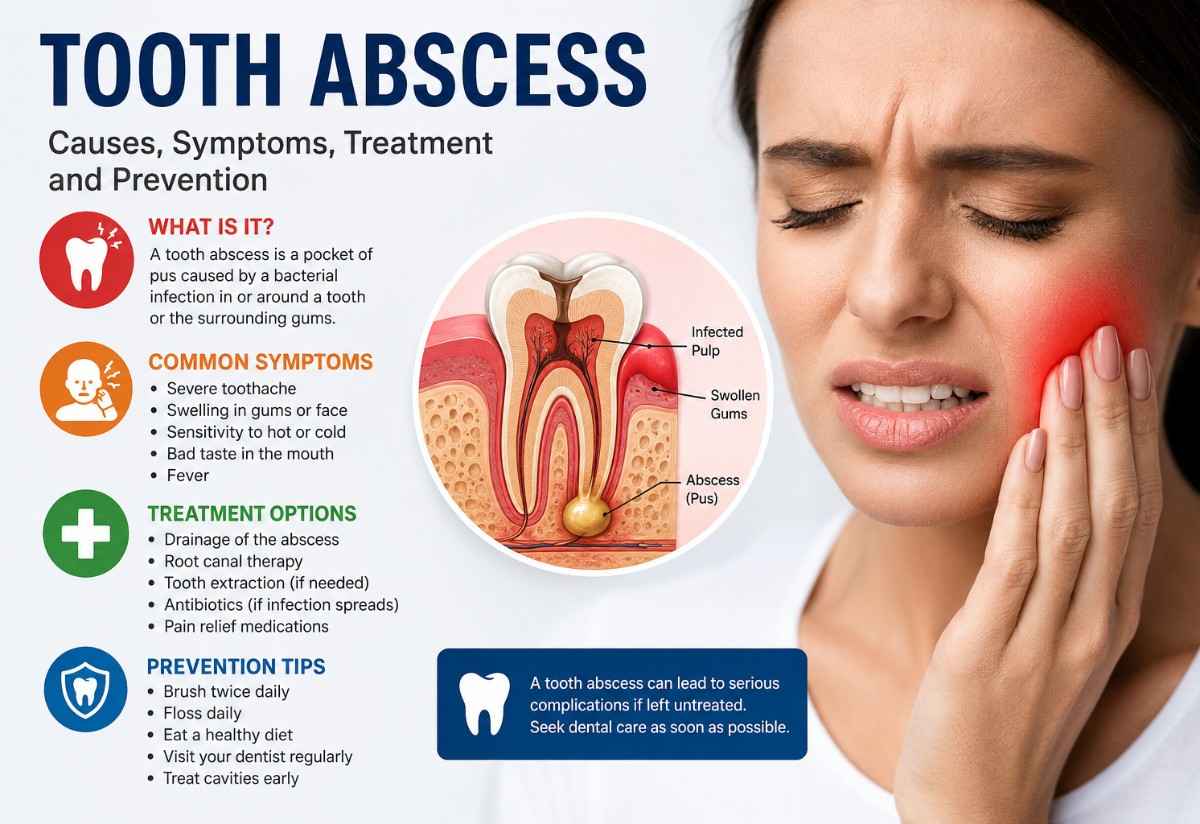
A tooth abscess is one of the most painful dental problems a person can experience. It occurs when a bacterial infection causes a pocket of pus to form inside a tooth, the surrounding gums, or the supporting bone. While the pain may come and go, an untreated tooth abscess will not heal on its own and can lead to serious health complications if the infection spreads.
The good news is that modern dental treatments can effectively eliminate the infection, relieve pain, and save the affected tooth in many cases. Recognizing the warning signs early and seeking prompt dental care can prevent complications and protect your oral health.
In this guide, you’ll learn everything you need to know about tooth abscesses, including their causes, symptoms, treatment options, possible complications, home care tips, and ways to prevent them.
What Is a Tooth Abscess?
A tooth abscess is a localized collection of pus caused by a bacterial infection. It develops when bacteria enter the inner layers of the tooth or surrounding tissues through untreated cavities, gum disease, cracked teeth, or dental injuries.
As the body’s immune system fights the infection, white blood cells collect in the affected area, leading to the formation of pus. Without treatment, the infection can spread to nearby tissues, the jawbone, or even other parts of the body.
Although anyone can develop a tooth abscess, it is more common in people with poor oral hygiene, untreated tooth decay, or weakened immune systems.
Types of Tooth Abscess
There are three primary types of dental abscesses.
1. Periapical Abscess
This develops at the tip of the tooth root and is usually caused by untreated tooth decay or trauma that allows bacteria to reach the dental pulp.
2. Periodontal Abscess
This forms within the gums next to the tooth root, often as a result of advanced gum disease or food trapped deep beneath the gum line.
3. Gingival Abscess
This type affects only the gum tissue and does not involve the tooth or periodontal ligament. It often develops after a foreign object becomes lodged in the gums.
Causes of Tooth Abscess
Several factors can contribute to the development of a tooth abscess.
- Untreated tooth decay
- Severe cavities
- Cracked or broken teeth
- Gum disease (periodontitis)
- Dental injuries
- Failed dental restorations
- Poor oral hygiene
- Dry mouth
- High-sugar diet
- Smoking or tobacco use
- Weakened immune system
- Diabetes
- Previous dental infections
Symptoms of Tooth Abscess
Symptoms may develop suddenly or worsen gradually.
1. Severe, Throbbing Toothache
Pain often radiates to the jaw, ear, or neck.
2. Swollen Gums
The gums may become red, tender, and swollen.
3. Facial Swelling
The infection may spread, causing swelling in the cheek or jaw.
4. Sensitivity
Hot, cold, or pressure while chewing may trigger severe pain.
5. Bad Taste in the Mouth
Pus draining from the abscess can leave an unpleasant taste.
6. Persistent Bad Breath
Bacterial infection often causes foul-smelling breath.
7. Fever
A fever may indicate the infection is becoming more severe.
8. Swollen Lymph Nodes
Tender lymph nodes under the jaw or in the neck may occur.
9. Difficulty Opening the Mouth
Severe infections can make jaw movement painful.
10. Difficulty Swallowing
Advanced infections may interfere with swallowing.
Risk Factors of Tooth Abscess
Certain factors increase your risk of developing a tooth abscess.
- Poor brushing and flossing habits
- Frequent sugary snacks and drinks
- Smoking
- Untreated cavities
- Gum disease
- Dry mouth
- Diabetes
- Weakened immunity
- Previous dental trauma
Stages of a Tooth Abscess
1. Early Tooth Decay
The first stage begins when bacteria damage the tooth enamel, leading to a cavity. At this point, symptoms may be mild or absent.
2. Infection Reaches the Dental Pulp
As the cavity deepens, bacteria enter the pulp, where the tooth’s nerves and blood vessels are located. This causes inflammation (pulpitis) and increasing tooth pain.
Common symptoms:
- Sharp or lingering toothache
- Sensitivity to hot and cold foods
- Pain when biting
3. Pus Formation (Abscess Develops)
The infection spreads beyond the pulp and forms a pocket of pus at the tooth root or in the surrounding gum tissue. This is the stage where a true tooth abscess develops.
Common symptoms:
- Severe, throbbing toothache
- Swollen gums
- Facial swelling
- Bad taste or pus drainage
- Persistent bad breath
4. Infection Spreads to Surrounding Tissues
Without treatment, the infection can spread into the jawbone, nearby soft tissues, or sinuses.
Common symptoms:
- Increased facial swelling
- Difficulty opening the mouth
- Swollen lymph nodes
- Fever
- Pain spreading to the ear, jaw, or neck
5. Severe or Advanced Infection
In rare cases, the infection enters deeper tissues or the bloodstream, becoming a medical emergency.
Common symptoms:
- High fever
- Difficulty swallowing
- Difficulty breathing
- Extensive facial or neck swelling
- Extreme fatigue or confusion
Seek emergency medical care immediately if these symptoms occur.
How Is a Tooth Abscess Diagnosed?
A dentist typically diagnoses a tooth abscess through:
- Dental examination
- Medical history review
- Tapping the affected tooth
- Dental X-rays
- Cone Beam CT scan (in complex cases)
- Pulp vitality testing
Early diagnosis helps prevent the infection from spreading.
Tooth Abscess Treatment
Treatment depends on the severity and location of the infection.
1. Drainage of the Abscess
The dentist makes a small opening to remove the accumulated pus and reduce pressure.
2. Root Canal Treatment
If the tooth can be saved, the infected pulp is removed, the canals are cleaned, disinfected, and sealed.
3. Tooth Extraction
If the tooth cannot be restored, extraction may be necessary to prevent further infection.
4. Antibiotics
Antibiotics may be prescribed if:
- The infection has spread
- Facial swelling is present
- The immune system is weakened
- Drainage alone is not sufficient
Antibiotics should never replace dental treatment.
5. Pain Relief
Over-the-counter pain relievers may help manage discomfort until definitive treatment is completed.
Can a Tooth Abscess Heal on Its Own?
No. Although the pain may temporarily decrease if the abscess drains naturally, the bacterial infection remains. Without professional dental treatment, the infection usually continues to spread.
Ignoring an abscess can result in:
- Bone infection
- Tooth loss
- Spread of infection to nearby tissues
- Sinus infection
- Rare but life-threatening bloodstream infection
Home Remedies for Tooth Abscess
Home remedies cannot cure a tooth abscess, but they may help relieve symptoms until you see a dentist.
1. Warm Salt Water Rinse
Helps reduce bacteria and soothe irritated tissues.
2. Cold Compress
Reduces facial swelling and numbs pain.
3. Keep the Area Clean
Brush gently and rinse after meals.
4. Soft Foods
Choose foods that require minimal chewing.
5. Stay Hydrated
Adequate hydration supports overall healing.
6. Avoid Very Hot or Cold Foods
Extreme temperatures may worsen sensitivity.
7. Elevate Your Head While Sleeping
This may reduce pressure and discomfort.
Foods to Eat During Recovery
Choose foods that are soft and nutritious.
- Yogurt
- Mashed potatoes
- Smooth soups
- Scrambled eggs
- Oatmeal
- Cottage cheese
- Smoothies
- Applesauce
- Soft cooked vegetables
- Rice porridge
Foods to Avoid
Certain foods may increase pain or delay healing.
- Hard candies
- Ice
- Nuts
- Popcorn
- Chips
- Sticky sweets
- Sugary drinks
- Alcohol
- Extremely hot foods
- Extremely cold foods
Possible Complications of Tooth Abscess
An untreated tooth abscess can become dangerous.
Possible complications include:
- Tooth loss
- Jawbone infection
- Gum destruction
- Facial cellulitis
- Sinus infection
- Osteomyelitis
- Spread of infection into the bloodstream (sepsis)
- Rare spread to deep tissues of the head and neck
Tooth Abscess Treatment Cost
The cost of treating a tooth abscess varies depending on the severity of the infection, the type of treatment needed, your location, and whether you have dental insurance.
| Treatment | Average Cost (Without Insurance) |
|---|---|
| Dental examination | $50–$200 |
| Dental X-rays | $20–$250 |
| Abscess drainage | $100–$300 |
| Root canal (Front tooth) | $700–$1,300 |
| Root canal (Premolar) | $800–$1,500 |
| Root canal (Molar) | $1,000–$2,000 |
| Dental crown (after root canal) | $800–$2,000 |
| Tooth extraction (Simple) | $75–$300 |
| Surgical tooth extraction | $250–$650 |
| Antibiotics | $10–$100 |
| Pain medication | $10–$50 |
| Emergency dental visit | $100–$500 |
How to Prevent a Tooth Abscess?
Good oral hygiene significantly lowers your risk.
1. Brush Twice Daily
Use fluoride toothpaste for at least two minutes.
2. Floss Every Day
Remove plaque from between the teeth.
3. Visit Your Dentist Regularly
Routine checkups help detect problems early.
4. Limit Sugary Foods
Reduce the risk of tooth decay.
5. Drink Plenty of Water
Water helps wash away food particles and bacteria.
6. Replace Your Toothbrush
Replace it every three to four months.
7. Wear a Mouthguard
Protect teeth during sports and from nighttime grinding if recommended.
8. Treat Cavities Early
Prompt treatment prevents bacteria from reaching the tooth pulp.
When Should You See a Dentist?
Schedule a dental appointment immediately if you experience:
- Severe tooth pain
- Swollen gums
- Swollen face
- Pus around a tooth
- Fever with tooth pain
- Difficulty chewing
- Persistent bad breath
- Broken tooth with severe pain
Seek emergency medical care immediately if you develop:
- Difficulty breathing
- Difficulty swallowing
- Rapidly increasing facial swelling
- High fever with facial infection
- Swelling extending toward the eye or neck
These symptoms may indicate the infection is spreading.
Recovery After Treatment
Most people begin feeling better within one to three days after successful treatment.
Recovery may include:
- Mild soreness
- Temporary chewing sensitivity
- Gradual reduction in swelling
- Follow-up dental visits
- Completion of antibiotics if prescribed
Following your dentist’s instructions improves healing and reduces recurrence.
FAQs
Is a tooth abscess a dental emergency?
Yes. It should be treated as soon as possible to prevent serious complications.
Can antibiotics cure a tooth abscess?
Antibiotics help control the infection but usually cannot cure the abscess without dental treatment.
Does a tooth abscess always require a root canal?
No. Depending on the damage, your dentist may recommend drainage, a root canal, or tooth extraction.
How long does it take for a tooth abscess to heal?
Most people begin feeling better within a few days after proper treatment, though complete healing may take one to two weeks.
Can a tooth abscess spread to other parts of the body?
Yes. If left untreated, the infection can spread to the jaw, neck, sinuses, or bloodstream.
Can I drain a tooth abscess at home?
No. Attempting to drain an abscess yourself can worsen the infection and increase the risk of complications.
Can a tooth abscess cause a fever?
Yes. A fever may indicate that the infection is spreading and requires immediate medical attention.
Can a tooth abscess cause bad breath?
Yes. The bacteria and pus associated with an abscess often cause persistent bad breath or a foul taste.
Is a tooth abscess contagious?
The abscess itself is not contagious, but the bacteria that contribute to tooth decay can spread through saliva.
Can children get a tooth abscess?
Yes. Children can develop tooth abscesses due to untreated cavities, dental injuries, or gum infections.
What happens if a tooth abscess bursts?
The pain may temporarily decrease as pus drains, but the infection remains and still requires dental treatment.
Can I pop a tooth abscess at home?
No. Attempting to puncture an abscess yourself can worsen the infection and increase the risk of complications.
Can a tooth abscess come back?
Yes. If the underlying cause is not treated or oral hygiene is poor, another abscess can develop.
How painful is a tooth abscess?
Pain ranges from moderate to severe and is often described as constant, throbbing, and intense.
Can poor oral hygiene cause a tooth abscess?
Yes. Poor oral hygiene allows plaque and bacteria to accumulate, increasing the risk of tooth decay, gum disease, and abscess formation.
How do I know if my tooth is abscessed?
Common signs include severe throbbing tooth pain, swollen gums, facial swelling, sensitivity to hot or cold, a bad taste in the mouth, pus drainage, and persistent bad breath. A dentist can confirm the diagnosis with an examination and X-rays.
What is Stage 1 tooth abscess?
Stage 1 refers to the early stage of tooth decay before a true abscess forms. Bacteria damage the tooth enamel and may cause mild sensitivity or a small cavity.
Can I wait 2 weeks for a tooth abscess?
No. A tooth abscess should be treated as soon as possible. Waiting can allow the infection to spread, increasing the risk of serious complications.
Should I brush an abscessed tooth?
Yes. Continue brushing gently with a soft-bristled toothbrush and maintain good oral hygiene, but avoid putting excessive pressure on the painful area.
What if my tooth abscess pops while sleeping?
If an abscess drains on its own, you may notice a foul taste or fluid in your mouth, and the pain may temporarily improve. However, the infection remains and still requires prompt dental treatment.
Does a tooth abscess always burst?
No. Some abscesses drain naturally, while others remain enclosed and require professional drainage by a dentist.
Why won’t a dentist pull an abscessed tooth?
In some cases, a dentist may first reduce the infection with drainage or antibiotics before removing the tooth. If the tooth can be saved, root canal treatment may be recommended instead of extraction.
What is the recovery time for a tooth abscess?
Most people begin feeling better within 1–3 days after treatment, while complete healing usually takes about 1–2 weeks, depending on the severity of the infection.
Why is my tooth abscess still swollen after 7 days of antibiotics?
Persistent swelling may indicate that the infection has not fully drained or requires additional treatment, such as a root canal or tooth extraction. Contact your dentist for a follow-up evaluation.
Is a tooth abscess hard or soft?
An abscess is usually soft and tender because it contains pus, although surrounding swollen tissues may feel firm due to inflammation.
Should I be worried about a tooth abscess?
Yes. A tooth abscess is a serious infection that can spread to the jaw, face, neck, or bloodstream if left untreated. Prompt dental care is essential.
What is mistaken for an abscessed tooth?
Conditions that can mimic a tooth abscess include severe tooth decay, pulpitis, gum disease, a cracked tooth, impacted wisdom teeth, sinus infections, temporomandibular joint (TMJ) disorders, and trigeminal neuralgia. A dental examination is needed for an accurate diagnosis.
Key Takeaways
A tooth abscess is a serious bacterial infection that should never be ignored. While temporary home remedies may ease discomfort, they cannot eliminate the infection. Prompt diagnosis and treatment by a dental professional can relieve pain, preserve your tooth, and prevent potentially dangerous complications. Maintaining excellent oral hygiene, attending regular dental checkups, and treating cavities early are the best ways to reduce your risk of developing a tooth abscess.
Sources / References:
- American Dental Association (ADA)
- National Institute of Dental and Craniofacial Research (NIDCR)
- Cleveland Clinic
- NHS (UK) – Dental Abscess
- World Health Organization (WHO) – Oral Health
About the Author:
Written by: Kirti Solanki (Health Content Researcher)
Kirti Solanki is a health content researcher who creates evidence-based, reader-friendly articles focused on health, nutrition, wellness, and preventive care. Her goal is to simplify complex medical information using reliable scientific sources while encouraging informed health decisions.
Disclaimer:
This guide is intended for educational purposes only and should not replace professional medical or dental advice, diagnosis, or treatment. Always consult a qualified dentist or healthcare provider regarding any dental concerns or symptoms.
Also Read: