A persistent toothache can make even the simplest daily activities—such as eating, drinking, or sleeping—feel uncomfortable. While some dental pain may result from a temporary issue, severe or lingering pain can indicate that the soft tissue inside your tooth has become infected or inflamed. In many cases, a root canal treatment is the most effective way to save the affected tooth and relieve pain.
Despite its reputation, modern root canal (also called endodontic, or root canal therapy). treatment is far more comfortable than many people expect. In this guide, you’ll learn what a root canal is, why it is needed, how the procedure works, what recovery looks like, and how to care for your tooth afterward.
What Is a Root Canal?
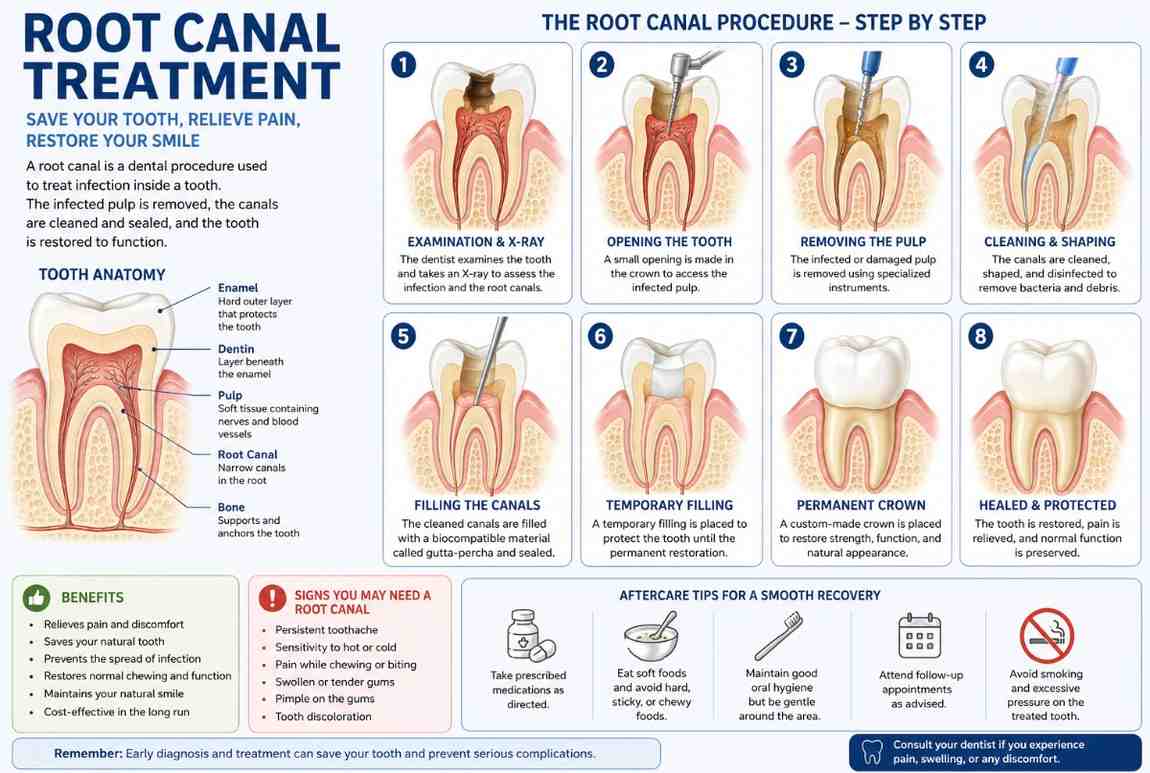
A root canal is a dental procedure used to treat infection or inflammation inside a tooth. During the treatment, a dentist or endodontist removes the damaged or infected pulp, thoroughly cleans and disinfects the inside of the tooth, fills the empty canals with a biocompatible material, and seals the tooth to prevent future infection.
The primary goal of a root canal is to save your natural tooth instead of removing it.
Saving your natural tooth offers several advantages, including maintaining normal chewing ability, preserving your natural smile, preventing neighboring teeth from shifting, and reducing the need for more complex dental procedures like implants or bridges.
Understanding Tooth Anatomy
To understand why a root canal is necessary, it helps to know the basic structure of a tooth.
Enamel
The enamel is the hard, outer protective layer of the tooth. It is the strongest substance in the human body and protects the inner structures from damage and decay.
Dentin
Beneath the enamel lies the dentin, a slightly softer layer that supports the tooth and contains microscopic tubules connected to the nerve.
Dental Pulp
At the center of the tooth is the pulp chamber, which contains:
- Blood vessels
- Nerves
- Connective tissue
The pulp nourishes the tooth during development and allows it to sense temperature and pressure.
Root Canals
The roots anchor the tooth into the jawbone. Each root contains narrow canals filled with pulp tissue. When bacteria reach these canals, infection can develop, leading to pain and swelling.
Why Is a Root Canal Needed?
A root canal becomes necessary when bacteria invade the pulp, causing infection or irreversible inflammation.
Without treatment, the infection can spread beyond the tooth and lead to:
- Severe tooth pain
- Dental abscess
- Swollen gums
- Bone loss around the tooth
- Difficulty chewing
- Tooth loss
- Spread of infection to nearby tissues
Treating the infection early improves the chances of saving the tooth and avoiding more extensive dental procedures.
Signs You May Need a Root Canal
Not everyone experiences the same symptoms, but several warning signs may indicate that the pulp inside a tooth is infected.
1. Persistent Toothache
Pain that lasts for hours or keeps returning is one of the most common symptoms. The discomfort may worsen while eating or when pressure is applied.
2. Sensitivity to Hot or Cold
If your tooth continues to hurt even after a hot or cold drink has been removed, it may indicate nerve damage inside the tooth.
3. Pain While Chewing
Pain during biting or chewing can suggest inflammation around the root of the tooth.
4. Swollen or Tender Gums
Inflammation near a painful tooth may indicate infection spreading into surrounding tissues.
5. Gum Pimples
A small bump on the gums that occasionally releases pus may be a sign of a dental abscess.
6. Tooth Discoloration
An infected tooth can become gray, brown, or darker than surrounding teeth due to internal tissue damage.
7. Loose Tooth
Advanced infection may weaken the supporting structures of the tooth, making it feel loose.
8. Facial Swelling
Serious infections may cause swelling in the face, jaw, or neck and require prompt dental evaluation.
What Causes the Need for a Root Canal?
Several dental problems can damage the pulp and increase the likelihood of requiring root canal treatment.
1. Deep Tooth Decay
Untreated cavities can gradually extend through the enamel and dentin until bacteria reach the pulp.
2. Cracked or Chipped Teeth
Even a small crack can allow bacteria to enter the inner portion of the tooth.
3. Dental Trauma
Sports injuries, falls, or accidents can damage the pulp, even if the tooth does not appear broken.
4. Repeated Dental Procedures
Multiple fillings or restorations on the same tooth may gradually irritate the pulp.
5. Severe Tooth Wear
Grinding your teeth or excessive wear can expose the dentin and eventually affect the pulp.
6. Large Fillings
Old or extensive fillings may weaken the tooth and allow bacteria to reach deeper tissues.
7. Gum Disease
Advanced periodontal disease may expose the tooth roots and increase infection risk.
Who Is More Likely to Need a Root Canal?
Certain factors increase the risk of pulp infection.
These include:
- Poor oral hygiene
- Frequent sugary foods and drinks
- Smoking or tobacco use
- Untreated cavities
- Tooth injuries
- Teeth grinding (bruxism)
- Delaying dental checkups
- Existing dental restorations
- Dry mouth
- History of dental trauma
Maintaining regular dental visits can help identify problems before they require root canal treatment.
How Dentists Diagnose the Need for a Root Canal?
A dentist performs several evaluations before recommending treatment.
1. Medical and Dental History
The dentist asks about pain, sensitivity, previous dental treatments, and medical conditions.
2. Clinical Examination
The affected tooth and surrounding gums are carefully examined for swelling, tenderness, decay, or cracks.
3. Percussion Test
The dentist gently taps the tooth to determine whether inflammation exists around the root.
4. Temperature Testing
Cold or heat tests help evaluate whether the pulp is healthy or damaged.
5. Electric Pulp Test
A mild electrical stimulus assesses whether the nerve inside the tooth is still functioning.
6. Dental X-Rays
X-rays help identify:
- Infection near the root
- Bone loss
- Deep decay
- Hidden cracks
- Root anatomy
Sometimes three-dimensional CBCT imaging is recommended for complex cases.
Step-by-Step Root Canal Procedure
Many patients are surprised to learn that modern root canal treatment is similar to receiving a routine dental filling.
Step 1: Examination and X-Rays
The dentist confirms the diagnosis and determines the number and shape of the root canals.
Step 2: Local Anesthesia
The area is completely numbed using local anesthesia to ensure comfort throughout the procedure.
Most patients feel pressure rather than pain during treatment.
Step 3: Placement of a Dental Dam
A thin rubber sheet isolates the tooth from saliva and bacteria, keeping the treatment area clean and dry.
Step 4: Opening the Tooth
A small opening is created through the top of the tooth to access the infected pulp.
Step 5: Removing the Infected Pulp
Specialized instruments are used to remove:
- Infected tissue
- Inflamed pulp
- Bacteria
- Debris
Step 6: Cleaning and Shaping the Root Canals
The canals are carefully cleaned, disinfected, and shaped to prepare them for filling.
Modern rotary instruments and disinfecting solutions improve treatment success.
Step 7: Filling the Root Canals
The cleaned canals are filled with a rubber-like material called gutta-percha, along with a dental sealer that helps prevent bacterial re-entry.
Step 8: Temporary Filling
A temporary filling is often placed until the tooth receives its permanent restoration.
Step 9: Permanent Crown or Filling
Many root canal-treated teeth, especially molars and premolars, require a dental crown. The crown strengthens the tooth, restores normal chewing function, and helps prevent fractures.
Does a Root Canal Hurt?
One of the biggest misconceptions is that root canal treatment is extremely painful.
In reality, modern root canal therapy is performed under effective local anesthesia, making the procedure no more uncomfortable than having a cavity filled. Most people feel pressure or vibration during treatment rather than pain.
After the anesthesia wears off, mild soreness or tenderness is common for a few days. This discomfort is usually manageable with over-the-counter pain relievers recommended by your dentist and typically improves as the surrounding tissues heal.
The pain caused by an untreated infected tooth is often far more severe than the temporary discomfort experienced after a root canal.
How Long Does a Root Canal Take?
The duration depends on several factors, including:
- The location of the tooth
- The number of root canals
- The severity of the infection
- Whether it is an initial treatment or a retreatment
In general:
| Tooth Type | Typical Treatment Time |
|---|---|
| Front tooth | 30–60 minutes |
| Premolar | 60–90 minutes |
| Molar | 90–120 minutes |
Some root canals can be completed in one visit, while more complex cases may require two appointments, especially if there is significant infection.
Recovery After a Root Canal
Most people return to their normal routine the same day or the following day. However, proper aftercare is essential for successful healing.
Immediately after treatment:
- Avoid chewing until the numbness has completely worn off.
- Take prescribed or recommended pain medication as directed.
- Eat soft foods for the first day if the tooth feels sensitive.
- Brush and floss gently around the treated tooth.
- Avoid chewing hard foods on the treated side until the permanent crown or filling is placed.
- Attend all follow-up appointments to ensure the tooth heals properly and receives its final restoration.
Proper recovery and long-term care will be discussed in detail in Part 2, along with the benefits, possible risks, foods to eat and avoid, cost, prevention strategies, and a comparison between root canal treatment and tooth extraction.
Benefits of Root Canal Treatment
Root canal therapy is one of the most successful procedures in modern dentistry. Rather than removing the tooth, it treats the infection while preserving your natural tooth structure. Saving your own tooth usually provides better long-term function and appearance than replacing it.
1. Relieves Tooth Pain
One of the biggest benefits is relief from persistent tooth pain caused by an infected or inflamed pulp. Once the infected tissue is removed, the source of the pain is eliminated.
2. Saves Your Natural Tooth
Keeping your natural tooth helps maintain proper chewing, speech, and jaw function while preserving your natural smile.
3. Prevents the Spread of Infection
Removing infected pulp helps stop bacteria from spreading to neighboring teeth, gums, and jawbone.
4. Restores Normal Chewing
After the tooth is restored with a filling or crown, most patients can eat their favorite foods comfortably again.
5. Preserves Jawbone Health
Keeping the natural tooth root stimulates the jawbone during chewing, helping reduce bone loss.
6. Maintains Tooth Alignment
Extracting a tooth without replacing it can cause nearby teeth to shift. A root canal helps maintain proper alignment.
7. High Success Rate
When performed correctly and followed by proper restoration, root canal treatment has a success rate of over 90% and can last for many years with good oral hygiene.
8. Cost-Effective in the Long Term
Although a endodontic may seem expensive initially, it is often less costly than extracting a tooth and replacing it with a bridge or dental implant.
Possible Risks and Complications of of Root Canal
Root canal treatment is generally very safe, but no dental procedure is completely free of risk.
1. Temporary Discomfort
Mild soreness or tenderness for a few days is common and usually improves with time.
2. Persistent Infection
In some cases, bacteria may remain inside complex root canals, requiring retreatment.
3. Tooth Fracture
A root canal-treated tooth becomes more brittle because the pulp has been removed. A dental crown significantly reduces the risk of fracture.
4. Missed Canals
Some teeth have extra or unusually shaped canals that can be difficult to locate. If bacteria remain in these canals, additional treatment may be needed.
5. Filling or Crown Failure
If the permanent restoration becomes loose or damaged, bacteria may re-enter the tooth and cause reinfection.
Root Canal Recovery Timeline
Recovery varies from person to person, but most people heal quickly.
First 24 Hours
- Mild tenderness is normal.
- Avoid chewing on the treated tooth.
- Wait until the numbness wears off before eating.
- Eat soft foods.
- Brush carefully.
Days 2–3
- Discomfort usually decreases.
- Continue taking medications if recommended.
- Resume normal activities unless your dentist advises otherwise.
One Week
Most patients feel completely comfortable within a week.
If pain worsens instead of improving, contact your dentist promptly.
After Crown Placement
Once the permanent crown is placed, the tooth should function similarly to a healthy natural tooth.
Root Canal Aftercare Tips
Proper aftercare improves healing and helps protect the treated tooth.
1. Practice Good Oral Hygiene
Brush twice daily with fluoride toothpaste and floss every day.
2. Avoid Hard Foods
Do not chew ice, hard candy, popcorn kernels, or similar foods until the tooth has been permanently restored.
3. Attend Follow-Up Appointments
Your dentist needs to monitor healing and place the permanent crown if needed.
4. Wear a Night Guard
If you grind your teeth during sleep, wearing a custom night guard can protect the treated tooth from excessive pressure.
5. Avoid Smoking
Smoking slows healing and increases the risk of future dental problems.
Foods to Eat After a Root Canal
Choosing soft, nutritious foods helps reduce discomfort during recovery.
Good Choices:
- Yogurt
- Mashed potatoes
- Scrambled eggs
- Oatmeal
- Soup (warm, not extremely hot)
- Rice
- Pasta
- Cottage cheese
- Smoothies (without using a straw if advised)
- Bananas
- Applesauce
- Avocados
- Soft cooked vegetables
Drink plenty of water to stay hydrated.
Foods to Avoid After a Root Canal
Avoid foods that may damage the temporary filling or irritate the treated tooth.
These include:
- Hard candy
- Ice
- Nuts
- Popcorn
- Sticky caramel
- Chewing gum
- Tough meat
- Hard bread crust
- Chips
- Extremely hot foods
- Extremely cold foods if sensitivity is present
- Sugary snacks
How Long Does a Root Canal Last?
With proper care, a root canal-treated tooth can last 10–20 years or even a lifetime.
Its longevity depends on:
- Quality of treatment
- Timely placement of a crown
- Daily oral hygiene
- Regular dental checkups
- Avoiding excessive pressure from teeth grinding
Can a Root Canal Fail?
Although uncommon, endodontic treatment can fail.
Possible reasons include:
- Hidden canals
- New decay
- Delayed crown placement
- Cracked tooth
- Broken filling
- Reinfection
Symptoms of failure may include:
- Persistent pain
- Swelling
- Gum abscess
- Sensitivity while chewing
- Tooth discoloration
Many failed root canals can be successfully treated again through root canal retreatment or, in some cases, an apicoectomy (surgical removal of the root tip).
Root Canal vs. Tooth Extraction
| Feature | Root Canal | Tooth Extraction |
|---|---|---|
| Saves natural tooth | Yes | No |
| Pain relief | Yes | Yes |
| Maintains chewing ability | Yes | May require replacement |
| Prevents tooth shifting | Yes | No |
| Recovery | Usually quicker | May take longer |
| Additional treatment | Crown may be needed | Implant, bridge, or denture often required |
| Long-term cost | Often lower | Usually higher if replacing the tooth |
Whenever possible, dentists recommend saving the natural tooth instead of removing it.
How Much Does a Root Canal Cost?
The cost of a root canal depends on the tooth being treated, your location, the dentist’s experience, whether you see an endodontist, and if a dental crown is needed afterward.
| Treatment | Average Cost (Without Insurance) |
|---|---|
| Front Tooth (Incisor/Canine) Root Canal | $600–$1,100 |
| Premolar Root Canal | $700–$1,300 |
| Molar Root Canal | $1,000–$1,800 |
| Dental Crown (After Root Canal) | $800–$2,000 |
| Dental X-rays | $25–$250 |
| Dental Consultation/Exam | $50–$200 |
Factors That Affect the Cost
| Factor | Impact on Cost |
|---|---|
| Tooth location | Molars cost more due to complex root canals. |
| Severity of infection | Complex cases may require additional treatment. |
| Dentist vs. Endodontist | Specialists often charge higher fees. |
| Geographic location | Costs vary by city and country. |
| Dental insurance | Insurance may cover 50–80% of the treatment cost. |
| Need for a crown | A permanent crown increases the overall cost but protects the treated tooth. |
Note: These are estimated costs and may vary depending on your dental clinic, location, and insurance coverage. Contact your dentist for an accurate treatment estimate.
How to Prevent the Need for a Root Canal?
Although not every case is preventable, healthy habits greatly reduce your risk.
1. Brush Twice Daily
Use fluoride toothpaste and brush for at least two minutes.
2. Floss Every Day
Floss removes plaque and food particles between teeth where a toothbrush cannot reach.
3. Limit Sugary Foods
Frequent sugar consumption increases the risk of cavities.
4. Visit Your Dentist Regularly
Routine checkups help detect small cavities before they reach the tooth pulp.
5. Wear a Mouthguard
Protect your teeth during contact sports.
6. Treat Cavities Early
Prompt treatment prevents bacteria from spreading deeper into the tooth.
7. Avoid Using Teeth as Tools
Do not use your teeth to open bottles, tear packages, or bite hard objects.
Common Myths About Root Canals
Myth 1: Root Canals Are Extremely Painful
Fact: Modern anesthesia and dental techniques make endodontic treatment similar in comfort to receiving a filling.
Myth 2: It’s Better to Pull the Tooth
Fact: Saving your natural tooth is usually the healthiest option whenever possible.
Myth 3: Root Canal Treatment Causes Illness
Fact: There is no credible scientific evidence that properly performed endodontic treatment causes disease elsewhere in the body.
Myth 4: Pain Means You Need a Root Canal
Fact: Not every toothache requires a endodontic. Pain can result from cavities, gum disease, cracked teeth, or tooth sensitivity. Only a dental examination can determine the cause.
Myth 5: A Root Canal Removes the Entire Tooth
Fact: Only the infected pulp is removed. The natural tooth remains in place and continues to function after restoration.
When Should You Call Your Dentist?
Contact your dentist immediately if you experience:
- Severe pain that does not improve
- Increasing swelling
- Fever
- Difficulty swallowing
- Difficulty breathing
- Persistent pus discharge
- Broken temporary filling
- Loose crown
- Allergic reaction to medication
Prompt treatment helps prevent complications and protects the treated tooth.
FAQ’s
How many appointments are needed for a root canal?
Many endodontic are completed in one visit, while some complex cases may require two appointments.
How long does it take to recover from a root canal?
Most people recover within a few days, although mild tenderness may last up to a week.
Will I need a crown after a root canal?
Many back teeth require a dental crown to protect the tooth from cracking and restore its strength.
Is a root canal better than tooth extraction?
In most cases, yes. Saving your natural tooth helps maintain chewing function, jawbone health, and tooth alignment.
Can I brush my teeth after a root canal?
Yes. Brush and floss gently around the treated area while maintaining your normal oral hygiene routine.
Can I drive home after a root canal?
Yes. If only local anesthesia is used, most people can safely drive home after the procedure.
Can I go to work after a root canal?
Most patients can return to work or school the same day or the following day, depending on their comfort level.
Can a root canal prevent tooth extraction?
Yes. The primary goal of a endodontic is to remove infection and preserve your natural tooth whenever possible.
Is a root canal safe?
Yes. endodontic treatment is a safe and well-established dental procedure with a high success rate when performed by a qualified dentist or endodontist.
Can a tooth become infected again after a root canal?
Yes. Reinfection can occur if the tooth develops new decay, the restoration leaks, or the tooth cracks. Regular dental checkups help reduce this risk.
What happens if I delay a root canal?
Delaying treatment can allow the infection to spread, leading to a dental abscess, bone loss, severe pain, or even tooth loss.
Who performs a root canal?
General dentists often perform endodontic, while complex cases may be referred to an endodontist, a dentist who specializes in treating the inside of teeth.
Can children have a root canal?
Yes. Children may need endodontic treatment on permanent teeth or a similar procedure (such as a pulpotomy or pulpectomy) on primary teeth, depending on the extent of the damage and the dentist’s recommendation.
Can I eat after a root canal?
Yes, but wait until the numbness has worn off completely. Choose soft foods for the first day and avoid chewing on the treated tooth until your dentist says it is safe.
How long does a root canal-treated tooth last?
With good oral hygiene, regular dental checkups, and a well-fitting crown or filling, a treated tooth can last for decades and, in many cases, for a lifetime.
How can you avoid a root canal?
Brush and floss daily, limit sugar, visit your dentist regularly, and treat cavities early.
Is a root canal a serious surgery?
No. It’s a routine dental procedure that saves an infected tooth.
Is a root canal good for teeth?
Yes. It removes infection and helps preserve your natural tooth.
What is the most painful stage of a root canal?
The infection before treatment is usually more painful than the procedure itself.
Which tooth is hardest to root canal?
Molars are the most difficult because they have multiple endodontic.
How many hours is a root canal procedure?
Most procedures take 30 minutes to 2 hours.
What is the success rate of root canals?
Root canals have a success rate of over 90%.
Does a root canal remove the nerve?
Yes. The infected pulp and nerve are removed to save the tooth.
What happens 10 years after a root canal?
With proper care, the tooth can remain healthy and functional for many years.
What are the alternatives to a root canal?
The main alternative is tooth extraction followed by a replacement option.
What is the new method of root canal?
Modern endodontic use advanced tools like rotary instruments, CBCT scans, and dental microscopes.
What is safer than a root canal?
A endodontic is a safe, proven treatment for saving an infected tooth.
What happens if they hit a nerve during a root canal?
The tooth’s infected nerve is intentionally removed during the procedure.
When is it too late to avoid a root canal?
Once the tooth pulp is severely infected, a endodontic or extraction is usually needed.
Sources / References:
- American Association of Endodontists (AAE)
- American Dental Association (ADA)
- National Institute of Dental and Craniofacial Research (NIDCR)
- National Health Service (NHS)
- Mayo Clinic
- Cleveland Clinic
- MSD Manual Consumer Version
- World Health Organization (WHO)
About the Author:
Written by: Kirti Solanki (Health Content Researcher)
Kirti Solanki is a health content researcher dedicated to creating well-researched, reader-friendly articles based on trusted medical resources and current scientific evidence. Her goal is to simplify complex health topics so readers can make informed decisions about their well-being while encouraging consultation with qualified healthcare professionals for personalized advice.
Disclaimer:
This guide is for educational and informational purposes only and should not be considered medical or dental advice. It is not a substitute for diagnosis, treatment, or recommendations from a qualified dentist or healthcare professional. Always consult your dentist regarding any dental pain, oral infection, or treatment decisions.
Also Read: