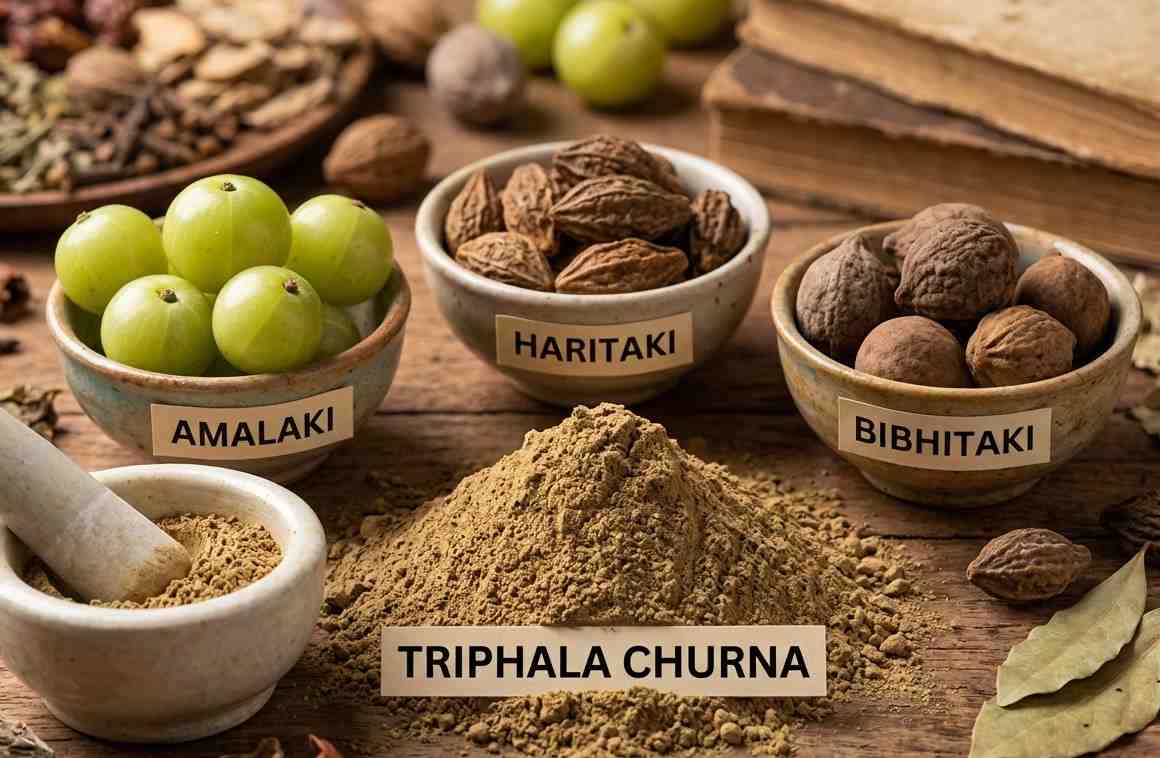
Triphala is one of the most respected herbal formulations in Ayurveda and has been used for thousands of years to promote overall health and longevity. The name “Triphala” literally means “three fruits,” referring to its unique blend of three medicinal fruits: Amalaki (Amla), Bibhitaki, and Haritaki. This powerful combination is known for supporting digestion, detoxification, immunity, eye health, and overall wellness.
Unlike many herbal supplements that target a single concern, Triphala is considered a Rasayana in Ayurveda, meaning it helps rejuvenate the body, balance the doshas, and promote healthy aging. Today, Triphala is available in powder, tablet, capsule, and liquid forms, making it easy to incorporate into daily routines.
What is Triphala?
Triphala is a traditional Ayurvedic herbal formula made from three dried fruits:
- Amalaki (Emblica officinalis) – Rich in vitamin C and antioxidants.
- Bibhitaki (Terminalia bellirica) – Supports respiratory and digestive health.
- Haritaki (Terminalia chebula) – Known as the “King of Medicines” in Ayurveda for its cleansing properties.
These three fruits work together synergistically to balance the body’s three doshas:
- Vata
- Pitta
- Kapha
Ayurvedic practitioners often recommend Triphala for digestive health, detoxification, immunity enhancement, and maintaining overall well-being.
Nutrition Facts of Triphala
The nutritional composition of Triphala can vary depending on preparation methods and ingredient ratios.
| Nutrient | Approximate Amount per 100g |
|---|---|
| Calories | 250–300 kcal |
| Carbohydrates | 60–70 g |
| Dietary Fiber | 25–35 g |
| Protein | 3–6 g |
| Fat | Less than 2 g |
| Vitamin C | Moderate to High |
| Polyphenols | High |
| Tannins | High |
| Flavonoids | Present |
| Gallic Acid | Present |
| Ellagic Acid | Present |
| Antioxidants | Abundant |
| Potassium | Moderate |
| Calcium | Small Amount |
| Iron | Small Amount |
| Magnesium | Small Amount |
20 Proven Health Benefits of Triphala
- Supports Digestive Health: It helps improve digestion, promotes regular bowel movements, and supports gut health.
- Natural Detoxification: Triphala assists the body’s natural cleansing processes by removing accumulated toxins.
- Relieves Constipation: Triphala acts as a gentle natural laxative without causing dependency in most users.
- Boosts Immunity: The antioxidant-rich fruits in Triphala help strengthen the immune system.
- Promotes Healthy Gut Flora: Triphala may support beneficial gut bacteria and improve microbiome balance.
- Rich in Antioxidants: It contains powerful antioxidants that help combat oxidative stress.
- Supports Weight Management: Triphala may help improve metabolism and support healthy weight goals.
- Improves Nutrient Absorption: Regular use may enhance the body’s ability to absorb nutrients from food.
- Supports Heart Health: Antioxidants in Triphala may contribute to cardiovascular wellness.
- Helps Maintain Healthy Blood Sugar Levels: Triphala may support normal glucose metabolism when combined with a healthy lifestyle.
- Promotes Liver Health: Traditional Ayurvedic use suggests Triphala supports liver function and detoxification.
- Supports Eye Health: Ayurveda traditionally uses Triphala to promote vision and eye comfort.
- May Reduce Inflammation: Natural plant compounds in Triphala possess anti-inflammatory properties.
- Supports Healthy Skin: Antioxidants may help maintain youthful and healthy-looking skin.
- Enhances Oral Health: It may help support gum health and oral hygiene.
- Promotes Healthy Aging: As a Rasayana, Triphala is traditionally used to support longevity.
- Supports Respiratory Wellness: Some components of Triphala may help maintain respiratory health.
- May Improve Energy Levels: Better digestion and nutrient absorption can contribute to improved vitality.
- Supports Colon Health: It is traditionally used to maintain healthy colon function.
- Balances the Doshas: Ayurveda values Triphala for helping maintain Vata, Pitta, and Kapha balance.
10 Side Effects of Triphala
- Diarrhea: Excessive intake may lead to loose stools or diarrhea.
- Abdominal Cramping: Some individuals may experience stomach discomfort when first using Triphala.
- Gas Formation: Digestive adjustments may occasionally cause bloating or gas.
- Nausea: High doses may trigger mild nausea in sensitive individuals.
- Dehydration Risk: Frequent loose stools may increase fluid loss.
- Electrolyte Imbalance: Long-term excessive use may affect electrolyte levels.
- Allergic Reactions: Rare allergic responses may occur in susceptible individuals.
- Reduced Medication Absorption: Triphala may interfere with the absorption of certain medicines.
- Blood Sugar Reduction: Individuals taking diabetes medications should monitor blood sugar carefully.
- Pregnancy Concerns: Pregnant women should consult a healthcare professional before use.
How to Take Triphala?
It can be consumed in several forms depending on personal preference:
Triphala Powder
Mix ½–1 teaspoon of powder with warm water and drink.
Triphala Capsules
Take according to the manufacturer’s instructions or healthcare provider’s recommendation.
Triphala Tablets
Swallow with water, usually once or twice daily.
Triphala Tea
Steep Triphala powder in hot water and consume as herbal tea.
Triphala Decoction
Boil Triphala powder in water and strain before drinking.
Tips for Consuming Triphala
- Start with a small dose and increase gradually.
- Drink plenty of water throughout the day.
- Choose high-quality, reputable products.
- Take consistently for best results.
- Follow Ayurvedic guidance when possible.
- Avoid excessive doses.
- Maintain a healthy diet alongside supplementation.
- Monitor your body’s response.
- Store properly to preserve potency.
- Consult a healthcare provider if taking medications.
Other Uses of Triphala
- Natural Mouth Rinse: Triphala water is traditionally used as a mouthwash to support oral hygiene.
- Eye Wash Preparation: Ayurvedic practitioners have historically used filtered Triphala preparations for eye care.
- Hair Care Support: It is sometimes added to herbal hair treatments.
- Skin Cleansing: It may be incorporated into natural skin-care preparations.
- Digestive Tonics: It is commonly included in digestive herbal formulations.
- Detox Programs: It is frequently used in Ayurvedic cleansing protocols.
- Herbal Face Packs: Powdered Triphala can be blended into traditional face masks.
- Colon Health Formulas: Many Ayurvedic digestive supplements contain Triphala.
- Rejuvenation Therapies: It is often used in anti-aging and wellness practices.
- Herbal Gargles: It may be used as a gargle to support throat comfort.
How Much Triphala Can You Take in a Day?
The ideal amount depends on age, health condition, and formulation.
General recommendations include:
- Powder: 1–5 grams daily
- Capsules: Follow label instructions
- Tablets: Follow manufacturer’s dosage recommendations
- Tea: 1–2 cups daily
It is generally best to begin with the lowest effective dose and adjust gradually if needed.
Triphala Dosage
| Form | Typical Dosage |
|---|---|
| Powder | 1–5 grams daily |
| Capsules | 500–1000 mg, 1–2 times daily |
| Tablets | As directed on label |
| Tea | 1–2 cups daily |
| Liquid Extract | Follow product instructions |
Dosage may vary based on individual needs and practitioner recommendations.
Best Time to Eat Triphala
Before Bed
Traditionally considered the most effective time for digestive cleansing and bowel regularity.
Early Morning
Many people take Triphala on an empty stomach for digestive support.
Between Meals
May help support nutrient absorption and digestive balance.
As Directed by an Ayurvedic Practitioner
Specific timing may vary according to dosha type and health goals.
Who Should Take Triphala?
- Individuals with Constipation: It may help support regular bowel movements.
- People Seeking Digestive Support: It is widely used for digestive wellness.
- Those Looking for Natural Detoxification: It supports the body’s cleansing mechanisms.
- Adults Interested in Healthy Aging: Its antioxidant content may support longevity.
- People with Busy Lifestyles: It may help maintain digestive balance under stress.
- Individuals Seeking Immune Support: The formulation contains antioxidant-rich fruits.
- People Looking to Improve Gut Health: It may support microbiome balance.
- Those Seeking Ayurvedic Wellness: It is one of Ayurveda’s foundational remedies.
- Individuals Seeking Colon Support: It is traditionally used for colon health.
- People Wanting Daily Rejuvenation: Ayurveda regards it as a Rasayana tonic.
Who Should Not Take Triphala?
- Pregnant Women: Use only under professional supervision.
- Breastfeeding Mothers: Consult a healthcare provider before use.
- Children Without Guidance: Pediatric use should be supervised by a qualified professional.
- Individuals with Chronic Diarrhea: Triphala may worsen symptoms.
- People with Severe Dehydration: Laxative effects may aggravate fluid loss.
- Those with Active Gastrointestinal Disorders: Medical advice is recommended.
- People Preparing for Surgery: Discuss use with a healthcare professional.
- Individuals Taking Multiple Medications: Potential interactions should be reviewed.
- People with Known Allergies: Avoid use if allergic to any ingredients.
- Individuals with Very Low Blood Sugar: Careful monitoring may be necessary.
How to Store Triphala?
- Keep in an Airtight Container: This helps preserve freshness and potency.
- Store in a Cool Place: Avoid excessive heat exposure.
- Protect from Moisture: Moisture can reduce product quality.
- Avoid Direct Sunlight: Sunlight may degrade active compounds.
- Use a Dry Spoon: Prevent contamination when handling powder.
- Seal Properly After Use: Proper sealing helps maintain effectiveness.
- Keep Away from Strong Odors: Herbal products can absorb surrounding smells.
- Check Expiration Dates: Use within recommended shelf life.
- Store Capsules Carefully: Keep capsules in their original packaging.
- Keep Out of Reach of Children: Ensure safe storage practices.
Precautions and Interactions
- Diabetes Medications: It may enhance blood sugar-lowering effects.
- Blood Pressure Medications: Monitor blood pressure when combining therapies.
- Laxative Products: Concurrent use may increase bowel activity.
- Anticoagulant Medications: Discuss potential interactions with a healthcare provider.
- Surgery Precautions: Discontinue use before surgery if advised by a physician.
- Digestive Sensitivity: Begin with small doses if you have a sensitive stomach.
- Chronic Medical Conditions: Seek professional guidance before use.
- Long-Term Use Monitoring: Regular evaluation may be beneficial.
- Hydration Needs: Increase fluid intake when using Triphala regularly.
- Quality Considerations: Choose products tested for purity and safety.
Medicinal Uses of Triphala
In traditional Ayurveda, Triphala is valued for numerous therapeutic purposes:
- Supporting digestive function
- Managing occasional constipation
- Promoting detoxification
- Supporting liver health
- Enhancing immunity
- Improving oral hygiene
- Supporting healthy vision
- Assisting wound healing
- Promoting skin wellness
- Supporting healthy metabolism
- Encouraging healthy aging
- Maintaining colon health
- Supporting respiratory wellness
- Helping maintain energy and vitality
Modern research continues to investigate Triphala’s antioxidant, anti-inflammatory, antimicrobial, and gut-supportive properties.
Rational Use of Triphala in Ayurveda
Ayurveda emphasizes individualized treatment rather than a one-size-fits-all approach. The rational use of Triphala involves understanding a person’s dosha constitution, digestive strength, age, season, and health condition.
Key Ayurvedic principles include:
- Using Triphala as a daily Rasayana for rejuvenation.
- Adjusting dosage according to digestive capacity.
- Combining Triphala with other herbs when necessary.
- Using it as part of a broader lifestyle and dietary plan.
- Considering seasonal and constitutional factors.
- Taking Triphala regularly but appropriately.
- Supporting natural detoxification rather than aggressive cleansing.
- Using it to balance Vata, Pitta, and Kapha doshas.
- Encouraging long-term digestive and metabolic health.
- Promoting overall harmony between body, mind, and spirit.
According to Ayurveda, Triphala is not merely a digestive aid but a comprehensive wellness formula that supports longevity, vitality, and balanced health. When used responsibly and consistently, it remains one of the most versatile and trusted herbal preparations in traditional medicine.
Conclusion
Triphala is a time-tested Ayurvedic formulation made from Amalaki, Bibhitaki, and Haritaki. Renowned for its digestive, detoxifying, antioxidant, and rejuvenating properties, it has earned a place among the most respected herbal remedies in the world. Whether used to support gut health, enhance immunity, promote healthy aging, or maintain overall wellness, Triphala offers a holistic approach to health rooted in centuries of Ayurvedic wisdom. As with any supplement, proper dosage, quality sourcing, and professional guidance can help ensure safe and effective use.
FAQ’s
What is Triphala used for?
Triphala is commonly used to support digestion, relieve occasional constipation, promote detoxification, boost immunity, and support overall wellness.
Can I take Triphala every day?
Yes, It is often used daily in Ayurveda, but it should be taken in appropriate doses and under professional guidance if used long-term.
Does Triphala help with constipation?
Yes, Triphala is known for its mild natural laxative properties and may help promote regular bowel movements.
Can Triphala help with weight loss?
It may support healthy digestion and metabolism, which can contribute to weight management when combined with a balanced diet and exercise.
Is Triphala safe for long-term use?
Many people use Triphala for extended periods, but long-term use should be monitored by a healthcare professional, especially if you have underlying health conditions.
Can Triphala lower blood sugar levels?
It may help support healthy blood sugar levels, so people taking diabetes medications should monitor their glucose levels and consult a healthcare provider.
Can pregnant women take Triphala?
Pregnant women should consult their healthcare provider before taking Triphala, as it may not be suitable during pregnancy.
Can Triphala improve gut health?
Yes, It may help support a healthy gut microbiome, improve digestion, and promote overall gastrointestinal health.
Is Triphala good for the liver?
Traditional Ayurvedic medicine uses Triphala to support liver function and natural detoxification processes.
Can Triphala be taken with other supplements?
In many cases, yes, but it is best to consult a healthcare professional to avoid potential interactions with supplements or medications.
How long does Triphala take to work?
For digestive support and bowel regularity, some people notice effects within a few days, while broader wellness benefits may take several weeks of consistent use.
What forms of Triphala are available?
It is available as powder, capsules, tablets, liquid extracts, and herbal teas.
Can Triphala help boost immunity?
Yes, It contains antioxidants and plant compounds that may help support a healthy immune system.
Does Triphala contain caffeine?
No, It is naturally caffeine-free.
Can Triphala improve skin health?
Its antioxidant properties may help support healthy skin and protect against oxidative stress.
Is Triphala suitable for vegetarians and vegans?
Pure Triphala powder is plant-based and suitable for both vegetarians and vegans, though capsule ingredients should be checked.
Can Triphala be taken on an empty stomach?
Yes, many Ayurvedic practitioners recommend taking Triphala on an empty stomach, particularly in the morning.
Is Triphala safe for children?
It may be used for children in certain situations, but it should only be given under the guidance of a qualified healthcare professional or Ayurvedic practitioner. Dosages for children differ from those for adults.
What is Triphala good for?
It is commonly used to support digestion, promote regular bowel movements, aid natural detoxification, support immunity, and help maintain overall wellness and healthy aging.
What does Triphala taste like?
Triphala has a unique flavor that is bitter, sour, astringent, slightly sweet, and mildly pungent. Its taste can be strong, especially when consumed as a powder mixed with water.
Is Triphala safe for kidneys?
It is generally considered safe for healthy individuals when taken in recommended amounts. However, people with kidney disease or other kidney-related conditions should consult a healthcare provider before using Triphala regularly.
Also Read: