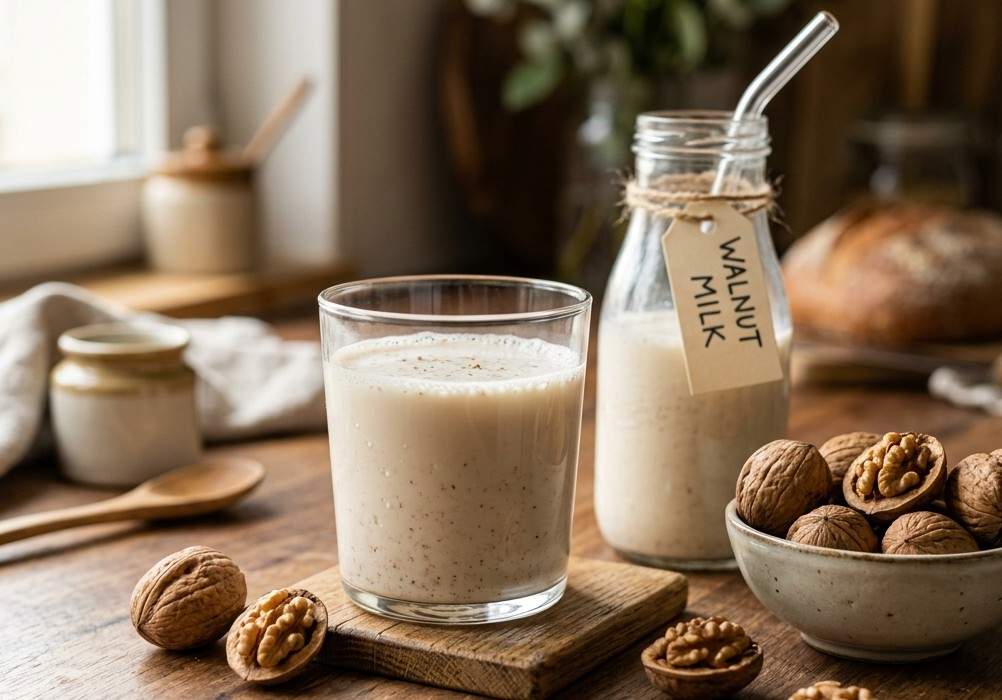
Walnut milk is a creamy, dairy-free plant-based beverage made by blending soaked walnuts with water and straining the mixture. It has gained popularity among people looking for lactose-free, vegan, and heart-friendly milk alternatives. Naturally rich in healthy fats, antioxidants, vitamins, and minerals, walnut milk offers a mild nutty flavor and can be enjoyed on its own or used in smoothies, coffee, cereals, and cooking.
Compared with many plant-based milks, homemade walnut milk contains beneficial omega-3 fatty acids, polyphenols, and essential nutrients naturally found in walnuts. While it may not provide as much protein as dairy milk or soy milk, it can still be a nutritious addition to a balanced diet when consumed as part of a healthy eating pattern.
What Is Walnut Milk?
Walnut milk is a non-dairy beverage prepared by soaking raw walnuts, blending them with fresh water, and filtering the mixture to create a smooth, creamy drink. Commercial varieties may also be fortified with calcium, vitamin D, and vitamin B12 to improve their nutritional value.
Because walnuts are naturally rich in alpha-linolenic acid (ALA), a plant-based omega-3 fatty acid, walnut milk provides healthy fats that support heart and brain health.
Nutrition Facts of Walnut Milk
| Nutrient | Amount (Per 1 Cup/240 ml Homemade Approx.) |
|---|---|
| Calories | 70–100 kcal |
| Protein | 2–3 g |
| Total Fat | 7–9 g |
| Saturated Fat | 0.6 g |
| Omega-3 (ALA) | 1.2–2.0 g |
| Carbohydrates | 2–4 g |
| Fiber | 0.5–1 g |
| Natural Sugars | <1 g |
| Calcium | 20–40 mg (higher if fortified) |
| Magnesium | 40–50 mg |
| Potassium | 120–170 mg |
| Phosphorus | 80–100 mg |
| Vitamin E | 0.5–1 mg |
| Copper | 0.2 mg |
| Manganese | 0.4 mg |
Values are approximate and vary depending on preparation and fortification.
20 Proven Health Benefits of Walnut Milk
- Supports Heart Health: Walnut milk contains plant-based omega-3 fatty acids that may help support healthy cholesterol levels and cardiovascular function.
- Rich in Healthy Fats: The unsaturated fats found in walnuts contribute to overall heart and metabolic health.
- Provides Antioxidants: Milk supplies polyphenols and vitamin E that help protect cells from oxidative stress.
- May Reduce Inflammation: Bioactive compounds in walnuts have been associated with lower levels of inflammatory markers.
- Supports Brain Function: Omega-3 fatty acids play an important role in maintaining healthy brain cells and cognitive performance.
- May Improve Blood Vessel Function: Regular walnut consumption has been linked with better endothelial function and circulation.
- Lactose-Free Alternative: Walnut milk is naturally free of lactose, making it suitable for people with lactose intolerance.
- Suitable for Vegan Diets: It provides a nutritious dairy substitute for individuals following plant-based lifestyles.
- Contains Essential Minerals: Walnut milk offers magnesium, copper, phosphorus, and manganese that support many body functions.
- May Support Healthy Cholesterol: Replacing saturated fats with walnuts may contribute to healthier LDL cholesterol levels.
- Can Aid Weight Management: Unsweetened milk is relatively low in calories compared with many flavored dairy beverages.
- Supports Bone Health: Fortified walnut milk may provide calcium and vitamin D that help maintain strong bones.
- Promotes Healthy Skin: Vitamin E and healthy fats help support normal skin barrier function.
- Supports Eye Health: Antioxidants help protect eye tissues from oxidative damage.
- May Help Control Blood Sugar: Unsweetened milk contains very little sugar and may fit into blood sugar-friendly diets.
- Supports Healthy Aging: Antioxidants help reduce oxidative stress associated with aging.
- Easy to Digest: Many individuals find walnut milk easier to digest than dairy products.
- Versatile in Healthy Diets: It can replace dairy milk in many recipes while adding a pleasant nutty flavor.
- Naturally Cholesterol-Free: Milk contains no dietary cholesterol.
- Encourages Healthy Dietary Variety: Including different plant-based foods helps diversify nutrient intake.
10 Side Effects of Walnut Milk
- Walnut Allergy Risk: People with tree nut allergies should completely avoid walnut milk.
- Lower Protein Content: Milk contains less protein than dairy milk and soy milk.
- May Contain Added Sugar: Sweetened commercial products can significantly increase sugar intake.
- Possible Digestive Discomfort: Drinking large amounts may cause bloating or stomach discomfort in sensitive individuals.
- Calorie Intake Can Add Up: Homemade walnut milk prepared with many walnuts may contain more calories than expected.
- Oxalate Content: Walnuts naturally contain oxalates, which may be a concern for some individuals prone to kidney stones.
- Not Suitable for Nut-Free Diets: Schools and workplaces with nut restrictions may prohibit walnut milk.
- Potential Medication Considerations: Individuals on special medical diets should consult their healthcare provider before making major dietary changes.
- May Spoil Quickly: Homemade walnut milk has a short shelf life and requires refrigeration.
- Fortification Varies: Homemade milk may lack calcium and vitamin D unless these nutrients are obtained from other foods.
How to Make Walnut Milk at Home?
Ingredients:
- 1 cup raw walnuts
- 4 cups filtered water
- 1 teaspoon vanilla extract (optional)
- 1–2 dates (optional)
- Pinch of cinnamon (optional)
Instructions:
- Soak walnuts overnight or for at least 8 hours.
- Drain and rinse thoroughly.
- Blend walnuts with fresh water for 1–2 minutes.
- Strain using a nut milk bag or fine cheesecloth.
- Add optional flavorings if desired.
- Store in a sealed glass bottle in the refrigerator.
- Shake well before every use.
Tips for Consuming Walnut Milk
- Choose unsweetened varieties whenever possible.
- Shake homemade milk before serving.
- Pair it with balanced meals containing protein.
- Add it to oatmeal or smoothies.
- Use fresh walnuts for better flavor.
- Refrigerate immediately after preparation.
- Consume homemade milk within a few days.
How to Drink Walnut Milk?
- Drink chilled as a refreshing beverage.
- Blend into smoothies.
- Add to coffee or tea.
- Pour over breakfast cereal.
- Use in overnight oats.
- Mix into protein shakes.
- Enjoy after exercise with fruit.
How to Use Walnut Milk?
- Smoothies
- Oatmeal
- Pancakes
- Muffins
- Soups
- Sauces
- Mashed potatoes
- Baking
- Coffee drinks
- Chia pudding
Other Uses of Walnut Milk
- Homemade ice cream
- Dairy-free yogurt recipes
- Vegan desserts
- Creamy pasta sauces
- Hot chocolate
- Salad dressings
- Breakfast bowls
- Homemade granola
- Vegan curries
- Plant-based casseroles
How Much Walnut Milk Can You Drink in a Day?
For most healthy adults, 1–2 cups (240–480 ml) per day can fit into a balanced diet. The ideal amount depends on your overall calorie needs, protein intake, and whether the walnut milk is homemade, fortified, sweetened, or unsweetened.
If you rely on milk instead of dairy, ensure you obtain enough calcium, vitamin D, vitamin B12, and protein from other foods or fortified products.
Best Time to Drink Walnut Milk
- Breakfast
- Mid-morning snack
- After exercise
- Evening snack
- Before bedtime as part of a light meal
- With cereal or oatmeal
- In smoothies during the day
Who Should Drink Walnut Milk?
- People with Lactose Intolerance: Milk provides a dairy-free alternative without lactose.
- Vegans: It fits well into vegan and plant-based eating patterns.
- Heart-Conscious Individuals: Its healthy fats support cardiovascular wellness.
- Older Adults: Fortified versions may help increase calcium and vitamin D intake.
- People Reducing Saturated Fat: Walnut milk can replace full-fat dairy in many recipes.
- Smoothie Enthusiasts: It adds a creamy texture and nutty flavor.
- Health-Conscious Adults: It contributes healthy fats and antioxidants to a balanced diet.
- People Seeking Variety: Milk offers another nutritious option among plant-based beverages.
Who Should Avoid Walnut Milk?
- People with Walnut Allergies: Even small amounts may trigger severe allergic reactions.
- Individuals with Tree Nut Allergies: Milk should generally be avoided unless approved by an allergist.
- Infants: Walnut milk should not replace breast milk or infant formula.
- People Requiring High-Protein Milk: Those with increased protein needs may benefit from higher-protein alternatives.
- Individuals Following Medical Nutrition Plans: Medical guidance may be needed before making dietary substitutions.
- People Sensitive to Added Sugars: Sweetened commercial products should be limited.
How to Store Walnut Milk?
- Refrigerate Immediately: Store walnut milk as soon as it is prepared.
- Use Airtight Containers: Glass bottles with tight lids help preserve freshness.
- Shake Before Serving: Natural separation is normal.
- Consume Homemade Milk Quickly: Drink within 3–5 days.
- Keep Refrigerated: Maintain temperatures below 40°F (4°C).
- Freeze if Needed: Freeze in portions for longer storage.
- Discard if Spoiled: Throw away milk that smells sour or develops unusual texture.
Precautions and Interactions
- Avoid walnut milk if you have a walnut or tree nut allergy.
- Read ingredient labels carefully if purchasing commercial products.
- Choose unsweetened versions to reduce added sugar intake.
- Fortified milk is generally a better source of calcium and vitamin D than homemade versions.
- Individuals with chronic kidney disease or other medical conditions requiring dietary restrictions should consult their healthcare provider.
- Milk should complement—not replace—a balanced diet that includes adequate protein and essential nutrients.
- If taking medications or managing chronic diseases, discuss significant dietary changes with your healthcare professional.
FAQ’s
Is walnut milk good for you?
Yes. milk can be a healthy dairy-free beverage because it contains heart-healthy fats, antioxidants, and essential minerals. Unsweetened and fortified varieties are generally the healthiest choices.
What does walnut milk taste like?
Milk has a mild, creamy, slightly earthy, and nutty flavor. Homemade versions usually have a richer taste than commercial varieties.
Is walnut milk healthier than almond milk?
Both have health benefits. Milk contains more plant-based omega-3 fatty acids, while almond milk is often lower in calories. The better choice depends on your nutritional needs.
Does walnut milk contain protein?
Yes, but only small amounts. Milk generally contains less protein than dairy milk and soy milk.
Can people with lactose intolerance drink walnut milk?
Yes. Milk is naturally lactose-free, making it a suitable option for people who cannot digest lactose.
Is walnut milk suitable for vegans?
Yes. Milk is entirely plant-based and is suitable for vegan and vegetarian diets.
Can walnut milk help with weight loss?
Unsweetened milk can fit into a weight-loss diet because it is relatively low in calories and contains healthy fats that may help promote fullness.
Is walnut milk good for heart health?
Yes. Walnuts are naturally rich in omega-3 fatty acids and unsaturated fats, which are associated with better heart health when included in a balanced diet.
Does walnut milk contain calcium?
Homemade milk contains only small amounts of calcium. Many store-bought versions are fortified with calcium and vitamin D.
Can diabetics drink walnut milk?
Yes, unsweetened milk can be a good choice for people with diabetes because it contains very little sugar. Always check nutrition labels for added sugars.
Is walnut milk gluten-free?
Yes. Plain milk is naturally gluten-free, but flavored commercial products should be checked for ingredient labels if you have celiac disease or gluten sensitivity.
Can children drink walnut milk?
Older children can enjoy milk as part of a balanced diet. However, it should not replace breast milk, infant formula, or nutrient-rich milk without medical advice.
Can I drink walnut milk every day?
Yes. Most healthy adults can safely enjoy 1–2 cups of milk daily as part of a varied, balanced diet.
How long does homemade walnut milk last?
Homemade milk typically stays fresh for 3–5 days when stored in an airtight container in the refrigerator.
Should walnut milk be refrigerated?
Yes. Both homemade and opened store-bought milk should always be refrigerated.
Can walnut milk be used in coffee?
Yes. milk can be added to coffee, although some homemade versions may separate slightly due to their natural fat content.
Is walnut milk good for smoothies?
Yes. milk adds a creamy texture and mild nutty flavor to smoothies while contributing healthy fats.
Can I cook with walnut milk?
Yes. milk works well in soups, sauces, oatmeal, pancakes, baked goods, curries, and many dairy-free recipes.
How long does it take for walnut milk to work?
Milk is a food, not a medication, so it does not produce immediate effects. Its nutritional benefits are generally seen over weeks or months when consumed regularly as part of a balanced diet and healthy lifestyle.
What does walnut milk smell like?
Fresh milk has a mild, nutty, and slightly earthy aroma. Homemade walnut milk made from fresh walnuts should smell pleasant, while a sour or rancid odor indicates it has spoiled and should be discarded.
Is walnut milk safe for pregnant women?
Yes. Unsweetened walnut milk can be a healthy addition to a pregnancy diet when consumed in moderation, provided the individual does not have a walnut allergy. Fortified varieties that contain calcium and vitamin D may offer additional nutritional benefits. Pregnant women should consult their healthcare provider before making significant dietary changes.
What is walnut milk good for?
Milk is good for supporting heart health, providing plant-based omega-3 fatty acids, supplying antioxidants, and serving as a lactose-free, vegan alternative to dairy milk. It can also be used in smoothies, cereals, coffee, baking, and cooking.
Can we boil walnut milk?
Yes. milk can be gently heated or boiled for use in recipes such as soups, oatmeal, sauces, or hot beverages. However, avoid prolonged boiling or very high heat, as it may affect the texture and slightly reduce the nutritional quality.
Why soak walnuts before making walnut milk?
Soaking walnuts softens them, making them easier to blend into a smooth, creamy milk. It also helps reduce some naturally occurring compounds like phytic acid and tannins, improves digestibility for some people, and creates a milder, less bitter flavor.
Sources / References:
- Harvard T.H. Chan School of Public Health
- U.S. Department of Agriculture (USDA FoodData Central)
- American Heart Association
- Academy of Nutrition and Dietetics
- National Institutes of Health (NIH) Office of Dietary Supplements
- Dietary Guidelines for Americans
About the Author:
Written by: Kirti Solanki (Health Content Researcher)
Kirti Solanki is a health content researcher who specializes in creating evidence-based, reader-friendly articles on nutrition, wellness, and healthy living. Her work focuses on translating scientific research into practical, easy-to-understand information while emphasizing accuracy, credibility, and responsible health communication.
Disclaimer:
This guide is intended for educational and informational purposes only and should not be considered medical advice. Walnut milk is not a substitute for professional medical treatment, diagnosis, or personalized nutrition guidance. Always consult a qualified healthcare professional before making significant dietary changes.
Also Read: