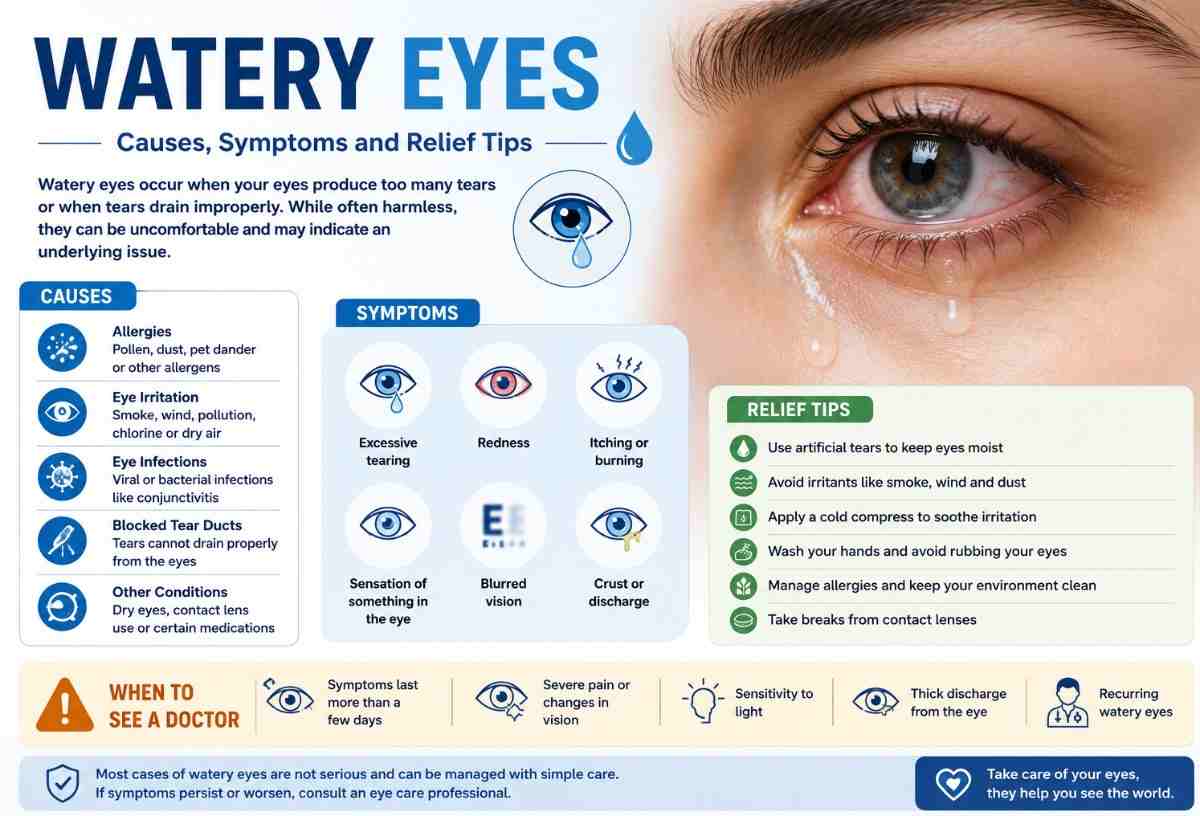
Watery eyes are a common eye complaint, and while they can sometimes be temporary, persistent watering may be a sign that something is irritating the eye or preventing tears from draining properly. The medical term for excessive tearing is epiphora.
Most people occasionally experience watery eyes when exposed to wind, smoke, dust, cold air, bright sunlight, or strong odors. However, if your eyes keep watering without an obvious reason, especially if it happens every day or affects your vision and daily activities, it is worth finding out why.
Interestingly, watery eyes do not always mean that your eyes are producing too many tears. Dry eyes can actually cause excessive watering because irritation on the eye’s surface triggers a reflex response that produces watery tears.
This guide explains the common causes of watery eyes, associated symptoms, treatment options, home-care measures, and warning signs that should not be ignored.
What Are Watery Eyes?
Watery eyes occur when there is an excessive amount of tears on the surface of the eye or when tears are not draining normally.
Tears are essential for healthy eyes. They keep the eye surface lubricated, help wash away small particles, and provide protection against irritation. Normally, tears drain through tiny openings near the inner corners of the eyelids and travel through the tear drainage system into the nose.
When this system becomes irritated, produces excessive tears, or becomes blocked, tears can spill over onto the cheeks. Watery eyes may affect one eye or both eyes, depending on the underlying cause.
Why Do My Eyes Water?
There are two broad reasons for watery eyes:
- Too Many Tears: The eye may produce additional tears because of irritation, allergies, infection, injury, dryness, or exposure to environmental triggers.
- Poor Tear Drainage: Tears may be produced normally but fail to drain properly because of a narrowed or blocked tear duct or an eyelid problem.
Understanding which of these is happening is important because treatment depends on the cause.
Common Causes of Watery Eyes
1. Dry Eyes
It may sound strange, but dry eyes are one of the common causes of excessive tearing. When the eye surface becomes dry or irritated, the body may respond by producing a sudden amount of watery tears.
Dry eye can also cause burning, gritty sensations, redness, light sensitivity, blurred vision, and eye fatigue. Long periods of screen use, air conditioning, wind, smoke, contact lenses, and certain medications can contribute to dry-eye symptoms.
2. Allergies
Allergic reactions can make the eyes itchy, red, swollen, and watery. Common triggers include pollen, dust mites, mold, and pet dander. Allergy-related watering is often accompanied by sneezing, a runny or blocked nose, and itchy eyes.
3. Blocked Tear Duct
A blocked or narrowed tear duct prevents tears from draining normally. As a result, tears accumulate on the eye and may overflow.
Blocked tear ducts can occur because of inflammation, infection, injury, age-related changes, previous surgery, or other problems affecting the drainage system. Persistent watering from one eye can sometimes be particularly suggestive of a drainage problem.
4. Eye Irritation
Dust, sand, smoke, pollution, fumes, wind, and other irritants can cause the eyes to produce extra tears as a protective response.
Even a tiny particle that becomes trapped under the eyelid can cause significant watering and discomfort.
5. Something Stuck in the Eye
An eyelash, speck of dust, grit, or other foreign material can trigger sudden tearing. The eye naturally produces tears to help flush the irritant away.
If you believe something is stuck in the eye and it does not come out easily, avoid repeatedly rubbing the eye. A persistent foreign-body sensation should be evaluated by a healthcare professional.
6. Conjunctivitis
Conjunctivitis, commonly called pink eye, can cause watering along with redness, irritation, itching, or discharge. The cause may be viral, bacterial, or allergic, and treatment depends on the type.
7. Eyelid Problems
The eyelids play an important role in spreading tears across the eye and directing them toward the drainage openings.
Conditions such as entropion, in which the eyelid turns inward, or ectropion, in which it turns outward, can interfere with normal tear distribution and drainage.
8. Blepharitis
Blepharitis is inflammation around the eyelids. It may cause red or irritated eyelids, crusting around the eyelashes, burning, and watery eyes.
Keeping the eyelids clean and treating the underlying cause may help reduce symptoms.
9. Corneal Scratch or Injury
A scratch on the cornea can cause watering, pain, redness, blurred vision, burning, or a sensation that something is in the eye.
Corneal injuries may occur from dust, fingernails, contact lenses, chemicals, or other objects.
10. Environmental Factors
Cold temperatures, wind, smoke, dry air, pollution, and bright light can temporarily stimulate tear production.
This is generally harmless when watering occurs only under those conditions and disappears once the trigger is removed.
Symptoms That May Occur With Watery Eyes
The symptoms accompanying watery eyes can provide clues about the underlying problem.
You may experience:
- Red or bloodshot eyes
- Itching
- Burning or stinging
- Gritty or sandy sensation
- Blurred vision
- Sensitivity to light
- Eyelid swelling
- Eye pain
- Mucus or discharge
- Crusting around the eyelashes
- Foreign-body sensation
- Runny or blocked nose
- Frequent blinking
For example, watery and itchy eyes are commonly associated with allergies, while watery eyes with burning and grittiness may occur with dry eye. Persistent watering with swelling near the inner corner of the eye can occur with a blocked tear duct.
Watery Eyes and Dry Eyes: Can You Have Both?
Yes. This is one of the most confusing aspects of excessive tearing.
When the eye surface becomes too dry, irritated nerves can signal the lacrimal glands to produce additional tears. These reflex tears may be more watery and may not provide the same long-lasting lubrication as a healthy tear film.
Therefore, someone can have dry-eye disease while also experiencing episodes of excessive watering.
If your eyes alternate between feeling dry and suddenly becoming very watery, dry eye may be worth discussing with an eye-care professional.
How Are Watery Eyes Diagnosed?
A healthcare professional or eye specialist will usually begin by asking about your symptoms and examining your eyes.
They may want to know:
- When the watering started
- Whether one or both eyes are affected
- Whether symptoms are constant or occasional
- Whether you have pain or vision changes
- Whether you wear contact lenses
- Whether you have allergies
- Whether you recently injured your eye
- Whether you have redness or discharge
- Whether particular environments trigger the watering
Depending on your symptoms, an eye examination may be performed to look for dry eye, inflammation, injury, eyelid abnormalities, or tear-drainage problems.
How Are Watery Eyes Treated?
There is no single treatment for watery eyes because treatment depends on the cause.
1. Artificial Tears for Dry Eyes
If excessive watering is caused by dry-eye irritation, lubricating artificial tears may help stabilize the eye surface.
People who need lubricating drops frequently may be advised to consider preservative-free formulations, depending on professional guidance.
2. Allergy Treatment
When allergies are responsible, reducing exposure to the trigger and using appropriate allergy treatments may help. Depending on the symptoms, a healthcare professional or pharmacist may recommend suitable eye drops or allergy medication.
3. Treatment for Infection
If an eye infection is responsible, treatment depends on whether the infection is viral, bacterial, allergic, or another type. Antibiotic eye drops are appropriate for certain bacterial infections but do not treat every cause of red or watery eyes.
4. Treatment for Blocked Tear Ducts
A blocked tear duct may require evaluation by an eye specialist. Treatment can range from observation to procedures that open or bypass the blocked drainage pathway, depending on the location and cause of the blockage.
5. Treatment for Eyelid Problems
If the eyelid is turning inward or outward and interfering with tear drainage, treatment may be needed to correct the eyelid position.
Home Care for Mild Watery Eyes
If your eyes are mildly watery and you do not have pain, vision changes, or an obvious injury, several simple measures may help.
- Protect Your Eyes From Wind: Wear glasses or sunglasses outdoors when wind or dust triggers watering.
- Take Screen Breaks: Long periods of concentrated screen use can reduce blinking and contribute to dry-eye symptoms. Take regular breaks and consciously blink more often.
- Avoid Smoke: Cigarette smoke and other airborne irritants can worsen eye irritation and dryness.
- Use a Warm Compress: A comfortably warm compress over closed eyelids may provide relief for some people, particularly when dry-eye or eyelid irritation is contributing to symptoms.
- Do Not Rub Your Eyes: Rubbing can increase irritation and may make inflammation worse.
- Keep Contact Lenses Clean: Follow the cleaning, replacement, and wearing instructions provided for your contact lenses and eye-care professional.
- Keep Eyelids Clean: Gentle eyelid hygiene can be useful when eyelid inflammation contributes to irritation.
When Should You See a Doctor for Watery Eyes?
Occasional watering that quickly disappears is usually not a reason for concern. However, persistent or unexplained watering deserves attention.
Make an appointment with a healthcare professional or eye specialist if:
- Your eyes keep watering for several days.
- The watering repeatedly returns.
- It interferes with reading, driving, working, or other daily activities.
- You have repeated eye infections.
- You have persistent redness or discharge.
- You have swelling near the inner corner of the eye.
- Your eyelid is turning inward or outward.
- You have unexplained long-term tearing.
When Are Watery Eyes an Emergency?
Do not ignore watery eyes accompanied by significant warning signs.
Seek urgent medical attention if you have sudden or worsening vision changes, severe eye pain, significant eye injury, bleeding, or a chemical exposure to the eye. A painful, very red, light-sensitive, or markedly watery eye can also require prompt evaluation, particularly when a corneal injury or infection is possible.
If a chemical enters your eye, prompt first aid and medical evaluation are important rather than waiting for the watering to stop.
Can Watery Eyes Be Prevented?
Not every cause can be prevented, but healthy eye habits can reduce some triggers.
Protect your eyes from dust and wind, avoid smoking and smoky environments, take breaks during prolonged screen use, maintain good contact-lens hygiene, and avoid rubbing your eyes.
If allergies cause your symptoms, identifying and limiting exposure to your triggers may also reduce episodes.
For people with recurring dry-eye symptoms, controlling environmental factors such as air conditioning, fans, dry air, and direct airflow toward the eyes can be helpful.
Watery Eyes in Babies and Children
Watery eyes are also common in babies. An incompletely developed tear-drainage system can cause persistent watering during the early months of life, and many cases improve as the drainage system develops.
However, persistent watering accompanied by redness, swelling, discharge, pain, or vision concerns should be assessed by a pediatrician or eye specialist.
FAQ’s
Why are my eyes watering all the time?
Constant watery eyes may be caused by dry eyes, allergies, irritation, infection, or a blocked tear duct.
Can dry eyes cause watery eyes?
Yes. Eye dryness can trigger reflex tear production, causing excessive watering.
Why is only one eye watering?
One-sided watering can result from irritation, a foreign object, eyelid problems, or a blocked tear duct.
How do I stop watery eyes?
Treatment depends on the cause. Artificial tears, avoiding irritants, managing allergies, or treating an underlying eye condition may help.
Are watery eyes a sign of an eye infection?
Sometimes. Watery eyes with redness, swelling, pain, or discharge may occur with an eye infection.
Can allergies cause watery eyes?
Yes. Allergies commonly cause itchy, red, and watery eyes, often along with sneezing or a runny nose.
Can too much screen time cause watery eyes?
Yes. Prolonged screen use can reduce blinking and contribute to dry-eye irritation, which may trigger excessive tearing.
Are watery eyes serious?
Most causes are not serious, but persistent or unexplained watering should be evaluated by an eye-care professional.
Why do my eyes water in cold or windy weather?
Cold air and wind can irritate the eye surface and stimulate extra tear production.
What is the best cure for watery eyes?
The best treatment depends on the cause. Artificial tears may help dry eyes, while allergies, infections, or blocked tear ducts require cause-specific treatment.
What illnesses start with watery eyes?
Watery eyes can occur with allergies, conjunctivitis, dry-eye disease, blepharitis, and some eyelid or tear-duct conditions.
Which deficiency causes watery eyes?
Vitamin deficiencies are not a common cause of watery eyes. Persistent tearing is more often linked to irritation, dry eyes, allergies, or tear-drainage problems.
Are watery eyes healthy?
Occasional watering is a normal protective response. Persistent or excessive watering, however, may indicate an underlying eye problem.
What vitamin should I take for watery eyes?
There is no specific vitamin proven to cure watery eyes. Avoid taking high-dose supplements unless a healthcare professional identifies a deficiency.
What does a watery eye indicate?
A watery eye may indicate irritation, allergies, dry eyes, infection, a foreign object, or a blocked tear duct.
Which disease causes watery eyes?
Conditions such as dry-eye disease, allergic conjunctivitis, infections, blepharitis, and blocked tear ducts can cause watery eyes.
Can a brain tumor cause eye watering?
Watery eyes alone are not a typical sign of a brain tumor. Persistent watering is much more commonly caused by an eye-surface or tear-drainage problem.
Why is only my left eye watering?
One-sided watering may be caused by irritation, an eyelash or foreign body, eyelid problems, or a blocked tear duct. Persistent one-sided tearing should be checked by an eye specialist.
Final Thoughts
Watery eyes are common, but persistent tearing should not simply be dismissed as an inconvenience. The cause can be something as simple as wind or temporary irritation, but recurring watering may also be linked to dry eye, allergies, eyelid problems, infection, or a blocked tear duct.
One of the most important things to remember is that watery eyes and dry eyes can occur together. Treating the underlying cause rather than simply trying to stop the tears is usually the most effective approach.
If watering continues, affects your everyday activities, or occurs with pain, discharge, injury, or changes in vision, speak with an eye-care professional. Getting the right diagnosis can help protect your comfort and, importantly, your vision.
Sources / References:
About the Author:
Written by: Kirti Solanki, Health Content Researcher
Kirti Solanki is a health content researcher who focuses on creating clear, reader-friendly articles based on reliable medical and scientific sources. Her work emphasizes practical health information, responsible communication, and evidence-informed content.
Disclaimer:
This article is for general educational purposes only and does not replace professional medical advice, diagnosis, or treatment. If you have persistent, painful, injured, or vision-changing eye symptoms, consult a qualified healthcare professional or eye specialist.
Also Read: