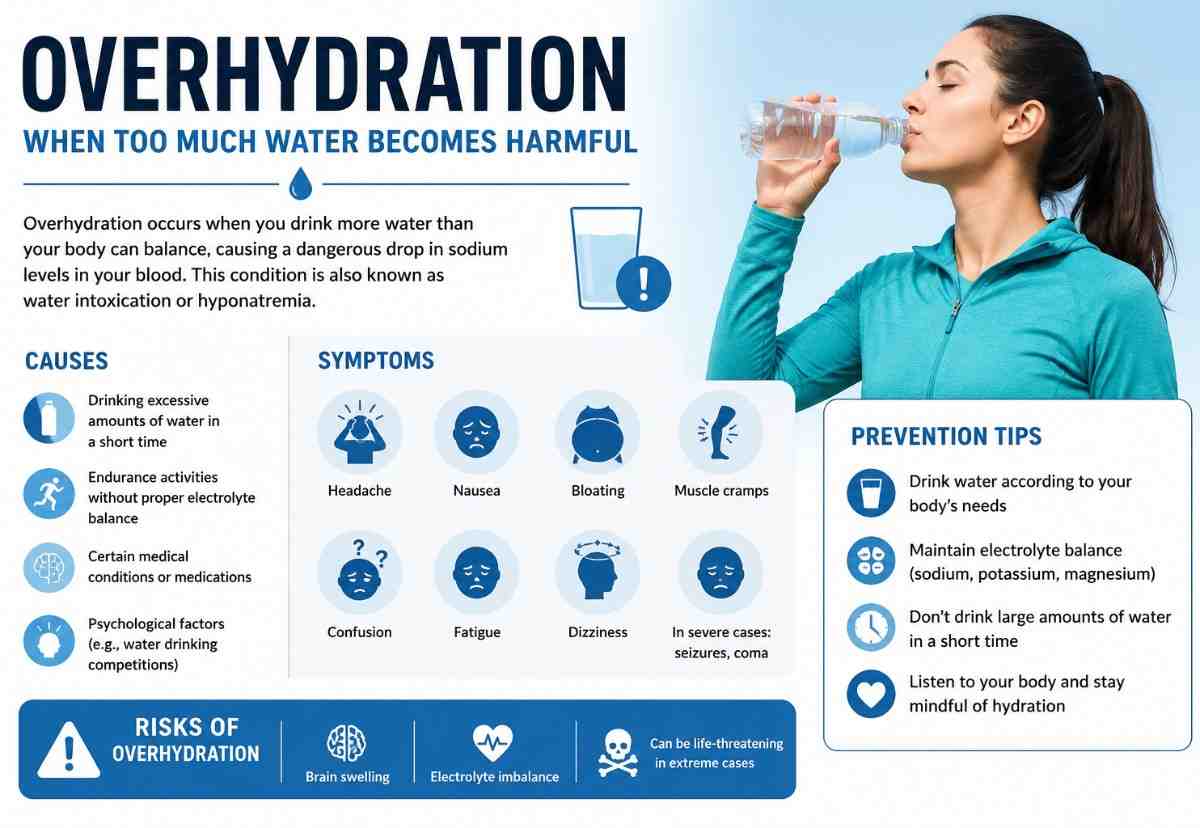
Drinking enough water is essential for good health. Water helps regulate body temperature, transport nutrients, support digestion, lubricate joints, and remove waste through the kidneys. But while dehydration gets most of the attention, there is another side of the hydration equation that is often overlooked: overhydration.
Overhydration happens when the body contains more water than it can effectively remove or balance. In some situations, drinking excessive amounts of water can dilute the sodium in the blood, causing a potentially serious condition called hyponatremia. The risk is particularly relevant when large amounts of fluid are consumed quickly or when a medical condition or medication affects the body’s ability to get rid of excess water.
This does not mean that drinking water is dangerous. For most healthy people with normally functioning kidneys, the body is very good at getting rid of extra water. The concern is mainly about drinking unusually large quantities, especially over a short period, or having a condition that causes the body to retain water.
What Is Overhydration?
Overhydration is a condition in which the body has more water than it needs or can safely eliminate. It is sometimes called water intoxication, water toxicity, or hyperhydration.
The main concern is that excess water can dilute the concentration of sodium and other electrolytes in the blood. Sodium is important for maintaining fluid balance and helping nerves and muscles function properly.
When blood sodium becomes too low, water can move into cells. Brain cells are particularly vulnerable because swelling inside the skull can increase pressure on the brain. Severe hyponatremia can cause neurological symptoms such as confusion, seizures, loss of consciousness, and, in extreme cases, death.
Is Overhydration the Same as Hyponatremia?
Not always, but the two conditions are closely related.
Overhydration refers to excess water in the body. Hyponatremia means that the sodium concentration in the blood is too low. Excess water can dilute sodium and cause what is sometimes called dilutional hyponatremia.
However, hyponatremia can have other causes, including certain medications, kidney disease, heart failure, liver disease, hormonal problems, and a condition called SIADH, in which the body retains too much water.
What Causes Overhydration?
Several situations can contribute to overhydration.
- Drinking excessive amounts of water: Consuming large volumes of plain water faster than the kidneys can eliminate it can overwhelm the body’s ability to maintain fluid and electrolyte balance.
- Drinking too much during exercise: Athletes and endurance exercisers may sometimes drink excessive amounts of water because they are worried about dehydration. This can increase the risk of exercise-associated hyponatremia.
- Kidney problems: The kidneys play a major role in removing excess water. Kidney disease can reduce this ability and make fluid accumulation more likely.
- Heart conditions: Certain forms of heart failure can cause the body to retain both sodium and water.
- Liver disease: Advanced liver disease can interfere with normal fluid regulation and contribute to fluid retention.
- SIADH: In syndrome of inappropriate antidiuretic hormone secretion, excessive vasopressin causes the kidneys to retain water even when the body does not need it.
- Certain medications: Some medicines can increase water retention or contribute to low sodium levels. Examples include certain antidepressants, diuretics, and other medications that affect fluid or electrolyte regulation.
- Excessive thirst or compulsive water drinking: Some people may drink unusually large quantities of water because of persistent excessive thirst or a behavioral or psychiatric condition known as primary or psychogenic polydipsia.
Symptoms of Overhydration
Mild overhydration may cause few or no noticeable symptoms. As the water imbalance becomes more significant, symptoms can become increasingly obvious.
1. Nausea: Feeling sick or unusually queasy can be an early warning sign of excessive fluid intake.
2. Vomiting: More significant water and sodium disturbances can trigger vomiting.
3. Headache: A headache can occur when changes in sodium and body water affect brain cells.
4. Bloating: Drinking excessive fluid can leave the stomach feeling unusually full, swollen, or uncomfortable.
5. Frequent urination: The body may attempt to remove excess water by producing more urine.
6. Muscle weakness: Low sodium and electrolyte disturbances can interfere with normal muscle function.
7. Muscle cramps: Changes in electrolyte balance may contribute to cramping or muscle discomfort.
8. Fatigue or drowsiness: Mild to moderate electrolyte disturbances can make a person feel unusually tired or sleepy.
9. Dizziness: Changes in fluid and electrolyte balance can affect how a person feels and functions.
10. Confusion: Significant hyponatremia can affect brain function and cause confusion or changes in mental status.
Severe Symptoms That Require Urgent Medical Attention
Severe overhydration and acute hyponatremia can become medical emergencies.
Seek urgent medical care if someone develops severe headache, repeated vomiting, confusion, unusual behavior, difficulty waking, seizures, loss of consciousness, or severe problems with balance after consuming large amounts of fluid. Severe hyponatremia can cause brain swelling and may lead to coma, permanent neurological injury, or death if untreated.
A person with suspected severe water intoxication should not attempt to correct the problem independently by taking large amounts of salt or other substances. The appropriate treatment depends on the underlying cause and laboratory findings.
How Does Overhydration Affect the Body?
The body constantly works to maintain a balance between water and electrolytes.
When too much water enters the body, sodium can become diluted. Sodium helps regulate the movement of water between the bloodstream and cells. When sodium levels fall substantially, water can move into cells.
This is especially concerning in the brain because the skull leaves little room for the brain to expand. Rapidly developing hyponatremia can therefore produce neurological symptoms such as headache, confusion, seizures, and reduced consciousness.
In some forms of overhydration associated with increased blood volume, excess fluid may also contribute to swelling in the legs or other tissues and, depending on the underlying condition, fluid accumulation in the lungs.
How Much Water Is Too Much?
There is no single amount of water that causes overhydration in every person.
The safe amount varies according to body size, kidney function, activity level, climate, diet, medications, medical conditions, and how quickly fluids are consumed.
For healthy people, the kidneys can usually remove substantial amounts of excess water. Merck Manual notes that drinking too much water rarely causes overhydration when the kidneys and other fluid-regulating systems are functioning normally.
The speed of drinking matters. Consuming a very large quantity in a short period is more concerning than spreading fluid intake throughout the day.
Cleveland Clinic advises avoiding large volumes over a short period and notes that more than about 32 ounces (roughly 1 liter) of water per hour is probably too much for many people. This should not be treated as a universal cutoff because individual needs vary.
Rather than forcing yourself to reach an arbitrary water target, drink regularly according to thirst and your circumstances unless a healthcare professional has given you different instructions.
| Water Intake | What It May Mean |
|---|---|
| 1–2 liters/day | Common range for many people, depending on diet, climate, activity, and body size |
| 2–3 liters/day | May be appropriate for many adults, especially with greater fluid needs |
| 3–4 liters/day | May be reasonable for some active people, but individual needs vary |
| 4+ liters/day | May be excessive for some people, particularly if consumed quickly |
| More than ~1 liter/hour | Potentially excessive; drinking this much repeatedly can increase the risk of water intoxication |
| Large amounts in a short period | Higher risk of dilutional hyponatremia, especially during prolonged exercise |
Can You Get Overhydrated From Drinking Water?
Yes, although serious water intoxication is uncommon in healthy people.
The risk increases when someone drinks excessive quantities quickly, particularly during prolonged exercise when they replace large amounts of sweat loss with plain water without considering electrolyte losses.
People with kidney, heart, or liver problems may have a higher risk because their bodies may not handle excess fluid normally.
Overhydration During Exercise
Exercise creates a unique hydration challenge.
Sweating causes the body to lose both water and electrolytes, including sodium. Some people respond by drinking as much water as possible. However, replacing large amounts of fluid without accounting for sodium loss can contribute to hyponatremia.
This is one reason athletes should avoid the idea that more water is always better.
During prolonged or intense exercise, hydration needs depend on factors such as sweat rate, duration, temperature, and individual physiology. In some situations, electrolyte-containing fluids and food can be useful, but they should not be consumed excessively either.
The goal is adequate hydration, not maximum hydration.
Can Clear Urine Mean You Are Drinking Too Much Water?
Urine color can provide a useful general clue, but it is not a perfect diagnostic test.
Very pale yellow urine generally indicates good hydration. Completely clear urine, particularly when it occurs repeatedly alongside very high fluid intake, may suggest that you are drinking more than necessary.
However, urine color can change because of medications, supplements, foods, and medical conditions. It should therefore be considered alongside thirst, fluid intake, activity, and other symptoms.
Who Is More at Risk of Overhydration?
Some people need to be particularly careful with fluid intake.
- People with kidney disease: Reduced kidney function can make it harder to remove excess water.
- People with heart failure: The body may retain fluid because of changes in circulation and hormonal regulation.
- People with liver disease: Certain liver conditions can cause significant fluid retention.
- People with SIADH: Excess antidiuretic hormone can cause the body to retain water.
- Endurance athletes: Prolonged exercise combined with excessive fluid consumption can increase the risk of exercise-associated hyponatremia.
- People taking certain medications: Some medicines can influence sodium levels or water retention.
- People with persistent excessive thirst: Unusually high water consumption can become dangerous when it exceeds the body’s ability to eliminate water.
How Is Overhydration Diagnosed?
A healthcare professional may evaluate your symptoms, medical history, fluid intake, medications, and underlying health conditions.
Blood tests can measure sodium and other electrolytes, while urine tests can help assess urine concentration and kidney handling of water. Doctors may also assess body weight, swelling, blood volume, and signs of an underlying heart, kidney, liver, or hormonal disorder.
Diagnosis is important because low sodium can have many different causes, and treatment needs to address the specific cause.
How Is Overhydration Treated?
Treatment depends on the severity and underlying cause.
- Fluid restriction: A healthcare professional may recommend limiting fluid intake when excess water is contributing to the problem.
- Treating the underlying condition: Kidney, heart, liver, hormonal, or medication-related causes need appropriate management.
- Medication adjustment: If a medicine is contributing to water retention or hyponatremia, a healthcare professional may change or stop it when appropriate.
- Diuretics: In selected cases, doctors may use medicines that increase the removal of sodium and water through urine.
- Hospital treatment: Severe hyponatremia may require carefully monitored treatment, sometimes including intravenous therapy. Sodium levels must be corrected carefully because correcting them too rapidly can itself cause serious neurological complications.
Do not attempt to treat suspected severe hyponatremia at home by simply eating large quantities of salt or drastically restricting fluids without medical advice.
How to Prevent Overhydration?
Preventing overhydration usually comes down to avoiding unnecessary extremes.
- Drink according to thirst: For most healthy adults, thirst is a useful guide to fluid needs.
- Avoid forcing water: You generally do not need to drink large quantities simply to reach a particular daily target.
- Spread fluids throughout the day: Avoid rapidly consuming very large amounts of water.
- Consider your activity: Hot weather, sweating, and prolonged exercise can increase fluid requirements.
- Do not ignore medical advice: People with kidney, heart, liver, or hormonal conditions may have individualized fluid recommendations.
- Pay attention to symptoms: Nausea, bloating, headache, and unusual fatigue after excessive drinking are reasons to stop forcing fluids and reassess your intake.
- Be cautious with endurance exercise: During long events, avoid drinking substantially more than your body’s needs.
Overhydration vs. Dehydration
Both dehydration and overhydration involve an imbalance in body fluids, but they are opposite problems.
| Feature | Dehydration | Overhydration |
|---|---|---|
| Basic problem | Too little body water | Too much body water |
| Common trigger | Fluid loss or inadequate intake | Excessive intake or impaired water removal |
| Possible symptoms | Thirst, dry mouth, fatigue, dizziness | Nausea, headache, bloating, confusion |
| Electrolyte concern | May occur with fluid loss | Sodium may become dangerously diluted |
| Severe complications | Organ dysfunction and shock | Brain swelling, seizures, coma |
| General approach | Replace appropriate fluids and electrolytes | Address excess fluid and underlying cause |
Both conditions can be serious when severe, which is why hydration should focus on maintaining balance rather than simply drinking as much as possible.
FAQ’s
Can drinking too much water cause low sodium?
Yes. Excessive water intake can dilute sodium in the blood and cause hyponatremia.
How much water is too much in one hour?
There is no universal limit, but drinking more than about 1 liter (32 ounces) per hour may be excessive for many people, especially when sustained.
Can overhydration cause headaches?
Yes. Headaches can occur when excessive water intake causes changes in sodium and fluid balance.
Can overhydration make you nauseous?
Yes. Nausea and vomiting are possible symptoms of significant overhydration or hyponatremia.
Can overhydration cause weight gain?
Yes. Excess fluid can temporarily increase body weight, particularly when the body is retaining water.
Can you die from drinking too much water?
In severe cases, yes. Extreme water intake can cause dangerous hyponatremia, which may lead to brain swelling, seizures, coma, and death.
Is overhydration worse during exercise?
It can be. Drinking excessive amounts of plain water during prolonged exercise may dilute blood sodium, particularly when large volumes are consumed.
Should I stop drinking water if I think I am overhydrated?
Avoid forcing yourself to drink more water, but do not make major fluid or electrolyte changes without medical advice, particularly if you have symptoms or an underlying medical condition.
When is overhydration an emergency?
Confusion, seizures, severe headache, repeated vomiting, difficulty waking, loss of consciousness, or significant neurological changes require urgent medical attention.
Can healthy people become overhydrated?
Yes, although serious overhydration is uncommon in healthy people. It is more likely when very large amounts of water are consumed rapidly.
Is drinking 4 liters of water a day too much?
It depends on the individual, activity level, climate, health status, and rate of consumption. Four liters consumed rapidly may be excessive, while some people may require higher fluid intake under specific circumstances.
Can overhydration affect the brain?
Yes. Severe hyponatremia can cause water to move into brain cells, potentially causing brain swelling and serious neurological symptoms.
Can drinking too much water damage the kidneys?
Excessive water intake can overwhelm the body’s ability to maintain fluid and electrolyte balance, although healthy kidneys can normally eliminate considerable amounts of water. People with impaired kidney function are more vulnerable to fluid accumulation.
When should I seek emergency care?
Seek urgent medical attention for confusion, seizures, difficulty waking, severe headache, repeated vomiting, loss of consciousness, or major neurological changes, particularly after consuming unusually large amounts of fluid.
How to fix overhydration immediately?
Stop forcing fluids and seek medical advice if you have symptoms such as nausea, headache, confusion, or vomiting.
How do I know if I drank too much water?
Bloating, nausea, headache, frequent urination, weakness, or confusion may occur after excessive water intake.
Is overhydration harmful?
Yes. Severe overhydration can dilute blood sodium and cause dangerous hyponatremia.
Am I overhydrated if I pee a lot?
Not necessarily. Frequent urination can have many causes, including high fluid or caffeine intake.
Is it okay to go 12 hours without peeing?
It is not typical and may indicate dehydration or urinary retention, especially if you have an urge but cannot urinate.
Is it okay to pee 7 times a day?
Yes. Around 6–8 times daily can be normal, depending on your fluid intake and individual habits.
Final Thought
Water is essential, but more is not always better. Overhydration occurs when the body has more water than it can effectively balance or eliminate. In some circumstances, excess water can dilute blood sodium and cause hyponatremia, which can become life-threatening when severe.
For most healthy people, the best approach is simple: drink regularly, respond to thirst, avoid rapidly consuming very large quantities of water, and adjust your hydration strategy to your activity and environment. If you have kidney, heart, liver, hormonal, or other medical conditions, ask your healthcare professional how much fluid is appropriate for you.
Most importantly, recognize the warning signs. Confusion, seizures, difficulty waking, or severe symptoms following excessive fluid intake require urgent medical evaluation.
Sources / References:
Disclaimer:
This article is for general education only and does not replace professional medical advice, diagnosis, or treatment. If you have severe symptoms or a medical condition affecting fluid balance, consult a qualified healthcare professional promptly.
About the Author:
Written by: Kirti Solanki, Health Content Researcher
Kirti Solanki is a health content researcher who focuses on creating clear, reader-friendly articles based on reputable medical and scientific sources. Her work emphasizes practical health education, evidence-based information, and responsible communication of health topics.
Also Read: