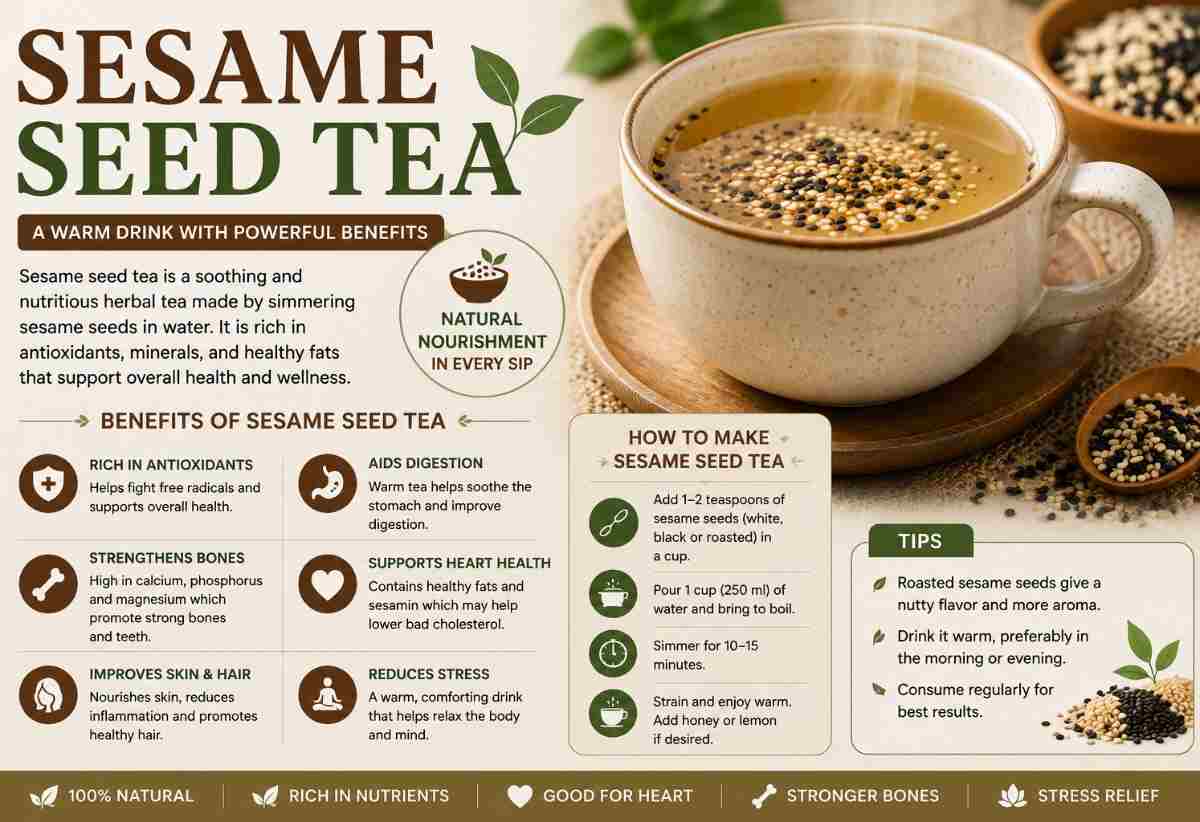
Sesame seed tea is a simple herbal-style drink made by steeping sesame seeds in hot water. It is traditionally used in several food cultures as a warm, nourishing beverage, although it is not a tea made from tea leaves such as black tea or green tea.
This guide explains what sesame seed tea is, its potential benefits, nutrition, preparation, possible side effects, appropriate serving amounts, and important precautions.
What Is Sesame Seed Tea?
Sesame seed tea is a beverage prepared by soaking or simmering sesame seeds in hot water and then drinking the infused liquid. White, black, or hulled sesame seeds can be used.
Unlike conventional tea, sesame seed tea contains no tea leaves and is naturally caffeine-free unless another caffeinated ingredient is added.
A basic preparation generally involves:
- Sesame seeds
- Hot water
- Optional ingredients such as ginger, cinnamon, cardamom, or a small amount of honey
Some people lightly toast the sesame seeds before brewing. Toasting can give the drink a deeper, nutty aroma, while unroasted seeds create a milder flavor.
Sesame seed tea is best viewed as a food-based beverage rather than a medicinal treatment.
One particularly important point is that drinking the strained liquid is not equivalent to eating sesame seeds. Sesame seeds provide substantial amounts of fiber, protein, minerals, fats, and other nutrients, but only some of these compounds will transfer into the brewing water.
Nutritional Facts of Sesame Seed Tea
| Nutrient | Approximate amount per 100 g sesame seeds |
|---|---|
| Calories | 573 kcal |
| Protein | 17.73 g |
| Total fat | 49.67 g |
| Carbohydrates | 23.45 g |
| Dietary fiber | 11.8 g |
| Calcium | 975 mg |
| Magnesium | 351 mg |
| Iron | 14.55 mg |
| Phosphorus | 629 mg |
| Potassium | 468 mg |
| Zinc | 7.75 mg |
| Copper | 4.08 mg |
| Manganese | 2.46 mg |
| Selenium | 34.4 mcg |
| Sodium | 11 mg |
| Cholesterol | 0 mg |
A tablespoon of sesame seeds provides considerably less than the 100-g values shown above, but it can still contribute useful amounts of minerals and healthy fats.
Important: When sesame seeds are steeped and then discarded, the tea will not contain the same nutritional profile as the seeds themselves. If you want the protein, fiber, and most of the minerals from sesame, consuming the softened seeds as part of food is more nutritionally meaningful than drinking only the strained liquid.
20 Science-Backed Benefits of Sesame Seed Tea
1. Provides Plant-Based Antioxidant Compounds
Sesame contains lignans and other bioactive compounds that have antioxidant properties, which may help the body manage oxidative stress. Sesame lignans such as sesamin and sesamolin have received considerable scientific interest for their biological activity.
2. May Support Heart Health
Regular sesame consumption has been investigated for potential cardiovascular benefits, particularly through effects on blood pressure and blood lipid levels. A meta-analysis of randomized controlled trials found that sesame intake was associated with improvements in several cardiovascular risk factors, although additional high-quality research is still needed.
3. May Help Support Healthy Blood Pressure
Sesame consumption may contribute to healthier blood-pressure measurements in some people, although sesame tea should not replace prescribed blood-pressure treatment. Research has reported reductions in systolic and diastolic blood pressure in some clinical studies.
4. May Support a Healthy Lipid Profile
Sesame has been studied for its possible effects on cholesterol and triglycerides, with some research showing improvements in blood lipid measurements. Evidence is not completely consistent, however, so sesame should be considered part of an overall heart-healthy eating pattern rather than a cholesterol-lowering treatment.
5. Supplies Minerals Important for Bone Health
Sesame seeds are rich in calcium, magnesium, phosphorus, and other minerals involved in maintaining normal bones. Because much of these minerals remains in the seeds, eating sesame may provide more nutritional benefit than drinking strained tea alone.
6. Provides Magnesium
Sesame seeds contain a meaningful amount of magnesium, a mineral involved in muscle function, nerve signaling, energy metabolism, and many enzymatic reactions. Some magnesium may enter the brewing liquid, but the amount in homemade tea is difficult to predict.
7. Provides Iron
Sesame seeds contain iron, which contributes to normal oxygen transport and energy metabolism. However, the iron content of the finished tea depends on extraction and is unlikely to equal the amount present in the whole seeds.
8. Provides Zinc
Sesame seeds supply zinc, a mineral involved in immune function, wound healing, DNA synthesis, and normal cellular activity. Eating the seeds provides a more reliable nutritional contribution than drinking their strained infusion.
9. Provides Copper
Sesame is particularly rich in copper, which is important for connective tissue formation, iron metabolism, energy production, and nervous-system function. Whole sesame seeds provide substantially more copper than a typical strained infusion is likely to contain.
10. May Complement a Balanced Diet
Sesame seed tea can be a low-sugar, caffeine-free alternative to sweetened beverages when prepared without large amounts of added sugar. Replacing sugary drinks with unsweetened beverages can make it easier to control overall added-sugar intake.
11. May Provide a Warm, Hydrating Beverage
Like other unsweetened drinks, sesame seed tea contributes fluid to the diet and can be an enjoyable way to increase beverage variety. Its hydration value comes primarily from the water rather than from sesame itself.
12. May Support Digestive Health When the Seeds Are Consumed
Whole sesame seeds contain dietary fiber that can support normal bowel function and digestive health. However, strained sesame tea contains much less fiber than the original seeds, so this benefit should not be exaggerated for the beverage itself.
13. Contains Healthy Unsaturated Fats in the Seeds
Sesame seeds contain predominantly unsaturated fats, including monounsaturated and polyunsaturated fatty acids. These fats are part of a heart-conscious dietary pattern, although most remain in the seeds rather than transferring into water.
14. May Support Antioxidant Defense
Sesame lignans and related compounds have been investigated for their effects on antioxidant systems and oxidative-stress markers. Clinical research has reported changes in some antioxidant-related biomarkers following sesame consumption.
15. May Complement Metabolic Health
Research on sesame consumption has explored possible effects on body weight, waist measurements, blood lipids, and other metabolic indicators. These findings are promising but do not establish sesame tea as a weight-loss or metabolic treatment.
16. Naturally Caffeine-Free
Pure sesame seed tea is naturally caffeine-free, making it an option for people who prefer to limit caffeine. This makes it different from beverages prepared from Camellia sinensis, such as black, green, and white tea.
17. May Be Useful as a Nighttime Beverage
Because plain sesame seed tea does not naturally contain caffeine, it can fit into an evening beverage routine for people who want something warm without stimulating caffeine. Individual preferences and digestion should still guide timing.
18. Can Increase Dietary Variety
Adding sesame-based beverages to a varied diet introduces a different source of plant compounds and minerals while providing an alternative to conventional teas. Variety is generally more useful than relying heavily on a single food or drink.
19. May Help Reduce Reliance on Sugary Drinks
Unsweetened sesame seed tea can replace sweetened beverages without requiring added sugar. The benefit comes from the overall dietary substitution rather than a special fat-burning or detoxifying effect of sesame.
20. Provides Sesame Lignans for Scientific Interest
Sesame lignans such as sesamin and sesamolin are among the compounds responsible for the growing scientific interest in sesame as a functional food. Human evidence is still developing, and researchers continue to investigate how these compounds affect cardiovascular and metabolic health.
10 Side Effects of Sesame Seed Tea
Sesame seed tea is generally a food-based beverage, but it is not appropriate for everyone.
1. Sesame Allergy Can Cause Serious Reactions
People with sesame allergy should avoid sesame seed tea because even exposure to sesame can trigger an allergic reaction. Sesame is recognized as a major food allergen in the United States, and allergic reactions can range from mild symptoms to life-threatening anaphylaxis.
2. It May Cause Digestive Discomfort
Consuming sesame seeds or concentrated sesame preparations may cause bloating, abdominal discomfort, or changes in bowel habits in sensitive individuals.
3. It May Not Suit People With Seed Sensitivities
People who have previously experienced reactions to sesame or sesame-containing foods should not experiment with sesame seed tea without professional guidance.
4. Added Sugar Can Increase Calories
Adding substantial amounts of sugar, jaggery, syrups, or honey can turn an otherwise simple beverage into a high-sugar drink.
5. Large Amounts May Be Harder to Digest
Drinking very concentrated preparations or consuming large quantities of sesame seeds may cause digestive discomfort in some people.
6. It May Interfere With Individual Dietary Restrictions
People following medically prescribed diets should consider the sesame content and any additional ingredients before making sesame seed tea part of their routine.
7. Cross-Contact Can Be a Concern for Allergy
People with sesame allergy should consider the possibility of cross-contact from shared utensils, containers, grinders, or preparation surfaces. The FDA emphasizes careful label checking and avoidance for people with food allergies.
8. Concentrated Preparations Are Not Necessarily Better
Using very large quantities of seeds does not automatically make the tea healthier and may increase digestive or dietary concerns.
9. Individual Food Intolerance Is Possible
Some people may experience unpleasant digestive symptoms after consuming sesame even without a diagnosed sesame allergy.
10. It Should Not Replace Medical Treatment
Sesame seed tea should not be used as a substitute for prescribed medication or professional treatment for high blood pressure, diabetes, anemia, high cholesterol, or other medical conditions.
How to Make Sesame Seed Tea?
Making sesame seed tea at home is straightforward.
Ingredients:
- 1 teaspoon sesame seeds
- 1½ to 2 cups water
- Optional: a small piece of fresh ginger
- Optional: cinnamon or cardamom
- Optional: a small amount of honey after cooling slightly
Method:
Step 1: Choose the sesame seeds.
Use clean white or black sesame seeds. If you have a sesame allergy, do not prepare or consume this beverage.
Step 2: Rinse the seeds.
Briefly rinse the sesame seeds under clean water and drain them.
Step 3: Lightly toast them if desired.
Place the seeds in a dry pan over low heat for a few minutes. Stop once they become fragrant. Avoid burning them.
Step 4: Heat the water.
Bring approximately 1½ to 2 cups of water to a gentle boil.
Step 5: Add the sesame seeds.
Add the seeds to the hot water and simmer gently for approximately 5 to 10 minutes.
Step 6: Steep.
Turn off the heat and allow the mixture to sit for another few minutes.
Step 7: Strain.
Pour the tea through a fine strainer.
Step 8: Add optional ingredients.
Ginger, cinnamon, cardamom, or a small amount of honey can be added according to taste.
Other Uses of Sesame Seed Tea
Sesame seed tea can be used in several practical ways beyond simply drinking it plain.
1. Morning Beverage
Unsweetened sesame seed tea can be enjoyed as a caffeine-free morning drink.
2. Evening Beverage
Because pure sesame tea is caffeine-free, it can be used as a warm evening beverage.
3. Base for Spiced Tea
Ginger, cinnamon, cardamom, or cloves can be added for additional flavor.
4. Warm Beverage During Cooler Weather
The nutty flavor and warmth can make sesame tea especially appealing during colder months.
5. Ingredient in Smoothies
A cooled, strained sesame infusion can be incorporated into smoothies, although it should be refrigerated and used promptly.
6. Culinary Ingredient
A small amount of cooled sesame infusion can be used in certain soups, porridges, or grain-based dishes for additional flavor.
It is best not to claim that sesame tea “detoxes” the body, melts fat, cures anemia, or treats disease. The body already has sophisticated organs and systems responsible for detoxification, and evidence does not establish sesame seed tea as a medical detox drink.
How Much Sesame Seed Tea Can You Drink a Day?
There is no scientifically established standard daily dose specifically for sesame seed tea.
For a homemade beverage, a practical starting point is around 1 cup per day prepared with approximately 1 teaspoon of sesame seeds. If you tolerate it well, some people may choose to have a second cup, but more is not necessarily better.
The appropriate amount depends on:
- Your overall diet
- Your tolerance to sesame
- Whether you consume the seeds or strain them
- Whether sugar or other ingredients are added
- Your individual health needs
- Any food allergies or dietary restrictions
If you are using sesame in concentrated quantities for a specific health purpose, discuss the amount with a qualified healthcare professional rather than assuming a larger dose will provide greater benefits.
Tips for Consuming Sesame Seed Tea
- Start with a mild preparation if you have never tried sesame seed tea before.
- Use fresh sesame seeds and store them properly to preserve quality.
- Avoid burning the seeds because excessive heating can produce an unpleasant flavor.
- Keep the beverage unsweetened if you are trying to reduce added sugar.
- Drink it fresh rather than leaving homemade tea at room temperature for long periods.
- Refrigerate leftovers promptly in a clean, covered container.
- Consume the softened seeds if you want more of the nutritional benefits associated with whole sesame.
- Do not rely on tea as your primary mineral source. A varied diet provides a broader range of nutrients.
- Choose black or white sesame according to preference. The taste and appearance differ, but neither should automatically be considered a miracle variety.
- Stop drinking it if you develop symptoms of an allergic reaction and seek appropriate medical attention if symptoms are serious.
Best Time to Drink Sesame Seed Tea
There is no scientifically proven “best” time to drink sesame seed tea.
In the Morning
Morning can be convenient if you want a caffeine-free alternative to regular tea or coffee.
Between Meals
Some people may prefer sesame tea between meals as a warm beverage. If it causes digestive discomfort when consumed on an empty stomach, try having it with food instead.
After Meals
A small cup after a meal may be comfortable for some people, particularly if they enjoy warm drinks.
At Night
Because pure sesame seed tea is naturally caffeine-free, it can be enjoyed in the evening. However, drinking large quantities immediately before bed may cause nighttime urination.
The best time is ultimately the time that fits your routine and agrees with your digestion.
Who Should Drink Sesame Seed Tea?
Sesame seed tea may be suitable for healthy adults who:
- Enjoy sesame and tolerate it well
- Want a caffeine-free beverage
- Prefer unsweetened drinks
- Want to add variety to their beverage choices
- Follow a varied diet that includes plant foods
- Enjoy the flavor of toasted or unroasted sesame
It is best thought of as an optional food beverage rather than something that everyone needs to drink for health.
Who Should Avoid Sesame Seed Tea?
- People With Sesame Allergy: Anyone with a confirmed sesame allergy should avoid Sesame Seed Tea because even small amounts may trigger an allergic reaction.
- People With Previous Sesame Reactions: If you have previously experienced hives, swelling, vomiting, breathing difficulty, or other symptoms after consuming sesame, do not drink sesame tea without medical guidance.
- People With Severe Food Allergies: Those with severe food allergies should be especially cautious because cross-contact during preparation may expose them to sesame proteins.
- People Advised to Avoid Sesame: If your doctor or dietitian has specifically advised you to avoid sesame, Sesame Seed Tea should also be avoided.
- People With Sesame Intolerance: Individuals who consistently develop bloating, stomach pain, nausea, or digestive discomfort after consuming sesame may want to avoid the tea.
- People Taking Certain Medications: Anyone taking medication for blood pressure, blood sugar, or other chronic conditions should consult a healthcare professional before regularly consuming concentrated sesame preparations.
- Pregnant Women Using Concentrated Preparations: Sesame is commonly eaten as a food, but pregnant women should consult their healthcare provider before consuming unusually concentrated or large amounts of sesame tea.
- Breastfeeding Women Using Large Amounts: Those who are breastfeeding should seek professional advice before making concentrated sesame tea a regular beverage.
- Young Children: Young children do not generally need Sesame Seed Tea, and parents should consider age, dietary needs, and potential sesame allergy before offering it.
- People With Unexplained Reactions: Anyone who develops unexplained symptoms after drinking sesame tea should stop consuming it and speak with a healthcare professional.
- People Using It Instead of Medical Treatment: Sesame Seed Tea should not be used by anyone as a substitute for prescribed treatment for conditions such as diabetes, high blood pressure, high cholesterol, or anemia.
Precautions and Interactions
- Sesame Allergy: Avoid Sesame Seed Tea completely if you have a sesame allergy because it may trigger symptoms ranging from hives and swelling to a potentially life-threatening allergic reaction.
- Blood Pressure Medication: If you take blood-pressure-lowering medication, speak with your healthcare provider before consuming large or concentrated amounts of sesame regularly.
- Diabetes Medication: People taking blood-sugar-lowering medicines should monitor their glucose levels and discuss regular sesame consumption with their healthcare professional.
- Blood-Thinning Medication: If you take anticoagulant or antiplatelet medication, consult your healthcare provider before using concentrated sesame preparations regularly.
- Pregnancy: Pregnant women should avoid unusually large or concentrated amounts of sesame tea and discuss regular use with their healthcare professional.
- Breastfeeding: If you are breastfeeding, moderate dietary amounts of sesame are generally different from concentrated preparations, so discuss frequent use with a healthcare professional.
- Digestive Sensitivity: Stop or reduce Sesame Seed Tea if it causes bloating, abdominal discomfort, nausea, or changes in bowel movements.
- Added Sugar: Avoid adding excessive sugar, honey, or jaggery because this can substantially increase the beverage’s sugar and calorie content.
- Medication Timing: If you take prescription medicines, ask your pharmacist or healthcare provider whether regular consumption of sesame-based beverages could affect your individual treatment.
- Do Not Replace Treatment: Sesame Seed Tea should not replace prescribed medicines or medical treatment for high blood pressure, diabetes, high cholesterol, anemia, or other health conditions.
- Start Slowly: If you have never consumed sesame tea before, begin with a small serving to assess your individual tolerance.
- Concentrated Preparations: Using larger quantities of sesame seeds does not necessarily provide greater health benefits and may increase the risk of digestive discomfort.
- Food Allergy Cross-Contact: People with sesame allergy should be cautious about cross-contact from utensils, cookware, grinders, and containers used to prepare sesame tea.
- Children: Consult a pediatrician before regularly giving Sesame Seed Tea to young children, particularly when there is a history of food allergies.
- Seek Medical Attention: Stop consuming the tea and seek immediate medical care if you develop difficulty breathing, throat swelling, severe dizziness, or other signs of a serious allergic reaction.
FAQ’s
What is Sesame Seed Tea good for?
Sesame seed tea is a caffeine-free beverage that may provide some beneficial plant compounds from sesame, while sesame itself supplies minerals, healthy fats, protein, and lignans.
Can I drink Sesame Seed Tea every day?
Yes, most people who tolerate sesame can enjoy a modest amount daily, such as 1 cup, but there is no established medical requirement or standard daily dose.
Does Sesame Seed Tea help with weight loss?
There is not enough evidence to show that sesame seed tea directly causes weight loss. It may be a useful low-sugar beverage when it replaces sugary drinks.
Is Sesame Seed Tea good for digestion?
It may be a comfortable warm beverage for some people, but strained tea contains much less fiber than whole sesame seeds, so its digestive benefits should not be overstated.
Does Sesame Seed Tea contain caffeine?
No. Pure sesame seed tea is naturally caffeine-free.
Can I drink Sesame Seed Tea at night?
Yes. Since it is naturally caffeine-free, it can be enjoyed in the evening, although drinking a large amount before bed may increase nighttime urination.
What does Sesame Seed Tea taste like?
Sesame seed tea has a mild, nutty flavor. Toasted sesame seeds create a stronger roasted taste, while unroasted seeds produce a lighter flavor.
Can Sesame Seed Tea help lower blood pressure?
Some clinical research on sesame consumption suggests possible improvements in blood pressure, but there is insufficient evidence to say that sesame seed tea itself lowers blood pressure or replaces medication.
Is Sesame Seed Tea good for cholesterol?
Sesame consumption has been studied for possible improvements in blood lipid levels, but evidence specifically involving sesame seed tea is limited.
Can I drink Sesame Seed Tea on an empty stomach?
Many people can, but there is no special health advantage to drinking it on an empty stomach. If it causes stomach discomfort, have it with or after food.
Is Sesame Seed Tea safe during pregnancy?
Sesame is commonly consumed as a food, but there is limited research on concentrated sesame seed tea during pregnancy. Pregnant women should discuss regular or concentrated use with their healthcare professional.
Is Sesame Seed Tea safe while breastfeeding?
Sesame-containing foods are commonly consumed, but evidence specifically on regular sesame seed tea during breastfeeding is limited. If you plan to drink large amounts, consult your healthcare professional.
Can children drink Sesame Seed Tea?
There is generally no need for children to drink sesame seed tea. Parents should consider the child’s age, dietary needs, and potential sesame allergy before offering it.
Can Sesame Seed Tea cause allergies?
Yes. Sesame can cause allergic reactions, including potentially serious reactions such as anaphylaxis. Anyone with a sesame allergy should avoid sesame seed tea.
Should I eat the sesame seeds after making the tea?
If you tolerate sesame, eating the softened seeds provides more protein, fiber, healthy fats, and minerals than drinking only the strained liquid.
Is black Sesame Seed Tea better than white Sesame Seed Tea?
Neither can be universally considered better. Both black and white sesame contain beneficial nutrients and plant compounds, although their flavor and composition can differ.
How long does Sesame Seed Tea take to work?
There is no established time for sesame seed tea to “work.” It is primarily a beverage, and any nutritional effects from sesame consumption depend on the overall diet and long-term intake rather than one cup.
Does Sesame Seed Tea help with anemia?
Sesame seeds contain iron, but there is not enough evidence to recommend sesame seed tea as a treatment for anemia. People with iron-deficiency anemia should follow their healthcare professional’s treatment plan.
Can Sesame Seed Tea improve skin and hair?
Sesame seeds contain nutrients and antioxidant compounds that contribute to overall nutrition, but there is insufficient clinical evidence that drinking sesame seed tea specifically improves skin or hair.
Can I add honey to Sesame Seed Tea?
Yes. Honey can be added for flavor, but keep the amount modest if you are trying to limit added sugars.
Can I add ginger to Sesame Seed Tea?
Yes. Ginger can add a warm, spicy flavor and pairs well with the nutty taste of sesame.
Is Sesame Seed Tea good before bed?
It can be a suitable caffeine-free evening drink. However, avoid drinking a large amount immediately before sleeping if nighttime urination is a concern.
Does Sesame Seed Tea detox the body?
There is no good evidence that sesame seed tea detoxifies the body. The liver, kidneys, lungs, and gastrointestinal system already perform the body’s primary detoxification functions.
Can Sesame Seed Tea replace regular tea or coffee?
Yes, if you want a naturally caffeine-free alternative. However, it does not provide the caffeine or tea-specific compounds found in conventional tea or coffee.
Sources / References:
About the Author:
Written by: Kirti Solanki (Health Content Researcher)
Kirti Solanki creates research-informed health and nutrition content focused on making complex wellness information easier to understand.
Disclaimer:
This article is for general educational purposes only and does not replace professional medical advice, diagnosis, or treatment. If you have a food allergy, take medication, are pregnant or breastfeeding, or have a medical condition, consult a qualified healthcare professional before making significant dietary changes.
Also Read: