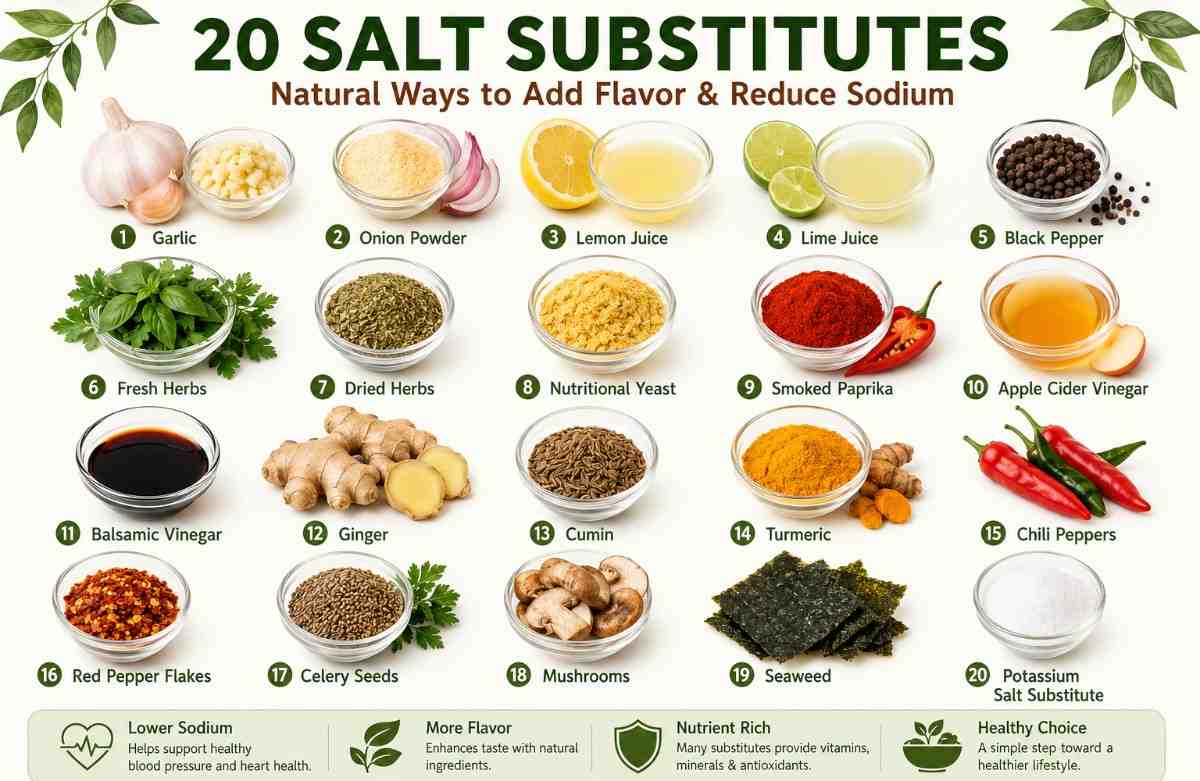
Reducing salt doesn’t mean giving up delicious food. In fact, many herbs, spices, citrus fruits, and natural seasonings can enhance flavor while helping you lower your sodium intake. Whether you’re trying to manage high blood pressure, improve heart health, or simply adopt healthier eating habits, using salt substitutes is one of the easiest changes you can make in your kitchen.
Many processed foods already contain significant amounts of sodium, making it easy to exceed the recommended daily intake without realizing it. By replacing table salt with flavorful alternatives, you can create meals that are just as satisfying while supporting your long-term health.
If you’re also interested in healthy ingredients, consider exploring foods like garlic, black garlic, herbs, spices, brown rice, wild rice, and anti-inflammatory foods, which pair well with many salt substitutes and help create balanced, nutritious meals.
In this guide, we’ll explain what salt substitutes are, why people use them, how to choose the right one, and the first 20 of the best salt substitutes you can start using today.
What Are Salt Substitutes?
Salt substitutes are ingredients that replace or reduce the need for regular table salt in cooking and seasoning. Some substitutes contain potassium chloride instead of sodium chloride, while others rely on herbs, spices, acids, or naturally flavorful foods to enhance taste.
These alternatives help reduce sodium intake without sacrificing flavor. Depending on the substitute, they may also provide additional nutrients, antioxidants, or other health benefits.
Not every salt substitute is suitable for everyone. For example, potassium-based salt substitutes may not be appropriate for people with kidney disease or those taking certain medications. It’s always wise to consult a healthcare professional if you have underlying medical conditions.
Why Reduce Salt Intake?
Most adults consume more sodium than recommended, primarily from packaged and restaurant foods.
Excess sodium intake has been linked to:
- High blood pressure
- Increased risk of heart disease
- Stroke
- Kidney problems
- Water retention
- Bloating
Reducing sodium while increasing the use of herbs and spices may improve overall diet quality and encourage healthier eating habits.
Benefits of Using Salt Substitutes
Using salt substitutes may help:
- Lower daily sodium intake
- Support healthy blood pressure
- Enhance natural food flavors
- Encourage home cooking
- Increase intake of beneficial herbs and spices
- Add vitamins, minerals, and antioxidants
- Reduce dependence on processed seasonings
- Improve heart-friendly meal planning
- Promote healthier long-term eating habits
- Create more flavorful meals without excess sodium
How to Choose the Right Salt Substitute?
The best substitute depends on the recipe and your health needs.
Consider these factors:
- Choose herbs for soups, vegetables, and roasted dishes.
- Use citrus juice for seafood, salads, and grilled chicken.
- Select vinegar for marinades and dressings.
- Add spices for warmth and depth of flavor.
- Use potassium-based salt substitutes only under medical guidance if you have kidney disease or take blood pressure medications.
- Experiment with combinations instead of relying on one ingredient.
20 Best Salt Substitutes to Help Reduce Sodium Without Losing Flavor
1. Garlic
Garlic is one of the most popular salt substitutes because it naturally boosts savory flavor without adding sodium. Fresh garlic, roasted garlic, or garlic powder can all enhance soups, pasta, vegetables, meats, and sauces.
Benefits
- Naturally low in sodium
- Rich in antioxidants
- Adds strong savory flavor
- May support heart health
- Contains beneficial sulfur compounds
Best for: Pasta, roasted vegetables, chicken, soups, sauces, marinades.
2. Onion Powder
Onion powder provides a mild sweetness and rich flavor that reduces the need for extra salt. It blends easily into dry rubs, soups, dips, casseroles, and roasted dishes.
Benefits
- Easy to use
- Long shelf life
- Naturally enhances flavor
- Low in sodium
- Works well in seasoning blends
Best for: Soups, casseroles, roasted potatoes, vegetables, meat dishes.
3. Lemon Juice
Fresh lemon juice brightens food and makes flavors more noticeable, reducing the desire for added salt. Even a small squeeze can transform vegetables, fish, salads, and grilled meats.
Benefits
- Rich in vitamin C
- Fresh, clean flavor
- Zero sodium
- Adds acidity and balance
- Supports healthy eating
Best for: Fish, chicken, salads, vegetables, beans.
4. Lime Juice
Lime juice offers similar benefits to lemon juice but provides a slightly sharper, tangier flavor. It’s especially popular in Mexican, Thai, and Indian cooking.
Benefits
- Naturally sodium-free
- Rich in vitamin C
- Brightens dishes
- Enhances fresh ingredients
- Adds refreshing flavor
Best for: Tacos, grilled chicken, seafood, salads, rice bowls.
5. Black Pepper
Black pepper is one of the simplest ways to increase flavor while cutting back on salt. Freshly ground pepper provides more aroma and depth than pre-ground varieties.
Benefits
- Naturally low in sodium
- Rich in plant compounds
- Complements almost every savory dish
- Enhances overall flavor
- Easy to combine with herbs
Best for: Eggs, vegetables, meats, soups, pasta, salads.
6. Fresh Herbs
Fresh herbs such as parsley, cilantro, basil, dill, rosemary, thyme, oregano, and mint provide vibrant flavors that reduce the need for salt.
Each herb offers its own unique aroma and nutritional profile.
Benefits
- Rich in antioxidants
- Naturally sodium-free
- Adds freshness
- Supports a nutrient-rich diet
- Improves meal variety
Best for: Salads, soups, roasted vegetables, chicken, seafood, pasta.
7. Dried Herbs
Dried herbs have a more concentrated flavor than fresh herbs and can easily replace excess salt in many recipes.
Popular choices include:
- Oregano
- Thyme
- Rosemary
- Basil
- Sage
- Marjoram
Benefits
- Long shelf life
- Strong flavor
- Easy storage
- Cost-effective
- Suitable for everyday cooking
Best for: Soups, sauces, casseroles, roasted meats, vegetables.
8. Nutritional Yeast
Nutritional yeast has become increasingly popular among people following vegetarian and vegan diets. It delivers a cheesy, nutty flavor without relying on large amounts of salt.
Many fortified varieties also provide B vitamins.
Benefits
- Rich umami flavor
- Naturally low in sodium (varies by brand)
- May provide B vitamins
- Vegan-friendly
- Adds depth to recipes
Best for: Popcorn, pasta, vegetables, mashed potatoes, sauces.
9. Smoked Paprika
Smoked paprika provides smoky richness that often replaces the need for additional salt. It works especially well in grilled dishes, roasted vegetables, chili, and barbecue recipes.
Benefits
- Deep smoky flavor
- Rich in antioxidants
- Low sodium
- Enhances savory dishes
- Adds vibrant color
Best for: Roasted vegetables, grilled meats, beans, soups, potatoes.
10. Apple Cider Vinegar
Apple cider vinegar adds acidity and brightness, helping foods taste more flavorful even with less salt. It works particularly well in salad dressings, marinades, and vegetable dishes.
Benefits
- Sodium-free
- Tangy flavor
- Versatile ingredient
- Helps balance flavors
- Suitable for many recipes
Best for: Salad dressings, marinades, roasted vegetables, coleslaw, beans.
11. Balsamic Vinegar
Balsamic vinegar adds a slightly sweet, tangy flavor that enhances dishes without relying on extra salt. Its rich taste makes vegetables, meats, and salads more satisfying while contributing very little sodium.
Benefits
- Naturally low in sodium
- Adds sweetness and acidity
- Rich flavor profile
- Contains beneficial plant compounds
- Versatile for cooking and dressings
Best for: Salads, roasted vegetables, grilled chicken, steak, marinades.
12. Ginger
Fresh or ground ginger provides a warm, slightly spicy flavor that works well in both savory and sweet dishes. It helps create complex flavors that reduce the need for added salt.
Benefits
- Naturally sodium-free
- Rich in antioxidants
- Supports digestive health
- Adds warmth to recipes
- Pairs well with garlic and citrus
Best for: Stir-fries, soups, seafood, chicken, Asian-inspired dishes.
13. Cumin
Cumin has a warm, earthy flavor that adds depth to meals. It is widely used in Indian, Middle Eastern, Mexican, and Mediterranean cuisines.
Benefits
- Low in sodium
- Rich in antioxidants
- Intensifies savory flavors
- Adds aroma
- Complements beans and vegetables
Best for: Lentils, curries, chili, roasted vegetables, tacos.
14. Turmeric
Turmeric gives dishes a vibrant golden color and mild earthy flavor. While it isn’t a direct replacement for salt, it contributes richness and pairs well with many other seasonings.
Benefits
- Contains curcumin, a powerful antioxidant
- Naturally sodium-free
- Adds color and flavor
- Supports a healthy diet
- Blends well with spices
Best for: Rice dishes, soups, curries, roasted vegetables, eggs.
15. Fresh Chili Peppers
If you enjoy spicy food, fresh chili peppers can reduce your dependence on salt by adding heat and bold flavor.
Benefits
- Naturally low in sodium
- Rich in vitamin C
- Adds freshness
- Enhances overall flavor
- Available in many varieties
Best for: Stir-fries, tacos, curries, soups, salsas.
16. Red Pepper Flakes
Red pepper flakes provide convenient heat without adding sodium. A small pinch can transform the flavor of many dishes.
Benefits
- Low in sodium
- Adds spicy flavor
- Long shelf life
- Easy to use
- Works in many cuisines
Best for: Pizza, pasta, roasted vegetables, soups, marinades.
17. Celery Seeds
Celery seeds have a concentrated savory flavor that can mimic some of the taste-enhancing qualities of salt.
Benefits
- Naturally low in sodium
- Strong aromatic flavor
- Excellent in seasoning blends
- Adds depth
- Easy to store
Best for: Potato salad, coleslaw, soups, pickles, salad dressings.
18. Mushrooms
Fresh mushrooms, especially varieties like shiitake and cremini, are naturally rich in umami—a savory taste that helps reduce the need for salt.
Benefits
- Rich in umami flavor
- Low in sodium
- Good source of nutrients
- Adds texture
- Makes meals more satisfying
Best for: Pasta, soups, stir-fries, casseroles, risotto.
19. Seaweed (Nori, Kelp, or Dulse)
Seaweed naturally contains minerals and umami compounds that create a salty taste while often requiring less added table salt.
Benefits
- Rich in minerals
- Naturally flavorful
- Provides umami taste
- Supports recipe variety
- Great for Asian-inspired dishes
Best for: Soups, rice bowls, salads, seafood, noodle dishes.
Note: Some seaweed products naturally contain sodium, so check nutrition labels if you’re following a strict low-sodium diet.
20. Potassium-Based Salt Substitute
Commercial salt substitutes often replace sodium chloride with potassium chloride. They taste similar to table salt while significantly reducing sodium intake.
Benefits
- Much lower in sodium than table salt
- Similar taste and texture
- Easy replacement in recipes
- Helpful for reducing sodium intake
- Widely available
Best for: Everyday cooking, table seasoning, baking (depending on the product).
Important: Potassium-based salt substitutes are not suitable for everyone. People with kidney disease or those taking certain medications (such as ACE inhibitors, ARBs, or potassium-sparing diuretics) should consult a healthcare provider before using them.
Related Articles:
- How Can a Salty Diet Increase the Risk of Dry and Itchy Skin?
- Does Blood Pressure Increase Immediately After Eating Salt?
- 7 Proven Benefits of Soaking Your Feet in Salt Water Before Sleeping
Comparison of 20 Salt Substitutes
| Salt Substitute | Flavor Profile | Best Uses | Sodium Level |
|---|---|---|---|
| Garlic | Savory, pungent | Soups, pasta, vegetables | Very Low |
| Onion Powder | Sweet, savory | Seasoning blends | Very Low |
| Lemon Juice | Bright, tangy | Fish, salads | None |
| Lime Juice | Citrusy, fresh | Mexican & Asian dishes | None |
| Black Pepper | Mildly spicy | Almost all savory foods | Very Low |
| Fresh Herbs | Fresh, aromatic | Salads, meats, vegetables | None |
| Dried Herbs | Concentrated herbal flavor | Soups, sauces | None |
| Nutritional Yeast | Cheesy, nutty | Pasta, popcorn | Low |
| Smoked Paprika | Smoky | Roasted foods | Very Low |
| Apple Cider Vinegar | Tangy | Dressings, marinades | None |
| Balsamic Vinegar | Sweet and tangy | Salads, vegetables | Low |
| Ginger | Warm, spicy | Stir-fries, soups | None |
| Cumin | Earthy | Curries, chili | None |
| Turmeric | Mild, earthy | Rice, soups | None |
| Chili Peppers | Hot | Curries, tacos | None |
| Red Pepper Flakes | Spicy | Pizza, pasta | None |
| Celery Seeds | Herbal | Salads, soups | Very Low |
| Mushrooms | Umami | Stir-fries, pasta | Low |
| Seaweed | Naturally savory | Rice, soups | Moderate (varies) |
| Potassium Salt Substitute | Similar to salt | Everyday cooking | Very Low |
Tips for Reducing Sodium Without Losing Flavor
Lowering sodium doesn’t mean your meals have to taste bland. Try these practical strategies:
- Taste your food before automatically adding salt.
- Use fresh herbs whenever possible for maximum flavor.
- Combine garlic, onion, citrus, and herbs to create balanced seasoning.
- Roast vegetables to bring out their natural sweetness.
- Choose fresh foods over heavily processed products.
- Read nutrition labels and compare sodium content.
- Rinse canned beans and vegetables to reduce excess sodium.
- Prepare homemade spice blends without added salt.
- Add acidic ingredients like lemon juice or vinegar at the end of cooking to brighten flavors.
- Gradually reduce salt over several weeks to help your taste buds adjust.
Tips for Getting Started with Salt Substitutes
Switching away from salt doesn’t have to happen overnight. Gradually reducing the amount of salt you use allows your taste buds to adjust over time. Start by replacing half the salt in recipes with herbs, spices, citrus juice, or vinegar, then continue reducing it as you become accustomed to the new flavors.
Experiment with different combinations, such as garlic and rosemary, lemon and black pepper, or smoked paprika with onion powder. Layering flavors often produces more satisfying meals than relying on salt alone.
Also, remember that many packaged foods contain hidden sodium. Cooking more meals at home using fresh ingredients gives you greater control over your sodium intake and makes it easier to enjoy the natural flavors of your food.
FAQs
What can I use instead of salt for high blood pressure?
Herbs, spices, garlic, citrus juice, and vinegar are excellent low-sodium alternatives. If you have high blood pressure, follow your healthcare provider’s advice regarding sodium intake.
Are salt substitutes healthier than regular salt?
Many natural salt substitutes are healthier because they contain less sodium while adding nutrients, antioxidants, and flavor.
Can I cook without salt?
Yes. You can prepare flavorful meals using herbs, spices, garlic, onions, citrus fruits, vinegar, and umami-rich ingredients like mushrooms.
Is Himalayan pink salt a good alternative to table salt?
Himalayan pink salt contains trace minerals but has nearly the same amount of sodium as regular table salt, so it should still be used in moderation.
Is potassium-based salt substitute safe?
Not for everyone. People with kidney disease or those taking certain medications should consult their healthcare provider before using potassium-based salt substitutes.
Which herbs can replace salt in cooking?
Popular choices include basil, oregano, thyme, rosemary, parsley, dill, cilantro, and sage.
Can lemon juice replace salt?
Yes. Lemon juice adds brightness and enhances natural flavors, making many dishes taste more flavorful without extra salt.
Are salt substitutes good for weight loss?
Salt substitutes do not directly cause weight loss, but reducing high-sodium processed foods may support a healthier diet and reduce water retention.
Which spice gives food a salty taste?
No spice tastes exactly like salt, but garlic powder, onion powder, celery seed, smoked paprika, and nutritional yeast can create a savory flavor that reduces the need for salt.
What foods naturally have a salty flavor?
Seaweed, mushrooms, tomatoes, olives, celery, and fermented foods naturally provide savory or salty flavors.
How can I reduce salt without losing flavor?
Use a combination of herbs, spices, garlic, onions, citrus juice, vinegar, and umami-rich ingredients to build flavor while gradually reducing added salt.
Are salt substitutes safe for everyone?
No. Potassium-based salt substitutes may not be safe for people with kidney disease or those taking medications that increase potassium levels. Always consult your healthcare provider before using them if you have a medical condition.
Can salt substitutes help lower blood pressure?
Replacing excess sodium with flavorful alternatives may support healthy blood pressure as part of an overall balanced diet and healthy lifestyle. However, they are not a substitute for medical treatment.
Can I completely stop using salt?
Your body needs small amounts of sodium to function properly. Rather than eliminating salt entirely, most experts recommend reducing excess sodium and choosing fresh, minimally processed foods.
What foods naturally reduce the need for salt?
Garlic, onions, mushrooms, tomatoes, citrus fruits, herbs, spices, vinegar, and fermented foods all provide strong natural flavors that can reduce the need for added salt.
Are homemade spice blends better than store-bought seasonings?
Often, yes. Homemade blends let you control the ingredients and avoid the high sodium levels commonly found in many commercial seasoning mixes.
Final Thoughts
Reducing your sodium intake doesn’t require sacrificing flavor. The best salt substitutes rely on nature’s own ingredients—fresh herbs, spices, citrus fruits, vinegar, garlic, mushrooms, and other naturally flavorful foods—to create delicious meals that support a healthier lifestyle.
Rather than depending on a single substitute, experiment with combinations that complement different recipes. A squeeze of lemon with black pepper, garlic paired with rosemary, or smoked paprika blended with cumin can transform everyday dishes into satisfying meals with far less sodium.
If you’re managing high blood pressure, heart disease, kidney disease, or another health condition, work with your healthcare provider or a registered dietitian to determine the most appropriate sodium intake and whether potassium-based salt substitutes are suitable for you.
Sources / References:
- World Health Organization (WHO) – Sodium Reduction
- Centers for Disease Control and Prevention (CDC) – Sodium and Your Health
- American Heart Association – Sodium and Salt
- U.S. Food & Drug Administration (FDA) – Sodium in Your Diet
- Academy of Nutrition and Dietetics
- National Institutes of Health (NIH) Office of Dietary Supplements
Also Read:
- How Salty Snacks Affect Your Body Before Your Period?
- How Much Salt Should High Blood Pressure Patients Eat in a Day?
- Can You Feed Salt to a One-Year-Old Child? Know the Risks
About the Author:
Written by: Kirti Solanki (Health Content Researcher)
Kirti Solanki is a Health Content Researcher who creates evidence-based articles on nutrition, wellness, fitness, and healthy living using trusted medical sources and current research.
Disclaimer:
This guide is for informational purposes only and is not a substitute for professional medical advice, diagnosis, or treatment. Always consult a qualified healthcare provider before making significant dietary or lifestyle changes.