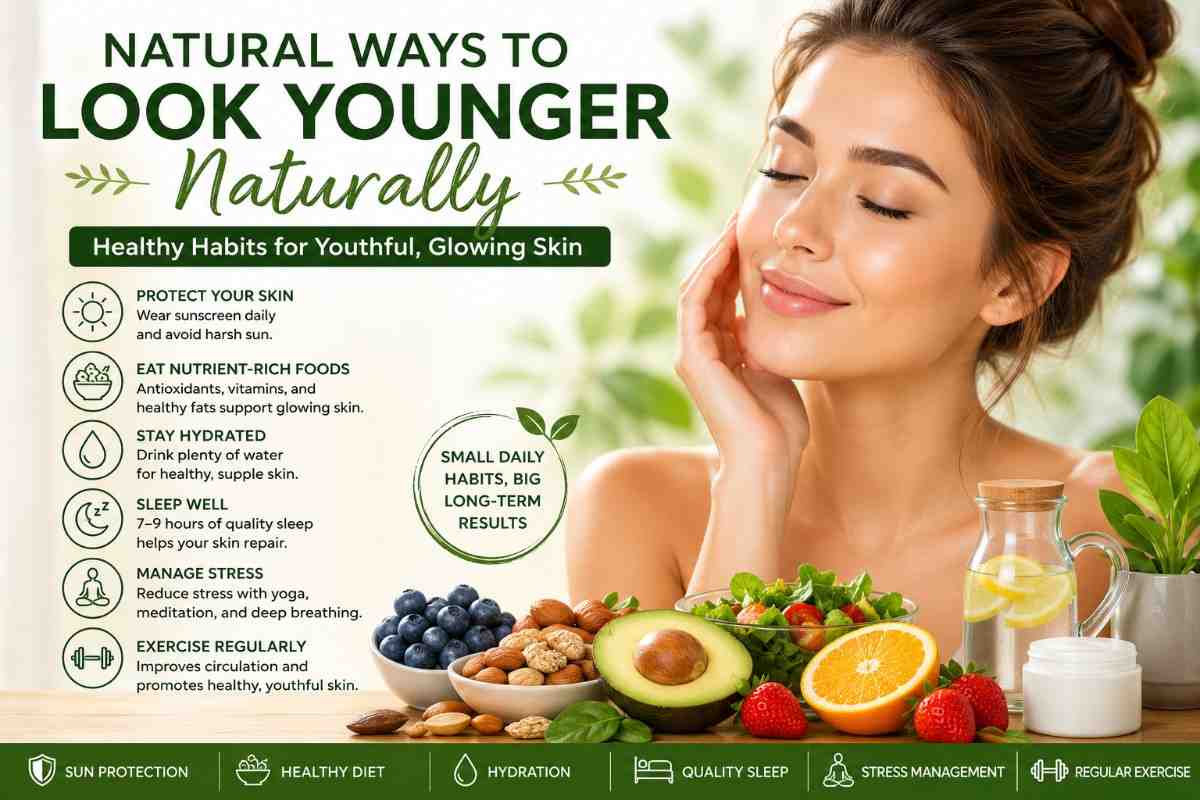
Aging is a natural part of life, but looking younger doesn’t always require expensive cosmetic procedures or invasive treatments. Healthy lifestyle habits, proper skincare, balanced nutrition, regular exercise, quality sleep, and stress management can significantly improve your skin’s appearance and help you maintain a youthful glow naturally.
If you’ve been wondering how to look younger naturally, the good news is that many evidence-based habits can slow visible signs of aging while improving your overall health. Healthy skin reflects what’s happening inside your body, so taking care of your physical and mental well-being is one of the most effective anti-aging strategies.
In this guide, you’ll discover practical, science-backed ways to look younger naturally without relying on harsh treatments or unrealistic beauty trends.
Why Does Skin Age?
Before learning how to look younger naturally, it’s helpful to understand why skin changes over time.
As you age:
- Collagen and elastin production decreases.
- Skin becomes thinner and drier.
- Cell turnover slows down.
- Sun exposure causes photoaging.
- Free radicals damage skin cells.
- Hormonal changes affect skin elasticity.
- Lifestyle habits such as smoking, poor diet, stress, and lack of sleep accelerate aging.
While natural aging cannot be stopped, many external factors are within your control.
20 Natural Ways to Look Younger
1. Protect Your Skin from the Sun Every Day
Sun exposure is one of the biggest causes of premature wrinkles, age spots, and sagging skin.
Use:
- Broad-spectrum SPF 30 or higher
- Sunglasses
- Wide-brimmed hats
- Protective clothing
Apply sunscreen every morning—even on cloudy days.
2. Eat More Antioxidant-Rich Foods
Antioxidants help fight free radicals that damage skin cells.
Excellent choices include:
- Blueberries
- Strawberries
- Spinach
- Kale
- Tomatoes
- Bell peppers
- Green tea
- Dark chocolate (in moderation)
Colorful fruits and vegetables provide vitamins that support healthy skin.
3. Stay Properly Hydrated
Water helps maintain skin elasticity and hydration.
While drinking water alone won’t erase wrinkles, dehydration can make fine lines appear more noticeable.
Aim for adequate fluid intake throughout the day, adjusting based on activity level and climate.
4. Prioritize Quality Sleep
Your body repairs skin during sleep.
Adults should generally aim for 7–9 hours of quality sleep each night.
Poor sleep may contribute to:
- Puffy eyes
- Dark circles
- Dull complexion
- Faster skin aging
5. Eat Enough Protein
Protein supplies amino acids needed to build collagen and repair tissues.
Healthy protein sources include:
- Fish
- Eggs
- Greek yogurt
- Lentils
- Beans
- Chicken
- Tofu
- Nuts
6. Exercise Regularly
Exercise improves circulation, delivering oxygen and nutrients to skin cells.
Regular physical activity may:
- Improve skin tone
- Reduce inflammation
- Increase energy
- Support healthy aging
Aim for at least 150 minutes of moderate exercise weekly.
7. Manage Stress
Chronic stress raises cortisol levels, which may negatively affect skin health.
Stress reduction methods include:
- Meditation
- Yoga
- Deep breathing
- Walking outdoors
- Journaling
- Spending time with loved ones
8. Avoid Smoking
Smoking accelerates skin aging by damaging collagen and reducing blood flow.
Quitting smoking can help improve:
- Skin texture
- Complexion
- Overall health
- Healing ability
9. Limit Alcohol Consumption
Excess alcohol can dehydrate the skin and contribute to inflammation.
If you drink alcohol, do so in moderation and drink plenty of water.
10. Use a Gentle Skincare Routine
Simple routines often work better than overly complicated ones.
Basic routine:
Morning:
- Cleanser
- Vitamin C serum
- Moisturizer
- Sunscreen
Night:
- Cleanser
- Retinoid (if tolerated)
- Moisturizer
Avoid harsh scrubs that damage the skin barrier.
11. Moisturize Daily
Healthy skin needs moisture.
Choose moisturizers containing:
- Hyaluronic acid
- Ceramides
- Glycerin
- Squalane
Moisturized skin appears smoother and healthier.
12. Include Healthy Fats
Healthy fats help maintain the skin barrier.
Good sources include:
- Avocados
- Walnuts
- Almonds
- Olive oil
- Flaxseeds
- Chia seeds
- Fatty fish
Omega-3 fatty acids may reduce inflammation and support skin health.
13. Eat Less Added Sugar
High sugar intake contributes to glycation, a process that damages collagen and elastin.
Reducing sugary foods may help maintain firmer-looking skin over time.
14. Eat Vitamin C-Rich Foods
Vitamin C is essential for collagen production.
Excellent sources:
15. Maintain a Healthy Weight
Rapid weight fluctuations can reduce skin elasticity.
A balanced diet combined with regular exercise supports healthier skin.
16. Practice Good Posture
Standing and sitting upright can instantly make you appear younger, taller, and more confident.
Good posture also reduces strain on muscles and joints.
17. Care for Your Eyes
The eye area often shows aging first.
Helpful habits include:
- Wearing sunglasses
- Using sunscreen around the eyes
- Getting enough sleep
- Staying hydrated
18. Don’t Forget Your Neck and Hands
The neck and hands frequently reveal age because they’re exposed to sunlight.
Apply sunscreen and moisturizer to:
- Neck
- Chest
- Hands
Daily protection can reduce premature aging.
19. Eat Collagen-Supporting Nutrients
Your body naturally produces collagen, but production decreases with age.
Support collagen by consuming foods rich in:
- Vitamin C
- Zinc
- Copper
- Protein
Bone broth, fish, eggs, citrus fruits, nuts, and seeds can contribute to a balanced diet that supports collagen production.
20. Be Consistent
Natural anti-aging results don’t happen overnight.
Small healthy habits practiced consistently often produce better long-term results than quick fixes.
Consistency is the secret to youthful-looking skin.
Foods That Help You Look Younger Naturally
| Food | Main Benefit |
|---|---|
| Blueberries | Rich in antioxidants |
| Salmon | Omega-3 fats support skin |
| Avocado | Healthy fats for hydration |
| Tomatoes | Lycopene helps protect skin |
| Spinach | Vitamins A and C |
| Walnuts | Omega-3 and vitamin E |
| Green Tea | Polyphenol antioxidants |
| Citrus Fruits | Vitamin C for collagen |
| Sweet Potatoes | Beta-carotene |
| Yogurt | Protein and probiotics |
Daily Anti-Aging Routine
Morning
- Drink water after waking
- Eat a protein-rich breakfast
- Cleanse your face
- Apply Vitamin C serum
- Moisturize
- Apply sunscreen SPF 30+
Afternoon
- Eat colorful vegetables
- Stay hydrated
- Walk or exercise
- Wear sunglasses outdoors
Evening
- Remove makeup
- Cleanse gently
- Apply retinoid if recommended
- Moisturize
- Sleep 7–9 hours
Habits That Can Make You Look Older
Try to avoid these common habits:
- Smoking
- Frequent tanning
- Skipping sunscreen
- Excess sugar intake
- Chronic stress
- Poor sleep
- Excess alcohol
- Dehydration
- Lack of exercise
- Overwashing or over-exfoliating the skin
Common Myths About Looking Younger
Myth 1: Expensive products always work better.
Price doesn’t guarantee effectiveness. Ingredients matter more than branding.
Myth 2: Natural remedies erase wrinkles overnight.
Natural approaches require consistency and realistic expectations.
Myth 3: Sunscreen is only needed in summer.
UV rays are present year-round, making daily sunscreen important.
Myth 4: Drinking collagen instantly removes wrinkles.
Collagen supplements may support skin health for some people, but they are not a miracle solution, and results vary.
FAQs
Can I look younger naturally without cosmetic procedures?
Yes. Healthy lifestyle habits, sun protection, proper skincare, good nutrition, regular exercise, and quality sleep can improve your skin’s appearance over time.
How long does it take to see results?
Some improvements, such as better hydration and skin texture, may be noticeable within a few weeks. Changes related to collagen support and overall skin health typically require several months of consistent habits.
What is the best natural anti-aging ingredient?
There isn’t one single best ingredient. Sunscreen, vitamin C, retinoids (where appropriate), hyaluronic acid, ceramides, and antioxidants all play important roles in maintaining healthy-looking skin.
Does drinking more water remove wrinkles?
Drinking enough water supports overall skin hydration, but it won’t eliminate wrinkles on its own.
Which vitamin helps skin look younger?
Vitamin C is essential for collagen production, while vitamins A and E also contribute to healthy skin.
Can exercise make you look younger?
Regular physical activity improves circulation, supports muscle tone, and contributes to healthier-looking skin and overall well-being.
At what age should I start an anti-aging routine?
Daily sunscreen and a gentle skincare routine are beneficial at any adult age. Preventive habits started early can help reduce premature aging.
What is the fastest natural way to look younger?
Protect your skin from the sun, stay hydrated, get enough sleep, and use a moisturizer daily. These habits can improve your skin’s appearance within weeks.
How many hours of sleep do I need for healthy skin?
Most adults should aim for 7–9 hours of quality sleep each night to support skin repair and overall health.
Does sugar make you look older?
Eating too much added sugar may contribute to collagen damage through glycation, which can accelerate visible skin aging over time.
Is sunscreen necessary every day?
Yes. Wearing a broad-spectrum sunscreen with SPF 30 or higher every day helps protect your skin from premature aging caused by UV rays.
Can stress make you look older?
Yes. Chronic stress may affect skin health, contribute to dullness, and increase the appearance of fine lines over time.
Which skincare ingredients help reduce signs of aging?
Ingredients such as vitamin C, retinoids, hyaluronic acid, ceramides, niacinamide, and peptides are commonly recommended for healthy, youthful-looking skin.
Does smoking affect skin aging?
Yes. Smoking damages collagen and elastin, reduces blood flow to the skin, and can lead to wrinkles and dull skin.
How to look 25 at 40?
Protect your skin from the sun, eat healthy, exercise, sleep well, and follow a consistent skincare routine.
How can I look 20 years younger naturally?
Use sunscreen daily, stay hydrated, eat nutritious foods, exercise regularly, and avoid smoking.
Why is Gen Z aging so fast?
Stress, poor sleep, UV exposure, unhealthy habits, and genetics may contribute to premature aging.
What should I eat to look 10 years younger?
Eat berries, leafy greens, salmon, avocados, nuts, tomatoes, and other antioxidant-rich foods.
What is the Japanese secret to anti-aging?
A balanced diet, green tea, regular activity, sun protection, and healthy lifestyle habits.
What drink is anti-aging?
Green tea, water, and antioxidant-rich smoothies are excellent choices for healthy skin.
What is the best homemade anti-aging remedy?
Aloe vera, honey, and oatmeal can hydrate the skin but won’t reverse aging.
Does amla stop aging?
No. Amla doesn’t stop aging, but its antioxidants and vitamin C support healthy skin.
Final Thoughts
Learning how to look younger naturally is less about chasing perfection and more about building healthy habits that support your skin from the inside out. Protecting your skin from the sun, eating a nutrient-rich diet, staying active, getting enough sleep, managing stress, and following a simple skincare routine can make a meaningful difference over time.
Remember that aging is a normal process, and healthy skin exists at every age. Focus on consistency, self-care, and evidence-based practices rather than quick fixes or unrealistic promises.
Sources / References:
- American Academy of Dermatology
- National Institute on Aging
- World Health Organization (WHO)
- Mayo Clinic
- National Institutes of Health (NIH)
- American Society for Dermatologic Surgery
About the Author:
Written by: Kirti Solanki (Health Content Researcher)
Kirti Solanki researches and writes evidence-based health and wellness content, making complex topics easy to understand for everyday readers.
Disclaimer:
This guide is for informational purposes only and is not a substitute for professional medical advice, diagnosis, or treatment. Always consult a qualified healthcare provider for personalized guidance.
Also Read: