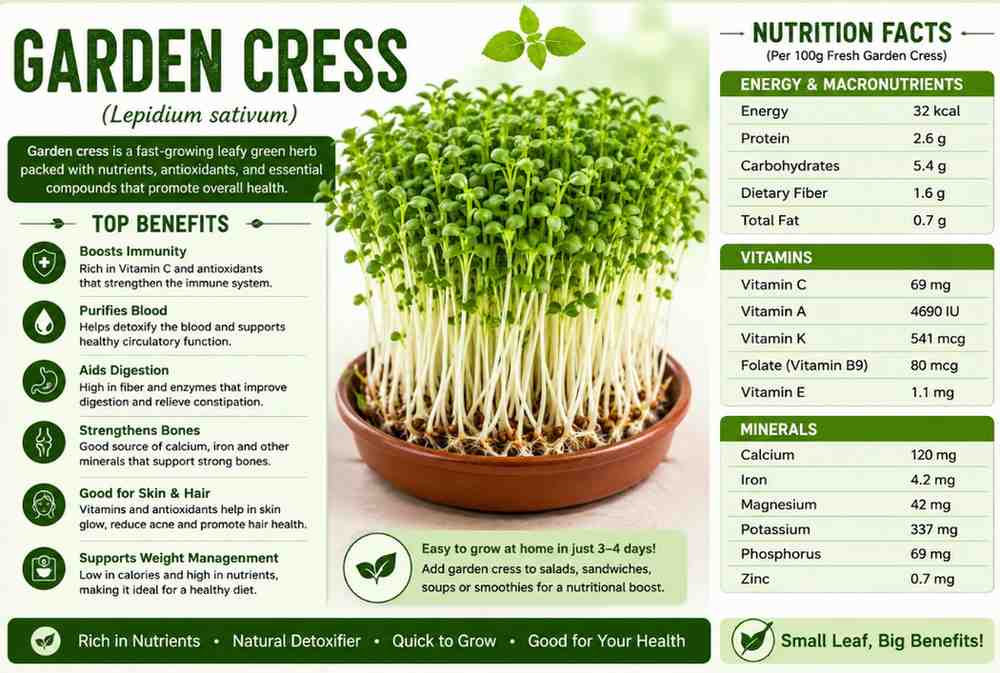
Garden cress is a small but remarkably nutrient-dense herb that has been used as both food and traditional medicine for centuries. Its tiny seeds are particularly popular in India, where they are known as halim, aliv, or chandrasur. The plant is scientifically known as Lepidium sativum and belongs to the Brassicaceae family, the same botanical family that includes broccoli, cabbage, mustard, and watercress.
Although garden cress seeds are tiny, they contain protein, healthy fats, fiber, calcium, magnesium, phosphorus, potassium, iron, and several bioactive plant compounds. They also contain glucosinolates, flavonoids, phenolic compounds, and other phytochemicals that researchers are studying for their antioxidant and anti-inflammatory properties.
What Is Garden Cress?
Garden cress is a fast-growing edible herb scientifically called Lepidium sativum. It produces small leaves, delicate stems, tiny white flowers, and small reddish-brown seeds. The leaves, stems, roots, and seeds have all been used in different culinary and traditional applications.
Garden cress seeds have a mildly pungent, peppery flavor and can be eaten whole, soaked, ground, roasted, or incorporated into recipes. When soaked in water, the seeds develop a slippery, mucilaginous coating because of their soluble fiber and mucilage. In India, garden cress is commonly called halim, aliv, or chandrasur. Other names include garden cress seed and Lepidium sativum.
The seeds are particularly valued for their nutritional density. Research reviews report that garden cress seeds contain substantial amounts of protein, fat, carbohydrates, fiber, calcium, magnesium, phosphorus, potassium, and iron, although the exact nutritional values vary according to variety, growing conditions, and processing methods. (PubMed)
Nutrition Facts of Garden Cress
| Nutrient | Approximate amount per 100 g |
|---|---|
| Energy | 445–475 kcal |
| Protein | 24–26 g |
| Fat | 24–28 g |
| Carbohydrates | About 30 g |
| Dietary fiber | About 7–12 g |
| Calcium | About 250–380 mg |
| Magnesium | About 315–430 mg |
| Phosphorus | About 515–723 mg |
| Potassium | About 785–1,240 mg |
| Iron | About 7–12 mg in several analyses |
| Zinc | About 4–7 mg |
| Copper | About 2–6 mg |
| Sodium | About 20–25 mg |
20 Proven Health Benefits of Garden Cress
1. Supports Nutrient Intake: Garden cress seeds provide protein, fiber, minerals, and healthy fats that can contribute to an overall nutrient-rich diet.
2. Provides Plant-Based Protein: The seeds contain roughly 21–26% protein in several analyses, making them a useful small addition to plant-based meals.
3. Supports Iron Intake: Garden cress seeds contain iron, which is essential for hemoglobin production and normal oxygen transport throughout the body.
4. Supports Healthy Bones: Calcium, phosphorus, magnesium, and protein in garden cress contribute nutrients involved in maintaining normal bones and teeth.
5. Provides Magnesium: Garden cress seeds are a notable source of magnesium, a mineral involved in muscle, nerve, and energy-related functions.
6. Supports Digestive Health: The fiber and mucilage found in garden cress seeds can contribute to normal bowel function when consumed with adequate fluids.
7. Contains Antioxidant Compounds: Garden cress contains phenolic compounds and flavonoids that demonstrate antioxidant activity in laboratory research.
8. May Help Protect Cells From Oxidative Stress: Its phytochemicals may help neutralize or counter oxidative processes in experimental models, although human evidence is still limited.
9. Contains Anti-Inflammatory Phytochemicals: Compounds found in garden cress have demonstrated anti-inflammatory activity in experimental studies, but this should not be interpreted as a treatment for inflammatory disease.
10. Supports a Heart-Healthy Eating Pattern: Its combination of fiber, minerals, unsaturated fatty acids, and plant compounds can fit into a balanced diet designed to support cardiovascular health.
11. Provides Beneficial Fatty Acids: Garden cress seeds contain oil rich in unsaturated fatty acids, including alpha-linolenic acid and linoleic acid.
12. May Support Healthy Blood Sugar Metabolism: Experimental research has reported glucose-lowering activity from garden cress extracts, but stronger human studies are needed before making therapeutic claims.
13. Supports Normal Energy Metabolism: Its combination of protein, fats, carbohydrates, magnesium, phosphorus, and other nutrients contributes to normal energy-producing processes.
14. May Support Bone Recovery: Animal studies have investigated garden cress seeds in relation to fracture healing and collagen deposition, but these findings do not establish that garden cress can heal human fractures.
15. May Support Healthy Cholesterol Levels: Animal research involving garden cress seed oil has reported improvements in several blood lipid measurements, although human evidence remains insufficient.
16. Supports Normal Muscle Function: Calcium and magnesium in garden cress contribute to normal muscle contraction and nerve function.
17. May Support Immune Nutrition: Garden cress provides minerals, protein, and antioxidant compounds that can contribute to an overall nutrient-rich eating pattern.
18. May Support Digestive Regularity: The seeds’ fiber and mucilage may help promote regular bowel movements, particularly when combined with sufficient water and an otherwise fiber-rich diet.
19. Provides Diverse Plant Compounds: Garden cress contains glucosinolates, flavonoids, phenolic acids, phytosterols, and other compounds that are being investigated for potential biological effects.
20. Can Add Nutritional Variety to the Diet: Using garden cress in small quantities can introduce additional nutrients and a distinctive peppery flavor without requiring major changes to everyday meals.
10 Side Effects of Garden Cress
1. Digestive Discomfort: Eating too many seeds at once may cause bloating, gas, abdominal discomfort, or changes in bowel movements because of their fiber and mucilage.
2. Loose Stools: Large amounts may have a laxative effect in some people, particularly when the seeds are consumed after soaking.
3. Possible Allergic Reaction: People allergic to garden cress or other plants in the Brassicaceae family may potentially experience an allergic reaction.
4. May Affect Blood Sugar: Concentrated garden cress preparations may potentially influence blood glucose, which is important for people taking glucose-lowering medication.
5. Possible Thyroid Concerns With Excessive Intake: Certain glucosinolate breakdown products may interfere with iodine utilization, so excessive long-term consumption may be a concern, particularly in people with thyroid disorders.
6. Possible Interaction With Medicines: Concentrated extracts may have biological effects that could interact with medicines, although clinical interaction data are limited.
7. Pregnancy Requires Caution: Traditional sources have described garden cress seeds as having emmenagogue effects, and safety during pregnancy has not been adequately established; pregnant women should therefore avoid medicinal or concentrated amounts unless their healthcare professional approves them.
8. Choking or Swallowing Difficulty: Dry seeds can swell and become mucilaginous after absorbing water, so they should be consumed appropriately rather than swallowed dry in large quantities.
9. Mineral Absorption May Be Affected: Like many seeds, garden cress contains compounds such as phytates and oxalates that can influence mineral absorption.
10. Concentrated Products May Have Stronger Effects: Powders, extracts, and oils can provide more concentrated exposure than ordinary food portions and should not automatically be treated as equivalent to culinary use.
How to Eat Garden Cress?
Garden cress can be incorporated into everyday meals in several simple ways.
The seeds can be soaked in water until they develop their characteristic gel-like coating. They can then be mixed with milk, yogurt, smoothies, porridge, or other foods.
You can also lightly roast and grind the seeds before adding them to homemade energy balls, laddoos, cereals, or savory dishes.
Fresh garden cress leaves can be washed thoroughly and added to salads, sandwiches, soups, wraps, and vegetable dishes. Their peppery flavor means that a small amount can add considerable flavor.
A simple option is to soak a small quantity of garden cress seeds and combine them with yogurt, fruit, or a balanced breakfast.
Tips for Consuming Garden Cress
- Start with a small amount if you have never eaten garden cress before.
- Soaking the seeds makes them easier to incorporate into foods and allows them to develop their mucilage.
- Drink enough water when consuming fiber-rich seeds.
- Avoid relying on garden cress as a replacement for prescribed iron, thyroid, diabetes, or other medical treatment.
- Combine iron-containing foods with vitamin-C-rich foods such as citrus fruits, guava, tomatoes, or bell peppers to support dietary iron absorption.
- Choose clean, food-grade seeds intended for human consumption.
- Wash fresh leaves thoroughly before eating.
- If using powdered seeds, avoid taking unnecessarily large amounts.
- If you have a chronic medical condition or take regular medicines, ask your healthcare professional before using concentrated garden cress preparations.
How to Cook Garden Cress?
Garden cress seeds and leaves can be used in both sweet and savory recipes.
For seeds, lightly roasting them can bring out a nuttier aroma and reduce their raw, sharp flavor. They can then be ground and added to porridge, laddoos, smoothies, or homemade snack mixtures.
Soaked seeds can be stirred into warm milk or plant-based beverages. They can also be combined with dates, nuts, or other ingredients to make a nutrient-dense snack.
Fresh leaves can be lightly sautéed with vegetables, added to soups, mixed into lentils, or used as a peppery salad green.
Cooking methods may affect nutrient and phytochemical levels, so there is no single “best” cooking method. For everyday use, choose the method you enjoy and tolerate well.
Other Uses of Garden Cress
1. Salads: Fresh garden cress leaves can be used as a peppery addition to salads and vegetable bowls.
2. Soups: Chopped leaves can be added to soups to provide a mild mustard-like flavor.
3. Smoothies: Soaked garden cress seeds can be blended into smoothies in small amounts.
4. Milk-Based Drinks: Garden cress seeds have traditionally been incorporated into milk-based nutritional beverages.
5. Laddoos: In Indian cooking, garden cress seeds are sometimes combined with ingredients such as jaggery, nuts, and ghee to make traditional laddoos.
6. Porridge: Soaked or ground seeds can be mixed into oatmeal, millet porridge, or other breakfast preparations.
7. Baked Foods: Garden cress seed powder has been investigated as an ingredient in bread, cakes, cookies, and other food products.
8. Food Thickener: The mucilage produced by the seeds after soaking can contribute texture to certain food preparations.
9. Traditional Preparations: Garden cress seeds have a long history of use in traditional food and herbal preparations in different regions.
10. Seed Oil: Garden cress seed oil has been studied for food and industrial applications and contains considerable amounts of unsaturated fatty acids.
How Much Garden Cress Can You Eat in a Day?
There is no universally established evidence-based daily dose of garden cress seeds for healthy adults.
For food use, it is sensible to think in terms of small culinary portions rather than large medicinal doses. A practical approach is to start with around 1 teaspoon (approximately 3–5 grams) of seeds per day, especially if you are new to them.
Some traditional preparations use larger quantities, but more is not necessarily better. Concentrated powders, extracts, and supplements should not be taken in large doses without professional guidance.
If you are pregnant, breastfeeding, taking medication, or managing a chronic condition, ask a healthcare professional about an appropriate amount.
Best Time to Eat Garden Cress
There is no scientifically established “best time” to consume garden cress.
Many people prefer soaked garden cress seeds with breakfast because they are easy to combine with milk, yogurt, porridge, or smoothies.
You can also include them with lunch or an evening snack. What matters more than the time of day is the total amount consumed and how well your digestive system tolerates it.
Who Should Eat Garden Cress?
1. Adults Seeking Nutrient-Dense Foods: Healthy adults can include small culinary amounts of garden cress as part of a varied and balanced diet.
2. People Looking for Plant Protein: Garden cress seeds can provide an additional source of plant-based protein.
3. People Increasing Dietary Fiber: The seeds can contribute fiber to meals when consumed with adequate fluids.
4. People Seeking Mineral-Rich Foods: Garden cress provides minerals including calcium, magnesium, phosphorus, potassium, and iron.
5. People Who Enjoy Traditional Indian Foods: Soaked garden cress can be incorporated into traditional dishes such as milk-based preparations and laddoos.
6. People Wanting More Variety: Fresh garden cress leaves can add a peppery flavor and nutritional variety to salads and cooked dishes.
Who Should Not Eat Garden Cress?
1. Pregnant Women Should Exercise Caution: Avoid medicinal or concentrated quantities during pregnancy unless specifically approved by a qualified healthcare professional because reproductive safety has not been adequately established.
2. People With Thyroid Disorders Should Ask a Doctor: Those with thyroid disease should discuss regular or high-dose consumption with their healthcare professional because glucosinolate compounds may influence iodine utilization.
3. People Taking Diabetes Medicines Need Caution: Anyone taking glucose-lowering medication should discuss concentrated garden cress preparations with their healthcare professional because experimental research suggests possible blood-glucose effects.
4. People With Seed Allergies Should Avoid It: Anyone who has previously experienced an allergic reaction to garden cress should not consume it.
5. People With Sensitive Digestion Should Start Slowly: Those prone to bloating or diarrhea should begin with a very small quantity or avoid it if symptoms occur.
6. People Taking Multiple Medicines Should Seek Advice: Individuals using several prescription medicines should ask their doctor or pharmacist before taking concentrated garden cress supplements.
How to Store Garden Cress?
1. Store Dry Seeds in an Airtight Container: Keep unopened or unused seeds in a clean, dry, airtight container away from moisture.
2. Keep Them Away From Heat: Store garden cress seeds in a cool location away from direct sunlight and excessive heat.
3. Protect Them From Moisture: Moisture can encourage spoilage or microbial growth, so always use a completely dry spoon.
4. Refrigerate Prepared Seeds: Soaked garden cress seeds should be kept refrigerated in a clean, covered container and consumed promptly.
5. Wash Fresh Leaves Before Use: Fresh garden cress should be washed thoroughly and stored under refrigeration.
6. Check for Spoilage: Discard seeds or leaves if they develop an unusual smell, mold, discoloration, or other obvious signs of spoilage.
Precautions and Interactions
1. Do Not Treat It as Medicine: Garden cress may complement a healthy diet but should not replace prescribed treatment.
2. Use Small Food Portions: There is insufficient evidence to establish a universally safe medicinal dose for garden cress seeds.
3. Consider Thyroid Health: People with thyroid disorders should discuss frequent or high-dose use with a healthcare professional because certain glucosinolate breakdown products may interfere with iodine uptake.
4. Consider Blood Sugar: If you use diabetes medication, monitor your blood glucose as advised by your healthcare professional before adding concentrated garden cress products.
5. Pregnancy Requires Professional Advice: Avoid medicinal doses during pregnancy unless your obstetric or healthcare professional specifically recommends them.
6. Do Not Swallow Large Amounts Dry: Because the seeds absorb water and form mucilage, it is preferable to soak them or incorporate them properly into food.
7. Choose Food-Grade Products: Only use seeds that are specifically sold for human consumption and are stored hygienically.
8. Be Careful With Concentrated Extracts: Extracts and oils may deliver substantially different amounts of active compounds compared with ordinary food portions.
9. Watch for Allergic Symptoms: Stop consuming garden cress and seek appropriate medical care if symptoms such as swelling, difficulty breathing, widespread rash, or severe digestive symptoms develop.
10. Discuss Regular Use With Your Healthcare Professional: Anyone with a chronic illness, pregnancy, medication use, or a history of food allergies should seek individualized advice before using garden cress medicinally.
FAQ’s
What is garden cress called in India?
Garden cress is commonly called halim, aliv, or chandrasur in different parts of India.
Is garden cress good for iron deficiency?
Garden cress contains iron and can contribute to dietary iron intake, but it should not replace medical treatment for iron-deficiency anemia.
Is garden cress good for digestion?
Its fiber and mucilage may support normal bowel regularity, although it is not a proven treatment for digestive disorders.
Can garden cress help with bones?
Garden cress provides calcium, magnesium, phosphorus, and protein, which are important nutrients for maintaining healthy bones.
Can pregnant women eat garden cress?
Pregnant women should consult their healthcare professional before consuming medicinal or concentrated amounts because pregnancy safety has not been adequately established.
What does garden cress taste like?
Garden cress has a mildly pungent, peppery flavor similar to mustard or other Brassica vegetables.
Can garden cress be eaten raw?
Fresh garden cress leaves can be eaten raw after thorough washing, while seeds are commonly soaked, roasted, ground, or cooked.
Can children eat garden cress?
Small food amounts may be suitable for some children, but concentrated or medicinal preparations should only be given with pediatric guidance.
Does garden cress help increase hemoglobin?
Garden cress contains iron, which contributes to normal hemoglobin production, but anemia requires proper medical evaluation and treatment.
Is garden cress the same as watercress?
No. Garden cress is Lepidium sativum, while watercress is Nasturtium officinale. They are different plants, although both belong to the broader Brassicaceae family.
Can garden cress be used in recipes?
Yes. Garden cress can be added to salads, soups, smoothies, milk-based drinks, porridges, laddoos, baked foods, and other recipes.
Can I eat Garden Cress every day?
Yes, healthy adults can generally include small culinary amounts of garden cress in their daily diet, but excessive or medicinal amounts should be avoided.
What is Garden Cress good for?
Garden cress provides nutrients such as iron, calcium, magnesium, protein, fiber, and beneficial plant compounds that support overall nutrition.
What is garden cress used for?
Garden cress is used in salads, soups, smoothies, porridges, milk-based drinks, traditional laddoos, and other food preparations.
Disclaimer:
This article is for general educational purposes only and does not provide medical advice. Garden cress should not replace prescribed treatment. If you are pregnant, have a medical condition, take medication, or plan to use garden cress in concentrated amounts, consult a qualified healthcare professional.
Also Read: