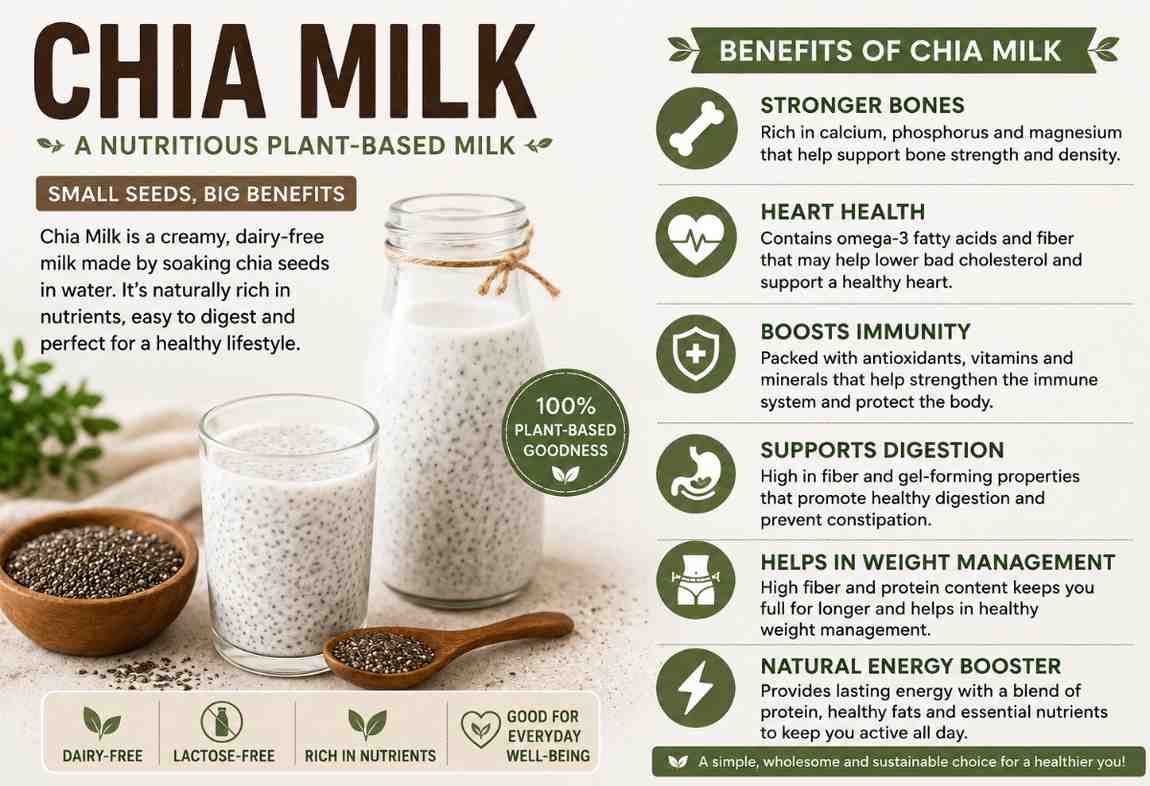
Chia milk is a simple plant-based drink made by combining chia seeds with water or another milk of your choice. As chia seeds absorb liquid, they develop a soft, gel-like texture and add fiber, plant-based omega-3 fatty acids, protein, minerals, and other beneficial plant compounds to the drink.
Because chia seeds are naturally nutrient-dense, chia milk can be an easy way to add more fiber and healthy fats to your daily diet. However, it is important to remember that chia milk is not a cure or replacement for medical treatment, and many of the health claims associated with chia are still being studied.
What Is Chia Milk?
Chia milk is a homemade beverage prepared by mixing or blending chia seeds with water, dairy milk, or plant-based milk. Some recipes soak whole chia seeds in liquid, while others blend the seeds to create a smoother drink.
Unlike many commercial plant milks, homemade chia milk does not have one standardized nutritional profile. Its nutrition depends on the amount of chia seeds used and whether the base is water, cow’s milk, almond milk, soy milk, oat milk, or another beverage.
Chia seeds are rich in dietary fiber, alpha-linolenic acid (ALA), plant protein, minerals, and antioxidant compounds. Research reviews have investigated chia consumption for possible effects on blood pressure, blood lipids, waist circumference, blood glucose, and other cardiometabolic measures, although results are not uniform across studies. (PubMed)
For this reason, it is better to think of chia milk as a nutrient-rich addition to a balanced diet rather than a “detox” or miracle drink.
Nutrition Facts of Chia Milk
Here is an approximate nutrition profile for 1 cup of homemade chia milk made with about 2 tablespoons (24–25 g) of chia seeds and water. Actual values vary according to the recipe and ingredients used.
| Nutrient | Approximate Amount per 1 Cup |
|---|---|
| Calories | 115–120 kcal |
| Protein | 4 g |
| Total Fat | 7–8 g |
| Saturated Fat | Less than 1 g |
| Carbohydrates | 10 g |
| Dietary Fiber | 8–9 g |
| Sugars | Less than 1 g |
| Calcium | About 150 mg |
| Magnesium | About 80–90 mg |
| Phosphorus | About 200 mg |
| Potassium | About 100–120 mg |
| Omega-3 ALA | About 4–5 g |
If chia seeds are blended with dairy or fortified plant milk instead of water, the calories, protein, calcium, vitamin D, vitamin B12, and other nutrients can be considerably different.
20 Science-Backed Health Benefits of Chia Milk
1. Supports Digestive Health: The high fiber content of chia seeds can help support regular bowel movements and overall digestive health when consumed with sufficient fluids.
2. Provides Plant-Based Omega-3 Fatty Acids: Chia seeds are one of the better plant sources of alpha-linolenic acid (ALA), an essential omega-3 fatty acid.
3. May Support Heart Health: The combination of fiber, ALA, minerals, and other plant compounds makes chia a useful addition to a heart-conscious eating pattern.
4. May Help Maintain Healthy Blood Pressure: Recent systematic reviews and meta-analyses of randomized trials suggest that chia consumption may modestly reduce systolic and diastolic blood pressure, although more high-quality research is needed.
5. Helps Increase Fiber Intake: A serving of chia milk can provide a substantial amount of dietary fiber, making it useful for people who struggle to get enough fiber from their usual meals.
6. May Promote Fullness: Chia seeds absorb liquid and expand into a gel, while their fiber and fat content can contribute to a feeling of fullness after eating.
7. Supports Healthy Digestion: Soluble fiber in chia forms a gel-like substance that can slow digestion and contribute to normal intestinal function.
8. Provides Plant Protein: Chia contributes plant-based protein containing several essential amino acids, making it a useful addition to vegetarian and plant-forward diets.
9. Supplies Calcium: Chia seeds naturally contain calcium, which contributes to normal bone and tooth maintenance.
10. Provides Magnesium: Magnesium from chia contributes to normal muscle function, nerve function, energy metabolism, and bone health.
11. Provides Phosphorus: Chia seeds contain phosphorus, a mineral involved in normal bone structure, energy metabolism, and cell function.
12. May Support Cardiometabolic Health: Clinical research has explored chia for effects on blood pressure, waist circumference, lipids, and inflammatory markers, with some studies showing modest improvements in selected measures.
13. May Help Support Healthy Cholesterol Levels: Some systematic reviews suggest potentially favorable effects on certain lipid measures, although findings between individual trials have been inconsistent.
14. May Support Blood Sugar Management: Chia’s fiber content may influence digestion and post-meal glucose responses, but chia should not be considered a treatment for diabetes.
15. Provides Antioxidant Compounds: Chia contains plant compounds with antioxidant activity, including polyphenolic compounds that help protect cells from oxidative stress.
16. May Support Weight-Management Goals: The fiber and fat in chia can increase satiety, but clinical research does not consistently show that chia directly causes weight loss.
17. May Support Healthy Waist Circumference: Some recent meta-analyses have reported modest reductions in waist circumference among adults consuming chia, although the evidence remains limited.
18. Supports Normal Bone Health: Calcium, phosphorus, magnesium, and protein in chia contribute nutrients needed for maintaining healthy bones.
19. Naturally Gluten-Free: Pure chia seeds do not naturally contain gluten, making chia milk suitable for people following a gluten-free diet when cross-contamination is avoided.
20. Easy Way to Add Nutrients to Meals: Chia milk can provide fiber, ALA, protein, and minerals without requiring complicated preparation.
10 Side Effects of Chia Milk
1. Bloating: Suddenly consuming a large amount of chia can increase intestinal gas and bloating because of its high fiber content.
2. Gas: A rapid increase in dietary fiber may cause additional gas, particularly in people who are not accustomed to high-fiber foods.
3. Constipation: Chia usually supports bowel regularity, but consuming large amounts without enough fluid can sometimes worsen constipation.
4. Diarrhea: Excessive amounts may cause loose stools or diarrhea in sensitive individuals.
5. Abdominal Discomfort: Some people may experience stomach cramps or discomfort after consuming a large serving.
6. Difficulty Swallowing: Dry chia seeds can absorb liquid and expand, so swallowing large amounts of dry seeds is not recommended.
7. Allergic Reactions: Although uncommon, people allergic to chia may experience symptoms such as itching, swelling, rash, or breathing difficulties.
8. Blood Sugar Changes: Because chia may affect digestion and post-meal glucose responses, people taking glucose-lowering medication should monitor their blood sugar appropriately.
9. Possible Blood-Pressure Effects: Chia may modestly influence blood pressure, which could be relevant for people taking blood-pressure medication.
10. Extra Calories: Large servings of chia milk can add considerable calories because chia seeds contain substantial amounts of fat and energy.
How to Make Chia Milk?
Ingredients:
- 2 tablespoons chia seeds
- 1 cup water or unsweetened plant milk
- ½ teaspoon vanilla extract, optional
- Cinnamon, optional
- A small amount of fruit or natural sweetener, optional
Method:
- Add the chia seeds and liquid to a blender.
- Blend until the mixture becomes creamy and the seeds are finely dispersed.
- Allow it to stand for approximately 5–10 minutes.
- Blend again if you prefer a smoother consistency.
- Add cinnamon or vanilla if desired.
- Drink immediately or refrigerate it for later use.
For a thicker drink, use more chia seeds. For a thinner drink, increase the amount of liquid.
If you prefer visible chia seeds rather than a smooth drink, simply stir the seeds into the liquid and refrigerate for several hours.
How to Drink Chia Milk?
Chia milk can be consumed chilled or incorporated into breakfast and snacks.
Start with a small serving if you are not accustomed to eating much fiber. Drink it slowly and make sure your overall fluid intake is adequate.
You can combine chia milk with:
- Oatmeal
- Smoothies
- Fruit
- Cereal
- Granola
- Overnight oats
- Coffee
- Protein smoothies
- Homemade puddings
Avoid swallowing large quantities of dry chia seeds separately from liquid.
Tips for Consuming Chia Milk
- Start with 1 tablespoon of chia seeds if you are new to high-fiber foods.
- Increase the amount gradually according to your tolerance.
- Drink enough water throughout the day.
- Choose unsweetened milk when you want to keep added sugar low.
- Check plant-milk labels for added sugar and fortification.
- Use fresh chia seeds with a pleasant, mild smell.
- Refrigerate homemade chia milk rather than leaving it at room temperature.
- Combine it with fruit or other whole foods for a more balanced snack.
- Do not rely on chia milk alone to meet your nutritional needs.
- If you have a medical condition or take medication, discuss regular high-dose chia consumption with your healthcare professional.
How to Use Chia Milk?
Chia milk can be used as a beverage or as an ingredient.
You can add it to breakfast cereal, oatmeal, smoothies, overnight oats, pancake batter, homemade puddings, chia pudding, or protein shakes.
It can also be used as a base for fruit smoothies. If using commercial plant milk as the base, choose a variety that fits your dietary needs.
Other Uses of Chia Milk
Chia milk can be useful in several everyday recipes:
- Smoothies: Use it as a fiber-rich liquid base.
- Overnight Oats: Mix it with oats and refrigerate overnight.
- Chia Pudding: Combine chia milk with additional chia seeds for a thicker pudding.
- Cereal: Pour it over breakfast cereal or granola.
- Pancakes: Add a small amount to pancake batter.
- Porridge: Stir it into cooked oats or other whole grains.
- Desserts: Use it in homemade puddings and similar recipes.
- Coffee Drinks: A small amount can be incorporated into certain cold coffee beverages.
How Much Chia Milk Can You Drink in a Day?
There is no universally established daily amount specifically for chia milk.
For most healthy adults, a practical starting point is 1 cup of chia milk containing about 1–2 tablespoons of chia seeds per day. If you tolerate it well, the amount can be adjusted according to your overall diet.
Remember that chia seeds are very high in fiber. Eating several large servings every day may cause digestive symptoms, particularly if your usual diet is low in fiber.
More is not necessarily better.
Best Time to Drink Chia Milk
There is no scientifically established “best” time to drink chia milk.
In the Morning
Chia milk can be added to breakfast to provide fiber, fat, and plant protein.
Before or With a Meal
Its fiber content may make it a satisfying addition to a balanced meal.
As an Afternoon Snack
Chia milk can be combined with fruit or yogurt for a filling snack.
In the Evening
It can also be consumed in the evening if it does not cause bloating or digestive discomfort.
The most important factor is choosing a time that fits comfortably into your diet rather than drinking it at a specific “magic” hour.
Who Should Drink Chia Milk?
- People Looking for More Fiber: Chia milk can be useful for adults who want to increase dietary fiber gradually.
- People Following Plant-Forward Diets: Chia milk made with plant-based milk can fit well into vegetarian and vegan eating patterns.
- People Seeking Plant Omega-3s: Chia provides alpha-linolenic acid, a plant-based omega-3 fatty acid.
- People Wanting a Nutrient-Dense Breakfast: Chia milk can make smoothies, oats, and breakfast bowls more filling and nutritious.
- People Following Gluten-Free Diets: Pure chia seeds are naturally gluten-free, provided the ingredients are not contaminated during processing.
- People Wanting More Variety: Chia milk offers another way to incorporate seeds into an otherwise varied diet.
Who Should Avoid Chia Milk?
- People With a Chia Allergy: Anyone with a known chia allergy should avoid chia milk and products containing chia.
- People With Swallowing Difficulties: Individuals with swallowing problems should discuss chia consumption with a healthcare professional because chia absorbs liquid and expands.
- People With Severe Digestive Sensitivity: Those who experience significant symptoms from high-fiber foods may need to limit or gradually introduce chia.
- People Taking Certain Medications: Anyone taking medication for blood pressure, blood sugar, or other conditions should ask their healthcare professional whether regular high amounts of chia are appropriate.
- People With Fluid Restrictions: Individuals who have been medically instructed to restrict fluids should discuss chia-containing drinks with their healthcare team.
- People Who Develop Persistent Symptoms: Stop consuming chia milk and seek medical advice if you develop significant swelling, breathing difficulty, severe abdominal symptoms, or other concerning reactions.
How to Store Chia Milk?
- Refrigerate Promptly: Homemade chia milk should be refrigerated rather than stored at room temperature for extended periods.
- Use a Clean Container: Store it in a clean, airtight glass jar or food-safe container.
- Shake Before Drinking: Chia seeds can settle at the bottom, so shake or stir the beverage before consuming.
- Check for Spoilage: Discard it if it develops an unusual smell, appearance, taste, mold, or other signs of spoilage.
- Prepare Small Batches: Making a small quantity helps maintain freshness and reduces food waste.
- Follow the Base Milk’s Storage Guidance: If you use dairy or plant milk, follow the storage instructions for that ingredient and keep the finished drink refrigerated.
Precautions and Interactions
Chia milk is generally considered a food rather than a medication, but its high fiber content means it should be introduced gradually.
People taking medication for diabetes or high blood pressure should be aware that chia consumption may influence some metabolic measurements. Clinical evidence suggests possible effects on blood pressure, while effects on blood glucose have been inconsistent.
If you take prescription medicines, especially medicines that affect blood sugar, blood pressure, or blood clotting, speak with your doctor or pharmacist before consuming large amounts of chia regularly.
Also remember that chia milk does not provide all the nutrients required for a balanced diet. It should complement vegetables, fruits, whole grains, legumes, nuts, seeds, and appropriate sources of protein rather than replace them.
FAQ’s
What is Chia Milk good for?
Chia milk is good for adding fiber, plant-based omega-3 ALA, protein, calcium, magnesium, and antioxidants to your diet. It may also support digestion, fullness, and overall heart health.
Is it good to drink milk with chia seeds?
Yes, combining milk with chia seeds can be a nutritious choice. Milk provides protein and calcium, while chia seeds add fiber and healthy fats. Choose unsweetened milk if you want to reduce added sugar.
Can chia seeds be boiled in milk?
Yes, chia seeds can be heated with milk, but boiling is not necessary. Gentle heating can be used for porridge or pudding, while soaking chia seeds in milk is a simple alternative.
Can I soak chia seeds in milk overnight?
Yes. You can soak chia seeds in milk overnight in the refrigerator. The seeds absorb the liquid and develop a thick, gel-like texture, making them suitable for breakfast or chia pudding.
How much milk for 2 tablespoons of chia seeds?
A good starting ratio is 1 cup (240 ml) of milk for 2 tablespoons of chia seeds. For a thinner consistency, add more milk; for a thicker pudding-like texture, use slightly less.
Is Chia Milk healthy?
Yes, chia seeds milk can be nutritious because chia seeds provide fiber, plant-based omega-3 ALA, protein, calcium, magnesium, and other nutrients.
Can I drink Chia Milk every day?
Most healthy adults can consume a moderate amount daily if they tolerate chia well and maintain adequate fluid intake.
Does Chia Milk help with weight loss?
Chia seed milk may help you feel fuller because of its fiber content, but it does not directly cause weight loss.
Does Chia Milk help with constipation?
The fiber in chia may support regular bowel movements, especially when consumed with enough fluids.
What does Chia Milk taste like?
Chia milk usually has a mild, slightly nutty flavor, while the taste largely depends on the milk or other ingredients used.
What does Chia Milk smell like?
Fresh chia milk generally has a mild, neutral or slightly nutty smell; a sour or unpleasant odor may indicate spoilage.
How long does Chia Milk take to work?
There is no specific time for chia milk to “work.” Digestive effects from its fiber may vary from person to person.
Can I drink Chia Milk at night?
Yes, you can drink chia milk at night if it does not cause bloating or digestive discomfort.
Is Chia Milk good for the skin?
Chia milk provides nutrients such as omega-3 ALA, protein, and antioxidants that support overall nutrition, but it is not a proven treatment for skin problems.
Is Chia Milk good for hair?
Its protein, minerals, and healthy fats can contribute to a balanced diet that supports normal hair health, but chia milk does not directly treat hair loss.
Can Chia Milk help lower cholesterol?
Chia consumption may have favorable effects on some cholesterol measures, but research findings are mixed and more evidence is needed.
Does Chia Milk contain omega-3?
Yes, chia seeds are particularly rich in alpha-linolenic acid (ALA), a plant-based omega-3 fatty acid.
Is Chia Milk good for diabetes?
Chia’s fiber may influence digestion and blood-glucose responses, but chia milk should not replace diabetes medication or medical treatment.
Can pregnant women drink Chia Milk?
Chia seeds can be part of a healthy pregnancy diet for many people, but pregnant women should discuss individual dietary needs with their healthcare provider.
Can children drink Chia Milk?
Children may consume chia as part of an age-appropriate diet, but portions should be suitable for their age and chia should be adequately hydrated.
Can Chia Milk replace regular milk?
It can replace milk in some recipes, but its nutritional profile is different. If using plant-based milk, choose a fortified option if you need nutrients such as calcium or vitamin B12.
Can I drink Chia Milk on an empty stomach?
Yes, but people who are sensitive to high-fiber foods may prefer drinking it with a meal to reduce the chance of digestive discomfort.
The Bottom Line
Chia milk is an easy way to incorporate chia seeds into everyday meals and drinks. Its main nutritional strengths are dietary fiber, plant-based omega-3 ALA, protein, calcium, magnesium, phosphorus, and antioxidant compounds.
Current research suggests that chia consumption may have modest benefits for blood pressure and certain cardiometabolic measures, but the evidence is not strong enough to treat chia as a medicine or miracle food.
For most people, the best approach is simple: start with a moderate amount, drink enough fluids, choose minimally sweetened ingredients, and include chia milk as part of an overall balanced diet.
Sources / References:
- Harvard T.H. Chan School of Public Health
- PubMed
- MedlinePlus – Healthy Food Trends
- NIH – Health Benefits of Dietary Fiber
About the Author:
Written by: Kirti Solanki (Health Content Researcher)
Kirti Solanki writes research-informed health and nutrition content, focusing on clear, practical information for everyday readers.
Disclaimer:
This article is for educational purposes only and does not replace professional medical advice, diagnosis, or treatment. If you have a medical condition, take medication, are pregnant, or have concerns about consuming chia regularly, consult a qualified healthcare professional.
Also Read: