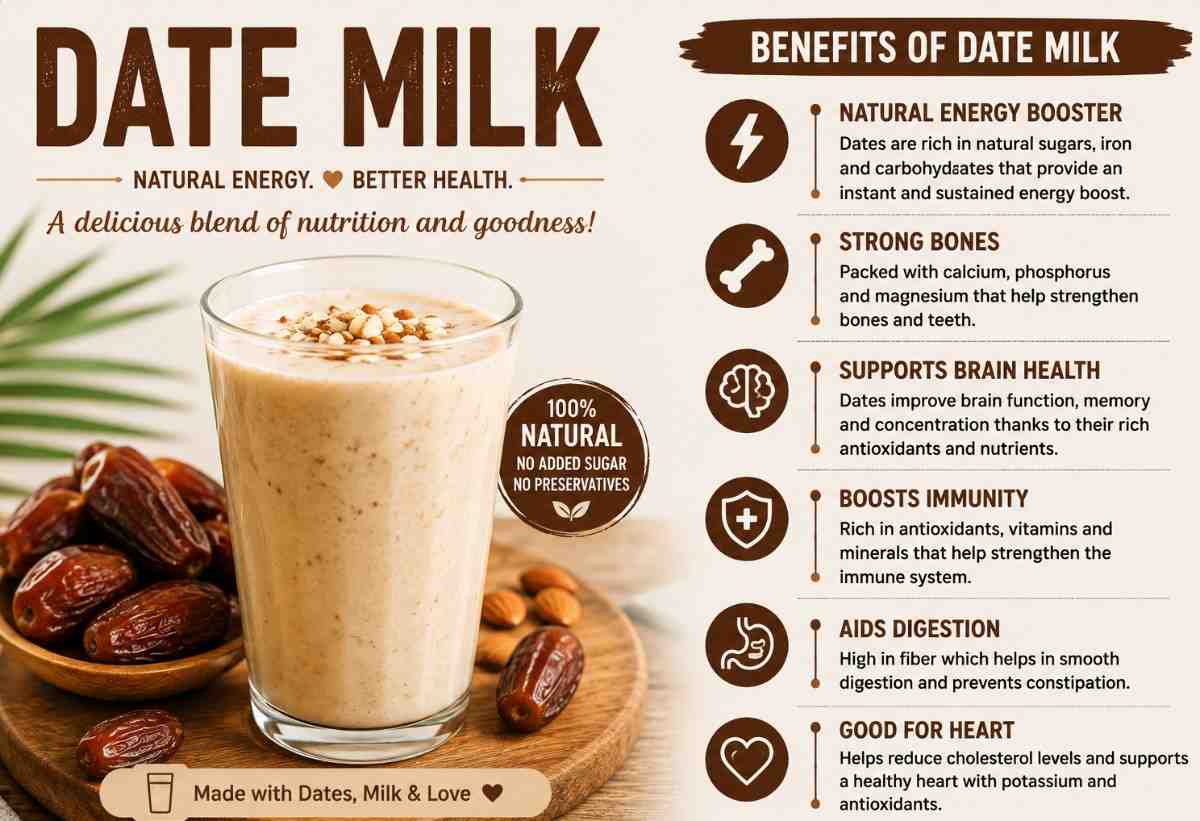
Date milk is a naturally sweet, creamy drink made by blending dates with milk. It is simple, comforting, and can be enjoyed warm or chilled. Unlike many flavored milk drinks that rely on refined sugar or syrups, date milk gets most of its sweetness from whole dates.
Dates provide carbohydrates, fiber, potassium, magnesium, and various plant compounds, while milk contributes protein, calcium, and other essential nutrients. However, the nutritional value can vary considerably depending on the type and number of dates used, the milk selected, and whether additional sweeteners are added.
Date milk can fit into a balanced diet, but it is best viewed as a nutritious beverage rather than a miracle drink. Research on dates suggests potential benefits for blood glucose control and metabolic health, although more high-quality human research is needed.
What Is Date Milk?
Date milk is a beverage prepared by blending pitted dates with milk until smooth and creamy. The dates can be soaked first to soften them, making them easier to blend and giving the drink a smoother texture.
You can prepare it with dairy milk or plant-based alternatives such as almond, soy, oat, or coconut milk. Dairy milk generally provides more naturally occurring protein and calcium, while fortified plant milks may offer similar nutrients depending on the product.
Date milk has a naturally caramel-like sweetness from dates and usually does not need added sugar.
Nutrition Facts of Date Milk
The following is an approximate nutrition profile for 1 cup of date milk made with 1 cup whole milk and 2 Medjool dates. Actual values vary according to the date variety, milk, and serving size.
| Nutrient | Approximate Amount |
|---|---|
| Calories | 280 kcal |
| Protein | 8 g |
| Total Carbohydrates | 48 g |
| Dietary Fiber | 3–4 g |
| Total Sugars | 42–44 g |
| Total Fat | 8 g |
| Saturated Fat | 5 g |
| Calcium | 275–300 mg |
| Potassium | 450–550 mg |
| Magnesium | 25–35 mg |
| Phosphorus | 200–230 mg |
| Iron | 0.5–1 mg |
| Sodium | 100–110 mg |
Dates are particularly rich in carbohydrates and also provide fiber and minerals such as potassium, magnesium, calcium, phosphorus, and iron.
20 Proven Health Benefits of Date Milk
1. Provides Quick Energy: The natural carbohydrates in dates can provide readily available energy, making date milk a convenient choice for breakfast or a filling snack.
2. Supports Bone Health: Milk supplies calcium and phosphorus, nutrients that contribute to maintaining normal bones and teeth.
3. Provides Dietary Fiber: Dates contain dietary fiber, which supports normal digestion and contributes to overall digestive health. Fiber is also associated with benefits for metabolic and cardiovascular health.
4. Supports Muscle Function: The potassium and magnesium supplied by dates, together with protein from milk, contribute to normal muscle and nerve function.
5. Helps Meet Protein Needs: Dairy milk provides high-quality protein that can contribute to daily protein requirements and help support muscle maintenance.
6. Supports Heart-Friendly Nutrition: Dates provide potassium and plant compounds, while a balanced diet rich in fiber-containing foods can support cardiovascular health.
7. May Support Healthy Blood Pressure: Potassium plays an important role in maintaining normal blood pressure, although date milk should not be considered a treatment for hypertension.
8. Provides Antioxidant Compounds: Dates contain phenolic compounds, flavonoids, carotenoids, and other bioactive substances that contribute antioxidant activity.
9. Supports Digestive Regularity: The fiber naturally present in dates can help support regular bowel movements when consumed as part of an adequate-fiber diet.
10. May Help With Satiety: The combination of carbohydrates, fiber, and protein can make date milk more satisfying than a sugary drink containing little nutritional value.
11. Supports Recovery After Activity: The combination of carbohydrates from dates and protein from milk can make date milk a practical post-exercise snack.
12. Provides Magnesium: Dates contribute magnesium, a mineral involved in normal muscle, nerve, and energy metabolism.
13. Provides Potassium: Dates are a useful source of potassium, an essential mineral involved in fluid balance, nerve signaling, and muscle contraction.
14. Supplies Calcium: When made with dairy or calcium-fortified plant milk, date milk can contribute meaningfully to daily calcium intake.
15. May Support Metabolic Health: Research examining dates has reported potentially favorable effects on some metabolic measures, although the available clinical evidence remains limited and varied.
16. May Be a Better Alternative to Refined-Sugar Drinks: Using dates for sweetness can reduce the need for table sugar, flavored syrups, or other added sweeteners.
17. Supports Nutrient Intake During Busy Days: A homemade glass of date milk can provide carbohydrates, protein, minerals, and calories in a convenient form.
18. Can Support a Balanced Breakfast: Combined with oats, nuts, seeds, or fruit, date milk can become part of a more complete breakfast.
19. Provides Naturally Occurring Micronutrients: Dates contain several minerals and smaller amounts of vitamins, while milk adds nutrients such as calcium, phosphorus, riboflavin, and vitamin B12 when dairy milk is used.
20. Offers a Nutrient-Dense Sweet Option: Date milk can satisfy a preference for something sweet while providing more nutrients than many sugar-sweetened beverages.
10 Side Effects of Date Milk
Date milk is generally well tolerated by most people, but drinking large portions or choosing an unsuitable milk can cause problems.
1. May Increase Calorie Intake: Large servings containing several dates can be calorie-dense and may contribute excess calories when consumed frequently.
2. Can Raise Blood Sugar: Dates contain substantial amounts of naturally occurring sugar and carbohydrates, so large servings can increase blood glucose.
3. May Cause Digestive Discomfort: Suddenly consuming a large amount of dates and fiber may cause bloating, gas, or abdominal discomfort in some people.
4. May Cause Diarrhea in Sensitive Individuals: A large amount of dates or milk may loosen stools in people who are sensitive to either ingredient.
5. Can Trigger Lactose-Related Symptoms: Date milk made with regular dairy milk may cause bloating, gas, cramps, or diarrhea in people with lactose intolerance.
6. May Cause Allergic Reactions: People allergic to milk or a particular plant-based milk ingredient should avoid the relevant version of date milk.
7. May Be Too Sweet for Some Diets: Using multiple dates can make the drink surprisingly high in total sugar even without adding refined sugar.
8. May Affect Weight Goals: Regularly drinking large portions can make it harder to maintain a calorie deficit if weight loss is the goal.
9. May Be Problematic for Certain Kidney Conditions: Because dates provide potassium, people who have been advised to restrict potassium should discuss their intake with their healthcare professional.
10. May Interfere With Individual Dietary Restrictions: Ingredients such as dairy, nuts, soy, or oats can make certain versions unsuitable for people with allergies or medically prescribed diets.
How to Make Date Milk?
Making date milk at home requires only a few ingredients.
Ingredients:
- 1 cup milk of your choice
- 2–3 pitted dates
- ¼ teaspoon cinnamon, optional
- ¼ teaspoon vanilla extract, optional
- A few ice cubes for a chilled version, optional
Method:
- Remove the pits from the dates.
- Soak the dates in warm water for about 10–15 minutes if they are firm or dry.
- Drain the dates.
- Add the dates and milk to a blender.
- Blend until smooth and creamy.
- Add cinnamon or vanilla if desired.
- Serve immediately, either chilled or gently warmed.
There is usually no need to add sugar because dates provide plenty of natural sweetness.
How to Drink Date Milk?
Date milk can be enjoyed in several simple ways.
You can drink it chilled as a breakfast beverage, blend it with oats for a more substantial smoothie, or gently warm it for a comforting evening drink.
For a more balanced snack, pair a smaller serving of date milk with nuts, seeds, eggs, or another protein-rich food. If you are monitoring carbohydrates or calories, use fewer dates and choose an unsweetened milk.
Tips for Consuming Date Milk
- Use naturally soft, good-quality dates for a smoother drink.
- Remove all pits before blending.
- Soak firm dates before blending.
- Avoid adding unnecessary sugar, honey, or syrup.
- Start with one or two dates if you are new to the drink.
- Choose unsweetened plant milk when you want to limit added sugars.
- Use dairy milk or fortified plant milk if you want the drink to contribute calcium and protein.
- Keep portions moderate because dates are naturally calorie- and carbohydrate-dense.
- Drink it alongside a balanced meal rather than relying on it as your only source of nutrition.
- Check packaged plant-milk labels for added sugar and allergen information.
How to Use Date Milk?
Date milk is versatile and can be incorporated into everyday meals.
You can use it as:
- A breakfast drink
- A post-workout beverage
- A smoothie base
- An ingredient in overnight oats
- A liquid for chia pudding
- A base for homemade cereal
- A naturally sweet ingredient in oatmeal
- A milk substitute in selected desserts
- A base for homemade milkshakes
- A warm bedtime-style beverage
Other Uses of Date Milk
Beyond drinking it on its own, date milk can add natural sweetness and creaminess to recipes.
Smoothies
Use date milk as the liquid base for banana, cocoa, peanut butter, or berry smoothies.
Oatmeal
Pour date milk over oats or cook oats with it for a naturally sweeter breakfast.
Chia Pudding
Combine date milk with chia seeds and refrigerate overnight for a creamy breakfast or snack.
Coffee and Beverages
A small amount can be added to coffee or blended beverages when you want mild natural sweetness.
Desserts
Date milk can be incorporated into homemade puddings, frozen desserts, and other recipes.
How Much Date Milk Can You Drink in a Day?
For most healthy adults, about 1 cup (240 ml) per day is a reasonable general serving.
The appropriate amount depends on your overall diet, calorie requirements, activity level, blood glucose management, and the recipe used.
If your date milk contains three to four large Medjool dates, its carbohydrate and calorie content can be substantially higher than a version made with one or two smaller dates.
People managing diabetes do not necessarily have to eliminate dates. Research suggests dates may be compatible with blood-glucose management for some people, but the evidence is limited and different date varieties have different glycemic characteristics. Portion size remains important.
Best Time to Drink Date Milk
There is no medically established “best” time for everyone.
Morning
Date milk can work well at breakfast because its carbohydrates provide energy while milk contributes protein and other nutrients.
Before Exercise
A small serving may provide carbohydrates before physical activity, especially when consumed as part of a balanced eating pattern.
After Exercise
The combination of carbohydrates and milk protein can make it a convenient recovery beverage.
Evening
A warm, modest serving can be enjoyed in the evening if it fits your overall calorie and carbohydrate intake.
The best time is therefore the time that fits your dietary needs and routine rather than a specific hour of the day.
Who Should Drink Date Milk?
- Healthy Adults: Healthy adults can generally enjoy moderate portions of date milk as part of a balanced diet.
- Active Individuals: People with higher energy requirements may find date milk useful as a convenient source of carbohydrates and calories.
- People Looking for Naturally Sweet Drinks: Those trying to reduce their dependence on refined sugar may use dates to sweeten homemade milk beverages.
- Vegetarians: Date milk made with dairy or suitable fortified plant milk can fit into many vegetarian eating patterns.
- People Needing More Calcium: Date milk made with dairy or calcium-fortified plant milk can contribute to daily calcium intake.
- People Wanting a Convenient Snack: A moderate serving can provide carbohydrates, protein, and several micronutrients in one drink.
Who Should Avoid Date Milk?
- People With Milk Allergy: Anyone with a cow’s milk allergy should avoid dairy-based date milk and use an appropriate alternative only if it is safe for them.
- People With Lactose Intolerance: Those who do not tolerate lactose should choose lactose-free milk or a suitable plant-based alternative.
- People With Date Allergy: Anyone with a known allergy to dates should avoid date milk.
- People With Certain Kidney Conditions: Individuals who have been instructed to limit potassium should ask their healthcare professional whether dates and date milk fit their diet.
- People Following Strict Carbohydrate Restrictions: Because dates are carbohydrate-rich, date milk may not fit some very-low-carbohydrate diets.
- People Monitoring Calorie Intake: Large servings may add significant calories, particularly when several dates are used.
- People With Specific Food Allergies: Check the milk and any additional ingredients carefully if you have allergies to nuts, soy, oats, or other ingredients.
How to Store Date Milk?
- Refrigerate Promptly: Store homemade date milk in a clean, covered container in the refrigerator.
- Use Quickly: For best quality and food safety, it is preferable to consume homemade date milk within about 24–48 hours.
- Shake Before Drinking: Separation can occur naturally, so shake or stir the beverage before consuming.
- Do Not Leave It at Room Temperature: Perishable milk-based beverages should not be left unrefrigerated for extended periods.
- Freeze When Appropriate: Date milk can be frozen in suitable containers, although freezing may change its texture after thawing.
- Keep the Container Clean: Always use a clean, sealed container and avoid drinking directly from the storage container if you plan to keep the remainder.
Precautions and Interactions
Date milk is a food rather than a medication, so clinically significant drug interactions are not generally expected. However, a few precautions are worth considering.
- Blood glucose: Date milk contains carbohydrates and natural sugars. People with diabetes should consider the amount of dates and milk used and monitor their individual glucose response when appropriate.
- Potassium: Dates contain potassium. People with kidney disease or those prescribed potassium restrictions should ask their healthcare professional before regularly consuming large amounts.
- Calories: Date milk can become calorie-dense when several dates, full-fat milk, nut butter, or other ingredients are added.
- Added sugar: Avoid assuming that “natural” sweetness means low sugar. Dates still contribute substantial carbohydrates and sugars.
- Food allergies: Check every ingredient, particularly when using nut, soy, or oat milk.
- Digestive sensitivity: Introduce larger amounts of dates gradually if you are not accustomed to a high-fiber diet.
- Medication and medical conditions: If you take medication for diabetes, kidney disease, or another condition requiring dietary restrictions, discuss regular consumption with your doctor or registered dietitian.
FAQ’s
Is Date Milk healthy?
Yes, dates milk can be a nutritious beverage because dates provide fiber, potassium, and other minerals, while milk can provide protein and calcium.
Can I drink Date Milk every day?
Yes, most healthy adults can enjoy about 1 cup of dates milk daily as part of a balanced diet, depending on their calorie and carbohydrate needs.
Does Date Milk increase blood sugar?
Yes, dates milk can raise blood sugar because dates naturally contain carbohydrates and sugars. Portion size is especially important for people with diabetes.
Is Date Milk good for weight gain?
Dates milk can support weight gain when it helps provide more calories than you burn, particularly when made with full-fat milk and several dates.
Can Date Milk help with constipation?
It may support digestive regularity because dates contain dietary fiber, especially when consumed as part of a fiber-rich diet with adequate fluids.
Is Date Milk good for bones?
Yes, especially when made with dairy or calcium-fortified plant milk, because it can provide calcium and phosphorus needed for healthy bones.
Can I drink Date Milk at night?
Yes, you can drink a moderate serving at night if it fits your diet and does not cause digestive discomfort.
Can I make Date Milk without sugar?
Yes. Dates are naturally sweet, so additional sugar, honey, or syrup is usually unnecessary.
Is Date Milk good before a workout?
It can be a convenient source of carbohydrates before exercise, particularly when consumed in a moderate portion.
Is Date Milk good after a workout?
Yes, dates milk made with dairy or protein-rich plant milk provides carbohydrates along with protein, making it a practical post-workout beverage.
Can I make Date Milk with almond milk?
Yes. Unsweetened almond milk can be used to make dates milk, although its protein content is generally lower than dairy or soy milk.
Can lactose-intolerant people drink Date Milk?
They can use lactose-free milk or a suitable plant-based milk instead of regular dairy milk.
Can children drink Date Milk?
Children can generally have a small serving as part of a balanced diet, but it should not replace age-appropriate meals or required milk/formula.
Does Date Milk have protein?
Yes. The amount depends on the milk used. Dairy milk and soy milk generally provide more protein than almond or some other plant milks.
Does Date Milk help with energy?
The carbohydrates in dates provide a readily available source of energy, while milk adds protein and other nutrients.
Is Date Milk good for the heart?
Dates milk can contribute nutrients such as potassium and fiber, but it should be part of an overall heart-healthy diet rather than viewed as a treatment for heart disease.
Can people with diabetes drink Date Milk?
People with diabetes may be able to include a small portion, but the carbohydrate content should be considered. Individual blood-glucose responses can vary.
How long does homemade Date Milk last?
Homemade dates milk is best refrigerated in a sealed container and consumed within about 24–48 hours for quality and food safety.
What does Date Milk taste like?
Dates milk usually tastes creamy, naturally sweet, and mildly caramel-like, with the flavor becoming stronger as more dates are added.
What does Date Milk smell like?
It generally has a mild milky aroma with a sweet, caramel-like smell from the dates. Fresh dates milk should not have a sour or unpleasant odor.
Is Date Milk Safe for Pregnant Women?
Yes, dates milk can generally be consumed during pregnancy in moderate amounts if the milk is pasteurized and the dates are clean and properly prepared. However, it contains natural sugars and carbohydrates, so portion size is important, especially for women with gestational diabetes.
Is Date Milk Good for You?
Yes, dates milk can be a nutritious drink because dates provide fiber, potassium, magnesium, and other nutrients, while milk provides protein and calcium. Its health value depends on the ingredients, portion size, and your overall diet.
Is It Okay to Boil Dates in Milk?
Yes, dates can be gently simmered or heated with milk. However, prolonged boiling is not necessary. A better approach is to warm the milk with chopped, pitted dates and then blend until smooth. Avoid overheating or scorching the milk.
Sources / References:
- Glycemic Index of 3 Varieties of Dates – PubMed
- Science Direct
- National Institutes of Health
- USDA FoodData Central – Food and Nutrition Database
- PubMed – Date Fruit Consumption at Term
- CDC
About the Author:
Written by: Kirti Solanki (Health Content Researcher)
Kirti Solanki creates reader-friendly health and nutrition content based on reliable scientific and nutritional references.
Disclaimer:
This article is for general educational purposes and does not replace personalized medical advice. People with diabetes, kidney disease, food allergies, or other medical conditions should consult a qualified healthcare professional before making significant dietary changes.
Also Read: