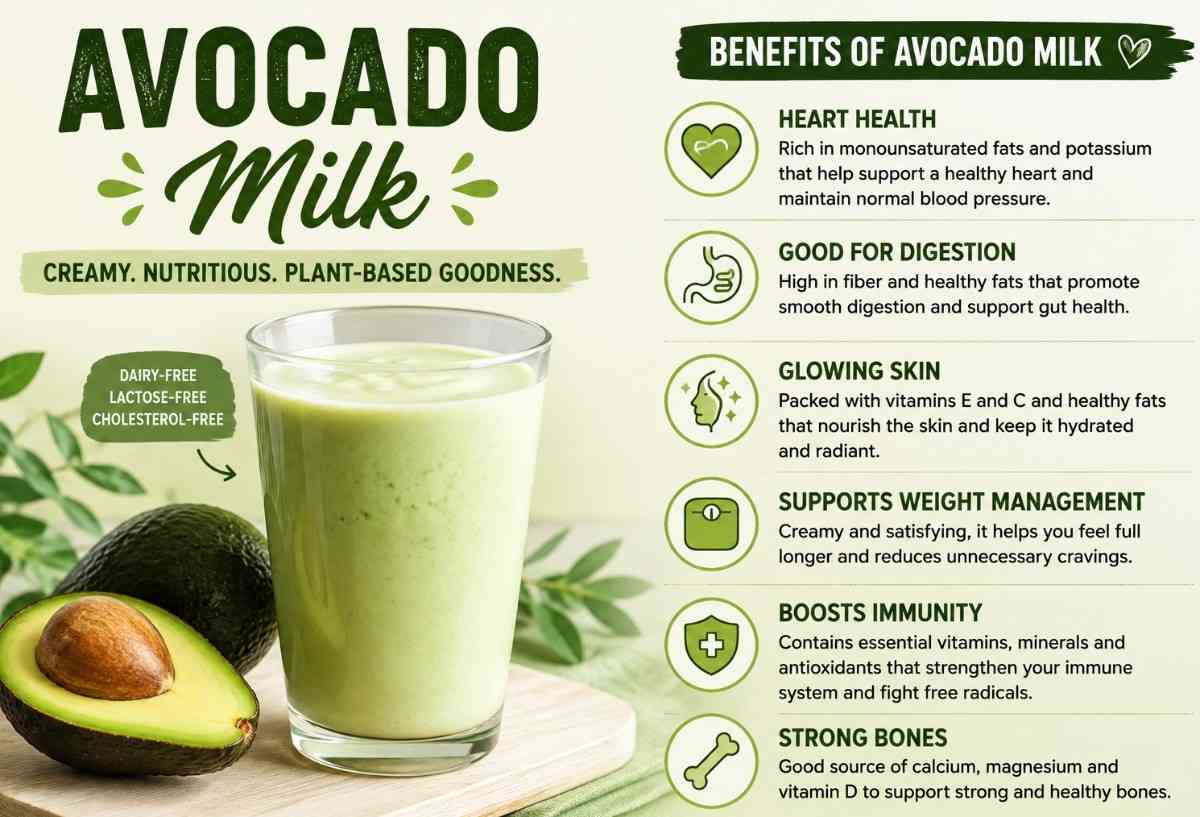
Avocado milk is a creamy, nutrient-rich drink made by blending ripe avocado with milk or a plant-based milk alternative. Unlike many fruit smoothies that are naturally watery or acidic, avocado milk has a thick, smooth texture and a mild, buttery flavor.
What makes it interesting nutritionally is that avocado contributes fiber, potassium, folate, vitamin K, vitamin E, and predominantly monounsaturated fats, while the type of milk you choose determines much of the drink’s protein, calcium, vitamin D, and additional nutrients.
What Is Avocado Milk?
Avocado milk is a blended beverage prepared from fresh avocado and milk. It can be made with dairy milk, almond milk, soy milk, oat milk, coconut milk, or another milk alternative.
A simple version contains only avocado, milk, and optionally a small amount of natural flavoring such as vanilla or cinnamon. For a sweeter drink, some people add dates, honey, maple syrup, or a small amount of sugar.
The avocado provides the drink’s creamy consistency and much of its fiber and healthy fat, while the milk provides liquid and can contribute protein, calcium, vitamin D, and other nutrients depending on the variety.
For a more nutritious everyday version, unsweetened milk is generally a better choice than heavily sweetened milk because it avoids adding unnecessary sugar.
Nutrition Facts of Avocado Milk
The following is an approximate nutrition profile for one 1-cup serving made with avocado and unsweetened milk. Exact values will change according to the avocado quantity and the milk selected.
| Nutrient | Approximate Amount per 1 Cup |
|---|---|
| Calories | 180–250 kcal |
| Protein | 3–8 g |
| Total Fat | 12–18 g |
| Saturated Fat | 2–5 g |
| Carbohydrates | 12–20 g |
| Dietary Fiber | 4–7 g |
| Natural Sugars | 2–8 g |
| Potassium | 400–650 mg |
| Calcium | 150–300 mg |
| Vitamin E | Moderate amount |
| Vitamin K | Moderate amount |
| Folate | Moderate amount |
| Sodium | 50–150 mg |
Note: These are estimates rather than laboratory-tested nutrition facts. Dairy, soy, almond, oat, and coconut milk have very different nutritional profiles, and sweeteners can substantially increase calories and sugar.
Avocados are particularly useful for their combination of fiber, potassium, monounsaturated fat, folate, vitamin C, vitamin K, and other nutrients. (American Heart Association)
20 Proven Health Benefits of Avocado Milk
1. Supports Heart Health: Avocado provides predominantly monounsaturated fat and fiber, nutrients that can fit well into a heart-healthy eating pattern when they replace foods higher in saturated fat.
2. May Help Support Healthy Cholesterol Levels: Research on avocado-containing diets has found improvements in some cholesterol measures, particularly when avocado replaces foods containing less healthy fats.
3. Provides Dietary Fiber: The avocado portion adds dietary fiber, which supports normal digestion and contributes to overall dietary fiber intake.
4. Supports Digestive Health: Fiber helps promote normal bowel function and can contribute to a healthier digestive system when consumed as part of an adequate-fiber diet.
5. Provides Potassium: Avocado is a useful source of potassium, an essential mineral involved in fluid balance, nerve function, and muscle contraction.
6. May Support Healthy Blood Pressure: Adequate potassium intake can help support healthy blood pressure, particularly when combined with a diet that is not excessively high in sodium.
7. Provides Healthy Unsaturated Fats: Avocado supplies monounsaturated fat, which can be used in place of foods rich in saturated fat as part of a balanced diet.
8. Supports Vitamin E Intake: Avocado contributes vitamin E, a fat-soluble antioxidant that helps protect cells from oxidative damage and supports normal immune function.
9. Provides Vitamin K: Avocado contributes vitamin K, a nutrient involved in normal blood clotting and bone health.
10. Supplies Folate: Avocado contains folate, a B vitamin required for DNA synthesis and normal cell division.
11. Can Support Satiety: The combination of fat and fiber can make avocado milk more filling than many fruit drinks that contain mostly carbohydrate and little fat or fiber.
12. Can Provide Sustained Energy: The calories from avocado’s fats and carbohydrates from the milk or optional ingredients can make the drink a convenient energy-containing snack or breakfast addition.
13. Supports Normal Muscle Function: Potassium and other minerals in avocado and milk contribute to normal muscle and nerve function.
14. Supports Bone Nutrition: Avocado contributes vitamin K, while dairy or fortified plant milk may supply calcium and vitamin D, creating a beverage that can contribute to a bone-supportive diet.
15. Helps Add Nutrient-Dense Foods to the Diet: Using avocado milk instead of a heavily sweetened beverage can be an easy way to include fruit and, depending on the milk, additional protein and micronutrients.
16. May Complement a Heart-Healthy Eating Pattern: The American Heart Association recommends choosing unsaturated fats instead of saturated fats, and avocado can be one food source of these healthier fats.
17. Supports a Balanced Breakfast: When made with protein-rich milk and paired with whole grains, nuts, seeds, or another protein source, avocado milk can become part of a more balanced meal.
18. May Help Increase Fruit Variety: Avocado provides a different nutritional profile from sweet fruits and can add variety to a diet centered on minimally processed foods.
19. Provides Antioxidant Nutrients: Vitamin E and other plant compounds in avocado contribute antioxidant activity, although this does not mean avocado milk prevents diseases caused by oxidative stress.
20. Can Be a Nutritious Alternative to Sugary Drinks: An unsweetened avocado milk prepared with nutritious ingredients can replace some beverages that provide substantial added sugar but relatively few nutrients.
10 Side Effects of Avocado Milk
1. Digestive Discomfort: A large serving may cause bloating, gas, or abdominal discomfort in people who are not accustomed to eating much fiber.
2. Extra Calories: Avocado is calorie-dense, so large servings of avocado milk can contribute significant calories even when no sugar is added.
3. Possible Weight Gain: Regularly drinking large portions without accounting for the calories elsewhere in the diet may contribute to unwanted weight gain.
4. Added Sugar Can Increase Calories: Honey, sugar, dates, syrups, and sweetened milk can turn an otherwise nutrient-rich drink into a much higher-sugar beverage.
5. Milk Allergy Reactions: People with a cow’s-milk allergy can experience symptoms if dairy milk is used.
6. Lactose-Related Symptoms: People with lactose intolerance may experience gas, bloating, diarrhea, or abdominal discomfort when avocado milk is prepared with regular dairy milk.
7. Possible Avocado Allergy: Although uncommon, avocado can trigger allergic reactions in susceptible individuals.
8. Potassium Concerns: People with certain kidney problems may need to limit potassium, so large quantities of avocado should not automatically be considered appropriate for everyone.
9. Medication-Related Concerns: The vitamin K content of avocado may be relevant for people taking warfarin because consistent vitamin K intake is important when using this medication.
10. Food-Safety Problems From Poor Storage: Homemade avocado milk is perishable and can become unsafe if it is left at room temperature for too long or stored improperly.
How to Make Avocado Milk?
Ingredients:
- 1/2 ripe avocado
- 1 cup milk or unsweetened plant milk
- 1/2 teaspoon vanilla extract, optional
- 1–2 dates or 1 teaspoon honey, optional
- A small pinch of cinnamon, optional
- A few ice cubes, optional
Method:
- Cut the avocado in half and remove the pit.
- Scoop the flesh into a blender.
- Add the milk.
- Add vanilla, cinnamon, or a small amount of sweetener if desired.
- Blend until completely smooth and creamy.
- Add a little more milk if you prefer a thinner consistency.
- Serve immediately for the best texture and flavor.
For a higher-protein version, use dairy milk or unsweetened soy milk. For a lower-calorie option, choose an unsweetened plant milk and use a smaller amount of avocado.
How to Drink Avocado Milk?
Avocado milk can be enjoyed chilled, at breakfast, as a snack, or alongside a meal.
It is naturally thick, so drinking it slowly rather than quickly can make it more satisfying. If you are using it as breakfast, consider pairing it with another protein- and fiber-containing food rather than relying on a sweetened avocado drink alone.
For everyday use, an unsweetened version is usually the simplest choice.
Tips for Consuming Avocado Milk
- Choose a ripe avocado that is creamy but not brown or spoiled.
- Use unsweetened milk when possible.
- Avoid adding large amounts of sugar or syrup.
- Start with a smaller serving if you are not used to high-fiber foods.
- Use soy or dairy milk when you want more protein.
- Use fortified plant milk when you want nutrients such as calcium and vitamin D.
- Drink it soon after preparation because avocado oxidizes and the drink can change color.
- Keep homemade avocado milk refrigerated.
- Shake or stir it before drinking if separation occurs.
- Treat avocado milk as part of your overall diet rather than as a cure or detox drink.
How to Use Avocado Milk?
Avocado milk is most commonly consumed as a beverage, but its creamy consistency gives it several culinary uses.
You can use it as:
- A breakfast smoothie
- A post-workout snack when paired with a protein source
- A filling afternoon drink
- A smoothie base
- A creamy ingredient in breakfast bowls
- A base for chia pudding
- A liquid ingredient in overnight oats
- A base for fruit smoothies
- A creamy addition to homemade shakes
- A substitute for some dairy or plant milk in selected recipes
If using it in cooking, remember that avocado can change color and texture when exposed to air, so freshly prepared avocado milk usually works best.
Other Uses of Avocado Milk
Avocado milk can also be incorporated into homemade foods and drinks.
Smoothies
Blend avocado milk with banana, berries, spinach, or oats for a thicker smoothie.
Chia Pudding
Use avocado milk as the liquid base for chia seeds and refrigerate until the mixture thickens.
Overnight Oats
Add a small amount of avocado milk to oats with chia seeds and fruit for a creamy breakfast.
Protein Shakes
Blend avocado milk with a protein-rich ingredient such as Greek yogurt, soy milk, or an appropriate protein powder.
Breakfast Bowls
Use a thicker avocado-milk mixture as part of a smoothie bowl topped with fruit, seeds, or nuts.
Frozen Treats
Unsweetened avocado milk can be blended with fruit and frozen into homemade pops or other frozen snacks.
How Much Avocado Milk Can You Drink in a Day?
For most healthy adults, about 1 cup per day is a practical serving size, although there is no official recommended daily amount specifically for avocado milk.
The appropriate amount depends on your overall calorie needs, the amount of avocado used, the type of milk, and whether sweeteners are added.
If the drink contains half an avocado and full-fat dairy milk, it will be considerably more calorie-dense than a drink made with a smaller avocado portion and unsweetened almond milk.
If you are watching your calorie intake, a smaller serving of approximately 1/2 to 3/4 cup may be more appropriate.
Best Time to Drink Avocado Milk
There is no medically established “best” time to drink avocado milk.
Morning
It can make a convenient breakfast drink, especially when combined with protein and whole-food carbohydrates.
Between Meals
A small serving can work as a filling snack because avocado provides fat and fiber.
After Exercise
It can contribute calories and nutrients after physical activity, although you may want to pair it with an adequate protein source if recovery nutrition is the goal.
Evening
It can also be consumed in the evening if it fits comfortably into your daily calorie and nutrition needs.
The most important factor is not the clock but the ingredients, portion size, and overall dietary pattern.
Who Should Drink Avocado Milk?
- Healthy Adults: Healthy adults can enjoy avocado milk as part of a varied and balanced diet.
- People Seeking More Healthy Fats: Individuals trying to replace foods high in saturated fat can use avocado as one source of monounsaturated fat.
- People Looking for More Fiber: Those who need to increase dietary fiber may find avocado milk a convenient way to include avocado in their diet.
- Active Individuals: People with higher energy needs may appreciate its combination of calories, carbohydrates, and fats.
- Vegetarians: Avocado milk can fit easily into vegetarian eating patterns, particularly when made with dairy or fortified plant milk.
- People Who Prefer Plant-Based Drinks: Unsweetened soy, almond, oat, or other plant milks can be used to create dairy-free versions.
- People Wanting a Creamy Smoothie: Avocado provides thickness without requiring large amounts of cream or other high-saturated-fat ingredients.
Who Should Avoid Avocado Milk?
- People With Avocado Allergy: Anyone who has experienced an allergic reaction to avocado should avoid avocado milk unless a qualified healthcare professional confirms that it is safe.
- People With Milk Allergy: Those with a cow’s-milk allergy should avoid versions made with dairy milk and choose an appropriate alternative only if tolerated.
- People With Lactose Intolerance: Individuals who do not tolerate lactose should choose lactose-free dairy milk or a suitable plant-based alternative.
- People With Certain Kidney Conditions: Individuals who have been advised to restrict potassium should discuss avocado intake with their healthcare professional because avocado contributes potassium.
- People Taking Warfarin: People taking warfarin should keep vitamin K intake consistent and discuss significant dietary changes with their healthcare professional.
- People Following a Calorie-Restricted Diet: Large servings may provide more calories than expected because avocado is rich in fat.
- People Sensitive to High-Fiber Foods: Anyone who experiences digestive symptoms from high-fiber foods may need a smaller serving.
- People Watching Added Sugar: Sweetened avocado milk should be limited if you are trying to reduce added sugar.
How to Store Avocado Milk?
- Refrigerate Promptly: Store homemade avocado milk in the refrigerator rather than leaving it at room temperature. FDA guidance recommends keeping perishable produce refrigerated at 40°F (4°C) or below.
- Use an Airtight Container: Transfer the drink to a clean, tightly sealed container to reduce exposure to air and contamination.
- Drink It Fresh: Homemade avocado milk is best consumed soon after preparation because avocado can oxidize and the drink’s quality declines over time.
- Keep It Cold: Do not store homemade avocado milk on the kitchen counter for extended periods.
- Check Before Drinking: If it develops an unusual smell, flavor, appearance, or signs of spoilage, discard it rather than tasting it to determine whether it is safe.
- Avoid Repeated Warming: Take only the amount you plan to drink and return the remainder to the refrigerator promptly.
- Do Not Rely Only on Appearance: Some harmful microorganisms may not noticeably change the smell or appearance of food, which is why proper refrigeration and handling are important.
Precautions and Interactions
Avocado milk is a food rather than a medicine, but several precautions are worth keeping in mind.
- Medication interactions: The most important dietary interaction is vitamin K. Avocado contributes vitamin K, and people taking warfarin are generally advised to maintain a consistent vitamin K intake rather than making sudden major changes.
- Kidney disease: Some people with impaired kidney function need individualized potassium restrictions. Because avocado contains potassium, people with kidney disease should follow their healthcare professional’s dietary advice.
- Milk selection: Choose the milk according to your nutritional needs and tolerances. Unsweetened versions can help reduce added sugar, while dairy and soy milk generally provide more protein than many other plant-based alternatives.
- Allergies: Stop drinking avocado milk and seek appropriate medical care if you develop symptoms of an allergic reaction such as swelling, hives, difficulty breathing, or severe gastrointestinal symptoms.
- Portion size: More is not necessarily better. Avocado is nutrient-dense but also calorie-dense, so portion size matters.
- Sweeteners: If your goal is a healthier everyday drink, avoid turning avocado milk into a dessert beverage with large amounts of sugar, syrup, or sweetened condensed milk.
FAQ’s
Is avocado milk healthy?
Yes, avocado milk can be nutritious because avocado provides healthy fats, fiber, potassium, vitamin E, vitamin K, and folate.
Can I drink avocado milk every day?
Yes, most healthy adults can enjoy a moderate serving daily as part of a balanced diet.
Does avocado milk help with weight gain?
It can support weight gain when it adds extra calories to your diet, but portion size and total daily calorie intake matter.
Is avocado milk good for weight loss?
It may help with fullness because avocado contains fiber and fat, but avocado milk is not specifically a weight-loss drink.
Can I drink avocado milk at night?
Yes, you can drink avocado milk at night if it fits your dietary needs and does not cause digestive discomfort.
What milk is best for avocado milk?
Dairy milk or soy milk can be good choices when you want more protein, while unsweetened almond milk is a lighter option.
Does avocado milk contain protein?
Yes, but the amount depends mainly on the milk used; dairy and soy milk generally provide more protein than almond or coconut milk.
Can avocado milk help digestion?
Avocado provides dietary fiber, which supports normal digestion and bowel regularity.
Is avocado milk good for children?
Avocado can be part of a child’s balanced diet, but the appropriate serving and ingredients depend on the child’s age.
Can babies drink avocado milk?
Avocado milk should not replace breast milk or infant formula for babies. Complementary foods should be introduced according to age-appropriate feeding guidance.
Can I make avocado milk without sugar?
Yes. You can blend avocado with unsweetened milk and add cinnamon or vanilla for flavor without added sugar.
Does avocado milk increase cholesterol?
Avocado contains mostly monounsaturated fats, and replacing saturated fats with unsaturated fats can support healthier cholesterol levels.
Can avocado milk cause gas?
Yes, especially if you consume a large amount at once because avocado contains dietary fiber.
Can I drink avocado milk if I am lactose intolerant?
Yes, if you use lactose-free dairy milk or a suitable plant-based milk instead of regular milk.
Can people with diabetes drink avocado milk?
An unsweetened version can fit into many diabetes-friendly eating patterns, but portion size and the total carbohydrate content of the recipe matter.
Can I drink avocado milk during pregnancy?
Avocado itself can be part of a healthy pregnancy diet, but homemade avocado milk should use pasteurized dairy milk or a safe, suitable plant-based alternative.
How long does homemade avocado milk last?
For best quality, drink it soon after preparation and keep it refrigerated in a clean, airtight container.
Is avocado milk good for breakfast?
It can be a convenient breakfast option, especially when combined with a protein source and other nutrient-rich foods.
What does Avocado Milk taste like?
Avocado Milk has a creamy, smooth, mildly nutty and buttery taste. It is not naturally very sweet, so milk, banana, vanilla, cinnamon, or a small amount of sweetener can make it more flavorful.
What does Avocado Milk smell like?
Avocado Milk usually has a mild, fresh, slightly grassy and buttery aroma. The smell can vary depending on the type of milk and other ingredients used.
What is Avocado Milk good for?
Avocado Milk can be a nutritious drink that provides healthy fats, fiber, potassium, vitamin E, vitamin K, and other nutrients. It can also be a filling breakfast or snack.
What not to mix with avocado milk?
There are no widely established foods that everyone must avoid mixing with avocado milk. However, avoid excessive sugar or sweetened condensed milk if you want to keep the drink healthier, and avoid ingredients that you personally cannot tolerate.
Final Thoughts
Avocado milk is a simple way to turn a nutrient-dense fruit into a creamy drink. Its biggest nutritional strengths come from avocado’s fiber, potassium, vitamin E, vitamin K, folate, and monounsaturated fats, while the choice of milk can significantly change the protein, calcium, vitamin D, calorie, and sugar content.
For an everyday version, keep the recipe simple: ripe avocado, unsweetened milk, and optional spices or a small amount of natural sweetness. The drink is best viewed as one useful addition to an overall balanced eating pattern rather than as a miracle beverage or treatment for a particular health condition. Current American Heart Association dietary guidance emphasizes vegetables and fruits, fiber-rich foods, healthy protein sources, unsaturated fats, minimally processed foods, and limiting added sugars.
Sources / References
- American Heart Association — Avocados and Heart Health
- NIH Office of Dietary Supplements
- FDA
- U.S. Food and Drug Administration
- Office of Dietary Supplements
About the Author
Written by: Kirti Solanki (Health Content Researcher) — Health content researcher focused on creating clear, reader-friendly nutrition and wellness information based on reliable sources.
Disclaimer
This article is for general educational purposes only and does not replace professional medical advice, diagnosis, or treatment. People with allergies, kidney conditions, or medication-related dietary restrictions should consult a qualified healthcare professional before making significant dietary changes.
Also Read: