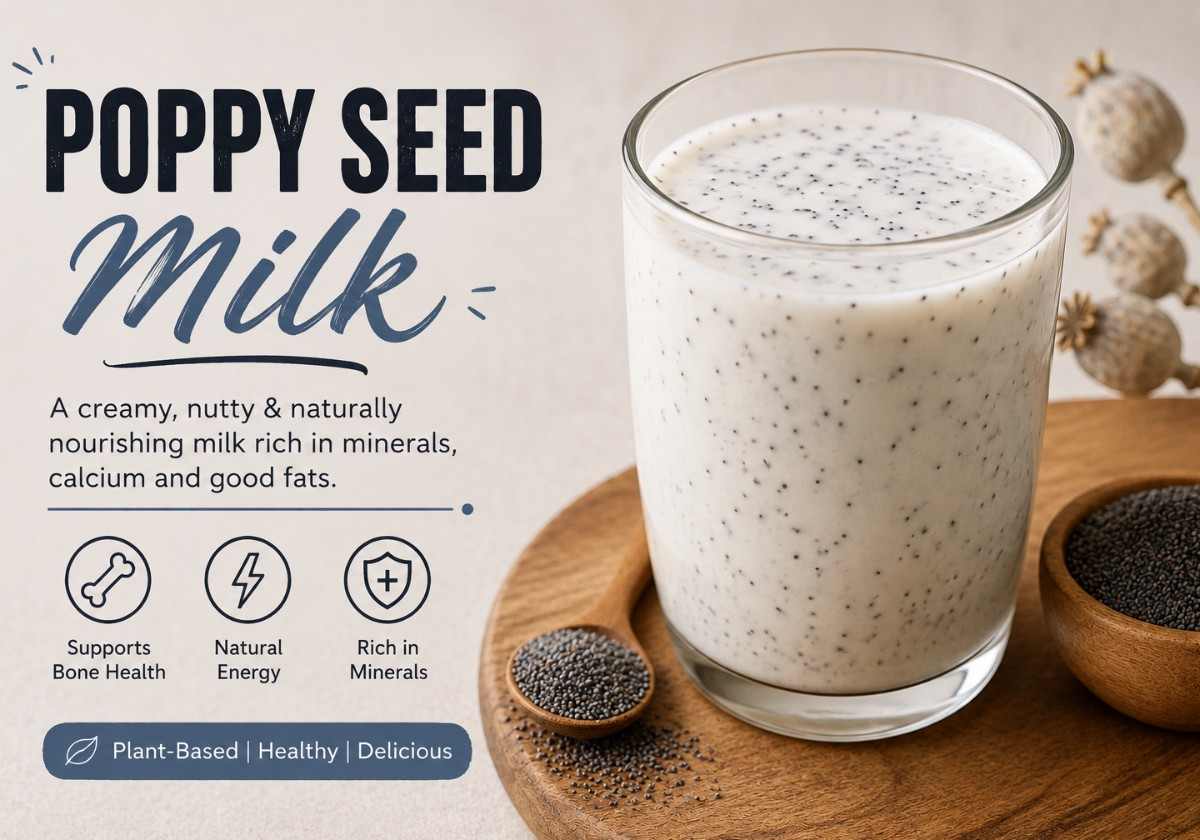
Poppy seed milk is a creamy, nutty plant-based drink made by blending soaked food-grade poppy seeds with water and then straining the mixture. It has a mildly nutty flavor and can be used as an alternative to dairy milk in smoothies, porridge, desserts, and some savory recipes.
Poppy seeds are nutritionally dense, providing minerals such as calcium, magnesium, iron, phosphorus, zinc, and manganese, along with protein and unsaturated fats. However, poppy seeds can sometimes carry trace amounts of opiate alkaloids on their outer surface because of harvesting and processing. For this reason, poppy seed milk should be made with food-grade seeds intended for culinary use, not seeds marketed for making tea or extracts.
What Is Poppy Seed Milk?
Poppy seed milk is a homemade seed-based beverage prepared by soaking poppy seeds, blending them with water, and filtering out most of the solid seed material.
Unlike dairy milk, it contains no lactose and is naturally plant-based. Unlike commercial nut milks, it does not require almonds, cashews, or other tree nuts.
The exact nutrition of homemade poppy seed milk varies considerably depending on the amount of seeds used, how thoroughly they are blended, how much liquid is added, and whether the pulp is strained.
Poppy seeds themselves contain protein, fat, fiber, calcium, magnesium, iron, phosphorus, zinc, and several B vitamins. It is important not to assume that a glass of poppy seed milk contains these same amounts. Much of the seed material is removed during straining, and homemade recipes vary.
Nutrition Facts of Poppy Seed Milk
The following is an estimated nutrition profile for one 1-cup (240 ml) serving made with approximately 1 tablespoon (about 9 g) poppy seeds and water. Actual values will vary according to the recipe and how much seed pulp remains in the drink.
| Nutrient | Approximate Amount per 1 Cup |
|---|---|
| Calories | 45–55 kcal |
| Protein | 1.5–2 g |
| Total Fat | 3.5–4 g |
| Carbohydrates | 2–3 g |
| Dietary Fiber | Variable; usually low after straining |
| Calcium | Approximately 125–135 mg |
| Magnesium | Approximately 30–35 mg |
| Iron | Approximately 0.8–0.9 mg |
| Phosphorus | Approximately 75–80 mg |
| Potassium | Approximately 60–70 mg |
| Zinc | Approximately 0.7 mg |
| Manganese | Approximately 0.6 mg |
| Sodium | Very low |
| Cholesterol | 0 mg |
These figures are estimates calculated from USDA-derived poppy-seed composition data and should not be treated as laboratory-tested nutrition facts for a particular homemade recipe.
20 Proven Health Benefits of Poppy Seed Milk
1. Supports Bone Health: Poppy seeds provide calcium, phosphorus, magnesium, and other minerals involved in maintaining normal bones and teeth.
2. Provides Plant-Based Minerals: A serving can contribute small amounts of several important minerals, particularly when some finely blended seed material remains in the drink.
3. Supplies Healthy Fats: Poppy seeds contain predominantly unsaturated fats, including polyunsaturated and monounsaturated fatty acids.
4. Supports Normal Muscle Function: Magnesium and calcium are involved in normal muscle contraction and nerve signaling.
5. Contributes to Normal Nerve Function: Magnesium, phosphorus, and other nutrients in poppy seeds participate in normal nervous-system function.
6. Provides Plant Protein: Poppy seeds contain protein, although a strained glass of poppy seed milk generally provides only a modest amount.
7. Supports Energy Metabolism: Poppy seeds provide B vitamins such as thiamine, which helps the body metabolize carbohydrates, fats, and proteins.
8. Provides Iron: Poppy seeds contain iron, a mineral needed for hemoglobin formation and oxygen transport.
9. Supplies Magnesium: Magnesium contributes to normal energy production, muscle function, nerve function, and bone maintenance.
10. Provides Zinc: Zinc supports normal immune function, wound healing, DNA synthesis, and cellular processes.
11. Contains Phosphorus: Phosphorus contributes to healthy bones and teeth and is involved in energy metabolism.
12. Provides Manganese: Poppy seeds are particularly rich in manganese, which contributes to normal connective-tissue formation and protection of cells from oxidative stress.
13. Can Add Variety to a Plant-Based Diet: Poppy seed milk offers another dairy-free option for people who enjoy experimenting with seed-based beverages.
14. Naturally Lactose-Free: When prepared only with poppy seeds and water, it contains no lactose and can be useful for people avoiding dairy.
15. Naturally Cholesterol-Free: Plant-based poppy seed milk contains no dietary cholesterol when prepared from seeds and water.
16. Can Make Meals More Nutrient-Dense: Using it in oatmeal, smoothies, or grain-based dishes can add some minerals and healthy fats to the meal.
17. May Support Satiety: The fats and small amount of protein from poppy seeds can contribute to a more satisfying beverage, although the effect depends on the recipe.
18. Provides Antioxidant-Related Nutrients: Poppy seeds contain nutrients such as manganese and vitamin E that participate in antioxidant defense systems.
19. Works as a Dairy Alternative: Its creamy texture makes it suitable for replacing some dairy milk in drinks, cereals, sauces, and desserts.
20. Offers Culinary Versatility: Beyond drinking, homemade poppy seed milk can be incorporated into smoothies, puddings, porridges, and baked recipes.
10 Side Effects of Poppy Seed Milk
1. Stomach Discomfort: Drinking a large amount may cause bloating, nausea, or digestive discomfort, particularly in people who are not accustomed to seed-based beverages.
2. Allergic Reactions: Although uncommon, people with a poppy-seed allergy may develop itching, swelling, hives, or other allergic symptoms.
3. Possible Drowsiness: Poppy seeds can occasionally carry opiate alkaloid residues on their surface, and higher exposure may cause drowsiness or dizziness.
4. Dizziness: Contaminated seeds containing higher levels of opiate alkaloids can potentially cause dizziness or lightheadedness.
5. Constipation: Significant exposure to opiate alkaloids may cause constipation.
6. Breathing Problems: High exposure to opiate alkaloids can slow or impair breathing and can become medically serious.
7. Blood Pressure Changes: Opiate alkaloid exposure may contribute to decreased blood pressure in susceptible individuals.
8. Medication Interactions: The potential for drowsiness or central nervous system depression may be more concerning when combined with sedatives, alcohol, or certain medications.
9. Calorie Addition: Larger servings can add calories because poppy seeds are relatively high in fat and energy.
10. Variable Alkaloid Exposure: The amount of opiate alkaloids on poppy seeds can vary substantially depending on the variety, harvesting, and processing conditions.
How to Make Poppy Seed Milk?
Ingredients:
- 1 tablespoon food-grade poppy seeds
- 1 cup filtered water for blending
- 1–2 additional cups water, depending on desired thickness
- Optional: a small amount of vanilla or a date for flavor
Method:
- Rinse the poppy seeds thoroughly with clean water.
- Soak them in fresh water for several hours or overnight.
- Drain and rinse the soaked seeds.
- Add the seeds and fresh water to a high-speed blender.
- Blend until the mixture looks creamy and milky.
- Strain through a fine-mesh strainer or clean nut-milk bag.
- Transfer the milk to a clean, covered container and refrigerate promptly.
Important safety note: Use only commercially packaged, food-grade poppy seeds intended for cooking. Do not make concentrated poppy-seed tea, extracts, or preparations intended to produce opioid-like effects. The FDA has linked misuse of poppy seeds for tea with serious adverse events, including deaths.
How to Drink Poppy Seed Milk?
Poppy seed milk can be enjoyed chilled or gently warmed. Start with a small serving to see how your body responds.
You can drink it plain, blend it into a smoothie, add it to oatmeal, or combine it with fruit and other ingredients.
If you prefer a sweeter drink, use a small amount of fruit, cinnamon, vanilla, or another food-based flavoring rather than adding large quantities of sugar.
Tips for Consuming Poppy Seed Milk
- Choose food-grade culinary poppy seeds from a reputable source.
- Rinse the seeds before preparing the milk.
- Avoid concentrated preparations or homemade poppy-seed tea.
- Begin with a small serving rather than drinking a large quantity.
- Keep homemade milk refrigerated.
- Shake the container before drinking because natural separation is normal.
- Avoid assuming that homemade poppy seed milk has the same nutrition as commercial dairy or fortified plant milk.
- If you need substantial calcium or vitamin D, remember that many commercial plant milks are fortified whereas homemade seed milk generally is not.
- Do not use poppy seed milk as a substitute for prescribed medication or treatment.
Other Uses of Poppy Seed Milk
Poppy seed milk can be used in several everyday recipes:
- Smoothies and shakes
- Oatmeal and overnight oats
- Chia pudding
- Rice pudding
- Pancake and waffle batter
- Homemade desserts
- Creamy soups
- Grain-based breakfast bowls
- Coffee or other hot beverages
- Sauces and dairy-free recipes
Its mild nutty flavor works particularly well with cinnamon, vanilla, dates, cocoa, bananas, and berries.
How Much Poppy Seed Milk Can You Drink in a Day?
There is no scientifically established standard daily serving specifically for homemade poppy seed milk.
A practical approach is to keep the serving modest, such as around ½ to 1 cup (120–240 ml), rather than consuming large quantities.
The appropriate amount also depends on how many poppy seeds are used to prepare the milk. Because opiate alkaloid contamination can vary significantly between batches of poppy seeds, it is not possible to give a universally safe amount of homemade poppy seed milk based solely on volume.
Best Time to Drink Poppy Seed Milk
There is no proven medical requirement to drink poppy seed milk at a particular time of day.
- Morning: It can be added to breakfast smoothies, oatmeal, or cereal.
- Afternoon: A small serving can be used as part of a snack or smoothie.
- Evening: It can be incorporated into a light evening meal, but people who experience drowsiness should avoid consuming it before activities requiring alertness.
Rather than focusing on a “best” time, focus on portion size, overall diet, and your individual tolerance.
Who Should Drink Poppy Seed Milk?
- Adults Seeking Dairy-Free Options: Adults who enjoy seed-based beverages can use a modest amount of food-grade poppy seed milk as one dairy-free option.
- People Avoiding Lactose: Individuals avoiding lactose can consider a homemade version made only from poppy seeds and water.
- Plant-Based Dieters: People following plant-forward diets can use it to add variety to smoothies, porridges, and recipes.
- People Looking for Mineral-Rich Foods: Those wanting more dietary sources of minerals can include poppy seeds as part of a balanced diet.
- People Who Enjoy Homemade Foods: Anyone comfortable preparing fresh seed milk can make a small batch for culinary use.
Who Should Avoid Poppy Seed Milk?
- Pregnant People: Because opiate alkaloid levels can vary in poppy seeds and pregnancy is considered a potentially more vulnerable period, it is sensible to discuss regular consumption with a healthcare professional.
- Young Children: Children may be more vulnerable to the effects of opiate alkaloids, so concentrated or high-quantity poppy-seed preparations should be avoided.
- People With Breathing Problems: Individuals with compromised respiratory function should exercise particular caution because opiate alkaloids can impair breathing.
- People Taking Sedating Medicines: Anyone taking medicines that depress the nervous system should consult a healthcare professional before consuming significant amounts.
- People With a Poppy Seed Allergy: Anyone who has experienced an allergic reaction to poppy seeds should avoid them.
- People With Certain Liver or Kidney Problems: People with hepatic or renal impairment may be more vulnerable to adverse effects from opiate alkaloids and should seek medical advice.
- People Who Need to Remain Highly Alert: Anyone who experiences drowsiness or dizziness after consuming poppy products should avoid using them before driving or operating machinery.
How to Store Poppy Seed Milk?
- Refrigerate Promptly: Store homemade poppy seed milk in the refrigerator rather than leaving it at room temperature for extended periods.
- Use a Clean Container: Keep it in a clean, airtight glass bottle or food-safe container.
- Shake Before Drinking: Separation is normal because homemade seed milk contains suspended particles.
- Make Small Batches: Preparing only what you expect to use quickly can help maintain freshness.
- Check Before Using: Discard the milk if it develops an unusual smell, visible mold, excessive fermentation, or an unexpected change in appearance.
- Do Not Rely on Smell Alone: Food can sometimes become unsafe before obvious spoilage signs appear, so good refrigeration and hygienic preparation are important.
Precautions and Interactions
Poppy seed milk deserves a little more caution than many ordinary seed milks because food-grade poppy seeds can sometimes carry opiate alkaloid residues on their outer surface. These residues can vary substantially according to cultivation, harvesting, and processing.
The FDA states that poppy seeds themselves contain little or no opiate alkaloids internally, but alkaloid-containing material from other parts of the plant can contaminate the outer surface during harvesting and processing.
Avoid using poppy seeds to prepare concentrated beverages or “poppy seed tea.” The FDA specifically warns consumers not to make poppy seed tea because misuse has been associated with serious adverse effects, including respiratory arrest and death.
People taking opioid medicines, sedatives, sleep medicines, or other substances that depress the central nervous system should discuss regular poppy-seed consumption with a healthcare professional. Alcohol can also increase concerns about sedation and impaired breathing when combined with substances that depress the nervous system.
People with respiratory conditions, liver or kidney impairment, older adults, pregnant individuals, and children may be more vulnerable to adverse effects from opiate alkaloids.
If you experience unusual sleepiness, dizziness, confusion, vomiting, slowed breathing, or other concerning symptoms after consuming a poppy-seed product, seek urgent medical attention.
Poppy Seed Milk vs. Other Plant-Based Milks
Poppy seed milk is best viewed as a culinary seed beverage, not as a nutritionally complete replacement for every type of milk.
For example, commercial soy, almond, oat, or other plant milks may be fortified with calcium and vitamin D. Homemade poppy seed milk generally will not contain these added nutrients unless they are specifically incorporated.
Its main attraction is its distinctive nutty taste and the mineral content naturally present in poppy seeds.
The Bottom Line
Poppy seed milk is a creamy, dairy-free beverage that can add variety and some minerals to a balanced diet. Poppy seeds are particularly notable for calcium, magnesium, phosphorus, iron, zinc, manganese, protein, and unsaturated fats.
However, claims that poppy seed milk is a proven sleep aid, detox drink, fertility remedy, or treatment for specific diseases go beyond the available evidence. The beverage itself has not been extensively studied in clinical trials.
Most importantly, use food-grade culinary poppy seeds, avoid concentrated poppy-seed preparations, and keep portions moderate. Because opiate alkaloid levels can vary between batches, more is not necessarily better.
FAQ’s
What does poppy seed milk taste like?
Poppy seed milk has a mild, creamy, slightly nutty flavor with a subtle earthy taste.
Is poppy seed milk good for you?
Poppy seed milk can provide minerals such as calcium, magnesium, phosphorus, iron, and manganese, although its nutritional value depends on how it is prepared.
Can I drink poppy seed milk every day?
Small amounts may be suitable for some adults, but there is no established recommended daily amount for homemade poppy seed milk.
Does poppy seed milk make you sleepy?
Poppy seeds can contain variable amounts of opiate alkaloid residues, so some products may cause drowsiness. Avoid concentrated preparations.
Can poppy seed milk help with sleep?
There is not enough good-quality evidence to say that poppy seed milk reliably improves sleep.
Is poppy seed milk safe during pregnancy?
Pregnant people should consult their healthcare professional before consuming poppy seed milk regularly because alkaloid levels can vary between poppy seed products.
Can children drink poppy seed milk?
Children should not be given concentrated poppy-seed preparations. Ask a pediatrician before offering homemade poppy seed milk regularly.
How long does homemade poppy seed milk last?
Keep it refrigerated in a clean, airtight container and use it promptly, preferably within a few days.
Can I drink poppy seed milk at night?
It can be consumed at night, but avoid it if it causes drowsiness or if you take medicines that can cause sedation.
Is poppy seed milk better than dairy milk?
Not necessarily. Poppy seed milk is a dairy-free option, while dairy milk generally provides more protein and naturally occurring or added nutrients such as calcium and vitamin D.
Can poppy seed milk help with calcium intake?
Poppy seeds are naturally rich in calcium, but the amount transferred into homemade milk depends on how much seed is used and how thoroughly it is blended and strained.
Can I make poppy seed milk with unwashed poppy seeds?
It is better to use clean, food-grade culinary poppy seeds from a reputable source and rinse them before preparation.
Is poppy seed milk the same as poppy seed tea?
No. Poppy seed milk is a culinary beverage, while concentrated poppy-seed tea can extract opiate alkaloids and has been associated with serious poisoning risks.
How long does it take for Poppy Seed Milk to work?
Poppy seed milk does not have a proven specific “working time.” Its nutrients are digested and absorbed as part of your normal digestion.
What does Poppy Seed Milk smell like?
Poppy seed milk usually has a mild, earthy, nutty aroma. Freshly prepared milk may smell slightly sweet and grain-like.
What is Poppy Seed Milk good for?
Poppy seed milk can provide minerals such as calcium, magnesium, phosphorus, iron, and manganese and can be used as a dairy-free beverage or ingredient in smoothies, oatmeal, and desserts.
Is it safe to boil poppy seeds in milk?
For culinary use, poppy seeds can be cooked in milk, but avoid concentrated preparations or prolonged boiling intended to extract substances from the seeds. Poppy seeds can carry variable amounts of opiate alkaloids on their surface, so use food-grade culinary seeds and consume them in normal food quantities.
Sources / References:
- U.S. FDA — Opiate Alkaloids on Poppy Seeds
- U.S. FDA — FDA Requests Information on Poppy Seeds
- EFSA — Opium alkaloids in poppy seeds: assessment updated
- USDA FoodData Central
- FDA — Foods Program Guidance Under Development
About the Author:
Written by: Kirti Solanki (Health Content Researcher)
Kirti Solanki creates reader-friendly health and nutrition content using reliable scientific and government sources, with a focus on making complex health information practical and easy to understand.
Disclaimer:
This article is for general educational purposes and is not medical advice. Individual needs and safety can vary. Consult a qualified healthcare professional before regularly consuming poppy seed products, especially during pregnancy, in children, or when taking medications.
Also Read: