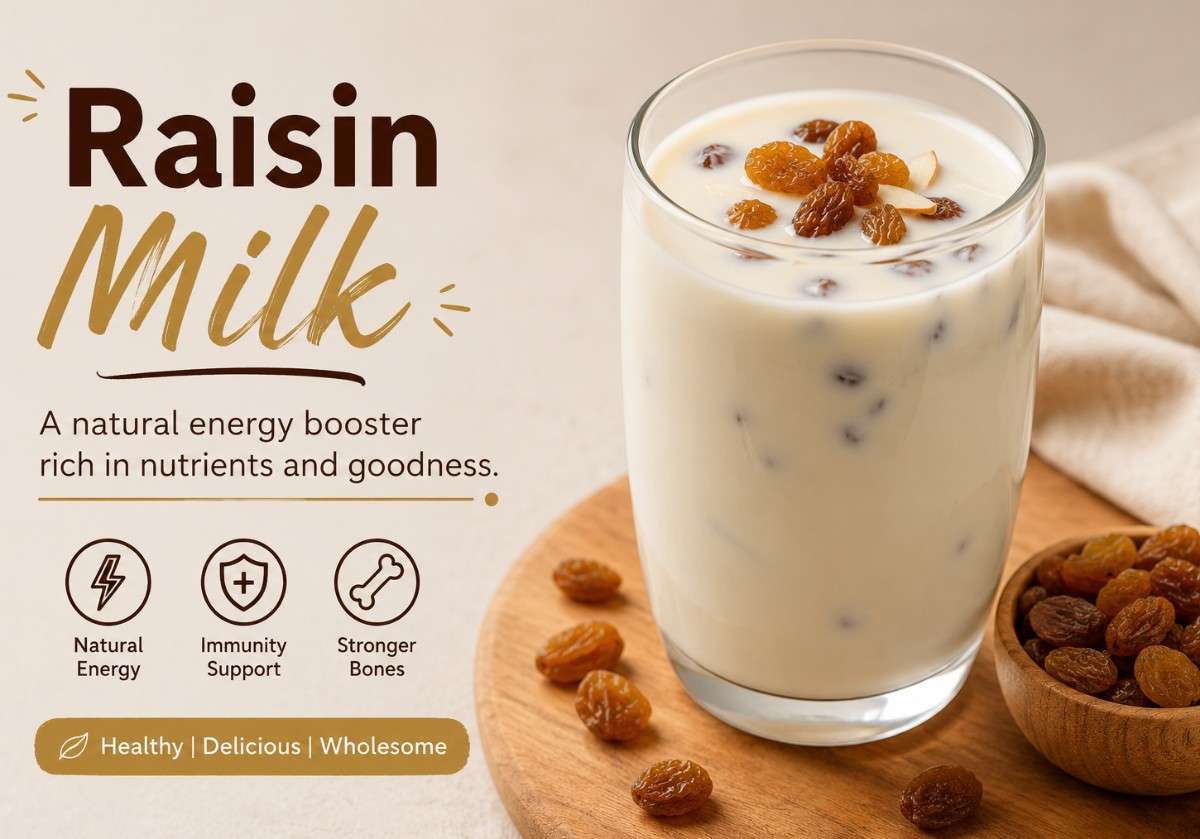
Raisin milk is a simple homemade drink made by blending or simmering raisins with milk. It combines the natural sweetness and nutrients of raisins with the protein, calcium, and other nutrients found in milk. Because raisins are dried grapes, they are naturally concentrated in carbohydrates and sugars, while milk contributes protein and minerals.
Raisin milk is sometimes promoted as a traditional drink for energy, digestion, bone health, and general nourishment. The nutritional value of the drink depends heavily on the type and quantity of milk, the amount of raisins used, whether the raisins are blended or strained, and whether additional sugar is added. Raisins themselves provide carbohydrates, dietary fiber, potassium, and small amounts of iron and calcium.
What Is Raisin Milk?
Raisin milk is a homemade beverage prepared by combining raisins with milk. A common preparation involves soaking raisins, simmering them in milk, and then drinking the mixture warm or blending the softened raisins into the milk.
The drink can be made with whole milk, low-fat milk, skim milk, lactose-free milk, or fortified plant-based milk. Each version has a different nutritional profile.
Raisin milk has a naturally sweet flavor because raisins contain concentrated natural sugars. For this reason, additional sugar is usually unnecessary.
One important point is that raisin milk is not the same as raisin-infused water. When raisins are blended into the drink, you consume more of the fruit’s fiber and nutrients. If the raisins are strained out, some of the nutritional value is left behind with the discarded fruit.
Raisins are also a concentrated food. For example, about 26 grams of raisins provide approximately 78 calories, 20.6 grams of carbohydrate, 16.9 grams of total sugars, 1.2 grams of fiber, 193 mg of potassium, and 0.47 mg of iron.
Nutrition Facts of Raisin Milk
The following is an approximate estimate for 1 cup of whole milk combined with about 30 g of raisins, without added sugar.
| Nutrient | Approximate Amount per 1 Cup |
|---|---|
| Calories | 210–220 kcal |
| Protein | 8–9 g |
| Total Carbohydrates | 26–28 g |
| Total Sugars | 25–26 g |
| Dietary Fiber | 1–1.5 g |
| Total Fat | 7–8 g |
| Saturated Fat | 4–5 g |
| Calcium | 275–300 mg |
| Potassium | 350–400 mg |
| Iron | 0.5–0.7 mg |
| Phosphorus | 220–250 mg |
| Sodium | 90–110 mg |
Note: These values are estimates rather than laboratory-tested values. The numbers change depending on the milk and quantity of raisins used. If the raisins are strained out, the final drink will generally contain less fiber and some of the nutrients that remain in the fruit pulp.
20 Proven Health Benefits of Raisin Milk
- Provides Energy: Raisin milk provides carbohydrates from raisins and milk, making it a convenient energy-containing beverage for people who need a filling snack or drink.
- Supports Bone Health: Milk supplies calcium and phosphorus, nutrients that are important for maintaining normal bones and teeth as part of an overall balanced diet.
- Provides Protein: Milk provides complete dietary protein containing essential amino acids needed for muscle maintenance, tissue repair, and numerous body functions.
- Supplies Potassium: Raisins and milk both contribute potassium, a mineral involved in nerve function, muscle contraction, and normal heart function.
- May Support Muscle Function: The potassium, calcium, and other nutrients in the drink contribute to normal muscle and nerve function when consumed as part of a balanced diet.
- Provides Dietary Fiber: If the raisins are blended rather than strained, the drink retains some of the raisins’ dietary fiber, which supports normal digestive function.
- Can Help Meet Calcium Needs: A serving made with dairy milk can contribute a meaningful amount of calcium toward daily nutritional requirements.
- Supports Normal Nerve Function: Potassium and calcium are involved in normal nerve signaling, while milk provides several nutrients that contribute to overall nervous-system function.
- May Be Useful as a Convenient Snack: Raisin milk combines carbohydrate, protein, and fat when made with dairy milk, making it more substantial than many sugary beverages.
- Provides Iron in Small Amounts: Raisins contain some iron, although raisin milk should not be considered a treatment for iron-deficiency anemia.
- Supports Normal Blood Formation: Iron is required for hemoglobin production, but the relatively small amount of iron in a typical serving means raisin milk should complement rather than replace iron-rich foods.
- Provides Phosphorus: Milk is a useful dietary source of phosphorus, which works with calcium in maintaining bones and teeth and participates in cellular energy processes.
- May Support Hydration: Because raisin milk contains a substantial amount of liquid, it can contribute to daily fluid intake, although plain water remains an important primary source of hydration.
- Can Be a Nutrient-Dense Breakfast Addition: When paired with foods such as oats, whole-grain toast, nuts, or fruit, raisin milk can become part of a more balanced breakfast.
- May Support Satiety: The combination of protein and fat from milk can make raisin milk more satisfying than a drink containing only fruit juice or added sugar.
- Provides Naturally Occurring Sugars: The sweetness mainly comes from the natural sugars in raisins and lactose in milk, allowing you to prepare the drink without adding table sugar.
- Contains Several Micronutrients: Depending on the milk used, raisin milk can provide calcium, phosphorus, potassium, vitamin B12, riboflavin, and other nutrients.
- Can Support Nutritional Intake During Busy Days: A homemade serving can be an easy way to combine several food-group nutrients in one drink when accompanied by a balanced diet.
- Can Be Customized for Different Diets: Raisin milk can be prepared with lactose-free dairy milk or a nutritionally appropriate fortified plant-based beverage according to individual dietary needs.
- May Be a Better Choice Than Sugar-Sweetened Drinks: When prepared without added sugar, homemade raisin milk can provide substantially more protein and micronutrients than many sweetened soft drinks or desserts.
10 Side Effects of Raisin Milk
Raisin milk can fit into a healthy diet, but it is not suitable for everyone and excessive amounts may cause problems.
- May Cause Digestive Discomfort: The combination of lactose from milk and fiber or concentrated carbohydrates from raisins may cause bloating, gas, or abdominal discomfort in some people.
- May Raise Blood Glucose: Raisins are naturally high in carbohydrates and sugars, so a large serving may cause a substantial rise in blood glucose, particularly in people with diabetes.
- May Add Significant Calories: Whole milk and raisins are both calorie-containing foods, so frequent large servings can contribute excess calories.
- May Cause Lactose-Related Symptoms: People with lactose intolerance may experience gas, bloating, diarrhea, or abdominal discomfort after drinking regular dairy-based raisin milk.
- Milk Allergy Can Cause Reactions: People with a cow’s-milk allergy should avoid dairy-based raisin milk because milk proteins can trigger allergic reactions.
- May Be Too Sweet for Some Diets: Even without added sugar, raisins and milk naturally contain sugars, so the drink may not be appropriate in large quantities for people trying to reduce carbohydrate intake.
- May Cause Loose Stools in Sensitive People: A large amount of dried fruit can be difficult for some digestive systems to tolerate, especially when consumed quickly.
- Can Interfere With Appetite: Drinking a large serving close to meals may make you feel full and reduce your appetite for a varied meal.
- May Be High in Potassium for Certain People: People with chronic kidney disease or conditions requiring potassium restriction may need to limit foods such as raisins and milk depending on their individual dietary plan.
- Added Sugar Can Reduce Its Nutritional Advantage: Adding sugar, honey, syrups, or sweetened condensed milk can substantially increase the drink’s sugar and calorie content.
How to Make Raisin Milk?
Ingredients:
- 1 cup milk
- 2 tablespoons raisins, preferably seedless
- ½ cup water for soaking
- Optional: a small pinch of cinnamon or cardamom
Method:
- Rinse the raisins thoroughly.
- Soak them in water for several hours or overnight.
- Drain the soaking water.
- Add the softened raisins and milk to a saucepan.
- Heat gently for approximately 5–10 minutes without aggressively boiling the milk.
- Allow the mixture to cool slightly.
- Blend until smooth if you want to consume the raisin pulp.
- Add cinnamon or cardamom if desired.
- Serve warm or refrigerate and serve chilled.
Do not add extra sugar unless you specifically need it for taste. Raisins are already naturally sweet.
Quick Version
For a faster preparation, soak the raisins in warm water for about 20–30 minutes, drain them, blend them with warm milk, and serve.
Should You Strain Raisin Milk?
That depends on your preference.
- Blended raisin milk: Retains more of the raisin pulp and therefore more dietary fiber.
- Strained raisin milk: Has a smoother texture but leaves much of the raisin pulp behind.
If you tolerate the texture, consuming the blended raisins gives you more of the whole fruit rather than only the flavored milk.
How to Drink Raisin Milk?
Raisin milk can be enjoyed warm or chilled.
For a simple serving, drink approximately 150–250 mL alongside breakfast or as a snack. If you are using it as a meal component, pair it with foods containing whole grains, nuts, seeds, eggs, or fresh fruit rather than relying on the drink alone.
Avoid treating raisin milk as a medicinal beverage or using it as a substitute for a varied diet.
Tips for Consuming Raisin Milk
- Choose Unsweetened Milk: Use plain milk instead of flavored or sweetened milk to keep unnecessary added sugars low.
- Use a Moderate Amount of Raisins: Two tablespoons are generally enough to provide sweetness and flavor without making the drink excessively concentrated.
- Blend Instead of Straining: If you tolerate the texture, blending keeps more of the raisin pulp in the drink.
- Choose Milk According to Your Needs: Whole, low-fat, skim, lactose-free, or fortified alternatives can all be used depending on dietary preferences.
- Avoid Excessive Sweeteners: Raisins already provide considerable sweetness, so additional sugar is usually unnecessary.
- Drink a Moderate Serving: A small glass can be easier to fit into a balanced diet than a very large serving.
- Pair It With a Balanced Meal: Combining the drink with protein, whole grains, vegetables, fruit, or healthy fats can provide a broader range of nutrients.
- Monitor Your Individual Response: If you experience bloating, diarrhea, or other symptoms, reduce the serving or consider lactose-free milk.
Other Uses of Raisin Milk
Raisin milk is not limited to drinking. You can also use it as an ingredient in several recipes.
Oatmeal
Use raisin milk instead of regular milk when preparing oatmeal for a naturally sweeter flavor.
Smoothies
Blend chilled raisin milk with banana, oats, or unsweetened nut butter for a thicker smoothie.
Porridge
Raisin milk can be used as the liquid base for rice, millet, or other grain-based porridges.
Chia Pudding
Combine raisin milk with chia seeds and refrigerate until thickened.
Pancake Batter
A small amount can be incorporated into homemade pancake or waffle batter.
Dessert Recipes
Raisin milk can be used as a naturally sweet dairy component in homemade puddings and similar desserts.
How Much Raisin Milk Can You Drink in a Day?
There is no officially established daily recommended amount specifically for raisin milk.
For most healthy adults, approximately 150–250 mL per day is a reasonable food-based serving, depending on the rest of the diet.
You may need less if:
- You are watching your calorie intake.
- You have diabetes or are monitoring carbohydrate intake.
- You have lactose intolerance.
- You have been advised to restrict potassium.
- You already consume substantial amounts of milk or other sweet foods.
People with kidney disease should ask their healthcare professional or registered dietitian about an appropriate potassium intake because kidney problems can make it harder for the body to remove excess potassium.
There is no benefit to drinking several large glasses simply because a beverage contains nutritious ingredients.
Best Time to Drink Raisin Milk
There is no scientifically established “best time” to drink raisin milk.
In the Morning
Raisin milk can be included with breakfast and provides carbohydrates and protein, especially when paired with a balanced meal.
As an Afternoon Snack
A small serving can work as a convenient snack between meals.
After Physical Activity
Milk provides protein and carbohydrates, which can make it useful as part of a post-exercise meal or snack.
At Night
Some people enjoy warm raisin milk in the evening. There is no strong evidence, however, that drinking raisin milk at night provides special health benefits compared with drinking it at another time.
The best time is therefore the time that fits comfortably into your overall eating pattern.
Who Should Drink Raisin Milk?
- Healthy Adults: Adults who enjoy the flavor and tolerate both raisins and milk can include moderate portions as part of a balanced diet.
- People Looking for a Filling Snack: The combination of milk protein and raisin carbohydrates can make a small serving more satisfying than many low-nutrient sweet drinks.
- People Who Need More Calcium: Dairy-based raisin milk can contribute calcium to the diet, particularly when consumed alongside other calcium-rich foods.
- People Who Prefer Naturally Sweet Drinks: Raisin milk can provide sweetness without requiring added table sugar.
- Active Individuals: People who exercise may use raisin milk as one component of a balanced snack containing carbohydrates and protein.
- People Who Enjoy Homemade Foods: Homemade preparation allows you to control the amount of raisins, type of milk, and added ingredients.
Who Should Avoid Raisin Milk?
- People With Cow’s-Milk Allergy: Anyone with a confirmed cow’s-milk allergy should avoid dairy-based raisin milk unless their healthcare professional has advised otherwise.
- People With Significant Lactose Intolerance: Those who develop symptoms after consuming lactose may need lactose-free milk or a suitable fortified alternative.
- People With Potassium Restrictions: Individuals with chronic kidney disease or other conditions requiring potassium restriction should ask their healthcare professional before making raisin milk a regular drink.
- People With Poorly Controlled Blood Glucose: Because raisins contain concentrated carbohydrates and sugars, large servings may not fit well into an individualized diabetes meal plan.
- People Following a Low-Carbohydrate Diet: Raisin milk may provide more carbohydrates than desired because both raisins and milk contain naturally occurring sugars.
- People With a Raisin Allergy: Anyone who has an allergy to raisins or grapes should avoid raisin-based beverages.
- People Who Experience Digestive Problems: Those who repeatedly develop bloating, diarrhea, or abdominal discomfort after drinking it should stop and discuss persistent symptoms with a healthcare professional.
How to Store Raisin Milk?
- Refrigerate Promptly: Homemade raisin milk should be refrigerated rather than left at room temperature for extended periods.
- Use a Clean, Covered Container: Store it in a clean airtight glass or food-safe container to reduce contamination and odor absorption.
- Shake Before Drinking: Natural particles from blended raisins may settle at the bottom, so shake or stir the drink before serving.
- Use It Fresh: For best quality and food safety, prepare small batches and consume refrigerated homemade raisin milk within about 2 days.
- Do Not Keep It at Room Temperature: Perishable milk-based drinks should not be left out for long periods.
- Discard Spoiled Milk: Throw it away if it develops an unusual odor, flavor, appearance, or signs of spoilage.
- Do Not Rely Only on Smell: Food can sometimes become unsafe before obvious spoilage is detectable, so proper refrigeration and storage time are important.
Precautions and Interactions
Although raisin milk is a food rather than a medication, a few precautions are worth remembering.
1. Diabetes and Blood Glucose
Raisins contain concentrated carbohydrates and natural sugars. A 26-g serving of raisins contains approximately 20.6 g of carbohydrate and 16.9 g of total sugars.
If you have diabetes, portion size matters. Consider the carbohydrate content of the entire meal rather than assuming that a homemade drink is automatically suitable because it contains natural ingredients.
2. Kidney Disease
Raisins and milk both contain potassium. The NIH notes that people with chronic kidney disease and people taking certain medications may develop high potassium levels and may need individualized dietary guidance.
If you have been instructed to follow a low-potassium diet, do not add raisin milk regularly without checking with your healthcare professional.
3. Lactose Intolerance
Regular cow’s milk contains lactose. If you are lactose intolerant, choose lactose-free milk or an appropriate fortified alternative.
4. Milk Allergy
Milk allergy is different from lactose intolerance and involves an immune reaction to milk proteins. Dairy-based raisin milk is not appropriate for someone with a confirmed cow’s-milk allergy.
5. Medication Considerations
Food-drug interactions depend on the specific medication and your health status. People taking medications that affect potassium levels should be particularly cautious about making high-potassium foods a large part of their diet. The NIH specifically notes potential potassium concerns with certain medicines, including ACE inhibitors and potassium-sparing diuretics.
6. Blood Thinners
Raisins are not considered a major source of vitamin K compared with leafy green vegetables. However, anyone taking warfarin should maintain a consistent dietary pattern and discuss significant dietary changes with their healthcare professional. NIH guidance emphasizes consistency in vitamin K intake for people taking warfarin.
7. Do Not Use It to Treat Anemia
Raisins contain some iron, but a typical serving does not provide enough iron to make raisin milk an established treatment for iron-deficiency anemia. If you have symptoms or laboratory-confirmed anemia, the underlying cause should be evaluated by a healthcare professional.
8. Watch Added Sugar
Avoid turning raisin milk into a high-sugar dessert by adding large quantities of sugar, honey, syrups, or sweetened condensed milk. Current U.S. dietary guidance emphasizes limiting added sugars and choosing nutrient-dense foods and beverages.
Is Raisin Milk Good for You?
Raisin milk can be a nutritious homemade beverage when consumed in moderation. Its strongest nutritional advantages come from the combination of milk’s protein, calcium, and other nutrients with raisins’ carbohydrates, fiber, potassium, and naturally occurring sugars.
However, raisin milk is not a miracle drink. Claims that it can dramatically increase hemoglobin, detox the body, cure constipation, or prevent disease should not be presented as established facts.
The simplest approach is to prepare it without added sugar, use a reasonable amount of raisins, choose a milk that suits your dietary needs, and consider the drink as part of an overall balanced eating pattern.
FAQ’s
Is raisin milk healthy?
Yes, raisin milk can be a nutritious drink because it combines the protein and calcium of milk with carbohydrates, potassium, and some fiber from raisins.
Can I drink raisin milk every day?
Yes, most healthy people can enjoy a moderate serving daily if they tolerate milk and raisins and it fits their overall diet.
Does raisin milk increase hemoglobin?
Raisin milk contains some iron, but there is not enough evidence to say that it significantly increases hemoglobin or treats anemia.
Is raisin milk good for constipation?
It may support digestion when the raisins are blended into the drink because they provide dietary fiber, but it should not be considered a treatment for chronic constipation.
Can I drink raisin milk at night?
Yes. You can drink it at night if you tolerate it well, although there is no proven special benefit to drinking it before bed.
Is raisin milk good for weight gain?
It can help increase calorie intake because both milk and raisins contain calories, but healthy weight gain depends on your overall calorie and nutrient intake.
Can diabetics drink raisin milk?
People with diabetes may be able to include a small portion, but raisins contain concentrated natural sugars, so portion size and total carbohydrate intake are important.
Can children drink raisin milk?
Children who tolerate milk and raisins can generally have an age-appropriate serving, but raisin milk should not replace breast milk or infant formula for babies.
Is raisin milk good for bones?
Yes, when made with dairy milk, it provides calcium and phosphorus, which are important nutrients for maintaining healthy bones.
Can I make raisin milk with almond milk?
Yes. Unsweetened, fortified almond milk can be used, although its protein and nutrient content will differ from dairy milk.
Does raisin milk help with weakness?
It can provide carbohydrates and calories that contribute to energy intake, but persistent weakness should not be treated with raisin milk alone.
Does raisin milk help with iron deficiency?
Raisins contain some iron, but raisin milk is not a reliable treatment for iron-deficiency anemia. Confirmed iron deficiency should be evaluated and treated appropriately.
Can I drink raisin milk during pregnancy?
Pregnant people can generally consume pasteurized milk and raisins as part of a balanced diet, but individual dietary needs may vary.
What does Raisin Milk taste like?
Raisin milk has a naturally sweet, creamy flavor with a mild fruity taste. Blended raisins make it thicker and sweeter.
How long does it take for Raisin Milk to work?
There is no specific time for raisin milk to “work.” Its nutrients are digested after drinking, but any noticeable effects depend on your overall diet and individual body.
What does Raisin Milk smell like?
Raisin milk usually has a mild sweet, fruity aroma combined with the creamy smell of milk.
What is Raisin Milk good for?
Raisin milk can provide energy, protein, calcium, potassium, and other nutrients, making it a convenient addition to a balanced diet.
Can we mix black raisins with milk?
Yes, black raisins can be mixed with milk. You can soak them first, then blend or simmer them with milk. No added sugar is usually necessary because black raisins are naturally sweet.
Sources / References:
- NIH Office of Dietary Supplements
- USDA FoodData Central
- U.S. Dietary Guidelines for Americans
- MedlinePlus
- My Food Data
- Food and Nutrition Service
About the Author:
Written by: Kirti Solanki (Health Content Researcher) — Kirti creates easy-to-understand health and nutrition content using reliable scientific and health sources, with a focus on practical, reader-friendly information.
Disclaimer:
This article is for general educational purposes only and does not replace professional medical advice, diagnosis, or treatment. If you have a medical condition, food allergy, kidney disease, diabetes, or take regular medication, consult a qualified healthcare professional before making significant dietary changes.
Also Read: