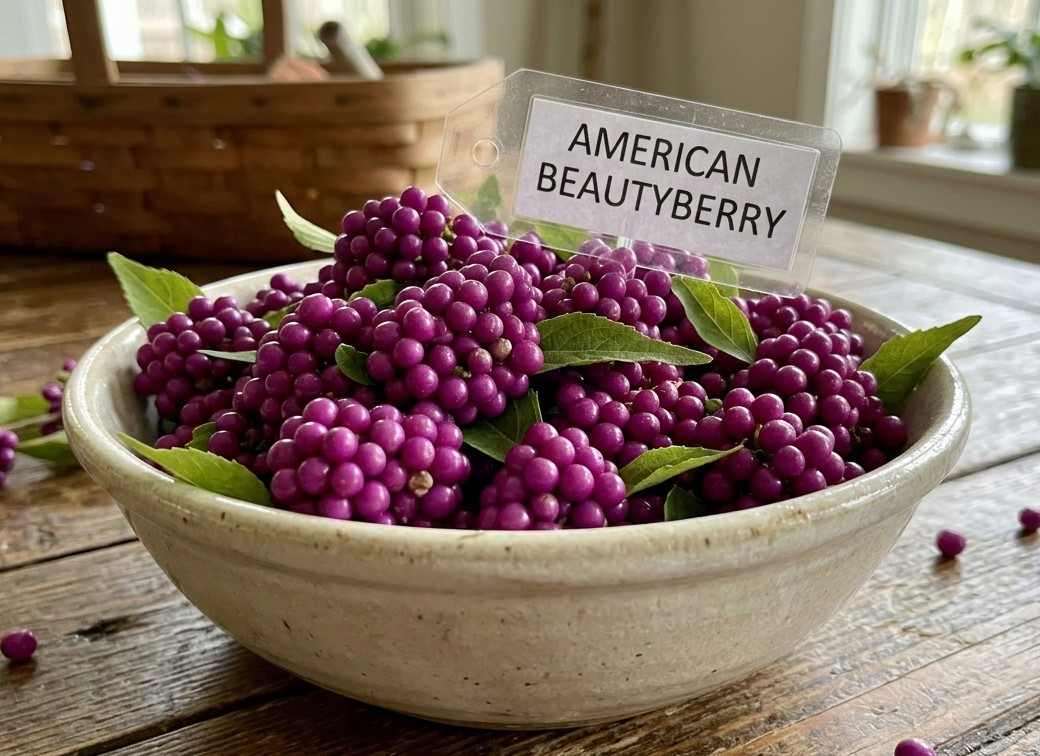
American beautyberry is a striking North American shrub known for its bright purple clusters of fruit that appear around the stems in late summer and fall. Although the fruit is not especially sweet and can leave the mouth feeling dry, the berries are edible and are traditionally used in jellies, preserves, drinks, and other preparations.
It is important to distinguish American beautyberry from unrelated plants with similar-looking berries, particularly pokeweed. Correct plant identification is essential before consuming any wild-foraged fruit.
What Is American Beautyberry?
American beautyberry is the common name for Callicarpa americana, a deciduous woody shrub belonging to the mint family, Lamiaceae. It is native primarily to the central and southeastern United States, with populations extending into parts of Mexico, Bermuda, and Cuba.
The plant generally grows about 3 to 8 feet tall and produces arching branches with large green leaves. Small flowers appear during spring and summer, followed by dense clusters of purple, lavender, pink, or occasionally white fruit that encircle the stems.
Botanically, the fruit is actually a drupe rather than a true berry. Each small fruit contains several hard seeds. The fresh fruit is edible but has a relatively mild, sometimes astringent flavor and can make the mouth feel dry. For this reason, American beautyberries are more commonly turned into jelly, preserves, syrups, beverages, or other prepared foods than eaten by the handful.
American Beautyberry at a Glance
| Feature | Details |
|---|---|
| Common name | American Beautyberry |
| Scientific name | Callicarpa americana |
| Family | Lamiaceae |
| Plant type | Deciduous woody shrub |
| Native range | Central and southeastern United States, plus parts of Mexico, Bermuda, and Cuba |
| Fruit color | Usually purple or violet; some varieties are white or pink |
| Fruit type | Drupe |
| Fruiting season | Generally late summer through fall |
| Fruit edible? | Yes, when correctly identified |
| Common food uses | Jelly, preserves, syrup, beverages, baked foods |
| Flavor | Mild, somewhat insipid or astringent |
| Wildlife value | Important food for birds and small mammals |
20 Potential Health Benefits of American Beautyberry
- Antioxidant Potential: American beautyberry contains plant compounds that may contribute antioxidant activity, although human studies on the fruit itself are limited.
- Provides Plant Phytochemicals: The fruit and other parts of Callicarpa americana contain naturally occurring phytochemicals that are being investigated for biological activity.
- May Add Variety to the Diet: Properly identified beautyberries can provide an unusual plant food that can be incorporated into homemade jellies, preserves, and beverages.
- Naturally Low-Fat Fruit Option: Fresh beautyberries are not known as a significant source of dietary fat, making them compatible with many generally balanced eating patterns.
- Source of Natural Carbohydrates: Like other fruits, beautyberries contain naturally occurring carbohydrates that contribute energy.
- May Provide Dietary Fiber: The edible fruit contains plant material and seeds that can contribute some fiber, although precise standardized values are not well established.
- Contains Bioactive Compounds: Chemical investigations of Callicarpa americana have identified numerous compounds with biological activity in laboratory research.
- Supports Dietary Plant Diversity: Adding a correctly identified edible native fruit can increase variety in a diet.
- Potential Polyphenol Contribution: Polyphenolic plant compounds are among the classes of phytochemicals researchers investigate in edible plants, although specific human benefits from beautyberry remain uncertain.
- May Support Antioxidant Defense: Laboratory antioxidant findings from Callicarpa research provide a reason for continued investigation, but they do not establish a clinical antioxidant effect from eating the fruit.
- Useful in Fruit-Based Preparations: Beautyberries can be incorporated into foods that provide fruit-derived plant compounds alongside other ingredients.
- May Complement a Whole-Food Diet: When correctly identified and prepared, the fruit can be an occasional addition to a diet that emphasizes a variety of minimally processed plant foods.
- Potential Source of Traditional Plant Compounds: Different parts of C. americana have a history of traditional use, although traditional use should not be considered proof of medical effectiveness.
- May Contribute Natural Pigments: The intensely purple fruit provides naturally occurring pigments responsible for its characteristic appearance.
- Supports Culinary Diversity: Beautyberry can be transformed into jelly, syrup, drinks, preserves, and baked preparations rather than being limited to raw consumption.
- Potential Source of Secondary Metabolites: Scientific investigations have identified diterpenes and other secondary metabolites in beautyberry plant material.
- Can Replace Some Conventional Fruit Ingredients: Prepared beautyberry can be used as a distinctive fruit ingredient in certain recipes.
- May Offer Seasonal Plant Variety: Its late-summer and fall fruiting period provides a seasonal source of an edible native fruit.
- Provides a Culinary Use for a Native Plant: Correctly identified beautyberry can be harvested responsibly and incorporated into homemade foods, while also serving as an important wildlife food.
- Potential for Future Nutritional Research: The limited nutritional data and presence of bioactive compounds make American beautyberry a plant that warrants further food and phytochemical research rather than strong health claims.
10 Side Effects of American Beautyberry
Human safety data on regularly consuming American beautyberry are limited. The fruit is described by university extension sources as edible, but that does not mean unlimited consumption is appropriate.
- Mouth Dryness: Fresh berries may produce an astringent sensation that makes the mouth feel dry.
- Unpleasant Taste: Some people may find the raw fruit bland, insipid, or slightly astringent.
- Digestive Discomfort: Eating large amounts of an unfamiliar wild fruit may cause stomach discomfort or digestive upset.
- Allergic Reaction: As with other plant foods, susceptible individuals could potentially develop an allergic reaction.
- Choking Risk: Small fruits and their seeds can present a choking concern, particularly for young children.
- Contamination Risk: Berries collected from roadsides, chemically treated areas, or polluted environments may contain unwanted contaminants.
- Misidentification Risk: Confusing beautyberry with another plant can create a potentially serious poisoning risk, making correct identification essential.
- Excessive Sugar From Prepared Products: Beautyberry jelly, syrup, and preserves can contain substantial added sugar even though the fresh fruit itself is not particularly sweet.
- Unknown Effects From Concentrated Products: Extracts, concentrated supplements, or medicinal preparations cannot be assumed to have the same safety profile as ordinary culinary amounts of fruit.
- Possible Individual Sensitivity: Anyone who develops itching, swelling, breathing difficulty, vomiting, or other concerning symptoms after eating the fruit should stop consuming it and seek appropriate medical attention.
How to Eat American Beautyberry?
American beautyberries can be eaten fresh after careful identification and washing, although their flavor and texture are not particularly appealing to everyone.
Common ways to use them include:
- Fresh Fruit: Eat a small amount of properly identified ripe fruit after washing it thoroughly.
- Jelly: Cook the berries and strain the liquid before preparing jelly.
- Preserves: Combine cooked beautyberries with sugar and other ingredients to make preserves.
- Syrup: Cooked berries can be incorporated into homemade fruit syrup.
- Beverages: Beautyberry can be used in certain homemade drinks.
- Baked Foods: Prepared fruit can be incorporated into selected baked recipes.
University of Florida Extension resources specifically describe beautyberry as edible and note its use in jams, jellies, drinks, and baked foods.
Tips for Consuming American Beautyberry
- Correctly identify the plant before harvesting.
- Choose fully developed purple or appropriately colored ripe fruit.
- Avoid fruit growing near roads or areas treated with pesticides.
- Wash the fruit thoroughly before use.
- Start with a small amount if you have never eaten it before.
- Consider cooking the fruit if you dislike its raw texture.
- Strain seeds when making jelly or syrup if the recipe calls for it.
- Avoid assuming that every plant called “beautyberry” is identical to Callicarpa americana.
- Do not use leaves or roots internally simply because they have historical medicinal uses.
- When foraging, consult a reliable local plant-identification resource or extension specialist.
Other Uses of American Beautyberry
- Jelly and Preserves: The purple fruit is commonly prepared into jelly, preserves, and similar foods.
- Drinks: Beautyberry fruit can be used in homemade beverages and syrups.
- Baked Foods: Prepared beautyberries can be incorporated into some baked recipes.
- Wildlife Food: The fruit provides an important seasonal food source for birds and several small mammals.
- Pollinator Gardens: The flowers attract pollinators, making the shrub useful in wildlife-friendly landscapes.
- Natural Landscaping: Its colorful fruit clusters make American beautyberry a popular ornamental native shrub.
- Privacy and Informal Screening: Its arching growth habit can be incorporated into informal landscape screens where sufficient space is available.
- Traditional Insect-Repellent Research: Compounds called callicarpenal and intermedeol have been identified in the leaves and investigated for mosquito and tick repellency.
- Garden Biodiversity: Beautyberry provides habitat and food resources for birds, insects, and other wildlife.
How Many American Beautyberry Can You Eat in a Day?
There is no scientifically established daily serving size or recommended therapeutic dose for American beautyberry fruit.
For culinary use, it is more appropriate to treat the fruit as an occasional wild fruit rather than as a dietary supplement. Start with a small serving, particularly when trying it for the first time.
Do not consume large quantities simply because the fruit is considered edible. Safety information for concentrated extracts and medicinal preparations is considerably less established.
Best Time to Eat American Beautyberry
There is no medically established best time to eat American beautyberry.
If you are consuming it as food, it can generally be included with a meal or snack. Eating it with other foods may also make its naturally astringent taste more enjoyable.
Who Should Eat American Beautyberry?
- Adults Interested in Native Fruits: Adults who correctly identify the plant may enjoy beautyberry as an occasional culinary fruit.
- People Exploring New Foods: Those interested in seasonal or wild edible plants can use properly prepared beautyberry as a culinary ingredient.
- Gardeners With Identified Plants: People growing Callicarpa americana can harvest ripe fruit after confirming the plant’s identity.
- People Making Homemade Preserves: Beautyberry can be suitable for individuals who want to experiment with homemade jelly, syrup, or preserves.
- Wildlife Garden Enthusiasts: Gardeners can grow the plant primarily for its value to birds and pollinators rather than for human consumption.
Who Should Not Eat American Beautyberry?
- People Unable to Identify the Plant: Do not eat wild berries if you cannot confidently distinguish American beautyberry from potentially poisonous look-alikes.
- Young Children: Young children should not forage or eat unfamiliar wild berries without close adult supervision.
- People With Known Plant Allergies: Anyone with a relevant food or plant allergy should be cautious and discuss uncertain exposures with a healthcare professional.
- People With Previous Reactions: Anyone who has previously experienced a reaction to beautyberry should avoid further consumption until medically evaluated.
- People Using Concentrated Preparations: Those considering beautyberry extracts or medicinal preparations should consult a healthcare professional rather than self-dosing.
- Pregnant or Breastfeeding People: Because specific safety research on medicinal doses of American beautyberry is limited, pregnancy and breastfeeding are reasons to avoid concentrated or medicinal preparations unless advised by a qualified healthcare professional.
How to Store American Beautyberry?
- Refrigerate Fresh Berries: Place freshly harvested berries in a clean container and refrigerate them if they will not be used immediately.
- Keep Them Dry: Excess moisture can accelerate spoilage, so avoid washing berries until you are ready to use them when practical.
- Use Promptly: Fresh berries are best used relatively soon after harvesting.
- Freeze for Longer Storage: Clean, properly prepared fruit can be frozen for later culinary use.
- Store Jelly Properly: Follow a tested canning or preservation recipe for homemade beautyberry jelly rather than relying on room-temperature storage methods.
- Discard Spoiled Fruit: Throw away berries that develop mold, unusual odors, fermentation, or significant deterioration.
Precautions and Interactions
- Confirm Identification: Correct identification is the most important precaution when consuming a foraged plant because poisonous plants can resemble edible species.
- Do Not Confuse With Pokeweed: Beautyberry fruit grows closely around the stem, whereas pokeweed produces fruit on elongated stalks and its berries and seeds can be poisonous.
- Do Not Assume Medicinal Benefits: Traditional uses of roots, leaves, and branches do not establish that these plant parts safely treat medical conditions.
- Be Careful With Extracts: Laboratory research has identified biologically active compounds in C. americana, but concentrated extracts can differ substantially from culinary fruit.
- Use Proven Repellents for Disease-Carrying Ticks and Mosquitoes: Beautyberry compounds have demonstrated insect-repellent activity in laboratory experiments, but homemade beautyberry preparations should not automatically be considered equivalent to tested commercial repellents.
- Ask About Medication Interactions: Because human clinical data are limited, people taking prescription medicines should consult a healthcare professional before using concentrated beautyberry preparations.
- Avoid Unverified Therapeutic Doses: There is no established human dosage for treating a medical condition with American beautyberry.
- Stop if Symptoms Develop: Discontinue consumption and seek appropriate medical advice if significant digestive, allergic, or other unexpected symptoms occur.
American Beautyberry and Scientific Evidence: What We Actually Know
American beautyberry is interesting scientifically, but it is important not to confuse laboratory findings with proven human health benefits.
Researchers have identified compounds such as callicarpenal and intermedeol in Callicarpa americana leaves and investigated their ability to deter mosquitoes and ticks. Laboratory experiments have demonstrated activity against certain tick species, but this research concerns isolated compounds and extracts rather than proof that eating beautyberries protects people from insect-borne diseases.
Research has also identified multiple diterpenes and other compounds in fruiting branches of the plant. These findings help explain why beautyberry continues to attract phytochemical research, but they do not establish that consuming the fruit provides a specific medical treatment or disease-prevention effect.
Therefore, American beautyberry is best viewed primarily as an edible seasonal fruit and useful native plant, rather than as a proven medicinal supplement.
FAQ’s
Is American Beautyberry edible?
Yes, the ripe fruits of American Beautyberry (Callicarpa americana) are considered edible and can be eaten fresh or used to make jelly, preserves, syrups, and beverages.
What is American Beautyberry good for?
American Beautyberry is primarily valued as an edible native fruit and for its plant compounds, while laboratory research has also investigated its antioxidant and insect-repellent properties.
What does American Beautyberry taste like?
American Beautyberry has a mild, somewhat bland and astringent flavor that can leave a dry sensation in the mouth.
Can you eat American Beautyberry raw?
Yes, ripe American Beautyberries can be eaten raw after proper identification and washing, although many people prefer them cooked or made into jelly because of their flavor and texture.
Are American Beautyberries poisonous?
Correctly identified ripe American Beautyberry fruit is considered edible, but confusing it with another wild plant can be dangerous, so proper identification is essential.
Can you eat American Beautyberry seeds?
The fruit contains several hard seeds, and beautyberry is commonly processed into jelly or other preparations where the seeds can be strained out.
Can American Beautyberry be used to make tea?
Traditional uses of different parts of the plant have been reported, but there is not enough clinical evidence to recommend American Beautyberry tea for treating a health condition.
Does American Beautyberry help repel mosquitoes?
Compounds isolated from American Beautyberry leaves have demonstrated insect-repellent activity in laboratory research, but eating the berries should not be considered a mosquito-repellent method.
Is American Beautyberry safe during pregnancy?
There is limited research on medicinal or concentrated American Beautyberry preparations during pregnancy, so pregnant women should avoid concentrated preparations unless recommended by a healthcare professional.
Can children eat American Beautyberry?
Children should only eat American Beautyberry when the plant has been positively identified and the fruit has been properly prepared, with young children supervised because of the small fruit and seeds.
Can American Beautyberry be used for jelly?
Yes, American Beautyberry is commonly used to make jelly, preserves, syrups, and other fruit-based preparations.
Is American Beautyberry a tree or a bush?
American Beautyberry is a deciduous shrub or bush that commonly grows several feet tall and wide.
Where does American Beautyberry grow?
American Beautyberry is native mainly to the southeastern and central United States and also occurs in parts of Mexico, Bermuda, and Cuba.
When is American Beautyberry ripe?
The fruit generally ripens in late summer and fall, developing characteristic clusters of purple, violet, pink, or occasionally white fruit around the stems.
Can American Beautyberry be frozen?
Yes, properly cleaned beautyberries can be frozen for later use in culinary preparations such as jelly, sauces, and other recipes.
Is American Beautyberry good for birds?
Yes, the fruit is an important seasonal food source for many birds and other wildlife.
What is the difference between American Beautyberry and pokeweed?
American Beautyberry produces dense fruit clusters that encircle the stems, while pokeweed produces berries on elongated hanging clusters; they are completely different plants.
Does American Beautyberry have medicinal benefits?
American Beautyberry contains various bioactive plant compounds that have been studied in laboratory research, but strong clinical evidence showing that consuming the fruit treats or prevents specific diseases is currently limited.
Can I eat American Beautyberry every day?
You can eat American Beautyberry occasionally, but there is no established evidence-based daily serving size or long-term safety recommendation.
Sources / References:
Disclaimer:
This guide is for educational purposes only and does not replace professional medical or dietary advice. Wild plants should only be consumed after reliable identification, and concentrated herbal preparations should be discussed with a qualified healthcare professional.
Also Read:
1 thought on “American Beautyberry: 20 Benefits, Side Effects & How to Eat It”