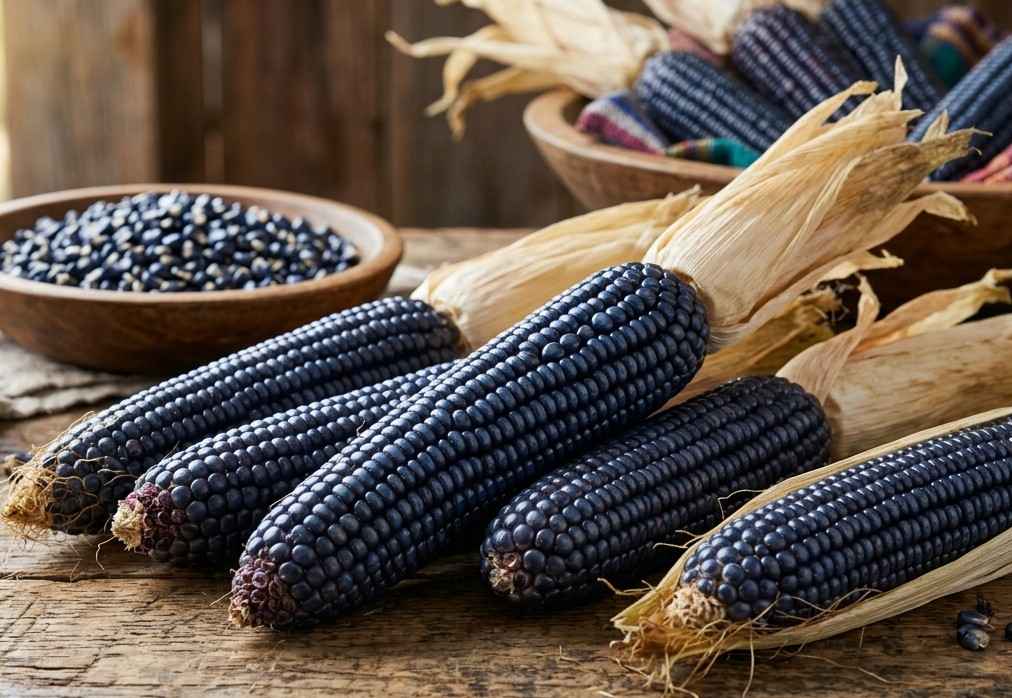
Blue corn is a naturally colorful variety of maize that has been eaten traditionally in parts of the Southwestern United States and Mexico for generations. Its deep blue, purple, or blue-gray kernels make it visually different from the familiar yellow or white corn, but the color is more than just an interesting feature.
Blue corn contains naturally occurring plant pigments called anthocyanins, the same family of compounds responsible for the red, purple, and blue colors found in foods such as berries, purple cabbage, and black rice. Research has identified several anthocyanins in blue corn, including cyanidin-3-glucoside and related compounds.
Depending on how it is processed, blue corn can be eaten as whole kernels, cornmeal, masa harina, tortillas, porridge, chips, crackers, or other foods. Whole or minimally processed blue corn can contribute carbohydrates, fiber, protein, minerals, and phytochemicals to the diet.
What Is Blue Corn?
Blue corn is a type of maize (Zea mays) with naturally blue, purple, or dark-colored kernels. It is sometimes called blue maize, Hopi blue corn, Yoeme Blue, Tarahumara Maiz Azul, Rio Grande Blue, although these names can refer to somewhat different varieties.
The characteristic color comes largely from anthocyanin pigments concentrated in the outer portions of the kernel. Studies of Southwestern U.S. blue corn have identified several anthocyanins, with cyanidin-3-glucoside among the major compounds detected.
Blue corn can be ground into flour or meal and used to prepare traditional foods such as tortillas and other masa-based products. USDA guidance recognizes blue cornmeal, blue corn masa flour, and blue corn tortillas as possible whole-grain foods when they meet the relevant whole-grain criteria.
One interesting characteristic of blue maize is that its nutritional composition can vary considerably depending on the cultivar, growing conditions, milling method, and preparation. Therefore, nutrition information on a package should be checked when available.
Nutrition Facts of Blue Corn
The following is an approximate nutritional profile for dry blue corn/blue corn products. Exact values vary substantially by variety and processing method. Research on blue maize has reported substantial amounts of starch, protein, fat, fiber, resistant starch, and anthocyanins.
| Nutrient | Approximate amount per 100 g dry blue corn* |
|---|---|
| Calories | About 350–380 kcal |
| Carbohydrates | About 70–80 g |
| Protein | About 8–13 g |
| Fat | About 3–5 g |
| Dietary Fiber | About 5–8 g |
| Starch | About 60–65 g |
| Resistant Starch | Can be around 8–9 g in some varieties |
| Magnesium | Varies by variety |
| Phosphorus | Varies by variety |
| Potassium | Varies by variety |
| Iron | Varies by variety |
| Zinc | Varies by variety |
| Anthocyanins | Varies greatly by cultivar and processing |
20 Health Benefits of Blue Corn
1. Provides Antioxidant Compounds: Blue maize contains anthocyanins and other polyphenolic compounds that contribute antioxidant activity.
2. Supports a Whole-Grain Diet: When consumed as whole blue maize or a qualifying whole-grain blue corn product, it can contribute to overall whole-grain intake.
3. Provides Dietary Fiber: Whole blue corn contains dietary fiber that can help support normal digestive function and contribute to a balanced diet.
4. Supports Digestive Health: The fiber in less-refined blue maize can help support regular bowel movements and overall gastrointestinal health.
5. May Support Heart Health: Diets containing whole grains are associated with cardiovascular benefits, although this evidence should not be interpreted as proof that blue corn alone prevents heart disease.
6. May Help Support Healthy Blood Sugar Management: Whole grains generally digest more slowly than many refined grain foods, while the exact blood-glucose response depends on preparation, portion size, and the rest of the meal.
7. Provides Resistant Starch: Some blue corn varieties contain resistant starch, a type of carbohydrate that is less readily digested in the small intestine.
8. Supports Gut Microbiota: Resistant starch and other fermentable carbohydrates can provide substrates for beneficial gut microbes.
9. Supplies Plant-Based Protein: Blue corn contributes protein that can help complement other plant foods in a balanced diet.
10. Provides Complex Carbohydrates: Its starch content provides carbohydrates that can be used as an energy source.
11. Contains Magnesium: Blue corn can contribute magnesium, a mineral involved in normal muscle, nerve, and energy metabolism.
12. Provides Phosphorus: Corn contributes phosphorus, which is important for bones, teeth, energy metabolism, and cellular functions.
13. Contains Important Phytochemicals: Beyond anthocyanins, pigmented corn can contain phenolic acids, flavonoids, and other plant compounds.
14. May Help Increase Dietary Variety: Choosing naturally colored whole grains such as blue corn can make meals more varied and introduce different plant compounds into the diet.
15. May Complement a Weight-Conscious Diet: Fiber-containing whole-grain foods can contribute to fullness when eaten in appropriate portions, although total calories and preparation methods still matter.
16. Supports Balanced Grain Choices: Replacing some refined grain foods with whole-grain blue corn can help increase whole-grain consumption.
17. Provides Anthocyanins: The blue-purple color is associated with anthocyanin pigments that are of interest for their potential biological effects.
18. May Contribute to a Heart-Healthy Eating Pattern: Whole grains are part of dietary patterns associated with cardiovascular health, particularly when they replace refined grains and are not heavily loaded with saturated fat, sugar, or sodium.
19. Can Add Nutritional Value to Traditional Foods: Using whole blue corn in tortillas, porridge, or masa-based foods can provide nutrients and phytochemicals while preserving traditional food practices.
20. Offers Nutritional Benefits Without Artificial Coloring: The distinctive blue-purple color occurs naturally from plant pigments rather than requiring artificial food coloring.
10 Side Effects of Blue Corn
Blue corn is generally suitable for most people when eaten as part of a balanced diet, but individual tolerance and the form in which it is consumed matter.
1. Digestive Discomfort: Eating large portions of fiber-rich blue corn suddenly may cause gas, bloating, or abdominal discomfort in some people.
2. Constipation From Low Fluid Intake: Increasing fiber without drinking enough fluids may contribute to constipation in some individuals.
3. Diarrhea in Sensitive Individuals: Large amounts of corn or certain highly processed blue-corn foods may cause loose stools in people with digestive sensitivities.
4. Corn Allergy: People with a true corn allergy can experience allergic reactions after consuming corn or corn-derived ingredients.
5. Calorie Intake Can Add Up: Blue maize products such as chips can become calorie-dense when prepared with substantial amounts of oil.
6. Excess Sodium From Processed Foods: Packaged blue-corn chips and snacks may contain significant amounts of sodium even though the corn itself is naturally low in sodium.
7. Blood Sugar Rise: Blue corn still contains substantial carbohydrates, so large portions can raise blood glucose, particularly when eaten without protein, fiber, or other balancing foods.
8. Cross-Contact Concerns: People following a medically necessary gluten-free diet should check packaged blue-corn products for gluten-containing ingredients or cross-contact.
9. Food Intolerance: Some people may experience digestive symptoms after eating corn without having a true allergy.
10. Contaminated or Poorly Stored Corn: Improperly stored corn can develop mold or other quality problems, so dry corn should be stored carefully and discarded if it develops an unusual odor, moisture, or visible mold.
How to Eat Blue Corn?
Blue corn is versatile and can be included in meals in many different forms.
You can eat whole cooked blue corn kernels as a side dish, use blue cornmeal to prepare porridge or baked foods, or use blue maize masa harina to make tortillas.
Other options include:
- Blue corn tortillas
- Blue corn porridge
- Blue cornmeal pancakes
- Blue corn muffins
- Blue corn flatbreads
- Blue corn crackers
- Blue corn chips
- Blue corn polenta-style dishes
- Blue corn tacos
- Blue corn-based breakfast bowls
For the greatest nutritional value, choose whole or minimally processed blue maize products and limit products containing excessive added salt, sugar, or oil.
Tips for Consuming Blue Corn
- Choose Whole-Grain Products: Look for products that identify whole blue maize, whole corn, or whole-grain blue corn as an ingredient when appropriate.
- Watch Added Ingredients: Blue maize chips and snack foods can contain substantial oil and sodium, so check the nutrition label.
- Pair With Protein: Combine blue maize tortillas or porridge with beans, lentils, eggs, yogurt, fish, or another protein source.
- Add Vegetables: Using blue maize with vegetables increases the overall fiber and micronutrient content of the meal.
- Control Portions: Blue maize is nutritious but still contributes calories and carbohydrates.
- Try Traditional Preparations: Masa made through nixtamalization can provide a useful way to prepare blue corn foods.
- Read Gluten-Free Labels Carefully: Plain corn is naturally gluten-free, but packaged foods may contain other ingredients or experience cross-contact.
How to Cook Blue Corn?
The cooking method depends on whether you are using whole kernels, blue cornmeal, or masa harina.
Cooking Whole Blue Corn
- Rinse the dry corn thoroughly.
- Soak it overnight if you are preparing dried kernels.
- Drain and add fresh water.
- Simmer until the kernels become tender.
- Drain and season lightly.
Cooking Blue Cornmeal
Blue cornmeal can be cooked similarly to other cornmeal. Combine it with water or milk, bring the mixture to a gentle simmer, and stir frequently until it thickens.
Making Blue Corn Tortillas
Blue maize masa harina can be mixed with water to form a soft dough. Small portions can then be pressed into thin tortillas and cooked on a hot skillet or griddle.
Does Cooking Affect Blue Corn’s Anthocyanins?
Yes. Processing and cooking can affect anthocyanin levels. Research has found that heat can reduce antioxidant compounds, while boiling can also move some anthocyanins and phenolic compounds into the cooking water. Steaming may preserve more antioxidant compounds than boiling in some pigmented-corn preparations.
Traditional nixtamalization, in which dried corn is soaked and cooked in an alkaline solution, is another important processing method. USDA notes that nixtamalization can increase the bioavailability of certain nutrients.
Other Uses of Blue Corn
1. Blue Corn Tortillas: Blue maize masa can be used to prepare naturally colored tortillas for tacos, wraps, and other meals.
2. Blue Cornmeal: Ground blue maize can be used in porridges, baked foods, pancakes, and other recipes.
3. Blue Corn Chips: Blue maize is commonly used to produce tortilla chips, although these should be eaten in moderation when they contain substantial oil or salt.
4. Blue Corn Flour: Finely ground blue maize can be used as an ingredient in selected baked and cooked foods.
5. Traditional Masa Foods: Blue maize can be processed into masa for a variety of traditional foods.
6. Breakfast Foods: Blue cornmeal can be used to make pancakes, porridge, and other breakfast dishes.
7. Baked Products: Blue maize flour can be incorporated into muffins, breads, crackers, and cookies.
8. Natural Food Color: Anthocyanin-rich pigmented corn has potential applications as a source of natural color compounds.
9. Specialty Snacks: Blue maize is used in commercially prepared snack foods and expanded grain products.
10. Food Research: Researchers are studying pigmented corn as a source of anthocyanins and other valuable phytochemicals.
How Much Blue Corn Can You Eat in a Day?
There is no universally established daily dose specifically for blue corn.
For most healthy adults, a moderate serving of about ½ to 1 cup of cooked blue corn or an equivalent portion of a whole-grain blue-corn food can fit into a balanced meal. The appropriate amount depends on your total calorie needs, carbohydrate intake, activity level, and the other grains you consume.
If you are eating blue maize tortillas, the appropriate amount will depend on their size and ingredients. Someone with diabetes or another condition requiring carbohydrate management may need an individualized portion recommendation from a healthcare professional or registered dietitian.
Best Time to Eat Blue Corn
There is no scientifically established “best time” to eat blue corn.
You can include it at breakfast, lunch, dinner, or as part of a snack. What matters more is the overall quality and balance of your diet.
For a more balanced meal, combine blue maize with protein, vegetables, healthy fats, and other nutrient-dense foods.
For example, blue corn tortillas with beans, vegetables, avocado, and a protein source can make a more balanced meal than eating blue maize chips alone.
Who Should Eat Blue Corn?
1. Healthy Adults: Most healthy adults can include moderate amounts of blue maize as part of a balanced diet.
2. Whole-Grain Seekers: People trying to increase their intake of whole grains may use whole blue maize as one grain option.
3. Plant-Based Eaters: Vegetarians and vegans can use blue corn as a carbohydrate and plant-protein-containing food alongside legumes, vegetables, nuts, and seeds.
4. People Seeking More Dietary Variety: Individuals who enjoy trying different grains can use blue maize to diversify their meals.
5. People Who Enjoy Traditional Foods: Blue maize can be incorporated into traditional Southwestern and Mexican-inspired dishes.
6. Active Individuals: People with higher energy requirements can use blue maize as one source of carbohydrate for meals and snacks.
7. Families Looking for Whole-Grain Options: Whole blue maize products can be included in family meals when appropriately prepared and portioned.
Who Should Not Eat Blue Corn?
1. People With Corn Allergy: Anyone with a diagnosed corn allergy should avoid blue maize unless their healthcare professional has specifically advised otherwise.
2. People With Corn Intolerance: Individuals who repeatedly develop symptoms after eating corn may need to avoid it or discuss their symptoms with a healthcare professional.
3. People With Specific Digestive Restrictions: Individuals following a medically prescribed diet may need to limit corn depending on their condition and treatment plan.
4. People Monitoring Carbohydrate Intake: People with diabetes or other conditions requiring carbohydrate management should pay attention to portion sizes rather than assuming blue maize will not affect blood glucose.
5. People With Gluten-Related Disorders: Plain corn is naturally gluten-free, but people with celiac disease should choose appropriately labeled products and consider the possibility of cross-contact.
How to Store Blue Corn?
1. Store Dry Blue Corn Properly: Keep dried kernels or blue cornmeal in a cool, dry place away from moisture.
2. Use Airtight Containers: An airtight container can help protect blue cornmeal from moisture, insects, and odors.
3. Refrigerate for Longer Storage: Refrigerating or freezing whole-grain cornmeal can help slow quality deterioration.
4. Protect From Heat and Light: Store blue maize products away from excessive heat and direct sunlight.
5. Check for Spoilage: Discard blue maize if it develops visible mold, moisture, insects, rancid odors, or other signs of deterioration.
6. Follow Package Instructions: Commercial blue maize products should be stored according to their package directions.
Precautions and Interactions
1. Check for Corn Allergy: Stop consuming blue maize and seek medical attention if symptoms of a serious allergic reaction occur after eating it.
2. Monitor Portion Size: Blue corn is still a carbohydrate-rich food, so large portions may affect blood glucose and total calorie intake.
3. Check Packaged Ingredients: Blue-corn snacks may contain significant amounts of salt, oil, sugar, or other ingredients.
4. Consider Gluten Cross-Contact: People with celiac disease should select certified or appropriately labeled gluten-free products when necessary.
5. Increase Fiber Gradually: If your usual diet is low in fiber, increase whole blue maize gradually and drink adequate fluids.
6. Consider Medication-Related Diets: People following diets prescribed for diabetes, kidney disease, gastrointestinal disorders, or other conditions should discuss appropriate portions with their healthcare professional.
7. Avoid Spoiled Corn: Do not consume corn that appears moldy, damp, insect-infested, or otherwise spoiled.
8. Do Not Treat It as Medicine: Blue corn can be a nutritious food, but it should not replace prescribed medication or medical treatment.
9. Be Careful With Highly Processed Products: The nutritional advantages of whole blue maize may be reduced when it is consumed mainly as heavily processed snacks.
10. Focus on the Overall Diet: The health effects of blue maize depend on the overall eating pattern, portion size, preparation method, and individual nutritional needs.
Blue Corn vs Yellow Corn
Blue and yellow corn are both nutritious grain options, but their plant pigments differ.
The most notable difference is that blue corn contains anthocyanins, which contribute to its blue-purple appearance. Yellow corn contains more carotenoid pigments, including lutein and zeaxanthin, which contribute to its yellow color. USDA data notes differences in carotenoid content between yellow and other corn varieties.
Blue maize therefore offers an interesting source of anthocyanins, while yellow corn can provide carotenoids. Neither color automatically makes one variety suitable for every dietary goal.
The preparation method may matter just as much as the color. A whole-grain corn food prepared with minimal added oil and salt will generally have a different nutritional profile from a highly processed snack made from the same type of corn.
Is Blue Corn Gluten-Free?
Plain corn is naturally gluten-free, and corn flour is listed by the National Institute of Diabetes and Digestive and Kidney Diseases among naturally gluten-free flour options.
However, not every packaged blue-corn food is automatically gluten-free. Tortilla chips, crackers, baked products, seasoning mixes, and other processed foods can contain additional ingredients or may experience cross-contact with gluten-containing grains.
People with celiac disease should carefully check product labels and choose appropriately certified gluten-free products when needed.
Is Blue Corn Healthy?
Blue corn can be a healthy addition to the diet, particularly when consumed as a whole or minimally processed grain.
Its main nutritional attractions include complex carbohydrates, fiber, protein, resistant starch in some varieties, and naturally occurring anthocyanins and other phytochemicals. Research has specifically identified anthocyanins in Southwestern U.S. blue corn, while broader research supports the role of whole grains as part of healthy dietary patterns.
Still, “blue” does not automatically mean healthy. A blue-corn tortilla made primarily from whole corn is nutritionally different from a fried, heavily salted blue-corn snack.
The simplest approach is to enjoy blue maize in reasonable portions and combine it with vegetables, legumes, protein, and other minimally processed foods.
FAQ’s
What is blue corn good for?
Blue maize provides carbohydrates, fiber, protein, minerals, and naturally occurring anthocyanins, making it a nutritious option when consumed as a whole or minimally processed grain.
Is blue corn healthier than yellow corn?
Blue maize contains anthocyanins, while yellow corn is particularly known for carotenoids such as lutein and zeaxanthin, so both can contribute different plant compounds to a balanced diet.
Does blue corn have more antioxidants?
Blue maize is rich in anthocyanins and other phenolic compounds that contribute antioxidant activity, although the amount varies by variety and processing method.
Is blue corn good for weight loss?
Blue maize can fit into a weight-management diet because whole-grain versions provide fiber and carbohydrates, but portion size and total calorie intake are more important than choosing blue maize alone.
Is blue corn good for the stomach?
The fiber in whole blue maize can support normal digestion, although people who are sensitive to corn or suddenly increase their fiber intake may experience gas or bloating.
Is blue corn good for diabetes?
Blue maize still contains carbohydrates, so people with diabetes should consider portion size, preparation method, and the total carbohydrate content of the meal.
Is blue corn high in fiber?
Whole blue maize contains dietary fiber, although the exact amount depends on the variety and how extensively the corn has been processed.
Does blue corn contain protein?
Yes, blue maize provides plant-based protein, although it is best combined with foods such as beans, lentils, dairy, eggs, nuts, or seeds for a more varied protein intake.
Can you eat blue corn every day?
Most people can include moderate portions of blue maize regularly as part of a varied and balanced diet if they tolerate corn well.
Can pregnant women eat blue corn?
Generally, properly cooked blue maize can be included during pregnancy unless the person has a corn allergy, intolerance, or another dietary restriction.
Can children eat blue corn?
Children can generally eat properly prepared blue maize as part of a balanced diet, with portions and texture adjusted according to their age and feeding stage.
Does blue corn raise blood sugar?
Yes, blue maize contains carbohydrates and can raise blood glucose, although the response varies according to portion size, processing, cooking, and what it is eaten with.
Does blue corn contain anthocyanins?
Yes, blue maize contains anthocyanins, including cyanidin-related compounds that contribute to its blue-purple color.
What does blue corn taste like?
Blue maize generally has a slightly nuttier, earthier, and more robust flavor than many common yellow or white corn varieties.
Are blue corn tortillas healthy?
Blue corn tortillas can be a nutritious choice when made primarily from whole blue maize and eaten in reasonable portions, particularly when paired with vegetables and protein.
Are blue corn chips healthy?
Blue maize chips can be enjoyed occasionally, but many packaged versions are fried or baked with added oil and salt, so checking the nutrition label and serving size is important.
Can blue corn help digestion?
The dietary fiber in whole blue maize can support normal bowel function and contribute to digestive health as part of an overall fiber-rich diet.
Does blue corn contain resistant starch?
Some blue maize varieties contain resistant starch, a type of starch that resists digestion in the small intestine and can be fermented by gut bacteria.
Can blue corn cause gas?
Yes, some people may experience gas or bloating after eating blue maize, particularly when consuming large portions or increasing fiber intake suddenly.
Can you eat blue corn at night?
Yes, blue maize can be eaten at night because there is no established evidence that it must be consumed at a particular time of day.
What is blue corn masa?
Blue corn masa is a dough made from ground blue maize that has typically undergone nixtamalization and is commonly used to make tortillas and other traditional foods.
Does cooking blue corn reduce its antioxidants?
Cooking can reduce some heat-sensitive anthocyanins and other plant compounds, although the effect varies depending on the cooking and processing method.
Can blue corn cause allergies?
Yes, people with a corn allergy may experience an allergic reaction after consuming blue maize because it is still a type of maize.
Is blue corn good for the heart?
Whole blue maize can contribute to a heart-supportive eating pattern because it provides whole-grain nutrients and plant compounds, although it should not be considered a treatment for heart disease.
What is the difference between blue corn and purple corn?
The terms can overlap because some corn varieties range from blue to deep purple, but the exact color and nutrient composition depend on the specific cultivar.
Does blue corn have fewer calories than yellow corn?
Blue and yellow corn can have similar calorie contents, and the actual calorie value depends more on the variety, processing, and preparation method than on color alone.
Is blue corn good for cholesterol?
Replacing refined grains with whole-grain foods such as minimally processed blue maize may support a heart-healthy eating pattern, but blue maize itself should not be considered a cholesterol-lowering treatment.
Can blue corn be eaten on a gluten-free diet?
Plain blue maize can be part of a gluten-free diet, but people with celiac disease should check packaged products for gluten-containing ingredients and cross-contact.
What foods can be made with blue corn?
Blue maize can be used for tortillas, tacos, porridge, pancakes, muffins, breads, crackers, chips, masa-based dishes, and other recipes.
Is blue corn naturally blue?
Yes, blue maize gets its blue or purple color naturally from anthocyanins, plant pigments that also have antioxidant properties.
Is blue corn healthier than white corn?
Blue maize contains anthocyanins that are less prominent in white corn, but both can be nutritious depending on the variety, processing method, and portion size.
Final Thought
Blue corn is a naturally pigmented variety of maize that offers more than an unusual color. Its kernels contain carbohydrates, fiber, protein, minerals, resistant starch in some varieties, and anthocyanins and other plant compounds.
Its strongest nutritional advantage is that it can provide a whole-grain food along with naturally occurring pigments that are being studied for their biological activity. However, the health value of maize corn depends heavily on whether it is eaten as a whole or minimally processed food or as a highly processed product containing large amounts of salt, sugar, or added fat.
Sources / References:
Disclaimer:
This guide is for general educational purposes only and does not replace professional medical or dietary advice. People with allergies, chronic health conditions, or medically prescribed diets should consult a qualified healthcare professional before making significant dietary changes.
Also Read: