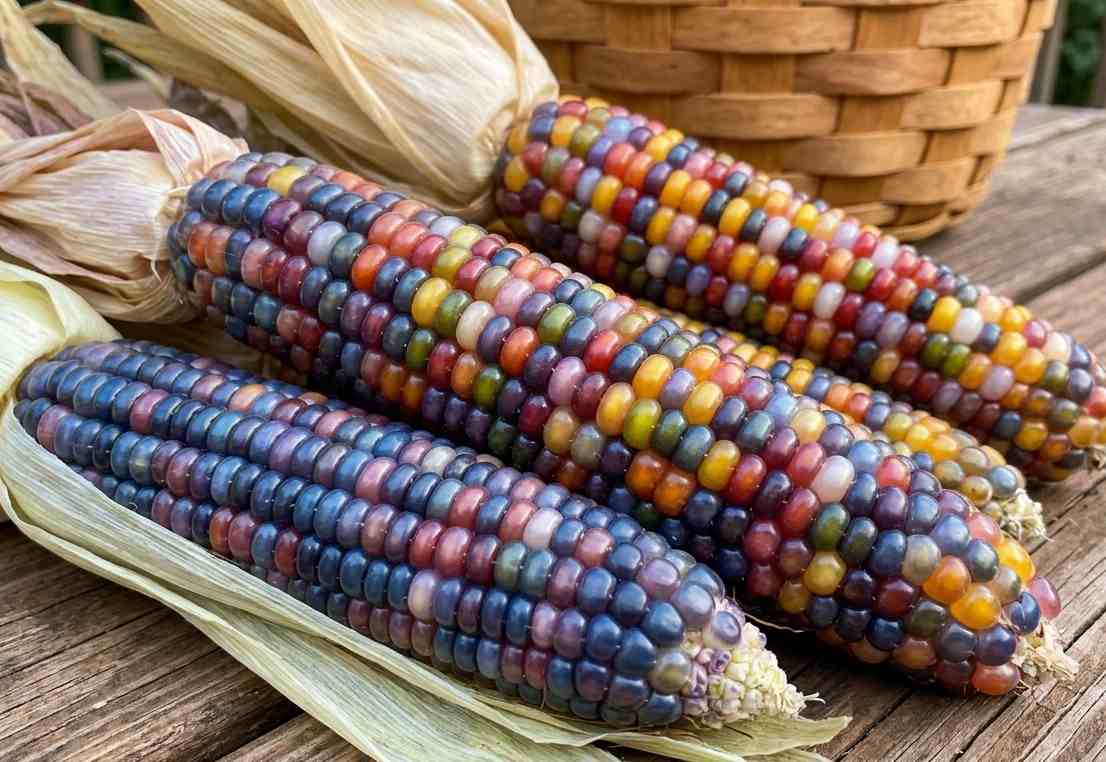
Glass Gem Corn, also known as rainbow corn, Indian corn, or calico corn, is one of the most visually striking varieties of corn, with kernels that can look like tiny pieces of glass, beads, or gemstones. Its naturally occurring colors may range from blue, purple, red, pink, orange, yellow, white, and multicolored combinations.
Despite its unusual appearance, Glass Gem Corn is still a type of maize and can be used as food. It is predominantly considered a popcorn or flint-corn type and can also be ground into cornmeal. The variety was developed through the work of Carl Barnes in Oklahoma, using several traditional Native American corn varieties, including Cherokee and Pawnee-related varieties.
What Is Glass Gem Corn?
Glass Gem Corn is a colorful heirloom maize variety belonging to the species Zea mays. It is famous for its translucent-looking kernels and extraordinary range of colors.
The variety is associated with Carl Barnes, a part-Cherokee farmer and corn breeder from Oklahoma. Barnes collected, selected, crossed, and saved seed from traditional corn varieties over many years. The seeds eventually passed to Greg Schoen and later to Bill McDorman, helping Glass Gem become more widely known.
Unlike typical sweet corn, Glass Gem is predominantly a popcorn/flint-corn type. The kernels can be popped or ground into cornmeal for foods such as polenta and grits.
Its beautiful appearance makes it popular among gardeners, seed collectors, food enthusiasts, and people interested in heirloom crops. However, the colorful appearance should not automatically be interpreted as proof that it contains dramatically more nutrients than ordinary corn.
Nutrition Facts of Glass Gem Corn
Because Glass Gem Corn is a diverse heirloom population rather than a single nutritionally standardized commercial food, exact values can vary considerably. The following is an practical overview of nutrients commonly associated with whole maize and popcorn-type corn.
| Nutrient | General Nutritional Contribution |
|---|---|
| Calories | Provides energy primarily from carbohydrates |
| Carbohydrates | Main macronutrient in corn |
| Dietary Fiber | Contributes to daily fiber intake |
| Protein | Provides plant-based protein |
| Fat | Naturally low to moderate depending on preparation |
| Magnesium | Provides a small amount of this mineral |
| Phosphorus | Contributes to mineral intake |
| Potassium | Provides potassium in modest amounts |
| Iron | Contains some dietary iron |
| Zinc | Provides a small amount of zinc |
| Vitamin B1 | Corn can contribute thiamin |
| Vitamin B3 | Provides niacin |
| Folate | Contains folate in smaller amounts |
| Lutein | Some corn varieties contain lutein |
| Zeaxanthin | Corn can be a dietary source of zeaxanthin |
| Other Carotenoids | Amounts depend strongly on kernel genetics and color |
| Polyphenols | Pigmented corn may contain various plant phenolic compounds |
20 Health Benefits of Glass Gem Corn
1. Provides Energy: The carbohydrates in corn provide the body with fuel for daily activities and exercise.
2. Supports Digestive Health: Whole corn contains dietary fiber that can help support normal bowel function.
3. Helps Increase Fiber Intake: Including whole-grain corn in meals can contribute to overall dietary fiber intake.
4. May Promote Fullness: Fiber and the physical structure of whole-grain corn can help make meals more satisfying.
5. Supports a Whole-Grain Diet: Whole-grain corn contains the bran, germ, and endosperm, providing a broader range of nutrients than refined corn products.
6. Provides Plant Protein: Glass Gem Corn contributes a modest amount of plant-based protein to the diet.
7. Provides B Vitamins: Corn can contribute B vitamins such as thiamin and niacin that participate in normal energy metabolism.
8. Supports Eye Nutrition: Maize naturally contains carotenoids such as lutein and zeaxanthin, although levels vary substantially among varieties.
9. Supplies Antioxidant Compounds: Pigmented corn varieties can contain phenolic compounds and other phytochemicals with antioxidant activity.
10. Provides Magnesium: Whole corn can contribute magnesium, a mineral involved in numerous physiological processes.
11. Provides Phosphorus: Corn supplies phosphorus, which contributes to normal bone and cellular functions.
12. Contributes Potassium: Corn provides potassium as part of a varied diet.
13. Supports Dietary Variety: Choosing colorful heirloom grains can increase variety in a balanced eating pattern.
14. May Support Heart-Healthy Eating Patterns: Whole-grain foods, including whole-grain corn, can form part of dietary patterns associated with cardiovascular health.
15. Supports Regular Bowel Movements: The fiber naturally present in whole corn can help support healthy laxation.
16. Provides Carotenoids: Depending on its genetics and kernel color, maize can contain lutein, zeaxanthin, beta-carotene, and other carotenoids.
17. Can Be a Nutritious Popcorn Base: When prepared with limited added butter, sugar, and salt, popcorn can provide whole-grain corn in a convenient snack.
18. Can Complement Plant-Based Meals: Corn can add carbohydrates, fiber, and some protein to vegetarian and vegan meals.
19. Provides Naturally Occurring Phytochemicals: Corn contains various phenolic compounds and other bioactive substances that contribute to its nutritional profile.
20. Adds Nutritional Variety to Meals: Using Glass Gem Corn as a whole-grain ingredient can make the diet more diverse without relying on refined grains.
10 Side Effects of Glass Gem Corn
Glass Gem Corn is generally suitable as a food for most people, but individual tolerance and preparation method matter.
1. Gas and Bloating: Eating a large amount of corn at once may cause gas or bloating in people who are sensitive to high-fiber foods.
2. Digestive Discomfort: A sudden increase in dietary fiber may cause temporary abdominal discomfort.
3. Constipation if Fluid Intake Is Low: Increasing fiber without drinking enough fluids may make bowel movements uncomfortable for some people.
4. Diarrhea in Sensitive Individuals: Large portions or heavily seasoned corn dishes may cause loose stools in people with sensitive digestion.
5. Allergy: Although uncommon, corn allergy can cause symptoms ranging from digestive complaints to more serious allergic reactions.
6. Calorie Increase from Toppings: Butter, oil, sugar, cheese, and other additions can substantially increase the calories of corn-based dishes.
7. High Sodium from Seasonings: Salt-heavy popcorn and prepared corn snacks can contribute significant amounts of sodium.
8. Dental Concerns from Sticky Preparations: Sweetened or caramel-coated corn can increase exposure to added sugars that may contribute to dental problems.
9. Choking Risk: Whole kernels and popcorn can present choking hazards, particularly for young children.
10. Foodborne Contamination: Improperly stored corn or corn products can become contaminated with microorganisms or molds, so proper storage is important.
How to Eat Glass Gem Corn?
The best preparation depends on whether you have fresh immature ears or mature dried kernels.
Mature Glass Gem Corn is predominantly suited to popping or grinding rather than eating like tender sweet corn. Native Seeds/SEARCH specifically identifies it as predominantly popcorn and notes that it can be popped or ground into cornmeal.
You can:
- Pop mature kernels as popcorn.
- Grind dried kernels into cornmeal.
- Use the cornmeal for porridge or polenta.
- Use it in grits-style dishes.
- Incorporate ground corn into breads and other baked foods.
- Cook suitable immature kernels if the particular variety and harvest stage are appropriate.
Tips for Consuming Glass Gem Corn
- Choose Food-Grade Corn: Make sure the kernels are intended for eating rather than decorative or untreated seed use.
- Start With a Small Portion: If you rarely eat whole grains, begin with a moderate amount.
- Drink Enough Water: Adequate fluid intake can help your body handle increased dietary fiber.
- Limit Excess Butter: Using modest amounts of butter or oil keeps the overall meal lighter.
- Watch Added Salt: Herbs, spices, garlic, or lemon can add flavor without relying heavily on salt.
- Pair With Protein: Combine corn with beans, lentils, eggs, fish, chicken, or another protein source for a more balanced meal.
- Add Vegetables: Corn works well with peppers, tomatoes, leafy greens, onions, and other vegetables.
- Do Not Assume Color Means More Nutrition: Kernel color reflects different pigments and does not by itself establish superior nutritional value.
- Use Freshly Prepared Cornmeal: Freshly ground cornmeal can provide excellent flavor and versatility.
- Store Properly: Keep dried kernels and cornmeal protected from moisture, heat, insects, and contamination.
How to Cook Glass Gem Corn?
Method 1: Popcorn
- Remove mature kernels from the cob.
- Make sure the kernels are clean and completely dry.
- Add a small amount of cooking oil to a heavy-bottomed pan.
- Add the kernels and cover the pan.
- Heat over medium heat.
- Shake the pan occasionally to prevent scorching.
- Remove from heat when the popping slows substantially.
- Season lightly according to preference.
Method 2: Cornmeal
Dried Glass Gem kernels can be ground into cornmeal. The resulting meal can be used for porridge, polenta, grits-style dishes, cornbread, and other recipes.
Method 3: Boiling or Steaming
If you have an immature edible form suitable for cooking, corn can be steamed or boiled until tender. Research on maize indicates that cooking can alter carotenoid availability and concentration, with some studies finding increases in measurable carotenoids after boiling or steaming.
Other Uses of Glass Gem Corn
1. Popcorn: Mature kernels can be popped to create colorful heirloom popcorn.
2. Cornmeal: Dried kernels can be ground into meal for cooking and baking.
3. Polenta: Finely or moderately ground Glass Gem Corn can be used to prepare polenta-style dishes.
4. Grits-Style Foods: Ground kernels can be prepared in a similar way to other coarse corn meals.
5. Cornbread: Ground cornmeal can be incorporated into cornbread recipes.
6. Porridge: Cornmeal can be cooked with water or milk to create a warm porridge.
7. Decorative Displays: The naturally colorful mature ears are frequently appreciated as decorative heirloom produce.
8. Seed Saving: Gardeners can save suitable seeds to grow future crops, following appropriate seed-saving practices.
9. Educational Gardening: The unusual colors make the variety useful for teaching children and adults about crop diversity.
10. Heritage Crop Conservation: Growing heirloom varieties can contribute to maintaining agricultural genetic diversity.
How Much Glass Gem Corn Can You Eat in a Day?
There is no established daily recommended amount specifically for Glass Gem Corn.
For most adults, a moderate serving of about ½ to 1 cup of cooked corn or a modest serving of plain popcorn can fit comfortably into a balanced diet, depending on individual calorie, carbohydrate, fiber, and whole-grain needs.
If you are eating it as popcorn, remember that the nutritional profile changes considerably when large amounts of oil, butter, sugar, caramel, or salt are added.
Best Time to Eat Glass Gem Corn
There is no scientifically established “best time” to eat Glass Gem Corn.
You can include it at breakfast, lunch, dinner, or as a snack. Eating it alongside protein, vegetables, healthy fats, and other nutrient-dense foods can make it part of a balanced meal.
For people who experience bloating from high-fiber foods, eating a moderate portion earlier in the day may be more comfortable than consuming a large portion late at night.
Who Should Eat Glass Gem Corn?
1. Healthy Adults: Most healthy adults can include Glass Gem Corn as part of a varied and balanced diet.
2. Whole-Grain Eaters: People looking to increase their intake of minimally processed whole-grain foods can use suitable Glass Gem Corn preparations.
3. Vegetarians: Corn can provide carbohydrates, fiber, and some plant protein in vegetarian meals.
4. Active Individuals: Its carbohydrate content can contribute energy to meals around physical activity.
5. Families: Appropriately prepared corn can be included in family meals, with age-appropriate preparation and portions.
6. People Seeking Dietary Variety: Heirloom corn can add variety to a diet that already includes other grains and plant foods.
7. Popcorn Lovers: Mature kernels can be used to prepare homemade popcorn with controlled amounts of oil and salt.
8. Home Cooks: People who enjoy experimenting with traditional grains can use the kernels for cornmeal-based dishes.
Who Should Not Eat Glass Gem Corn?
1. People With a Confirmed Corn Allergy: Anyone with a diagnosed corn allergy should avoid Glass Gem Corn unless their healthcare professional advises otherwise.
2. People With Severe Food Intolerances: Individuals who consistently experience symptoms after eating corn should discuss their symptoms with a healthcare professional.
3. Young Children and Popcorn: Whole popcorn kernels and popcorn can be choking hazards for young children.
4. People With Certain Digestive Disorders: Those following medically prescribed dietary restrictions may need to limit whole corn or popcorn depending on their individual plan.
5. People With Difficulty Digesting High-Fiber Foods: A large portion may worsen gas or digestive discomfort in sensitive individuals.
6. People Watching Added Calories: Butter-heavy, caramel-coated, or oil-heavy corn preparations may not fit some calorie-controlled eating plans.
7. People Limiting Sodium: Heavily salted popcorn or corn dishes may not be appropriate for a low-sodium diet.
8. People With Food Safety Concerns: Corn that is moldy, damp, rancid, or improperly stored should not be consumed.
How to Store Glass Gem Corn?
1. Store Dry Kernels in an Airtight Container: Keep mature kernels in a clean, dry, tightly sealed container.
2. Protect From Moisture: Moisture can encourage mold growth and reduce storage quality.
3. Keep Away From Heat: A cool storage location helps preserve quality.
4. Avoid Direct Sunlight: Store dried corn away from prolonged exposure to light.
5. Inspect Before Use: Discard kernels with visible mold, unusual odors, insect infestation, or significant discoloration that is not part of the natural variety.
6. Refrigerate Cornmeal: Refrigeration can help extend the quality of freshly ground whole-grain cornmeal.
7. Freeze for Longer Storage: Properly sealed cornmeal or dried kernels can be frozen when longer storage is needed.
8. Label Stored Products: Write the storage date on containers to help monitor freshness.
Precautions and Interactions
1. Corn Allergy: People with a confirmed corn allergy should avoid Glass Gem Corn and corn-derived products unless medically advised otherwise.
2. Diabetes Management: Corn contains carbohydrates, so people with diabetes should account for the portion and carbohydrate content within their overall meal plan.
3. Digestive Sensitivity: Increase portions gradually if your usual diet is low in fiber.
4. Medication Timing: Whole corn does not have a well-established major drug interaction, but very high-fiber meals can potentially affect the absorption of some medicines.
5. Blood Sugar Considerations: Plain whole corn generally differs from sugary corn products, but preparation and portion size still influence the carbohydrate load.
6. Salt and Blood Pressure: Avoid turning otherwise nutritious corn into a high-sodium food through excessive seasoning.
7. Popcorn Additives: Check ingredients when purchasing packaged popcorn because some products contain substantial amounts of added salt, sugar, saturated fat, or flavoring.
8. Seed Safety: Do not assume that corn sold specifically as planting seed is automatically suitable for human consumption.
9. Food Storage: Discard corn with signs of mold or spoilage rather than trying to remove the affected portion.
10. Individual Medical Diets: Anyone following a medically prescribed diet should consider the carbohydrate, fiber, or other nutritional content of corn within their individual dietary plan.
Glass Gem Corn vs Regular Corn
Glass Gem Corn differs from ordinary supermarket corn mainly in appearance, genetics, texture, and culinary use.
| Feature | Glass Gem Corn | Typical Sweet Corn |
|---|---|---|
| Appearance | Multicolored, jewel-like kernels | Usually yellow, white, or bicolor |
| Type | Predominantly popcorn/flint type | Sweet corn |
| Mature texture | Hard and starchy | Sweet and tender when harvested young |
| Main uses | Popcorn, cornmeal, polenta, grits | Boiled, grilled, steamed, canned, frozen |
| Flavor | Corny, often less sweet | Naturally sweet |
| Primary appeal | Heirloom diversity and unusual colors | Tender eating quality |
| Seed history | Associated with heirloom breeding and seed preservation | Many modern commercial varieties |
Native Seeds/SEARCH describes Glass Gem as predominantly popcorn and a flint-corn subtype that can also be ground into cornmeal.
Does Glass Gem Corn Have More Antioxidants Because of Its Colors?
Not necessarily.
The colors of Glass Gem Corn come from naturally occurring plant pigments, but different kernels can have different pigment profiles. Research on maize shows that carotenoid concentrations vary substantially according to genotype and kernel color.
Therefore, it is more accurate to say that Glass Gem Corn can contain naturally occurring phytochemicals and pigments, rather than claiming that every Glass Gem cob has exceptionally high antioxidant levels.
Is Glass Gem Corn Healthy?
Glass Gem Corn can be a nutritious addition to a balanced diet, particularly when consumed as a whole-grain food and prepared without excessive amounts of added sugar, salt, or saturated fat.
Its main nutritional strengths come from the characteristics it shares with whole maize: carbohydrates for energy, dietary fiber, plant protein, minerals, B vitamins, and various phytochemicals. Corn also contains carotenoids such as lutein and zeaxanthin, although the amounts vary between maize varieties.
The colorful appearance is an added botanical and cultural feature, rather than evidence by itself of a particular medical benefit.
FAQ’s
Is Glass Gem Corn edible?
Yes, Glass Gem Corn is edible, particularly when mature kernels are used for popcorn or ground into cornmeal, polenta, or grits.
Can you eat Glass Gem Corn like regular sweet corn?
Usually not in the same way because mature Glass Gem Corn is predominantly a popcorn or flint-corn type with harder, starchier kernels rather than the tender texture of sweet corn.
Does Glass Gem Corn taste different from regular corn?
Yes, mature Glass Gem Corn generally has a more starchy, grain-like flavor and is less sweet than fresh sweet corn.
Is Glass Gem Corn good for weight loss?
Glass Gem Corn can fit into a weight-management diet when eaten in moderate portions and prepared without excessive butter, oil, sugar, or other high-calorie toppings.
Is Glass Gem Corn high in fiber?
Whole Glass Gem Corn can contribute dietary fiber, although the exact amount depends on the variety, maturity, and preparation method.
Can Glass Gem Corn be used for popcorn?
Yes, mature dried Glass Gem Corn kernels can be popped, and popcorn is one of its best-known culinary uses.
Can Glass Gem Corn be ground into flour?
Yes, dried kernels can be ground into cornmeal or a corn flour-like product and used in recipes such as polenta, grits, porridge, and cornbread.
Why is Glass Gem Corn so colorful?
The unusual colors come from naturally occurring pigments and genetic differences among the kernels, producing the characteristic jewel-like appearance.
Is Glass Gem Corn genetically modified?
Glass Gem Corn is generally described as an heirloom variety developed through traditional selection and cross-pollination rather than modern genetic engineering.
Can you grow Glass Gem Corn at home?
Yes, Glass Gem Corn can be grown in a suitable garden environment when viable seeds, adequate sunlight, water, soil, and sufficient growing space are available.
How long does Glass Gem Corn take to grow?
The growing period varies according to seed source, climate, soil, and growing conditions, so the seed supplier’s maturity information is the best guide for a particular strain.
Can you eat Glass Gem Corn raw?
Mature Glass Gem kernels are hard and are generally better suited to cooking, popping, or grinding rather than eating raw.
Is Glass Gem Corn safe during pregnancy?
Food-grade Glass Gem Corn can generally be included in a balanced pregnancy diet when properly prepared and tolerated, but individual dietary restrictions should be discussed with a healthcare professional.
Is Glass Gem Corn suitable for children?
Corn can be included in children’s diets when prepared appropriately, but popcorn and whole hard kernels can present choking hazards for young children.
Does Glass Gem Corn contain gluten?
Corn is naturally gluten-free, so plain Glass Gem Corn does not naturally contain gluten; however, cross-contact and added ingredients can matter for people with celiac disease or gluten-related disorders.
What can you make with Glass Gem Corn?
Glass Gem Corn can be used to make popcorn, cornmeal, polenta, grits-style dishes, porridge, cornbread, and other corn-based foods.
Is Glass Gem Corn Indian corn?
No, Glass Gem Corn is not originally from India; it is an heirloom maize variety associated with Native American corn traditions and was developed and preserved in the United States.
Can I eat Glass Gem Corn every day?
Yes, most people can eat a moderate amount of properly prepared Glass Gem Corn regularly as part of a balanced diet, provided they tolerate corn well.
What is Glass Gem Corn good for?
Glass Gem Corn provides carbohydrates, dietary fiber, plant protein, minerals, B vitamins, and naturally occurring plant compounds that can contribute to a balanced diet.
What does Glass Gem Corn taste like?
Mature Glass Gem Corn has a starchy, grain-like corn flavor and is generally less sweet and more suitable for popping or grinding than tender sweet corn.
Sources / References:
Disclaimer:
This guide is for general educational purposes and does not replace professional medical or dietary advice. Nutritional values can vary by Glass Gem Corn variety, growing conditions, maturity, and preparation method.
Also Read: