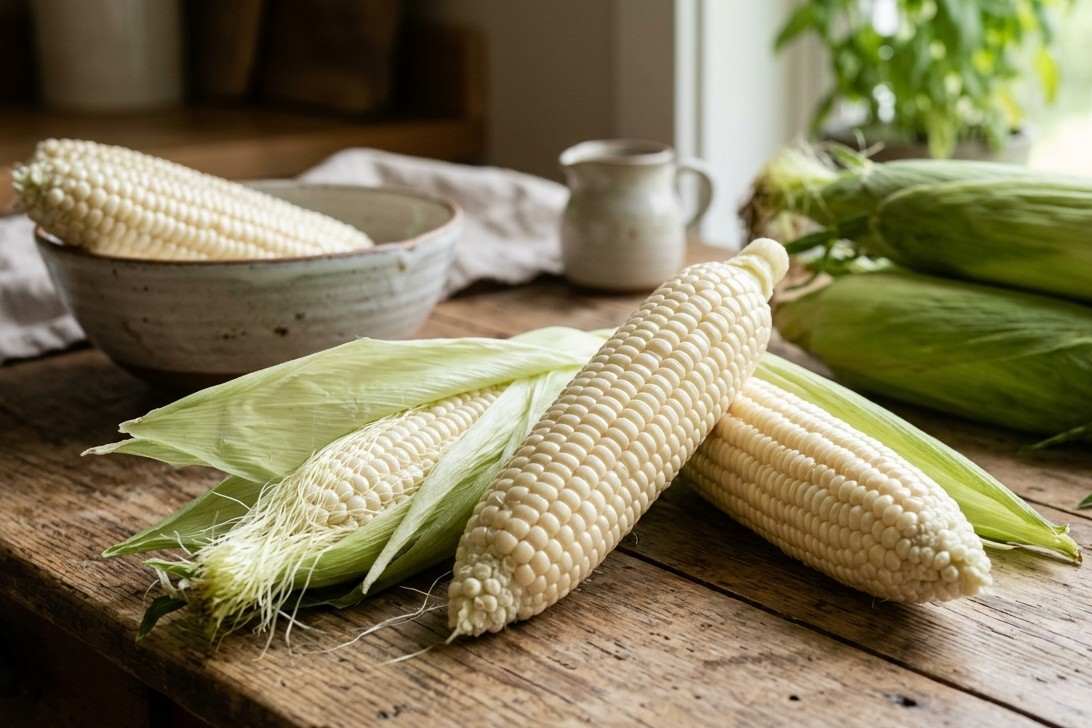
White corn is a popular variety of corn known for its pale or creamy-colored kernels, naturally sweet flavor, and soft texture when cooked. It is widely eaten fresh, boiled, grilled, steamed, roasted, or added to soups, salads, curries, tortillas, porridges, and other dishes.
Like yellow corn, white corn provides carbohydrates, fiber, plant protein, vitamins, and minerals. Its nutritional profile makes it a useful addition to a balanced diet, particularly when eaten in its minimally processed form. White corn is also a versatile ingredient. It can be enjoyed as a vegetable when fresh and as a grain when dried and processed into flour or meal.
What Is White Corn?
White corn is a type of maize (Zea mays) that produces kernels with a white, cream, or pale ivory color. The color difference mainly comes from the natural pigments present in the kernels; white corn generally contains less yellow-orange carotenoid pigmentation than yellow corn.
Fresh white sweet corn contains water, carbohydrates, fiber, protein, small amounts of fat, and several micronutrients. It can be eaten directly after cooking or used in a wide range of recipes.
White corn is not necessarily nutritionally “better” than yellow corn. Both can contribute valuable nutrients, although their exact nutritional composition varies according to variety, maturity, growing conditions, and preparation.
Corn is classified as a starchy vegetable in U.S. dietary guidance, while dried corn and products such as cornmeal can function nutritionally as grains.
Nutrition Facts of White Corn
The following values are approximate for 100 grams of raw white sweet corn and can vary by variety and growing conditions.
| Nutrient | Approximate Amount per 100 g |
|---|---|
| Calories | 86 kcal |
| Water | 75.96 g |
| Carbohydrates | 19.02 g |
| Protein | 3.22 g |
| Total Fat | 1.18 g |
| Dietary Fiber | 2.7 g |
| Sugars | 3.22 g |
| Calcium | 2 mg |
| Iron | About 0.5 mg |
| Magnesium | About 37 mg |
| Phosphorus | About 89 mg |
| Potassium | About 270 mg |
| Sodium | About 15 mg |
| Vitamin C | About 6.8 mg |
| Folate | About 42 mcg |
20 Proven Health Benefits of White Corn
1. Provides Energy: White corn supplies carbohydrates that the body can use as an important source of energy for daily activities.
2. Supports Digestive Health: Its dietary fiber can help support normal bowel function and contribute to a healthy digestive system.
3. Helps Increase Fiber Intake: Including whole white corn in meals can contribute to overall daily fiber intake, which is an important part of a balanced diet.
4. Supports Heart-Friendly Eating: White corn is naturally low in saturated fat, and replacing heavily processed or high-saturated-fat foods with plant-based foods can contribute to a heart-conscious eating pattern.
5. Provides Plant Protein: White corn contains a modest amount of plant protein that contributes to daily protein intake.
6. Supports Muscle Function: Its potassium and magnesium content contributes to normal muscle and nerve function.
7. Provides Magnesium: Magnesium is involved in numerous processes in the body, including normal muscle and nerve function and energy metabolism.
8. Contributes to Potassium Intake: White corn provides potassium, a mineral involved in fluid balance, nerve signaling, and muscle function.
9. Provides Vitamin C: Fresh white corn contains vitamin C, which contributes to normal immune function and antioxidant protection.
10. Supports Normal Immune Function: Its vitamin C and other nutrients can contribute to an overall nutrient-rich diet that supports normal immune function.
11. Provides Folate: White corn contains folate, a B vitamin required for DNA synthesis and normal cell division.
12. Supports Red Blood Cell Formation: Folate contributes to normal blood-cell formation, making adequate dietary intake important.
13. Contains Antioxidant Compounds: Corn contains various plant compounds, including phenolic compounds and other antioxidants that contribute to its nutritional value.
14. Supports a Balanced Diet: White corn can add carbohydrates, fiber, minerals, and plant-based nutrients to meals without requiring highly processed ingredients.
15. May Help With Fullness: The combination of carbohydrates, water, and fiber can make whole cooked corn more satisfying than many highly refined carbohydrate foods.
16. Supports Healthy Meal Variety: Adding white corn to salads, soups, grain bowls, and vegetable dishes can increase dietary variety, which is encouraged as part of a healthy eating pattern.
17. Naturally Gluten-Free: Pure corn does not naturally contain gluten, making plain white corn an option for people who avoid gluten, although processed corn products can have cross-contact or added ingredients.
18. Useful for Active Lifestyles: Its carbohydrate content can provide readily available dietary energy for people who are physically active.
19. Supports Nutrient-Dense Snacking: Plain boiled or roasted white corn can be a more nutrient-dense snack option than many highly processed snack foods.
20. Can Support Overall Dietary Quality: When prepared with moderate amounts of salt, butter, oil, or sauces, white corn can fit into a balanced eating pattern rich in vegetables, fruits, whole grains, legumes, and other minimally processed foods.
10 Side Effects of White Corn
White corn is generally well tolerated by most people when eaten in reasonable portions, but certain individuals may experience problems.
1. Gas and Bloating: Eating a large amount of corn at once may cause gas or bloating in people who are sensitive to higher-fiber foods.
2. Digestive Discomfort: A sudden increase in dietary fiber from corn may cause abdominal discomfort, particularly when overall fiber intake is usually low.
3. Diarrhea in Sensitive Individuals: Some people may experience loose stools or digestive upset after eating large portions or heavily seasoned corn dishes.
4. Constipation When Fluid Intake Is Low: Increasing fiber without drinking enough fluids may contribute to constipation in some individuals.
5. Blood Sugar Increase: White corn contains carbohydrates and can raise blood glucose, so people with diabetes should account for it within their overall carbohydrate intake.
6. Food Allergy: Corn allergy is uncommon but has been reported, and susceptible individuals may experience allergic reactions after consuming corn.
7. Excess Calories From Toppings: Corn itself is relatively moderate in calories, but adding large amounts of butter, cheese, creamy sauces, or oil can substantially increase the calorie content of a serving.
8. Excess Sodium: Salt-heavy corn snacks, canned corn, and prepared corn dishes can contribute significant sodium to the diet.
9. Digestive Issues From Highly Processed Corn Products: Corn-based products containing large amounts of added fat, sugar, or additives may be less suitable for people trying to maintain a minimally processed diet.
10. Individual Food Sensitivity: Some people may experience digestive or other symptoms after consuming corn even without a confirmed allergy, so recurring symptoms should be discussed with a healthcare professional.
How to Eat White Corn?
White corn can be eaten in many simple ways:
- Boiled: Remove the husk and silk, then boil the ears until the kernels become tender.
- Steamed: Steam the corn until cooked while preserving its natural sweetness.
- Grilled: Grill the ears and serve them with herbs, lemon, or a small amount of healthy fat.
- Roasted: Roast white corn until the kernels become tender and lightly browned.
- Added to Salads: Cut cooked kernels from the cob and add them to vegetable or bean salads.
- In Soups: Add cooked kernels to vegetable, chicken, or bean soups.
- In Curries: White corn can be incorporated into vegetable-based curries.
- In Grain Bowls: Combine corn with beans, vegetables, whole grains, and a protein source.
- As Cornmeal: Dried white corn can be processed into cornmeal or flour for various traditional dishes.
- As a Snack: Plain boiled or roasted corn can be eaten as a simple snack.
Tips for Consuming White Corn
- Choose fresh, firm ears with plump kernels and fresh-looking husks.
- Wash or clean fresh corn appropriately before preparation.
- Prefer boiling, steaming, roasting, or grilling over deep-frying.
- Keep added butter, salt, cheese, and creamy sauces moderate.
- Combine corn with protein and non-starchy vegetables for a more balanced meal.
- If you are monitoring carbohydrates, include corn as part of the carbohydrate portion of your meal.
- Increase fiber-rich foods gradually if your usual diet is low in fiber.
- Drink adequate fluids when increasing dietary fiber.
- Choose plain frozen or canned corn without excessive added sodium when fresh corn is unavailable.
- Check packaged corn products for added sugars, sodium, oils, and other ingredients.
How to Cook White Corn?
Boiling White Corn
- Remove the husks and silk.
- Rinse the corn.
- Place the ears in a pot and cover them with water.
- Bring the water to a boil.
- Cook until the kernels become tender.
- Drain and serve.
Fresh corn does not generally need prolonged cooking. Overcooking can make the kernels softer and may reduce some heat-sensitive nutrients.
Steaming White Corn
Place cleaned ears in a steamer basket and steam until the kernels are tender. Steaming is a convenient method when you want to avoid cooking the corn directly in water.
Grilling White Corn
Grill cleaned corn over moderate heat, turning it regularly so that it cooks evenly. You can serve it with lemon juice, herbs, spices, or a small amount of oil.
Roasting White Corn
White corn can also be roasted until the kernels become tender and lightly browned. Avoid excessive charring.
Other Uses of White Corn
1. Cornmeal: Dried white corn can be ground into cornmeal for breads, porridges, batters, and other recipes.
2. Corn Flour: Finely ground white corn can be used in various traditional and gluten-free recipes.
3. Tortillas: White corn is traditionally used to make many types of corn tortillas.
4. Porridge: Ground corn can be cooked with water or milk to create a warm porridge-style meal.
5. Soups: Whole kernels can add texture, carbohydrates, and flavor to soups.
6. Salads: Cooked white corn can add sweetness and texture to vegetable and bean salads.
7. Salsas: Corn can be combined with tomatoes, onions, peppers, herbs, and lime to make fresh salsa-style dishes.
8. Snacks: Roasted or seasoned corn can be prepared as a savory snack.
9. Corn-Based Baked Foods: White cornmeal can be incorporated into breads, muffins, and other baked foods.
10. Traditional Foods: Different cultures use white corn in porridges, flatbreads, steamed dishes, fermented foods, and other traditional preparations.
How Much White Corn Can You Eat in a Day?
There is no single universal daily amount of white corn that is appropriate for everyone.
For many adults, about ½ to 1 cup of cooked corn as part of a meal can be a practical serving, depending on total calorie and carbohydrate needs.
People who are physically active may have different carbohydrate requirements, while people with diabetes or those following a calorie-controlled diet may need individualized portions.
The key is to treat white corn as one component of an overall balanced diet rather than relying on it as the main source of vegetables or carbohydrates.
The World Health Organization recommends dietary variety and emphasizes carbohydrates from foods such as whole grains, vegetables, fruits, and pulses.
Best Time to Eat White Corn
There is no medically established “best” time of day to eat white corn.
Morning
White corn can be included in breakfast alongside eggs, beans, vegetables, or another protein source.
Afternoon
It can make a convenient addition to lunch salads, grain bowls, soups, or vegetable dishes.
Evening
Cooked corn can be included with dinner, particularly when paired with protein and plenty of non-starchy vegetables.
Around Exercise
Because corn provides carbohydrates, it may fit into meals or snacks around physical activity depending on an individual’s energy requirements and digestive tolerance.
Overall, the portion, preparation method, and total dietary pattern are more important than a specific clock time.
Who Should Eat White Corn?
1. Healthy Adults: Most healthy adults can include moderate portions of white corn as part of a varied and balanced diet.
2. Physically Active People: People with higher energy requirements may use corn as one source of dietary carbohydrate.
3. People Looking for Fiber-Rich Foods: Whole corn can contribute dietary fiber to meals.
4. Vegetarians: White corn provides plant-based carbohydrates and a modest amount of protein that can complement legumes, dairy, eggs, nuts, or seeds.
5. People Seeking Gluten-Free Foods: Plain corn is naturally gluten-free and can be included in gluten-free eating patterns when contamination or unsuitable added ingredients are avoided.
6. Families: Cooked white corn can be incorporated into family meals in age-appropriate portions and preparations.
Who Should Not Eat White Corn?
1. People With Confirmed Corn Allergy: Anyone with a diagnosed corn allergy should avoid corn and corn-derived ingredients as advised by their healthcare professional.
2. People Who Develop Allergic Symptoms: Individuals who repeatedly experience hives, swelling, breathing problems, vomiting, or other possible allergic symptoms after eating corn should seek medical evaluation rather than continuing to consume it.
3. People With Individual Intolerance: Those who consistently develop significant digestive symptoms after eating corn may need to limit or avoid it under professional guidance.
4. People With Poorly Controlled Blood Glucose: White corn contains carbohydrates, so people experiencing difficulty managing blood glucose should discuss appropriate portions with their healthcare team.
5. People Following Specific Therapeutic Diets: Individuals on medically prescribed diets may need to adjust or restrict corn according to their individualized nutritional plan.
Corn allergy is relatively uncommon but documented, and food-allergic individuals should avoid known trigger foods and read ingredient labels carefully.
How to Store White Corn?
1. Refrigerate Fresh Corn: Keep fresh ears of corn refrigerated if they will not be cooked immediately.
2. Keep the Husk On When Appropriate: Leaving the husk intact can help protect the kernels and reduce moisture loss during short-term storage.
3. Use Fresh Corn Promptly: Fresh corn generally tastes best when used relatively soon after purchase.
4. Store Cooked Corn in the Refrigerator: Place cooked corn in a clean, covered container and refrigerate it promptly.
5. Freeze Extra Kernels: Cooked or blanched kernels can be frozen in suitable airtight freezer containers or bags.
6. Label Frozen Corn: Mark the storage date on frozen packages so older portions can be used first.
7. Avoid Leaving Cooked Corn at Room Temperature: Perishable cooked foods should not be left unrefrigerated for extended periods.
8. Check for Spoilage: Discard corn that develops an unusual odor, visible mold, sliminess, or other clear signs of spoilage.
Precautions and Interactions
1. Monitor Portion Size: White corn is a carbohydrate-containing food, so portion size matters when managing overall carbohydrate intake.
2. Consider Blood Glucose: People with diabetes should account for corn within their individualized carbohydrate plan rather than assuming that a natural food cannot affect blood glucose. The American Diabetes Association emphasizes individualized carbohydrate management and nutrient-dense carbohydrate sources.
3. Watch Added Ingredients: Large amounts of butter, cheese, salt, sugar, or creamy sauces can change the nutritional profile of a corn-based meal.
4. Check Packaged Foods: Corn-based processed foods may contain additional ingredients, including allergens, sodium, added sugars, or fats.
5. Consider Corn Allergy: People with a known corn allergy should carefully check ingredient lists because corn-derived ingredients can occur in processed foods.
6. Introduce Fiber Gradually: If your usual diet contains little fiber, suddenly eating large amounts of corn may contribute to gas or bloating.
7. Drink Adequate Fluids: Adequate fluid intake can support comfortable digestion when consuming fiber-rich foods.
8. Avoid Spoiled Corn: Do not consume corn showing signs of mold or spoilage.
9. Consider Your Medical Diet: If you have diabetes, kidney disease, gastrointestinal disease, or another condition requiring dietary modification, ask your healthcare professional about an appropriate portion.
10. Seek Medical Attention for Allergic Reactions: Difficulty breathing, throat swelling, dizziness, or other symptoms of a severe allergic reaction require urgent medical attention.
White Corn vs Yellow Corn
White and yellow corn are closely related varieties of maize and can both be nutritious choices.
The most obvious difference is color. Yellow corn contains more yellow-orange carotenoid pigments, while white corn generally has much less of these pigments.
Both varieties can provide carbohydrates, fiber, protein, potassium, magnesium, and other nutrients. The exact nutritional differences depend on the variety and how the corn is grown, stored, and prepared.
Rather than focusing only on the color, consider the overall meal, cooking method, portion size, and dietary pattern.
Is White Corn Healthy?
Yes, white corn can be part of a healthy diet for most people.
It provides carbohydrates for energy along with fiber, plant protein, vitamin C, folate, potassium, magnesium, and other nutrients. However, it is also a starchy food, so it should complement rather than replace the wider variety of vegetables, fruits, legumes, whole grains, nuts, seeds, and protein foods in a balanced diet.
The World Health Organization emphasizes dietary diversity and recommends obtaining carbohydrates primarily from whole grains, vegetables, fruits, and pulses.
Final Thoughts
White corn is a versatile, naturally nutritious food that can fit into many different eating patterns. Fresh white maize provides carbohydrates, fiber, plant protein, vitamins, and minerals while offering a naturally sweet flavor that works well in both savory and simple meals.
For the most nutritional benefit, choose minimally processed corn and use cooking methods such as steaming, boiling, roasting, or grilling. Keep highly salted or heavily buttered preparations occasional, and consider portion size if you are monitoring carbohydrates or calories.
Like any food, white corn does not need to be viewed as a miracle food or something that must be avoided by everyone. Its value depends largely on how much you eat, how it is prepared, and how it fits into your overall diet.
FAQ’s
Is white corn healthier than yellow corn?
White and yellow corn are both nutritious, and neither is universally healthier; their nutritional differences depend on the specific variety and preparation method.
Is white corn good for weight loss?
White maize can fit into a weight-loss diet because it provides fiber and can be filling, but portion size and the overall calorie content of the diet are more important.
Is white corn good for diabetes?
White maize contains carbohydrates and can raise blood glucose, so people with diabetes should consider portion size and include it within their individualized carbohydrate plan.
Is white corn high in carbohydrates?
Yes, white corn is a carbohydrate-rich starchy food, with approximately 19 grams of carbohydrates per 100 grams of raw sweet corn.
Does white corn contain fiber?
Yes, white maize contains dietary fiber, which can contribute to normal digestion and help increase overall daily fiber intake.
Is white corn gluten-free?
Pure corn is naturally gluten-free, but packaged or processed corn products should be checked for added gluten-containing ingredients or cross-contact.
Can you eat white corn every day?
Most healthy people can eat moderate portions of white maize regularly, provided their overall diet includes a variety of vegetables, fruits, whole grains, legumes, and protein foods.
Is white corn good for digestion?
Yes, the fiber in whole white maize can support normal bowel function and digestive health, although eating a large amount suddenly may cause gas or bloating.
Does white corn cause gas?
It can cause gas or bloating in some people, particularly when eaten in large amounts or when the person is not accustomed to eating much dietary fiber.
Is white corn good for the heart?
White maize can be part of a heart-conscious diet because it provides fiber and minerals and is naturally low in saturated fat, especially when prepared without excessive butter, salt, or cheese.
Is white corn good for pregnancy?
White maize can generally be included in a pregnancy diet when properly cooked and eaten as part of a balanced diet, providing carbohydrates, fiber, and several micronutrients.
Can children eat white corn?
Yes, children can generally eat properly cooked white maize in age-appropriate portions, but whole kernels may present a choking concern for very young children and should be prepared according to their developmental stage.
Can white corn be eaten at night?
Yes, white maize can be eaten at night; there is no established health requirement to avoid it specifically in the evening.
Does white corn increase blood sugar?
Yes, because white maize contains carbohydrates, eating it can increase blood glucose, although the response varies according to portion size, the meal composition, and individual metabolism.
Is white corn good for constipation?
The fiber in white maize may support regular bowel movements, particularly when consumed with adequate fluids and an overall fiber-rich diet.
Can you eat white corn raw?
Fresh sweet corn can technically be eaten raw after proper cleaning, although cooking makes the kernels softer and may improve palatability.
Can white corn cause allergies?
Yes, although corn allergy is uncommon, some people can develop an allergic reaction to corn or corn-derived ingredients.
Is white corn good for cholesterol?
White maize can contribute to a heart-healthy dietary pattern because whole corn contains fiber and is naturally low in saturated fat, but it should not be considered a treatment for high cholesterol.
Is white corn a vegetable or a grain?
Fresh corn is commonly treated as a starchy vegetable in dietary guidance, while dried corn and products such as cornmeal are generally considered grain foods.
Does white corn have protein?
Yes, white maize contains plant protein, although it is not considered a high-protein food and is best combined with other protein sources when building a balanced meal.
Can white corn help with energy?
Yes, its carbohydrate content provides energy that the body can use for daily activities and physical exercise.
What does white corn taste like?
White maize generally has a mild, sweet flavor and tender texture, although taste varies depending on the variety and maturity.
Is boiled white corn healthy?
Yes, boiled white maize can be a nutritious choice, particularly when eaten with moderate amounts of salt, butter, or other toppings.
Can white corn help you feel full?
The water and fiber content of whole corn can contribute to fullness, especially when it is eaten alongside protein and other high-fiber foods.
Is white corn good for the skin?
White maize provides nutrients such as vitamin C that support normal skin function, but eating corn alone cannot guarantee specific skin benefits.
What is white corn good for?
White maize is a good source of carbohydrates, fiber, plant protein, potassium, magnesium, vitamin C, and folate, making it a useful addition to a balanced diet.
Are sweet corn and white corn the same?
No, they are not exactly the same; sweet corn describes corn harvested at an immature, naturally sweet stage, while white maize describes corn varieties with white or cream-colored kernels, and white corn can be a type of sweet corn.
Why is white corn more expensive?
White maize may cost more because of factors such as limited supply, seasonal availability, variety-specific growing conditions, harvesting costs, transportation, and differences in consumer demand.
Why is white corn so sweet?
White sweet corn tastes sweet because it contains naturally occurring sugars that are more noticeable when the kernels are harvested while immature; the sweetness varies by variety and freshness.
What is healthier, blue corn or white corn?
Both blue and white corn can be nutritious, but blue corn generally contains more naturally occurring anthocyanin pigments, while white corn provides carbohydrates, fiber, and several vitamins and minerals; the healthier choice depends on the overall diet and preparation.
Is purple corn healthier than white corn?
Purple corn is particularly rich in anthocyanins and other plant pigments, while white maize provides a range of carbohydrates, fiber, vitamins, and minerals, so they offer somewhat different nutritional profiles rather than one being universally healthier.
Sources / References:
About the Author:
Written by: Kirti Solanki (Health Content Researcher): Kirti Solanki creates reader-friendly health and nutrition content based on research from reputable medical, nutrition, and public-health sources.
Disclaimer:
This article is for general educational purposes only and does not replace professional medical or dietary advice. If you have a food allergy, diabetes, or another medical condition requiring dietary management, consult a qualified healthcare professional before making significant dietary changes.
Also Read: