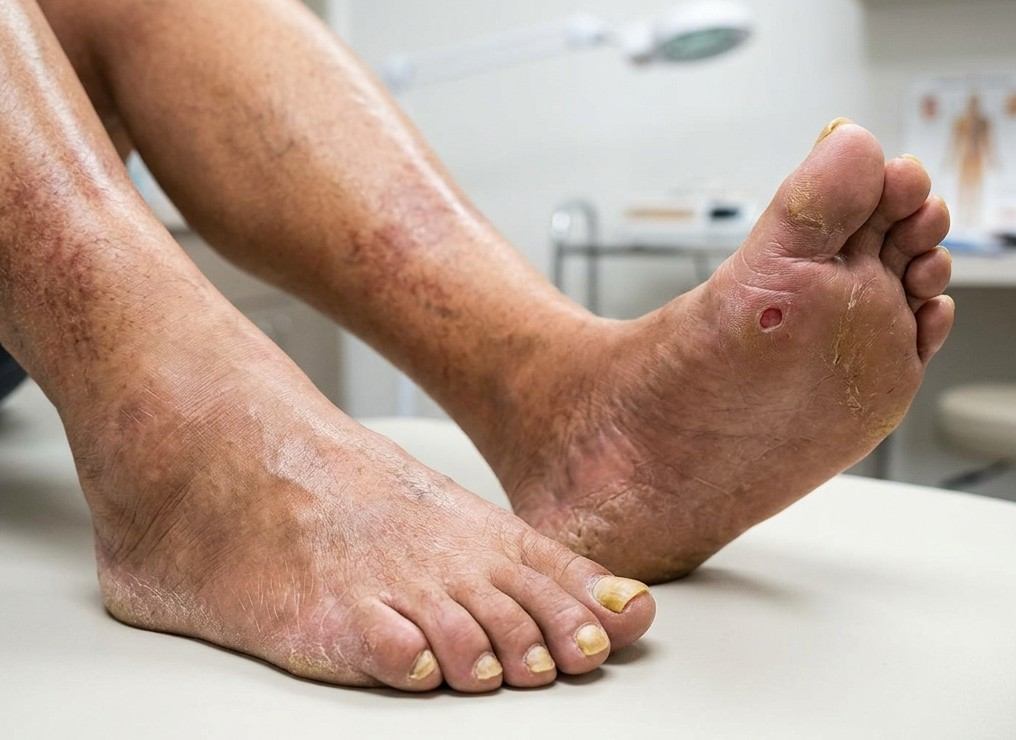
Your feet can sometimes reveal important clues about diabetes, especially when blood sugar has been high for a long time. Symptoms such as persistent tingling, numbness, burning, unexplained foot pain, slow-healing sores, changes in skin color or temperature, and recurring infections can be associated with diabetes-related nerve or blood-vessel problems.
However, having one of these symptoms does not automatically mean you have diabetes. Many foot problems have other causes. If you notice persistent or unusual changes in your feet, particularly if you have diabetes or risk factors for it, a healthcare professional can determine the cause.
How Can Diabetes Affect Your Feet?
Diabetes can affect the feet mainly through nerve damage and reduced blood flow.
Over time, elevated blood glucose can damage nerves, particularly those in the feet and legs. This condition is called diabetic peripheral neuropathy. It may cause tingling, burning, pain, numbness, weakness, or reduced ability to feel temperature and touch.
Diabetes can also contribute to poor circulation. Reduced blood flow can make it harder for cuts, blisters, and other wounds to heal and can increase the risk of infection. This is why a seemingly minor foot problem can sometimes become more serious in someone with diabetes.
12 Warning Signs in Your Feet That May Indicate Diabetes
1. Persistent Tingling or Pins-and-Needles
A recurring sensation of tingling, prickling, or “pins and needles” in your feet may be an early sign of nerve involvement.
Diabetic peripheral neuropathy commonly causes tingling in the feet and legs, sometimes becoming more noticeable at night.
2. Numbness in Your Feet
Numbness can be more concerning because it may reduce your ability to notice injuries.
You might step on something sharp, develop a blister from your shoes, or have a small cut without realizing it. Loss of sensation is one reason people with diabetes are advised to inspect their feet every day.
3. Burning or Shooting Foot Pain
A burning sensation or sharp, shooting pain in the feet can occur when diabetes damages peripheral nerves.
Some people experience increased sensitivity, meaning even light touch can feel painful.
4. Foot Pain That Gets Worse at Night
Diabetic nerve pain may become particularly noticeable at night.
If your feet regularly burn, tingle, or hurt when you are resting or trying to sleep, it is worth discussing the symptom with a healthcare professional rather than assuming it is simply tiredness.
5. Cuts or Blisters That Heal Slowly
A small cut or blister normally begins healing without much trouble. However, diabetes can contribute to reduced sensation and impaired circulation, making foot wounds harder to notice and heal.
A wound that does not start improving after a few days should be medically evaluated, especially if you have diabetes.
6. Repeated Foot Sores or Ulcers
A foot ulcer is an open wound that can develop on the foot. Nerve damage may allow an injury to go unnoticed, while reduced blood flow can interfere with healing.
Foot ulcers can become infected, so they should not be ignored.
7. Changes in Foot Color
A noticeable change in the color of your feet can sometimes signal a circulation or other foot problem.
Diabetes-related foot complications may involve changes in circulation, while infections can cause redness. Because color changes have many possible causes, persistent or sudden changes deserve medical attention.
8. Feet That Feel Unusually Hot or Cold
Changes in the temperature of your feet can be another warning sign.
The CDC specifically recommends seeking medical attention for changes in foot color or temperature, particularly in people with diabetes.
A localized warm area may also occur around an injury or developing infection.
9. Dry, Cracked Skin
Very dry or cracked skin on the feet can create openings through which bacteria may enter.
The CDC lists dry, cracked foot skin among the changes people with diabetes should discuss with a healthcare professional.
Keeping the skin healthy and checking your feet regularly can help you identify problems before they become more serious.
10. Thick, Yellow Toenails or Repeated Fungal Infections
Thickened, yellow toenails and fungal infections such as athlete’s foot can occur alongside diabetes-related foot problems.
These symptoms do not prove that someone has diabetes, but persistent or recurring infections should be evaluated, especially when combined with other symptoms such as numbness, slow-healing wounds, or changes in circulation.
11. Swelling or Changes in the Shape of Your Feet
Swollen feet or a noticeable change in foot shape should not be ignored.
Diabetic nerve damage can sometimes contribute to serious structural changes such as Charcot foot, which can begin with redness, warmth, and swelling and eventually cause changes in the shape of the foot.
12. Loss of Hair on Your Toes or Feet
Unexplained loss of hair on the toes, feet, or lower legs can be associated with circulation problems.
Loss of hair in these areas among foot symptoms that warrant medical evaluation in people with diabetes.
What Do Diabetic Feet Look Like?
There is no single appearance that defines a “diabetic foot.”
Depending on the underlying problem, you might notice:
- Dry or cracked skin
- Redness or unusual discoloration
- Swelling
- Blisters
- Cuts or sores
- Ulcers
- Thick or yellow toenails
- Fungal infections
- Changes in foot shape
- Areas that feel unusually warm or cold
- Reduced hair growth on the feet or lower legs
Importantly, a diabetic foot problem may not be painful. Nerve damage can reduce sensation, allowing an injury to progress without the person realizing it.
Can Foot Problems Be the First Sign of Diabetes?
Yes, foot symptoms can sometimes occur in people who have diabetes but have not yet been diagnosed.
For example, numbness or tingling in the feet and sores that do not heal are recognized symptoms associated with diabetes.
However, these symptoms are not specific to diabetes. Vitamin deficiencies, nerve disorders, circulation problems, infections, injuries, medications, and other health conditions can also cause foot symptoms.
If you have persistent symptoms along with increased thirst, frequent urination, unexplained weight loss, fatigue, blurred vision, or other possible diabetes symptoms, talk with a healthcare professional about appropriate blood glucose testing.
When Should You See a Doctor?
If you have diabetes, do not wait for your next routine appointment when you notice a significant foot problem.
Seek medical attention promptly for:
- A cut, blister, or bruise that does not begin healing
- Red, warm, painful skin
- A new foot ulcer or open wound
- Signs of infection
- Significant swelling
- New numbness or loss of sensation
- A sudden change in foot color or temperature
- A major change in the shape of your foot
- A black or foul-smelling infected area
NIDDK advises people with diabetes to contact their healthcare provider about wounds that do not begin healing after a few days and about red, warm, or painful skin that could indicate infection.
A black, foul-smelling foot infection can indicate gangrene and requires urgent medical attention.
How to Check Your Feet for Diabetes-Related Problems?
If you have diabetes, make foot inspection part of your daily routine.
1. Check the Tops and Bottoms
Look carefully at both feet, including the soles.
2. Check Between Your Toes
Look for redness, cracks, moisture, peeling skin, blisters, or fungal infections.
3. Look for Wounds
Check for cuts, blisters, bruises, sores, ulcers, and areas of dried blood.
4. Notice Changes in Color or Temperature
Compare both feet and pay attention to unusual changes.
5. Check Your Toenails
Look for thickening, discoloration, cracks, or ingrown toenails.
6. Use a Mirror if Necessary
If you cannot comfortably see the bottoms of your feet, use a mirror or ask someone you trust to help you inspect them. NIDDK specifically recommends this approach for people who have difficulty seeing their feet.
Simple Ways to Protect Your Feet
Good foot care can help reduce the risk of serious complications.
- Check your feet every day.
- Wash them gently with warm, not very hot, water.
- Dry your feet carefully, particularly between the toes.
- Wear properly fitting shoes and socks.
- Avoid walking barefoot if you have reduced sensation.
- Protect your feet from extreme temperatures.
- Trim toenails straight across.
- Avoid attempting to remove corns or calluses aggressively at home.
- Keep your blood glucose within the range recommended by your healthcare team.
- Do not ignore even small wounds.
- Have your feet examined regularly by a healthcare professional.
NIDDK recommends daily foot checks and at least an annual thorough foot examination for people with diabetes, with more frequent examinations for people who have certain risk factors or previous foot problems.
Can Diabetes-Related Foot Problems Be Prevented?
Many serious diabetes-related foot complications can be reduced through consistent care.
Managing blood glucose, blood pressure, and cholesterol, avoiding smoking, checking your feet regularly, and getting recommended medical examinations can help protect your nerves, circulation, and feet.
The most important habit is simple: do not wait until your feet hurt before checking them. Nerve damage can reduce pain sensation, so a serious problem may sometimes develop with little or no pain.
FAQ’s
Can diabetes cause numbness in your feet?
Yes, diabetes can damage nerves and cause numbness or reduced sensation in the feet.
Does diabetes cause burning feet?
Yes, burning feet can occur when diabetes damages peripheral nerves, although burning sensations can also have other causes.
Can diabetes cause sores on your feet?
Yes, diabetes can increase the risk of foot sores and ulcers, particularly when nerve damage or poor circulation is present.
Why do wounds on diabetic feet heal slowly?
High blood glucose, nerve damage, and reduced blood flow can interfere with the body’s ability to heal foot wounds.
How often should diabetics check their feet?
People with diabetes should check their feet every day for cuts, blisters, swelling, discoloration, sores, and other changes.
When should I see a doctor for diabetic foot symptoms?
Seek medical advice promptly for a new wound, persistent swelling, redness, warmth, infection, significant color changes, numbness, or a sore that is not healing.
Can diabetes cause foot pain?
Yes. Diabetes-related peripheral neuropathy can cause burning, shooting, or other types of foot pain, although some people experience numbness instead of pain.
Do diabetic foot problems always hurt?
No. Nerve damage can reduce the ability to feel pain, so a person may have a blister, cut, or ulcer without experiencing significant pain.
Can foot problems indicate diabetes even if I have never been diagnosed?
They can occur in undiagnosed diabetes, but foot symptoms alone cannot diagnose diabetes. A healthcare professional can determine whether blood glucose testing or other evaluation is appropriate.
How do I know if my feet are diabetic?
Signs that may be linked to diabetes include numbness, tingling, burning, foot pain, dry or cracked skin, swelling, discoloration, slow-healing cuts, blisters, or foot ulcers.
How can I treat my diabetic feet?
Treatment depends on the problem and may include controlling blood sugar, caring for wounds, treating infections, using appropriate footwear, and getting professional medical care; a healthcare provider should evaluate any open or infected wound.
Can diabetic feet be cured?
Diabetes-related nerve damage may not always be reversible, but good blood sugar management and proper foot care can help prevent or reduce complications.
Can I walk with diabetic foot problems?
It depends on the condition. If you have a foot ulcer, significant swelling, infection, or a serious injury, ask your healthcare professional whether walking or weight-bearing is safe.
What should I do if I have a diabetic foot sore?
Keep the area clean and protected and contact a healthcare professional promptly, especially if the sore is worsening, red, warm, swollen, painful, or showing signs of infection.
Final Takeaway
Your feet can provide important warning signs of diabetes-related complications. Numbness, tingling, burning, unexplained pain, slow-healing wounds, swelling, color or temperature changes, dry cracked skin, recurring infections, and changes in foot shape should not be ignored.
These symptoms do not automatically mean you have diabetes, but persistent or unexplained changes deserve professional evaluation. If you already have diabetes, daily foot checks and early treatment of even minor injuries can help prevent small problems from becoming serious complications.
Sources / References:
Disclaimer:
This guide is for educational purposes only and does not replace professional medical advice, diagnosis, or treatment. If you have diabetes or develop a new, persistent, infected, or non-healing foot problem, consult a qualified healthcare professional promptly.
Also Read: